

A fire in the room where you sleep changes how the whole room feels — softer light, a gentle focal point, and a reason to linger in bed with a book on cold mornings.
These 75 ideas cover fire types, placements, surrounds, colours, mantels, seating, storage and restful styling, from full masonry fireplaces to compact electric and faux versions for the smallest rooms.
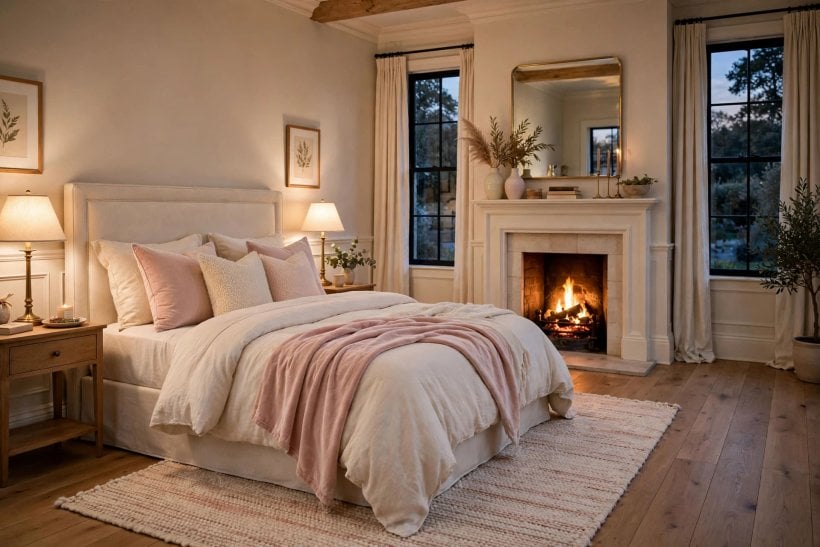
1. A Bedroom Fireplace at a Glance
A bedroom with fireplace is first a decision about role: is the fire the room’s main heat, a top-up on cold nights, or mainly ambience? That answer decides the fire type — wood-burning, gas, electric, ethanol or faux — then placement, surround material and styling. Safety sits underneath every choice: ventilation, clearances, a carbon monoxide detector where fuel is burned, and professional installation, all following manufacturer and local code guidance.
| Which fire type is easiest to add? | Electric and faux fireplaces, because they need no flue or fuel store. Gas, wood and ethanol versions need professional advice on ventilation, flues and safe operation. |
| Can a small bedroom have a real flame? | Sometimes, but only where the fire, its clearances and its ventilation all fit the room properly. Many small rooms do better with a compact electric or a well-made faux fireplace. |
| Where should a fireplace sit in a bedroom? | Usually where it can be seen from the bed and from a chair, without blocking the route through the room or crowding furniture against the hearth. |
| Does it need to heat the whole room? | No. Many bedroom fires are chosen for glow and atmosphere, with the main heating system doing the background work, especially in homes where nights stay cool rather than cold. |
| What safety basics apply? | Follow manufacturer and local code guidance on clearances, hearths, ventilation and servicing, keep combustibles well away, fit detectors as advised, and never leave a real flame unattended. |
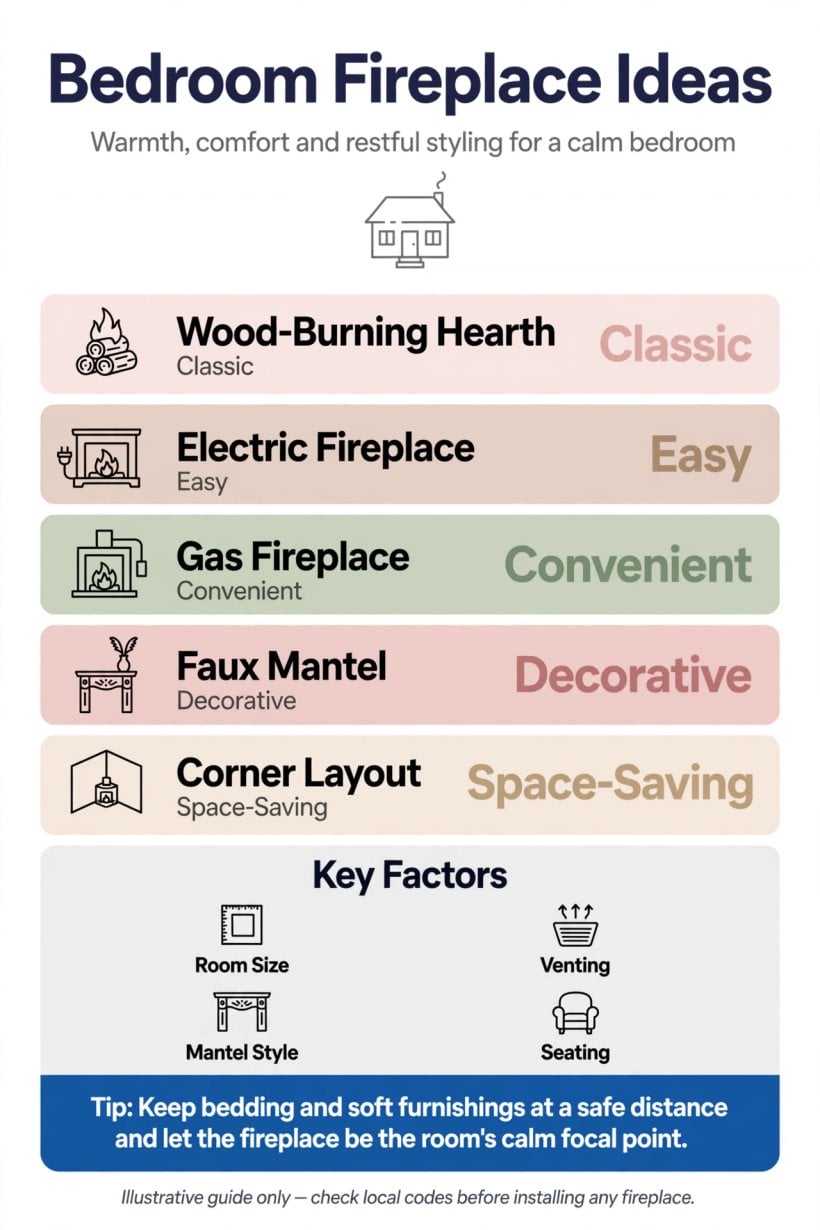
At a glance: decide the fire’s role first, then its type, placement and surround — and let safety and clearances shape the plan from the beginning, not at the end.
2. Fire Types: Ideas 1–9
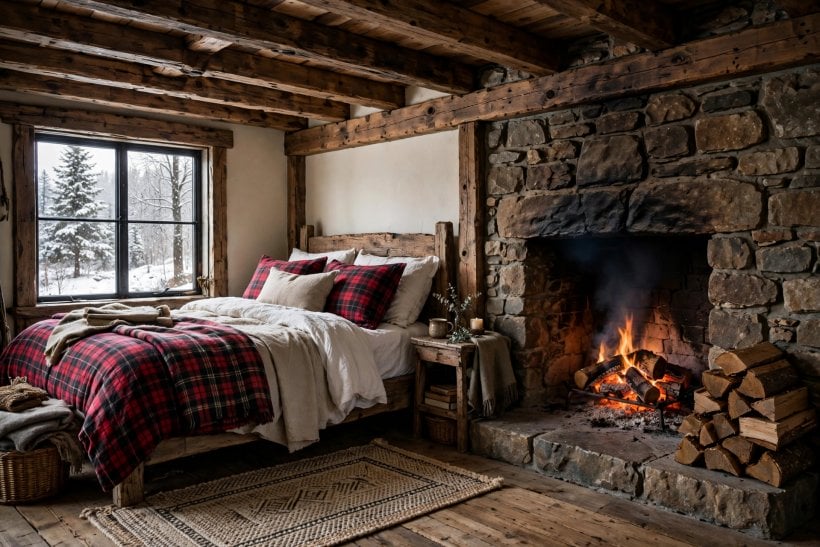
Type comes before style, because each fuel brings its own installation, running and maintenance needs. The broader principles in our interior design fireplace ideas for tiny houses apply at any scale: match the fire to the room, the building and how honestly you will use and maintain it.
1. Classic Wood-Burning Masonry Fireplace
A built masonry fireplace with a real log fire gives the strongest crackle, scent and heat here. It also needs a sound flue, dry log storage and regular sweeping, so it suits homes where wood burning is already part of daily life.
2. Gas Fireplace with a Clean, Controllable Flame
Gas gives a real flame that starts and stops on demand, with no logs to carry through the house or ash to clear in the morning. It needs professional installation and servicing, and it suits bedrooms where warmth and convenience matter equally.
3. Slim Electric Inset Fire
An electric inset sits inside a surround or media wall and gives flame effect, with or without heat, by remote. With no flue or combustion, it is often the simplest route in flats and rooms without a chimney.
4. Wall-Mounted Electric Fire
A wall-mounted electric fire hangs like a wide picture, its flame band running low and long beneath eye level from the bed. It frees the floor entirely, which helps in narrow rooms, and it can be purely decorative on warmer evenings.
5. Freestanding Ethanol Burner
A freestanding ethanol burner gives a real, portable flame that can move between rooms. Ventilation, refuelling discipline and the maker’s safety guidance matter greatly, so treat it as a considered occasional fire, not a casual ornament.
6. Small Wood Stove Instead of an Open Fire
A compact enclosed stove burns more efficiently and controllably than an open grate, and its black box shape suits rustic and modern bedrooms alike. Clearances, hearth materials and flue routing must follow manufacturer and local code guidance, planned before you buy.
7. Faux Fireplace, Decorative Only
A faux fireplace — surround, mantel and hearth with no fire at all — delivers the architecture without heat, fuel or flue. Fill the opening with candles in safe holders, books or a plant, in any room, rented or owned.
8. Electric Stove-Style Fire
An electric stove mimics the shape and glow of a small wood stove while plugging in like a lamp. It is a good compromise for bedrooms that want a cottage or cabin feel without a flue, fuel store or sweeping routine.
9. Double-Sided Fire Between Bedroom and Ensuite
A double-sided gas or electric fire set into the wall between bedroom and ensuite shares its glow with both rooms. It is a major build decision, best planned during a renovation rather than added afterwards.
3. Placement and Layouts: Ideas 10–18
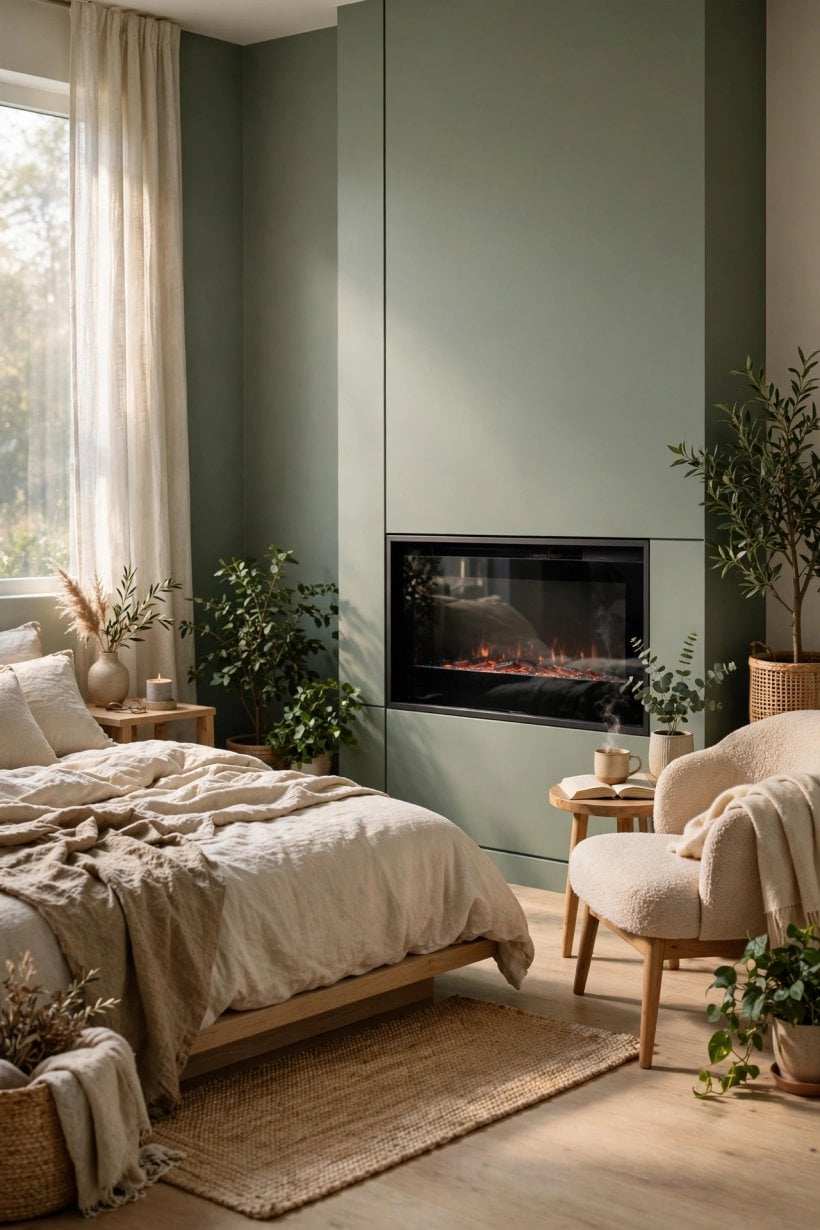
Placement decides whether the fire becomes the room’s calm centre or an obstacle. Work it out on a floor plan with bed, doors and storage drawn in, using the room-first thinking in our bedroom interior design for tiny houses.
10. Centred on the Main Wall, Facing the Bed
The classic layout puts the fireplace in the middle of the wall the bed faces, so flames are the last thing seen at night. Symmetry around it makes the whole room feel settled and deliberate.
11. At the Foot of the Bed
A low fire at the foot of the bed, built into a bench or partition, brings the glow close without dominating the wall. Keep the route around the bed clear and follow guidance on distances to bedding.
12. Corner Placement to Save the Main Wall
A corner fire leaves the long walls free for the bed, wardrobes and windows while still giving the room a clear focal point. Corner stoves and angled surrounds work especially well in square rooms where no single wall wants the fireplace.
13. Between Two Windows
Setting the fireplace between two windows balances daylight on both sides with firelight in the middle. It suits formal, symmetrical bedrooms, and curtains should stay well clear of heat and hearth.
14. In an Alcove or Existing Chimney Breast
Using an existing chimney breast or alcove gives the fire a natural home and often the only practical flue route. In older houses, have the chimney checked and prepared professionally before assuming an open fire can simply be revived.
15. Beside the Bed as a Near Focal Point
A small fire beside the bed makes reading by firelight a real pleasure. This intimate placement needs the most care: clearances and furniture distances must follow manufacturer and local code guidance exactly.
16. In a Partition Dividing Sleep and Dressing Zones
In a large bedroom, a low partition carrying a double-sided electric fire can separate sleeping from dressing or work areas. It zones the room without a full wall, so light and warmth are still shared.
17. Low Inset Beneath a Deep Sill
A wide, low electric inset set beneath a deep window sill or a low media unit suits modern bedrooms where a tall traditional surround would crowd the wall. The long flame line reads calmly from the bed, like a horizon.
18. Facing a Reading Chair, Not the Bed
Not every fire must face the bed: turning it towards a reading chair creates a second destination in the room. This works well in larger bedrooms and suites with a small sitting area.
4. Surrounds and Materials: Ideas 19–27
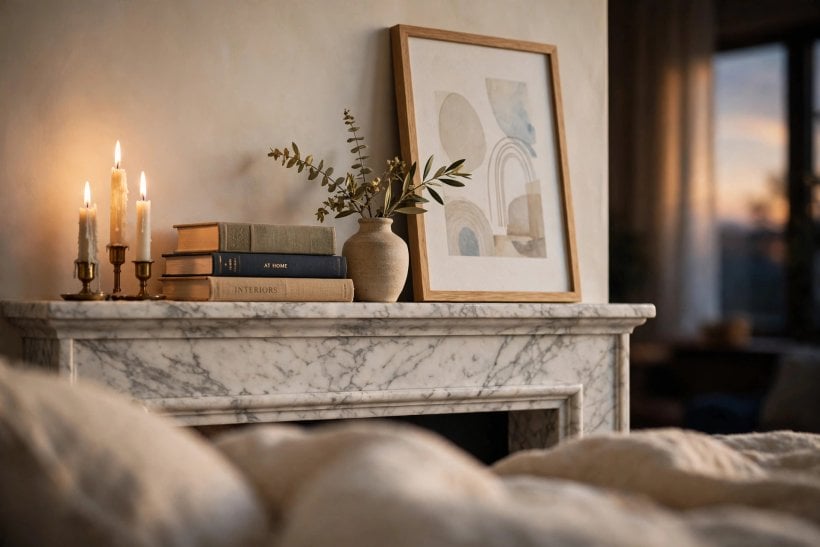
The surround is what you actually look at most of the year, including all the months when the fire is unlit. Choose its material for touch, upkeep and how it sits with the room’s other surfaces, and always in a form the fire’s maker allows near heat.
19. Brick Surround, Bare or Painted
Brick brings texture and history, whether it is original, reclaimed or a well-made slip finish. Left bare it reads rustic and warm; painted in the wall colour it turns quieter and more tailored, while keeping its gentle surface variation.
20. Natural Stone Surround for Weight and Calm
Limestone, slate and other stones give a fireplace real visual weight and a cool, steady presence. Stone needs the right fixing and care for its type, so take supplier advice, and expect natural variation.
21. Marble Surround for a Classic, Formal Note
A marble surround with clean lines is the traditional choice for an elegant bedroom, its veining doing the decorating. Pale marble brightens the wall, while darker veined stone makes a dramatic centrepiece.
22. Tiled Surround in Colour or Pattern
Heat-suitable tiles let a fireplace carry colour — deep green, inky blue or a handmade-look glaze — without repainting the room. Varied glazes catch firelight beautifully, and a tiled surround wipes clean easily.
23. Plaster or Limewash Surround for Soft Minimalism
A plain plaster surround, in limewash or the same paint as the walls, gives the softest fireplace of all. The fire itself becomes the decoration, suiting calm, low-contrast bedrooms especially well.
24. Timber Beam Mantel Over a Simple Opening
A solid timber beam as a mantel shelf adds warmth and a place to style above a brick, stone or plaster opening. Timber near a fire needs the clearances and protection the manufacturer and local code require, arranged by your installer.
25. Concrete or Microcement Surround
Cast concrete and microcement give a smooth, modern surround with no joints and a quietly industrial feel. They pair well with low inset fires and plain bedding, and their matte surface keeps the wall restful.
26. Dark Slate Hearth and Surround
Slate’s deep grey-black tone grounds the fireplace and hides ash dust and scuffs better than pale materials do. Used for both hearth and surround it frames the flames sharply, making even a small fire look intentional and strong.
27. No Surround at All: Flush Modern Inset
The most minimal option is no surround — just a flush fire set into a flat wall, with a simple hearth line or none where the fire type allows it. The wall stays calm, the flame band does all the work, and styling moves elsewhere.
5. Colours and Palettes: Ideas 28–36
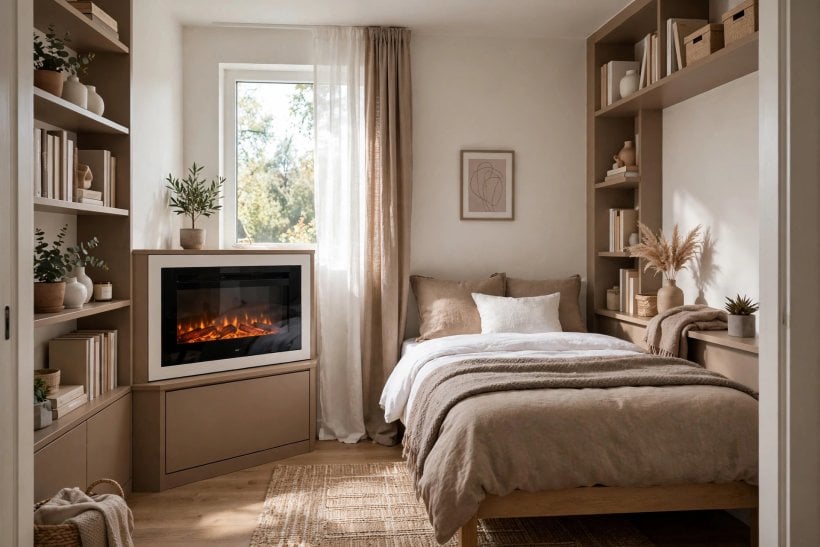
Firelight is warm and orange-toned, so colours around a bedroom fireplace must work in daylight and in that glow. Build the palette from the surround outward, and test samples beside the fire lit and unlit.
28. White and Cream for a Calm, Bright Base
White and cream walls keep a fireplace bedroom restful and let brick, stone or a dark firebox provide the contrast. Layer several off-whites in paint, bedding and curtains so the room feels soft under firelight.
29. Charcoal Surround for Deliberate Drama
A charcoal or near-black surround gives pale walls a strong centre and makes flames look brighter by contrast. Balance it with light bedding and one or two dark accents elsewhere, so the fireplace leads the scheme instead of standing alone.
30. Sage and Stone for a Soft, Natural Scheme
Sage green walls with a pale stone surround bring garden colours indoors and sit comfortably with timber and linen. The combination feels cool in summer daylight and warm by firelight — an easy year-round palette.
31. Navy Walls with Brass Details
Deep navy behind a fireplace creates an enveloping, evening-ready bedroom, while brass details stop it feeling flat. This suits rooms with decent daylight, where the dark wall can retreat each morning.
32. Terracotta and Clay for Earthy Warmth
Terracotta paint, clay tiles or rust-toned textiles echo the colours inside a real flame and make even an electric fire feel warmer. Use them on the fireplace wall or in layers of bedding, keeping floors and ceiling lighter for balance.
33. All-Wood Tones for a Cabin Mood
Timber cladding, a wood mantel, oak furniture and brown textiles build a cabin bedroom around the fire. Vary the wood tones slightly and add cream textiles, so the room reads layered rather than matched.
34. Black Fireplace in an Otherwise Pale Room
A single black fireplace — firebox, surround and hearth all dark — in a white or pale-grey room is a crisp, modern pairing. It needs very little styling: a plain mantel, light walls and one piece of art let the shape speak.
35. Tonal: Surround and Wall in the Same Colour
Painting the surround, chimney breast and wall in one colour makes the fireplace feel carved from the room rather than applied to it. Texture carries the interest here — matte paint against brick, plaster or tile in the same shade.
36. Muted Pastels for a Gentle Fireplace Wall
Blush, dusty blue or soft lavender on the fireplace wall gives a bedroom a tender note that firelight flatters. Keep pastels muted and greyed, and ground them with a mid-tone hearth or timber mantel.
6. Mantel Styling and Decor: Ideas 37–45
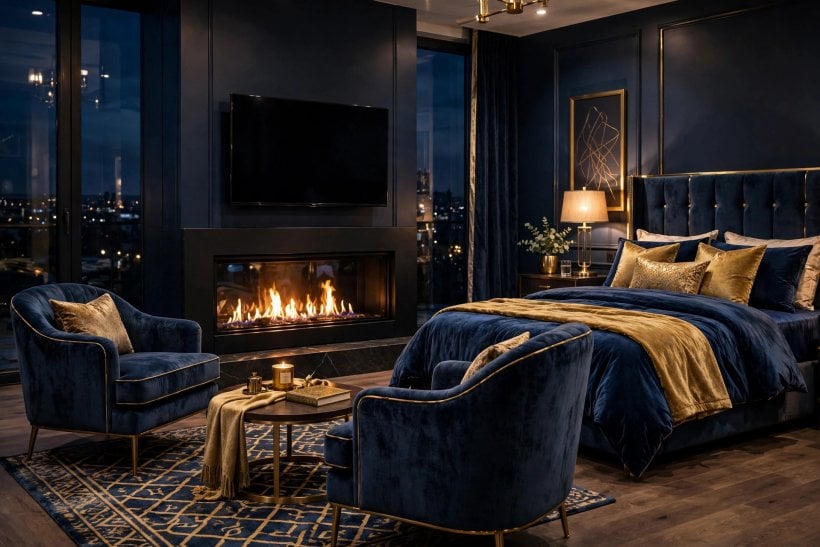
A mantel is a narrow stage that changes the whole room from the bed’s viewpoint. Style it in odd-numbered groupings, leave breathing space, and keep anything heat-sensitive or combustible well away from the fire itself, following the guidance for your particular fireplace.
37. A Large Mirror Above the Mantel
A mirror reflects firelight around the bedroom and doubles the sense of space above the fireplace. Choose a simple wood, black or brass frame, sized slightly narrower than the surround.
38. Artwork Hung or Leaning on the Mantel
One substantial piece of art above the mantel gives the fireplace a finished, gallery feel, hung or casually leaned. Landscapes and abstracts in warm, muted tones sit best with firelight.
39. Candles for the Nights the Fire Stays Unlit
Grouped candles on the mantel — or in safe holders inside a faux firebox — keep the glow alive on warm nights. Use stable holders, keep flames supervised, and consider flameless candles where real ones are impractical.
40. Greenery: A Plant or a Simple Garland
A trailing plant on the mantel or a loose garland along its edge softens the hard lines of brick, stone and tile. Keep foliage well clear of heat and flames, and favour sturdy plants that tolerate a warm, dry room in winter.
41. Books Stacked on the Mantel and Hearth
Small stacks of books add colour, height and personality to a mantel, and a reading pile on the hearth suits a bedroom that is used for evening reading. Keep paper well away from any working fire, and treat hearth books as decor for faux fires only.
42. A Symmetrical Pair: Lamps, Vases or Candlesticks
Pairs bring order: two lamps, two vases or two candlesticks flanking a central mirror or picture make a formal fireplace feel composed from the bed. Symmetry suits traditional surrounds, and it is the easiest styling formula to get right first time.
43. Seasonal Styling, Changed Through the Year
Rotating mantel decor — greenery and candles in winter, shells, art or dried grasses in summer — keeps the fireplace a feature even when it is never lit. Small changes stop the room feeling frozen in one season and cost almost nothing.
44. The Empty Mantel: Nothing at All
Leaving a beautiful mantel completely bare is a styling choice, not a failure to finish. It suits plaster, stone and modern flush fireplaces, and in a bedroom it keeps the view from the bed calm, uncluttered and genuinely restful.
45. Personal Objects, Curated Rather Than Crowded
A few meaningful pieces — a photograph, a travel find, a small clock — make the fireplace belong to the people who sleep in the room. Edit hard: three or four chosen objects read as a collection, while a full shelf reads as storage.
7. Seating, Reading Nooks and Storage Around the Fire: Ideas 46–54
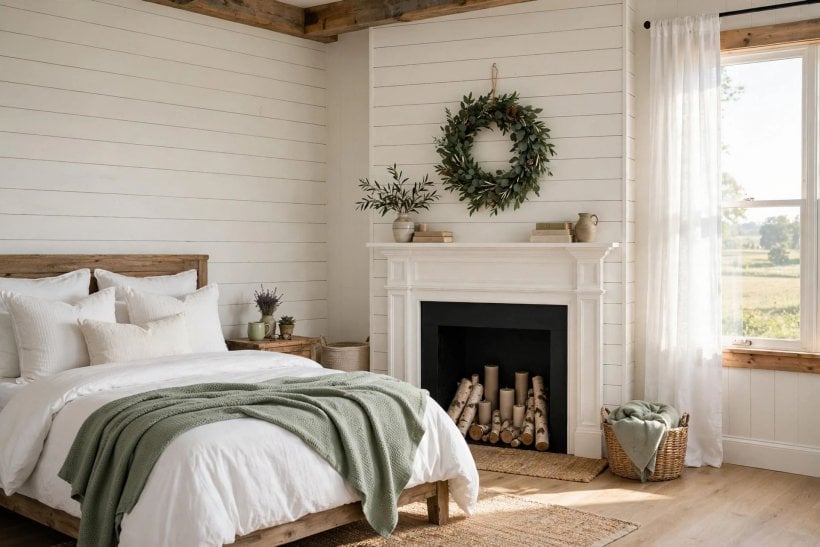
A fireplace earns its keep when someone actually sits by it, so seating, light and storage for books and blankets matter as much as the surround. The fireside arrangements in our tiny house bedroom ideas show how little floor a good chair-and-lamp corner really needs.
46. A Pair of Armchairs Facing the Fire
Two armchairs angled towards the flames turn a large bedroom into a room with an evening life of its own. Add a small table between them, and keep the path from bed to door clear.
47. One Reading Chair with a Footstool and Lamp
A single deep chair, footstool and reading lamp beside the fire is the classic bedroom nook, fitting far smaller rooms than a pair of chairs. Choose the chair for long sits, not just looks.
48. A Fireside Bench with Cushions
A low bench or wide hearth seat with firm cushions gives flexible fireside seating that doubles as a place to sit while dressing. Keep cushion fabrics and placement in line with the fire maker’s guidance on materials near heat.
49. Log Storage Treated as a Design Feature
For wood fires, a neat log basket, alcove stack or built-in log store beside the fireplace is both practical and handsome. Keep stored fuel tidy and dry, follow guidance on indoor storage, and let the stacked wood itself decorate the wall.
50. Built-In Shelves in the Alcoves
Chimney breasts create two alcoves, and filling them with shelves or cupboards turns awkward recesses into the bedroom’s best storage. Books and closed boxes keep the fireside useful without clutter near the hearth.
51. A Blanket Basket Within Reach of the Chair
A basket of throws beside the reading chair makes fireside evenings feel planned rather than improvised, and it keeps spare bedding layers off the bed. Place it to the side of the seating, well clear of the hearth and any open flame.
52. A Small Bookcase or Book Nook by the Fire
A low bookcase near the chair keeps current reading where it is actually read, instead of piled on the floor. In a bedroom this can be modest — two shelves is enough — and it gives the fireside corner its own identity.
53. Dressing Area Near, But Not Crowding, the Fire
In suites, a dressing table along the fireplace wall shares its warmth and light. Keep furniture and fabrics at the distances the fire’s guidance requires, and never draped over the surround.
54. A Storage Ottoman at the Foot of the Bed
An upholstered ottoman facing the fire stores spare blankets, offers a seat and gives the bed a finished end. It also bridges bed and fireplace visually, tying the room’s two main pieces together.
8. Small Bedrooms and Tiny-House Versions: Ideas 55–63
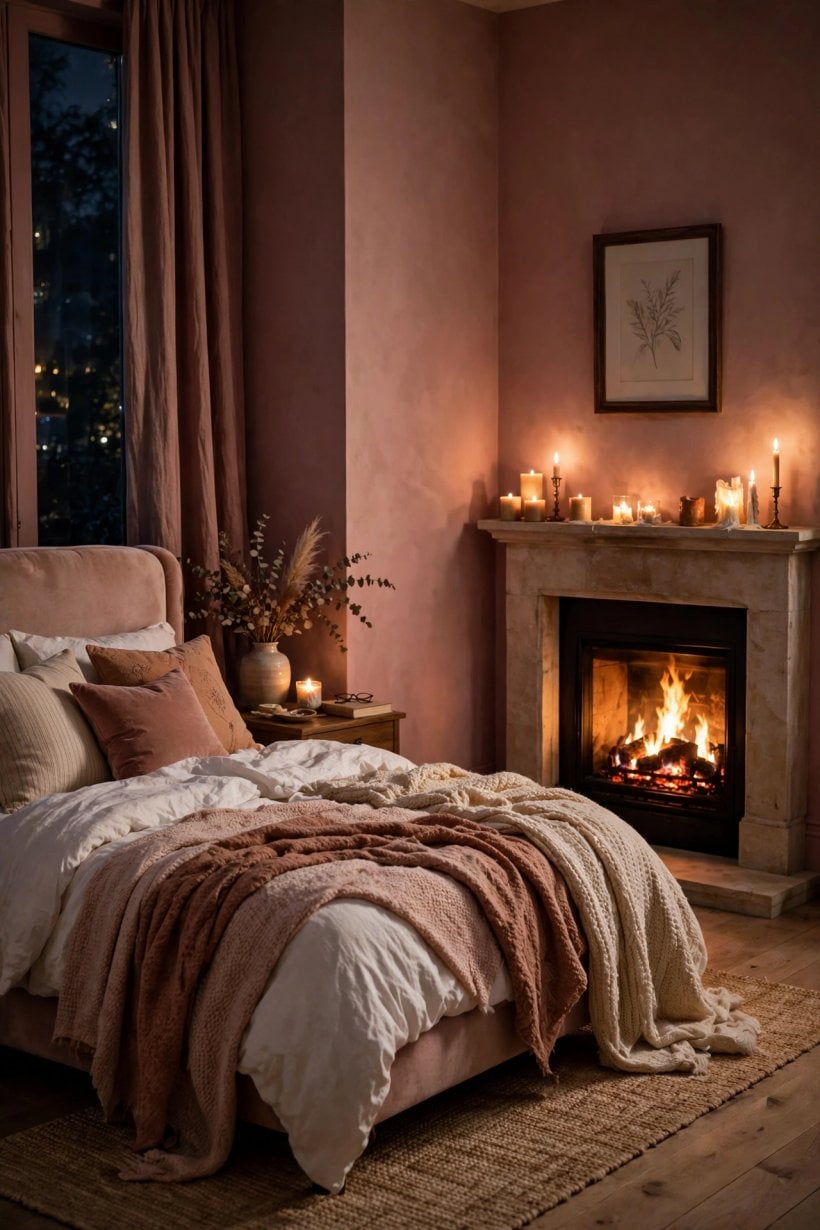
Small rooms do not rule out a fireplace; they rule out the wrong one. Compact electric, stove-style and faux designs dominate here, in the spirit of our modern tiny house bedroom layouts and small bedroom interior design ideas for tiny houses.
55. A Compact Electric Stove in the Corner
A small electric stove tucked into an unused corner gives a tiny bedroom a real focal point for almost no floor space. Its glow reads from the bed, its heat tops up the room, and it can move if the layout changes.
56. A Slim Wall-Hung Fire Above a Low Dresser Line
Mounting a slim electric fire on the wall keeps every inch of floor for furniture that stores things. Set it at a height that reads comfortably from the bed, and let the wall below hold a low dresser or bench.
57. A Faux Mantel with an Electric Insert
A narrow faux surround fitted with a small electric insert gives a small bedroom the full fireplace look — mantel shelf included — at a fraction of a masonry fireplace’s depth. It is a strong option for rentals that allow fixed decor changes.
58. A Double-Sided Fire Serving Bed and Bath in a Suite
In a compact suite, one double-sided electric fire shared between bedroom and bathroom makes both small rooms feel designed around something. Because it replaces part of a wall, it can save the space two separate focal points would have taken.
59. A Mini Wood Stove, Professionally Specified
Very small stoves exist for cabins, boats and tiny houses, and one can heat a small bedroom completely. This is professional territory: flue, hearth, ventilation and clearances must be specified and installed to manufacturer and local code guidance, without exception.
60. A Fireplace Media Wall in One Shallow Unit
Combining a low electric fire, television and shelving into one shallow media wall gives a small bedroom one organised feature instead of three. Keep its depth minimal and let the bed face a single calm composition.
61. A Tabletop Ethanol Flame for Occasional Evenings
A small tabletop ethanol burner can bring a real flame to a tiny room for an evening, then be stored away. It demands strict attention to ventilation, refuelling and supervision guidance, so many small bedrooms will rightly choose electric instead.
62. A Decorative Hearth Where No Fire Is Allowed
Where rules, leases or flues rule out any fire, a decorative hearth — surround, mantel, candles or a plant in the opening — still gives the bed a focal point, and can take an electric insert later.
63. A Raised Storage Platform with the Fire Built In
In tiny bedrooms, a low storage platform under or beside the bed zone can incorporate a slim electric fire on its face, combining drawers, sleeping space and focal point in one build. Ventilation for the appliance must follow its maker’s instructions exactly.
9. Lighting, Textiles and Restful Styling: Ideas 64–75
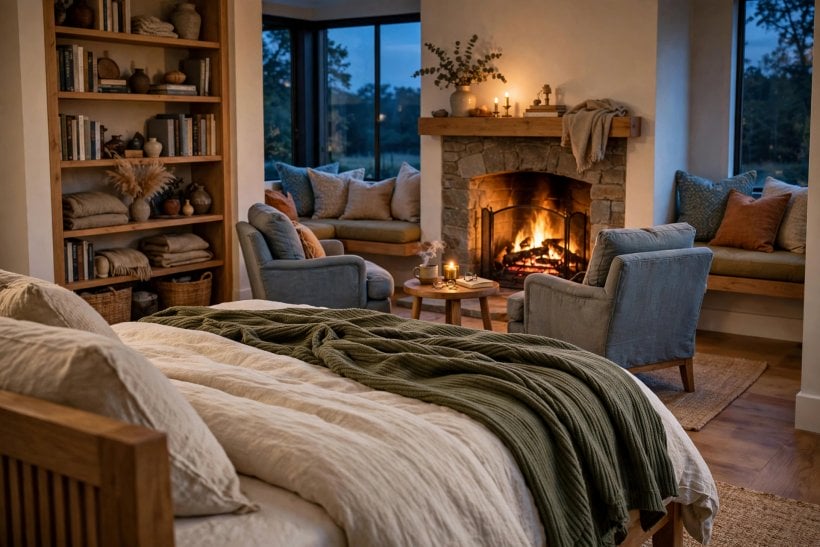
The last twelve ideas are the layers that decide how the room feels at 10pm: light, fabrics and the small rituals around a fire in a room made for sleep. Get these right and even a simple electric fire feels luxurious.
64. Layered, Dimmable Lighting Around the Firelight
Firelight should be one layer among several: dimmable lamps, a soft ceiling light and the flame let the room shift from dressing to reading to sleep. Warm-toned bulbs flatter skin and firelight.
65. Bedside Lamps That Balance the Fireplace Wall
Matching bedside lamps give the bed its own glow to balance the fireplace across the room, so neither end dominates. Their light also keeps the route to the door safe on nights when the fire is the only other source.
66. Linen Bedding in Natural, Fireside Tones
Washed linen in cream, oatmeal, clay or soft grey suits a fireplace bedroom’s relaxed mood. Natural fibres and layered weights also let you adjust warmth as the fire adds heat.
67. A Wool Throw and Cushions by the Chair
Wool throws and a couple of cushions at the reading chair make the fireside spot ready at any moment, and their texture echoes the surround’s brick or stone. Choose colours from the room’s palette rather than introducing a new one here.
68. A Rug Defining the Fireside Zone
A rug between the fire and the chair or bed marks out the fireside zone and softens sound in the room. Place and choose it in line with the fire maker’s guidance for materials near a hearth, keeping the hearth area itself clear.
69. Curtains That Soften the Room, Kept Well Clear
Full curtains add softness and darkness a sleep room needs. Their tracks, hems and tie-backs must keep fabric well clear of the fireplace, as your installer’s guidance requires.
70. A Low-Light Evening Routine
Dimming lamps as the fire settles creates a natural wind-down signal that bright overhead light destroys. Build the habit into the room: switches and dimmers reachable from the bed, and no harsh white light anywhere in the evening layers.
71. Crackle and Quiet Instead of Screens
The sound of a real fire, or the quiet of an electric one, pairs well with keeping screens out of the last hour before sleep. A bedroom planned around a fire and a chair makes that easier.
72. Flame Tones Echoed Gently in Accents
Repeating tiny amounts of amber, rust or warm gold in a cushion, a picture or a lamp shade ties the decor to the fire without turning the room orange. Keep the echoes small and scattered, so the real flame stays the strongest note.
73. Focused Reading Light in the Nook
A dedicated reading light — a shaded floor lamp or a directional wall light — makes the fireside chair genuinely usable for books, not just for sitting. Position it over the reader’s shoulder so pages are lit without glare competing with the fire.
74. Sleep First: The Fire as an Evening Feature
A bedroom fire should be part of the evening, not the night: follow the maker’s guidance, never leave a real flame unattended, and let the room cool and darken for sleep.
75. Summer Styling for an Unlit Fireplace
In warm months, dress the unlit fireplace: a plant, art books or unlit candles in the opening. The surround stays the room’s focal point, in its summer version.
10. Final Ideas and Checks
Before ordering, settle the heat-versus-ambience decision honestly. If the fire must warm the bedroom, compare it with the main system using our guide to heating a tiny house and its options, and size it with professional advice. If glow is the real goal, an electric or faux fire does that job more simply.
Safety checks come next, in general terms because the right numbers belong to your fire, building and local code. Use a wood stove clearance calculator only as a planning aid, then confirm clearances, hearth, ventilation and detectors with the manufacturer guidance and a qualified installer. Plan servicing from day one — sweeping for wood, servicing for gas, cleaning as the maker directs — and keep bedding, curtains, furniture and fuel well clear of heat.
Finally, check the unlit room: a bedroom fireplace spends most of its life unlit, so judge surround, mantel and chair as furniture first. If they make the room calmer in daylight, the evening firelight is a bonus already earned.
Final Considerations
A bedroom fireplace succeeds when its type, placement and surround are chosen for the room’s size, the building’s limits and how you actually live. A bedroom with fireplace should feel calmer than the same room without one — safer, softer in light, and better arranged around rest, reading and sleep. Start from the role you need, respect the safety guidance, and let styling follow.
Choose the version you will use happily and maintain properly — serviced wood or gas, a simple electric inset, or an honest faux surround. The best fireplace here is not the grandest; it is the one that fits your room and evenings, and still looks right on a bright morning, cold and unlit.

0 Comments