

An old farmhouse earns its charm slowly: floorboards that creak in the right places, a porch that catches the evening sun, and rooms furnished by generations rather than by a single shopping trip.
This collection breaks that charm into parts you can copy: porches, kitchens, vintage details, bedrooms, bathrooms and gardens, each with the pieces and finishes that make it work.
1. Old Farmhouse at a Glance
Farmhouse character is not a product you buy; it is a set of relationships between materials, proportions and patina. Natural wood, painted timber, iron, enamel, linen and stone do most of the work, while the layout stays practical: rooms arranged for muddy boots, big meals and long evenings. Use the table below to find the signature look for each part of the house, the hero pieces worth hunting for, and one easy win you can do this weekend.
| Room or zone | Signature look | Hero pieces | Easy win |
|---|---|---|---|
| Porch | Shaded, sociable, unhurried | Rocking chairs, porch swing, lanterns | Add potted herbs by the steps |
| Kitchen | Hardworking and gathered around a table | Farm table, apron-front sink, open shelves | Swap cabinet knobs for iron or wood |
| Living room | Beams, hearth and soft textiles | Stone or brick fireplace, worn leather chair | Layer a faded rug over boards |
| Bedroom | Calm, layered and uncluttered | Iron bed, quilts, a simple dresser | Hang linen curtains high and wide |
| Bathroom | Plain, bright and practical | Clawfoot tub, beadboard, pedestal basin | Change taps to a traditional style |
| Garden | Useful first, pretty second | Picket fence, vegetable beds, fruit trees | Edge one path with salvaged brick |
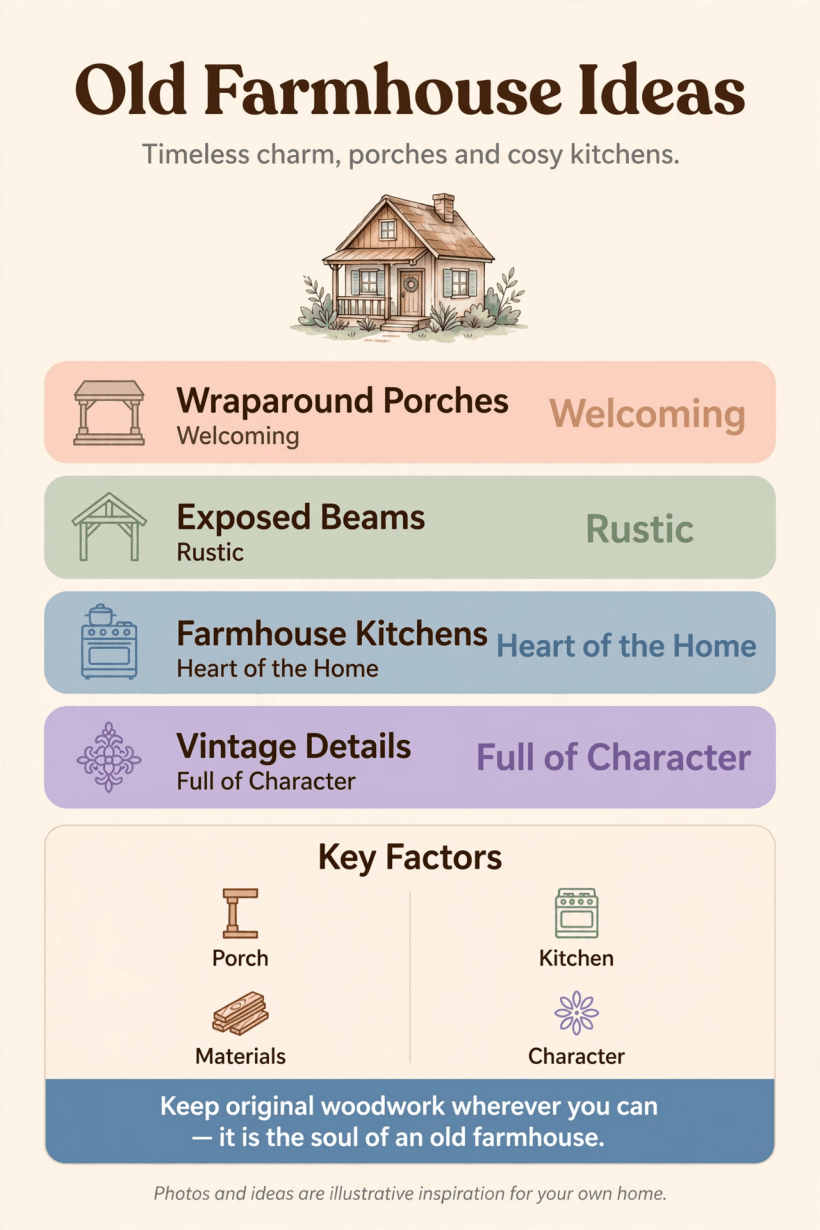
The farmhouse recipe at a glance: honest materials, practical layouts and pieces with a past, repeated gently from porch to garden.
A note on authenticity before we start: you do not need a house that is genuinely old, and you do not need antiques with proven histories. You need pieces with honest materials and a bit of wear, arranged as if the house is used every day. Mix one or two truly old finds with well-made new pieces in traditional shapes, and let time do the rest. Resist matching everything. A farmhouse that looks collected over years will always beat one decorated in a weekend, even if the weekend version cost more.
2. Porches That Welcome You Home
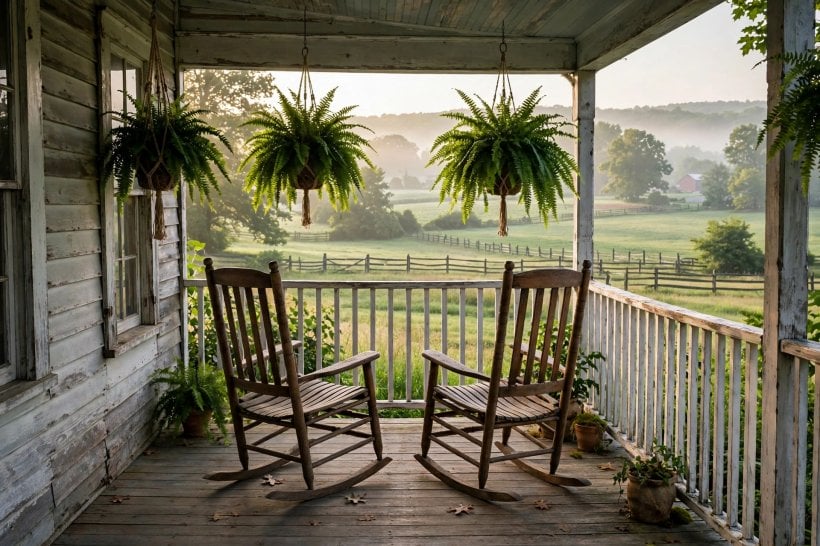
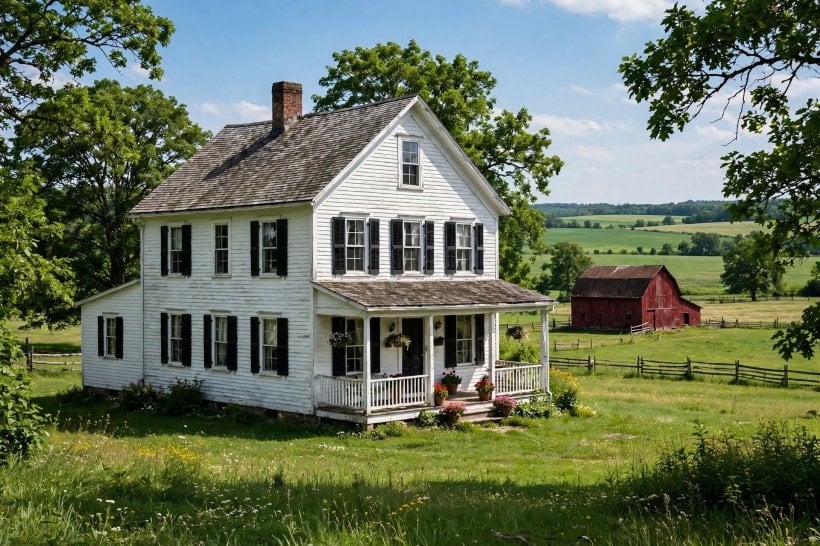
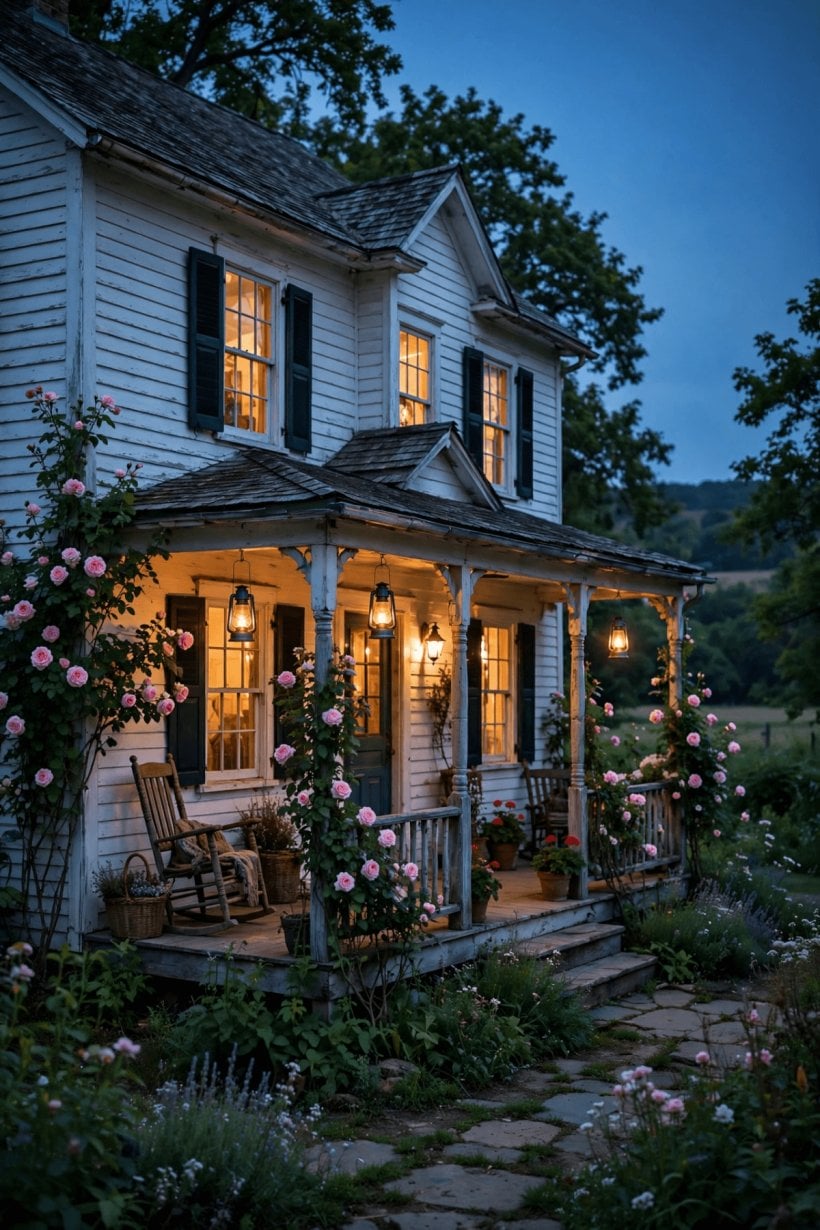
The porch is the farmhouse handshake. A wraparound or deep front porch, shaded by a simple roof on square posts, creates an outdoor room for rocking chairs, a swing and a row of boots by the door. Keep the furniture sturdy and weather-friendly, the cushions plain linen or ticking stripe, and the lighting warm: a lantern by the door and perhaps a ceiling fan where summers are hot, fitted and wired according to local guidance.
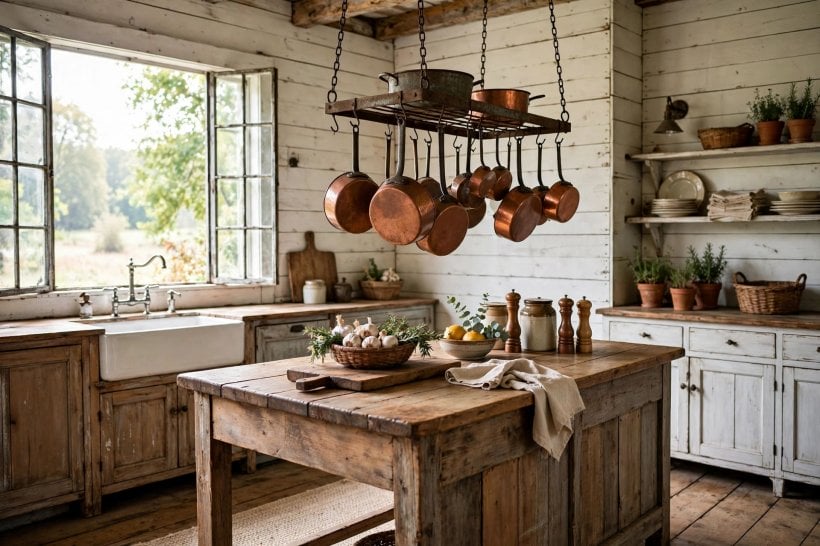
Details make the welcome. A worn bench for parcels and pumpkins, hooks for hats and dog leads, a boot scraper by the steps and a simple wreath on a painted door all say the house is lived in. Painted porch floors and ceilings in soft, dusty colours are a traditional touch; check exterior paint guidance for products suited to floors and weather. If you are planning the porch itself, these tiny house plans with screened porches show how a modest footprint still porches beautifully, and screened sections earn their keep wherever insects rule the evenings.
3. The Kitchen: Table First, Everything Else Second
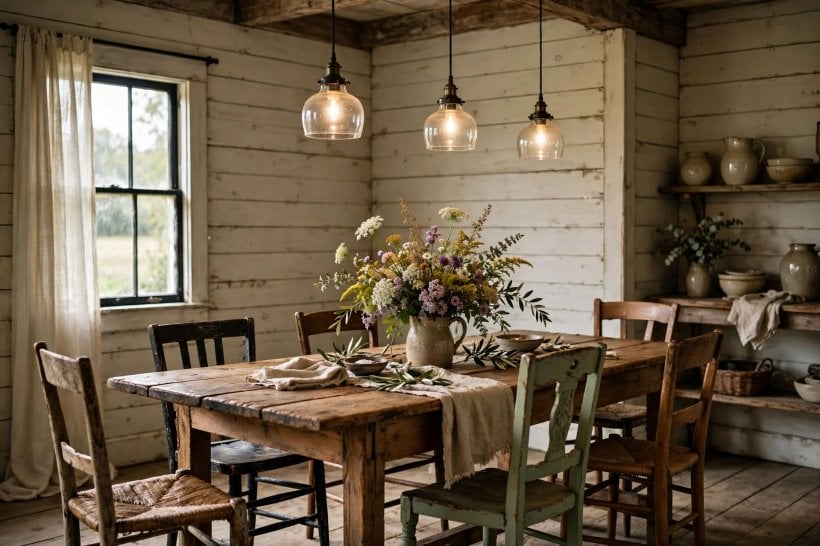
In a farmhouse, the kitchen is the house. Start with a generous table that seats family, neighbours and homework all at once, then arrange everything else around it. An apron-front sink under a window, open shelves or glazed cupboards for everyday dishes, and a range that looks as sturdy as it cooks on are the classic anchors. Freestanding pieces, a dresser for linens, a baker’s rack for jars, keep the room from feeling fitted and precious.
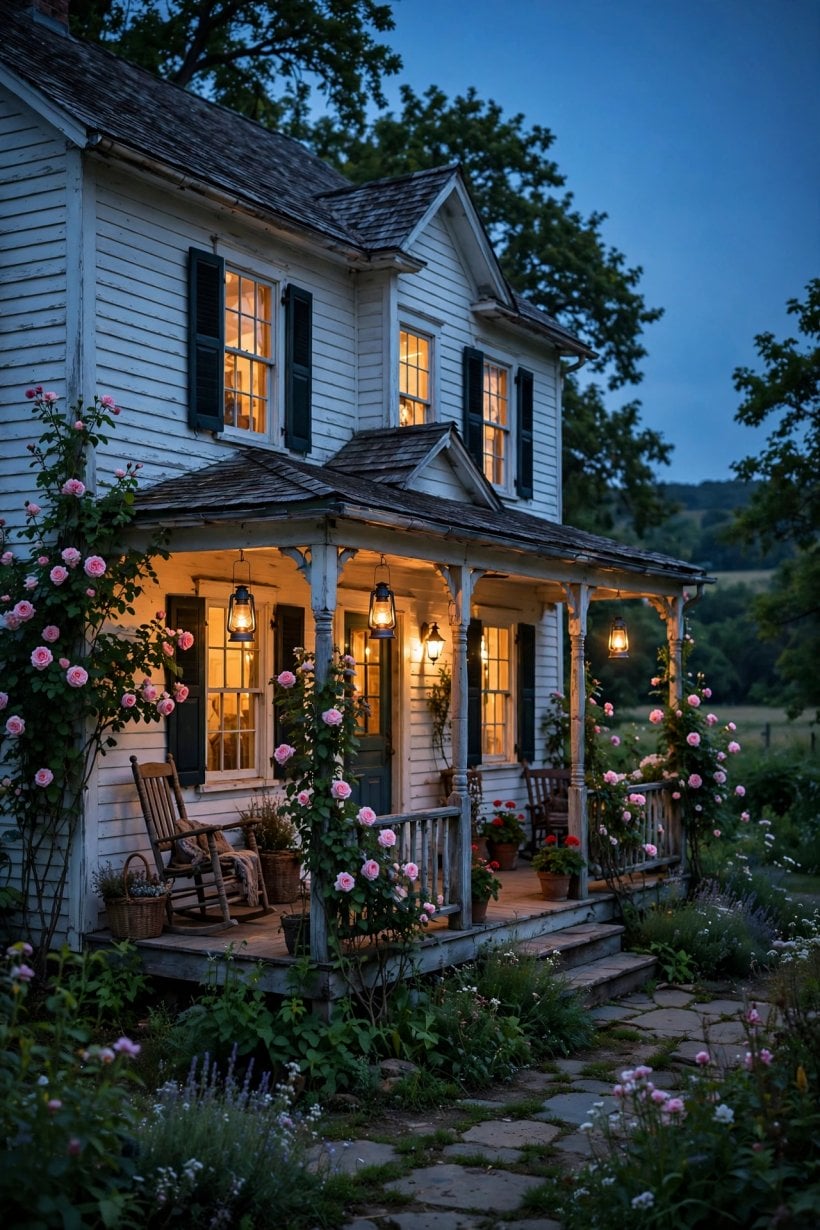
Materials stay plain and repairable: painted wood cabinets, timber or stone worktops, a big butler-style sink, and walls in washable paint or simple tile. Store food visibly in jars and crocks, hang pans where hands can reach them, and let a enamel kettle live on the hob. When planning a compact version, borrow the small-space discipline from these kitchen ideas for tiny houses and small spaces: every shelf earns its place, and nothing is stored that is not also used weekly. Add one soft thing, a runner, a linen curtain, a bowl of fruit, and the working kitchen becomes the warmest room you own.
Working zones matter more than matching finishes. Keep the sink, range and main preparation stretch within a few steps of each other, give knives, boards and oils one home near where food is chopped, and park a stool where a cook can sit to pod peas or supervise homework. A rail of hooks under a shelf, a plate rack that air-dries dishes, and a bin for compost by the back door are dull ideas that make daily cooking noticeably calmer, which is exactly the kind of beauty a farmhouse kitchen trades in.
4. Vintage Details That Do the Heavy Lifting
Small old things change a room faster than big new ones. Swap modern lever handles for iron or porcelain knobs, hang a schoolhouse-style pendant over the table, and choose visible, honest fixings: strap hinges, rim locks, hook-and-eye latches. Enamelware, stoneware crocks, galvanised buckets and worn cutting boards bring instant patina to shelves, and they all still work for a living, which is the point.
Hunt patiently and buy the best you can. Check salvaged pieces for soundness, lead paint and safe wiring before bringing them home, and have old electrical fittings checked and rewired by a qualified electrician rather than trusting aged cables. Ask sellers about a piece’s materials and condition, and favour things you can repair over things you can only dust. One genuinely worn treasure per room is enough; more can tip a home toward museum. Keep the background simple, plain walls, plain curtains, and let the details you have chosen carry the story without competition from busy patterns.
5. Living Rooms With Beams, Hearths and Linen
The farmhouse living room gathers around heat and light: a fireplace or stove as the anchor, seating pulled close in a rough circle, and textiles doing the softening. Exposed beams, whether original, reclaimed or carefully added, give the ceiling its structure; a stone or brick hearth gives the room its heart. Keep the palette chalky and natural: limewash tones, unbleached linen, worn leather and wool in faded checks or stripes.
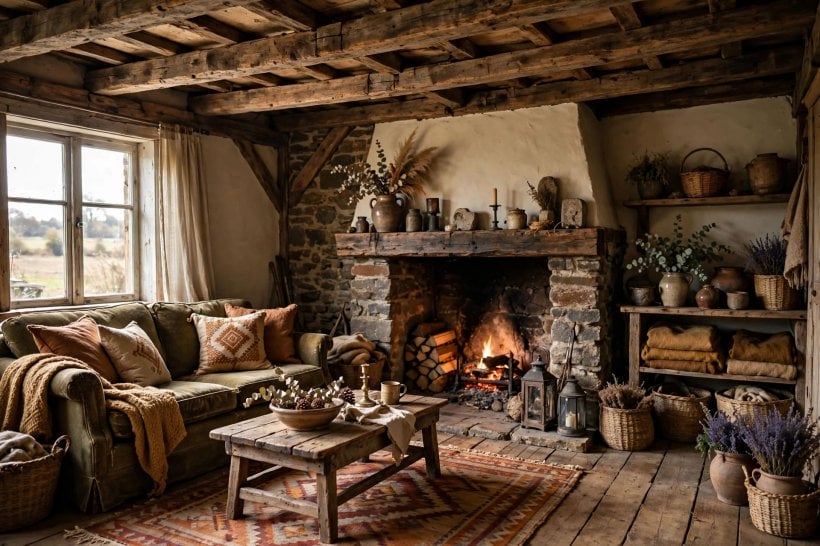
Furniture mixes ages without apology: a deep sofa in a washable slipcover, a farmhouse table doubling as a desk, a ladder for blankets, and shelves of books and baskets rather than ornaments. For bigger inspiration on rustic shells, these converted barn homes show beams and hearths at their grandest, while this guide to how to build a durable timber frame cabin explains the joinery behind the look. Light the room in layers, hearth glow, a reading lamp, a candle on the mantel, and keep the television, if there is one, smaller than the conversation.
Arrange the room for the way evenings actually happen. A small table within reach of every seat, a basket for firewood or knitting beside the hearth, and one chair that claims the best of the firelight will be fought over kindly for years. Keep a clear path from door to kitchen, because farmhouse living rooms are thoroughfares as much as retreats, and choose fabrics you can wash without ceremony. When the room works for muddy paws, tray suppers and afternoon naps all at once, the styling has done its job and can stop trying.
6. Bedrooms: Iron Beds, Quilts and Quiet
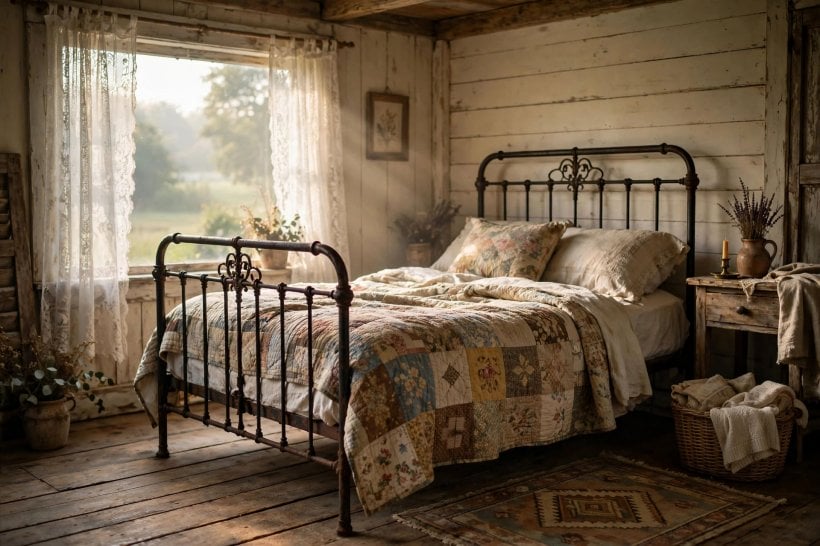
A farmhouse bedroom is a retreat from ornament. The iron or simple wooden bedstead is the hero, dressed in layers that can change with the weather: cotton sheets, a wool blanket, and a quilt with a history, real or lovingly imitated. Keep surfaces spare: a dresser, a chair for clothes, a small rug to land on, and curtains that soften early light without blacking out the morning entirely.
Colour leans pale and sleepy: whitewash, faded blue, sage, and the natural tones of wood and basketry. Store out-of-season quilts in a blanket box at the foot of the bed, hang one good picture rather than a gallery, and let a jug of garden flowers do the decorating in summer. Families planning bedrooms in compact old houses can borrow layouts from these 2-bedroom tiny house floor plans, where every room is planned around rest and storage rather than show. The test of a farmhouse bedroom is simple: it should look as good unmade as made, and it should smell faintly of laundry dried outdoors.
7. Bathrooms: Clawfoot Tubs and Beadboard
Farmhouse bathrooms mix the sanitary with the salvaged. A clawfoot or simple freestanding tub, a pedestal basin or a vanity made from an old washstand, and taps in traditional silhouettes set the tone. Beadboard or tongue-and-groove cladding, painted in a washable finish, warms walls that tile alone would chill, and a timber floor, properly sealed for wet rooms or convincingly imitated, keeps the room in the family of the house.
Keep the practicalities modern even when the looks are not: good water pressure, safe electrics and proper ventilation matter more than any vintage fitting, so have plumbing and wiring work done by qualified trades and check product guidance for wet-room suitability. Storage hides in baskets, a linen press or a mirrored cabinet with a wooden frame. Finishes for walls in steamy rooms deserve care; these lightweight interior wall finishes for tiny houses cover options that keep character without weight. Finish with thick towels, a wooden bath bridge and a plant that likes the steam, and the plainest bathroom turns quietly luxurious.
Small rituals finish the room. A stool beside the tub for a book and a cup, hooks rather than bars so towels dry in soft heaps, and a window treatment that gives privacy without stealing daylight all cost little and change every bath. Keep cleaning simple with surfaces that forgive splashes, and store only what the room uses: spare linen in the press, not the bath’s edge. A bathroom that is easy to wipe down on a Sunday night will still be looking honest and calm for guests on Friday.
8. Floors, Walls and Woodwork With Wear
Original boards are the farmhouse treasure. Wide planks with gaps, patches and a century of footsteps tell the house’s story underfoot, so restore before you replace: sand gently, accept the dips, and finish with products the manufacturer recommends for old timber. Where boards are gone, new wide-format timber or convincing alternatives, laid simply and finished matt, will settle in quickly once rugs and furniture move in.
Walls favour texture over pattern: limewash or chalky paint, tongue-and-groove or shiplap in working rooms, and honest plaster left slightly imperfect elsewhere. Woodwork, skirting, architraves, doors and stairs, painted in a soft off-white or a deep heritage colour, frames every room. Outside, the same honesty applies to weatherboard and trim; these tiny house siding options in cedar, metal and composite show how cladding choices change a small home’s whole expression. The rule throughout: let materials look like themselves, and let wear show where hands and feet have earned it.
9. Gardens, Yards and Useful Outbuildings
A farmhouse garden feeds people first. Vegetable beds in plain timber or brick, a herb patch by the kitchen door, fruit trees against a sunny wall and a compost corner that is tidy rather than hidden: usefulness is the aesthetic. Flowers belong too, in cottage drifts along paths and around the porch, hollyhocks, roses and whatever self-seeds happily in your soil and climate.
Structure the yard simply: a picket or post-and-rail fence, a gravel or brick path, a bench under a tree and a shed or small barn, weathered to silver, for tools and firewood. Keep edges soft and maintenance realistic; these tiny house landscaping ideas and this collection of backyard landscaping ideas both show how planting, paths and seating make small grounds feel generous. Chickens, a dog asleep on the porch and washing on the line are not props here; they are the life the whole look was built to hold, and the garden should serve that life before it serves any photograph.
Season by season, keep the yard’s jobs small and regular. Mend one fence run in spring, mulch beds before summer heat, split and stack firewood where it can dry under cover, and leave seed heads standing for winter birds where tidiness allows. An outbuilding with a sound roof and a swept floor earns more affection than a prettier one that leaks, so check roofing, gutters and door hinges each year and follow local guidance for any structural repairs. Usefulness, maintained gently, is what keeps a farmyard charming rather than merely picturesque.
10. Collecting Slowly: The Art of Not Finishing
The last farmhouse skill is patience. Rooms in these houses were never finished; they accumulated. Adopt the same habit: live with a room bare for a season, notice what it actually needs, then hunt for the piece with the right size, material and wear. Auctions, salvage yards, farm sales and family hand-me-downs all beat next-day delivery for soul, and a piece with a story you know is worth two you merely like.
Display collections the farmhouse way: grouped, useful and unprecious. Jars on a kitchen shelf, baskets by the hearth, quilts folded on an open rail, hats on pegs by the door. Edit kindly each year, passing on what no longer earns its place, because clutter is not character. These tiny house decorating ideas make the same point in small spaces: fewer, better-loved things, arranged where hands actually reach them. Over time the house starts to decorate itself, each object a small souvenir of a life being lived in it.
Final Considerations
Chase the life, not the look. Begin where the house works hardest, the porch, the kitchen table, the bed you sleep in, and choose honest materials, practical layouts and pieces that can be repaired rather than replaced. Let one or two details per room carry the vintage story, keep backgrounds plain, and add slowly as finds and budgets allow. Whether your farmhouse is two centuries old or a new build with an old soul, the recipe holds: wood, iron, linen and stone, worn in by use and loved without preciousness. That is a home that will never date, because it was never decorated for a date in the first place. Start with one room, live in it properly, and let the house tell you what it wants next.

0 Comments