

A great deck railing does more than guard the edge. It sets the mood of the whole house behind it. These arts and crafts wooden deck railing styles lean on honest timber, square lines and joinery that looks built, not bought.
Work through the posts, balusters and top rails below, then borrow the finish, stair and seating details that suit your own deck, porch or tiny-house platform.
1. Arts and Crafts Wooden Deck Railing Styles at a Glance
Start with the family that fits your house, then fine-tune the details. Craftsman railings share a recognisable recipe: sturdy square posts, honest square balusters, a generous top rail you can lean on, and proportions that feel grounded rather than delicate. The table below compares the main families in this collection, so you can match a railing to your deck size, your exposure to weather and the amount of upkeep you genuinely want.
| Railing family | Best for | Balusters | Top rail | Upkeep |
|---|---|---|---|---|
| Classic Craftsman grid | Traditional homes and wide decks | Square, evenly spaced | Wide flat cap | Seasonal wash, stain as needed |
| Tapered-post statement | Entrances and covered porches | Square or panel infill | Chunky cap with a small overhang | Check post bases every year |
| Panel-and-post | Privacy and shelter from wind | Solid or slatted panels | Slimmer cap rail | Keep panels clear of soil |
| Wood and metal mix | Smaller decks that need light | Slim dark metal within a wood frame | Warm wood cap | Wipe metal, refresh wood cap |
| Bench-integrated rail | Family decks and entertaining | Square balusters behind seating | Extra-wide cap used as a perch | Tighten bench fixings seasonally |
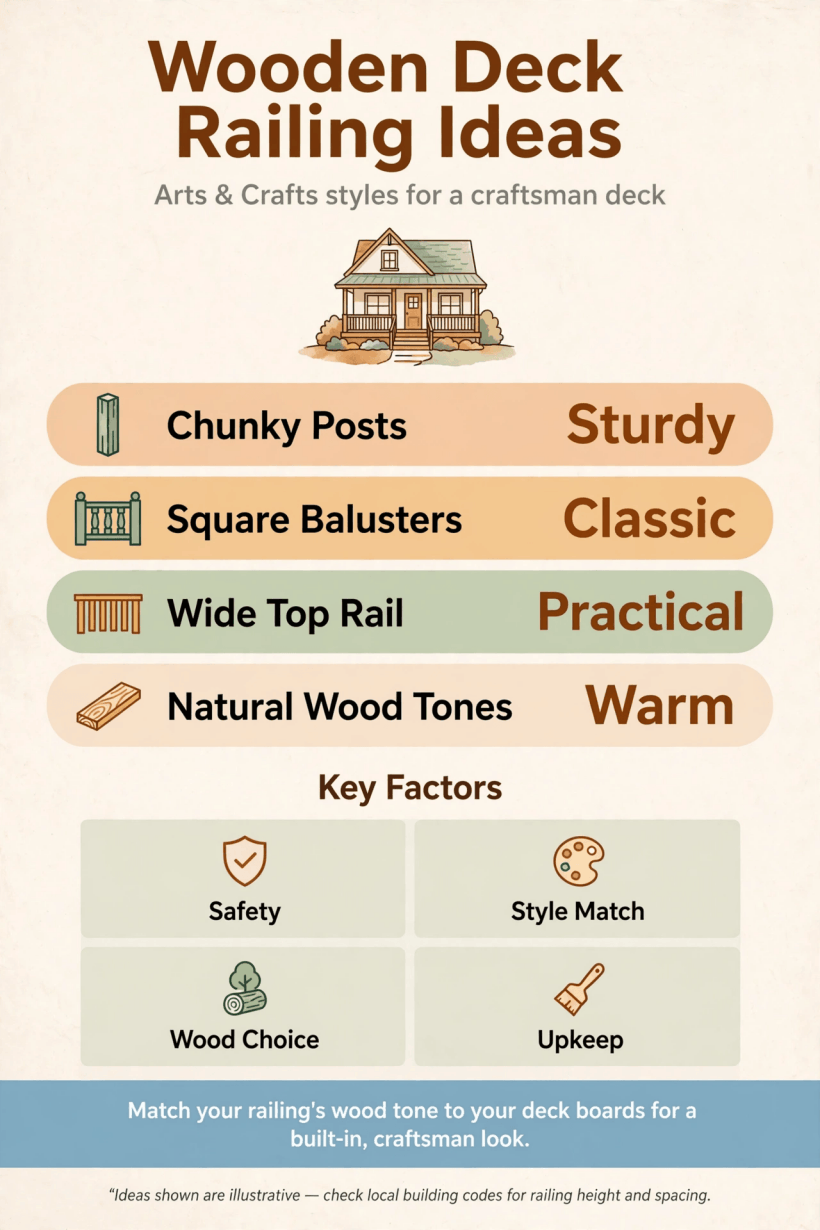
The Craftsman recipe at a glance: strong posts, square balusters, a wide cap rail and details that repeat calmly from bay to bay.
Whichever family you choose, keep three checks in view. First, safety: guard height, baluster spacing and handrail rules vary, so confirm the current requirements with your local building department before you build. Second, water: every design below sheds rain, protects end grain and lets timber dry. Third, rhythm: the same post spacing, cap profile and finish repeated around the deck is what makes a railing feel crafted rather than improvised. Read the table like a shopping list rather than a ranking. The best family is the one whose upkeep column matches the time you will honestly give it, whose silhouette suits your house, and whose details you can repeat consistently around every corner of the deck.
2. Start With the Bones: Posts, Bays and Honest Proportions
Every convincing Craftsman railing starts with its posts. Square newel posts, set at regular bays and anchored firmly to the deck frame rather than just the decking boards, give the railing its calm, architectural rhythm. Keep bay widths consistent around corners and along stairs, and let the posts read slightly proud of the rails between them. That small shadow line is a signature of the style, and it costs nothing but care when you set out the work.
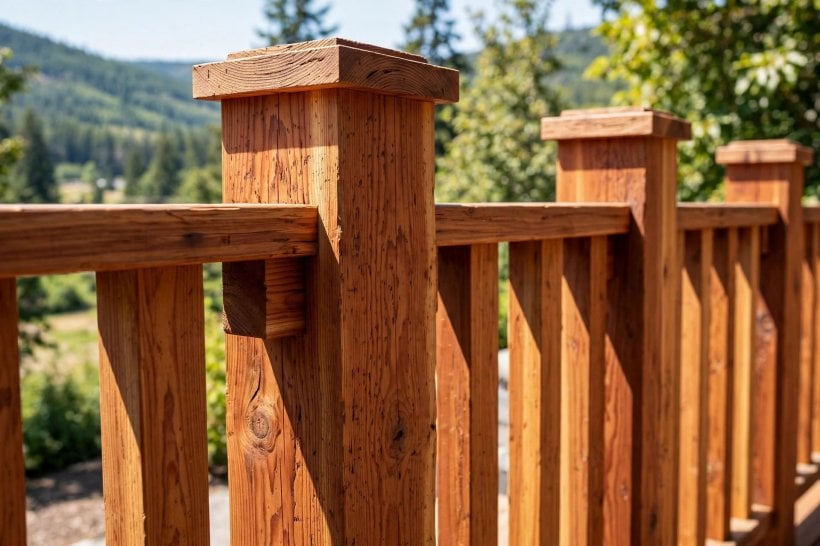
Proportion matters more than decoration. A post that is too slender makes a wide deck look flimsy, while an oversized post can crowd a small platform. As a working habit, mock up one full bay with offcuts before committing: post, top rail, bottom rail and a run of balusters. Stand back from the garden and judge it at distance. The same patience pays off on bigger timber projects too, as shown in this guide to how to build a durable timber frame cabin, where setting out carefully always beats fixing mistakes later.
Timber choice shapes those bones. Naturally durable species and properly treated softwoods are the usual candidates for exterior railings, and each weathers, takes stain and ages in its own way. Ask your timber supplier what is recommended for exterior joinery in your climate, check the treatment and care guidance that comes with the material, and keep offcuts for test staining. A railing built from timber suited to its weather will hold its lines far longer than one chosen on colour alone.
3. Tapered and Chamfered Posts That Make an Entrance
The tapered post is the Craftsman calling card. Posts that are wider at the base and narrower at the top, sometimes sitting on a short masonry or boxed plinth, give a porch or deck entrance a sense of permanence borrowed from classic bungalow verandas. You can build the taper with boxed construction, cladding a structural post with boards mitred at the corners, which keeps the post stable while achieving the silhouette.
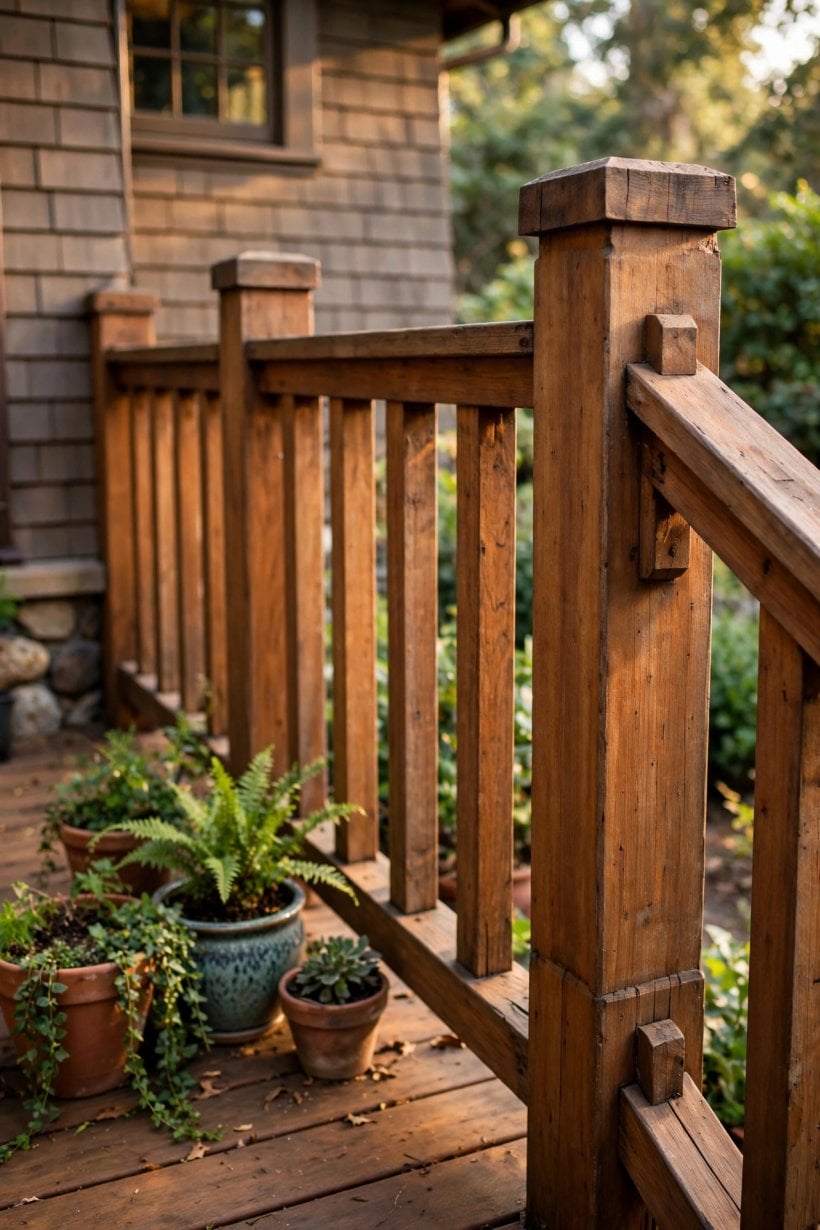
Chamfered edges are the quieter cousin of the taper. A simple angled cut along the top edges of a square post, or a stopped chamfer partway down, softens the timber and catches light beautifully in the evening. Pair tapered posts at the stair or gate with plain square posts along the run, so the entrance reads as the punctuation mark. If your deck wraps toward a screened sitting area, borrow the sheltered proportions from these tiny house plans with screened porches, where posts carry both roof and railing in one tidy system.
4. Balusters: Square, Evenly Spaced and Easy to Live With
Craftsman balusters are almost always square. Turned spindles belong to other styles; here, straight square pickets, evenly spaced and aligned top and bottom, create the grid that defines the look. Grouping balusters in twos or threes with slightly wider gaps between groups is a traditional variation that adds pattern without fuss, and it looks especially good on longer runs where a plain rhythm might feel monotonous.
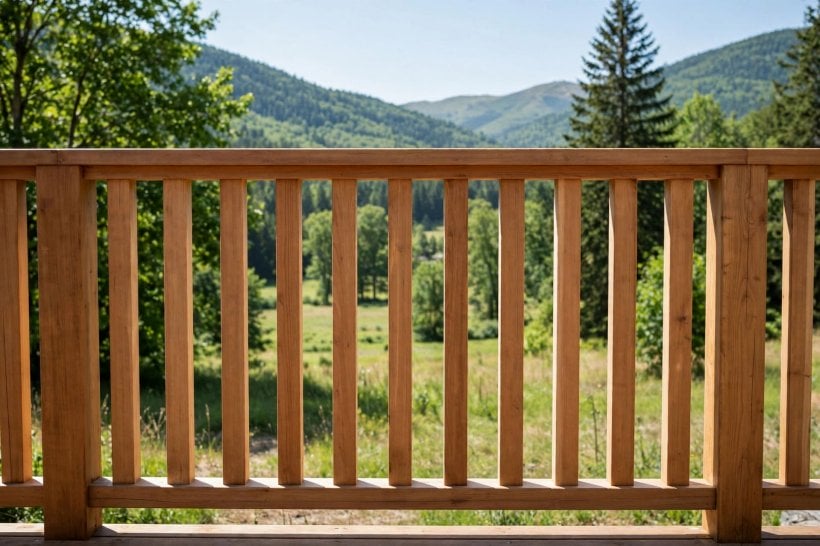
Spacing is a safety question as much as a visual one. Rules about the maximum gap between balusters, and about guards on raised decks, differ between areas and change over time, so check the current guidance with your local building department or a licensed builder before you cut anything. Practically, balusters fixed between a top rail and a bottom rail raised slightly off the deck boards are easiest to sweep under, easiest to repaint, and least likely to trap leaves and moisture against the timber.
Think about the view through the balusters, too. From a seated position inside the house, a regular grid reads as a calm screen, while grouped balusters open small windows onto the garden. On decks used by children or pets, closer, simpler spacing is usually the wiser and calmer choice, and it also makes the railing feel more substantial from the street. Whatever pattern you settle on, draw it full-size on a story pole or a length of scrap first, so the rhythm at corners and gates works out on paper rather than in finished timber.
5. Top Rails and Wide Caps Worth Leaning On
If one element invites touch, it is the top rail. A wide, flat cap rail, comfortably broad enough for a coffee mug, a plant pot or a leaning elbow, is pure Craftsman practicality. The cap usually overhangs the posts and baluster line slightly on both sides, which throws rainwater clear of the joints below and creates the strong horizontal line the style is known for.

Build the cap from the straightest boards you have, join lengths over posts rather than mid-bay, and round or ease the outer edge so it feels kind under a forearm. Where the cap meets a post, a small step or shadow gap looks intentional even when cuts are not perfect. Seal the end grain at every cut, because the cap takes the worst of the sun and rain. On stair runs, the cap gives way to a shaped, graspable handrail, covered in section seven, but keep the same timber and finish so the two read as one family.
6. Benches, Planters and Gates That Belong to the Railing
The most-loved Craftsman decks treat the railing as furniture. A built-in bench along one edge, its back formed by the railing itself, turns the perimeter into seating without eating floor space. Keep the bench seat at a comfortable height, brace it independently of the balusters, and repeat the cap profile on the bench back so the joinery language stays consistent around the deck.
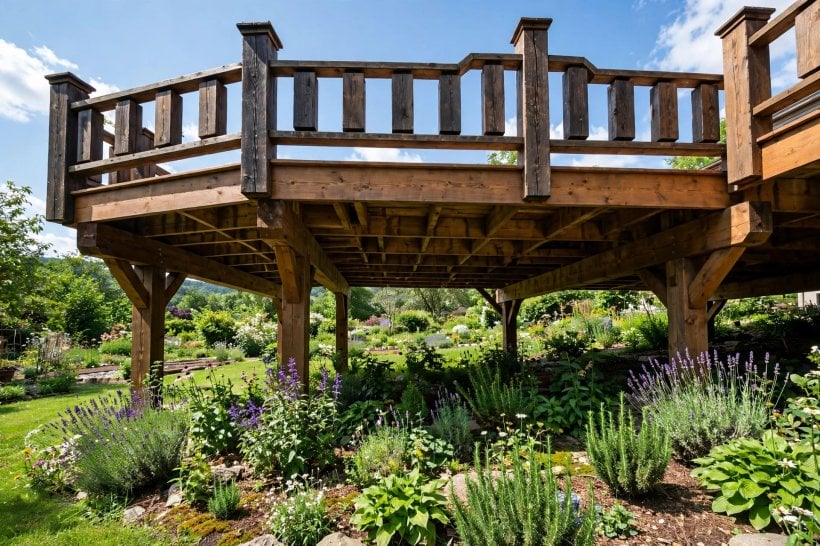
Planter boxes hung inside the rail, a simple gate with matching square pickets, and even a low section of railing designed as a serving ledge beside the grill all extend the same idea. Plant with the same relaxed confidence you would use in the beds below the deck; these tiny house landscaping ideas show how planting softens hard edges. For evenings, a railing bench pairs naturally with the kind of gathering spots in this round-up of fire pit seating with boulders and stump logs just beyond the deck boards.
Gates deserve the same care as the railing itself. Build the gate frame square and braced, hang it on exterior-rated hinges sized for the gate’s weight, and choose a latch that small hands and garden gloves can both manage. Follow the hardware manufacturer’s fitting guidance, leave a sensible gap for seasonal timber movement, and check the swing each spring. A gate that closes sweetly, year after year, is one of those small details that makes a deck feel genuinely well made.
7. Stairs, Landings and Changes of Level
Stairs are where railings earn their keep. Carry the same post-and-baluster language down the flight, with newel posts at the top, at any landing and at the foot, and a continuous handrail that a hand can grip without interruption. Angled cuts where rails meet stair posts are the fiddliest part of the whole build, so dry-fit each junction and accept small shadow gaps rather than forcing joints that will open with the seasons anyway.
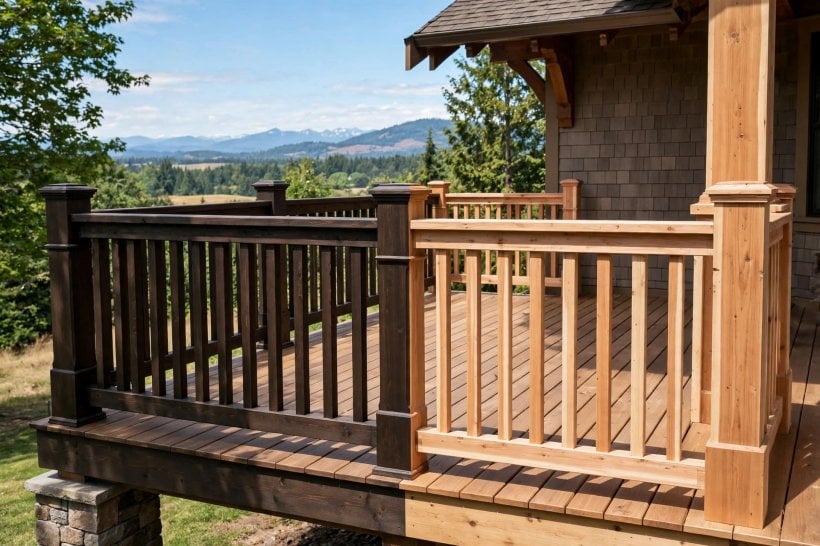
On multi-level decks, let each level keep the same railing height above its own boards and the same cap detail, so the steps between levels feel like a deliberate cascade rather than a compromise. Wide, shallow garden steps can sometimes use a low parapet-style rail or a planted edge instead of a full guard, subject to local rules. Compact yards benefit from flexible thinking, and this guide to how to build a foldable outdoor deck shows how moving parts and careful edges help small outdoor spaces work harder.
8. Finishes: Stain, Paint and Honest Weathering
Finish decides whether a wood railing looks crisp, rustic or quietly invisible. Clear and lightly tinted stains keep the grain centre stage and suit cedar-toned decks; semi-transparent stains add colour while still reading as timber. Paint, traditionally in deep green, brown or the trim colour of the house, gives the most unified, architectural result and hides mixed timber, but it asks for thorough preparation and periodic repainting.
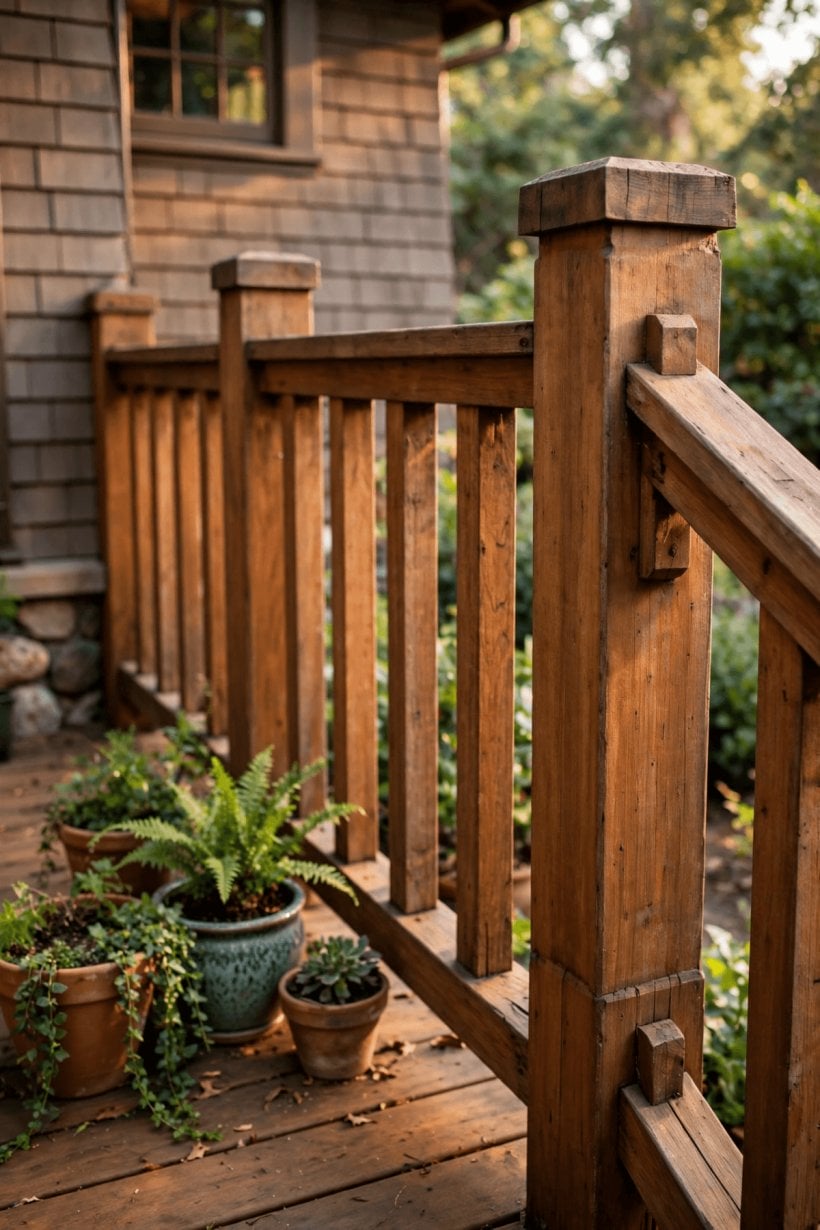
Whatever you choose, coat every face you can reach before assembly, pay double attention to end grain and the tops of posts, and keep the bottom rail and post bases clear of trapped soil and leaf litter. Let new pressure-treated timber dry before finishing, and follow the finish manufacturer’s guidance on preparation and recoat timing rather than folklore. Coordinating the railing colour with the house is easier when you think of the exterior as one palette, an approach echoed in these tiny house siding options in cedar, metal and composite.
Build a simple maintenance rhythm around the seasons. Wash the railing down in spring, check post bases, cap joints and stair fixings while you work, and touch up worn finish on the cap before winter weather arrives. Note which faces fade fastest, because those are the faces that will want attention first next year. Fifteen unhurried minutes with a brush, twice a year, will keep a wood railing looking crafted for far longer than one heroic rescue weekend every five years.
9. Mixing Wood With Metal or Cable, Carefully
A Craftsman frame can welcome slimmer infill without losing its soul. Black metal balusters inside a chunky wood frame keep the strong posts and cap while opening views and cutting visual weight, which helps on decks overlooking a garden or slope. Cable runs are the most open option of all, but they shift the look toward contemporary, so keep the wood frame especially generous if you want the Craftsman character to survive.
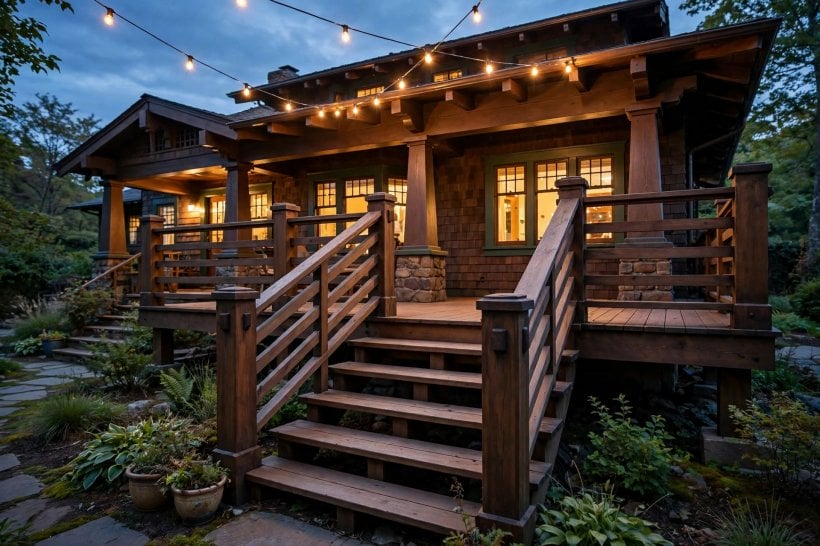
Whichever infill you pick, the rules stay the same: confirm spacing and guard requirements locally, choose fixings rated for exterior use with your timber, and check with the cable or baluster manufacturer for tensioning and spacing guidance rather than guessing. Mixed materials also age differently, so plan how each will be cleaned and refreshed. Done thoughtfully, the hybrid railing keeps the honest timber bones that make the style timeless, while suiting modern decks that need light, air and a longer view.
10. Small Decks, Porches and Tiny-House Platforms
Small decks forgive nothing, so every railing decision shows. Fewer, well-spaced bays look calmer than many short ones; a slightly slimmer cap keeps proportions kind; and a bench-integrated rail can remove the need for loose chairs altogether. On porches, align railing posts with the porch columns above so loads and lines stack neatly, and keep a clear, welcoming gap at the steps rather than gating the whole width.
Tiny-house platforms add their own twist: the deck may be the home’s only outdoor room, its entrance stair and its mudroom all at once. Borrow space-smart thinking from these tiny house floor plans with rooftop decks, and consider whether part of the platform could fold or flex as in these folding deck designs for tiny homes. Keep the Craftsman recipe intact even at miniature scale: square posts, a cap worth leaning on, and one repeated detail, such as a chamfer, that ties the little deck to the little house.
Comfort at the edges matters at every scale. Make sure the handrail runs continuously where older guests and young children will reach for it, keep the route from gate to door free of planters and stored clutter, and light the steps in a way that suits the house, following local electrical guidance for outdoor fittings. A small deck that is easy to arrive at, easy to sit on and easy to leave after dark will be used daily, which is the whole point of building it well.
Final Considerations
Build the railing you will enjoy maintaining. Choose the family from the table in section one, mock up a single bay before committing, and confirm guard, spacing and handrail requirements with your local building department, because those rules, not style blogs, have the final say. Protect end grain, let water escape, and repeat a few honest details, post, baluster, cap and finish, until the whole deck feels of a piece. A Craftsman railing is not about ornament for its own sake. It is about timber, proportion and care, and a place at the edge of the deck where everyone naturally gathers, mug in hand, at the end of the day. Start with one well-built bay, live with it for a weekend, and then let it teach the rest of the deck how to behave.



0 Comments