

Two kitchens can choose the same quartz and still receive very different quotes. The difference is rarely mysterious. It usually comes down to the slab, the layout, the edges and the amount of careful labour hiding behind a seemingly simple surface.
This guide walks through each cost driver in plain language, so you can spot what is pushing a quote up, what could bring it down, and where spending more is genuinely worth it.
1. Start With the Big Picture
Understanding quartz countertops cost starts with one simple truth: you are not only buying a surface. You are paying for material, measuring, templating, cutting, polishing, delivery, fitting and finishing, all wrapped into a single figure. When a quote feels high, one or more of those stages is doing the heavy lifting, and the sections below help you identify which one.
Ask any supplier to explain a quote in layers rather than as one lump sum. Which part is the slab itself? Which part is fabrication? Which part covers removal of the old counters, plumbing disconnections or extra visits? Clear answers make quotes easier to compare, and they reveal where a small change in the plan could soften the total without spoiling the finished kitchen. If you are planning the room from scratch, our guide to tiny house kitchen design ideas shows how much layout alone can change what a surface needs to do.
| Cost factor | Pushes the price up when… | Pushes the price down when… |
|---|---|---|
| Slab choice | The colour or veining sits in a premium range | You choose a standard, widely stocked colour |
| Amount of material | The kitchen is large, or an island needs a full extra slab | Runs are shorter and offcuts can be reused |
| Thickness and edges | You pick a thicker look or a detailed edge profile | You keep a simple, clean edge finish |
| Cutouts and seams | There are several sinks, hobs and joins to shape | The layout needs few cutouts and minimal seams |
| Removal and prep | Old counters, tiles or plumbing need extra work first | The space is clear, level and ready to template |
| Fitting complexity | Access is tight, walls are uneven or levels need correcting | The room is straightforward and everything is ready |
| Finishing touches | Upstands, splashbacks and drainer grooves are added | The design keeps extras to a minimum |
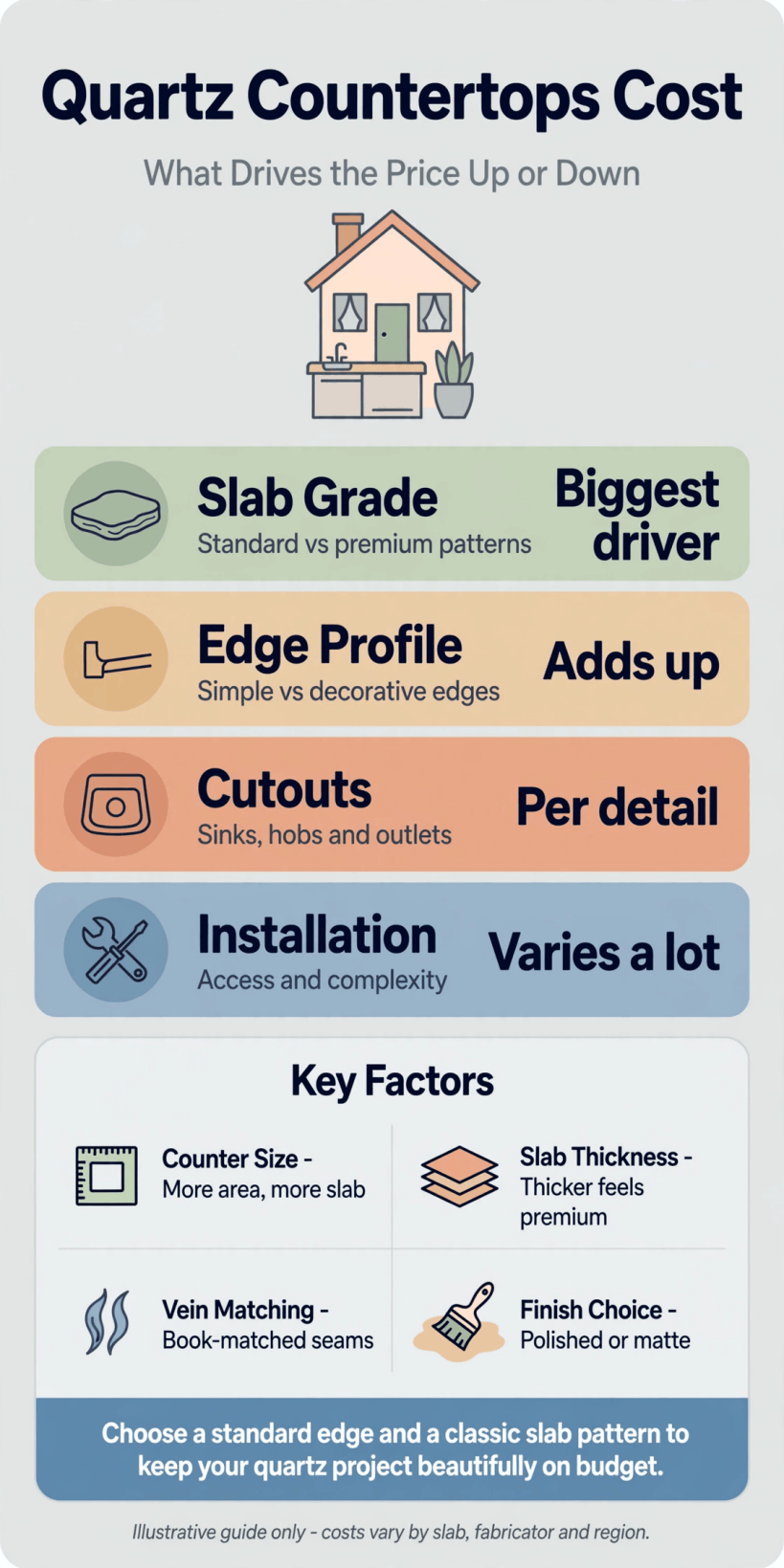
A quick visual summary of the choices that shape a quartz counter quote, from slab selection to fitting day.
Keep this table beside you when quotes arrive. Tick off which column each kitchen falls into, factor by factor, and the pattern usually explains the gap between the cheapest and dearest estimate. A kitchen that lands on the left-hand side again and again will always cost more, whatever supplier you choose, while one full of right-hand answers gives you room to negotiate or to upgrade a single favourite feature.
2. The Slab Itself: Range, Brand and Finish
The slab is normally the single biggest ingredient in the bill. Quartz surfaces are manufactured rather than quarried, but ranges still vary widely. Standard colours produced in large volumes tend to sit at the gentler end, while dramatic veining, book-matched patterns and designer collaborations usually command more. The finish matters too: polished surfaces are the familiar default, while honed or textured finishes can add a premium because they are produced in smaller runs.
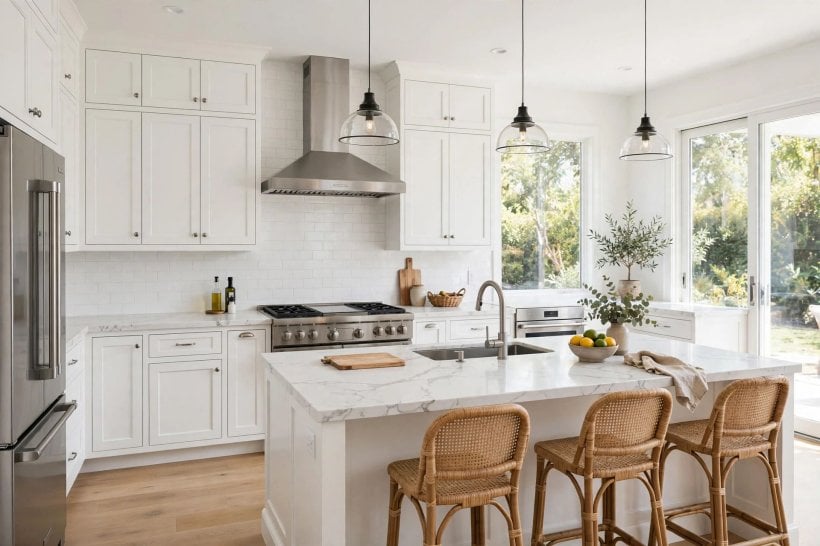
- Standard colours: soft whites, greys and stone-look designs are widely stocked and usually the kindest to a budget.
- Statement veining: bold marble-style patterns often sit higher because matching the pattern takes extra care.
- Dark and dramatic shades: deep tones can show marks more readily, so ask about upkeep before committing.
- Sample versus slab: always view the largest sample you can, because a small swatch hides how the pattern repeats.
- One range, several names: similar colours appear across brands, so compare like with like when quotes differ.
None of this means the dearest slab is the best choice. A mid-range colour that suits your cabinets and light will look expensive once fitted, while a premium pattern squeezed into a layout that wastes half the slab is poor value. Think of the slab budget as one ingredient in the whole recipe, and save a little headroom for the fitting details that decide how polished the result feels.
3. Colour and Pattern: Why Looks Change the Labour
Colour affects more than mood. Strongly veined quartz needs pattern matching at seams and corners, and that careful alignment takes skilled time. Fabricators may need to plan cuts so veins flow across an island or turn a corner gracefully, which can mean using more material and discarding awkward offcuts. Plainer designs are far more forgiving, because a seam can sit almost anywhere without breaking a pattern.
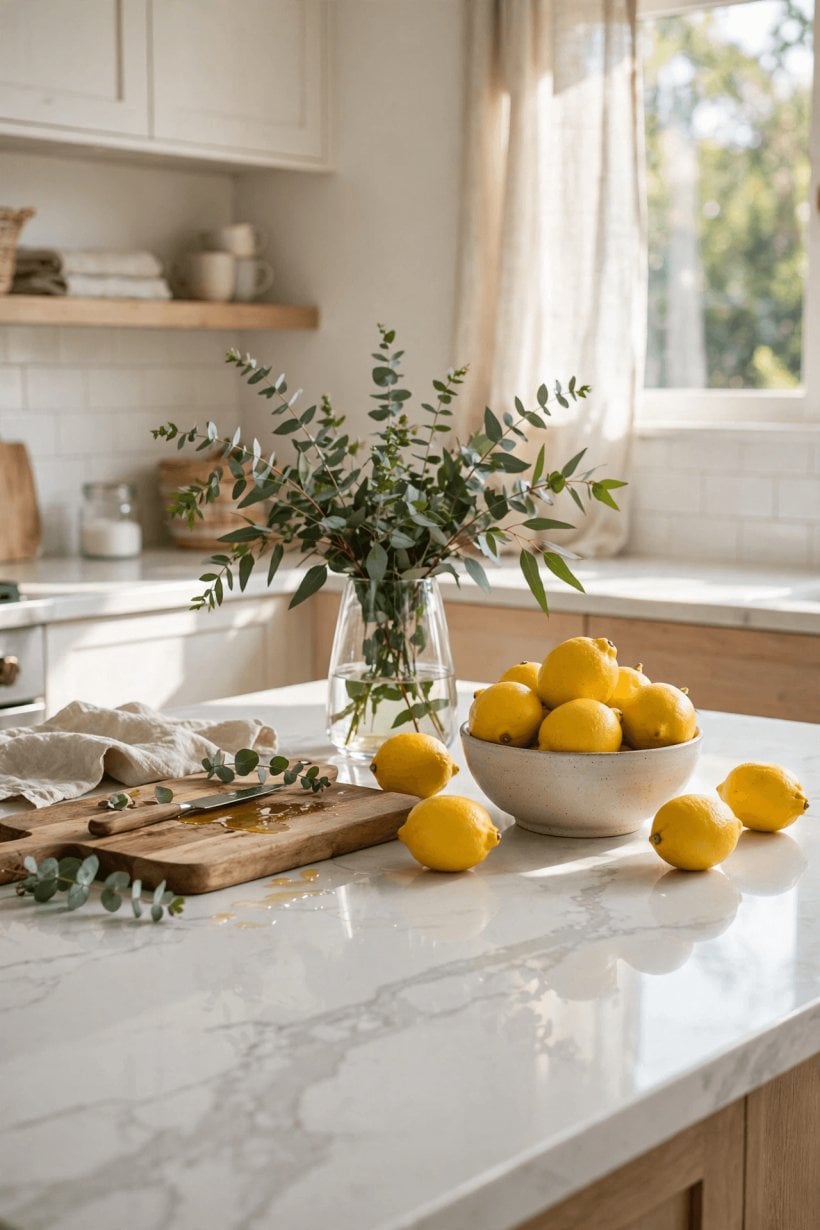
Light colours remain the most requested for good reason: they lift small kitchens, hide crumbs reasonably well and pair with almost any cabinet shade. If your taste runs calmer, the gentle palettes in our Zen interior design ideas for tiny houses translate beautifully to quartz, because soft stone tones and uncluttered lines are natural partners. Darker quartz creates a moodier, restaurant-style feel, especially with brass or warm wood, but every fingerprint tends to announce itself, so be honest about how much wiping you will tolerate.
- Ask how the pattern will be matched at each seam before you sign.
- Check whether vein direction on an island is included or treated as an extra.
- View colours under your own kitchen lighting, warm and cool, before deciding.
- Remember that a busy pattern can make a small kitchen feel lively or crowded.
Treat pattern as a labour decision as much as a style one, and its effect on the quote will make complete sense.
4. Size, Layout and the Island Question
Quartz is priced around slabs, so the footprint of your kitchen matters enormously. Long unbroken runs, peninsulas and generous islands all consume material, and once a design tips past what one slab can cover, a second slab joins the bill. L-shaped and U-shaped layouts also create corners that need careful cutting and joining, while a single straight run in a galley kitchen is the simplest and usually the kindest arrangement of all.
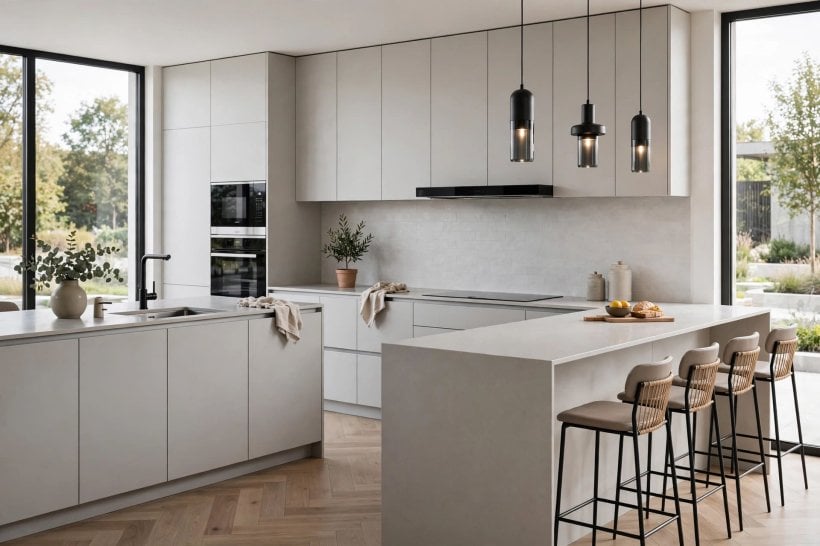
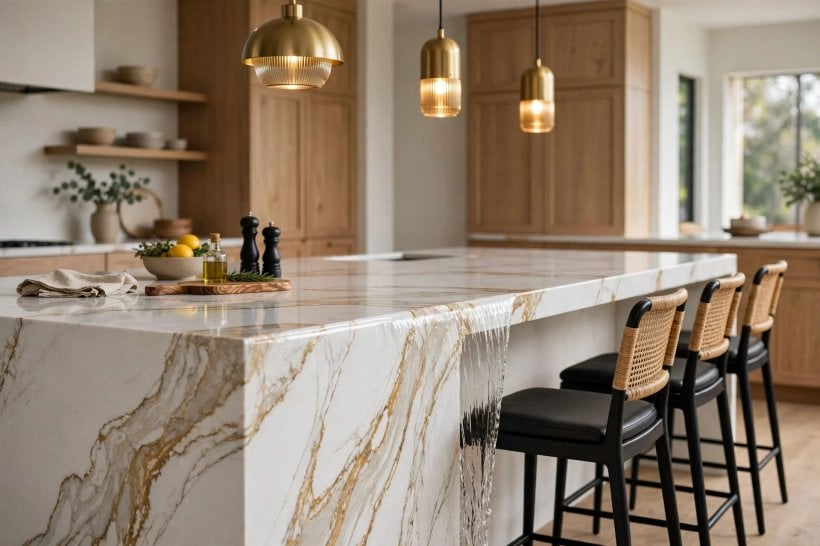
Islands deserve special thought. A modest island may come from offcuts of the main run, while a statement island with a waterfall end, where the quartz wraps down the side to the floor, uses a striking amount of extra material and precision cutting. Neither is wrong, but they live in different budget worlds. Measure honestly, sketch your layout to scale, and ask the fabricator how many slabs the design really needs, because that single answer explains a large share of most quotes. Open-plan spaces raise the stakes further, since the counters are on show from the sofa; our living room interior design ideas for tiny houses are a useful reminder that surfaces visible from seating areas earn their keep differently from hidden work zones.
- Shorter runs and fewer corners keep fabrication straightforward.
- A waterfall island end is a luxury feature, so price it as one.
- Ask whether offcuts can become a windowsill, shelf or utility surface.
- Confirm slab count in writing before comparing quotes.
5. Thickness and Edge Profiles
Thickness changes both the look and the labour. Slimmer counters give a crisp, modern line and use less material, while chunkier profiles feel substantial and traditional. Some chunkier looks are built up by mitring an edge strip onto a standard slab, which creates that solid appearance through skilled joinery rather than solid stone all the way through, and that joinery is skilled, time-consuming work that quotes reflect.
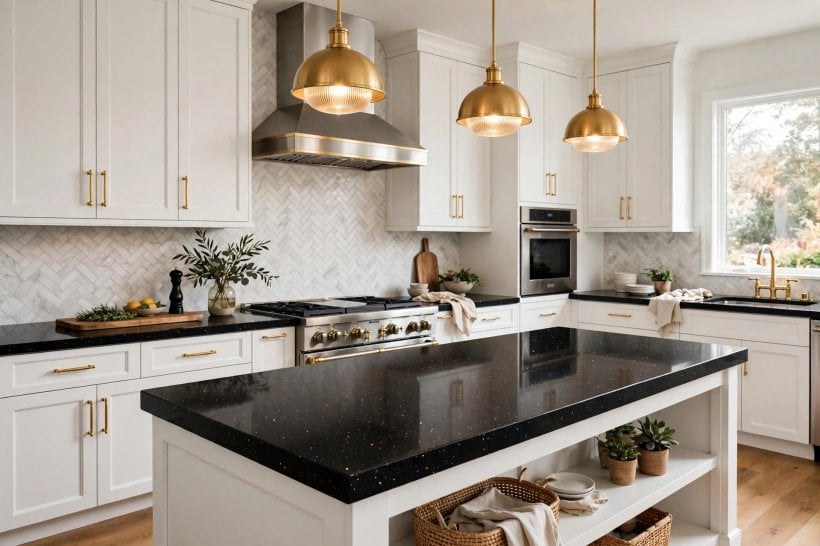
Edge profiles follow the same pattern. A simple square or softly rounded edge is quick to polish and easy to live with. Stepped, curved or ornate profiles need more passes, more polishing and more experience, so they cost more and can also be slightly more delicate in busy family kitchens. Chips, when they happen, tend to find the fanciest edges first.
- Pencil or square edges: clean, contemporary and usually the simplest to produce.
- Bullnose edges: fully rounded, friendly in family kitchens, a little more work to polish.
- Mitred build-ups: create a thick, furniture-like look with extra cutting and joining.
- Waterfall ends: dramatic, material-hungry and best reserved for a feature island.
Run your hand along sample edges in the showroom. The profile you enjoy touching every day is worth more than the one that merely photographs well, and choosing a simpler profile is one of the easiest ways to trim a quote without changing the colour you love.
6. Seams, Joins and Cutouts
Every interruption in the surface adds work. Sink cutouts, hob cutouts, tap holes, pop-up sockets and drainer grooves are all cut and polished individually, and an undermounted sink needs a beautifully finished internal edge because it stays on show. Seams, where two pieces meet, must be levelled, aligned and colour-matched with care, especially across veined patterns. None of these items is large alone, but together they quietly shape the fabrication share of a quote.
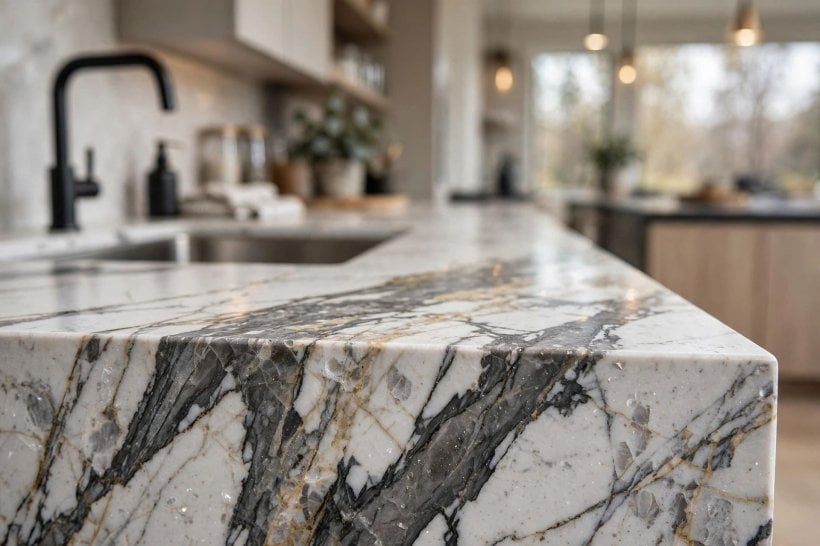
- Count your cutouts and ask for each one to be itemised.
- Decide tap and socket positions early, because late changes mean new cuts.
- Ask where seams will fall and whether you are happy living with those lines.
- Drainer grooves look sleek but are optional; a removable drainer does the same job.
- Keep hob and sink models fixed once templating is booked.
Good fabricators discuss seam placement openly, often suggesting a discreet spot near a corner or beside the hob where the eye rarely rests. That conversation costs nothing and improves the result, so welcome it. The styling around the counters matters too, and the layering advice in our interior design and home decorating ideas can help you plan splashback colours and accessories that flatter the seams you do have, rather than fighting them.
7. Removing the Old and Preparing the Room
Quotes often assume different starting points, which is why two figures for the same kitchen can drift apart. One may include removing and disposing of old counters, disconnecting the sink and hob, and making good the walls, while another expects a clear, empty room. Old laminate lifts away easily; old stone or tile can be heavy, dusty work. Cabinets that are not level need correcting before a rigid quartz surface can sit safely, and that preparation takes time.
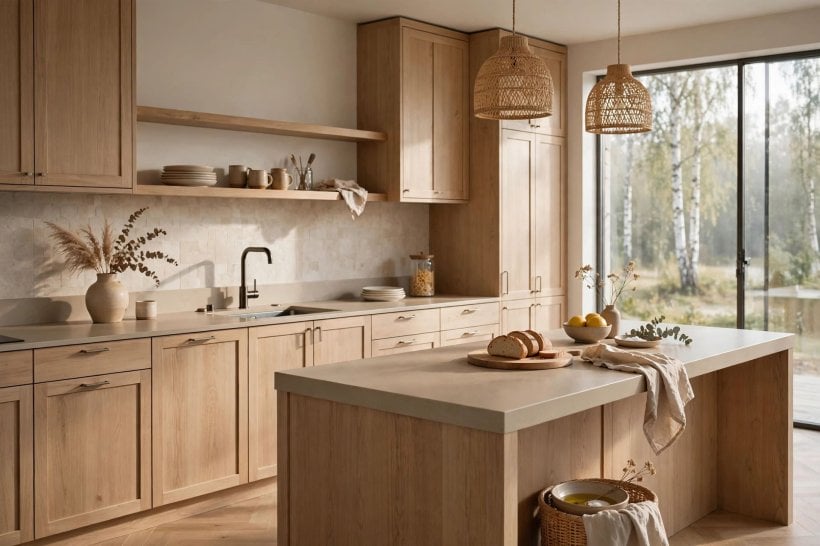
- Ask whether removal and disposal of the old surface are included.
- Check who disconnects and reconnects plumbing and the hob, and whether that is priced.
- Clear cupboards under the sink and hob before templating day.
- Flag uneven floors, sloping cabinets or wobbly walls early, not on fitting day.
- Confirm whether a return visit is needed after templating, and if it is charged.
Doing simple preparation yourself, such as emptying cupboards and removing a lightweight old surface where you are confident and safe, can soften this part of the bill. Leave anything involving gas, electrics or heavy stone to professionals, and always check local requirements with your city or county guidance before disconnecting services. Honest preparation is cheaper than surprises.
8. Templating, Delivery and Fitting Day
Quartz is made to measure, so templating is where accuracy is bought. A templater records every wall angle, socket and cutout, sometimes with laser equipment, because the slabs are cut from that template and cannot be trimmed casually on site. Complex rooms, out-of-square walls and last-minute layout changes all add visits or rework. Delivery matters as well: large pieces are heavy and awkward, and tight stairs, narrow halls or limited parking can mean extra hands on the day.
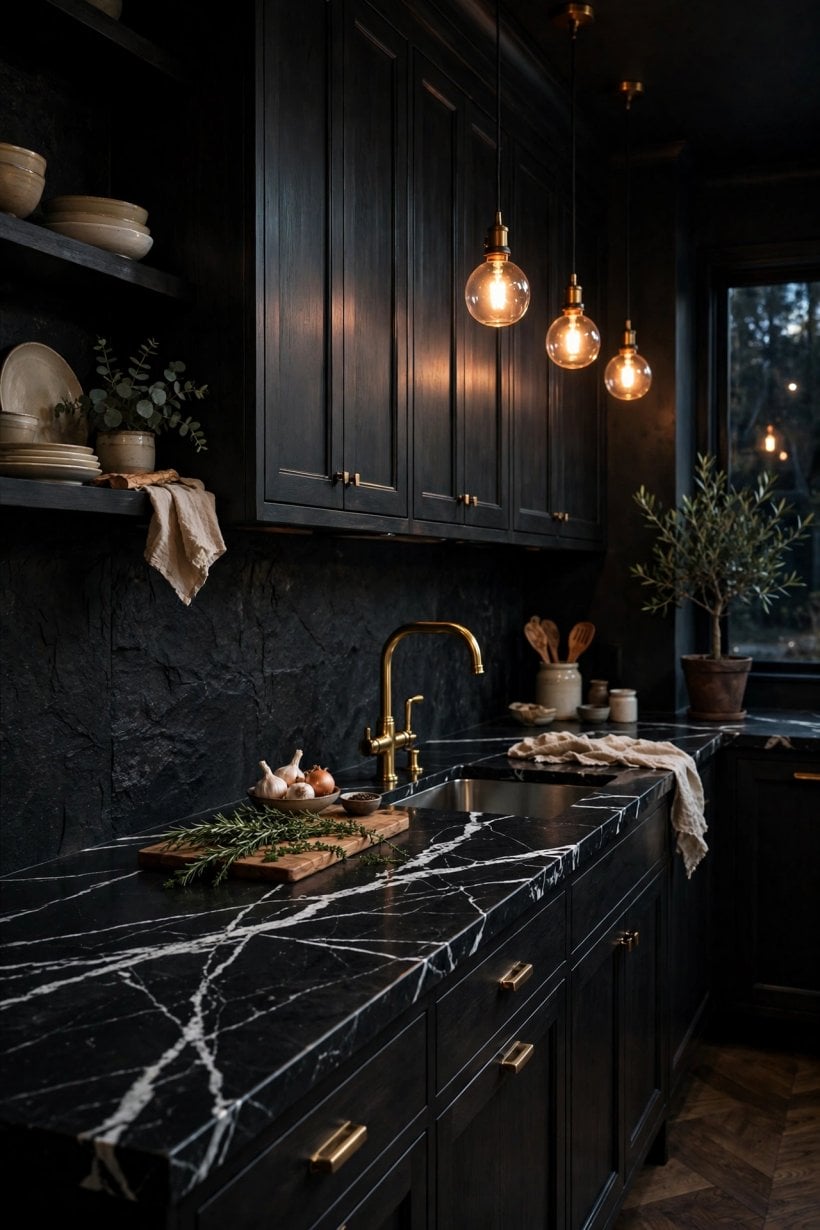
Fitting itself is skilled, unhurried work. Pieces are levelled, seams are set, sinks are sealed and the surface is polished before handover. If you are coordinating a larger build, the sequencing lessons in how to build your own tiny house apply here too: trades booked in the wrong order cost return visits, and return visits are rarely free. Book templating only when cabinets are fixed and final, appliances are chosen, and the sink and tap are decided, because the template freezes all of those choices in stone, quite literally.
- Have the sink, tap and hob on site or their exact dimensions confirmed.
- Keep the room clear and the access route measured for large pieces.
- Ask how long the kitchen will be unusable between templating and fitting.
- Plan meals for fitting week so delays do not become crises.
9. Upstands, Splashbacks and Finishing Extras
The finishing touches are where quotes quietly grow. Matching upstands run along the wall behind the counters, full-height splashbacks turn quartz into a wall finish, and windowsills, shelves and drainer grooves all draw from the same slabs and the same skilled hours. Each extra is lovely in isolation, which is exactly why they accumulate: nobody adds them all at once, they arrive one reasonable decision at a time.
- Upstands: a neat, wipeable alternative to tiling the lowest strip of wall.
- Full splashbacks: dramatic behind a hob, and the most material-hungry extra of all.
- Matching sills and shelves: a clever use for offcuts, if the fabricator agrees.
- Drainer grooves: elegant and permanent, but optional for most households.
- Sealed joints and care guidance: ask what aftercare is included in the price.
Choose extras with the same discipline you would use outside, where our tiny house landscaping ideas make a similar point about features competing for one budget. Pick the one or two finishes you will notice daily, perhaps the splashback you face while cooking, and let the rest stay simple. A restrained specification fitted beautifully beats a long list of extras fitted in a rush, every single time.
10. How to Keep the Total Down Without Regrets
Saving money on quartz is mostly about removing complexity, not removing quality. Keep the layout simple, choose a widely stocked colour, favour a clean edge profile and limit cutouts to what you genuinely use. Reuse offcuts for a sill or a small utility run instead of paying to discard them. Get quotes that itemise slab, fabrication, removal and fitting separately, because an itemised quote lets you adjust one ingredient instead of arguing about the whole dish.
- Compare at least a few itemised quotes for the identical specification.
- Change one variable at a time so you can see what each choice costs.
- Ask about recently stocked colours, which are often priced kindly to move.
- Keep premium pattern for the island and simpler quartz elsewhere, if the look works.
- Fix every decision before templating to avoid rework charges.
- Protect the fitted surface during any remaining decorating or building work.
What not to do is chase the cheapest figure by cutting the fitting quality. Poorly supported quartz, rushed seams and sloppy sealing are the faults that show up months later, long after the saving is forgotten. Spend on accurate templating and careful fitting, save on ornament, and the balance usually lands in the right place. That principle holds whether the kitchen sits in a family house or a compact off-grid cabin where every surface must earn its space.
Final Considerations
Quartz rewards clear thinking. Once you see quartz countertops cost as a bundle of material, pattern, layout, edges, cutouts, preparation and skilled fitting, no quote should feel like a mystery number again. Work through the factors in this guide, decide where your kitchen sits on each one, and ask suppliers to price the same specification so the comparison is fair.
Choose the colour you will still love when trends move on, keep the design as simple as your cooking allows, and put your money into accuracy and fitting rather than extras you will barely notice. Do that, and the finished counters will feel worth every part of the bill, morning after morning, for years of breakfasts, baking days and late-night cups of tea.

0 Comments