

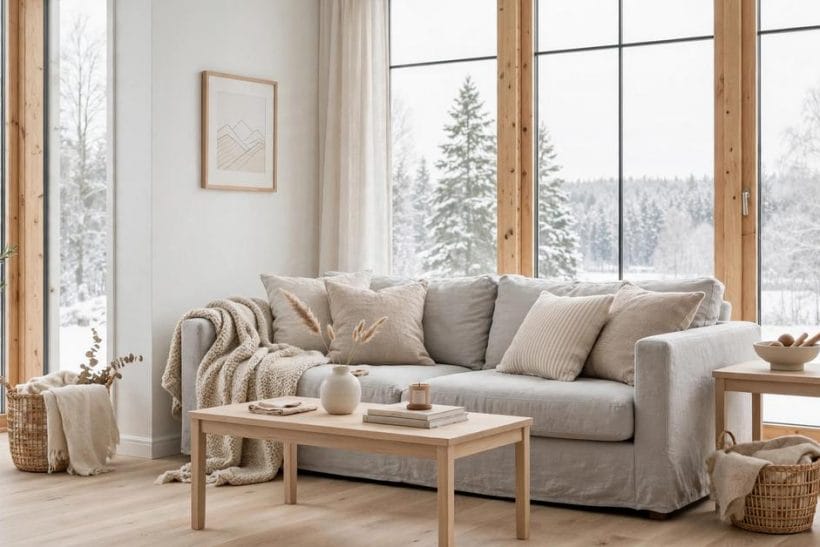
Scandinavian interiors were not invented by magazines; they were invented by winter. In countries where daylight is scarce for months, a room learns to hoard light, waste nothing and make its warmth from wood, wool and welcome rather than from ornament. The result — pale floors, white walls, simple honest furniture and layers of soft textiles — is the most copied interior language in the world, and the easiest to live with once you understand that it is a system, not a shopping list.
This post covers the interiors only: the palette, the rooms, the materials and the cosiness. Everything here is designed to be achieved in ordinary houses and ordinary budgets, one calm decision at a time.
1. Scandinavian Interiors at a Glance
Scope first, and the split stated plainly: this post owns Scandinavian INTERIORS. The house from the street — cladding, roofs, the Scandinavian silhouette — belongs to Scandinavian exterior home ideas, and the two posts link both ways on that basis; neither is a whole-Scandinavian post. The miniature version of the interior story lives in the Scandinavian tiny house interior. Here, everything is the rooms.
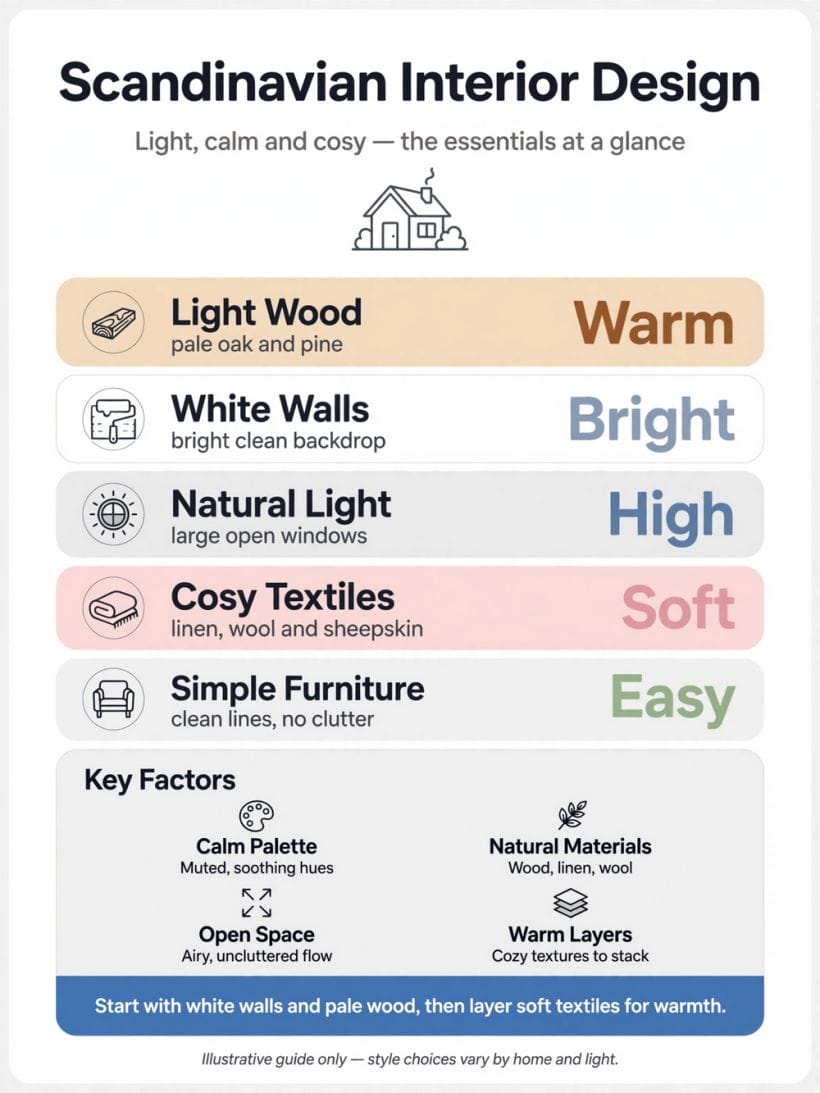
One rule governs the whole post: light first, then layers. White and pale wood build the bright shell; textiles, plants and candlelight build the warmth inside it. Every Scandinavian room that fails has skipped one of those two halves.
| Element | Character | What it means |
|---|---|---|
| Light Wood | Warm | Pale oak and pine, the scheme’s warm base |
| White Walls | Bright | A bright, clean backdrop that returns daylight |
| Natural Light | High | Large, open windows treated as treasure |
| Cosy Textiles | Soft | Linen, wool and sheepskin layered for warmth |
| Simple Furniture | Easy | Clean lines, no clutter, everything earning its place |
2. The Light-First Palette
1. White walls that work hard
The Scandinavian white wall is not a default; it is a light instrument, chosen warm rather than blue so rooms feel bright without feeling cold. The two classic whites and how they behave in different lights are compared in Pure White vs Extra White — the same thinking, applied at full scale.
2. Pale wood floors as the base note
Light oak, pine, ash or birch underfoot is the scheme’s foundation — it bounces light upward and warms the white from below. Dark floors are not banned, but they change the recipe: everything above them must work harder to keep the room bright.
3. The muted middle tones
Between the white walls and pale floors lives the palette’s middle register: stone grey, oatmeal, fog, putty, the colours of undyed wool. These are the sofa, rug and curtain colours — calm neutrals with enough grey in them to sit quietly beside each other.
4. Black as punctuation
A few black notes — a lamp stem, picture frames, a stove, chair legs — give pale rooms their grammar. Black is used the way punctuation is used: sparingly, and the whole sentence reads better for it. A room with no dark note at all can drift into blandness.
5. One colour accent, honestly chosen
Scandinavian rooms do take colour — a rust cushion, a fog-blue throw, a single ochre chair — but usually one accent at a time, drawn from nature’s muted register. The discipline is not the absence of colour; it is colour with an editor.
6. Windows treated as treasure
Sheer linen, blinds that vanish by day, curtains that hang beside rather than across the glass: Scandinavian windows are dressed to admit light, not to display fabric. If a window treatment costs the room daylight, it has failed its first job.
7. Mirrors and pale surfaces borrow light
A mirror opposite a window, a pale rug on a mid-tone floor, gloss kept low and surfaces kept matte — the small physics of light-borrowing are woven through the style. Each trick is cheap; together they are why these rooms photograph like noon in November.
8. Evening light is designed too
Many small warm light sources beat one bright ceiling light: table lamps, wall lights, candles in groups. Scandinavian evenings are lit like a landscape — pools of warmth in a dim field — and the pale rooms are designed to receive it.
9. The palette on a budget
White paint, one pale floor solution, and textiles in the muted register will carry ninety per cent of this look into any house. The palette’s luxury is not its products; it is its restraint. Spend on the few natural-material pieces, and let paint do the rest.
3. Living Rooms: Calm, Layered, Uncluttered
10. The pale sofa anchors the room
A sofa in undyed linen tones — grey, oatmeal, soft white — is the Scandinavian living room’s largest decision. It keeps the room bright, accepts every cushion colour, and asks only for washable covers and honest fabric in return.
11. Layering is the decoration
Throws over the sofa arm, a sheepskin on the chair, cushions in two textures and one pattern: the living room’s richness comes from layers you can touch, not objects you must dust. Add a layer, remove an ornament — the room gets warmer and simpler at once.
12. Low, light furniture keeps sight lines open
Scandinavian furniture sits low and stands on legs, so the floor plane runs visibly beneath it and the room reads larger. In small living rooms this is the single most effective trick the style owns — a lesson the site’s guide to decorating a tiny living room teaches from the same physics.
13. A rug defines the sitting island
Flat-woven or softly piled, in the palette’s middle tones, the rug gathers the seating into an island on the pale floor. Front legs of sofa and chairs on the rug is the arrangement that makes the island feel intentional.
14. The coffee table earns its keep
One honest table — wood, round or rectangular, nothing it does not need to be. Scandinavian rooms avoid the nest-of-tables clutter by choosing the single right piece at the right size for the sofa it serves.
15. Storage that disappears
Low sideboards in pale wood, baskets for the everyday overflow, and cupboards whose fronts are as calm as the walls: the uncluttered look is not tidiness, it is architecture. If it cannot be put away, it will be on display — so the style designs the away.
16. Plants as the living colour
Green is the Scandinavian room’s exempt colour — plants in simple pots bring the life that the muted palette deliberately restrains elsewhere. One large plant beats five small ones; the style prefers a tree to a collection.
17. Art: little, large, light-framed
One big print in a pale frame, or a quiet gallery of small ones — but walls are left mostly breathing. Line drawings, landscapes and simple abstracts in the palette’s tones are the traditional choices, hung lower than instinct suggests.
18. The reading corner
A chair, a lamp, a small table, a throw: the Scandinavian living room always contains this complete small sentence. It is the room’s hygge headquarters and the proof that cosiness here is a function designed in, not a mood hoped for.
4. Kitchens and Dining the Scandinavian Way
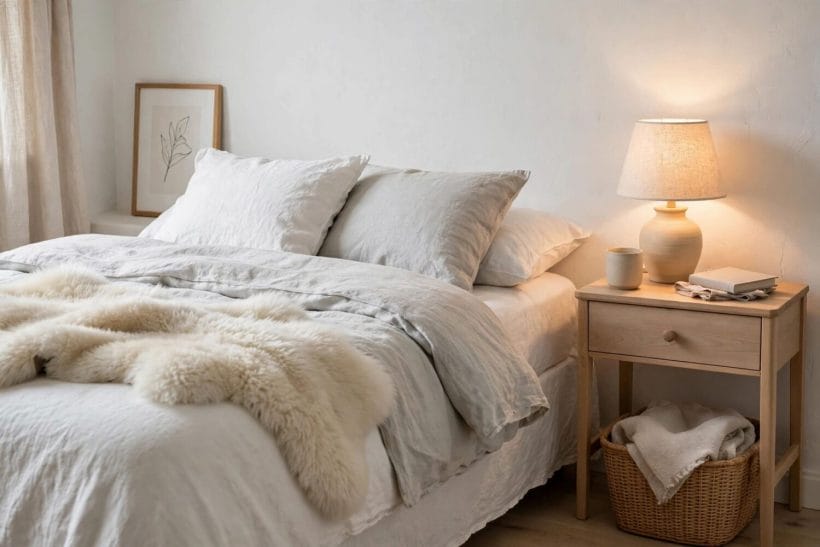
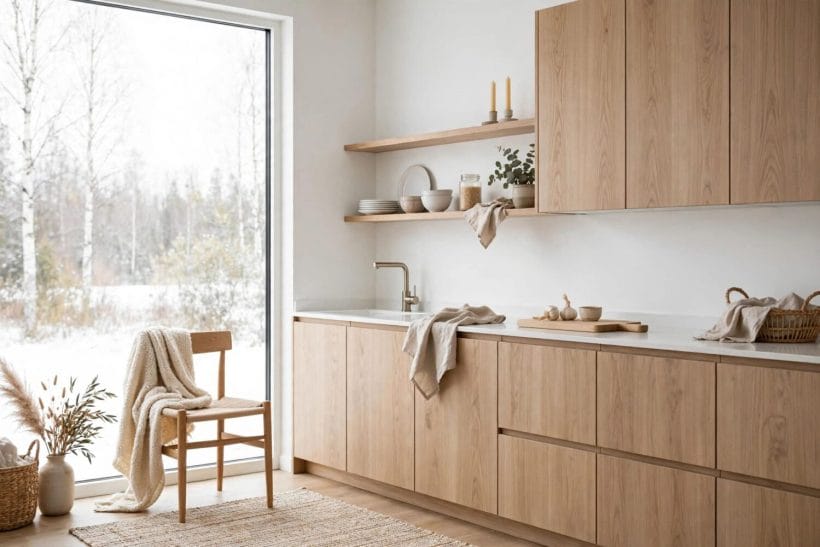
19. White and pale-wood kitchens
The signature kitchen pairs white or very pale cabinets with wood worktops and open shelving — bright, plain and quietly warm. The full room-by-room treatment of the main kitchen space lives in the site’s kitchen ideas; here the Scandinavian recipe is the point: nothing glossy, nothing fussy, everything touchable.
20. Open shelves over closed cupboards
One or two open shelves of everyday dishes keep a small kitchen feeling airy and force a gentle discipline: what is displayed is used, and what is used is beautiful enough to display. It is storage as still life.
21. The dining table is the altar
In Scandinavian homes the dining table works all day — meals, homework, laptops, crafts — and it is furnished like it matters: a pale wood table, simple chairs (mixed, often), a pendant low above it and a cloth or runner for softness.
22. Pendant lights hung low
A single generous pendant, or a row of small ones, hung lower than other cultures dare — that pools the light on the table and leaves the room’s edges in gentle dimness. It is the dining version of the evening-light rule from the palette section.
23. Chairs that need not match
A set of similar-but-not-identical wooden chairs around the table is a Scandinavian signature — collected rather than bought, each one comfortable, the set united by material and tone rather than by a catalogue number.
24. Breakfast light and blackout honesty
Kitchens and dining rooms face the morning in these houses: pale surfaces catch the first light, and coffee tastes better in a white room. Keep window dressings minimal here above all — the style treats breakfast light as an ingredient.
25. Everyday ceramics on show
Plain stoneware, wooden boards, glass jars of dry goods: the Scandinavian kitchen’s decoration is its equipment, chosen well and used daily. Nothing is kept “for best” — best is Tuesday.
26. The kitchen textile touches
Linen tea towels, a woven runner, a sheepskin thrown over the bench seat — the kitchen gets the same textile logic as the living room, in washable form. Softness in a hard-surfaced room is a design material, not an accident.
27. Small kitchens: this style is your friend
Pale colours, leggy furniture, open shelves and ruthless editing make Scandinavian the natural style of the small kitchen. Every principle in this post was born in small northern rooms; tiny kitchens are its home ground.
5. Bedrooms: Pale, Soft and Restful
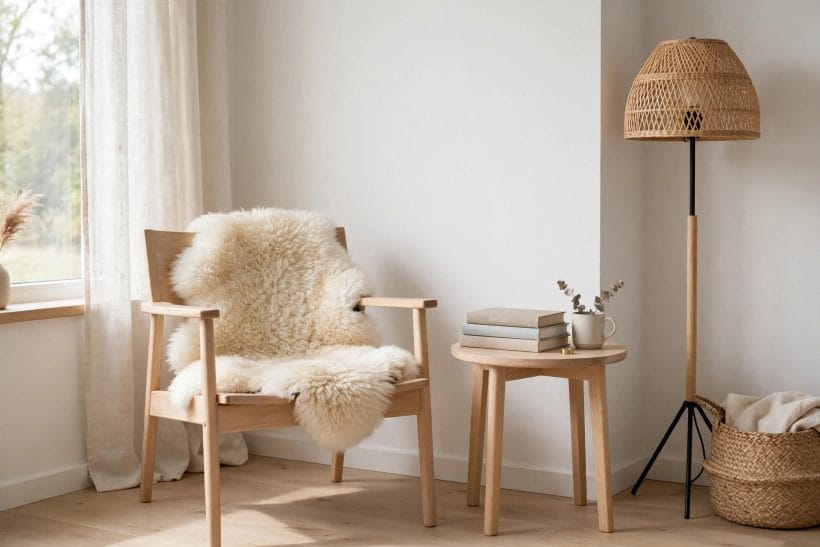
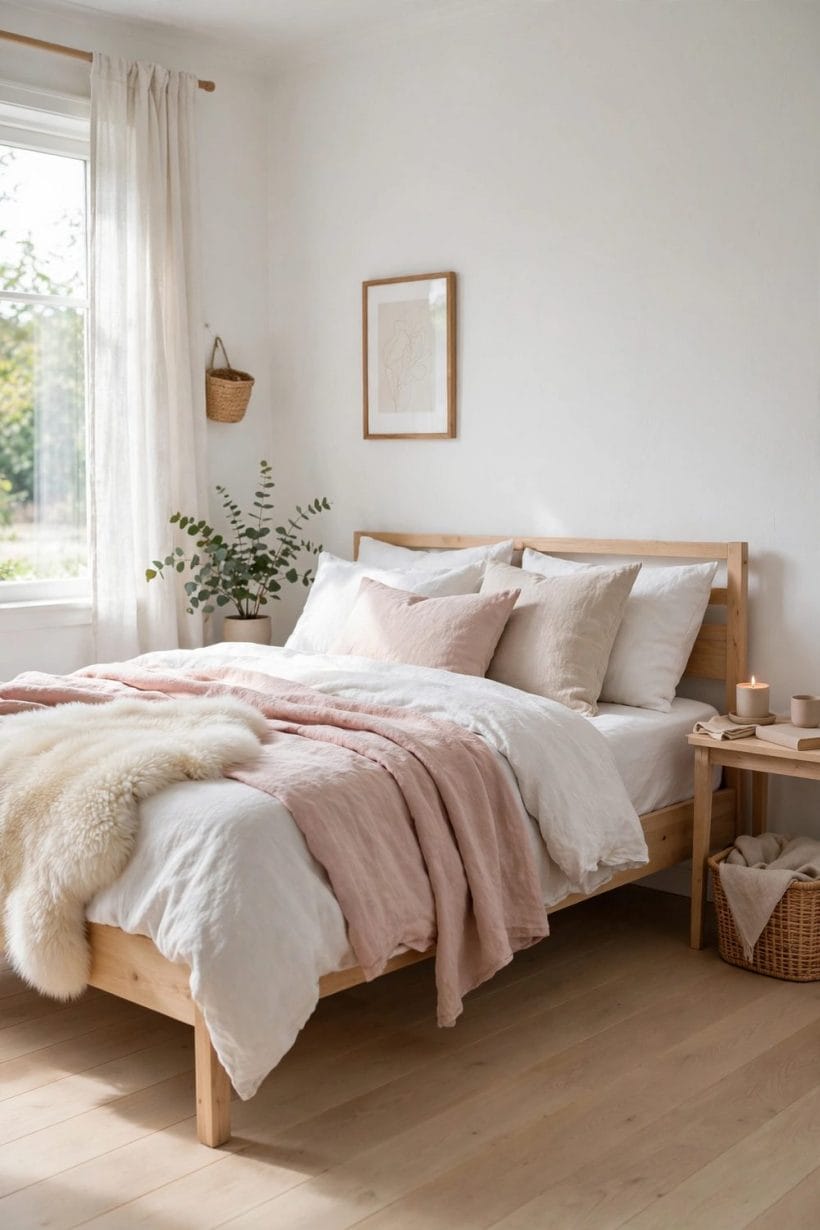
28. The bed dressed in layers
White or oatmeal linen, a wool throw folded across the foot, cushions in two muted tones — the Scandinavian bed is made the way the living room’s sofa is layered, because the bedroom is read as the house’s softest room.
29. Pale wood and white, again
The bedroom keeps the house palette — pale floor, white walls, light wood bed frame — so the whole home feels like one calm place rather than a tour of themes. Consistency is the style’s quiet luxury.
30. Blackout behind the sheers
Northern summers are bright at 4 a.m., so Scandinavian bedrooms layer practical blackout behind the pretty linen. Copy the honesty: dress the window for light by day and for sleep by night, with both layers present.
31. Bare floors, warm feet
Bedrooms often skip the full rug for a smaller one beside the bed — pale boards visible, sheepskin or woven wool where feet land. The room stays airy while the first step of the day stays kind.
32. Storage in calm fronts
Wardrobes in white or pale wood with plain fronts, baskets for the rest, and a strict one-in-one-out clothing peace: the restful bedroom is mostly an editing achievement wearing a palette.
33. A chair, a lamp, a book
The reading-corner sentence appears in the bedroom too — one chair that is not a clothes horse, a warm lamp, a small stack of books. Rooms that contain a complete small comfort tend to stay tidy around it.
34. Children’s rooms in the same language
Scandinavian children’s rooms keep the pale shell and add colour in toys, textiles and one playful print — the room grows by swapping accents, not by repainting. Low, reachable storage teaches the editing habit early.
35. The guest room as a small hotel of calm
White bedding, a carafe of water, a chair for clothes, one good lamp: the Scandinavian guest room is a study in sufficiency. Guests remember these rooms as restful because nothing in them asks for attention.
36. Waking to the light
Arrange the bed to meet the morning — facing or beside the window where the house allows. In a style built around scarce light, the bed’s orientation to the sunrise is a genuine design decision, and the pale room is its amplifier.
6. Bathrooms, Halls and Hard-Working Corners
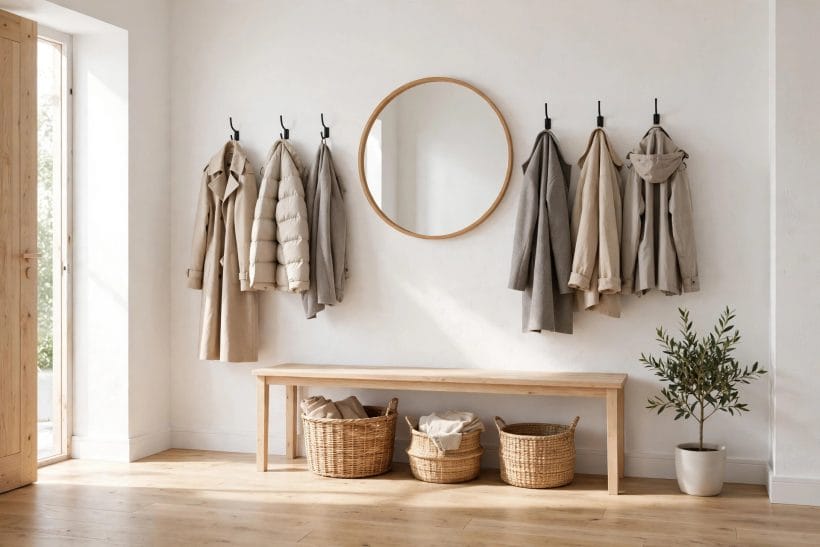
37. Small white bathrooms
White tile or paint, pale wood accessories, black taps as punctuation: the small Scandinavian bathroom is bright, plain and easy to clean — a room designed around light and water rather than around a theme.
38. Wood in the bathroom, carefully
A teak stool, a wooden bath bridge, a slatted mat — small doses of timber warm the white room and are chosen in woods and finishes that accept splashing. Keep the doses small and the room stays practical.
39. The hallway that works
Northern halls are equipment rooms: hooks at two heights, a bench, baskets for hats and gloves, a mirror for the light. Furnished plainly in pale wood and white, the hall sets the house’s calm from the front door.
40. Laundry and utility corners
The style’s discipline shows best where nobody photographs: sorted baskets, labelled jars, a rail for airing, everything pale and washable. A beautiful utility corner changes how a house feels more than another cushion ever will.
41. The home office corner
A small desk in pale wood, one good chair, a lamp and a plant — the Scandinavian work corner fits into a living room or landing without declaring an office. When work ends, the corner returns to being furniture.
42. Stairs and landings as galleries of light
White walls, pale treads, a runner in a muted weave and one picture at the turn: landings are treated as rooms in transit, lit and finished like the rest of the house rather than left as shafts.
43. Rental-friendly Scandinavian
Nearly everything in this post is movable: pale textiles, leggy furniture, lamps, plants, pictures on hooks. The style is unusually kind to renters — the full effect can be packed into boxes and rebuilt in the next house in a weekend.
44. Winter entries and the mudroom logic
Where winters are real, a bench to sit and unboot, hooks that drain, and a floor that forgives meltwater are the style’s practical poetry. Design the entry for the worst day of the year and it will serve all the others.
45. Plants in the hard corners
The bathroom shelf, the hall table, the top of the utility cupboard — a trailing plant in each hard corner keeps the whole house feeling tended. Scandinavian rooms use greenery the way other styles use ornaments: as the sign of life.
7. Pale Wood and Natural Materials
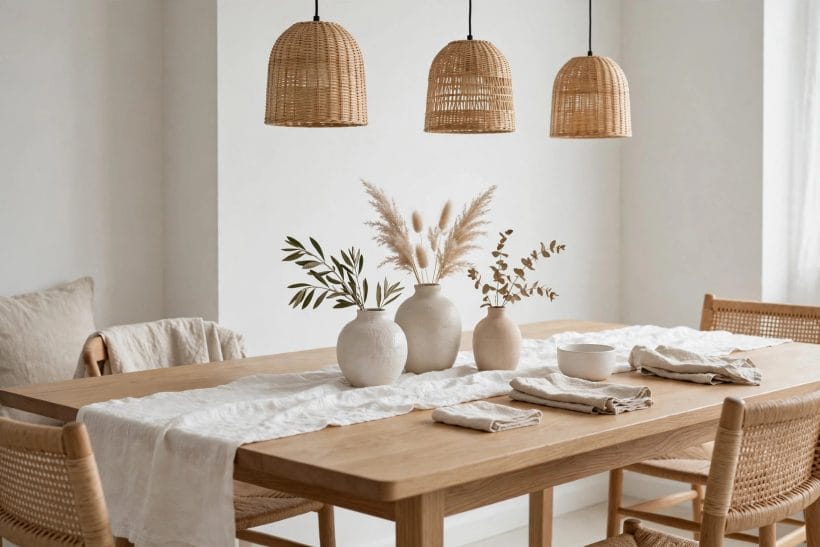
46. The pale woods, in order of warmth
Birch is the palest and coolest, ash and pine sit in the middle, oak runs warmest of the common pale woods. Mixing them is allowed — the family resemblance is strong — but one wood should lead each room so the mix reads as harmony, not inventory.
47. Wool, linen, cotton, sheepskin
The textile register is entirely natural: wool for warmth, linen for air, cotton for washability, sheepskin for the single luxurious note. Synthetics appear, where they appear, quietly — the hand should believe everything it touches.
48. Stone, clay and the handmade
Stoneware vases, a clay pot, a stone tray: small handmade objects give pale rooms their soul and their slight irregularity. The style values the maker’s mark — one imperfect pot over a shelf of perfect ornaments.
49. Leather and cane as the warm accents
A tan leather strap, a cane-webbed chair back, a woven paper-cord seat: these warm mid-tones are the material version of the palette’s accent rule — natural, warm, and dosed with restraint.
50. Glass and light metals
Clear glass keeps rooms feeling open (vases, simple pendants, cabinet doors in kitchens), and pale metals — brushed steel, soft brass in small doses — carry the modern note. Shine is used like black: as punctuation.
51. What the style avoids, and why
High gloss, heavy dark-stained wood in quantity, ornate carving, and synthetic-looking surfaces all fight the light-first system. The avoidance is functional, not snobbish: every one of them either eats light or adds visual noise the small northern room could not afford.
52. Floors: oil, soap and pale finishes
Traditionally, pale wood floors were finished soft — soap-treated or lightly oiled — to keep them matte and bright. Modern pale finishes pursue the same look with easier care. The point stands: the floor should look like wood in daylight, not like varnish in a showroom.
53. Mixing old and new
A flea-market pine table among new pieces, grandmother’s chair re-covered in undyed linen: Scandinavian rooms absorb vintage naturally because the palette forgives everything pale and wooden. The mix is the style’s history, worn lightly.
54. Materials on a budget: the honest order
Spend first on the things hands touch daily — sofa fabric, bed linen, the dining chairs — in natural materials, and let paint, baskets and one good plant do the rest. The scheme fails by a thousand small synthetic purchases, not by one missing designer piece.
8. Furniture: Form, Function and Honest Craft
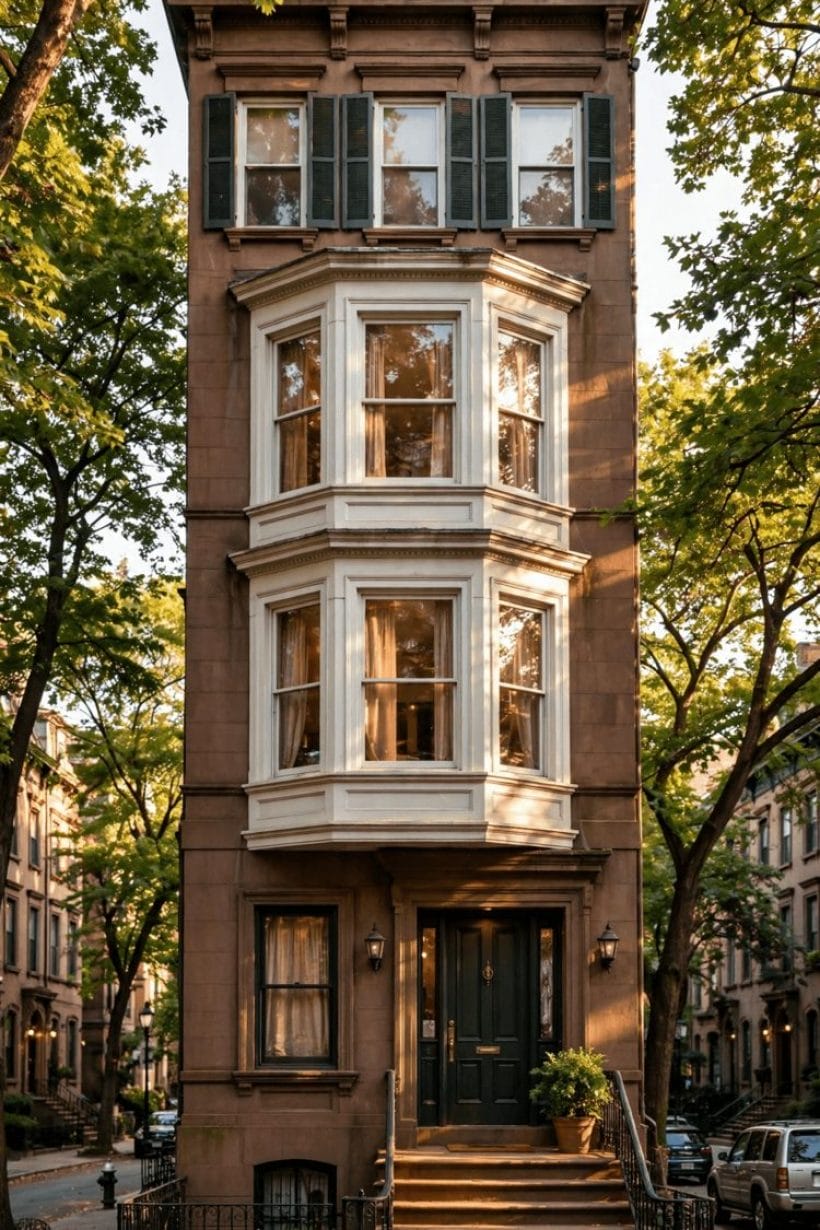
55. Form follows function, visibly
The classic Scandinavian chair is light because it was designed for small rooms and real bodies — every curve argues a purpose. That visible logic is the style’s beauty standard: if a piece cannot explain itself, it does not belong.
56. Buy once, in wood
The culture buys furniture the way it builds houses — rarely and for decades. A solid wood table that can be sanded back to new three times in its life is the economics of the style, and its second-hand market is the proof.
57. The wishbone, the paper cord, the molded shell
Mid-century Danish and Finnish design gave the style its icons — steam-bent wood, woven seats, molded plywood — but the point for your rooms is not the names; it is the properties: light, warm, repairable, comfortable for hours.
58. Scale for real rooms
Scandinavian furniture is scaled for apartments, not showrooms: sofas that fit through doors, tables that seat six in the space of four, storage that uses height without looming. Measure honestly; the style’s pieces reward it. Small-space palettes for whole tiny homes are gathered in tiny house interior paint colours.
59. Multi-function as a virtue
The bench that stores, the stool that is a side table, the daybed that hosts guests: in small northern homes, doubling up is elegance. Judge each purchase by how many jobs it can do gracefully.
60. Flat-pack and the democratic layer
The style also has its democratic wing — simple, affordable, self-assembled furniture in pale finishes that put the look within everyone’s reach. Chosen in wood tones and kept uncluttered, it sits comfortably beside the classics; the system matters more than the price tag.
61. Arranging for conversation
Seats face each other across low tables; the television, where present, does not chair the room. Scandinavian living rooms are arranged for people talking — a social plan disguised as a floor plan.
62. Negative space is a furnishing
Empty floor at the room’s centre, a wall left bare, a corner with only light in it: the style counts breathing room among its furniture. When a room feels almost right, the Scandinavian move is to remove one thing, not add one.
63. Furniture in the other rooms agrees
The bed, the desk, the kitchen chairs and the hall bench should all belong to one material family, so moving through the house feels like one thought. The bungalow interiors on this site work the same way from a different tradition — compare bungalow interior ideas for the craftsman version of the discipline.
9. Cosiness: Hygge Layers and Seasonal Shifts
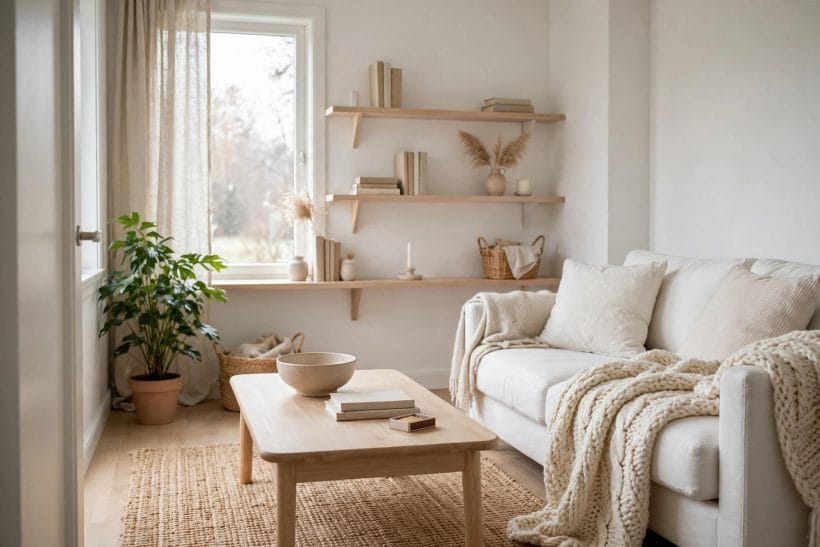
64. Hygge is a practice, not a purchase
The famous cosiness is a verb: light the candles, make the hot drink, pull the throw over two people instead of one. Shops can sell the props; the practice — deliberate, shared, unhurried comfort — is the actual design material.
65. Candlelight as a system
Groups of candles at different heights, in plain glass and ceramic holders, lit nightly rather than saved: candlelight is the Scandinavian evening’s second lighting system, and pale rooms are designed to glow under it.
66. The winter layer set
When the dark season arrives, the rooms change clothes: heavier throws, sheepskins on chairs, curtains drawn at dusk, more lamps lit earlier. The pale shell stays; the layers thicken. Designing both wardrobes — summer and winter — is the complete version of the style.
67. The summer edit
In the bright months the layers thin: throws folded away, sheepskins off, windows bare, flowers from the garden on the table. The same rooms feel airy rather than sparse because the shell was always designed for light first.
68. Scent and sound count
Wood, wool, coffee, baking, a fire’s crackle: the style’s atmosphere is multi-sensory, and its rooms are furnished for the ears and nose too. A cosy corner with a record playing is a completed design, not a lucky accident.
69. Gatherings around the table
Long, unhurried meals at the pale table under low pendants — with candles in the middle of the day in winter — are the social form of the whole aesthetic. The dining room is the style’s theatre, and everyone already owns the set.
70. Small rituals, deliberately placed
A tray for the morning coffee things, a basket that means “knitting lives here”, the good cups used daily: Scandinavian homes run on small rituals with designed homes. Give each ritual its place and the house stays both calm and alive.
71. Cosy in small spaces
Hygge scales down beautifully — one chair, one lamp, one throw can make a complete climate in a studio corner. Smallness is not the obstacle to this style; it is nearly a requirement for its best effects.
72. The unphotographable test
Judge a Scandinavian room at 6 p.m. in February, in person, with the lamps low: if it feels warm, calm and quietly beautiful with no camera involved, the design is finished. The style was built for exactly that hour.
Weekend houses and cabins deserve a note of their own, because the Scandinavian interior was partly born there: small wooden rooms, simply furnished, where the pale palette turns limited daylight into a glow and a handful of good pieces — table, chairs, daybed, stove — do everything. If you are furnishing a cabin, a garden room or a small rental, this post’s system at its most concentrated is the answer: white, wood, wool, light, and nothing else asking for your attention.
10. Costs and Practical Details
73. What actually drives the cost
Daylight is free and paint is cheap; the money in this style goes to textiles and a few solid wood pieces. Floors are the big-ticket item if you replace them — otherwise the transformation is mostly paint, fabric and editing, which is why the style spreads so fast through ordinary homes.
74. The editing discipline (the free part)
Before buying anything, subtract: clear surfaces, empty one shelf, put half the ornaments in a box for a month. Scandinavian calm is at least half removal, and removal costs nothing — most “failed” attempts at this style are simply unedited rooms wearing pale paint.
75. The Scandinavian room that lasts
Build the bright shell, layer the natural warmth, edit without mercy, and change the layers with the seasons: that is the whole system, and it does not date because it was never a trend — it is a northern answer to darkness that any house, anywhere, can borrow. Start with one room, at 6 p.m., with the lamps low.
Final Considerations
The Scandinavian interior is a kindness a house does its people: maximum light, honest materials, warmth you can touch, and nothing you do not need. It asks for restraint in buying and generosity in living — and in return it gives rooms that stay calm in every season and every photograph, including the ones nobody takes.

0 Comments