

It arrives without knocking. One evening the window is open, the dog has been in the garden, and suddenly the whole house smells like a struck match crossed with burnt garlic — a skunk has sprayed somewhere close, and the odour has moved in like it pays rent.
This guide is the calm, household-general version of what to do: air first, wash what can be washed, wipe what cannot, find the entry points, and let time finish the job. No chemical recipes, no miracle products — just the checks that actually move a skunk smell out of a house.

1. Skunk Smell in the House at a Glance
Scope first. This post owns one unwelcome event: skunk sprayed outside my window — or under the porch, or on the dog — and the smell is now indoors. Its nearest neighbours are the household-air posts like the home dehumidification guide, which covers the other great indoor atmosphere problem; here, everything serves getting one very specific odour out.
The five moves in the table are the whole response in order. Air and textiles do most of the work; patience does the rest.
| Move | Character | What it means |
|---|---|---|
| Fresh Air | First Response | Open the house up and move air through it, on the spray side first |
| Fabrics | Where It Lingers | Soft furnishings hold the smell longest — wash or air everything washable |
| Surfaces | Ordinary Cleaning | Hard floors, walls and paintwork near the source get wiped down |
| Entry Points | How It Got In | Gaps, vents and under-porch spaces carry the smell — and shelter the skunk |
| Time | The Finisher | Repeat airing and washing over days; the smell fades rather than vanishing |

2. First Response: Air the House
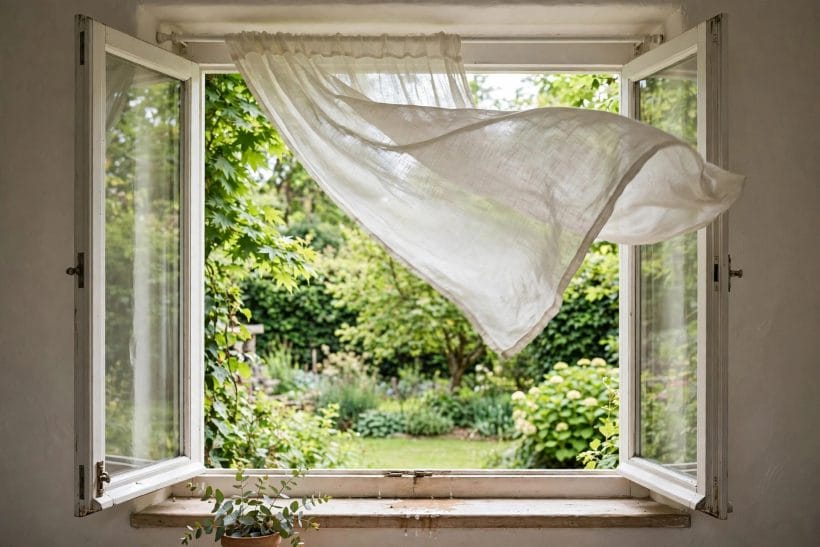
1. Open up on the spray side first
Start where the smell is strongest and open windows wide there, then through the house, so air has a path in and out. Cross-ventilation does in an hour what a single open window does in a day.
2. Use fans to push, not just stir
A fan in a window, blowing outward on the spray side and inward on the far side, turns the house into a slow chimney. Ordinary household fans are enough — the goal is air changes, not drama. Move from room to room in the order the air travels, opening as you go; a house aired as one system clears faster than a house aired as a series of separate rooms.
3. Keep air moving in sessions
Weather and security permitting, repeat long airing sessions over the first days rather than one heroic blast. Each session measurably thins the smell; between sessions, closed rooms simply hold it in reserve. A fan aimed out of a window on the still side of the house does the work the breeze cannot; a short spell of assisted air beats a long afternoon of hoping for wind.
3. Find Where the Smell Is Strongest
4. Follow the gradient
Walk the house slowly and honestly. Skunk odour pools near its entry — the room over the porch, the wall by the open window, the lowest rooms. Treating the strongest zone first saves washing the whole house on suspicion.
5. Check low points and air paths
Smell travels along the same routes air does: under doors, through vents, up stairwells. Basements and the spaces covered in basement ideas often hold the odour longest simply because their air changes slowest. Door handles, stair rails and the backs of chairs deserve a pass too — hands carry scent oils to exactly the places a checklist is most likely to forget.
6. Rule the dog in or out
If a pet was outside, check the pet before redecorating your theory of the house — a sprayed dog on a sofa will defeat a week of window-opening. Section 6 covers the pet in general terms.
4. Soft Furnishings and Fabrics
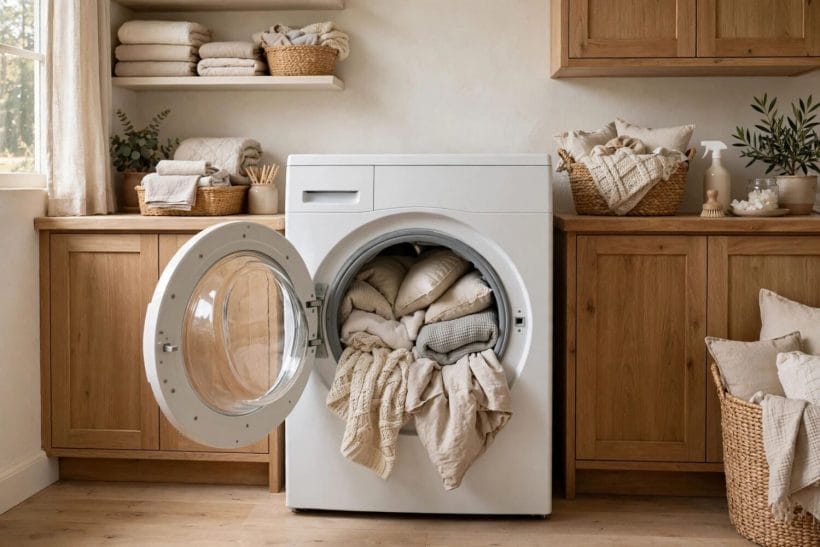
7. Wash everything washable near the source
Curtains, cushion covers, throws, bedding and pet blankets from the affected rooms go through an ordinary wash with ordinary detergent, following their care labels. Textiles are the smell’s favourite hiding place; this is the highest-value laundry you will ever do, as any tour of laundry room ideas would agree in spirit.
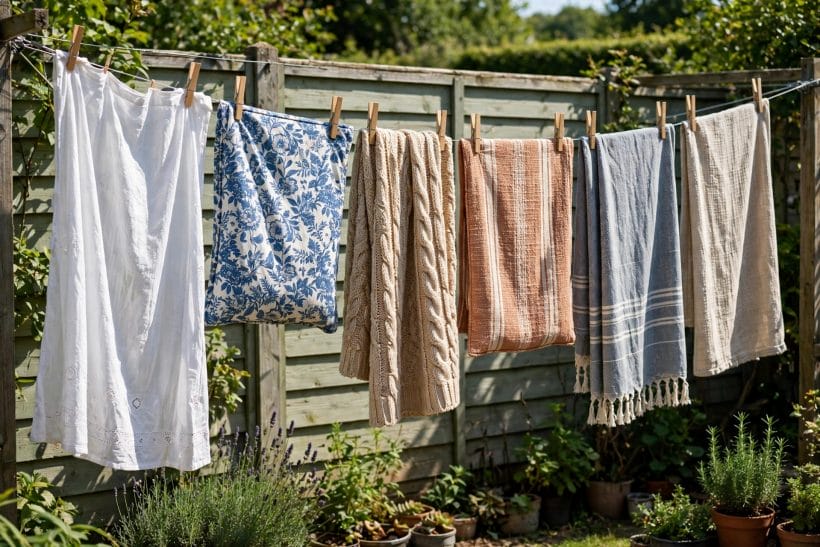
8. Air what cannot be washed
Rugs, upholstered pieces and mattresses that cannot go in a machine get the next best thing: hours outdoors in moving air, repeated over several days. Sunlight and wind together are the oldest deodorisers there are. Wash the dog’s bedding in the same rotation as the throws and cushion covers; the pet’s own textiles quietly hold the household’s strongest share of any smell.
9. Repeat without resentment
Some pieces need a second wash or a third airing — skunk oils cling, and a single pass honestly may not finish them. Judge by a fresh nose after the item has been back indoors overnight, not straight off the line.
5. Hard Surfaces, Floors and Walls
10. Wipe the hard surfaces in the strong zone
Floors, skirting, windowsills and paintwork near the source carry a film of the spray’s oils. An ordinary household cleaner, used as its label directs, on a cloth or mop, is the correct and sufficient tool. Work from high to low — shelves and mantels before tables, tables before floors — so anything loosened on the way lands where it will still be cleaned.
11. One product, used as directed
Keep the cleaning simple: one ordinary product at a time, used exactly as directed, with the room ventilated. Never mix cleaning products — that rule has no exceptions and no household emergency justifies breaking it.
12. Softly does it on delicate finishes
Painted, waxed and delicate surfaces get the mildest ordinary treatment first, tested somewhere unobtrusive. The smell is temporary; a damaged finish is not — patience protects both the room and the deposit. If a textile cannot be washed or aired outdoors, isolate it in a closed room for the week rather than leaving it to share its smell with everything stored beside it.
6. The Pet Question, in General Terms
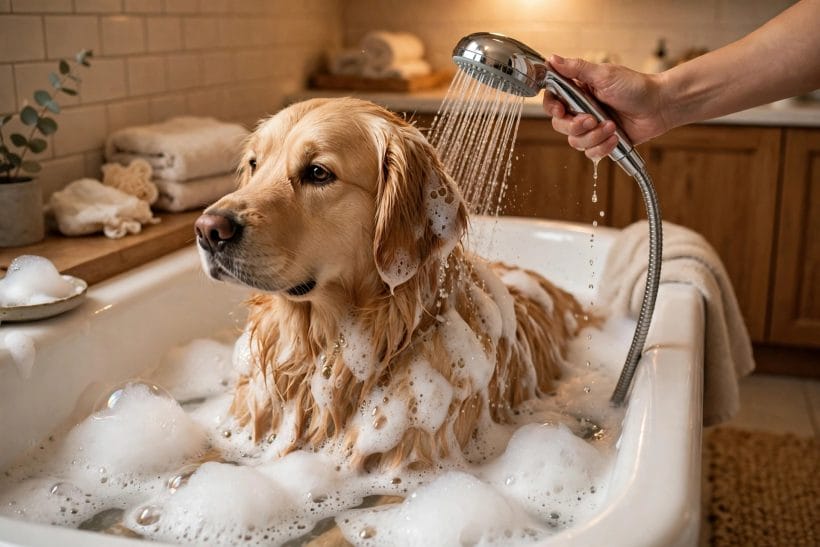
13. Bathe the pet with pet shampoo
If the dog took the spray, a thorough bath with a pet shampoo, used as the label directs and repeated if needed, is the ordinary household answer. Keep the pet off soft furnishings until the smell on its coat has genuinely faded. Porous things are patient things: a smell that lives inside foam or unsealed timber fades on its own schedule, and judging it daily only makes the schedule feel longer than it is.
14. Wash the pet’s bedding and collar too
The dog’s bed, blankets and fabric collar hold the smell as faithfully as the dog does. They go in the same wash-or-air programme as the household textiles in section 4 — otherwise the pet re-seeds the room nightly.
15. Leave pet health to the vet
This guide deliberately says nothing about pet health, eyes or remedies. If a sprayed pet seems unwell, distressed or hurt, that is a question for a vet, in person — not for a home-design website, including this one.
7. Entry Points: How the Smell Gets In
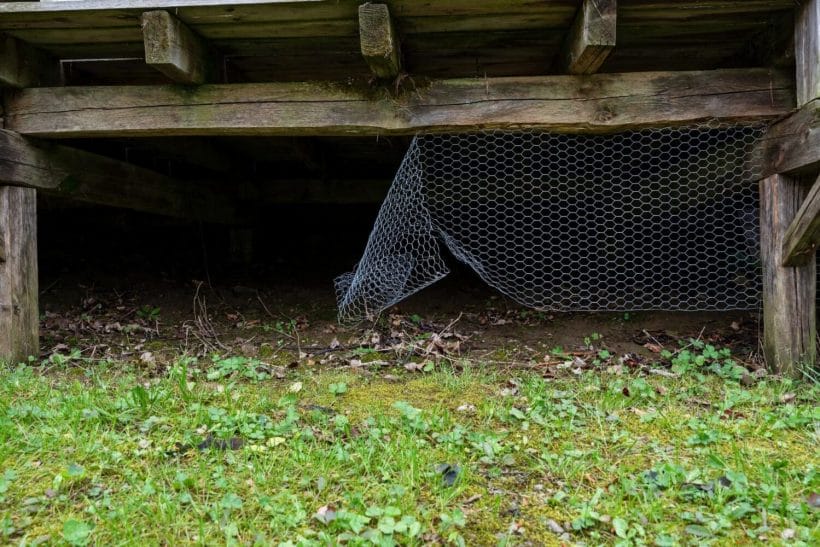
16. Gaps under doors and around pipes
Odour pours through the same small gaps weather does — door sweeps, pipe penetrations, tired seals. Finding and later sealing them is draught-proofing by another name, with a memorable motivation. If the dog rolled in something rather than being sprayed, the collar and harness carry as much as the coat does; wash the gear along with the bedding load.
17. Vents and open flues
Air bricks, extractor vents and unused flues are open doors to outside air and everything it carries. A spray beside a vent can scent a whole floor; knowing where your vents are is the first step to not repeating the week.
18. Under porches, decks and sheds
The classic skunk address is the sheltered void under a porch or deck, close to the house wall. If the smell is strongest at floor level on one side, suspect shelter beneath it — and read the next section before doing anything about it. Wash the pet’s own blankets before the household’s bedding — the animals’ textiles are closer to the source than the symptom, and treating the source first shortens the whole episode.
8. The Garden Side

19. Shelter, food and quiet are the attractors
Skunks settle where they find cover, food and little disturbance: dense borders, woodpiles, pet food outdoors, fallen fruit. The planting in mulch landscaping ideas and similar garden schemes is lovely — just know it doubles as wildlife habitat, and manage food sources accordingly. Look from the wildlife’s point of view: a gap at ground level under a porch, hidden by shrubs, dry and undisturbed, is an advertisement for a den — the mesh and the tidiness together close it.
20. Light and tidiness discourage returns
A garden that is lit at its edges, cleared of food waste and short on undisturbed hiding places is simply less interesting to a skunk. None of this harms the animal; it merely makes the next garden more attractive than yours.
21. Gardens are shared space
The calm framing used throughout the small Japanese garden ideas applies here too: a garden hosts wildlife whether invited or not. The goal is a house that smells like a house — not a war on the neighbourhood’s skunks. A skunk denning beneath a structure is the clearest line of all: removal, exclusion and any legal protections around wildlife are professional territory everywhere.
9. What Not to Do
22. Never mix cleaning products
It bears repeating as its own rule: do not mix household cleaners, and do not improvise chemical mixtures of any kind for odour removal. Ordinary products, one at a time, as labelled — that is the entire chemistry of this guide.
23. Do not just mask it
Scented sprays and candles over an untreated skunk smell produce skunk-plus-perfume, which nobody has ever preferred. Masking has its place at the very end, when the real work is done and only a trace remains.
24. Do not handle the skunk
If a skunk is living under the house, the answer is a local wildlife professional — for the animal’s sake and yours. Homeowners with pets should also take the ordinary precaution in tiny house pet friendly design spirit: supervise evening garden time until the visitor has moved on. Note where in the house the smell peaks at the same hour each evening; that small pattern often points to the vent or gap nearest the sheltered side of the building.
10. When the Smell Lingers

25. Expect days, and judge weekly
Skunk odour fades on a curve, not a deadline — strong for days, faint for longer, especially in textiles. Judge progress week to week; nose fatigue makes daily judgements unreliable in both directions. Let the last task be the pleasant one: fresh bedding on the beds the night the house finally clears, so the episode ends with the clean smell of linen rather than the memory of the other one.
26. Re-run the cycle on the strong zone
A second pass — air, wash, wipe — on the zone identified in section 3 usually takes the smell from present to occasional. Each pass is easier than the first, and the order never changes. When the house smells like itself again, keep one habit from the episode: fabrics aired regularly and vents kept clear make the next unwelcome smell — of any kind — a one-day event.
27. Professional cleaning as the honest last resort
If a heavy spray has saturated carpets or upholstery beyond home washing, a professional cleaning firm is a reasonable, ordinary step — not a failure of housekeeping. Say what the smell is when you book; they have met it before.
Final Considerations
A skunk smell feels like a siege, but it obeys simple physics: it lives in air, in textiles and on surfaces, and it leaves by the same three doors. Air the house properly and repeatedly, wash and air everything washable, wipe the hard surfaces with ordinary care, find the gaps the smell used — and let a vet answer pet questions and a wildlife professional handle the skunk. Do those things in that order, and the house becomes yours again.

0 Comments