

A small petrol garden machine that leaves fuel where it should never be — at the air intake, on the casing, or in a damp patch beneath it — is sending a clear and serious message. The fault will not clear itself simply because it is tried again.
This guide explains, calmly and in plain language, what those signs usually mean, what to do first to stay safe, what an owner may safely look at, and why the repair itself belongs with a professional mechanic. Nothing here involves opening the fuel system, and that is deliberate.

1. Small Engine Fuel Trouble at a Glance
Small engine fuel trouble, as this guide uses the term, means petrol appearing outside the places it is meant to travel. Most garden machines live alongside their fuel, in the shed or garage corner that shed ideas helps to plan, and that shared home is exactly why a fuel fault deserves respect: petrol vapour, a stored machine and an enclosed space are a poor mixture.
The five families in the table below are the whole subject in miniature. Each is a reason to stop rather than a puzzle to solve at home, and the sections that follow take them in a safe order: meaning, response, the little that can be observed, and the habits that keep trouble from returning.
| Family | Character | What it means |
|---|---|---|
| Fuel at the Intake | Petrol appearing where it should not be | Stop |
| Flooding Smell | Strong petrol smell and no start | Wait |
| Leaking Fuel | Drips, stains or a damp patch | Unsafe |
| Stale Fuel | Old petrol left from last season | Suspect |
| The Safe Response | Engine off, no sparks, fresh air | First |

Scope, stated plainly: this is an explainer, not a manual. It names no maker, gives no repair steps and describes causes only in principle, because a fuel fault is a fire risk before it is a curiosity. Where fuel is kept matters as much as the machine, and the storage thinking in garage storage ideas runs through this guide from the first section to the last.
2. What the Symptoms Mean

Symptoms are information, and with a small engine fuel fault they are best read from a standing distance. A machine kept in a detached garage or a garden shed announces its trouble in the same few ways, and each points the same direction: stop, make the area safe, and let a mechanic find the cause.
Fuel Showing at the Air Intake
Petrol visible at the air intake, or wetting the casing around it, means fuel has travelled somewhere it was never meant to reach. A healthy intake draws in air and only air, so wetness there means fuel is no longer being held and measured as it should be — a symptom to respect, not to wipe away.
A Strong Smell of Petrol
A faint smell after a long day of mowing is one thing; a strong petrol smell at the shed door, or around a machine that refuses to start, is quite another. It usually means far more fuel has arrived than the engine can use — the flooding pattern — or that fuel is escaping somewhere. Either way, the smell itself is the warning: vapour is present, and the machine needs to be left alone.
Drips, Stains and a Flooded No-Start
Drips and dark stains beneath a parked machine, a damp patch that returns after the floor has dried, and an engine that will not start while smelling of fuel all belong to the same family. None of them is a reason to keep trying the starter: each attempt risks moving more fuel to places it should never be.
3. Why Fuel Ends Up in the Wrong Place

The causes below are described at the level of principle only, because understanding why fuel strays is genuinely useful, while opening the parts involved is not an owner’s job. A small engine meters fuel in tiny amounts, and several ordinary pressures work against that care.
A Metering Part That No Longer Closes Cleanly
Inside every small engine, parts meant to open and close in turn decide how much fuel passes. A metering part that should close can stick open with wear or old fuel, and when it does, fuel keeps arriving whether the engine needs it or not — which is how a machine floods or wets its intake. Naming the principle is as far as an owner needs to go.
Old Fuel and Honest Wear
Petrol does not keep its character forever. Fuel left standing in a machine or a container across a season grows stale, and stale fuel is hard on small engines: it can leave sticky traces in the narrow passages where fuel is measured, and it makes starting reluctant. Wear plays the same slow game, until a machine that behaved for years shows fuel where it never used to.
A Machine Left Standing
Machines that stand unused for long stretches often show their fuel trouble at the first start of the season rather than the last cut of the old one. Fuel sitting still and seals drying in the quiet months lean the same way. That is why a spring fault rarely surprises a mechanic, and why the seasonal habits later in this guide matter more than any cure.
4. The Safe First Response

Whatever the symptom, the first response is the same, and short enough to remember under stress: stop the machine, remove every source of ignition, get fresh air moving, and give the machine time and space.
Stop, Switch Off and Let It Cool
If the machine is running, stop it. If it is being started and fuel appears or the smell turns strong, stop trying. A hot engine and loose petrol are a combination to separate calmly and quickly, so let the machine cool completely where it stands, and resist the wish to test whether it behaves better on one more attempt. It will not, and the attempt itself is the risk.
No Sparks, Flames or Smoking Nearby
Petrol vapour is the real hazard, and it travels further and ignites more easily than most people expect. Keep flames, cigarettes and sparking tools well away from a leaking or flooded machine, and never run or test it in a closed space while the fault is live: the building itself becomes part of the risk.
Fresh Air and a Clear Space
Open the shed or garage doors wide, or better, let the machine stand outdoors where the air can do its quiet work. Keep people and pets clear until the smell has faded. Only when the area smells clean and the machine is cold does it make sense to look, from the outside, at what the next sections describe.
5. What You Can Safely Look At
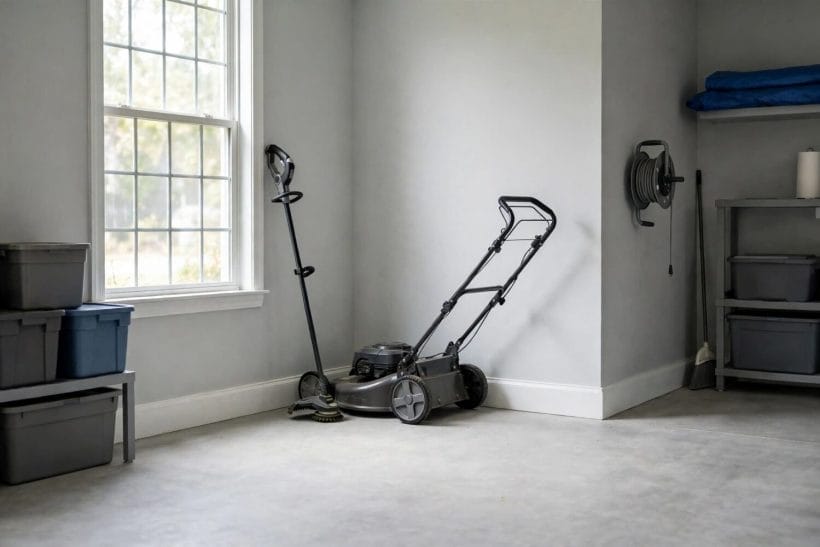
Looking is not repairing. An owner may safely observe a machine from the outside — eyes only, nothing opened, loosened or removed — and a clear account of what was seen is valuable to the mechanic who later takes the fault on.
Visible Drips and Where They Gather
Walk around the cold, stopped machine and notice: where does fuel appear, where does a drip gather, and does a stain pattern on the floor say the leak happens parked, running, or both. Note whether the dampness sits near the tank end of the machine or lower around the engine. That geography, honestly reported, saves a mechanic time.
The Outside of Lines, Tank and Cap
The exterior may also be read at a glance: a fuel line whose outer surface looks perished, a tank with staining around its seams, a cap whose surround is wet. Looking is the whole of the job — a perished-looking line is a finding to report, never an invitation to flex it or loosen it. The outside tells its story undisturbed.
Fuel Age and How It Has Been Kept
Ask the simple questions only you can answer: how old is the fuel in the tank, was it fresh this season or carried over from the last, and where has the spare fuel been kept. Stale fuel is a prime suspect in flooding, and a mechanic told honestly about it starts the diagnosis in a far better place.
6. What Not to Touch
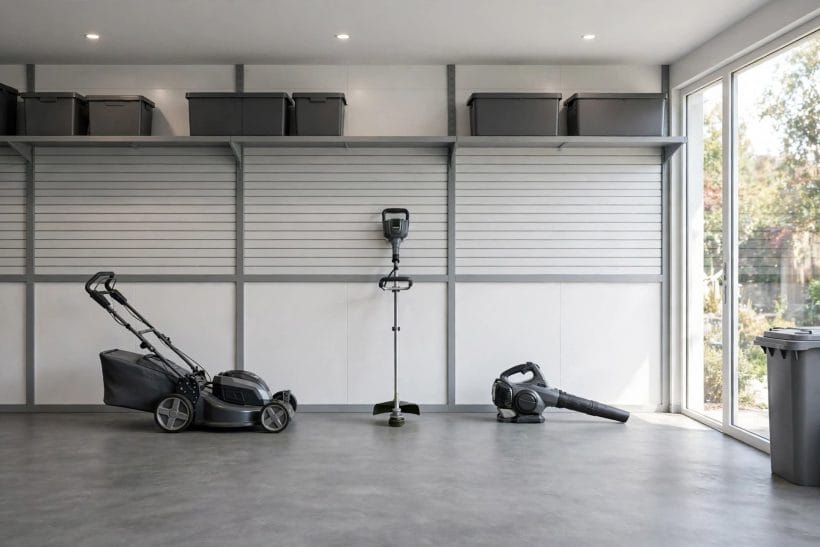
This section exists because curiosity with a fuel fault is not harmless. The parts that meter and carry fuel are small, exact and surrounded by the most flammable liquid in the garden, and the line between observing and interfering is the line this guide is built around.
The Inside of the Fuel System
Do not open the fuel system. The internals that meter fuel — the chamber where it is measured and mixed with air — are precise and impossible to judge honestly without training. Cleaning, adjusting or exploring them at home turns a contained fault into loose fuel and disturbed seals. The owner’s tools here are a notebook and a telephone, and using them is the correct response.
Adjustments of Any Kind
Settings that govern how much fuel a machine receives are set against instruments and experience, not by ear in a garden. Turning at them to cure flooding makes the underlying fault harder to find. If a machine floods, the adjustment it needs is the one a mechanic makes after finding why — in that order.
Repeated Starting and Indoor Running
Two habits deserve naming plainly. The first is cranking a flooded or leaking machine again and again in hope: each attempt can move more fuel into the wrong places and adds heat to a vapour-rich moment. The second is running or testing a machine with a known fuel fault inside a shed or garage, where vapour gathers instead of dispersing. Neither has ever fixed anything.
7. Storing Fuel Safely at Home
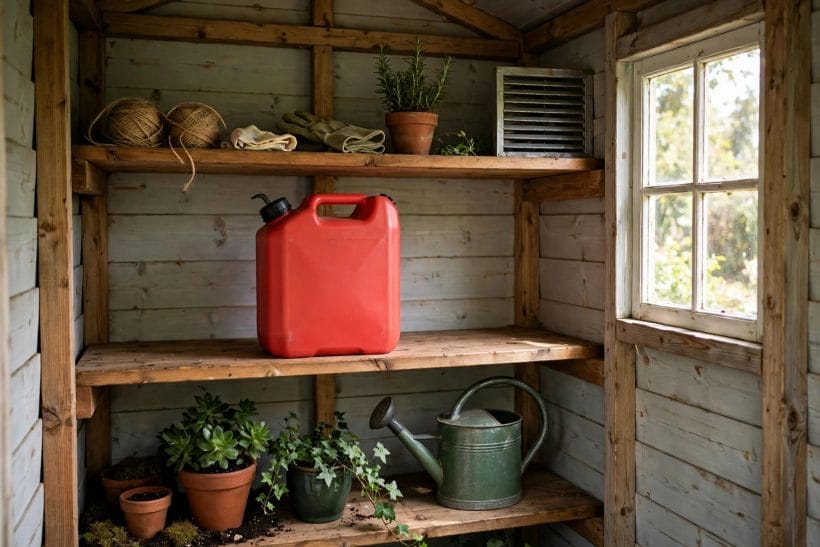
Most fuel trouble is met at the machine, but much of it begins at the shelf. How petrol is stored between uses decides how fresh it is and how safe the whole corner feels across a season.
An Approved Container, Kept Closed
Spare petrol belongs in a container made and approved for fuel, kept closed, and kept only in the quantity the season honestly needs. Improvised bottles and open cans have no place near garden machinery: they spill and they breathe vapour into the room. A proper container, kept for fuel and nothing else, is the whole of the rule.
A Ventilated Shelf, Away from Heat
Store the container where air moves, away from direct sun, heaters and anything that sparks or flames, and off the floor where knocks and damp gather. The storage corners planned in modern shed ideas show the right instinct: a defined place, air around it, and nothing hot sharing the shelf. A machine with a known leak is never stored beside the fuel store.
Old Fuel and Honest Disposal
Fuel that has sat too long to trust should leave the shed by the honest route. Never pour petrol into drains, onto soil or into household rubbish. Local hazardous-waste routes and council collection points exist for exactly this, and using them keeps fuel out of water and ground. When in doubt about a container’s age, treat the doubt as the answer.
8. When It Is a Mechanic’s Job
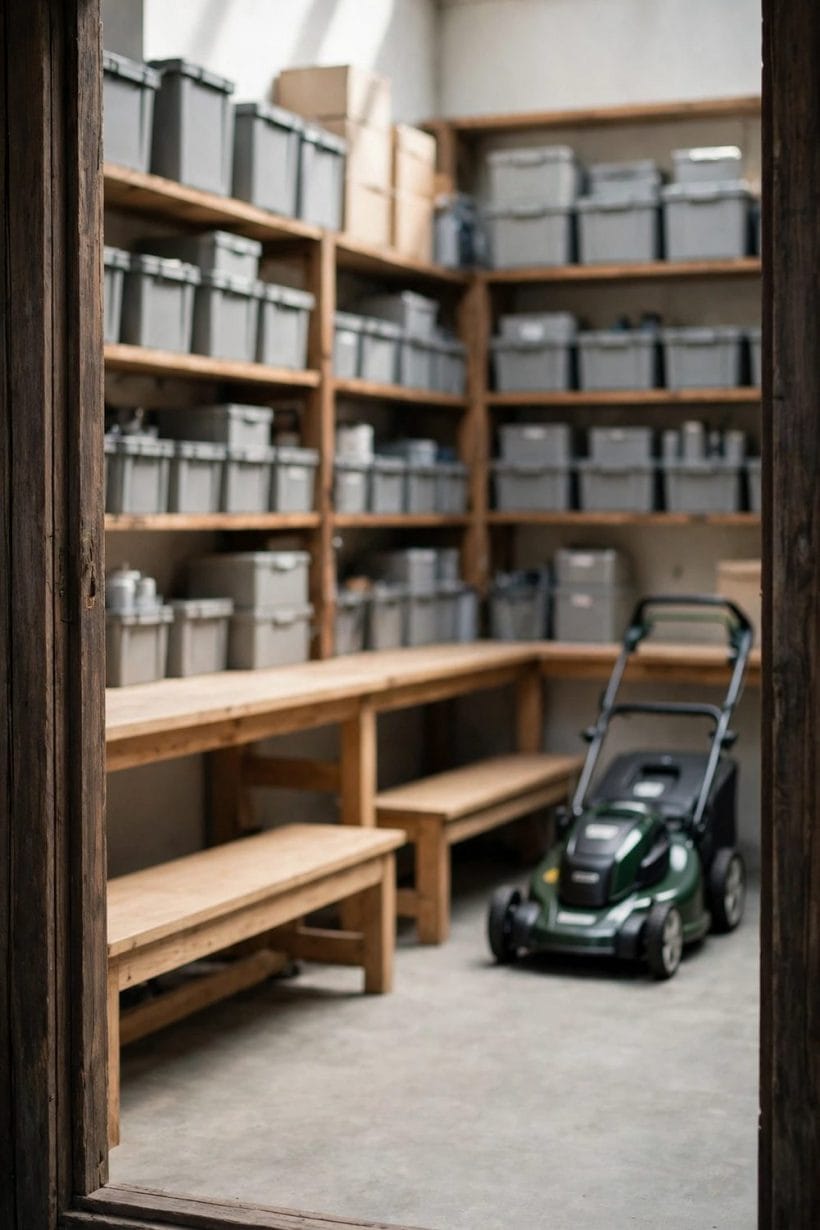
For fuel faults, the mechanic is not the last resort; the mechanic is the default answer. This section explains why that is the calm and economical conclusion, and what a proper service visit usually covers.
The Default Answer for Fuel Faults
Fuel at the intake, a leak, repeated flooding, a machine weeping petrol while parked: each means the system that holds and measures a flammable liquid has failed somewhere inside itself. Finding that somewhere involves opening the system and handling fuel safely — the daily work of a qualified small-engine mechanic, in a workshop set up for it. The fire risk alone settles the question.
What a Service Visit Covers, in General
In general terms, expect a mechanic to trace the fuel’s route, find where it escapes or over-arrives, renew what wear or stale fuel has damaged, and run the engine to prove the fault has gone. You help most by handing over your observations: when the fuel appears, how old it is, and what changed first.
Choosing Calm Over Curiosity
There is a particular temptation, with a small machine, to feel the fault must be simple because the engine is simple. Resist it kindly. Small engines are simple in outline and exact in detail, and fuel makes their faults unforgiving. Paying for the repair buys back a machine that starts cleanly and can be stored without a second thought.
9. Seasonal Habits That Prevent Trouble
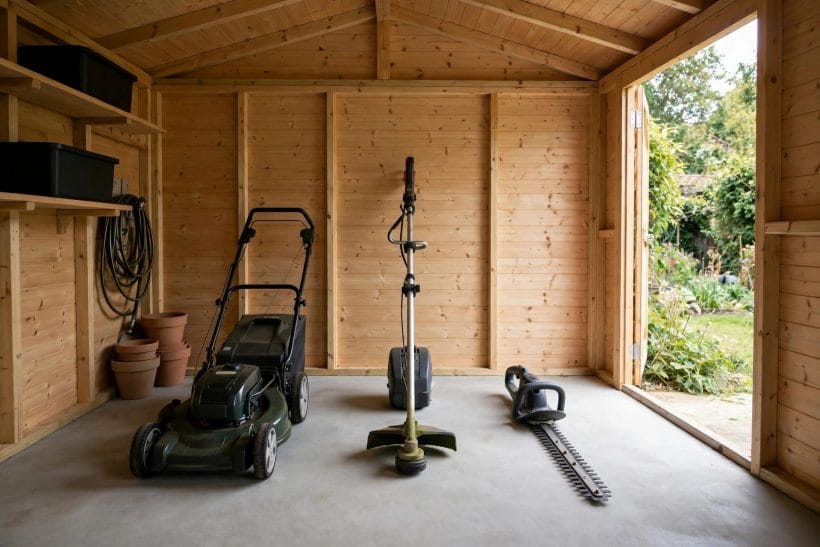
Prevention, with fuel, is mostly a matter of rhythm: fresh fuel in the working season, honest preparation before the quiet one, and a look over the machine’s home as often as the machine. Garages that share space with cars, as in three car garage ideas, ask for the same habits kept a little more deliberately.
Fresh Fuel in Season
The simplest habit is also the most effective: buy petrol in quantities the season will actually use, so the fuel in the tank is this season’s fuel, not a relic of the last one. Fresh fuel starts more willingly and leaves less behind in the narrow places where fuel is measured. A machine fed fresh fuel is the least likely to meet this guide’s symptoms.
Storage Prep in General Terms
Before a machine is put away for its quiet months, the general shape of good preparation is the same everywhere: the machine clean and dry, its fuel arrangements settled as its handbook recommends, and its home tidy around it. The detail belongs to the handbook and, where fuel is involved, to professional advice rather than improvisation — a machine stored thoughtfully wakes far more willingly than one abandoned where it stopped.
A Look Over Before the Season Turns
At the season’s start, walk around the machine before the first start is attempted: look for stains beneath it, perished-looking surfaces, a stale smell around the tank. Catching a weep on the floor in spring, before the machine is ever started, is the cheapest and safest diagnosis in this guide — and it costs nothing but attention.
10. Keeping Garden Machines Ready
Readiness is a home as much as a machine. Equipment that lives in a tidy, ventilated space stays cleaner, safer and easier to inspect — and trouble is spotted early because everything around it looks as it should.
A Tidy, Ventilated Home for Machines
Give machines a defined bay or corner, fuel stored apart and properly, and floor space clear enough that a drip shows against it. The planning in garage measurements helps that home fit the equipment honestly, with room to walk around a machine. A space where air moves is a space where a fuel smell announces itself early.
The Garden Around the Shed
The ground outside matters too. A shed reached by a clear path, with machines wheeled out onto open, level ground to be looked over, is safer than one buried in clutter — and the wider thinking in backyard landscaping ideas treats that working ground as part of the garden. Open air and room to step back are safety equipment of a quiet kind.
Ready Means Looked After, Not Pulled Apart
A ready machine is a clean machine, honestly stored, fed fresh fuel, watched for changes and serviced when its fuel system speaks. None of that asks an owner to become a mechanic; it asks for attention, tidiness, good storage and the judgement to stop. Machines kept that way spend their seasons working, as they were bought to.
Final Considerations
If this guide leaves one habit behind, let it be the order of operations: stop, make the area safe, look from the outside, and hand the fault itself to a professional. A fuel fault is rarely a verdict on the machine — wear, stale fuel and time explain most of them — but it is always a verdict on how the next hour should be spent, and that hour belongs in fresh air.
Keep the machine’s home tidy and ventilated, keep its fuel fresh and properly stored, watch for the early signs each season, and let a qualified mechanic do the work that involves fuel under the casing. Do that, and a spitting or weeping machine becomes a short interruption, honestly handled, before the garden gets its machine back — clean-starting and ready for the season.




0 Comments