

New Mexico builds tiny houses the hard way: strong sun at altitude, nights that drop below freezing after warm afternoons, water that cannot be taken for granted, and land that may sit an hour from the nearest hardware store. None of that rules out a small home — people have built snug, thick-walled houses here for centuries — but it does mean the builder matters. This guide compares the types of tiny house builders new mexico buyers can hire, what each route costs, and the checks to make before you commit.
1. New Mexico Tiny House Builders at a Glance
Builders fall into four types. Custom builders design and build a one-off home around your land and climate zone. Semi-custom builders work from plans they have already built and let you select options. Shell builders hand you a weather-tight structure to finish yourself. Kit and plan sellers provide a materials package or drawings, and the building is yours to do. In a state of long distances and sharp daily temperature swings, the right choice depends on how much design help, desert know-how and finishing work you need from a professional.
| Builder Type | What You Get | At a Glance |
|---|---|---|
| Custom builders | Full design-build | Most control |
| Semi-custom builders | Plans + options | Mid-range |
| Shell builders | Weather-tight shell | DIY finish |
| Kit & plan sellers | You build | Lowest cost |
Key factors in New Mexico: heat spec, water, delivery and warranty. As the comparison below puts it, this is a place of high desert sun by day and cold by night — insulation and thermal mass work together here.

The four builder types compared, with the New Mexico checks that come first: heat specification, water, delivery and warranty.
Start from your land, not from a floor plan. A site with power and water at the road, close to a town, suits any row of the table. A remote parcel with a well to drill, an access road to grade and winter nights well below freezing pushes you toward builders who design for those conditions every day — or toward taking on a great deal of the problem-solving yourself. The sections below work through each type, then costs, contracts, placement checks and the build process.
2. How New Mexico Conditions Shape the Build
The defining fact here is the daily swing. At New Mexico’s elevations, a home can need shade and ventilation in the afternoon and real heating the same night. Builders who know the state design for both halves of the day: insulation that slows heat moving in either direction, thermal mass that soaks up daytime warmth and releases it after dark, windows placed for winter sun and protected from summer glare, and a roof and exterior that shrug off intense ultraviolet. The northern mountains add genuine winter snow to the brief, while the southern deserts soften the cold and sharpen the heat — the same builder may spec two homes in this state quite differently.
Water and distance are the other two shapers. Ask early where your water comes from — a municipal line, a private well, or hauled water with storage — because the answer affects plumbing design, the site budget and in some places whether you can build at all. Monsoon-season rain arrives fast when it comes, so drainage, grading and roof water management belong in the plan from the start. Finally, measure your project in miles: delivery routes, material runs and warranty visits all stretch in a big, sparsely settled state. Our building a tiny house checklist orders the land, water and build decisions so none of them ambush you halfway through.
3. Custom Builders: When Full Design-Build Fits
A custom builder is the natural fit when the land leads. Orientation for sun and shade, walls designed as a thermal system, a roof detailed for your elevation’s snow and wind, and systems chosen for your water supply and power situation — a design-build team treats those as one connected problem rather than options on a list. That is also why custom builders here often have deep experience with off-grid or partly off-grid homes: when the site has no utility lines, the house and its systems have to be designed together from the first sketch.
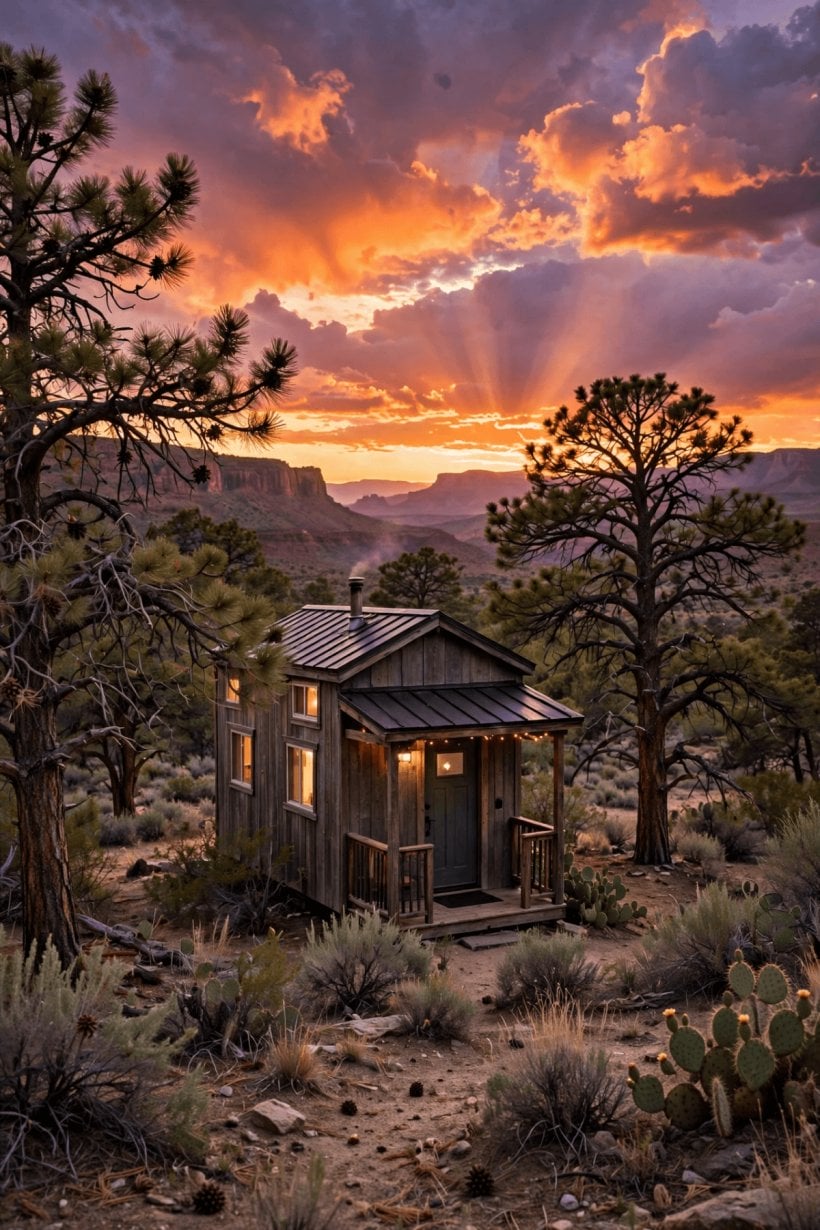
A custom New Mexico build is oriented for sun, shade and thermal mass — decisions that have to happen at the drawing stage, not after delivery.
Expect this route to carry the highest price and the longest timeline of the four types, because design, engineering and one-off construction all take time. It suits buyers with distinctive land, a year-round high-elevation site, off-grid ambitions, or a wish to build in the region’s earthy, thick-walled traditions adapted to a tiny footprint. Ask how many of a builder’s homes sit at elevations like yours, what their owners heat and cool with, and who designs the water and power systems. The same design-led approach shows up across the line among tiny house builders in Arizona, where desert specification is likewise the whole game.
4. Semi-Custom Builders: Proven Plans, Your Options
Semi-custom builders sell plans that have already been built and debugged, with an options list standing in for a blank page. You trade total freedom for predictability: firmer pricing, a faster build, and a structure the builder can stand behind because they have raised it before. In New Mexico the skill is choosing options like a local. Spend on the envelope — insulation, quality glazing with the right solar shading, a roof specification matched to your elevation, and heating and cooling sized for the swing — before you spend on visible finishes.
Interrogate the inclusions. Builders based far away may assume easy delivery and utility connections that your site cannot offer, so confirm what the price covers for transport, setting the home, and connecting water, waste and power — and what lands on you. Ask which of their standard plans have actually been placed in high-desert conditions and what those owners changed afterwards; that answer tells you how honest the options list is. Regional comparison helps here: the desert-spec conversation runs through our guide to tiny house builders in Nevada as well, and the builders who do this well tend to think in terms of climate first and catalogue second.
5. Shell Builders: A Weather-Tight Start You Finish
A shell builder delivers the building’s skeleton and skin: framing, roof, cladding, windows and doors fitted, the inside ready for insulation, services and finishes. It is a sensible split for this state. Getting a structure weather-tight quickly matters when your building season is bracketed by winter cold and monsoon storms, and finishing the interior yourself afterwards lets you spread cost over time and choose exactly where your money goes — extra insulation, better fixtures, or the water storage your site demands.
Go in clear-eyed about the finish. Insulating a small home for high-desert nights, running plumbing that will not freeze, and completing electrical work that passes inspection are substantial jobs, and on a rural site every forgotten item is a long drive. Get the shell builder’s scope in writing: bare frame or insulated shell, window and door installation complete or openings only, roof drainage handled, and what condition your site and access must be in on delivery day. Ask also how the shell is documented for whoever inspects the finished home. The stage-by-stage approach — professional structure first, owner finish second — is equally common on the plains, as our guide to tiny house builders in Kansas describes.
6. Kit and Plan Sellers: The Lowest-Cost Route
Kits and plans cost the least money and the most effort. A kit arrives as a package of materials, sometimes pre-cut; a plan set is drawings alone. Either way, you become the builder — and in New Mexico that includes being the local-knowledge department. Plans drawn for other climates routinely under-handle this state’s realities: they may lack the insulation strategy, window shading or roof detailing your elevation needs, and adapting them is your job. Kits need the same sceptical read: compare what is actually included, line by line, because membranes, flashings and fixings are classic gaps.
Logistics decide whether the cheap route stays cheap. Price delivery to your actual site — rural New Mexico addresses can turn a bargain kit into an expensive one — and think through where materials will be stored, protected from sun and sudden rain, while you build. If your land is off-grid, your systems design (power, water, waste) sits entirely with you, so budget for advice even if you do the labour yourself. Ask sellers how they support buyers in this state: will they talk to your county, clarify details for an inspector, or stand behind a part that arrives damaged after a long haul? The self-build discipline is identical to the one in our guide to tiny house builders in New Jersey: the less you pay a builder, the more of the builder’s knowledge you must supply yourself.
7. What a Tiny House Costs in New Mexico: The Real Drivers
This guide prints no prices, because here more than most states, the site writes the budget. Builder type still sets the first-order range — full design-build at the top, kits at the bottom, semi-custom and shell routes between — but what happens around the house can rival what the house itself costs. Start with utilities: connecting to existing lines is one project; drilling a well, installing septic, adding storage for hauled water, or building an off-grid power system is several projects, each with its own price tag and timeline.
Distance is the second driver. Delivery over long rural routes, trades travelling to a remote site, and materials moving in stages all cost more than the same work near a city. Specification is third: the thermal package that makes a high-desert home comfortable — serious insulation, considered glazing, mass where it helps, heating and cooling that handle the swing — is not a luxury line item here, it is the house working as intended. Access and groundworks follow: grading, drainage for monsoon downpours, and a foundation or pad suited to your soil. Compare every quote against the same written list of house, site work, systems and delivery, or you will compare a whole project against half of one.
8. Questions to Ask Before You Sign Anything
Ask about the climate first, in specifics. What insulation, glazing and heating and cooling specification is written into this price, and how does it change for my elevation? How many of your homes are lived in year-round in high-desert conditions, and can I talk to an owner through both a summer and a winter? What is the plan for water and waste on my site, and who designs it? Then turn to distance: where will warranty work come from if something fails, how long does it typically take, and what does the warranty actually cover — structure, roof, systems, appliances?
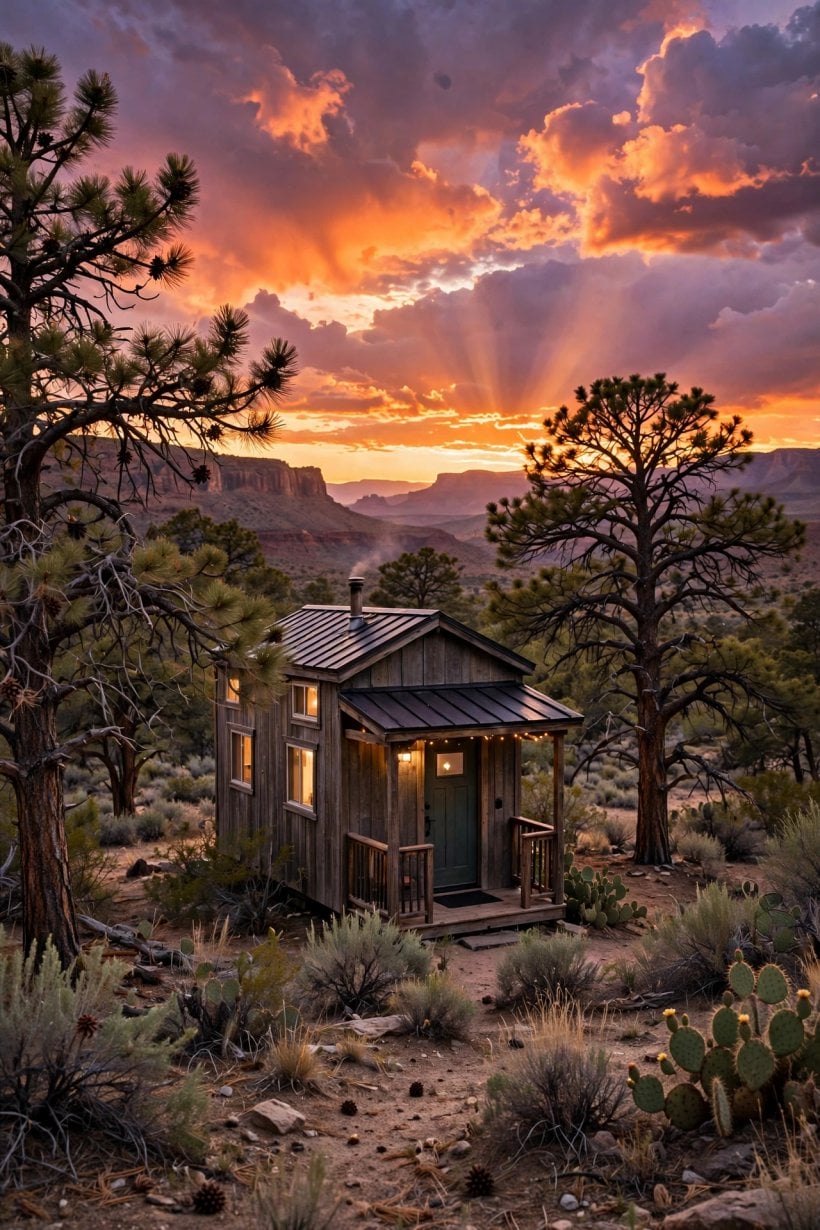
In a big, rural state, the warranty question is also a geography question — ask who comes, from where, and how fast, before you sign.
Finish with the commercial ground. What does the payment schedule look like, tied to which completed stages? What is the realistic timeline, including delivery to a site like mine, and what weather or access problems could move it? Who is responsible for confirming the site is ready — access, pad, utilities — on delivery day? Good builders answer these questions in writing and without irritation; the same contract discipline runs through our guide to tiny house builders in New York, where the climate differs and the paperwork matters just as much. If a builder is vague about heat specification or warranty coverage at distance, keep looking.
9. Placement, Permits and Legal Checks in New Mexico
Placement here is a county-by-county and city-by-city conversation. What counts as a dwelling, whether a tiny house belongs on a permanent foundation or may stay on wheels, minimum sizes, and how accessory units are treated all come from local ordinances and the offices that administer them — so check with your county or city planning and building departments before you buy land or sign a build contract, and treat general online claims, including ours, as orientation rather than permission.
Ask the questions that decide real projects. Is a home of this size allowed as a primary residence on this parcel, and under what classification? What foundation, septic or sewer, and electrical requirements apply, and who inspects each stage? How is water supply approved — and if the plan involves a well or hauled water, what does approval look like? Rural land adds its own traps: subdivision covenants, easements and access rights, and parcels sold with no legal or physical access at all are known hazards of cheap desert land, so verify access and any private restrictions as carefully as the public rules. A morning of dull phone calls at this stage is the cheapest insurance in the whole project.
10. From First Call to Move-In: Process and Timeline Checks
A sound New Mexico build runs in this order: county checks and water answers first, then builder shortlisting from the table in section 1, a written specification covering the thermal package and the site systems, stage payments matched to completed work, and a delivery planned around seasons — not into the teeth of a northern winter or onto access roads turned to mud by monsoon rain. Because so much happens far from the builder’s yard, agree in advance who confirms the site is ready, who meets the delivery, and who connects what in the days after the home lands.
Close the project properly. Walk the home at handover with the specification in hand: run the heating and cooling, test every water outlet and drain, check doors and windows that have travelled a long way, and collect the warranty documents, system manuals and inspection records into one place. Remote living rewards owners who know their own systems, so ask the builder to walk you through yours — filters, shut-offs, freeze precautions — before they leave. The habit is the same one we recommend in our guide to tiny house builders in North Dakota: in wide-open states, a careful handover is part of the build.
Final Considerations
New Mexico will forgive a plain tiny house; it will not forgive a badly specified one. Choose the builder type that matches your land and your skills — custom for design-led answers to a demanding site, semi-custom for proven plans with the right desert options, a shell for a staged self-finish, a kit only if you can supply the local knowledge yourself. Get the heat specification, the water plan and the warranty in writing, confirm placement with your county early, and your small home will handle blazing afternoons and frosty nights with the calm this landscape has taught builders for centuries.


0 Comments