

New Jersey packs more variety into a small state than almost anywhere in the country — tight suburbs within commuting distance of two big cities, Shore towns, farmland, pine forests and wooded hills. Land is precious, lots are often small, and every town writes its own rules. That makes choosing among tiny house builders new jersey less about the prettiest plan and more about who can get a home approved, delivered and set on your specific site. This guide compares the four builder types, what drives cost here, and the checks to run first.
1. New Jersey Tiny House Builders at a Glance
Builders here work in four ways. Custom builders design and build a one-off home around your lot and your town’s requirements. Semi-custom builders start from plans they have already built and let you choose options. Shell builders deliver a weather-tight structure for you to finish. Kit and plan sellers hand you the materials package or the drawings and leave the building to you. In a state where placement is half the battle, the right type depends on how much of the approval, delivery and finish work you want a professional to carry.
| Builder Type | What You Get | At a Glance |
|---|---|---|
| Custom builders | Full design-build | Most control |
| Semi-custom builders | Plans + options | Mid-range |
| Shell builders | Weather-tight shell | DIY finish |
| Kit & plan sellers | You build | Lowest cost |
Key factors in New Jersey: permits (compliance required), placement (site approved), delivery (transport access) and warranty (coverage terms). The comparison below sums it up: rules change town to town here — confirm placement before the build starts.

The four builder types compared, with the New Jersey checks that come first: permits, placement, delivery and warranty.
Read the table alongside your site. A buyer with a straightforward rural lot and building skills can use any row. A buyer squeezing a home onto a small suburban lot, inside setbacks and under a town’s close eye, needs a builder whose service includes the paperwork and the delivery plan, not just the house. The sections that follow take each type in turn, then turn to costs, contract questions, placement checks and the process itself.
2. How New Jersey Conditions Shape the Build
Three things shape almost every New Jersey tiny build: the town, the lot and the journey between the builder’s yard and your site. The town comes first because municipalities control zoning and construction approvals locally, and two towns sharing a border can treat the same house completely differently. The lot comes second — many New Jersey parcels are narrow, deep or hemmed in by setbacks, mature trees and neighbours, and a design that ignores those limits will not survive the approval process. Delivery comes third: a finished tiny house has to travel real streets, under real wires and through real turns, and tight suburban roads punish a delivery nobody planned.
Climate plays a supporting role. Winters bite harder in the northwestern hills than at the Shore, summers are humid almost everywhere, and coastal sites add wind, salt air and flood questions that inland buyers never face. None of this is exotic, but all of it belongs in the specification discussion with your builder: insulation and heating for cold snaps, cooling and moisture control for summer, corrosion-aware exterior choices near the coast, and drainage wherever water already pools. Our building a tiny house checklist sequences these site, approval and build decisions in order. A builder who asks about your town and your lot before quoting a number is showing you they understand this state.
3. Custom Builders: When Full Design-Build Fits
Custom builders earn their premium on awkward briefs, and New Jersey produces awkward briefs constantly: a narrow lot that only fits one footprint, setbacks that push the home to one corner, a slope in the back half of the garden, a town that wants the design to sit comfortably on its street. A design-build firm handles that puzzle as one job — drawing a home that fits the parcel, engineering it, pricing it honestly, and shepherding it through approvals with drawings the town can actually review. You also get interior control that stock plans rarely offer: a proper workspace for a commuter, storage designed for a household downsizing from a full house, or a layout arranged around mobility needs.
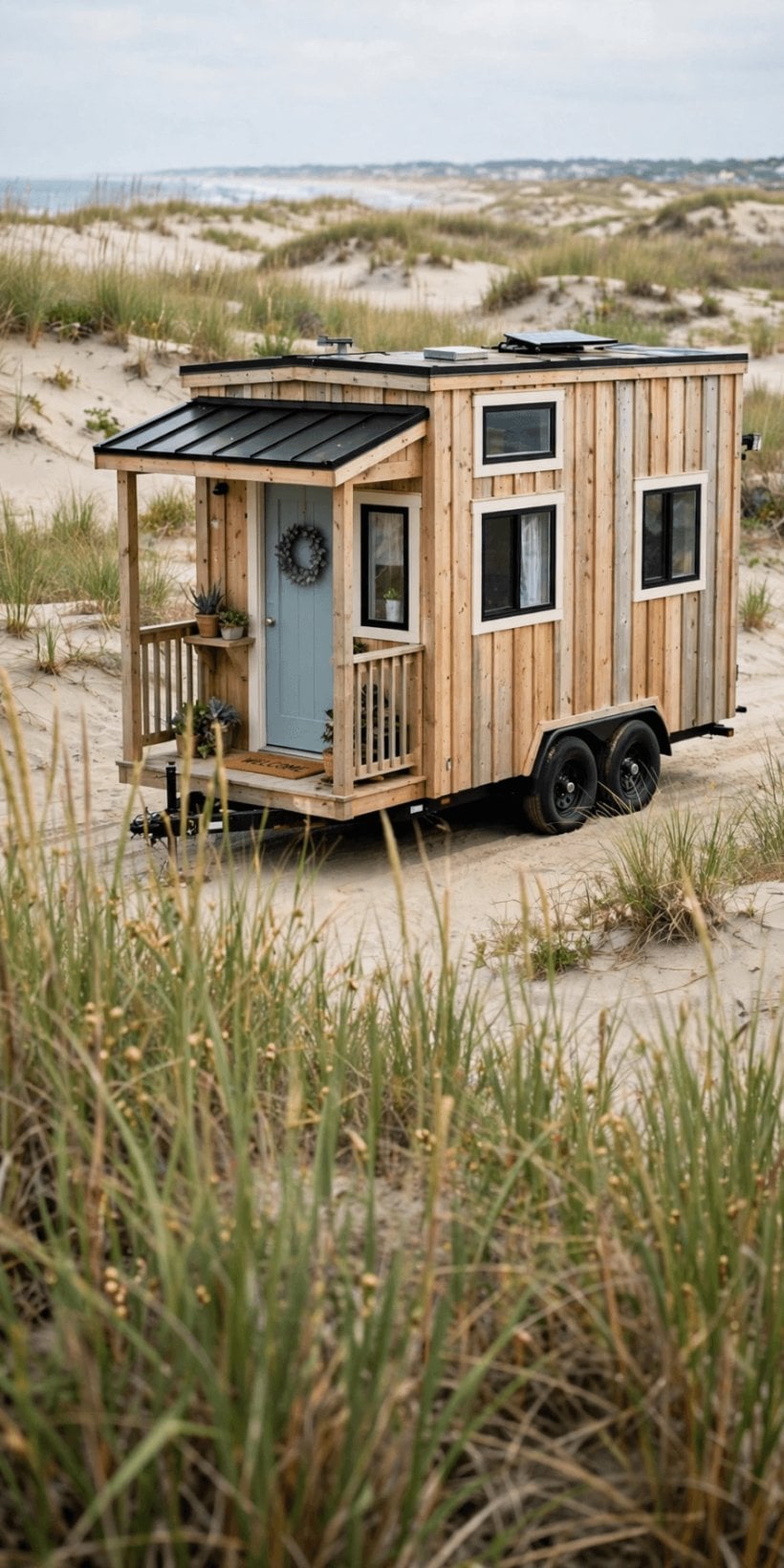
On a tight New Jersey lot, a custom design is shaped by setbacks, access and the town’s rules before it is shaped by taste.
The trade-offs are price and patience. One-off design, engineering and approvals take longer and cost more than any catalogue route, and a busy firm’s calendar can stretch a project across seasons. Ask a custom builder how much of their work is in municipalities like yours, who in their team handles submissions, and what happens to the price if the town asks for changes. Buyers near the northern border often compare across state lines too — our guide to tiny house builders in New York covers the same design-build model in the neighbouring market, where the approval culture is similar.
4. Semi-Custom Builders: Proven Plans, Your Options
Semi-custom builders sell certainty. Their plans have been built before, so the structure is proven, the price is firmer, and the timeline is shorter than a one-off design. You choose from an options list rather than a blank page: exterior cladding and colour, window packages, heating and cooling specification, kitchen and bathroom finishes, and sometimes small layout moves such as flipping a plan to suit your lot. For many New Jersey buyers this is the sweet spot — professional handling of structure and systems, without paying for design work a catalogue already solved.
The discipline is in the details. Confirm exactly what the base price includes, because delivery, crane or set crew, foundation work, skirting and utility connections are common exclusions that land on your budget later. Ask which options the builder recommends for your part of the state — cold-climate specification matters more in the northwest, moisture and storm detailing more at the Shore — and pin down the delivery radius, since a builder whose price assumes an easy run may reprice a tight one. The same proven-plan approach anchors our guides to tiny house builders in New Hampshire and tiny house builders in Delaware, the two neighbours whose buyers most often cross-shop this market.
5. Shell Builders: A Weather-Tight Start You Finish
A shell builder delivers the hard part fast: a framed, roofed, clad building with windows and doors fitted, dry inside and ready for insulation, wiring, plumbing and finishes. For buyers with skills — or with trusted local trades on call — this splits the project sensibly. Professionals do the structural work that must be right the first time, and you control the interior budget and pace, finishing room by room as money allows. It is also a practical way to get a building weather-tight quickly once approvals land, rather than waiting in a full build queue.
Price the whole project before falling for the shell price. Interior materials, insulation, electrical and plumbing work, heating, appliances and finishes add up to a substantial share of a finished home’s cost, and in New Jersey the work you do still has to satisfy your town’s inspection process. Agree in writing exactly where the shell builder’s scope ends: is the building insulated or bare framing, are openings flashed and sealed, is interior wall lining included, and what access does the delivery need? Ask who is responsible if an inspector questions the shell itself. The same balance of professional structure and owner finish is popular further south — our guide to tiny house builders in Georgia walks through the shell route in a market where owner-finishing is common.
6. Kit and Plan Sellers: The Lowest-Cost Route
Kits and plans are the budget end of the market: a materials package, sometimes pre-cut or panelised, or a set of drawings you build from. In money terms nothing else comes close. In New Jersey, though, the scarce resource is rarely money alone — it is space to build. Constructing a house takes a work area, materials storage and months of access, and not every driveway, garden or homeowners’ association welcomes that. Before pricing kits, be honest about where the build will physically happen and how the neighbours and the town will view a long project.
Then vet the product itself. Plans vary enormously in completeness: a good set includes foundation or trailer details, framing plans, and specifications you can hand to an inspector or a supplier; a thin set leaves expensive questions to you. Kits vary just as much in what is actually in the crate, so compare inclusion lists — membranes, flashing, fasteners, trim — rather than headline prices, and price delivery to a New Jersey address with your access in mind. Ask whether the seller supports buyers through local approval questions; in this state that support can matter more than a small price difference. The self-build checks are the same ones spelled out in our guide to tiny house builders in New Mexico: the cheaper the route, the more of the builder’s job lands on you.
7. What a Tiny House Costs in New Jersey: The Real Drivers
Any guide that prints a tidy price for a New Jersey tiny house is inventing it, so this one will not. What drives your total, in rough order, starts with the builder type from the table in section 1: full design-build at the top, kits at the bottom, semi-custom and shell routes between. The second driver is the site itself, and in this state it can be the biggest of all: foundation or pad work, utility connections to water, sewer or septic and power, tree work, fencing, and making access good enough for delivery all cost real money before the house spends a night on the lot.
Approvals and compliance form the third driver — application fees, surveys, drawings and any changes your town requires are part of the project cost, not an afterthought. Specification follows: a home built for humid summers and cold winters, with solid insulation and proper heating and cooling, costs more than a fair-weather box and is worth it every month you live in it. Finally, finish level and size do what they do everywhere. When you compare quotes, force every builder onto the same written specification — including delivery, set and connections — so you are comparing totals, not teasers. Buyers who want the regional picture can see the same cost drivers at work across the river in our guide to tiny house builders in Nevada, where land is cheaper but distance drives the bill instead.
8. Questions to Ask Before You Sign Anything
Start with placement, because in New Jersey it decides everything else. Has this builder delivered homes into towns like mine, and will they confirm in writing that the design can meet my town’s requirements? What exactly does the price include — approvals support, delivery, set, foundation, utility connections — and what is listed as my responsibility? What warranty covers structure, roof and systems, who performs warranty work, and how fast? What does the payment schedule look like, and what completed stage triggers each payment?
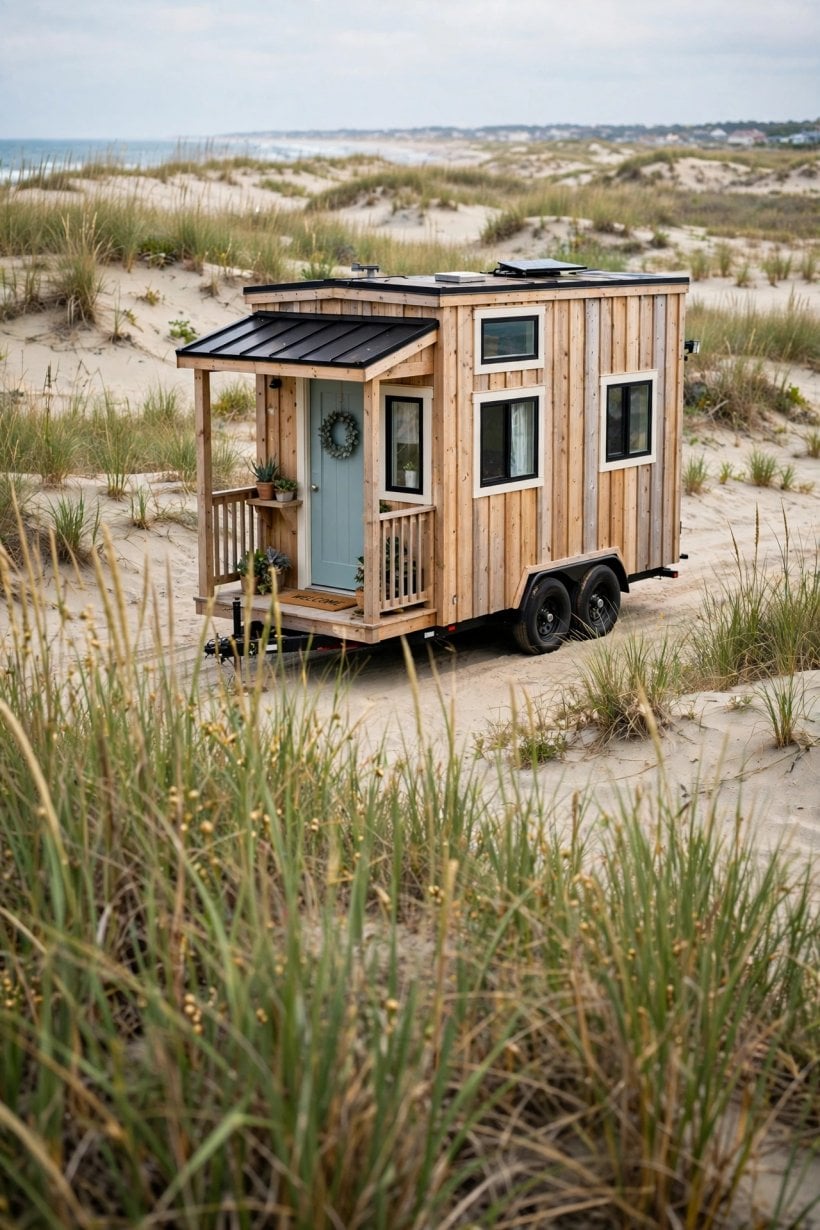
In New Jersey the smart questions are about permits, placement and delivery first, and finishes second — get the answers in writing.
Then cover the practical ground. Who visits my site before the contract, and who surveys the delivery route — turns, wires, trees, parking? What is the realistic timeline from signing to move-in, including approval time, and what happens if the town’s review runs long? Can I speak to a recent customer in a similar municipality? Builders who work this state well answer these questions with specifics, because they have lived them. Evasive answers on approvals or delivery are the reddest flags in this market: as our New Hampshire guide’s contract section also argues — see tiny house builders in New Hampshire — the time to discover a builder’s limits is before your deposit, not after it.
9. Placement, Permits and Legal Checks in New Jersey
New Jersey runs on municipal home rule, and tiny houses feel that more than almost any housing type. Whether a tiny house counts as a dwelling, an accessory dwelling unit, or something a zoning code never contemplated is decided by your town’s ordinances, administered by your town’s offices. Minimum floor areas, foundation requirements, lot coverage, setbacks and parking rules all live at that level too. So treat anything general — including this guide — as background only, and check with your city or township planning, zoning and construction offices before you buy land, sign a contract or assume a backyard placement is allowed.
Ask specific questions and write down the answers. Can a home of this size be a primary residence on my lot, or only an accessory unit — and if accessory, what rules attach to it? Must it sit on a permanent foundation, or is a wheeled chassis acceptable? How do water, sewer or septic and electrical connections work here, and who inspects them? If your site is anywhere near the coast or a waterway, ask what flood-related requirements apply to siting and elevation. If the lot sits in a community with a homeowners’ association, check its documents as well — private rules can stop a project public rules allow. This homework is unglamorous, and it is the difference between a smooth build and an expensive argument.
10. From First Call to Move-In: Process and Timeline Checks
The healthy New Jersey sequence starts with the town, not the builder: confirm what your lot allows, then shortlist builders using the table in section 1, interview with the questions in section 8, and agree a written specification that covers the home, the delivery and the connections. Through approvals and the build itself, keep a single written record — submissions, approvals, stage payments matched to completed work, and any change, however small, priced and agreed before it happens. Most disputes in this market are really memory disputes, and paper settles them.
Plan the ending as carefully as the start. Delivery day in a built-up state is an operation: confirm the route, the set crew, where the house waits if the site is not ready, and who connects utilities so the home is liveable on arrival, not just present. Walk the finished house against the specification before the final payment — doors, windows, water, drainage, heating and cooling — and collect every warranty document, manual and approval record into one file. The discipline is identical to the one in our guide to tiny house builders in North Dakota: different landscape, same rule that a written spec and a careful handover protect the buyer long after the truck leaves.
Final Considerations
In New Jersey, the best builder is the one who treats your town and your lot as part of the design brief. Choose custom for control on a difficult site, semi-custom for proven value, a shell for a hands-on finish, or a kit only if you truly have the space and skills to build. Whichever route you take, confirm placement before the build starts, get inclusions and warranty in writing, and plan the delivery like it matters — because here, it does. Do those things, and the small house on your small lot will feel like the smartest space in the state.


0 Comments