

A gooseneck tiny house is the towable home that hitches in the bed of the truck instead of behind it — and that one change buys stability, a bonus loft over the neck, and the calmest tow in the tiny world. This buyer’s guide walks the whole purchase: the prices, the builders, the checks, the financing, and the first tow — everything a gooseneck buyer needs before the coupler drops.
Tiny House on Gooseneck Trailer for Sale: At a Glance
This guide covers the search for a tiny house on gooseneck trailer for sale from the first listing to the last mile: the gooseneck advantage and its prices, the builders and the listings, the checks that protect the purchase, the financing and the insurance, the overhang loft and the towing life, the commandments and the mistakes — and the settled, open-road payoff at the end of it.
| Topic | What It Covers | Key Fact or Figure |
|---|---|---|
| The Advantage and the Prices | Bed-mounted hitch, bonus loft; new vs used | New builds $75,000–$150,000 |
| The Builders and the Listings | Specialists, custom orders, where listings live | Watch the listings daily |
| The Checks Before Buying | Trailer, hitch, title and the used inspection | Rated 14,000–21,000 lbs |
| Financing and Insurance | RV loans, personal loans, policies, licensing | Shop and compare the terms |
| The Overhang Loft | The gained 8 feet over the neck; full-time living | Sleeping and storage above |
| Towing and the Truck Match | The pivot in the bed; fifth wheel vs gooseneck | 3/4-ton or 1-ton pickup |
| Commandments and Mistakes | The ten rules — and the errors that cost | Match, inspect, buy confident |
| First Tow, Parking, Negotiating | Practice, leveling, comps and fair deals | The trailer valued separately |
| The Long Haul and Truck Life | Miles, stops and the truck as partner | Checked stops, a steady routine |
| The Payoff | Stability, mobility and the settled life | Match, inspect, tow |
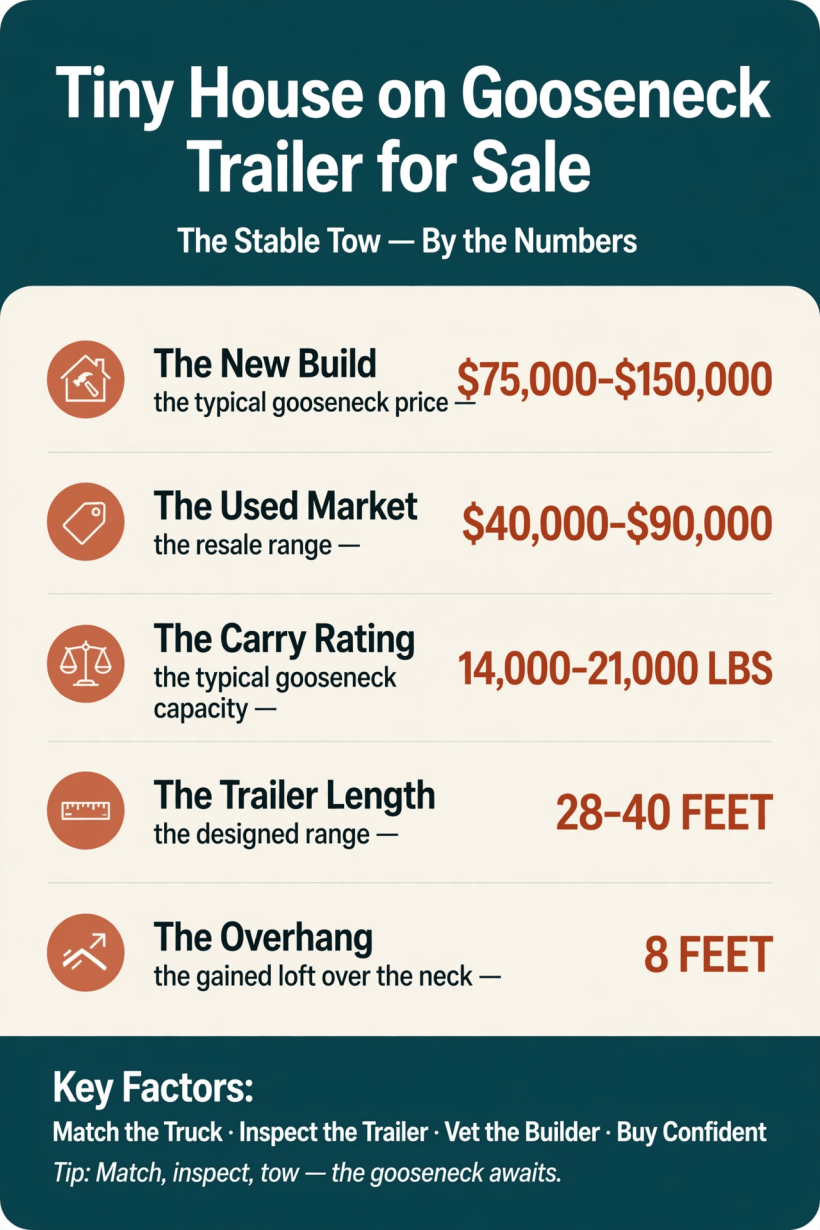
The gooseneck market at a glance: what a new build costs, what the used market asks, what the trailer must carry — and the loft the neck gives back.
1. The Gooseneck Advantage and the Prices
Start with the hitch, because the hitch is the whole argument. A gooseneck coupler drops onto a ball mounted in the bed of the truck, ahead of the rear axle — the bed-mounted, the stable. The pivot sits over the truck instead of behind it, and that geometry is why the original guide states its rule without hedging: the gooseneck tows — the best. Weight carried over the axle tracks straighter, sways less and asks less of the driver on a long highway day.
The second advantage is space. The neck reaches forward over the truck bed, and the house built above it gains an overhang — the extra loft, the gained. That raised section becomes the sleeping loft or the storage deck — floor space a bumper-pull of the same length does not have. Between the tow and the loft, the gooseneck makes its case before price ever enters the conversation.
The prices follow the format’s premium. A new build typically runs $75,000–$150,000 — the typical range for a fresh, warrantied gooseneck tiny. The used market runs $40,000–$90,000, the band where condition, trailer health and patience set the real number. So how much do gooseneck tiny houses cost? Exactly that — and the gooseneck premium is real: the trailer, the stability.
2. The Builders and Where to Find Listings

Gooseneck building is a specialty, and the original guide’s rule governs the search: the builder is the vetted — the chosen. The specialists are the gooseneck-experienced — builders whose standard product rides on a neck, whose welds, weight math and loft framing are practiced rather than improvised. A bumper-pull builder attempting a first gooseneck is learning on your money; the specialist’s tenth build is the safer purchase at any price.
The custom route is the ordered — the waited: your floor plan drawn around the overhang, your finishes chosen, and a build slot measured in patience. Vet either route the same way — tour the shop, read the in-progress frames, and judge the work where no buyer was expected to look.
Listings live in the same two places as every tiny search. Online, the marketplaces are the searched — the platforms where new and used goosenecks appear and disappear. Direct, the builders hold inventory of their own, sometimes the freshest stock available. The rule is discipline: the listings are the watched — the daily. So where can you buy one? The specialist builders, the online marketplaces, the used listings. The bought is the researched: the builder toured, the used inspected. Buyers comparing how other markets price the same search can see the regional spread in our guides to tiny houses in Seattle for sale and tiny houses for sale in Portland.
3. What to Check Before Buying
Three checks protect the purchase, plus a fourth the gooseneck adds. The trailer: the rated — the inspected; the frame under a gooseneck carries more weight over a longer neck, and its rating is the deal’s foundation. The hitch: the matched — the truck; coupler, ball and bed mount must suit the truck you actually own. The title: the clear — the confirmed. And the rule that compresses them: the checked is the bought — the safe. Our step-by-step used tiny home inspection checklist walks the general examination in full.
On a used gooseneck, the inspection goes to the steel first. The frame: the welds — the cracks; run eyes and fingers along every joint. The neck: the stress — the straight; a bent or twisted neck is the one flaw that ends a negotiation. The axles: the bearings — the brakes. The rule: the trailer is the foundation — the inspected. Trailer-first thinking is also what drives our tiny house trailers for sale in Texas buyer’s guide.
Two numbers close the section. How much weight can a gooseneck trailer carry? The rated — the 14,000–21,000 lbs typical. The carried is the engineered: the rating respected, the margins kept. And what size should the trailer be? The 28–40 feet — the designed, the rated. The sized is the matched: the plan, the trailer, the truck.
4. Financing, Insurance and the Paperwork

The money side starts with the loan. The RV loan is the common route — the compared: many gooseneck tinies are titled and treated like the RVs they resemble, and RV loan terms vary enough that comparison pays. The personal loan is the alternative — the weighed, simpler for some buyers and costlier for others. The rule: the financing is the shopped — the compared. Can you finance one? Yes — the RV loans, the personal loans. The financed is the shopped: the terms compared, the fine print read. Buyers working the full cost picture can go deeper with our guides to super-affordable tiny homes and the true cost of tiny houses, prefab vs DIY.
Insurance follows the same discipline. How do you insure a gooseneck tiny house? The RV policy or the specialty policy — the quoted, the compared. The insured is the covered: the road, the parked. A home that tows at highway speed and then sits as a dwelling needs cover for both lives, arranged before the first tow rather than after the first storm.
And the licensing question every heavy rig raises: do you need a CDL to tow one? The state rules vary — the weight, the combined. The needed is the checked: the DMV, the current law. Combined truck-and-trailer weights decide the answer state by state, so check yours before the purchase.
5. The Overhang Loft: The Space the Neck Gives Back
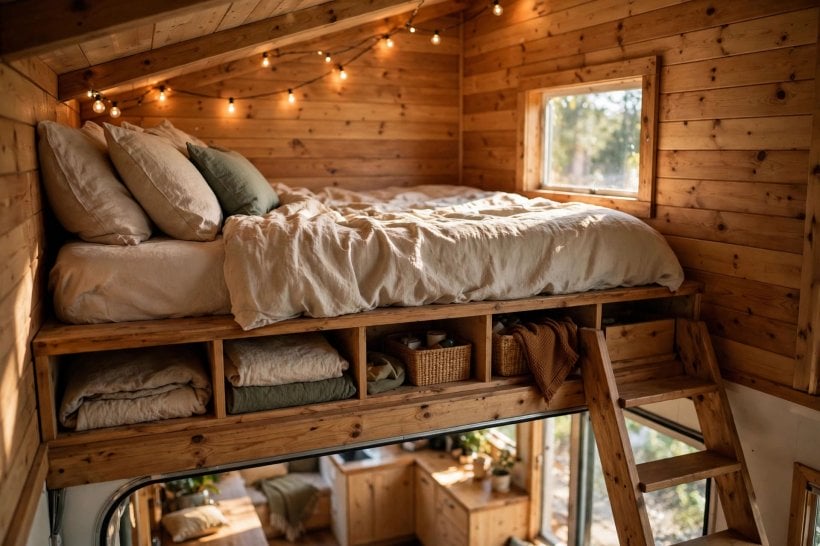
The overhang is the gooseneck’s signature room. The gained: the 8-foot — the neck; eight feet of house reach forward over the truck bed, and the floor plan spends them where they matter most. The used: the sleeping — the storage. Most builders put the bed up there, in a loft with real sitting headroom over the mattress rather than a crawl-in shelf, and the corners the bed does not take become the storage the small house always needs.
The rule states the value plainly: the overhang is the bonus — the gooseneck. A bumper-pull tiny of the same road length gives that space to the wind; the gooseneck gives it to the sleeper. It is also why the first night of ownership, in the original’s closing sections, is slept in the overhang — the cozy.
Which raises the living question directly: can you live in a gooseneck tiny house full-time? Yes — the parked, the hooked, the sited. The full-time is the placed: the land, the rules, the systems. Unhitched on a legal spot with hookups and skirting, the gooseneck is simply a small house whose foundation happens to have wheels — and the overhang loft makes it the most livable of the towable formats.
6. The Towing Experience and Fifth Wheel vs Gooseneck
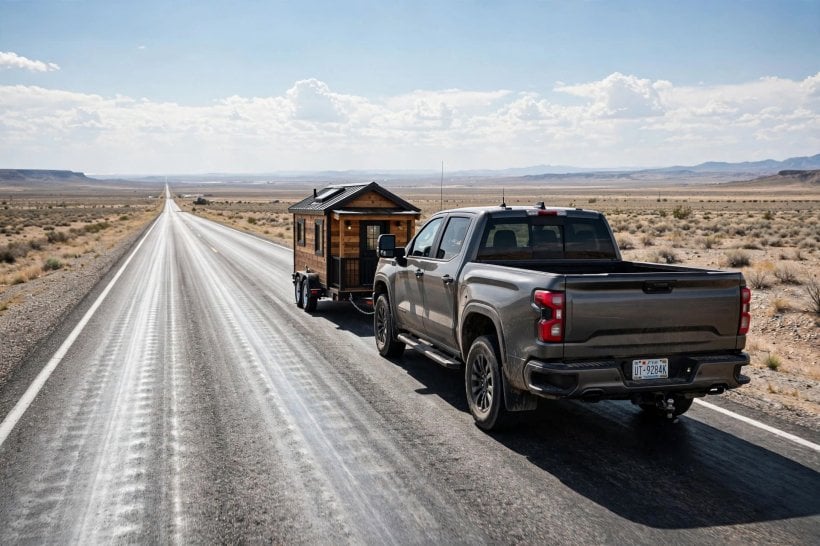
Towing is where the format earns its premium. The stable: the pivot — the bed. With the coupler over the rear axle, the trailer follows the truck instead of levering against it, and the whole rig feels planted at speed. The turning: the tighter — the practiced; a gooseneck pivots more sharply than a bumper-pull, which rewards practice in an empty lot before it rewards confidence on the road. The rule: the towing is the learned — the confident.
What truck does the job take? The 3/4-ton or 1-ton pickup — the bed hitch, the rated. The needed is the matched: the trailer weight, the truck capacity. There is no lighter answer, and the original guide never pretends otherwise — the truck is part of the purchase price of the format.
Buyers cross-shopping the other bed-hitch format will ask about fifth wheel vs gooseneck. The similar: the bed hitch — the stable; both ride over the axle and tow with the same calm. The different: the coupler — the kingpin; a fifth wheel closes a jaw around a pin, a gooseneck drops a coupler over a ball. The rule: the terms blur — the tiny world, where builders use both and the towing experience matters more than the label. And against bumper-pull? The stability — yes; the truck requirement — the bigger. The better is the weighed: the towing, the vehicle.
7. The 10 Commandments and the Mistakes to Avoid
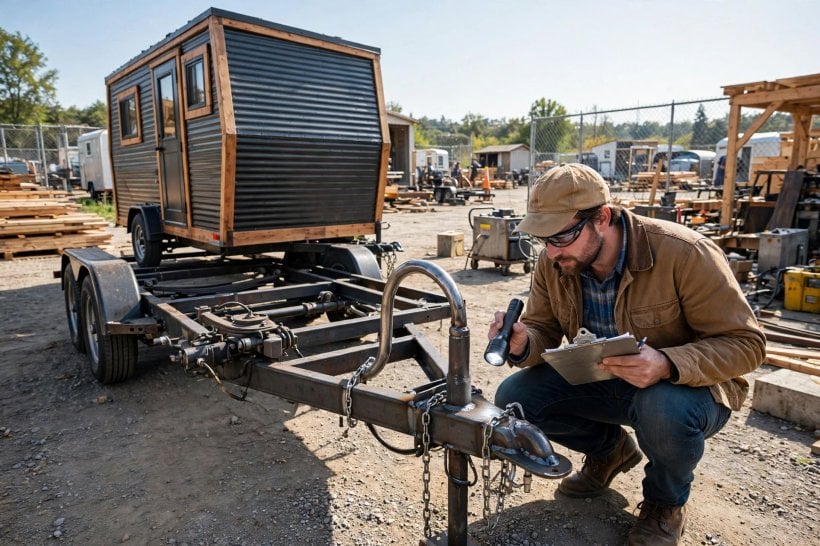
The original guide distills the purchase into ten commandments, and they deserve their full list. Match the truck. Inspect the trailer. Vet the builder. Check the weight. Verify the title. Shop the financing. Practice the towing. Maintain the hitch. Know the route. Buy the confident. Every section of this guide hangs on one of those lines — the truck match of the towing sections, the trailer inspection of the checks, the title and financing of the money sections.
The mistakes are the commandments read backwards. The under-trucked: the strained — the matched; a half-ton asked to do a one-ton’s work is the most expensive error in the format. The uninspected: the cracked — the checked; the neck flaw nobody looked for. The overpaid: the researched — the negotiated. The rule: the researched avoids — the regretted.
The eighth commandment earns its own answer: how do you maintain a gooseneck hitch? The greased, the inspected, the torqued. The maintained is the safe: the coupler, the routine. A hitch is a small machine doing enormous work; grease it, inspect it, torque it, and it disappears from your worries — neglect it, and nothing else about the rig matters.
8. The First Tow, Parking and Negotiating
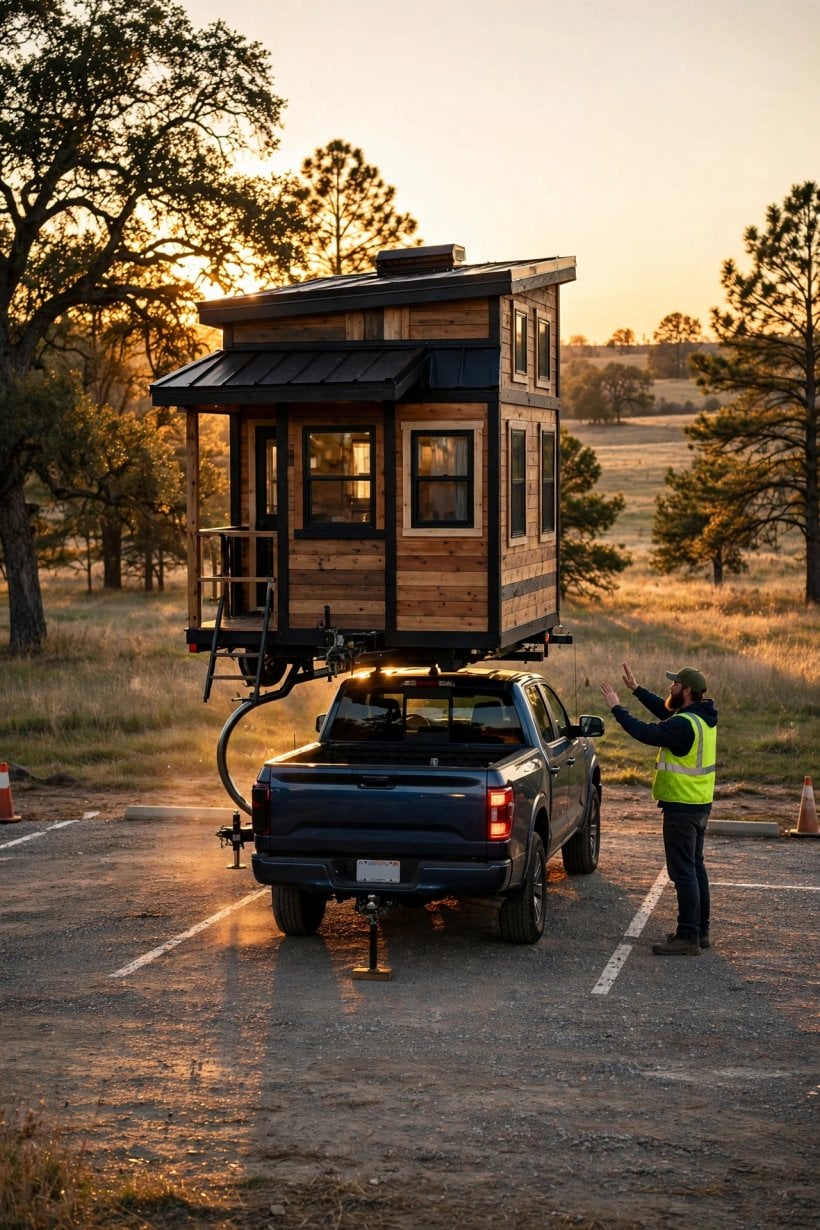
The first tow is a ceremony with a checklist. The hitched: the checked — the double; coupler latched, chains crossed, lights tested, brakes confirmed, then all of it checked again. The slow: the practiced — the lot; the first miles belong in an empty lot and on quiet roads, not on a deadline. The truth: the first tow is the careful — the learned. Every confident gooseneck driver started with that same slow lap.
Parking is the skill that follows. The backed: the practiced — the spotter; one voice outside, one driver inside, and no pride about pulling forward to try again. The leveled: the blocks — the stable. The rule: the parked is the leveled — the lived; a gooseneck parked out of level is a house that leans, so the leveling is not the chore after arrival — it is the arrival.
Negotiating closes the purchase. The comps: the researched — the armed; know what comparable goosenecks actually sold for. The trailer: the valued — the separate; a sound rated trailer holds its own worth inside any deal, and a tired one should be priced like the liability it is. The rule: the negotiated is the fair — the both. Buyers who decide the numbers still do not work can price the build-it-yourself alternative in our guide to how to make a tiny house for cheap.
9. The Long Haul and the Truck Life

Ownership settles into two rhythms, and the first is the road. The miles: the planned — the rested; long gooseneck days are routed like the heavy work they are, with fuel, grades and rest chosen ahead. The checked: the stops — the routine; coupler, tires, temperatures and lights at every halt, the same quick circuit until it is habit. The truth: the long haul is the adventure — the tiny; the format was bought for exactly these miles, and it delivers them calmly.
The second rhythm is the truck itself. The daily: the driver — the big; a 3/4-ton or 1-ton is not a car, and daily life with it is part of the format’s honest cost. The loved: the capability — the rumble; owners forgive the size for the competence, because the same truck that hauls the house hauls everything else in life. The truth: the truck is the partner — the gooseneck. Buy the truck as deliberately as the house, and the partnership runs for years.
10. The Gooseneck Payoff and the Open Road
The payoff gathers the whole purchase. The towed: the stable — the confident. The lived: the extra — the loft. The moved: the anywhere — the free. The truth: the payoff is the mobility — the designed. And the invitation stands as the original gives it: match, inspect, tow — the gooseneck awaits.
Then the rig comes home. The unhitched: the lowered — the jacks, the stable; the freed — the truck, the errands; the truth: the unhitched is the home — the placed. The settled: the skirted — the insulated, the winter; the decked — the porch, the lived; the truth: the settled is the home — the tiny. The first night: the parked — the leveled, the quiet; the slept — the overhang, the cozy; the truth: the first night is the sweetest — the towed. The open road: the called — the highway, the answered; the truth: the road is the freedom — the gooseneck. And the forever: the kept — the maintained, the years; the loved — the always, the tow; the truth: the forever is the mobile — the tiny. Owners weighing where the settled life should happen can read how the land changes the equation in our tiny houses for sale in Colorado with land buyer’s guide.
The hitched blessing: the grateful — the stable, the miles; the truth: the blessing is the gooseneck — the tiny. The stable tow: the felt — the confidence, the highway; the truth: the stable is the gooseneck — the always. The neck: the curved — the steel, the strong; the truth: the neck is the genius — the gooseneck. The always hitched: the ready — the always, the road; the truth: the hitched is the freedom — the always. The final hitch: the coupled — the last, the checked; the truth: the hitch ends — the journey begins. The towed blessing, the gooseneck grace, the last mile: the towed — the final, the home; the parked — the leveled, the lived; the truth: the mile ends — the tiny remains. The last word is the gooseneck — the always.
Final Considerations
Gooseneck tiny houses reward the prepared buyer — the truck matched, the trailer inspected, the builder vetted. For anyone weighing a tiny house on gooseneck trailer for sale, the sequence in this guide is the whole discipline: match the truck, check the weight, verify the title, shop the money, practice the tow — and let the stable miles come to a prepared driver. Buy smart, tow stable, live tiny.
Note: prices and availability change — verify all current information directly. This is not financial advice; consult a qualified professional for financing decisions.



0 Comments