

Two trailers can weigh exactly the same and tow like completely different machines. The difference is not the house on top — it is where the trailer hands its weight to the truck. A bumper pull hangs its share off the back bumper; a gooseneck sets its share over the rear axle. That single geometric choice changes stability, payload, turning and even the floor plan.
1. At a Glance: Two Hitches, Two Load Paths
Every trailer splits its weight the same way: most of it rides on the trailer’s own axles, and a share of it transfers to the truck through the hitch. What changes between the two designs is how big that share is and exactly where it lands. This gooseneck vs bumper pull weight analyzer was built to make that invisible split visible — because the share, and its landing point, decide whether a combination feels calm at highway speed or nervous, and whether your truck is legally and mechanically up to the job. The table below is the whole comparison on one screen; the sections after it work through each attribute in turn.
| Attribute | Bumper pull | Gooseneck |
|---|---|---|
| Hitch point | Ball mount in a receiver behind the rear axle | Coupler on a ball in the truck bed, over the rear axle |
| Weight share | 10%–15% of trailer weight as tongue weight | 20%–25% of trailer weight as pin weight |
| Load behaviour | Leverage — the tongue load pries at the back of the truck | Direct load — weight pushes straight down into the tires |
| Towing feel | Can sway if the balance is off; sensitive to loading | Exceptionally stable, tracks with the truck |
| Floor plan effect | Low, flat deck and a level floor | Raised platform over the hitch — a bonus room |
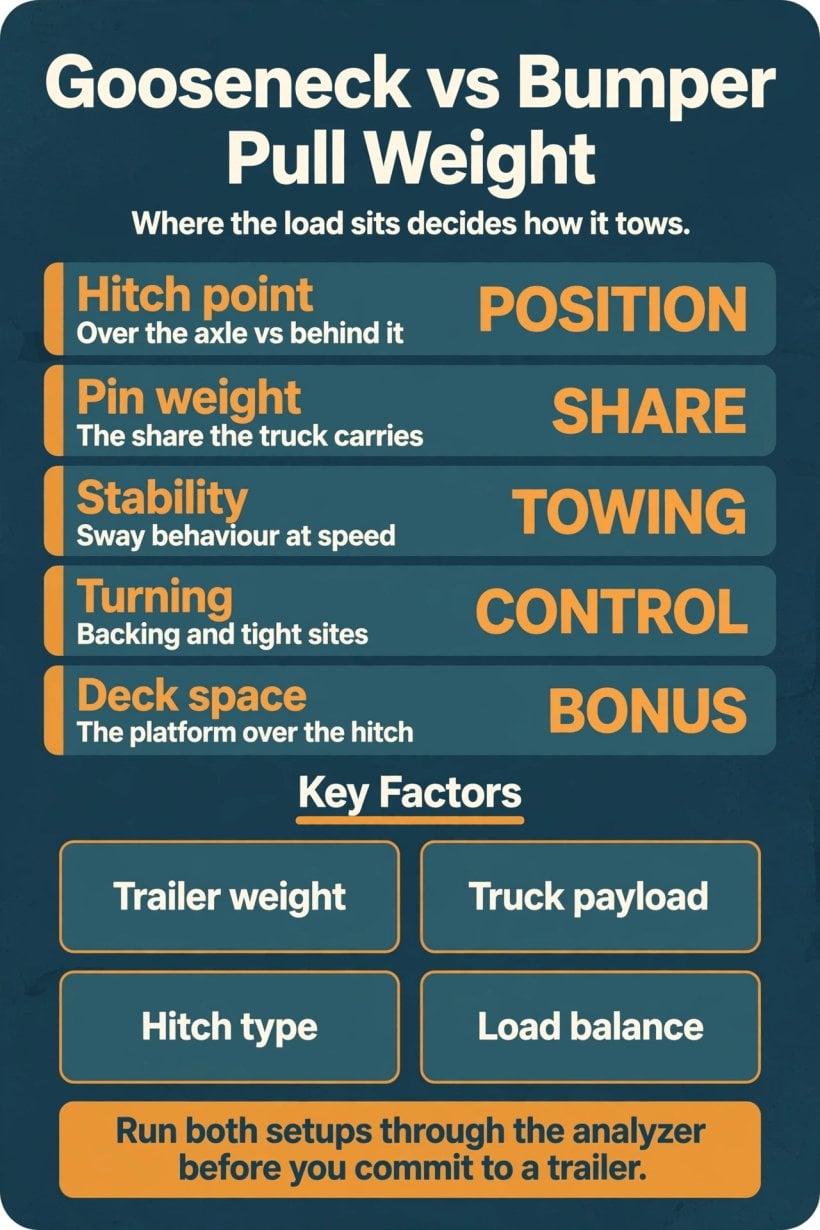
The comparison at a glance: hitch position, weight share, stability, turning and the platform bonus — five attributes, all set by where the load sits.
2. Two Hitch Geometries: Behind the Axle vs Over It
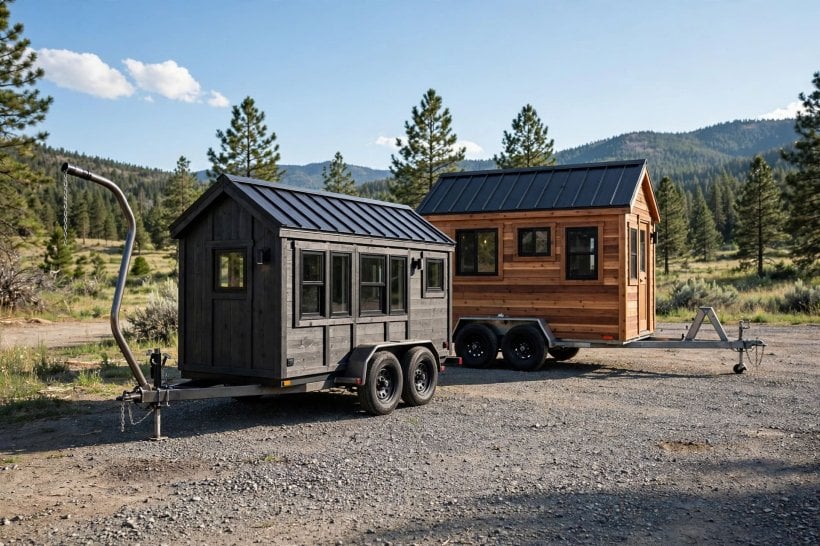
A bumper pull trailer connects the way its name says: a coupler on the trailer’s A-frame tongue latches onto a ball mounted in a receiver at the very back of the truck, well behind the rear axle. The trailer is a separate vehicle following at arm’s length, and the connection point sits at the end of a lever — the distance from the rear axle to the ball. Everything the trailer does to the truck is applied through that lever.
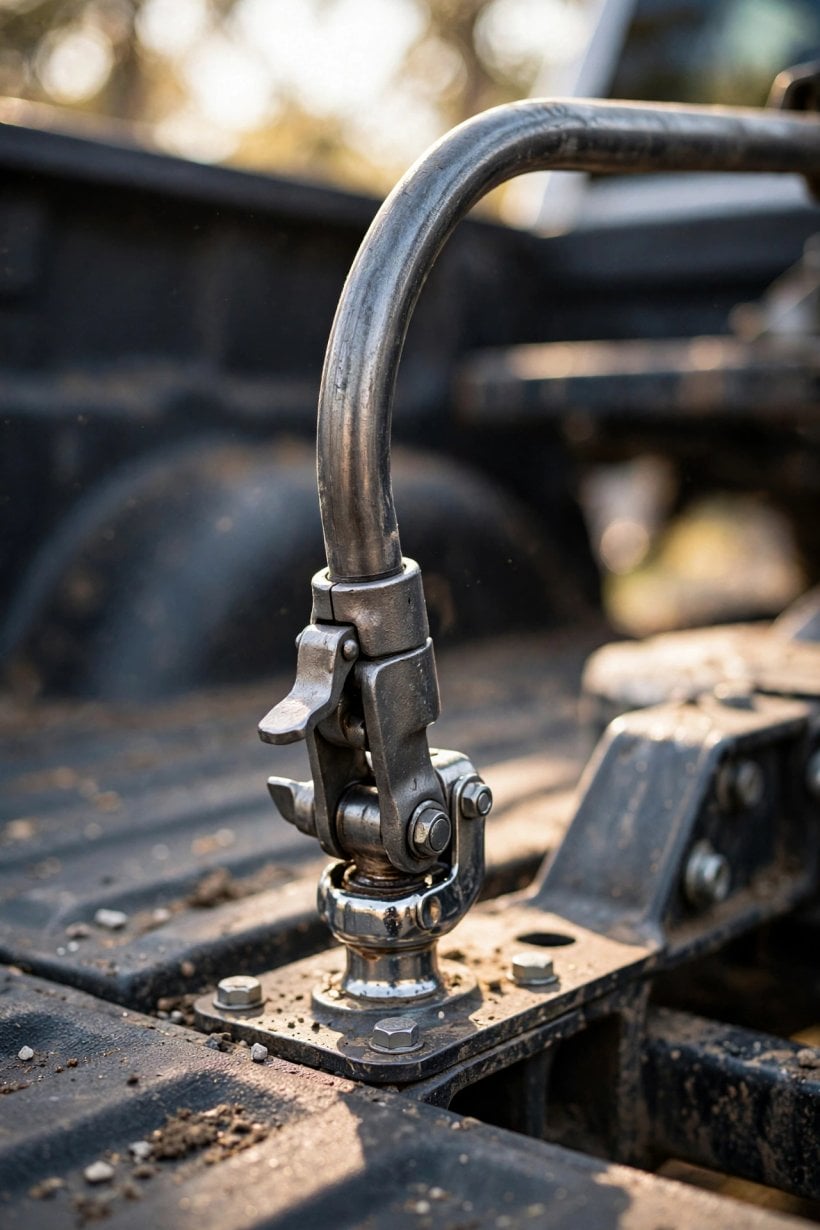
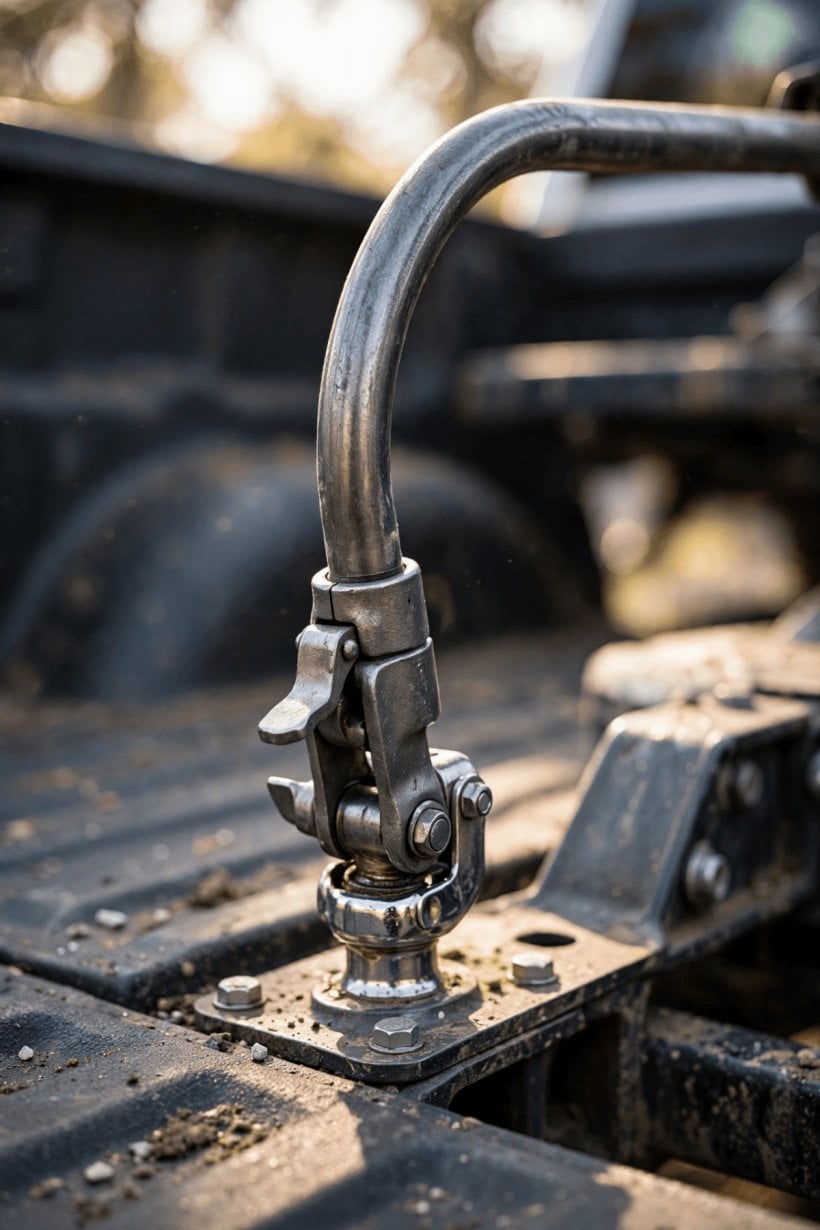
A gooseneck removes the lever. The trailer’s neck rises up and over the tailgate, and its coupler drops onto a ball mounted in the truck bed, centred over — or just ahead of — the rear axle. The pivot point now sits almost directly above the drive wheels, so truck and trailer rotate around a point the truck already controls. The rest of the trailer’s weight still rides on its own axles in both designs, which is why the axle decision matters alongside the hitch decision: this axle comparison tool works through how many axles a trailer of a given weight wants underneath it.
3. Where the Weight Lands: Tongue Weight vs Pin Weight
The share each hitch carries is not a detail — it is the design. A bumper pull is balanced so that roughly 10% to 15% of the total trailer weight rests on the hitch as tongue weight. That load presses down behind the rear axle, and the leverage cuts both ways: it adds weight to the truck’s rear axle while prising weight off the front steering axle. Run the share too light and the trailer becomes unstable; run it too heavy and the steering goes light and vague.
A gooseneck carries a much bigger share — roughly 20% to 25% of the trailer’s weight as pin weight — but it lands in the one place a truck is built to receive it: directly over the rear axle, pushing straight down into the tires. As the analyzer below puts it, there is no lever arm to lift the front steering wheels, so the truck’s steering and braking geometry stay as the manufacturer intended. The tool labels the two behaviours exactly this way: leverage for the bumper pull, direct load for the gooseneck. Where the trailer’s axles sit along its frame decides how much weight the hitch is asked to carry in the first place, which is why this axle placement guide belongs in the same conversation as hitch choice.
4. Stability and Sway: The Highway Difference
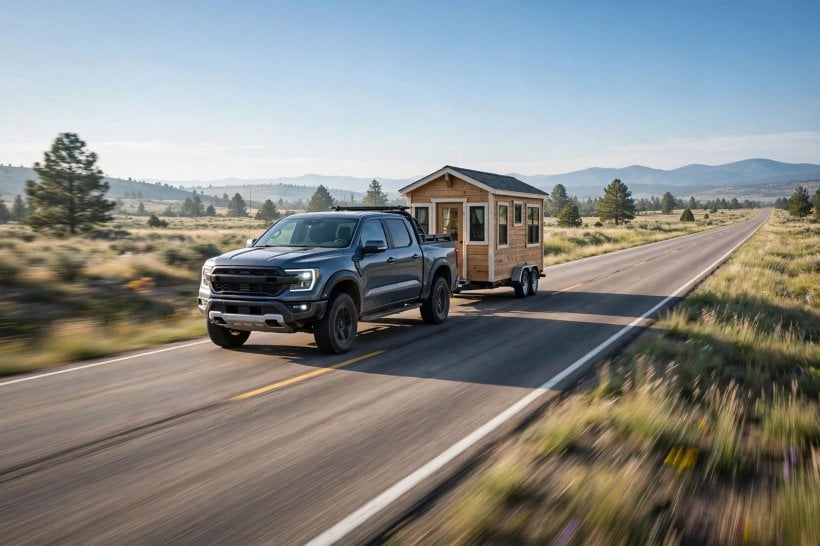
Sway is a geometry problem before it is a driver problem. On a bumper pull, a side force on the trailer — a gust, the bow wave of a passing lorry, a careless steering input — pushes against a pivot that hangs behind the truck’s rear axle. That offset gives the force a lever to twist the truck itself, and if the trailer starts oscillating, the truck gets shaken by the tail. Correct tongue weight is the main defence: enough share on the hitch keeps the trailer following instead of wandering, which is why bumper pulls reward careful loading so strongly.
The gooseneck’s pivot over the axle denies side forces that lever. A push on the trailer acts almost at the truck’s own centre of control, so the combination tracks straight and settles quickly; the original description of this tool calls the result exceptionally stable, with zero sway. That calm is the gooseneck’s headline benefit, and it grows more valuable the heavier the house and the longer the highway miles. It does not make a bumper pull unsafe — millions tow happily on a ball — but it does mean the bumper pull’s stability is something you manage through balance and loading, while the gooseneck’s is built into the geometry.
5. The Payload Trap: What the Bigger Share Costs
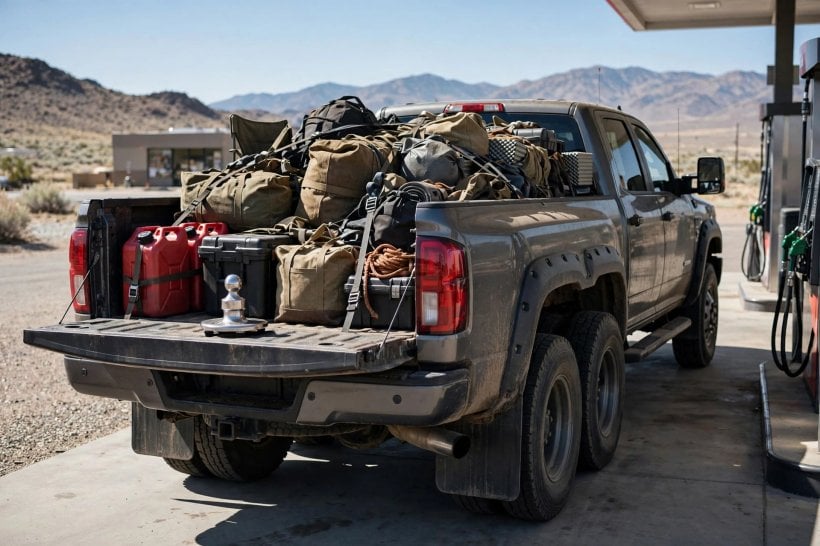
The gooseneck’s stability is not free, and the bill arrives as payload. Pin weight sits in the truck bed, and every pound of it counts against the truck’s payload capacity, pound for pound. The tool on this page works the sobering example: a 15,000 lb gooseneck puts roughly 3,300 lbs in the bed — while most single-rear-wheel one-ton trucks offer only about 3,500 to 4,000 lbs of payload in total. Add passengers, fuel and the hitch itself, and the truck is likely overweight before the house even moves. This is why goosenecks usually require a dually: dual rear wheels bring the payload headroom the pin weight demands.
The bumper pull’s smaller share is far kinder to payload, which is why lighter trucks can tow respectable houses on a ball — though tongue weight still counts against the same payload budget, and it is routinely forgotten. Either way, the check that matters is not the headline tow rating but the payload arithmetic for your actual truck, loaded the way you actually travel. Our guide to calculating GVWR for tiny homes walks through those ratings and how they interact.
6. Turning and Manoeuvring: Pivot Behaviour on Site
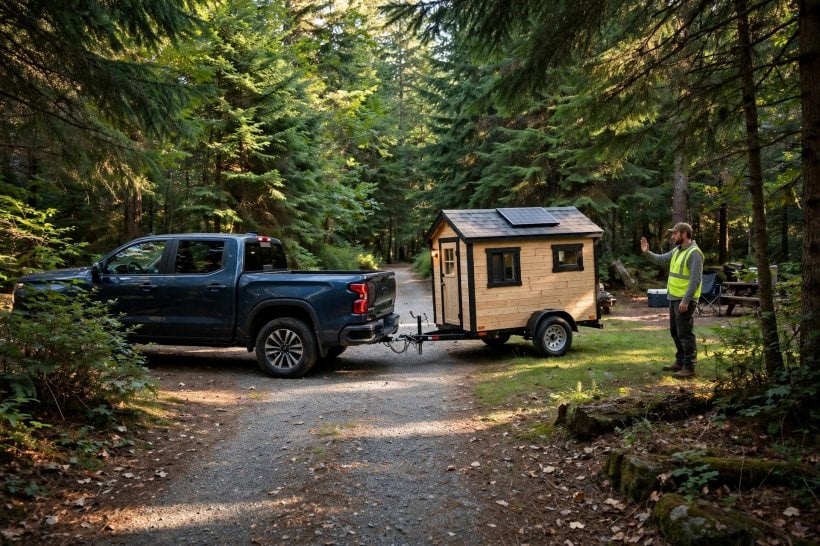
At walking pace the geometry flips from a stability question to a handling one, and here the gooseneck’s pivot position pays a second dividend. Because the trailer turns around a point over the truck’s rear axle, it responds immediately to steering inputs and can be backed through a tighter arc — the trailer follows the truck’s own turning circle closely, which matters enormously when the destination is a narrow gate, a wooded pitch or a driveway with one attempt in it. Experienced gooseneck drivers routinely place trailers in spots that would take several shunts on a ball.
The bumper pull’s remote pivot makes the trailer react later and swing wider: the tongue sweeps its own arc, the trailer’s tail swings out on turns, and reversing asks for more patience and more room. Against that, hitching a bumper pull is the simpler ritual — back up to the coupler, drop it on the ball, clip the chains — and the truck bed stays empty for cargo, which for many owners is the deciding everyday convenience. Neither behaviour is a defect; they are the same geometry read at two different speeds.
7. The Platform Bonus: A Room Over the Hitch
Only one of these hitches changes the house itself. A gooseneck trailer’s raised neck needs a raised deck above it, and that platform — sitting over the truck bed when hitched — becomes genuine floor space: most often the main bedroom, sometimes a lounge, a work space or storage, reached by a short flight of steps inside. It is the defining feature of gooseneck tiny house floor plans, and it effectively adds a room that a flat trailer of the same length cannot offer, without a loft ladder.
The trade is height and steps: the whole floor sits higher, the platform zone has its own headroom character, and the house presents a taller profile to the wind and to low branches. A bumper pull keeps the classic arrangement — one low, flat, single-level floor from end to end — which suits owners who want step-free living and the simplest possible build. So the platform question is really a lifestyle question: is the bonus room worth the raised floor it rides on?

8. Weight Distribution Mistakes That Undo Both Designs
Either hitch can be defeated by loading. The classic bumper-pull error is stacking heavy systems — water tanks, batteries, a full-size fridge — at the very back of the house: the tongue share falls below its healthy range, and the trailer that was stable in the brochure starts to sway in the real world. Its mirror error is piling weight at the front until the steering axle is unloaded and the truck wallows. Balance is a band, not a maximum.
Gooseneck owners make a different mistake: trusting the tow rating and never doing the payload sum from the section above, so a combination that tows beautifully is quietly hundreds of pounds over the truck’s payload on every trip. Both errors share one root — guessing the weight instead of knowing it. This tiny house weight distribution diagram shows how load placement moves weight between axles and hitch, and a session on a real scale turns the whole question from opinion into numbers.
9. Using the Analyzer: From Total Weight to a Decision
The gooseneck vs bumper pull weight analyzer below this article reduces the comparison to one input: your best estimate of the total tiny house weight, as it will actually travel — water, belongings and all. Enter it, then toggle between the two modes. The load comparison shows the bumper pull’s tongue weight at 10% to 15% beside the gooseneck’s pin weight at 20% to 25%, in real pounds for your house, while the physics display flips between leverage and direct load so you can see why the numbers sit where they do.
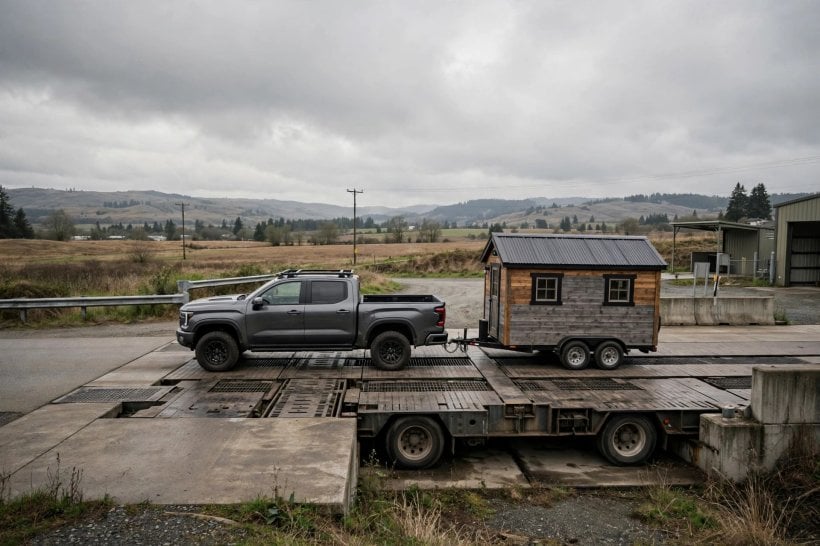
Run it twice: once at your design weight and once at a pessimistic loaded weight, because houses gain pounds between the drawing and the driveway. Then hold both answers against your truck’s payload figure — the pin weight, plus passengers, fuel and gear, is the sum that decides whether a gooseneck is even on the table. If the bumper pull wins, the tongue weight tuner helps you fine-tune the exact share your setup should carry; either way, confirm the estimate on a weighbridge scale before the first long tow.
10. Which Suits Which Build: The Honest Verdict
The bumper pull suits the lighter half of the tiny house world: houses that stay within modest weights, owners whose trucks are half-ton or single-rear-wheel models, and anyone who values a free truck bed, simple hitching and a low, step-free floor. It also keeps the door open to borrowing or hiring different tow vehicles, since almost anything with a receiver can move it. Its costs are paid in attention — balance it carefully, load it thoughtfully, and it tows well.
The gooseneck suits the heavy half: the biggest houses, long and frequent highway moves, and owners who can bring a dually’s payload to the partnership. In return it gives the calmest towing geometry available, the tightest manners on site, and a free room over the hitch. Its costs are paid in payload and in commitment to one suitable truck. In practice, the truck you already own — or are willing to buy — casts the deciding vote, and the honest way to hear it is to run your real numbers rather than argue from preference.
Final Considerations
Strip away the hardware and the choice is one sentence long: a bumper pull carries a small share of weight in a place that gives it leverage over the truck, while a gooseneck carries a large share in the one place the truck shrugs off. Everything else — sway, payload, turning, the bonus room — follows from that sentence. So do not choose from folklore. Put your house’s true weight into the Gooseneck Pin Weight Calculator below, read the two numbers it hands back, set them against your truck’s payload, and let the arithmetic — not habit — pick your hitch.
Gooseneck Pin Weight Calculator
Gooseneck Pin Weight Calculator
Pin Weight vs. Tongue Weight: Can your truck handle it?
1. Estimate Payload
Load Comparison
Why the Difference?
Because the connection point (“Pin”) sits directly over the truck’s rear axle, the weight pushes straight down into the tires. There is no lever arm to lift the front steering wheels, making highway towing exceptionally stable with zero sway.
The trade-off is Payload Capacity. A 15k lb Gooseneck puts ~3,300 lbs in the bed. Most single-rear-wheel (SRW) 1-ton trucks only have ~3,500-4,000 lbs of payload total. Once you add passengers and fuel, you are likely overweight. This is why Goosenecks usually require Dually (DRW) trucks.


1 Comment