

Yes — tiny houses are for sale in and around Nashville, Tennessee, in the same forms you will find across the country: finished homes on wheels, finished cottages built for a foundation, unfinished shells, and pre-owned homes sold by their owners. As the single Nashville guide on the site, it covers the whole purchase in one place — what is for sale, where listings appear, how placement works, what the full price should include, and the checks to complete before money changes hands.
Two things decide whether a Nashville purchase goes well. The first is placement: a tiny house you cannot legally live in, in the spot you have in mind, is not a bargain at any price. The second is the total cost, because the listing price is only the first layer of what you will spend.
1. What “For Sale” Means in Nashville
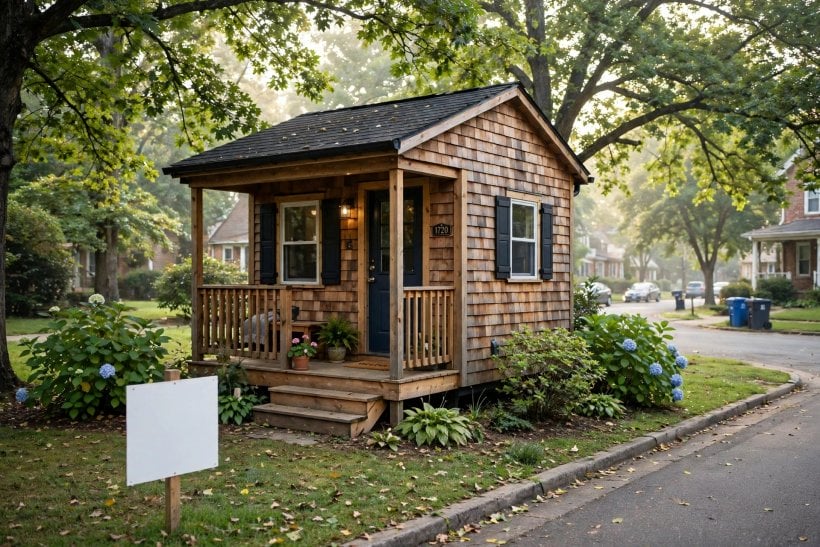
A listing that says “tiny house for sale” is not describing one single kind of product, and the differences decide almost everything that follows. Some Nashville-area homes are built on trailers and sold ready to tow away. Some are small cottages built for delivery to a permanent foundation. Some are shells — finished outside, left for the buyer to complete inside. Others are pre-owned, which can mean anything from a nearly new home sold after a change of plans to an older home that needs work on its roof, systems, or seals.
That difference matters: the three kinds do not carry the same paperwork, transport needs, financing routes, or placement checks. Before comparing listings, categorise each one — wheels or foundation, finished or shell, new or pre-owned, builder or private seller.
Sold with land, or sold without it
Most listings are for the home alone, not the land under it. If a listing appears to include land, read exactly what is offered — an outright sale, a lease, or a lot in a community with ongoing fees — and have it checked in writing. If land is not included, your search is two searches at once: the home, and a legal place to put it. Section 3 covers that second search.
2. Where Nashville Listings Appear, and How to Read Them
Nashville buyers usually find tiny houses through builders who sell direct, online marketplaces, specialist tiny-house listing sites, and private sales in regional groups. Each route offers different backup. A builder can usually explain how the home was built, what standard it follows, and what paperwork comes with it. A private sale may cost less, but history, title, and condition are yours to verify.
Read every listing the same way. Note the size and layout, heating and cooling described — Nashville summers make real air conditioning a need, not a luxury — whether appliances are included, and whether delivery is part of the price or a separate cost. Be cautious with listings that show only styled photographs and say nothing about construction, weight, title, or placement. Ask for the missing details before driving out.
The Nashville market moves in seasons: spring and early summer bring the most listings, and fairly priced homes tend to move quickly. That is a pattern, not a promise — verify the specific home in front of you, every time.
3. Placement First: Nashville and Tennessee Rules in Plain Terms
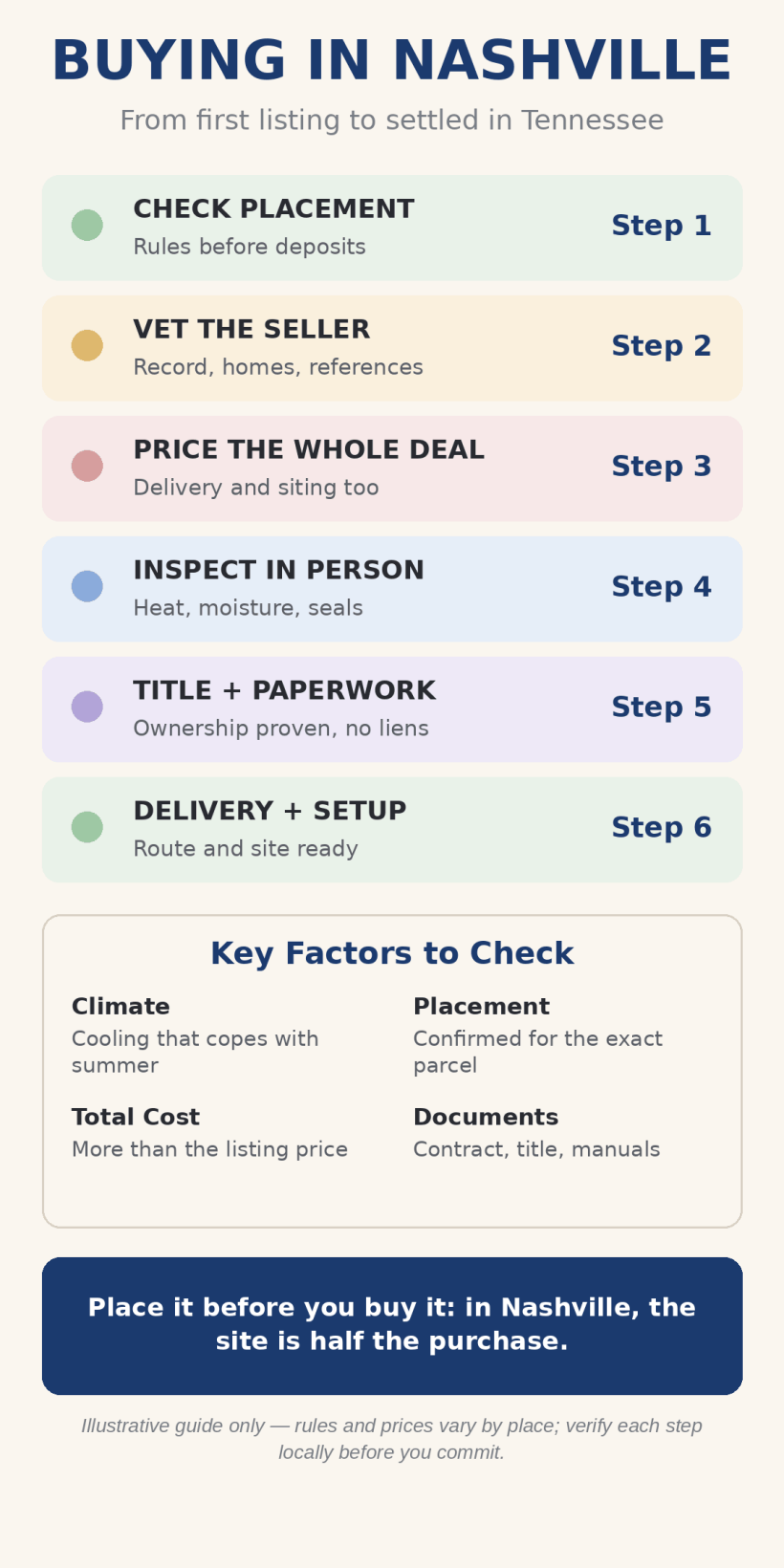
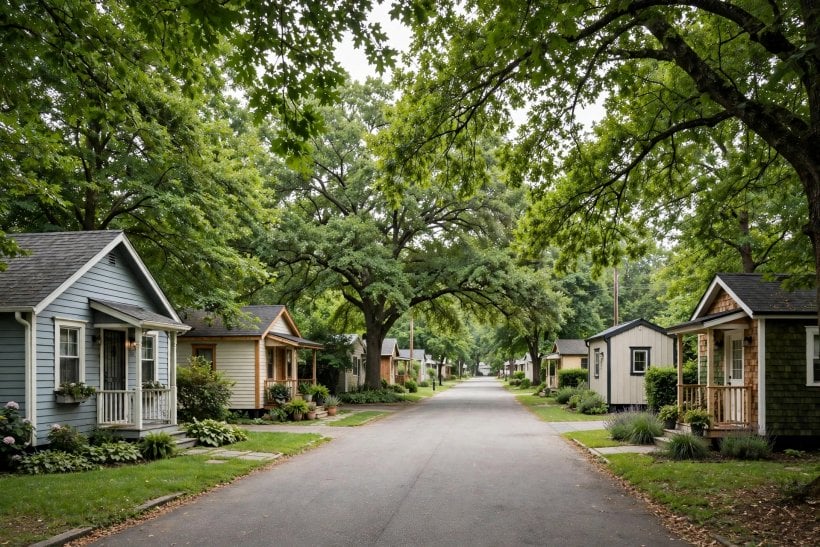
The most important rule in Nashville tiny house buying is to secure the placement before the home. Rules are set at several levels, and in practice the local level — the zoning and codes offices for the exact place the home will sit — is where your answer comes from. Nashville and Davidson County share a combined city-county government, so a home inside Nashville answers to that one system, while the surrounding counties each run their own zoning, with their own districts and standards.
The rule types to ask about are consistent everywhere: local zoning and permitted uses, whether a home on wheels is treated differently from one on a foundation, any minimum dwelling size, whether the home counts as a primary dwelling or as an accessory dwelling beside an existing house, and approvals for water, sewer or septic, and utilities. Some areas allow small second dwellings behind an existing house in certain districts; others restrict wheeled homes to approved parks or communities, or to temporary use. No general statement — including anything in this guide — replaces the answer for your exact address.
Start with our guide to tiny house laws in Tennessee for the state picture, compare it with tiny house laws by state, then confirm the details for your parcel with the local officials who will decide. Do not rely on a seller, a listing, or a neighbouring street’s answer: the same home can be acceptable in one spot and not in another a short drive away.
If you do not have land yet
If you are buying before you have land, be honest about the risk. Storage, a leased lot, or a community that accepts tiny houses may bridge a short gap, but each option needs to be confirmed, costed, and time-limited before you buy. A home with nowhere legal to go is a liability, whatever the listing price says.

4. What the Price Should Cover, and What It Often Does Not
The asking price is only part of what you will spend. Budget also, in general terms, for delivery or towing, site preparation, pad or foundation work, utility connections, permits or local fees where they apply, insurance, and any work needed before you move in. Which apply, and what they come to, varies by home, site, and locality — there is no honest single Nashville figure, and any printed “market price range” would be a guess about homes you have not seen.
Ask the seller for a written breakdown of what the price includes — appliances, delivery, setup on site, skirting or steps — and what is excluded. Getting that list before you commit protects you from the most common budget surprise: discovering after the deposit that delivery, siting, and hookups were never part of the deal. Our breakdown of how much a tiny house costs walks through every layer so you can build the total for the home you are actually considering.
5. Checking a Nashville Builder or a Private Seller
Whoever you buy from, vet the source before money moves. For a builder, ask how long they have been building, whether you can see a finished home in person — ideally one a season or two old, not just the show model — what standards or third-party certification, if any, the home follows, and what paperwork comes at sale. References from past buyers, a physical address, and a written contract are all reasonable to expect. Be wary of pressure to pay large sums quickly with little documentation.
For a private sale, confirm the seller owns the home outright, ask about any loan or lien, and request build records, manuals, and receipts. If the home is on wheels, the trailer identification and title paperwork must match the home you are viewing. Ask why it is being sold, how it was used — full-time home, guest space, rental — and whether it has been moved, and how often. If anything does not line up, pause until it does.
Our comparison of the true cost of tiny houses, prefab versus DIY helps you weigh a professionally built home against shells and self-finished options on the full cost, not the sticker.

6. Viewing and Inspecting in Person
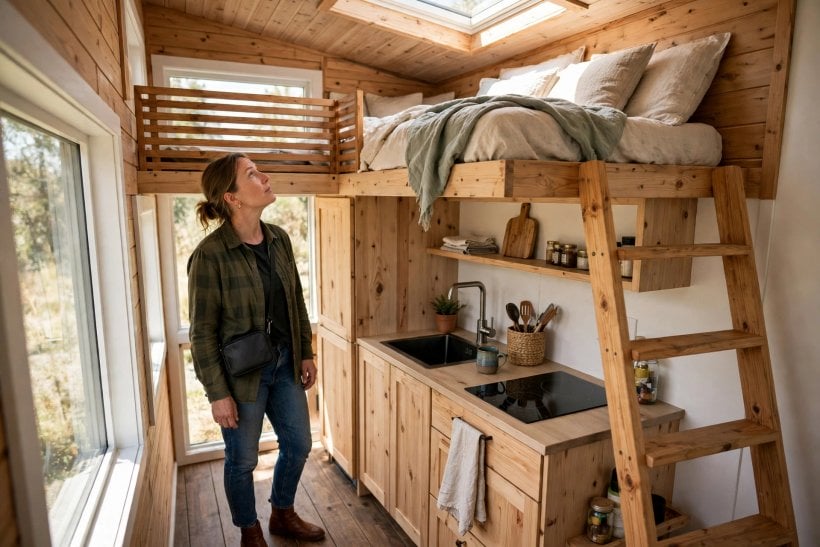
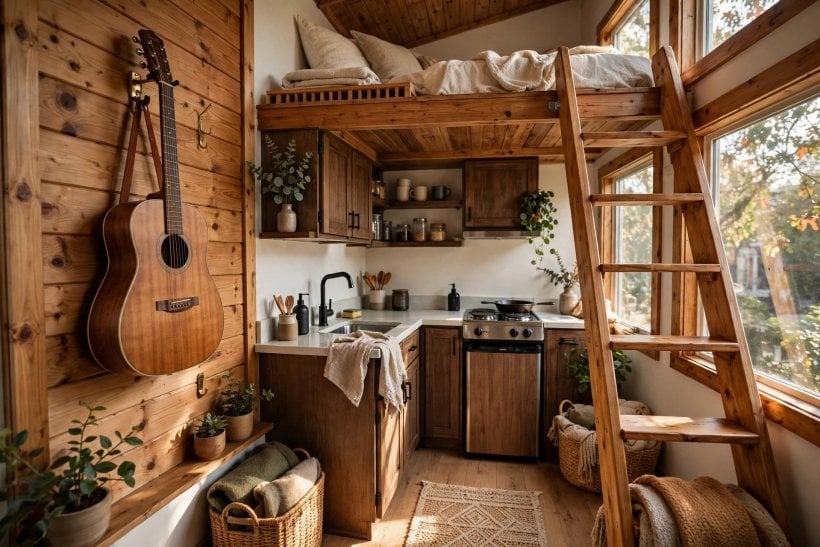
Never buy a tiny house you have not stood inside, unless you are buying new from a builder whose finished work you have seen and whose contract protects you. In a small home, layout is felt immediately: loft headroom, bathroom size, whether the kitchen works for how you cook, and whether storage is real or just photographed well. Walk slowly, open everything, run the water, test the heating and cooling, and check for smells or stains suggesting leaks.
Nashville’s climate writes its own inspection list. Humidity and heavy rain make moisture the first thing to hunt: soft floors near doors and showers, staining on ceilings, musty smells, and failed seals around windows and roof vents. Check that the cooling genuinely cools the whole space on a hot afternoon, and ask how storm water drains around the base — a home sitting in a puddle after rain has a siting problem, not just a weather problem.
Outside, check the roof, window and door seals, the trailer and tires if the home is on wheels, and any skirting underneath. For a pre-owned home, an independent inspection is money well spent compared with the cost of hidden rot.
7. Financing and Insurance for a Tennessee Tiny House
How a tiny house is financed depends largely on how it is classified. A home on wheels is often financed differently from one fixed to a foundation on land you own, with different loan types, terms, and requirements. Lenders will typically want to know what the home is, who built it, whether it has the documentation they require, and where it will be placed. Arrange financing early — ideally before you make an offer — so you know your real budget and can move when the right home appears. Our guide to how to finance a tiny house explains the main routes and the questions to ask each lender.
Insurance needs sorting before the home moves, not after it arrives. The policy that fits depends on whether the home is on wheels or on a foundation, whether it is your primary home or used part-time, and where it will sit. Some homes are insured much like a recreational vehicle, others much like a dwelling, and the distinction affects cover in transit, on site, and during a storm. Tennessee’s thunderstorms and heavy rain make the storm and water questions worth asking in detail. Our guide to tiny house insurance for wheels versus foundation walks through the difference so you can get quotes on the right basis.
Keep a complete paperwork file as you go: sales contract, proof of ownership or title transfer where it applies, builder documentation, delivery records, and placement approvals. Clean paperwork protects your resale value as much as it protects the purchase itself.
8. Transport and Delivery to Your Nashville Site
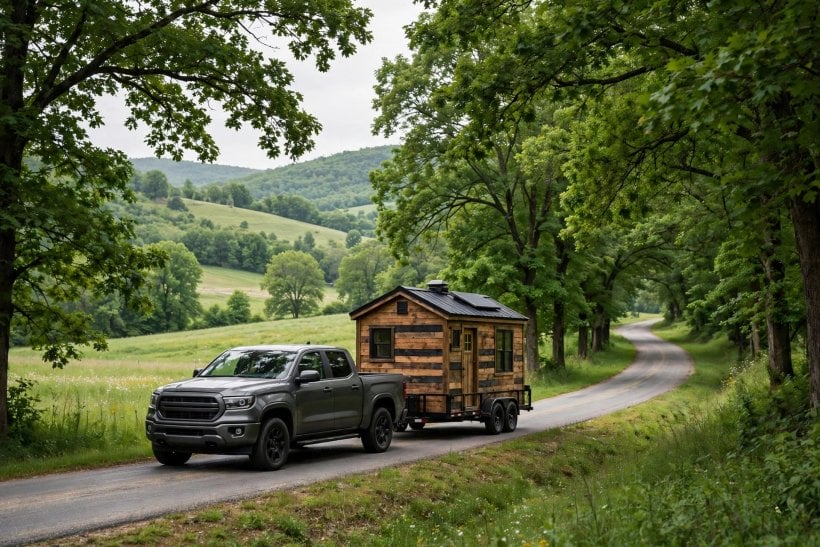
Moving a tiny house is a planned job, not an afterthought. Before delivery day, confirm who handles transport, what route and access the site allows — narrow gates, low branches, and steep or soft driveways all matter — whether any transport permits or escorts are needed, and exactly where the home will sit. The site should be level, accessible, and ready for utility connections, with drainage that moves storm water away from the base rather than under it.
If delivery is included, get the scope in writing: how far, onto what surface, and whether levelling and blocking are part of the job. If it is not included, get quotes before you close from haulers who move tiny houses regularly. A home that arrives before its site is ready becomes an expensive storage problem within days.
9. Negotiating and Closing Without Surprises
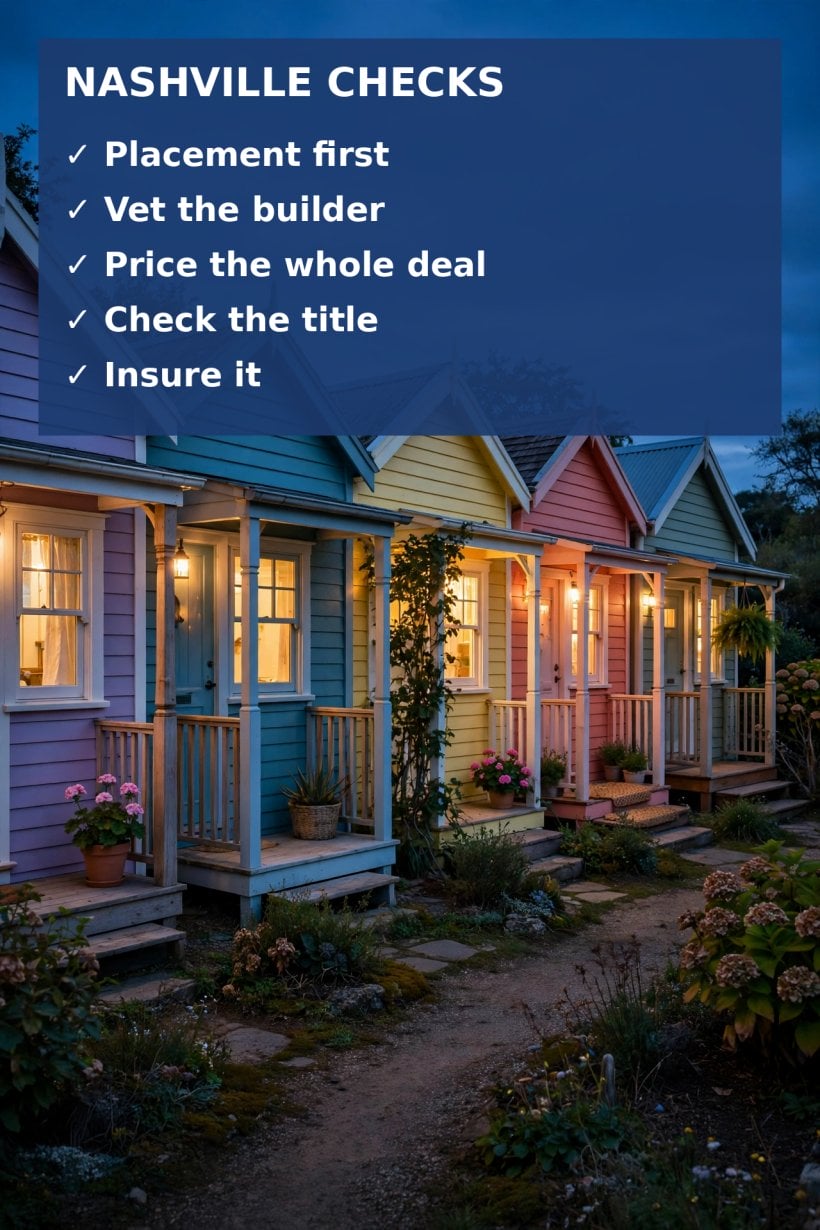
Negotiation is normal in private sales and sometimes possible with builders, depending on timing and what is included. Base any offer on comparable homes you have actually seen, this home’s condition, and what the price includes — and be prepared to walk away. A home with the wrong placement, paperwork, or moisture history is not made right by a small discount.
Close in writing. The contract should identify the home, the price, what is included, the deposit and balance dates, the delivery arrangement, and what happens if either side cannot complete. Run the title check as its own step: confirm the seller is the person named on the ownership documents, that they match the home in front of you — including the trailer identification on a wheeled home — and that no loan or lien travels with it. Pay through traceable methods, and do not hand over the final balance until the paperwork is in your hands.
Buying in a second state market as well? The same method applies — our guide to tiny houses for sale in Texas follows this identical structure under that state’s rules.
10. Frequently Asked Questions
Can I Airbnb a tiny house in Nashville?
Only if several layers of rules all allow it: the city’s short-term rental rules for that property type and area, any requirement that the owner live on site, the zoning for the parcel, and — for a home in a community or on leased land — the community’s own terms. These rules change and are enforced, so check the current position with the city and get any permission in writing before you count rental income in your budget. Never assume a tiny house can be rented out simply because other rentals exist nearby.
What insurance do I need for a tiny house in Tennessee?
The policy follows the home: a house on wheels is commonly insured on a vehicle-style basis, a house on a foundation more like a small dwelling, and either way the cover should match how the home is actually used and where it sits. Lenders and communities may require particular cover. Get quotes on the correct basis before you buy, using the insurance guide linked in section 7, and confirm storm and water cover in detail.
How do I transport a tiny house to Nashville?
Either with a suitable tow vehicle and a driver experienced with tall, heavy loads, or — more commonly — by hiring a hauler who moves tiny houses regularly. Confirm the home’s dimensions and weight, the route’s clearances, any permit or escort requirements, and that the destination site can receive it. Section 8 sets out the full checklist.
What is the biggest challenge buying tiny in Nashville?
Placement. The patchwork of city and county rules, and securing a legal, serviced site that suits the home, takes longer than finding the home itself for most buyers. Buyers who solve placement first have the smoothest purchases — which is why this guide puts it in section 3, before the listings.
Can I negotiate on a tiny house price in Nashville?
Yes — negotiation is normal, especially in private sales. Justify an offer with comparable homes and the real costs you have identified (repairs, delivery, siting), keep it calm and in writing, and know your walk-away point before you start. Section 9 covers closing safely.
Final Considerations
Buying in Nashville goes well when the order is right: decide wheels or foundation, verify the placement for that exact spot, check the seller and the paperwork, arrange financing and insurance on the correct basis, inspect in person with the climate in mind, and plan delivery before closing. Prices, availability, and local rules change, so verify current information directly with sellers, lenders, insurers, and local officials before you commit. This guide is general information, not financial or legal advice.


0 Comments