

Rain finds every unsealed connector. One sloppy autumn storm can turn a thousand-dollar e-bike into a very expensive paperweight — unless the machine was dressed for it. Water and electricity have never been friends, but they can coexist: seal what must be sealed, let what must breathe breathe, and run the short post-ride routine that keeps corrosion from ever getting started.
1. Weatherproofing an E-Bike at a Glance
Weatherproofing an E-Bike is best understood as a system rather than a product: the electrics hate moisture, the mechanics hate salt, and the rider hates the cold spray — and each of the three gets its own line of defence. The electrical side is sealed with grease, covers and caps. The mechanical side is defended with wet lube, wipedowns and rinses. The rider is wrapped in fenders, tread and breathable gear. The table below gathers the whole system the way the original lays it out; the sections after it take each layer apart in turn.
| Attribute | Detail |
|---|---|
| The Grease | Dielectric grease on every electrical connector — the corrosion barrier; the $8 tube |
| The Display | Neoprene or silicone cover over the display and controller — the rain shield for the vulnerable brains |
| The Battery Contacts | Contact cleaner plus grease — the mounted battery’s exposed point, wiped down as routine |
| The Motor | Rated IPX4+ — hub motors shrug off rain; the pressure washer is banned outright |
| The Charging Port | Rubber cap, always on — the forgotten seal that rain finds first |
| The Lube | Wet lube, applied frequently through winter — salt’s enemy on the drivetrain |
| The Fenders | Full front and rear coverage with mudflaps — a dry back and a dry drivetrain |
| The Tires | Treaded rubber for rain, carbide studs for ice, 4″+ fat tires for deep snow |
| The Drying | A 5-minute post-ride wipe of frame and contacts; the battery removed and kept indoors |
| The Snow Routine | The full 10-minute rinse, wipe and lube after snow rides — salt’s defeat |
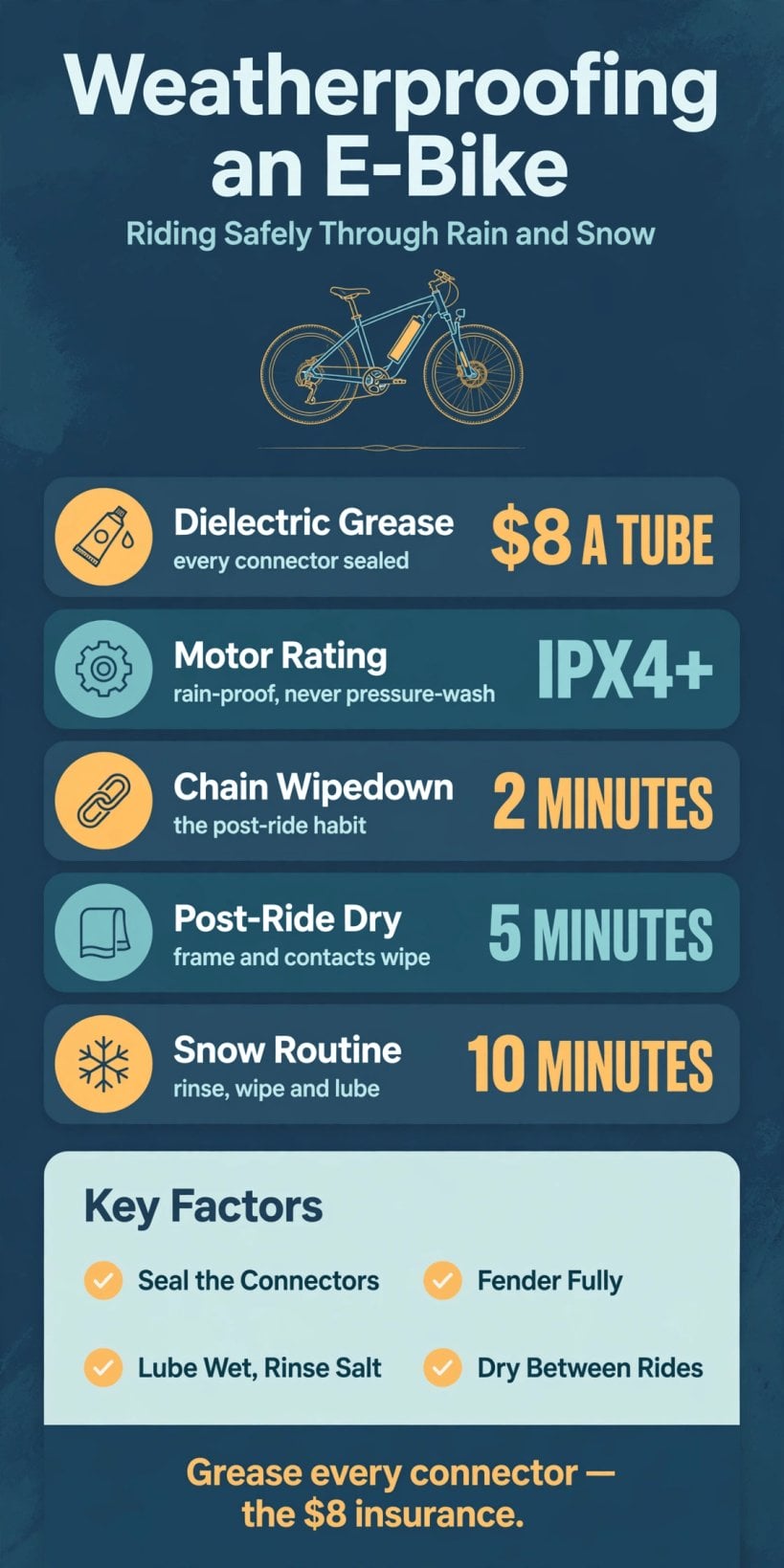
An $8 tube of grease, an IPX4+ motor and a 5-minute wipe — the whole defence on one card.
Read the system as three truces negotiated at once. The electrical truce says water may fall on the bike but may not reach a contact. The mechanical truce says salt may coat the machine but may not stay on it. The rider’s truce says the weather may do its worst outside the gear while the person inside stays warm, dry and visible. None of the three truces is expensive or complicated; all three fail the same way — by being skipped on the one ride that mattered. The sections that follow are organised the way the original organises them: electrics first, then mechanics, then the spray, the grip, the rider, the storage and the deep-winter protocol.
2. The Electrons Fear Water: Why E-Bikes and Weather Collide
An ordinary bicycle tolerates weather by having almost nothing to ruin. An e-bike carries a battery, a controller, a display, a motor and a harness of connectors — a small electrical system riding exposed through the worst conditions the road produces. That is the collision the whole subject turns on: the electrics hate moisture because water across contacts means corrosion and short paths; the mechanics hate salt because road salt is a corrosion accelerant spread exactly where the drivetrain lives; and the rider hates the cold spray because a wet rider at speed loses heat, comfort and eventually concentration.
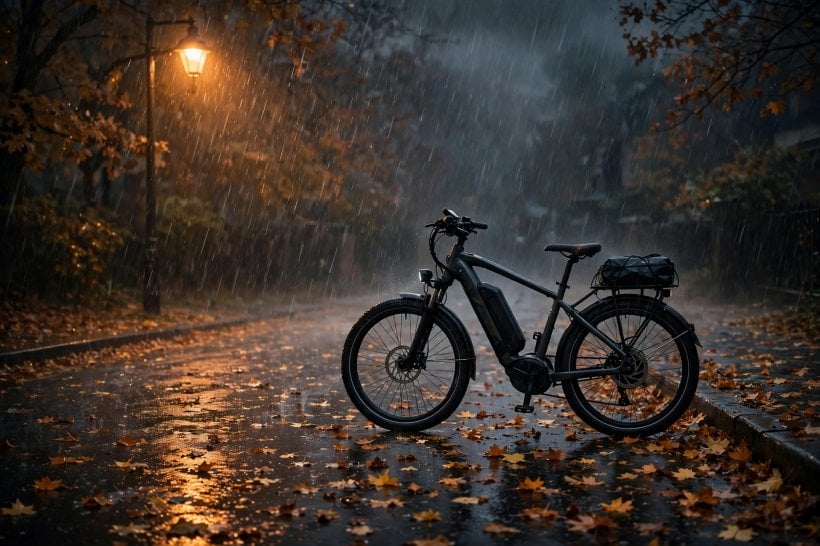
The encouraging fact is that none of this requires heroics. The machine’s vulnerable points are few and known — the connectors, the display, the battery contacts, the charging port — and each has a cheap, specific defence. The rest of the work is habit rather than hardware: the wipedown, the rinse, the drying. Riders who treat weather as a system to be managed, rather than a verdict to be accepted, keep machines alive through seasons that retire unprepared ones. The e-bike sits inside the wider family of small electric vehicles surveyed in sustainable micro-mobility — and of that whole family, it is the one that most rewards a deliberate weather routine, because it is the one most often ridden daily, in everything.
3. Sealing the Electrical System: Connectors, Display and Battery Contacts
The electrical defence starts at the connectors, because connectors are where water and electricity actually meet. Every electrical connection on the bike gets dielectric grease — the original names it plainly as the corrosion barrier, and prices the whole defence at the cost of an $8 tube. The grease does not conduct; it seals. Packed into and around a connector, it occupies the space water would otherwise occupy, so rain can sheet over the outside of the joint while the contact inside stays dry and clean. It is the cheapest insurance on the machine, and it is applied everywhere: harness plugs, sensor leads, throttle and display connections.
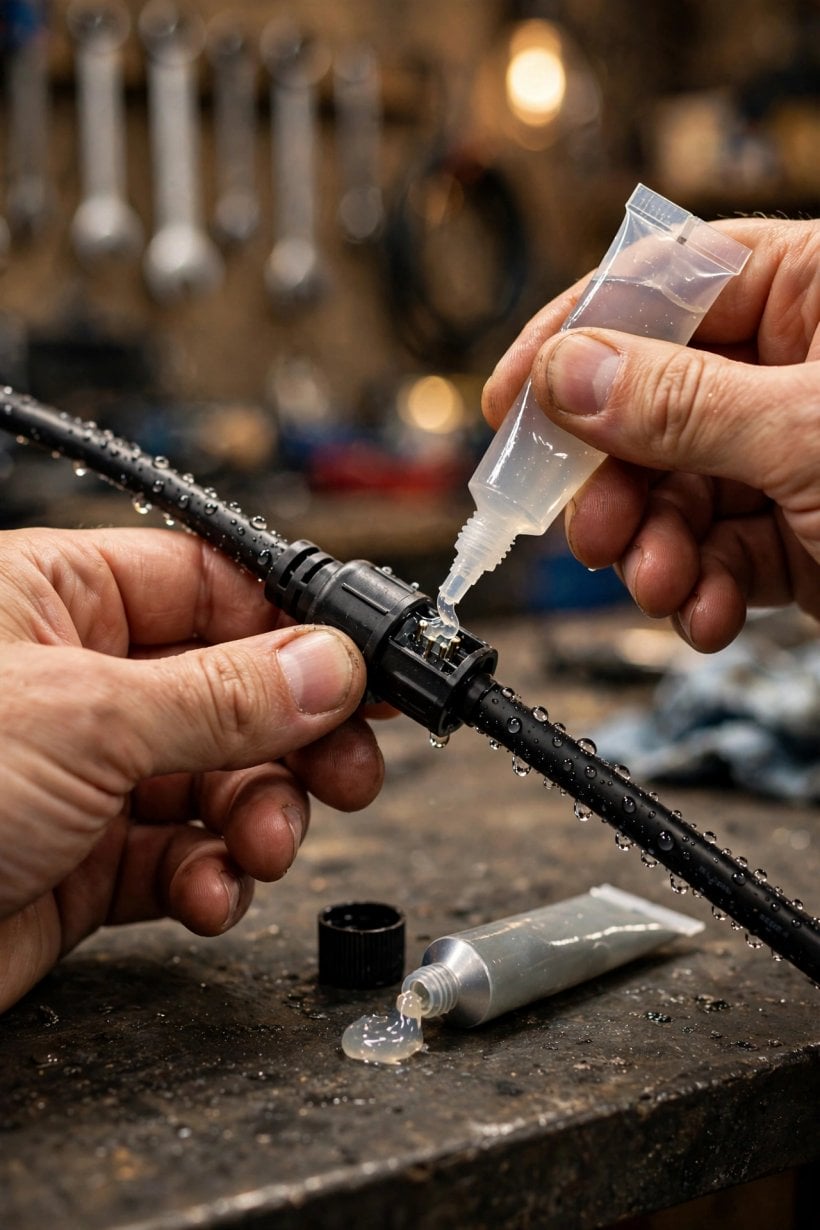
The display and controller — the vulnerable brains of the system — get covers: neoprene or silicone rain shields that shed water off the screens and buttons the rider’s thumbs and the weather both touch. The battery contacts get their own routine: contact cleaner and grease, because the mounted battery’s terminals are exposed every time the pack is removed and refitted, and a film of corrosion there quietly taxes every ride. The principle across all three is identical — no bare electrical surface meets the weather unprotected — and the cost across all three is trivial next to the thousand-dollar machine they defend. Seal once, check at intervals, and the electrical system stops being the fragile part of the bike.
4. The Motor and the Charging Port: Rated, Capped, Never Pressure-Washed
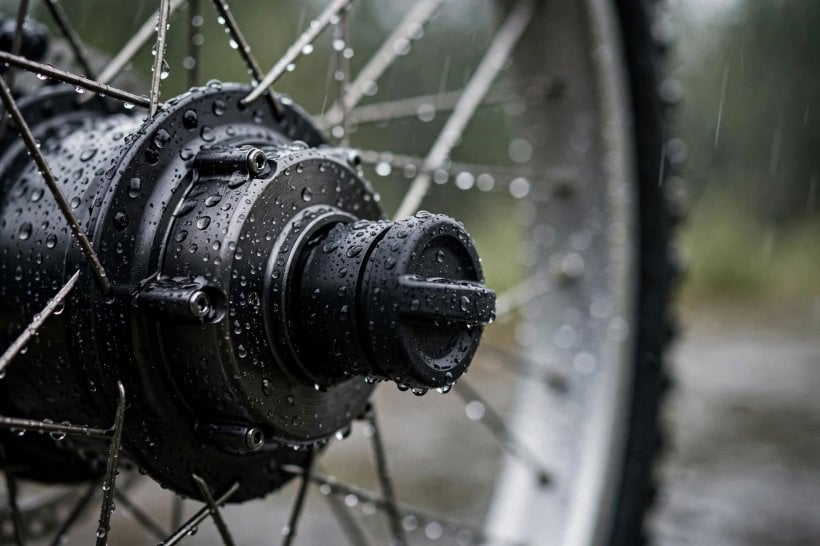
The motor is tougher than riders fear. Hub motors are rated — IPX4+ in the original’s terms — and a motor carrying that rating shrugs off rain: sprayed water from any direction is inside its design envelope. What sits outside the envelope is the pressure washer. A pressure jet drives water past seals that rain never challenges, which is why the original states the ban without qualification: the pressure-washer ban. Wash the bike the way the frame section prescribes — a gentle post-ride hose rinse — and the motor’s rating is never tested beyond what it was built for.
The charging port is the opposite case: small, easy to protect, and constantly forgotten. Its defence is the rubber cap — the original’s phrasing is “the capped (the rubber cover — the always; the forgotten)” — a cap that lives on the port always, removed only for the minutes a charger is actually connected. An open charging port is a funnel aimed at the battery’s electronics, positioned exactly where road spray lands. Riders building their charging routine from scratch will find the electrical side worked through in the guide to charging an electric bike with off-grid solar power; the weatherproofing rule that belongs here is simpler — the charge happens under cover, through a dry port, and the cap goes back on before the bike goes back out.
5. Mechanical Protection: Wet Lube, Wipedowns and the Salt War
The mechanical enemy is not water itself but what winter water carries: salt and grit. The drivetrain’s defence is wet lube — the winter chain lube, applied frequently, because wet conditions strip a chain and salt attacks whatever the stripping exposes. Where a dry-weather lube is a light film, the wet lube is a persistent one, chosen to stay on the chain through spray and slush; the original calls it simply salt’s enemy, and the application rhythm — frequent, not occasional — is the point. A chain that is wiped and re-lubed on schedule survives winters that eat neglected drivetrains in a single season.
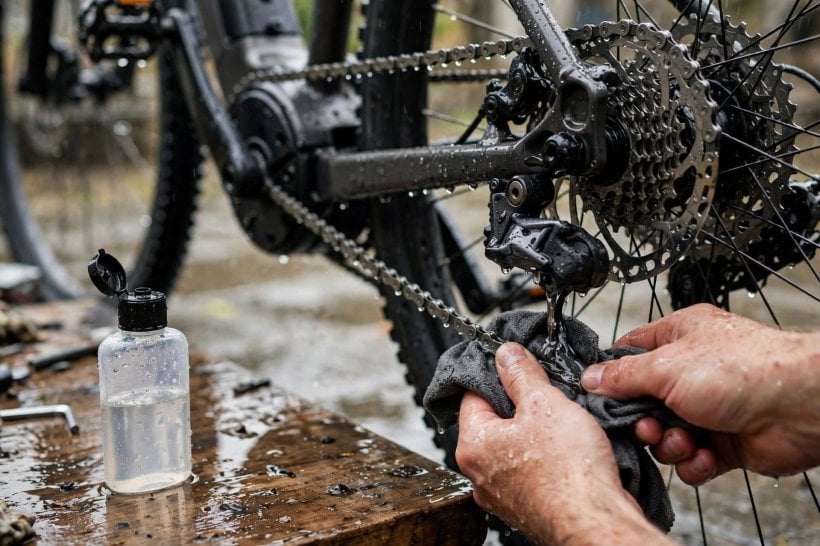
Around the chain, three habits complete the mechanical defence. The chain wipedown itself is the post-ride 2-minute routine — rust’s prevention, done while the day’s grit is still loose rather than after it has dried onto the links. The bearings are sealed cartridge units on a quality machine, checked annually — the annual check — rather than serviced in panic. The frame gets the post-ride rinse, a hose washing the salt off before it can sit, with frame-saver as the deeper defence; and the bolt check runs monthly, because vibration plus corrosion loosens fasteners quietly, and the torque check is a safety habit as much as a maintenance one. None of these habits is long. Together they are the difference between a bike that ages and a bike that corrodes.
6. Fenders and Coverage: Winning the Spray War
If sealing is the defence of the machine’s insides, fenders are the defence of everything else. The original’s verdict is unambiguous: full fenders are essential — front and rear, with mudflaps. A bare wheel throws a rooster-tail of near-freezing road water in two directions at once: up the rider’s back, and forward across the drivetrain. Full fenders with mudflaps end both throws — the dry back and the dry drivetrain, in the original’s summary — which makes them simultaneously rider gear and mechanical protection, the only component that serves both truces at once.
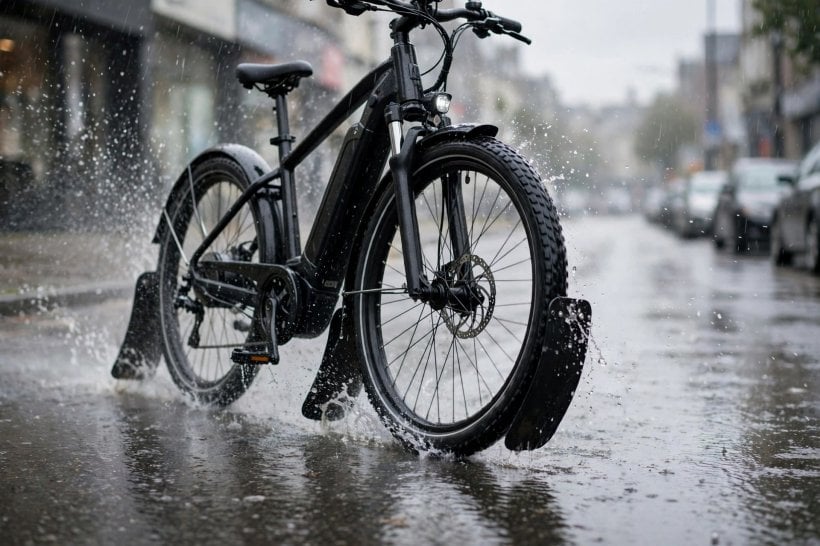
Coverage is a fit question as much as a presence question. The fenders that work are the close ones — tire-hugging coverage, the SKS-class of full-length guards that follow the wheel’s curve and carry the mudflap low, close to the road, where the spray actually leaves the tire. A short decorative guard stops the stripe up the rider’s back and nothing else; the close fender defeats the spray itself. There is a bonus the original notes: the fender shields the motor too — the front guard in particular cuts the direct splash load on a front hub and on the bottom-bracket area — so coverage buys longevity as well as dryness. Riders comparing the open bike’s spray war with the enclosed alternative will recognise the fender’s job in the shell discussion inside the guide to how to commute in winter: the velomobile wears its fender as a body; the e-bike bolts its on — and bolted on properly, it works.
7. Tires for Wet and Snow: Tread, Studs and Smooth Technique
Grip is where weather stops being a maintenance topic and becomes a safety one. For rain, the answer is the treaded tire: a water-shedding tread with puncture protection, run at a slight drop in pressure — the pressure’s slight drop — so the contact patch grows and the tread can work. Wet roads hide their hazards in plain sight, and the original names the two that catch riders: painted lines and manhole covers, both treacherous when wet because painted and metal surfaces offer a fraction of asphalt’s grip. The technique that answers them is smoothness itself: gentle braking, no sudden inputs, the line chosen to cross paint and covers upright and unhurried.
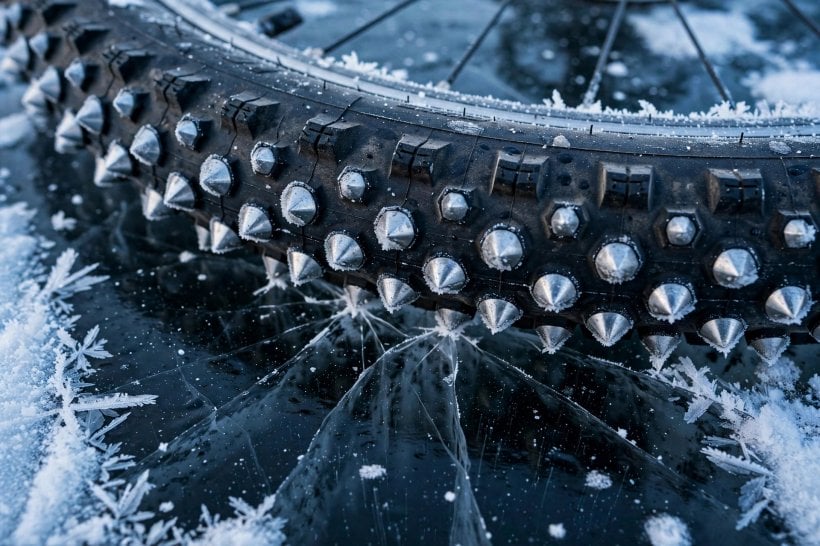
For snow and ice, the answer changes from tread to hardware: the studded tire — carbide studs that bite where rubber alone would polish the ice smooth. The original defers the detail to the winter guide, and the studded discussion there is the natural companion to this section; what belongs here is the decision rule. Tread for rain, studs for ice, and — arriving in the snow protocol below — width for deep snow. Each surface gets the tire that actually grips it, and the rider who swaps rubber with the season rather than arguing with it keeps the shiny side up through the whole calendar. No other single component change buys as much winter safety per dollar as the right tires do.
8. The Rider: Rain Gear, Visibility and Dry Extremities
The machine can be perfectly sealed and the ride still fails at the rider. Rain gear starts with the breathable layer — jacket and pants that shed water outside while letting sweat escape, pit zips doing the venting work — because the sweat’s management is what separates a rider who arrives functioning from one who arrives soaked from the inside. A fully waterproof shell that traps perspiration wets the rider almost as reliably as the rain it blocks; breathability is not a luxury feature but the mechanism that keeps the whole system working over a full commute.
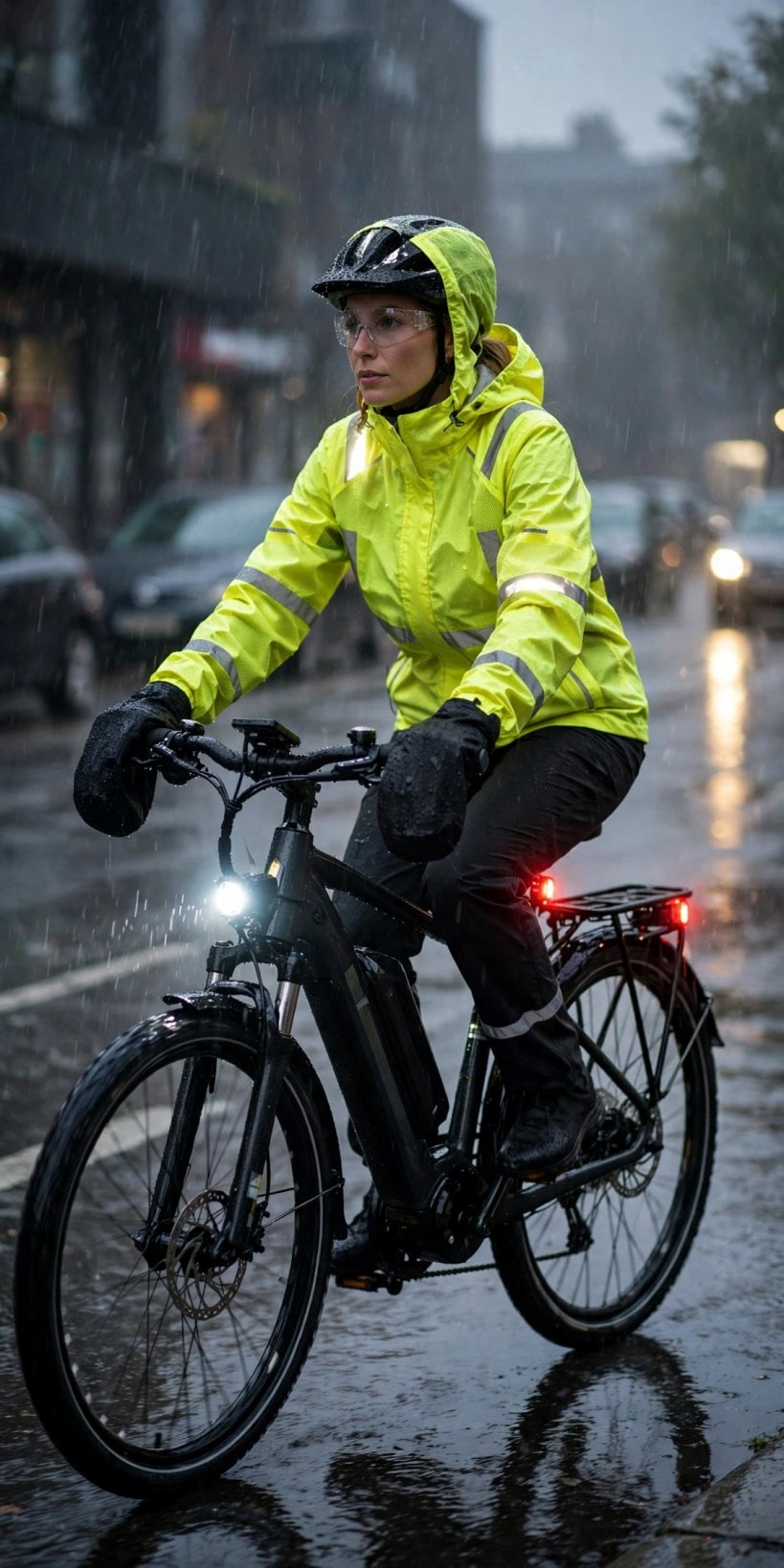
Visibility is the second rider system, and rain raises its stakes: the rain’s gray flattens contrast and shortens sightlines, so the lights run as daytime running lights, backed by reflective material that catches headlights through the murk. Hands and feet close the system — the extremities, where comfort is actually decided. Bar mitts shelter the hands in still air over the grips, and waterproof boots keep the feet dry through spray and slush; cold, wet hands lose brake feel, which makes dry extremities a safety item and not merely the comfort the original also credits them with. The gear philosophy here matches the broader one in e-bike commuting 101 — dress the rider as a system — and the body’s own output in wet cold is part of the same picture the human power versus electric assist analysis draws: a rider who stays warm and dry can keep contributing power; a chilled one becomes a passenger on a draining battery.
9. Storage Between Rides: Drying, Battery Indoors, Breathable Covers
Weatherproofing does not end when the ride does; the hours between rides are when corrosion does its quiet work. The first storage habit is drying: the 5-minute wipe — frame and contacts — done on arrival, while water is still water and not yet the damp film that sits in joints overnight. Five minutes is the original’s figure and it is honestly priced: the habit costs less time than a single corroded connector costs money. The second habit is the battery: removed and brought indoors, warm and dry — the longevity rule — because a pack stored cold and damp ages faster and delivers less, while a pack sleeping in the house is ready at full strength for the next ride.
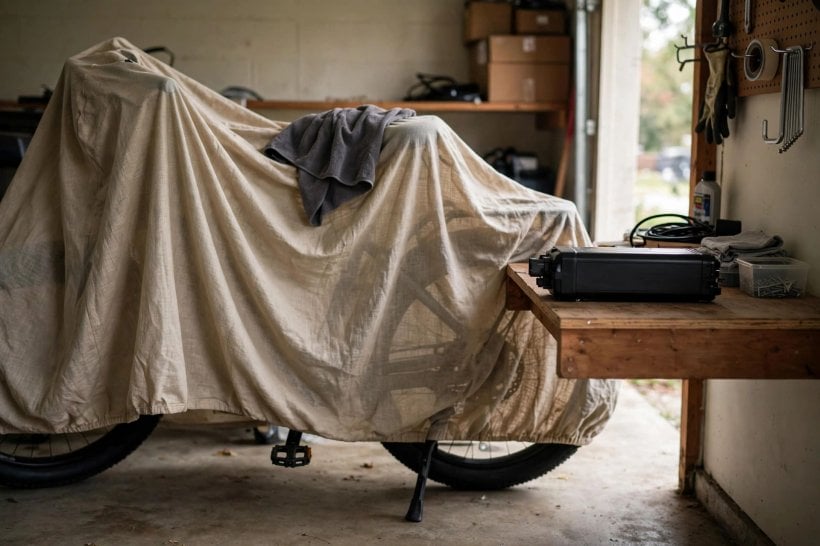
The third habit is the cover, and its specification matters: breathable. A ventilated bike cover sheds the garage’s dust and drips while letting residual moisture escape — the condensation’s avoidance — where a sealed plastic sheet would trap the day’s damp against the frame and undo the drying the rider just did. Storage is also where the charging discipline from the earlier sections lands: a battery kept indoors is a battery that can be charged warm and monitored, and riders pairing the bike with home solar will find the storage-and-charging picture completed in the roundup of the best solar chargers for e-bikes. Dry bike, indoor battery, breathing cover: the between-rides truce, held nightly, is what makes the on-ride sealing worth doing at all.
10. The Snow Protocol: Deep Winter, the Blizzard Limit and the Honest Day Off
Snow concentrates every earlier section into one protocol. The pre-ride check has two items: the battery comes to the ride warm — stored indoors, as the storage section prescribes, so it starts the ride at strength rather than spending its first miles warming itself — and the tire pressure is dropped, widening the footprint on the soft surface. For deep snow the machine changes shoes entirely: the fat tires, 4″+ wide, floated at low pressure so the bike rides on the snow rather than ploughing through it — the float, on the dedicated setup. The post-ride side of the protocol is the full routine: rinse, wipe and lube, the 10-minute version, because snow rides carry the heaviest salt load of the year and the salt’s defeat is a same-day job, not a weekend one.
And then the protocol’s last item, which the original states with a honesty the whole guide has been building toward: the limit. The blizzard is the day off — the discretion to leave the bike under its breathable cover and let the storm win the day. Weatherproofing extends the riding season enormously; it does not abolish judgment. The rider deciding which machine fits which day at all is running the same calculation the sustainable transportation quiz formalises — matching vehicle to conditions honestly — and on the worst days the honest match is no vehicle. A missed day costs nothing. A crashed bike, or a corroded one, costs the season.
Final Considerations
Grease every connector — the $8 insurance. Fender fully — the spray war, won at the wheel. Lube wet and rinse salt — the mechanical truce. Tread for rain, stud for ice — the grip, matched to the surface. Dry the machine and de-battery it between rides — the storage habit that makes the rest compound. And respect the blizzard — the limit that keeps discretion ahead of bravado. The weatherproofed e-bike doesn’t fear the forecast; it just dresses for it — and so does its rider.




0 Comments