
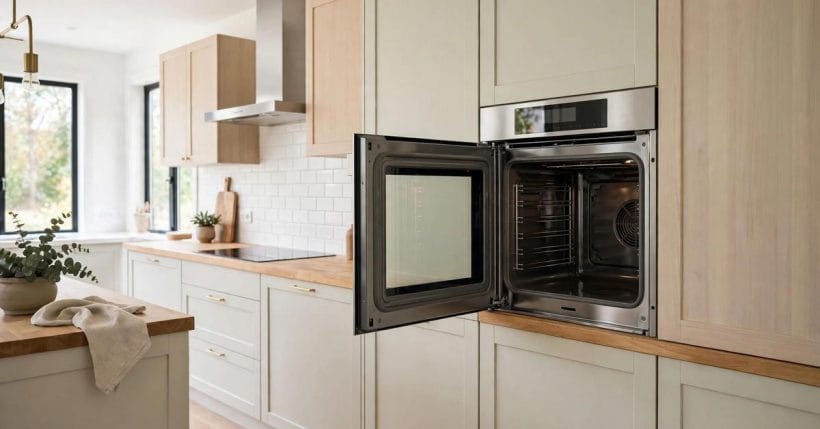
A wall oven door seems like a small detail until the day a hot dish has to come out of a hot box in a busy kitchen. The door is the part you touch, the part that swings toward you or to the side, and the part that decides how close you can stand while you lift. Some wall ovens open sideways on a hinge, like a tall cupboard door, so the cavity faces you directly. Others carry the familiar regular door, a panel that drops down toward the floor and leaves the opening clear from above. Both styles cook in the same basic way, and both have lived in ordinary kitchens for years, yet they ask for different space, different habits, and different care around heat.
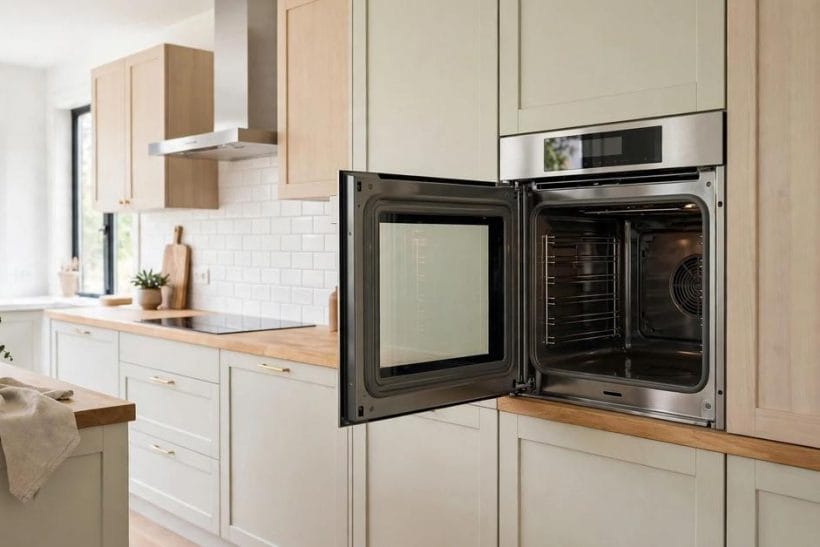
This guide compares a side opening oven with a regular-door wall oven in general terms only. It looks at door swing and access, at how each style fits common kitchen layouts, and at the safety framing that matters when children, pets, and passing traffic share the room. It gives no fitting instructions, no wiring guidance, and no gas guidance, because fitting, wiring, and gas work belong to qualified professionals throughout. What follows is a way to think through the choice before visiting a showroom, measuring a housing unit, or talking with a fitter about what suits the room as it actually is.
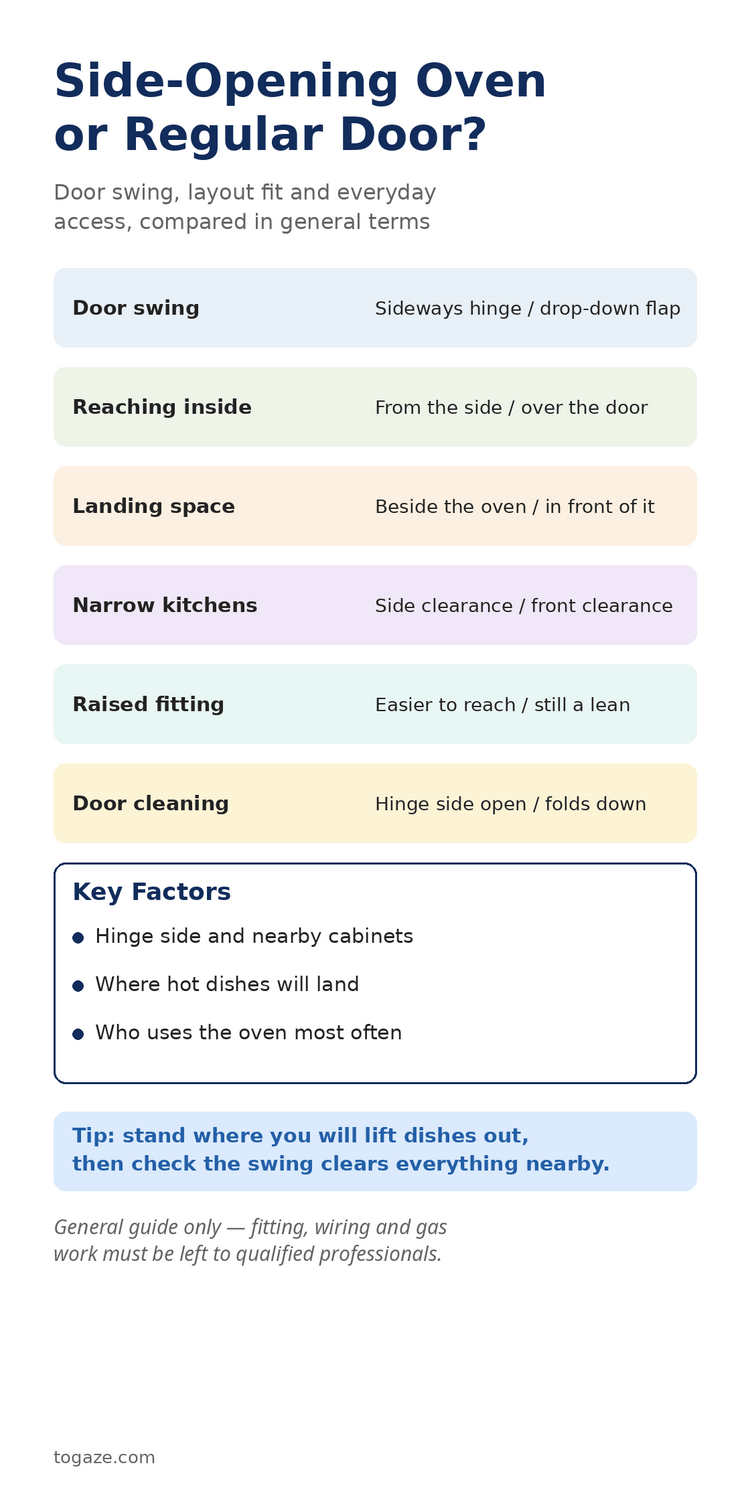
1. The Two Door Styles at a Glance
The side-opening style hangs its door on a vertical hinge, so the panel swings out to one side and stays clear of the floor. Standing in front of the oven, you face the cavity directly, with nothing between your hands and the shelf except the heat itself. The hinge side matters a great deal here, because the door needs a clear arc on that side, and the landing surface for hot dishes naturally sits beside the oven rather than in front of it. For cooks who lift with both hands and step slightly sideways, that arrangement can feel calm and direct, with no panel to lean across.
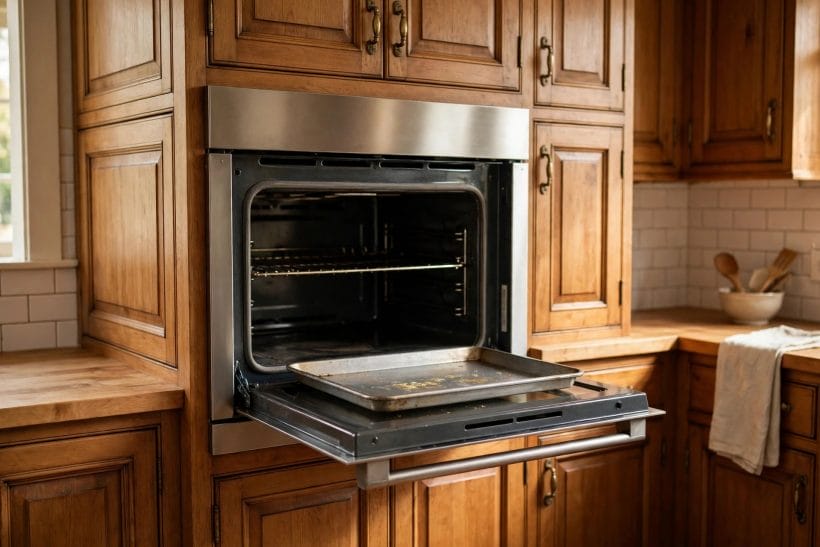
The regular door drops down on a horizontal hinge, so the panel becomes a low shelf in front of the oven while it is open. That shelf can hold a tray for a moment while oven gloves are adjusted, and it gives a clear, unobstructed view down into the cavity from above. The trade is the space it claims on the floor in front of the oven, and the lean it asks for, because reaching the back of a shelf means leaning over the open panel. In a roomy kitchen that lean is barely noticed, while in a tight kitchen it becomes part of every cooking session.
Neither style is the correct answer on its own. The right door depends on the shape of the room, the height at which the oven sits, the people who cook, and the way hot dishes move from oven to counter. A related family of door ideas appears in the guide to slide-away oven doors, where the panel disappears beneath the cavity instead of swinging or dropping, and comparing that third arrangement can sharpen what matters most in this choice. Keep the comparison practical: think about hands, heat, and floor space, not about novelty for its own sake.
2. Door Swing and the Space Around the Oven
Every oven door describes an arc, and that arc has to be empty. A side-opening door sweeps sideways, so the wall, the tall housing, the neighbouring cabinet, or the corner return on the hinge side all need to stand clear of its path. Handles, knobs, and protruding trim on the adjacent unit can intrude into that sweep, and a door that cannot open fully becomes a daily frustration. Checking the swing with the room as furnished, rather than as drawn, is the honest test, because a stool, a bin, or a pet bed can quietly occupy the very space the door wants.
A regular door sweeps downward and outward, so its arc lives on the floor in front of the oven. That space needs to stay clear while the door is open, which matters most where a walkway passes the oven or where a drawer, a dishwasher door, or a fridge door opens into the same zone. Two doors competing for the same floor space will collide sooner or later, and the habit of standing back while a tray is lifted becomes harder when the room is crowded. The advantage of the drop-down panel is that its arc is predictable and low, so once the front zone is kept clear, the door rarely surprises anyone.
Handle placement deserves a thought of its own. A side-opening door usually carries its handle on the edge away from the hinge, so the hand pulls from the free side and the body steps naturally to the hinge side as the door opens. A regular door carries its handle along the top edge, so the hand pulls down and the body steps back. Both gestures are easy to learn, but they suit different stances, and a cook with limited reach, a sore back, or a small frame may strongly prefer one gesture over the other. Trying both gestures in a showroom, with a tray in hand, tells more than any description can.
3. Reaching In: Comfort, Heat and Hot Dishes
Reaching into an oven is a moment of exposure to heat, weight, and awkward angles all at once. With a side-opening door, the cook stands close and reaches straight in, with the shelf sliding toward the hands and the dish coming out at a natural height. There is no panel to lean over, which helps when the dish is heavy, wide, or filled with liquid, because the lift stays close to the body. The heat, however, rolls straight out toward the cook, so oven gloves, a steady stance, and an unhurried movement matter more than speed.
With a regular door, the cook leans over the open panel and reaches down and in, which can feel less direct, especially when the oven sits low. The open panel does offer a resting place, a spot to set a tray for a breath while gloves are repositioned, though it is not a work surface and it stays hot while the oven is in use. For lighter dishes and everyday roasting, that resting place is genuinely useful, and many cooks use it without thinking. For very heavy dishes, the lean plus the lift can strain the back, so the height of the oven and the weight of the usual dishes deserve honest attention.
Shelf design changes the experience for both styles. Shelves that glide smoothly toward the cook reduce the depth of the reach, while shelves that stick or tilt make every lift harder. Racks that sit at a comfortable height for the cook, rather than at the very top or bottom of the cavity, keep the lift within easy arm range. None of this depends on the door alone, which is why the door question should be settled together with the fitting height and the shelf arrangement, rather than treated as an isolated feature.
4. Kitchen Layout Fit: Galley, Corner and Island Kitchens
Layout decides how much of each door style the room can actually accommodate. In a galley kitchen, where two runs face each other across a narrow passage, a side-opening door needs clear space on its hinge side, while a regular door needs clear floor in front of the oven. The passage itself becomes the shared resource, and whichever door claims less of it during cooking will feel easier to live with. Tall housing at the end of a run often suits a side-opening door well, because the hinge side can face the end wall while the landing surface sits on the neighbouring counter.
Corner positions deserve special care. An oven tucked into or beside a corner can leave a side-opening door swinging into the corner return, or leave a regular door opening toward a neighbouring run. Measuring the corner as built, including any filler panels and handle projections, prevents a door that opens only partway. Island kitchens change the picture again, because an oven in an island or a peninsula faces open floor on both sides, so either door can work, and the choice turns on where hot dishes will land and where people will stand while the door is open.
The landing surface is the unsung partner of any oven door. Hot dishes need somewhere to go the moment they leave the cavity, and that surface should be heat tolerant, clear, and within a short step. For a side-opening door, the landing surface sits beside the oven, often the counter next to the tall housing. For a regular door, it sits in front, often the counter opposite or the island edge. Thinking through that short journey, from shelf to surface, in the real room, with real dishes, is the most practical layout test of all, and it connects naturally with the wider question of how a small kitchen is planned, as explored in the collection of condo kitchens, where tight footprints force every landing surface to earn its place.
5. Fitting Height: Raised, Eye Level and Under Counter
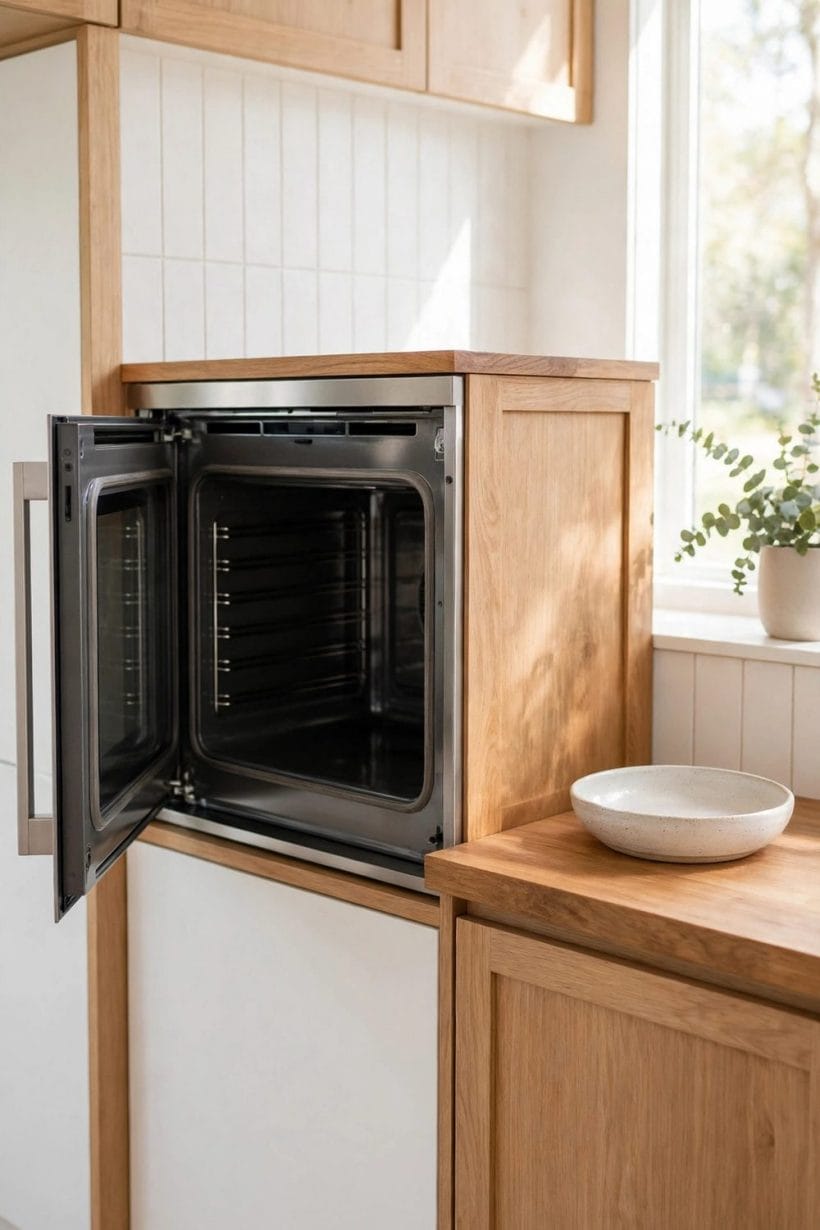
Height transforms a door choice. A wall oven fitted at a raised position, with the cavity near standing eye level, lets the cook see inside without bending, and a side-opening door at that height feels especially natural, because the dish slides out toward the hands at a comfortable level. The same raised position also helps a regular door, since the lean over the panel becomes shallower when the cavity is higher, though the panel still drops toward the cook and still needs floor clearance below it.
An under-counter oven sits low by definition, and there the two styles diverge more sharply. A side-opening door at low level still opens sideways, but the cook must bend to reach the cavity, and the hinge arc runs close to the floor, where feet, pets, and low drawers all compete for space. A regular door at low level drops toward the floor and asks for a deeper lean, yet its panel gives a resting place at knee height that some cooks appreciate. Neither arrangement is ideal for cooks who struggle to bend, which is why a raised fitting is worth considering wherever the housing allows it.
Tall housing brings its own detailing. Panels, fillers, and ventilation gaps around the oven affect how the door sits in the run and how the handle aligns with neighbouring doors and drawers. A housing that is specified and fitted by professionals, with the door swing and the ventilation needs settled together, will look and work far better than a housing chosen for appearance alone. For a sense of how cabinet construction shapes these details, the guide to kitchen cabinet construction is a useful companion, because the housing is the frame within which the door must do its daily work.
6. Safety Framing: Children, Pets and Passing Traffic
Safety framing starts with heat, and heat behaves differently with each door. A side-opening door, once open, leaves the hot cavity facing the room, with no panel shielding the space in front of it. A child or a pet passing close by could come nearer the opening than an adult expects, so the habit of closing the door promptly and keeping the landing zone clear matters. A regular door, once open, places a hot panel across the front of the cavity, which acts as a low barrier, though the panel itself stays hot and invites curious hands, so it is not a guard in any real sense.
Passing traffic is the second safety question. A side-opening door projects sideways into the room, and someone walking past with arms full may not expect a panel at shoulder or waist height jutting from the tall housing. A regular door projects low, toward the feet and shins of anyone passing, and a person stepping back from a neighbouring counter could stumble against it. Both risks are managed by the same habits: announcing when the oven is open, keeping the walkway clear during cooking, and choosing a hinge side or a position that keeps the open door out of the main path.
Hot dishes deserve their own safety note. The journey from shelf to landing surface is when spills and burns are most likely, because the dish is hottest, heaviest, and hardest to see around. Oven gloves that fit well, a clear and uncluttered landing surface, and a rule that nobody reaches across the cook while a dish is moving all reduce that risk far more than any door feature can. Steam deserves respect too, since opening any oven releases a rush of hot air, and standing slightly to the side for a breath before reaching in is a small habit with a large payoff.
7. Cleaning, Hinges and Everyday Wear
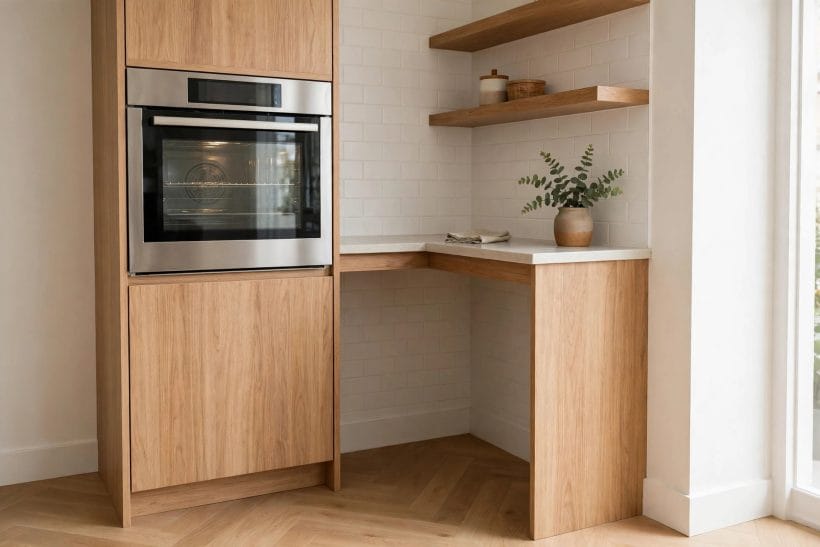
Cleaning follows the door. A side-opening door presents its inner glass and its hinge edge for wiping, with the hinge side reachable once the door stands open, though the hinge mechanism itself can gather grime where the panel meets the frame. A regular door folds down, so its full inner panel lies flat and accessible, which many cooks find easier for wiping the glass and the seal, though the hinge area at the bottom can collect spills that run down the panel. Seals deserve gentle care in both styles, since a damaged seal lets heat escape and makes the oven work harder.
Hinges carry the weight of the door for years, and they wear differently by style. A side hinge carries the panel like a cupboard door, with the load hanging from the vertical edge, while a drop-down hinge carries the panel like a flap, with the load pulling forward and down. Both designs are proven, and both last well when the door is opened and closed without force, yet a door that is leaned on, hung from, or allowed to slam will wear faster in either form. Gentle handling, and prompt professional attention if a door begins to sag, stick, or fail to close squarely, will protect the seal and the fit.
Glass and trim show wear first. Fingerprints, splashes, and baked-on marks gather on any oven door, and a finish that wipes clean easily will look better for longer than a finish that traps grime around handles and trims. Stainless trims, dark glass, and pale handles all age differently, and the choice should suit the cleaning habits of the household rather than the look of the showroom alone. Whatever the finish, harsh scouring and abrasive pads should be avoided, since scratched glass and damaged coatings are harder to live with than a mark that needs a second wipe.
8. Cooking Habits That Tip the Choice
Cooking habits tip many door decisions. A household that roasts large joints, lifts heavy casseroles, or bakes wide trays will feel the benefit of a door that lets the dish come straight out toward the hands, with a landing surface beside the oven. A household that bakes lighter trays, reheats everyday dishes, or uses the oven mainly for roasting vegetables and gratins may never notice the difference, and the familiar drop-down panel will serve perfectly well. The weight and width of the usual dishes, rather than the size of the occasional feast, should drive the decision.
Frequency matters too. An oven used daily rewards a door that opens smoothly, closes with a light touch, and stays out of the way of the cook’s normal stance. An oven used rarely can tolerate a door that asks for a little more care, because the compromise is felt only now and then. Households where several people cook, including people of different heights and strengths, should weigh the door that suits the least confident cook, not the most enthusiastic one, since that person will use the oven too, and their comfort is the real test.
Baking, roasting, and grilling each interact with the door in small ways. Baking trays slide out toward the cook in both styles, yet a side-opening door lets a tray of risen loaves come out without tilting over a panel. Roasting benefits from a clear view into the cavity, which both doors give, though a regular door lets the cook look down into a roasting tin from above. Grilling, where food sits close to the top of the cavity, rewards a door that opens fully and stays clear while the cook watches the food, whatever its hinge. None of these differences is decisive alone, but together they sketch a picture of the household’s real cooking life.
9. What to Check in a Showroom or at Home
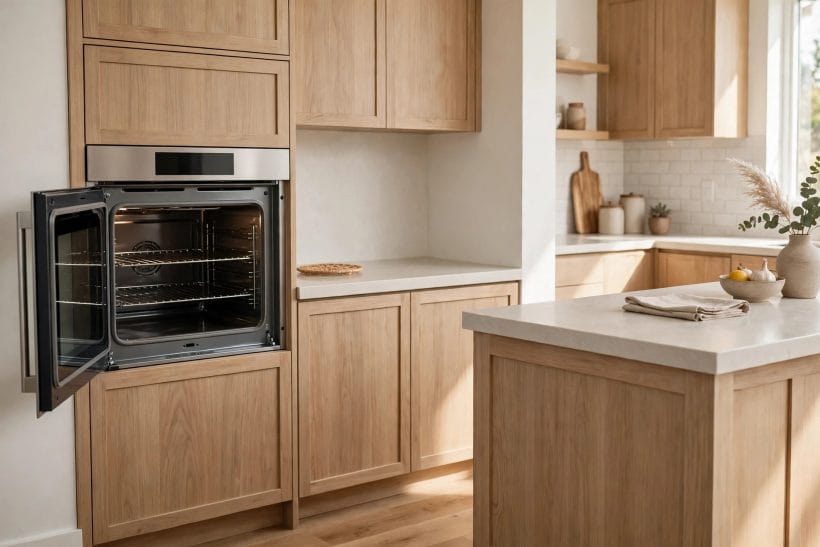
A showroom visit is the best place to settle a door question, provided the visit is treated as a rehearsal rather than a browse. Open and close each door several times, with a tray in hand if the showroom allows it, and notice how the body moves: where the feet go, how far the hands reach, and whether the stance feels balanced. Check the hinge side against the neighbouring units, check the floor space in front of a regular door, and check that the door opens fully without striking handles or trim. A door that feels awkward in the showroom will feel awkward at home, only more so, because home adds clutter, traffic, and tired evenings.
At home, the checks are about the room as it is. Stand where the oven will sit, or where it already sits, and trace the door arc with a hand, noting every cabinet, handle, stool, and walkway it would cross. Place a tray on the intended landing surface and walk the journey from oven to surface, checking that the path is short, clear, and free of obstacles. Ask everyone who cooks to try the same journey, because a door that suits one cook may frustrate another, and the household’s verdict matters more than any single preference.
Before ordering, the wider buying picture deserves a look as well. Delivery, returns, warranty terms, and the scope of professional fitting all shape the experience around the door itself, and the guide to buying major appliances walks through those checks in general terms. Settling the door style first, then the fitting scope, then the surrounding details, keeps the decision in the right order: the daily gesture first, the surrounding arrangements second, and the finishing touches last.
10. Costs in General Terms: What Drives a Quote
Cost is shaped by drivers rather than by the door alone, and understanding those drivers helps any conversation with a fitter or a retailer. The oven itself, the housing or tall unit it sits in, the ventilation and electrical or gas arrangements it needs, and the finishing around it all contribute to the scope. A door style that needs a different housing, a different hinge side, or a change to neighbouring units can carry knock-on work, while a door style that fits the existing housing neatly may keep the scope simpler. Comparing quotes on the same clearly described scope, rather than on headline figures alone, is the honest way to compare.
Site conditions form the next group of drivers. Access for delivery and fitting, the state of the existing housing and wall, the supply arrangements for electricity or gas, and any work needed to bring the surrounding units into line all affect the scope. A straightforward swap in an accessible run is a different proposition from a refit that moves the oven, changes the housing height, or alters neighbouring cabinets, and a reputable professional will walk through these factors before quoting. The door style should be settled early in that conversation, because changing it late can reopen decisions about housing, handles, and landing surfaces.
The long view matters as well. A door that is easy to open, clean, and live with will be appreciated daily, while a door that fights the room will irritate daily, and that daily experience is worth weighing alongside the initial scope. The surrounding surfaces play their part too: the counters where hot dishes land, and the materials that must tolerate heat and spills, all belong in the same conversation, and the collection of trending kitchen countertops shows how those surfaces are chosen in general terms. Gather local quotes for a clearly described scope, compare them fairly, and let the daily gesture carry its proper weight in the final call.
Final Considerations
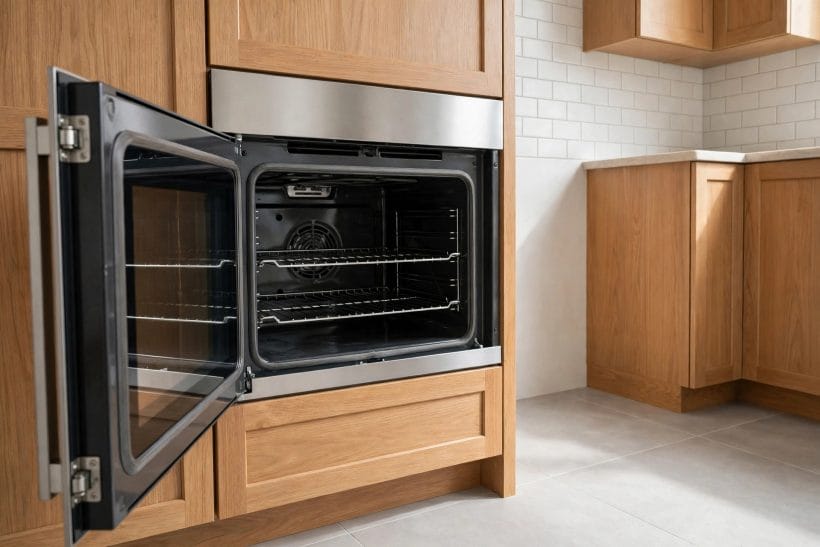
The best oven door is the one that disappears into the cooking routine. Door swing, layout fit, fitting height, safety framing, cleaning, and cooking habits all point toward that single test: can a hot dish travel from shelf to landing surface calmly, safely, and without a contortion, on a tired evening as well as on a leisurely weekend? When the answer is yes, the door style has earned its place, whichever hinge it carries, and the kitchen gains a small daily ease that adds up over years of use.
For kitchens where the oven sits within a wider story of timber, warmth, and lived-in character, the collection of kitchens with oak cabinets shows how tall housings, cabinet finishes, and oven positions combine, and it is a useful place to gather ideas before settling the housing around a chosen door. For kitchens with a longer history, where old layouts still shape modern cooking, the vintage kitchens collection offers a reminder that the most enduring kitchens are those planned around the cook’s actual movements, not around fashion alone.
Start with the gesture, not the gadget. Stand where you will cook, trace the door arc, walk the dish to its landing surface, and ask everyone who cooks to do the same. Leave fitting, wiring, and gas work to qualified professionals, gather local quotes for a clearly described scope, and choose the door that keeps hot dishes, busy feet, and passing traffic in calm company. A side opening oven suits cooks who want a direct reach and a landing surface beside the oven, while a regular door suits cooks who value a familiar drop-down panel and a clear view from above. Either way, the right door is the one the room, the household, and the daily routine can all agree on.
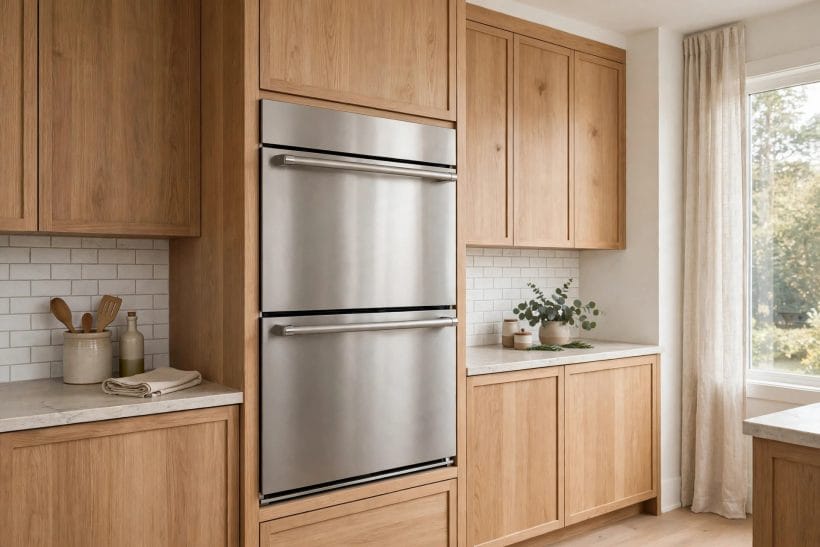
Small kitchens deserve the same care as large ones, and sometimes more, because every swing and every step shows. A side-opening door in a compact run can free the floor in front of the oven, while a regular door in the same run can keep the landing journey short and familiar. The scale changes, but the questions do not: where does the door go, where does the dish land, and who stands where while the oven is open. Answer those three questions honestly, and the door choice largely answers itself.
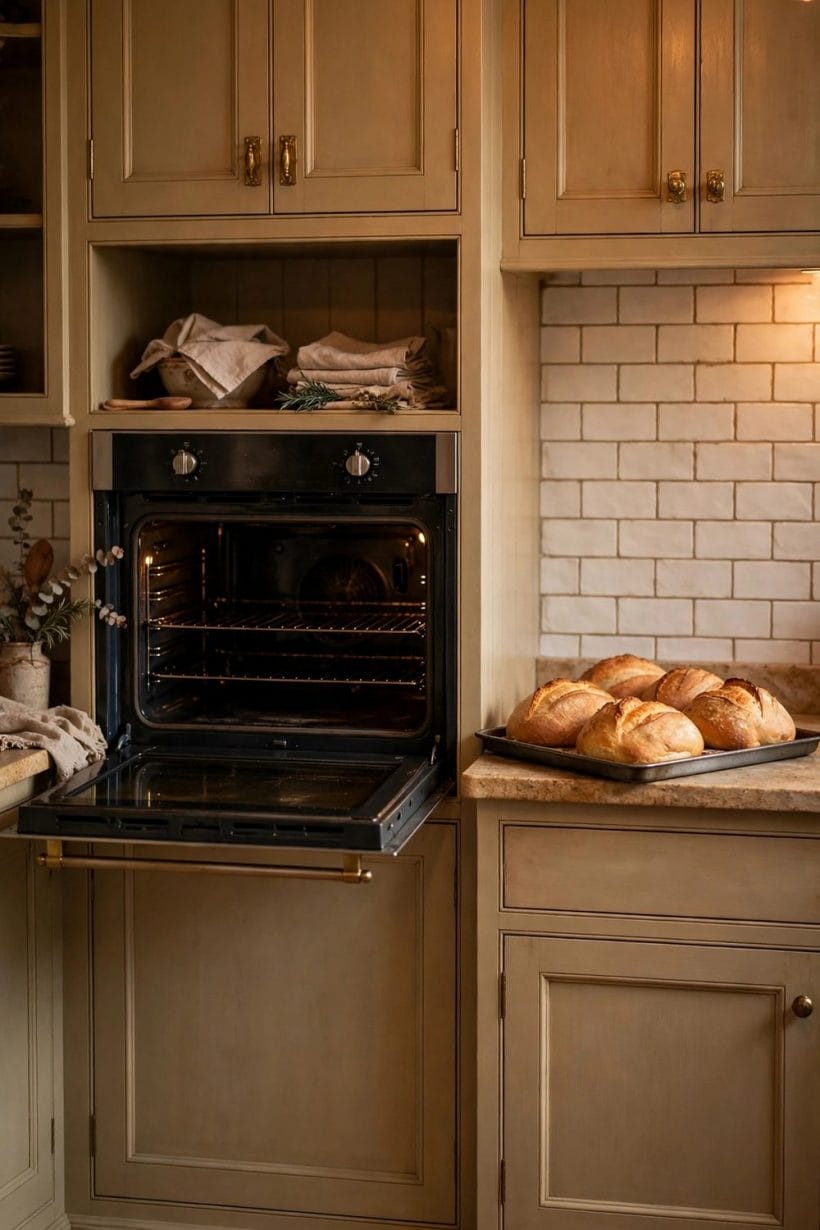
Seasons change the way an oven is used, from summer baking to winter roasting, and a door that works across those rhythms is worth more than a door that suits a single occasion. Heavy winter dishes, light summer trays, everyday reheating, and occasional feasts all pass through the same opening, and the door should welcome each of them without complaint. That constancy is its virtue, and it is why the fitting, the housing, and the surrounding details deserve professional attention from the start, so the door can be used rather than managed.
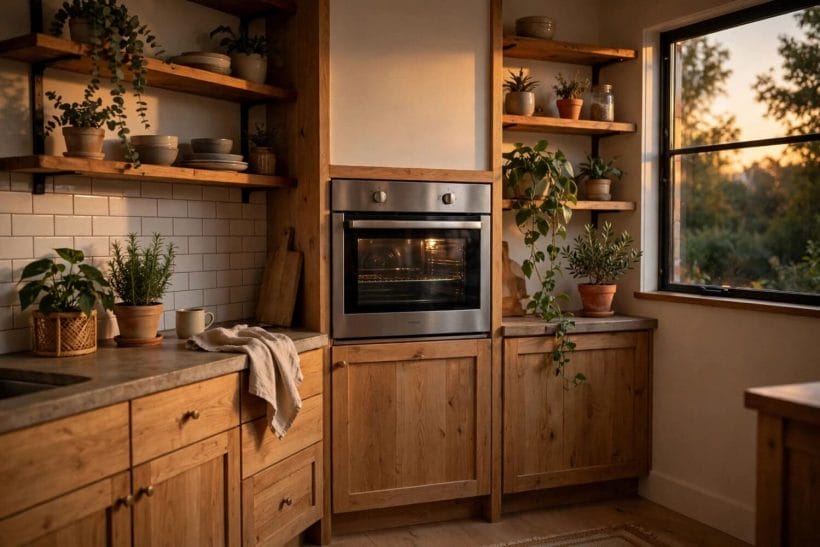
Whatever the kitchen, the final test is simple. Stand where you cook, open the door in your mind, lift an imaginary dish, and set it down where it belongs. If the movement feels calm, the landing surface is close, and nobody has to step aside, then the door is doing its job, and the oven has earned its place as the quiet workhorse of the whole kitchen.


0 Comments