
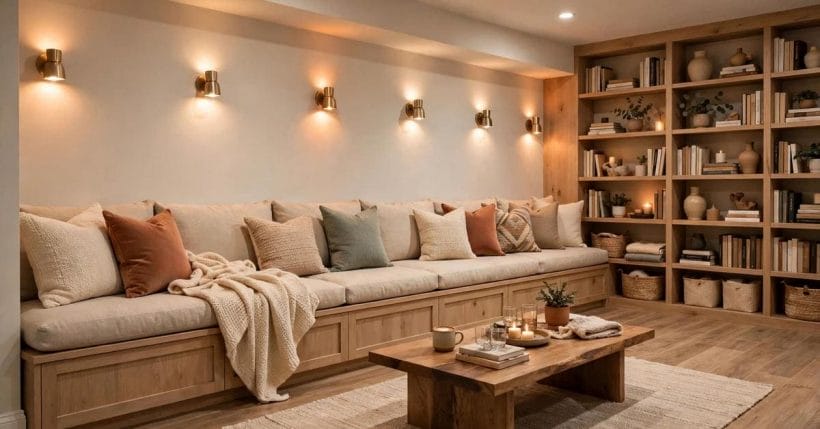
A basement becomes a room people actually use when it has somewhere comfortable to sit, and a long bench gives that room its anchor. This survey gathers ideas for basement bench seating, from window seats and corner nooks to media rows and entry benches, with layouts, lighting, flooring and moisture-smart finishes considered together so the bench suits the room around it.
Every idea here is a survey of forms and finishes, not a building guide. Where work touches damp, structure, drainage or electrics, a qualified professional should assess the room and carry out the work, and finishes should be chosen for below-ground life: air that can feel cool, walls that can carry moisture, and floors that must forgive everyday use.
1. Bench Forms That Suit a Basement
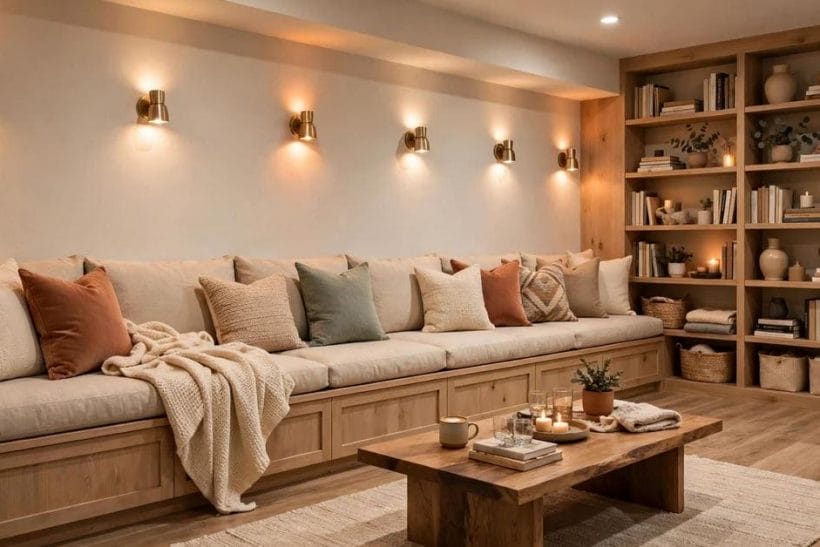
The form of a bench decides how a basement feels, because a bench is large furniture that stays put. A straight bench calms a long wall, a corner bench gathers people, and a window bench borrows whatever daylight the room can offer, so the first choice is always the shape that matches the wall it will serve.
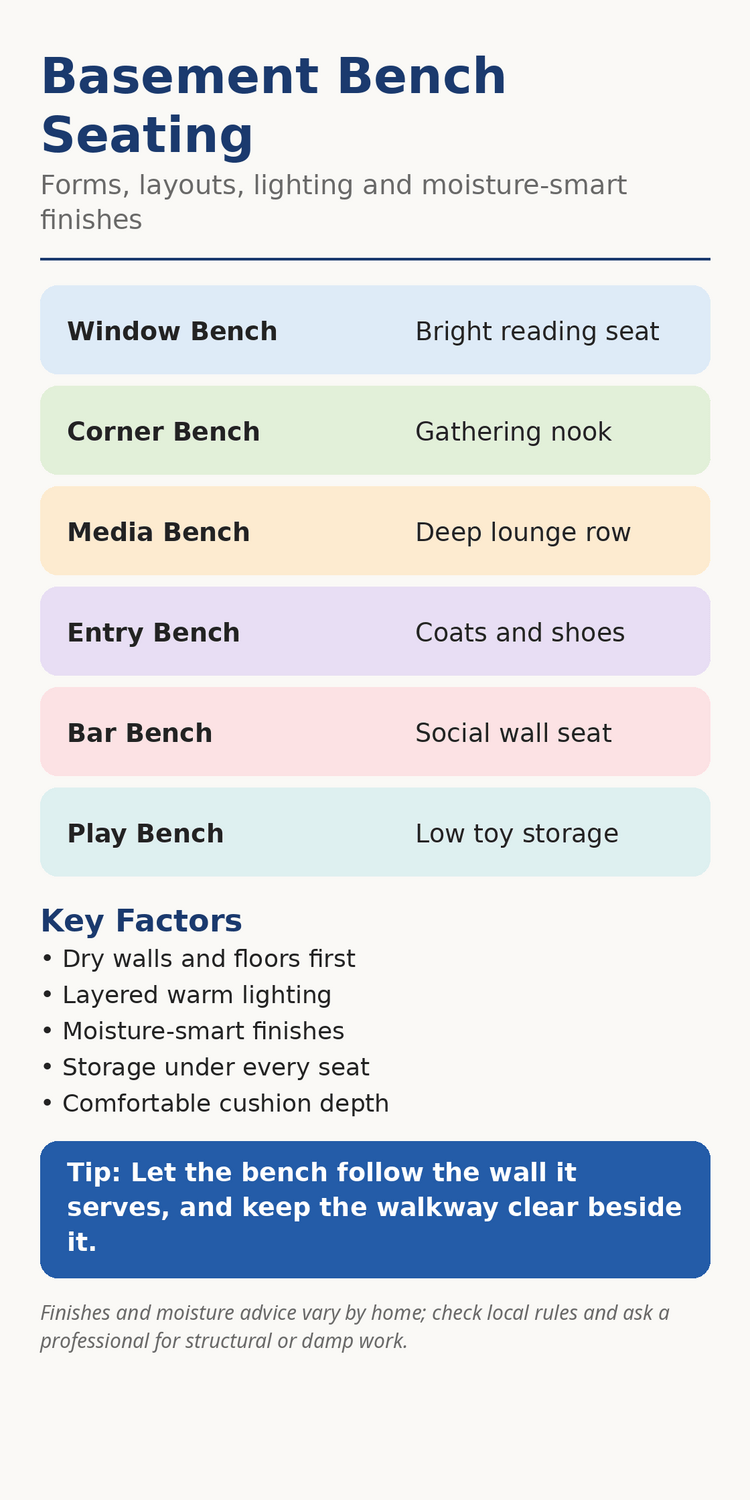
Readers planning a basement in stages may find the companion survey of partially finishing a basement useful, because it treats the permanent layers of a basement before any single room is furnished.
| Item | What it is |
|---|---|
| A Straight Wall Bench | A straight bench along the longest wall gives a basement a calm spine, with cushions in a single run and storage beneath, and it leaves the rest of the floor free for tables, play or a screen wall. |
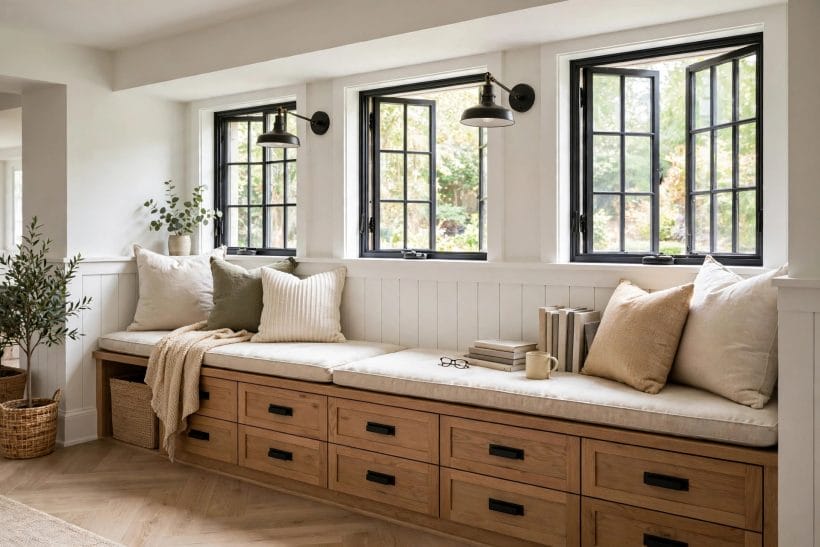
| A Window Bench | A bench built beneath a basement window turns the brightest spot in the room into a reading seat, with daylight falling on the cushions and a low shelf nearby for books and a lamp. |
| A Corner Bench | A bench that wraps a corner gathers people face to face, so a small basement can hold a conversation without chairs scattered across the floor, and the corner itself becomes the room's natural meeting place. |
| A Freestanding Bench | A freestanding bench can be moved when the room changes use, which suits basements that serve as guest room one weekend and playroom the next, and it asks nothing of the walls behind it. |
| A Low Platform Bench | A low platform bench with deep cushions feels like a daybed, inviting long sits and afternoon rests, and it suits a media corner or a quiet reading end of a larger basement. |
| A Gentle Curved Bench | A curved bench softens a basement that otherwise feels boxy, and its sweep can follow a bay, a curved wall or a round table, giving the room a focal point without sharp corners. |
| A Banquette Bench | A banquette bench beside a table turns a basement corner into a dining or games nook, with one side fixed to the wall and the other side open, so meals and board games gain a settled home. |
| A Daybed Bench | A daybed bench with a back bolster and layered cushions doubles as a guest bed, which makes a basement genuinely useful for overnight visitors without dedicating a whole room to sleeping. |
| A Bench on the Longest Wall | Placing a bench on the longest wall gives it room to breathe, with space at each end for a lamp or a small table, and the wall itself becomes a backdrop for art, shelving or a simple painted finish. |
| A Bench Beneath the Window | A bench beneath the window claims the room's best light for sitting, and low storage beneath keeps the window wall tidy while the seat stays clear for reading or watching the garden beyond. |
| A Bench Wrapping the Corner | Wrapping a bench around a corner uses a part of the room that often stands empty, and the corner seat becomes the favourite place, with views across the room in two directions at once. |
| A Bench Facing the Screen Wall | A bench facing the screen wall gives a media basement its rows, with the bench low enough that sightlines stay clear and a small table within reach for drinks and remotes. |
| A Bench That Divides Zones | A bench set with its back to one zone and its seat to another can divide a large basement gently, marking where play ends and conversation begins without building a wall. |
| A Bench Beside the Stair | A bench beside the stair gives arrivals somewhere to pause, put down bags and take off shoes, and it softens the stair wall, which is often the first wall a visitor sees. |
| A Bench Under the Slope | Where a basement ceiling slopes, a low bench can sit beneath the lower part of the slope, turning awkward headroom into a cosy seat while the taller part of the room stays open for standing. |
| A Bench Paired With a Table | Pairing a bench with a table at the right height makes it useful for meals, homework and hobbies, and the table should leave enough room to slide in and out without catching the bench edge. |
| Warm Wall Lights Above the Bench | Wall lights above a bench throw a warm pool of light onto the cushions and the wall behind, so the bench reads as a destination rather than a dark corner, and the light flatters faces at conversation height. |
| Soft Ceiling Light Across the Room | Soft ceiling light spread across the room keeps the bench from feeling like a stage, with brightness that fills the space evenly and leaves no single harsh spot above the seat. |
| A Lamp at the Bench End | A lamp at the end of a bench gives a reader a personal pool of light, and it can be switched on alone for a quiet evening while the rest of the basement stays dim. |
| A Shelf Light for Evening Reading | A small light fitted beneath a shelf above a bench lights books and cushions without glare, and it makes a window bench usable long after daylight has faded. |
| Layered Light With a Dimmer | Layering wall, lamp and ceiling light with dimming lets one bench serve bright mornings and quiet evenings, and the room can shift mood without moving a single piece of furniture. |
| Pale Walls That Bounce Light | Pale walls around a bench bounce what light the room has back onto the seat, so a basement with small windows still feels bright where people sit, and darker colours can be kept for cushions and throws. |
| Light That Reaches the Bench Corners | Lighting the corners of a long bench matters as much as lighting its centre, because a dark end seat goes unused, and a small light at each end keeps the whole bench welcoming. |
| A Reading Light for the Window Seat | A dedicated reading light beside a window bench extends its useful hours, so the seat that is brightest by day stays the favourite seat after dark as well. |
| Deep Drawers Beneath the Bench | Deep drawers beneath a bench hold blankets, board games and seasonal clothes, and they keep the room tidy because everything has a place that closes out of sight. |
| A Lift-Up Lid Seat | A lift-up lid turns the whole bench into a chest, which suits bulky items like spare bedding, and the lid should be light enough to lift comfortably and safe to lower. |
| Open Cubbies for Baskets | Open cubbies beneath a bench hold baskets that can be pulled out and carried away, so toys, craft supplies and shoes stay sorted by basket rather than by pile. |
| Shoe Cubbies at the Entry Bench | Shoe cubbies beneath an entry bench give every pair a home, and the bench above gives people somewhere to sit while they change, so the entry stays clear and calm. |
| A Blanket Chest Bench | A blanket chest bench keeps throws and spare cushions close at hand, and it suits a media or reading bench where comfort depends on having a warm layer within reach. |
| A Book Ledge Behind the Bench | A shallow book ledge behind a bench keeps reading material at arm's length, and it turns the wall above the bench into a small library without taking floor space. |
| Hidden Storage for Games | Hidden storage beneath a games bench holds boards, cards and controllers out of sight, so the room can shift from play to conversation simply by closing a drawer. |
| Labelled Baskets for Shared Benches | Labelled baskets beneath a shared bench give each person a place of their own, which keeps a family basement orderly without anyone needing to tidy the whole room. |
| A Media Row Bench | A media row bench with deep cushions and a low back lets a group watch together in comfort, and its length means no one needs a separate chair dragged in from upstairs. |
| A Games Bench | A games bench beside a table gives players and watchers a shared seat, with room for a board between them and storage beneath for the games themselves. |
| A Bar Bench | A bar bench along the wall opposite a drinks counter gives guests a place to sit and talk while the host serves, and it keeps the bar area social rather than standing-only. |
| A Conversation Corner Bench | A conversation corner bench with cushions on two sides turns an empty basement corner into the room's talking place, with a small table at its centre for cups and books. |
| A Guest Bench for Overnight Stays | A guest bench with a thick cushion and a bolster can host an overnight visitor in comfort, and it avoids dedicating a basement room solely to guests who visit only sometimes. |
| A Snack Ledge Bench | A snack ledge bench with a narrow shelf behind the seat holds drinks and plates during film nights, so the bench stays a seat rather than becoming a sideboard. |
| A Bench That Seats the Whole Household | A bench long enough for the whole household changes how a basement is used, because everyone can gather in one place, and the room finally feels like the house's second living room. |
| An Entry Bench With Hooks Above | An entry bench with hooks above gives coats a place at sitting height and below, so arrivals can hang a coat and sit to change shoes in one smooth pause. |
| A Landing Bench on the Stair Turn | A landing bench on a stair turn gives a resting place halfway down, and it softens a stair that might otherwise feel like a passage rather than part of the home. |
| A Mudroom Bench for the Basement Door | A mudroom bench by the basement door catches the mess of coming and going, with a wipeable seat and storage beneath for boots and bags. |
| A Slim Bench for a Narrow Hall | A slim bench suits a narrow basement hall because it gives a seat without stealing the walkway, and its shallow depth keeps the passage comfortable for everyone. |
| A Bench With a Boot Tray Zone | A bench with a boot tray zone beneath keeps wet and muddy footwear off the floor, and the tray can be lifted out and cleaned, which suits a basement entry used in all weathers. |
| A Changing Bench for the Pool or Gym Door | A changing bench near a basement pool or gym door gives people somewhere to sit while they change, and it keeps that corner of the basement purposeful rather than cluttered. |
| A Bench That Welcomes Guests Downstairs | A bench at the foot of the stair welcomes guests downstairs with a place to pause and take in the room, and it marks the basement as a hosted space rather than a storage level. |
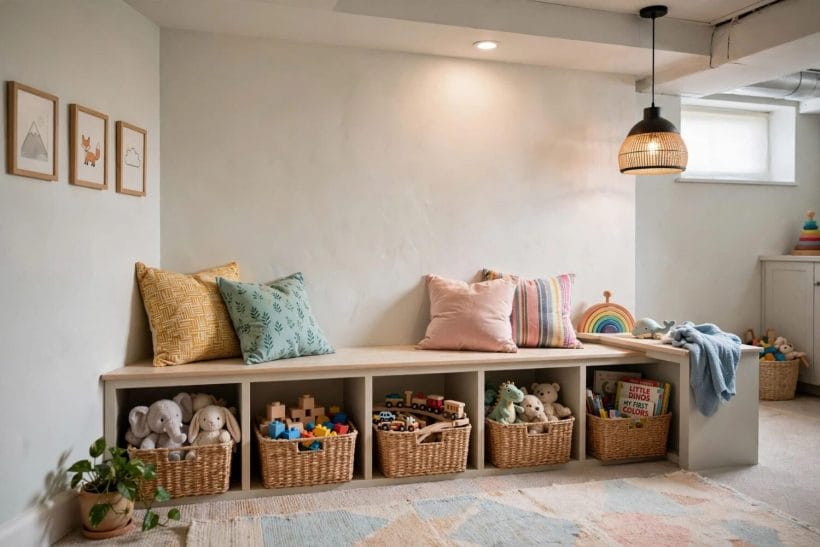
| A Low Play Bench | A low play bench at child height gives children a seat and a boundary for play, with baskets beneath for toys, and its low height keeps the room feeling open for adults. |
| A Craft Bench With Supply Storage | A craft bench with supply storage beneath keeps materials close while the seat stays clear, so a hobby can be picked up and put away without clearing a whole table. |
| A Reading Nook Bench | A reading nook bench tucked into a quiet basement corner, with a lamp and a book ledge, gives a household a retreat that costs no extra room at all. |
| A Homework Bench for Shared Study | A homework bench beside a table gives children a shared study seat, with room for books and bags beneath, and it keeps study visible and sociable rather than isolated. |
| A Hobby Bench by the Window | A hobby bench by the window uses the room's best light for detailed work, whether sewing, modelling or puzzles, and the window itself becomes a pleasant backdrop. |
| A Music Bench for Practice | A music bench near an instrument gives a player a settled seat for practice, with sheet music storage beneath, and it marks one corner of the basement as the music corner. |
| A Stretch Bench Beside the Workout Zone | A stretch bench beside a workout zone gives a place to warm up and cool down, and its firm cushion suits sitting and stretching alike without demanding a separate room. |
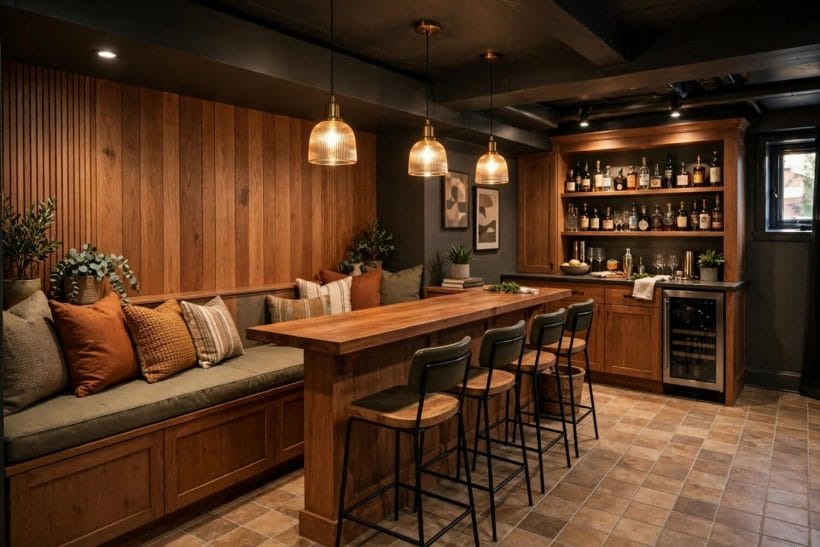
| A Wood-Look Floor Beside the Bench | A wood-look floor beside a bench warms the whole basement, and its continuous run beneath the bench makes the room feel larger and more settled. |
| Tile at the Entry Bench | Tile at an entry bench forgives wet shoes and muddy boots, and it marks the entry zone clearly, so the rest of the basement floor stays clean and dry. |
| A Rug That Softens the Bench Zone | A rug in front of a bench softens the seating zone underfoot, defines where sitting happens, and can be lifted and cleaned, which suits a room used by the whole household. |
| A Washable Runner Along a Long Bench | A washable runner along a long bench protects the floor where feet rest, and it adds colour and pattern to a basement that might otherwise feel plain. |
| A Level Threshold at the Bench | A level threshold at a bench avoids trips and catches, so the bench zone feels safe for children and older visitors alike, and the floor flows cleanly from room to seat. |
| A Warm Layer Underfoot for Media Benches | A warm layer underfoot, whether rug or soft flooring, makes a media bench comfortable for bare feet during long evenings, and it also softens sound in a hard-floored basement. |
| A Durable Finish for Play Benches | A durable finish around a play bench forgives toys, spills and busy feet, and it lets children use the room freely without the floor becoming a worry. |
| Colour Continuity From Floor to Bench | Colour continuity from floor to bench, with tones that echo rather than match exactly, makes a basement feel designed, and the bench reads as part of the room rather than an addition. |
| Dry Walls Before Any Bench | A bench should only follow a professional check that the walls and floor are dry, because a bench built against a damp wall hides the very problem it sits beside, and dryness first protects both bench and room. |
| A Raised Bench Base | A raised bench base lifts timber and cushions clear of the floor, which helps air move beneath the seat and keeps the bench away from any surface moisture a basement floor may carry. |
| Moisture-Tolerant Bench Finishes | Moisture-tolerant finishes for a basement bench, chosen on professional advice, stand up to humid air better than untreated timber, and they keep the bench looking settled through damp seasons. |
| Ventilation Around the Bench | Ventilation around a bench, with air able to move behind and beneath it, keeps the seat fresh, and a bench pushed hard against an outside wall without an air gap can trap the very dampness it should avoid. |
| Washable Cushion Covers | Washable cushion covers suit a basement bench because they can be freshened regularly, and a cover that comes off easily will be washed, while a fixed cover may simply grow dull. |
| An Air Gap Behind the Bench | An air gap behind a bench, even a small one, lets the wall breathe and lets a homeowner see the wall behind the bench, so any change in damp can be noticed early. |
| A Seasonal Check of Bench and Wall | A seasonal check of bench and wall, looking and feeling for damp or mustiness, keeps a basement bench honest, and anything found should be shown to a professional rather than covered over. |
| A Comfortable Cushion Depth | A comfortable cushion depth lets sitters relax without perching, and the depth should suit the people who will use the bench most, with deeper cushions for lounging and firmer ones for dining. |
| Back Support That Invites Long Sits | Back support, whether a padded back, a row of bolsters or the wall itself with cushions, invites long sits, and a bench without any back becomes a perch rather than a seat. |
| Washable Fabric for Family Benches | Washable fabric for a family bench forgives spills, pets and everyday life, and a fabric that can be cleaned will keep its colour far longer than one that cannot. |
| A Muted Palette With Warm Accents | A muted palette with warm accents suits a basement bench, because pale cushions lift a low-light room while rust, sage or ochre throws add warmth without darkening the space. |
| Seasonal Throws for the Bench | Seasonal throws for a bench, heavier in winter and lighter in summer, let the room change with the year, and a basket beneath the bench keeps them close without clutter. |
| A Bench That Grows With the Household | A bench that grows with the household, from play seat to study seat to guest bed, is the most useful furniture a basement can hold, and its long, simple form adapts while trendier pieces come and go. |
1. A Straight Wall Bench
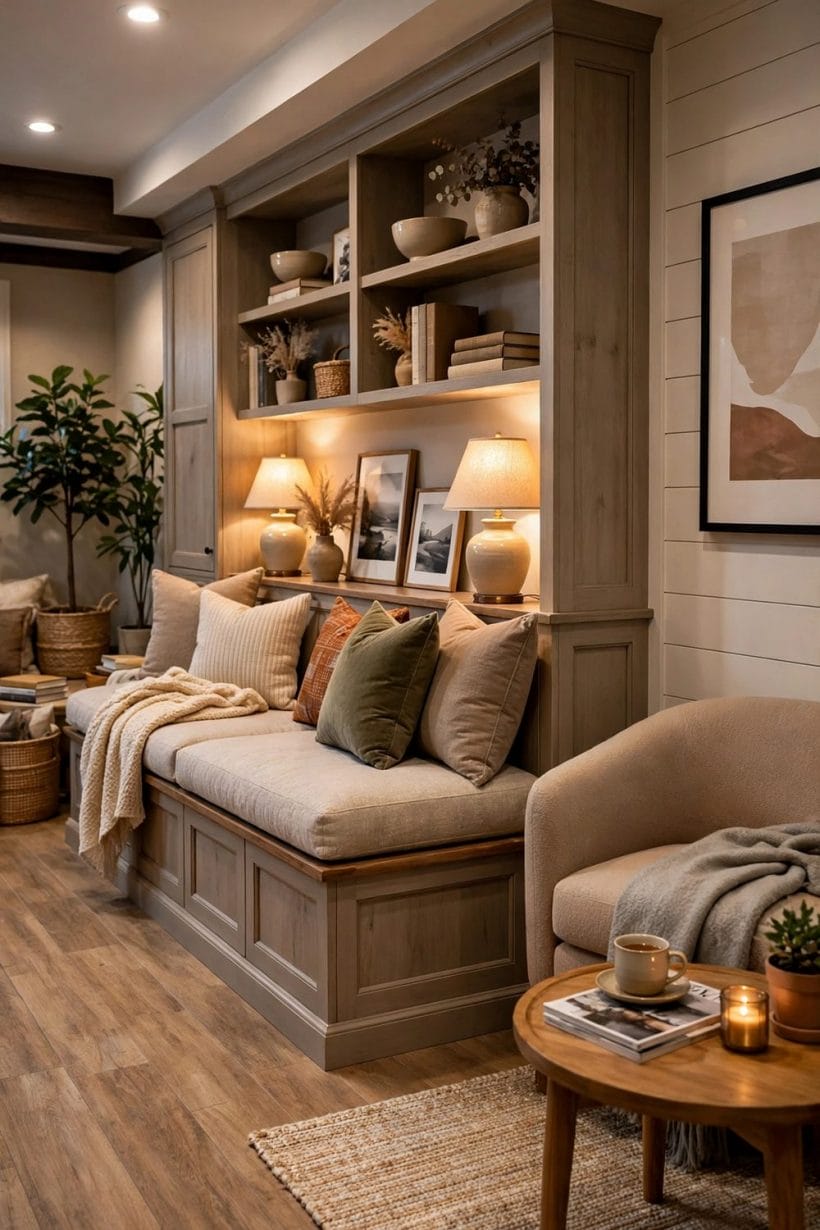
A straight bench along the longest wall gives a basement a calm spine, with cushions in a single run and storage beneath, and it leaves the rest of the floor free for tables, play or a screen wall.
2. A Window Bench
A bench built beneath a basement window turns the brightest spot in the room into a reading seat, with daylight falling on the cushions and a low shelf nearby for books and a lamp.
3. A Corner Bench
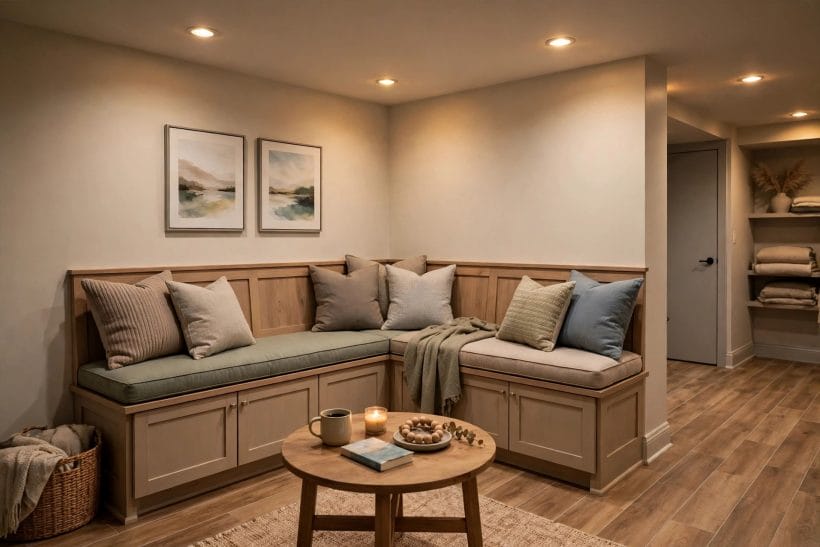
A bench that wraps a corner gathers people face to face, so a small basement can hold a conversation without chairs scattered across the floor, and the corner itself becomes the room’s natural meeting place.
4. A Freestanding Bench
A freestanding bench can be moved when the room changes use, which suits basements that serve as guest room one weekend and playroom the next, and it asks nothing of the walls behind it.
5. A Low Platform Bench
A low platform bench with deep cushions feels like a daybed, inviting long sits and afternoon rests, and it suits a media corner or a quiet reading end of a larger basement.
6. A Gentle Curved Bench
A curved bench softens a basement that otherwise feels boxy, and its sweep can follow a bay, a curved wall or a round table, giving the room a focal point without sharp corners.
7. A Banquette Bench
A banquette bench beside a table turns a basement corner into a dining or games nook, with one side fixed to the wall and the other side open, so meals and board games gain a settled home.
8. A Daybed Bench
A daybed bench with a back bolster and layered cushions doubles as a guest bed, which makes a basement genuinely useful for overnight visitors without dedicating a whole room to sleeping.
2. Layouts That Follow the Room
A bench layout works when it follows the room rather than fighting it, keeping walkways clear, doors unblocked and the brightest wall in use. The ideas in this section place benches by wall, window and stair, so the room keeps its flow while the bench earns its length.
The wider basement interior, with its own treatment of walls, ceilings and light, is surveyed in the companion guide to basement interior design, which places bench ideas inside the whole room.
9. A Bench on the Longest Wall
Placing a bench on the longest wall gives it room to breathe, with space at each end for a lamp or a small table, and the wall itself becomes a backdrop for art, shelving or a simple painted finish.
10. A Bench Beneath the Window
A bench beneath the window claims the room’s best light for sitting, and low storage beneath keeps the window wall tidy while the seat stays clear for reading or watching the garden beyond.
11. A Bench Wrapping the Corner
Wrapping a bench around a corner uses a part of the room that often stands empty, and the corner seat becomes the favourite place, with views across the room in two directions at once.
12. A Bench Facing the Screen Wall
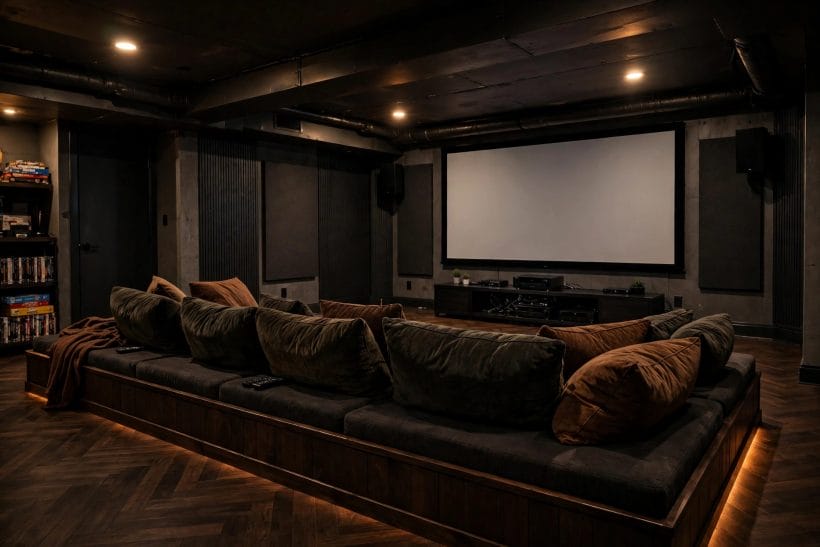
A bench facing the screen wall gives a media basement its rows, with the bench low enough that sightlines stay clear and a small table within reach for drinks and remotes.
13. A Bench That Divides Zones
A bench set with its back to one zone and its seat to another can divide a large basement gently, marking where play ends and conversation begins without building a wall.
14. A Bench Beside the Stair
A bench beside the stair gives arrivals somewhere to pause, put down bags and take off shoes, and it softens the stair wall, which is often the first wall a visitor sees.
15. A Bench Under the Slope
Where a basement ceiling slopes, a low bench can sit beneath the lower part of the slope, turning awkward headroom into a cosy seat while the taller part of the room stays open for standing.
16. A Bench Paired With a Table
Pairing a bench with a table at the right height makes it useful for meals, homework and hobbies, and the table should leave enough room to slide in and out without catching the bench edge.
3. Lighting for a Low-Light Seat
Basement benches need lighting that flatters both the seat and the sitter, because daylight is often limited and a single ceiling light can leave a bench in shadow. Layered light, with wall lights, lamps and soft ceiling light working together, makes a bench inviting after dark.
The companion survey of interior lighting ideas treats layered light for compact rooms in general, and its principles carry directly to a basement bench.
17. Warm Wall Lights Above the Bench
Wall lights above a bench throw a warm pool of light onto the cushions and the wall behind, so the bench reads as a destination rather than a dark corner, and the light flatters faces at conversation height.
18. Soft Ceiling Light Across the Room
Soft ceiling light spread across the room keeps the bench from feeling like a stage, with brightness that fills the space evenly and leaves no single harsh spot above the seat.
19. A Lamp at the Bench End
A lamp at the end of a bench gives a reader a personal pool of light, and it can be switched on alone for a quiet evening while the rest of the basement stays dim.
20. A Shelf Light for Evening Reading
A small light fitted beneath a shelf above a bench lights books and cushions without glare, and it makes a window bench usable long after daylight has faded.
21. Layered Light With a Dimmer
Layering wall, lamp and ceiling light with dimming lets one bench serve bright mornings and quiet evenings, and the room can shift mood without moving a single piece of furniture.
22. Pale Walls That Bounce Light
Pale walls around a bench bounce what light the room has back onto the seat, so a basement with small windows still feels bright where people sit, and darker colours can be kept for cushions and throws.
23. Light That Reaches the Bench Corners
Lighting the corners of a long bench matters as much as lighting its centre, because a dark end seat goes unused, and a small light at each end keeps the whole bench welcoming.
24. A Reading Light for the Window Seat
A dedicated reading light beside a window bench extends its useful hours, so the seat that is brightest by day stays the favourite seat after dark as well.
4. Storage Under Every Seat
A basement bench earns its footprint twice over when it stores as well as seats, because basements often hold the household overflow. Drawers, cubbies and lift-up lids beneath a bench hide blankets, games and shoes while keeping the seat itself clear.
Storage thinking for compact rooms is surveyed in the companion guide to interior storage ideas, which treats hidden and open storage side by side.
25. Deep Drawers Beneath the Bench
Deep drawers beneath a bench hold blankets, board games and seasonal clothes, and they keep the room tidy because everything has a place that closes out of sight.
26. A Lift-Up Lid Seat
A lift-up lid turns the whole bench into a chest, which suits bulky items like spare bedding, and the lid should be light enough to lift comfortably and safe to lower.
27. Open Cubbies for Baskets
Open cubbies beneath a bench hold baskets that can be pulled out and carried away, so toys, craft supplies and shoes stay sorted by basket rather than by pile.
28. Shoe Cubbies at the Entry Bench
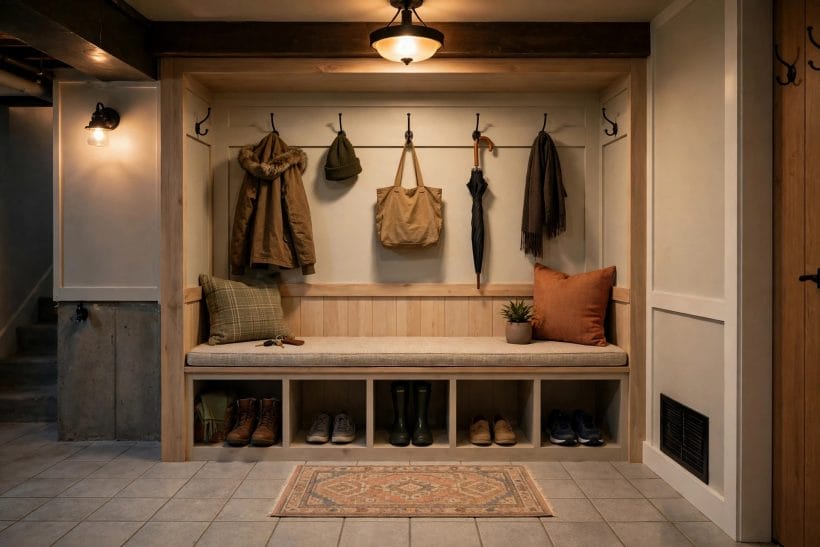
Shoe cubbies beneath an entry bench give every pair a home, and the bench above gives people somewhere to sit while they change, so the entry stays clear and calm.
29. A Blanket Chest Bench
A blanket chest bench keeps throws and spare cushions close at hand, and it suits a media or reading bench where comfort depends on having a warm layer within reach.
30. A Book Ledge Behind the Bench
A shallow book ledge behind a bench keeps reading material at arm’s length, and it turns the wall above the bench into a small library without taking floor space.
31. Hidden Storage for Games
Hidden storage beneath a games bench holds boards, cards and controllers out of sight, so the room can shift from play to conversation simply by closing a drawer.
32. Labelled Baskets for Shared Benches
Labelled baskets beneath a shared bench give each person a place of their own, which keeps a family basement orderly without anyone needing to tidy the whole room.
5. Media and Gathering Benches
A basement often becomes the household gathering room, and a bench suits that role because it seats a crowd without the formality of matched chairs. Media rows, bar benches and conversation corners all use the same idea: a long, deep seat that invites people to settle together.
33. A Media Row Bench
A media row bench with deep cushions and a low back lets a group watch together in comfort, and its length means no one needs a separate chair dragged in from upstairs.
34. A Games Bench
A games bench beside a table gives players and watchers a shared seat, with room for a board between them and storage beneath for the games themselves.
35. A Bar Bench
A bar bench along the wall opposite a drinks counter gives guests a place to sit and talk while the host serves, and it keeps the bar area social rather than standing-only.
36. A Conversation Corner Bench
A conversation corner bench with cushions on two sides turns an empty basement corner into the room’s talking place, with a small table at its centre for cups and books.
37. A Guest Bench for Overnight Stays
A guest bench with a thick cushion and a bolster can host an overnight visitor in comfort, and it avoids dedicating a basement room solely to guests who visit only sometimes.
38. A Snack Ledge Bench
A snack ledge bench with a narrow shelf behind the seat holds drinks and plates during film nights, so the bench stays a seat rather than becoming a sideboard.
39. A Bench That Seats the Whole Household
A bench long enough for the whole household changes how a basement is used, because everyone can gather in one place, and the room finally feels like the house’s second living room.
6. Entry, Stair and Landing Benches
The bench by the basement entry works harder than any other, because it handles shoes, coats, bags and pauses. It should be sturdy, easy to wipe, and placed where it helps arrivals without blocking the stair or the door swing.
40. An Entry Bench With Hooks Above
An entry bench with hooks above gives coats a place at sitting height and below, so arrivals can hang a coat and sit to change shoes in one smooth pause.
41. A Landing Bench on the Stair Turn
A landing bench on a stair turn gives a resting place halfway down, and it softens a stair that might otherwise feel like a passage rather than part of the home.
42. A Mudroom Bench for the Basement Door
A mudroom bench by the basement door catches the mess of coming and going, with a wipeable seat and storage beneath for boots and bags.
43. A Slim Bench for a Narrow Hall
A slim bench suits a narrow basement hall because it gives a seat without stealing the walkway, and its shallow depth keeps the passage comfortable for everyone.
44. A Bench With a Boot Tray Zone
A bench with a boot tray zone beneath keeps wet and muddy footwear off the floor, and the tray can be lifted out and cleaned, which suits a basement entry used in all weathers.
45. A Changing Bench for the Pool or Gym Door
A changing bench near a basement pool or gym door gives people somewhere to sit while they change, and it keeps that corner of the basement purposeful rather than cluttered.
46. A Bench That Welcomes Guests Downstairs
A bench at the foot of the stair welcomes guests downstairs with a place to pause and take in the room, and it marks the basement as a hosted space rather than a storage level.
7. Benches for Play, Work and Hobbies
A basement bench can serve play, work and hobbies as readily as rest, because a long seat doubles as a work surface edge, a play boundary and a hobby station. The ideas in this section give each activity a bench of its own character.
Where a bench sits beside a workout zone, the companion survey of a basement gym treats layout, flooring and moisture-smart finishes for that room, and its bench ideas sit naturally alongside exercise space.
47. A Low Play Bench
A low play bench at child height gives children a seat and a boundary for play, with baskets beneath for toys, and its low height keeps the room feeling open for adults.
48. A Craft Bench With Supply Storage
A craft bench with supply storage beneath keeps materials close while the seat stays clear, so a hobby can be picked up and put away without clearing a whole table.
49. A Reading Nook Bench
A reading nook bench tucked into a quiet basement corner, with a lamp and a book ledge, gives a household a retreat that costs no extra room at all.
50. A Homework Bench for Shared Study
A homework bench beside a table gives children a shared study seat, with room for books and bags beneath, and it keeps study visible and sociable rather than isolated.
51. A Hobby Bench by the Window
A hobby bench by the window uses the room’s best light for detailed work, whether sewing, modelling or puzzles, and the window itself becomes a pleasant backdrop.
52. A Music Bench for Practice
A music bench near an instrument gives a player a settled seat for practice, with sheet music storage beneath, and it marks one corner of the basement as the music corner.
53. A Stretch Bench Beside the Workout Zone
A stretch bench beside a workout zone gives a place to warm up and cool down, and its firm cushion suits sitting and stretching alike without demanding a separate room.
8. Flooring Around the Bench
Flooring around a bench should be chosen for the life the bench will see: shoes at an entry bench, spills near a bar bench, and bare feet at a media bench. The floor beneath and beside the bench matters as much as the bench itself, because it sets the room’s warmth and ease of care.
54. A Wood-Look Floor Beside the Bench
A wood-look floor beside a bench warms the whole basement, and its continuous run beneath the bench makes the room feel larger and more settled.
55. Tile at the Entry Bench
Tile at an entry bench forgives wet shoes and muddy boots, and it marks the entry zone clearly, so the rest of the basement floor stays clean and dry.
56. A Rug That Softens the Bench Zone
A rug in front of a bench softens the seating zone underfoot, defines where sitting happens, and can be lifted and cleaned, which suits a room used by the whole household.
57. A Washable Runner Along a Long Bench
A washable runner along a long bench protects the floor where feet rest, and it adds colour and pattern to a basement that might otherwise feel plain.
58. A Level Threshold at the Bench
A level threshold at a bench avoids trips and catches, so the bench zone feels safe for children and older visitors alike, and the floor flows cleanly from room to seat.
59. A Warm Layer Underfoot for Media Benches
A warm layer underfoot, whether rug or soft flooring, makes a media bench comfortable for bare feet during long evenings, and it also softens sound in a hard-floored basement.
60. A Durable Finish for Play Benches
A durable finish around a play bench forgives toys, spills and busy feet, and it lets children use the room freely without the floor becoming a worry.
61. Colour Continuity From Floor to Bench
Colour continuity from floor to bench, with tones that echo rather than match exactly, makes a basement feel designed, and the bench reads as part of the room rather than an addition.
9. Moisture-Smart Finishes
Moisture is the first question for any basement bench, and it should be answered before cushions are chosen. A professional assessment of damp, drainage and ventilation shapes what finishes will last, and the companion survey of basement remodel cost treats the drivers behind that scope in general terms, without invented figures.
62. Dry Walls Before Any Bench
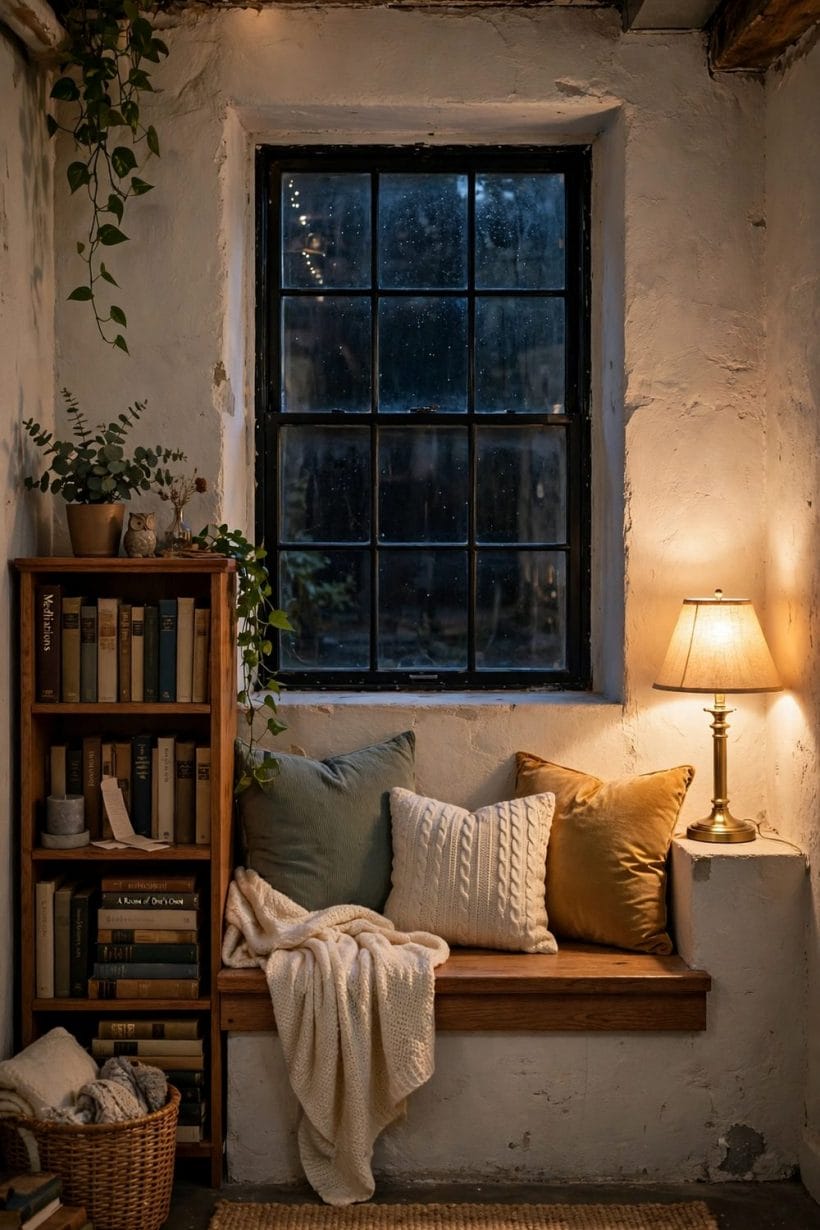
A bench should only follow a professional check that the walls and floor are dry, because a bench built against a damp wall hides the very problem it sits beside, and dryness first protects both bench and room.
63. A Raised Bench Base
A raised bench base lifts timber and cushions clear of the floor, which helps air move beneath the seat and keeps the bench away from any surface moisture a basement floor may carry.
64. Moisture-Tolerant Bench Finishes
Moisture-tolerant finishes for a basement bench, chosen on professional advice, stand up to humid air better than untreated timber, and they keep the bench looking settled through damp seasons.
65. Ventilation Around the Bench
Ventilation around a bench, with air able to move behind and beneath it, keeps the seat fresh, and a bench pushed hard against an outside wall without an air gap can trap the very dampness it should avoid.
66. Washable Cushion Covers
Washable cushion covers suit a basement bench because they can be freshened regularly, and a cover that comes off easily will be washed, while a fixed cover may simply grow dull.
67. An Air Gap Behind the Bench
An air gap behind a bench, even a small one, lets the wall breathe and lets a homeowner see the wall behind the bench, so any change in damp can be noticed early.
68. A Seasonal Check of Bench and Wall
A seasonal check of bench and wall, looking and feeling for damp or mustiness, keeps a basement bench honest, and anything found should be shown to a professional rather than covered over.
10. Comfort, Colour and Care
Comfort decides whether a basement bench is used daily or admired once, and colour decides whether the room feels like part of the home. Deep cushions, a supportive back and a palette that warms a low-light room turn a bench from furniture into a favourite place.
69. A Comfortable Cushion Depth
A comfortable cushion depth lets sitters relax without perching, and the depth should suit the people who will use the bench most, with deeper cushions for lounging and firmer ones for dining.
70. Back Support That Invites Long Sits
Back support, whether a padded back, a row of bolsters or the wall itself with cushions, invites long sits, and a bench without any back becomes a perch rather than a seat.
71. Washable Fabric for Family Benches
Washable fabric for a family bench forgives spills, pets and everyday life, and a fabric that can be cleaned will keep its colour far longer than one that cannot.
72. A Muted Palette With Warm Accents
A muted palette with warm accents suits a basement bench, because pale cushions lift a low-light room while rust, sage or ochre throws add warmth without darkening the space.
73. Seasonal Throws for the Bench
Seasonal throws for a bench, heavier in winter and lighter in summer, let the room change with the year, and a basket beneath the bench keeps them close without clutter.
74. A Simple Care Routine
A simple care routine, with cushions plumped, covers washed and the floor beneath swept, keeps a basement bench welcoming, and a bench that is easy to care for is a bench that stays in use.
75. A Bench That Grows With the Household
A bench that grows with the household, from play seat to study seat to guest bed, is the most useful furniture a basement can hold, and its long, simple form adapts while trendier pieces come and go.
Final Considerations
Choosing well comes down to a short sequence: check the room is dry with professional help, place the bench where light and movement suit it, give it storage beneath and layered light above, and finish it in materials that forgive below-ground life. Done in that order, basement bench seating turns the lowest room in the house into one of its most lived-in.
For readers weighing the wider room around the bench, the companion survey of home design ideas places basement rooms inside the whole house, and a bench chosen with its room in mind will serve the household far longer than one chosen alone.


0 Comments