
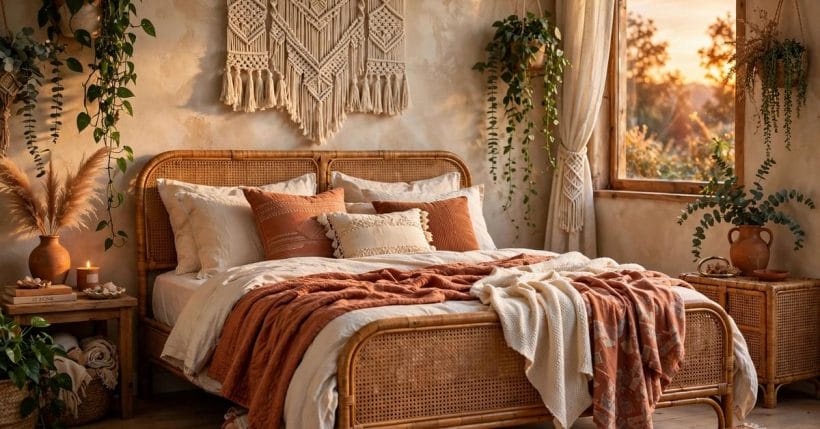
A bohemian bedroom is less a single look than a way of gathering a room together. Colour, pattern, texture and well-loved pieces are layered until the space feels personal rather than decorated, and no two rooms ever turn out quite the same. That freedom is the appeal, and it is also why a survey of the style helps: seeing the different directions it can take makes it easier to recognise the one that suits your own home, your light and the pieces you already own.
This post looks at eight distinct bohemian styles, from sun-warmed desert rooms to calm, pared-back versions of the same idea. Each one leans on the same relaxed spirit, but each gets there differently, through its palette, its textiles and the way it treats pattern and plants. If you want the building process rather than the overview, the companion post on ten steps to a bohemian room walks through the layers in order, from the bed outward.
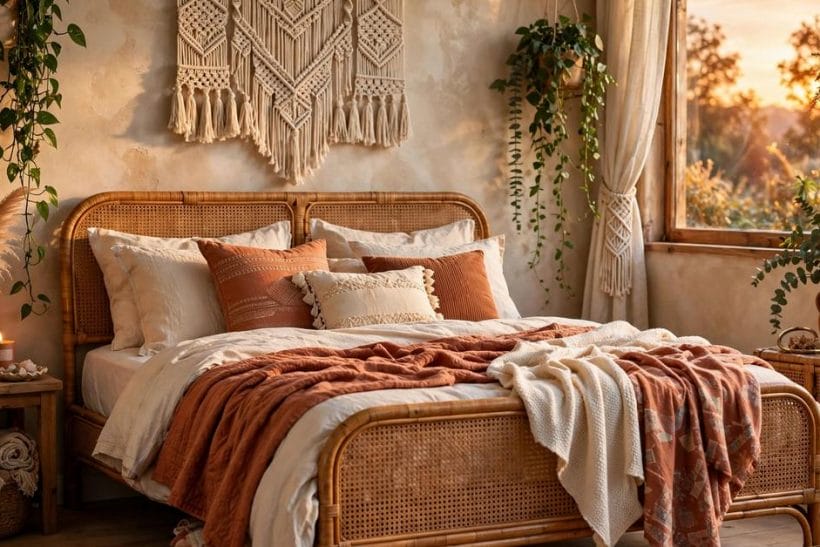
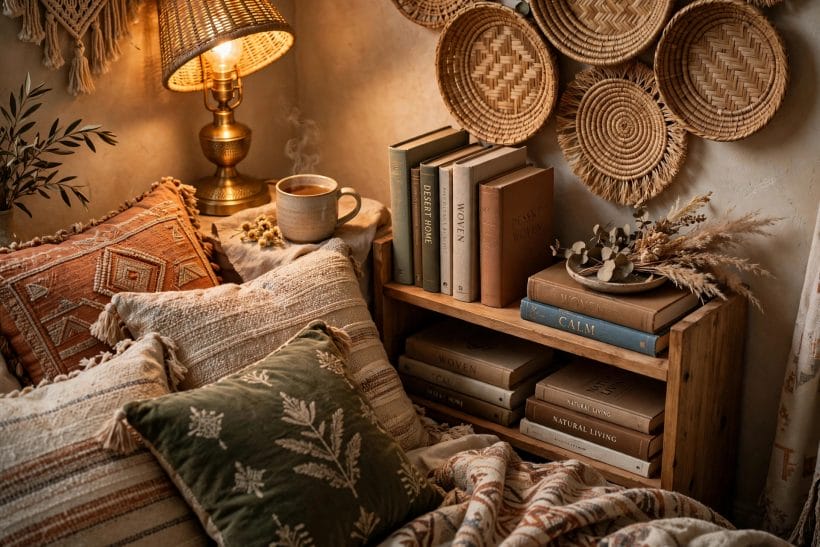
1. Desert Earth: Warm Sand, Terracotta and Woven Texture
The desert earth version of the style takes its palette straight from dry landscapes: sand, clay, warm rust and soft ochre, set against natural wood and woven fibres. Walls stay warm and quiet, so the colour comes from bedding, rugs and cushions rather than from bold painted statements. The result is a room that feels sunlit even on a grey morning, because every surface carries a little warmth.
Texture does most of the work here. A woven rug underfoot, a chunky throw across the foot of the bed and cushions in linen, cotton and wool give the room depth without any need for pattern overload. Keep the patterns simple and earthy, stripes, small geometric prints and hand-woven looks, and let one larger piece, a rug or a wall hanging, set the tone for the rest.
Curtains and rugs deserve the same attention as bedding in this style. A plain linen curtain in a warm neutral lets the light stay golden, while a flat-weave rug in a sandy tone grounds the bed without competing with it. If the room has a wooden floor, a rug large enough to extend beyond the sides of the bed will make the whole space feel warmer underfoot, especially on cold mornings, and it gives the woven textures elsewhere in the room something to echo.
This style suits rooms with good natural light, where warm tones can glow rather than darken the space. In a smaller or north-facing room, keep the deepest rusts to accents, a cushion or two and a throw, and let sand and cream carry the larger surfaces. The room still reads as desert-inspired, but it stays bright and easy to live in.
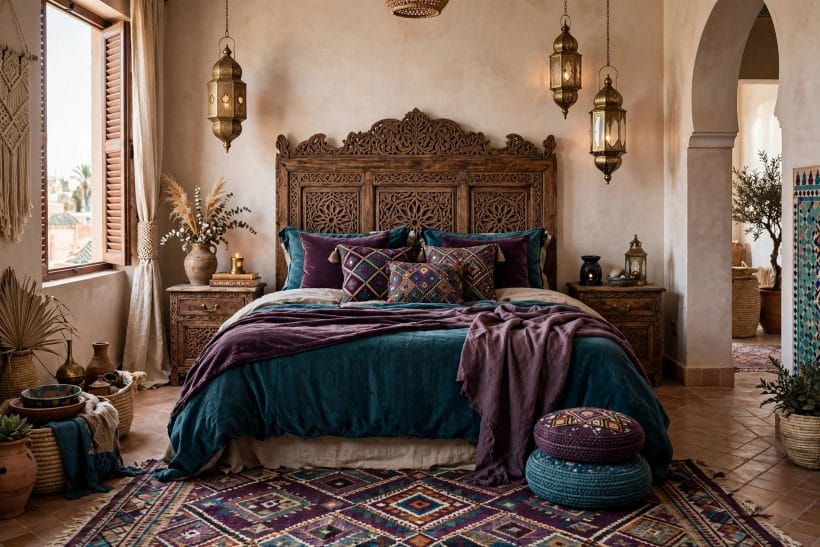
2. Global Collected: Travel Finds and Pattern Mixing
The global collected bedroom is built slowly, piece by piece, from things gathered over time: textiles picked up on travels, market finds, gifts and inherited pieces that each carry a story. Nothing here is bought as a matching set, and that is the point. A patterned throw from one place sits happily beside cushions from another, because the shared warmth of the palette holds them together.
Pattern mixing works best when the colours agree even if the prints do not. Choose a loose family of tones, warm reds, indigos, ochres and creams, for example, and let the patterns vary freely inside it. A plain bedspread gives the eye somewhere to rest, so the mixed cushions and throws read as collected rather than chaotic.
Balance matters as much as abundance. When a room starts to feel busy, remove one patterned piece rather than adding a plain one, and see whether the room settles. Collectors often find that a single plain cushion, or a stretch of unadorned wall beside the bed, is what lets the gathered pieces shine. The goal is a room that feels curated by a life, not crowded by a shopping list.
Walls in this style often carry the collection too, with framed textiles, prints and small shelves of objects. A brick wall in a bedroom can make a particularly good backdrop for this kind of display, because its texture and warmth sit comfortably beside layered textiles. Keep the arrangement loose and a little uneven, as if it grew over time, because that is exactly the feeling this style is aiming for.
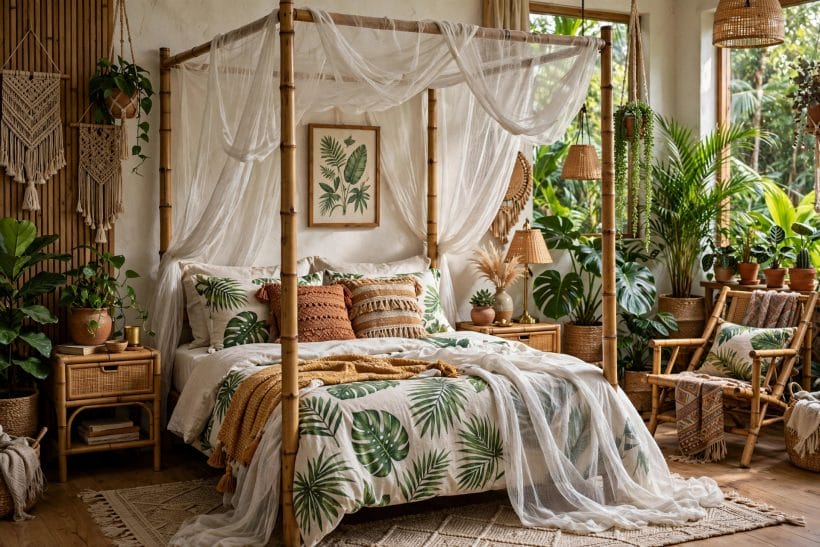
3. Botanical Jungle: Plants as the Main Layer
In the botanical version, plants are not an afterthought but the main decorative layer. Trailing plants from shelves, tall leafy plants beside the bed and small pots on a windowsill turn the room into something between a bedroom and a greenhouse. The green of the foliage sets the palette, so bedding and textiles can stay simple, in cream, sage and soft natural tones.
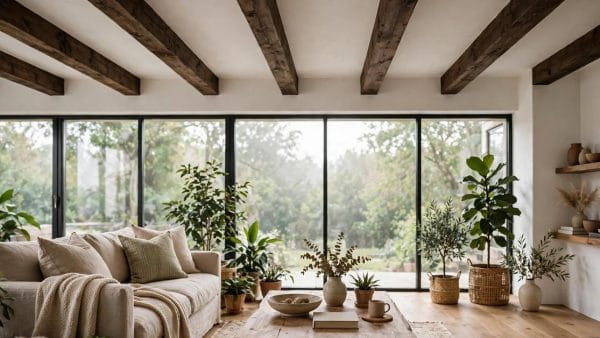
The trick is to let the plants shape the room rather than crowding it. Group plants at different heights, on the floor, on a stool and on a shelf, so the eye travels upward, and leave clear space around the bed itself so the room still feels restful. A vaulted ceiling in a bedroom suits this style beautifully when you have one, because the extra height gives trailing plants room to breathe.
Choose plants you can genuinely look after in the light you have, and place them where watering and care are easy rather than awkward. A room full of thriving plants feels lush and calm, while a room full of struggling ones does the opposite. Start with a few generous plants rather than many small ones, and add more only once the first group is settled and growing well.
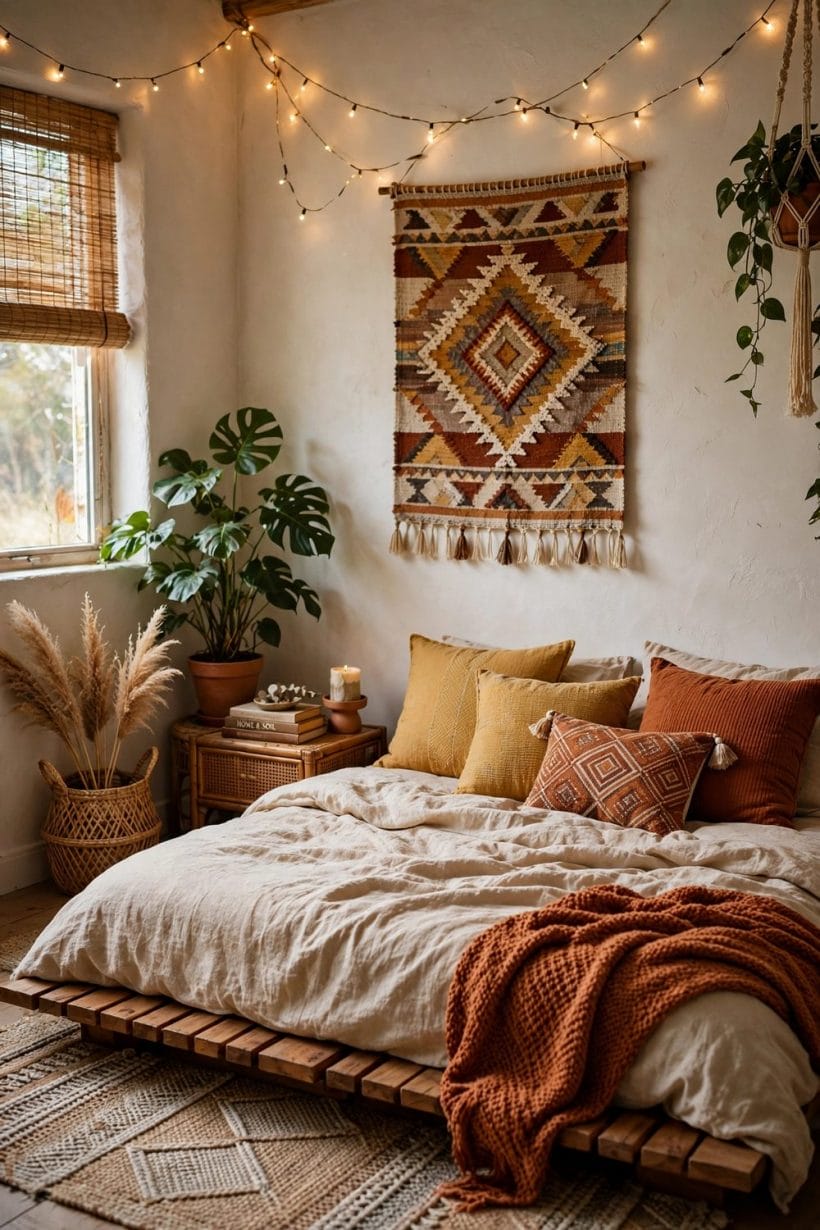
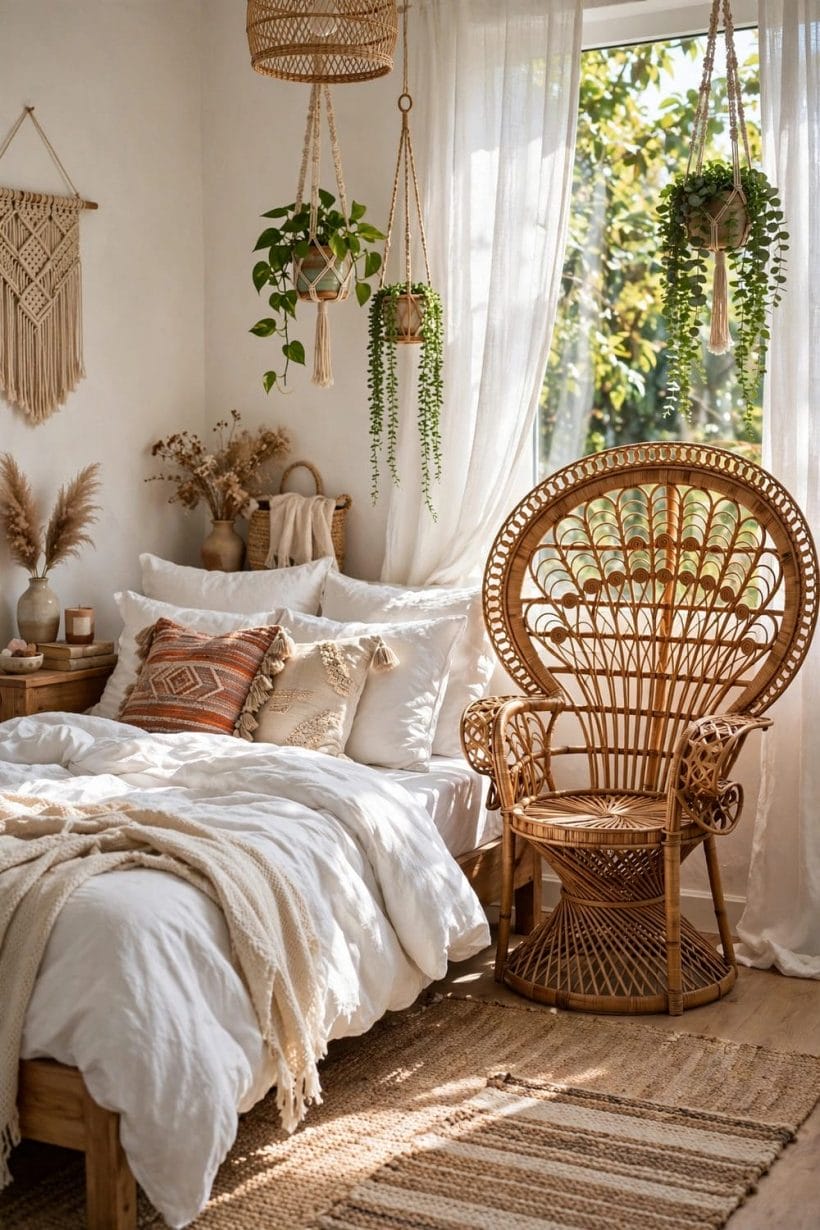
4. Coastal Breezy: Light, Air and Natural Fibres
Coastal bohemian keeps the relaxed, layered feeling but lightens everything: white and sand tones, pale wood, linen and rattan, and as much daylight as the room can offer. The mood is closer to a beach house than a market stall, with fewer colours and more breathing space between pieces.
Natural fibres carry the style here. A rattan headboard or pendant shade, a jute rug, linen bedding and woven baskets give the room its texture, while the palette stays pale enough to feel airy. Pattern, when it appears, tends to be gentle, stripes, soft botanical prints and simple woven designs rather than dense, high-contrast prints.
Keep the floor light as well. Pale wood, a natural-fibre rug and bare feet-friendly surfaces suit the breezy mood, and they make a small room feel larger because the eye is not stopped by a dark, heavy floor covering. If the existing floor is dark, a large pale rug can lift the whole room without any structural change, and it adds the softness underfoot that a coastal bedroom needs.
Wall treatments suit this lighter mood too, and shiplap walls in a bedroom are a natural fit, giving a plain wall subtle rhythm without adding colour or weight. Keep window dressings light, linen or sheer cotton that lets daylight through, and the whole room will feel like it exhales.
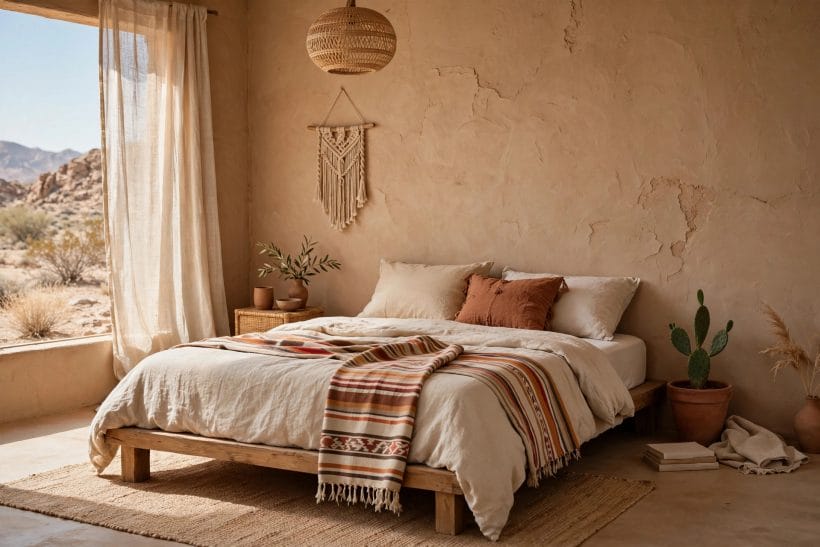
5. Vintage Romantic: Soft Florals, Lace and Muted Pastels
The vintage romantic bedroom leans on softness: faded florals, lace-edged bedding, muted pastels and furniture with a gently worn finish. Where other bohemian styles go bold with colour, this one whispers, in blush, sage, dusty blue and cream. The romance comes from the layering, a floral quilt over plain sheets, a lace runner on a dresser, a vase of dried flowers on a nightstand.
Colour restraint is what keeps this style from turning fussy. Pick two or three pastels and repeat them across the room, in bedding, curtains and a cushion or two, and let cream and natural wood steady the whole scheme. A soft peach tone, used sparingly in bedding or a throw, can warm the palette without overpowering it, as the ideas in peach in the bedroom show.
Old and new mix happily here, provided the new pieces are quiet. A plain modern lamp beside a vintage-style mirror, or simple cotton sheets under a floral quilt, keeps the room feeling lived in rather than staged. The aim is a bedroom that feels like it has been loved for years, not assembled in a weekend.
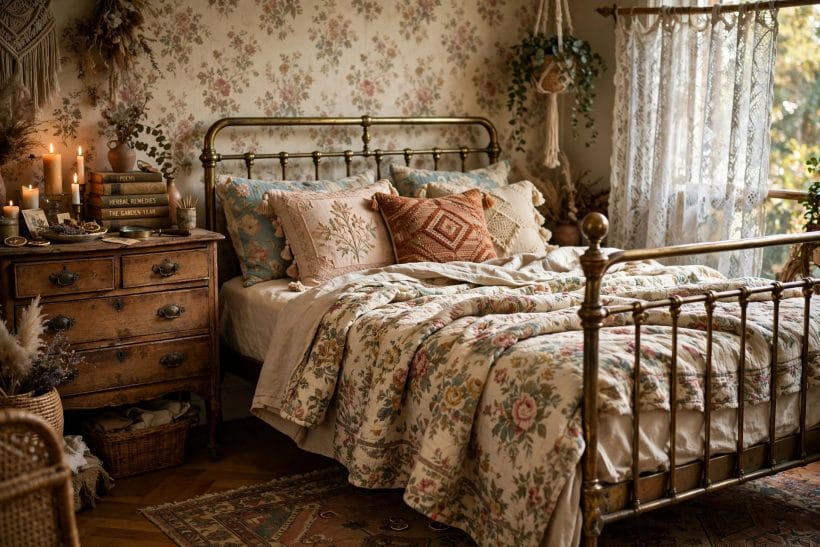
6. Moody Jewel-Tone: Deep Colour and Rich Textiles
At the other end of the scale sits the moody version, where deep jewel tones, forest green, teal, plum and rich rust, give the room drama and warmth. Bedding in velvet or heavy cotton, layered throws and a rug in a deep tone make the bed the clear centre of the room, and the darker palette makes the whole space feel enclosed and cocooning.
Deep colour needs careful balancing so the room feels rich rather than heavy. Keep the ceiling and at least one wall light, let a mirror or a light-coloured rug bounce daylight around, and use metallic or warm wood accents sparingly to lift the darker tones. The contrast between deep bedding and pale walls is what gives this style its glow.
Artwork and mirrors earn their keep in a moody room. A large mirror opposite a window doubles the daylight, while framed prints with pale mounts break up a dark wall without breaking the mood. Keep frames simple, in wood or a soft metallic finish, and hang pieces at eye level rather than high on the wall, so they read as part of the room instead of decoration floating above it. One generous piece usually serves the style better than a crowded gallery wall.
This is a good choice for a bedroom that is mainly used in the evening, where a cosy, enclosed feeling matters more than bright daylight. Layer the lighting too, with a bedside lamp and a softer secondary light, and have any fixed lighting or wiring work carried out by a qualified electrician rather than attempting it yourself. Warm, low light suits the palette far better than a single harsh overhead source.
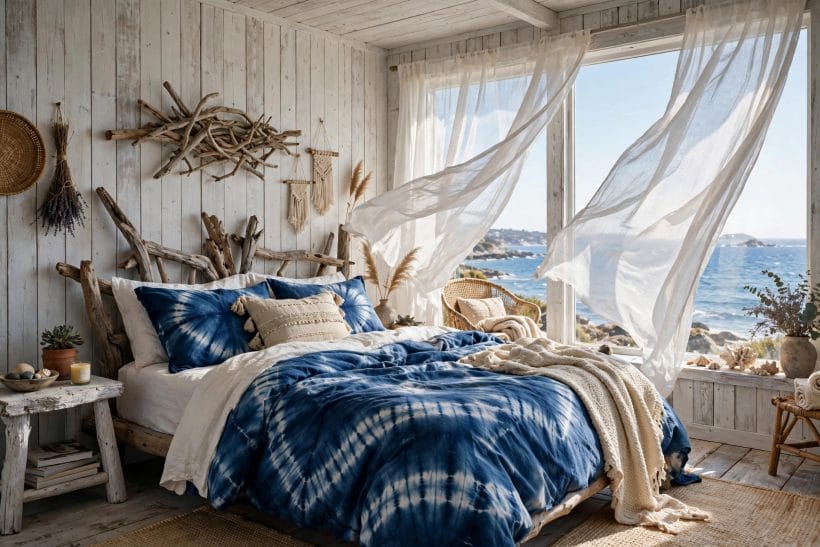
7. Minimal Boho: Calm, Few Pieces and Natural Materials
Minimal bohemian strips the style back to its essentials: a comfortable bed, natural materials, a few well-chosen textiles and plenty of empty space. There is still warmth, in wood, linen and wool, but nothing is there purely for decoration. Every piece earns its place, and the room feels calm because of it.
The palette stays close to nature, cream, oatmeal, soft grey and pale wood, with texture providing the interest that pattern provides elsewhere. A nubby wool throw, a linen duvet and a single woven wall piece give the room its character without clutter. Bedrooms with white walls suit this restrained version especially well, because the pale backdrop lets the natural materials speak.
Bedding quality matters more here than bedding quantity. With fewer layers on show, the ones you keep are noticed, so choose sheets and a duvet cover that feel good against the skin and wash well, in natural fibres that soften with use. A single beautiful throw, folded at the foot of the bed, can be the room’s main colour accent, and it will be appreciated every evening in a way that a pile of rarely used cushions never is.
This style asks for discipline, which is part of its charm. Before adding anything, ask whether it makes the room more comfortable or simply fuller. The pieces that survive that question, a beautiful rug, a plant you love, bedding that feels wonderful, are the ones that make a minimal boho room feel generous rather than empty.
8. Small-Space Boho: Layered but Uncluttered
The small-space version proves that a boho bedroom does not need a large room. In fact, the style adapts well to compact bedrooms, because its layering can be concentrated where it matters most: on the bed, at the window and on one feature wall, leaving the rest of the room clear.
Scale is the key decision. Choose a rug that fits the floor you have rather than one that crowds it, keep patterns to one or two pieces, and use vertical space, shelves above a nightstand or a hanging plant, for display rather than filling every surface. A bed that doubles as seating during the day, with cushions arranged against the wall, can make a tiny room feel like a retreat rather than a squeeze.
Storage should be part of the look, not hidden in shame: woven baskets, a wooden crate or a pretty trunk hold the overflow and add texture at the same time. For more ideas on making compact rooms work hard, tiny bedroom ideas cover layouts and storage alongside the styling. The goal is a room that feels layered when you look at the bed, and calm everywhere else.
9. Choosing Among the Eight Styles
With eight styles on the table, the choice usually comes down to three practical questions: how much light the room gets, how much pattern you enjoy living with, and how much upkeep you are willing to do. A bright room can carry desert earth, coastal breezy or minimal boho with ease, while a darker room often suits moody jewel tones or vintage romantic softness better. If bold pattern energises you, the global collected room will feel like home; if it tires you, minimal boho or coastal breezy will be kinder over time.
Plants are the other honest test. The botanical jungle style is wonderful, but only if watering, light and care sound like pleasure rather than chores. There is no shame in borrowing the look in miniature, two or three generous plants in an otherwise desert-earth or coastal room, rather than committing to a full jungle. Styles are starting points, not contracts, and the best choice is the one you will still enjoy on an ordinary Tuesday, not just on the day the room is finished.
10. Keeping the Look Layered Without Clutter
Layering is the heart of this style, and clutter is its constant risk, so it helps to have a simple rule for telling them apart. A layer earns its place when it adds comfort, colour or texture you actually notice and enjoy; clutter is what remains when layers are added out of habit or because there was nowhere else to put them. Every few months, walk into the room as a guest would, and remove anything your eye skips over or that makes the room harder to use.
Storage that looks good is the easiest defence. Baskets, trunks and lidded boxes hold the extra throws, books and seasonal pieces, and they add texture while doing it, so tidiness never feels like a betrayal of the style. Keep the bed itself as the most layered surface in the room, let one wall carry the display, and leave the remaining surfaces comparatively clear. A bohemian room that breathes will always feel more inviting than one that is full to the edges.
Final Considerations
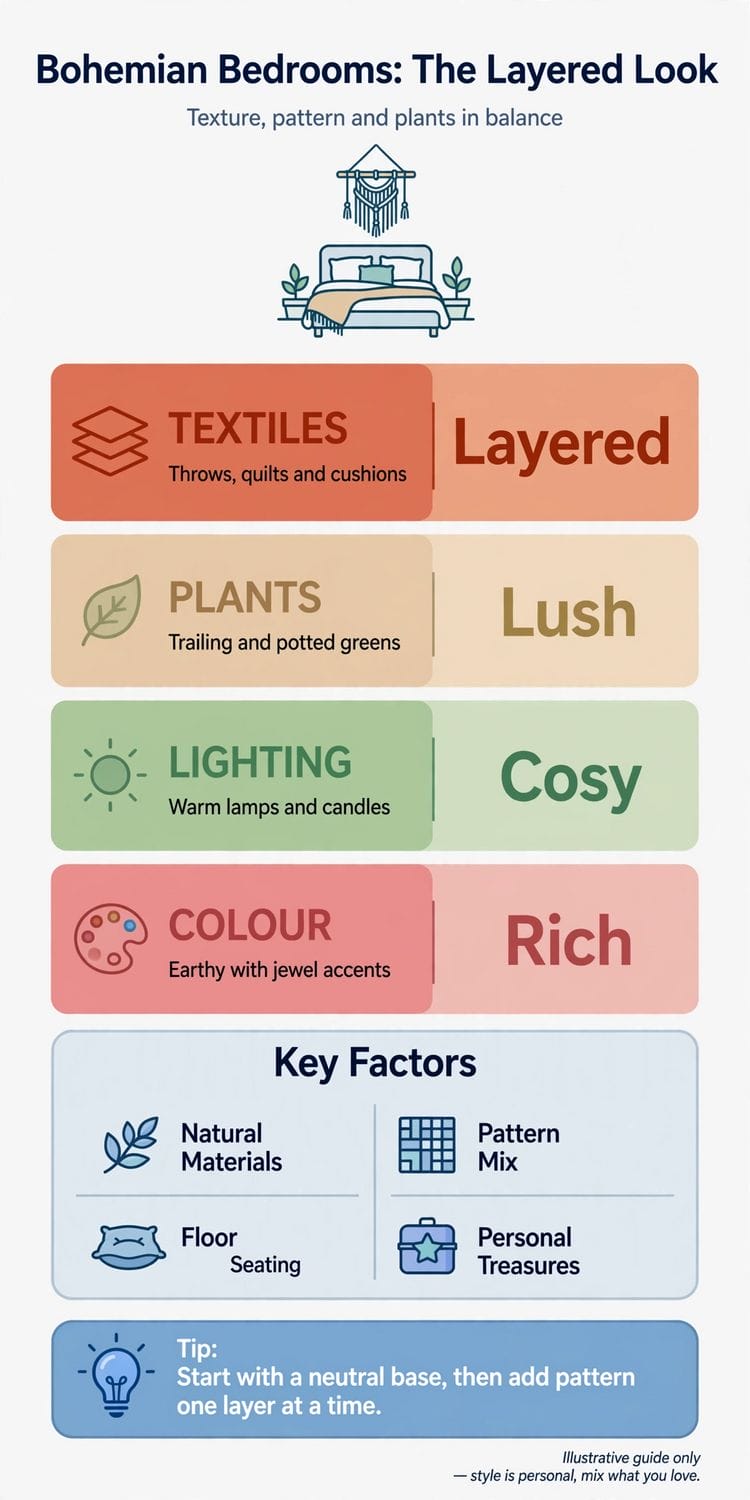
Across all eight styles, a few shared habits separate rooms that feel genuinely bohemian from rooms that simply look busy. Start with the bed, because it dominates any bohemian bedroom, and build outward in layers, adding one element at a time and living with it before adding the next. A room assembled slowly almost always looks better than one filled in a single shopping trip.
Colour discipline matters more than colour quantity. Even the boldest style on this list works because its colours belong to one family, and even the palest works because its textures vary. Pick your family, warm earth, jewel tones, pastels or pale coastal neutrals, and let everything else follow it.
Seasonal swaps keep any of these styles feeling fresh without a redecoration. A lighter throw and fewer cushions in summer, a heavier throw and an extra layer of bedding in winter, and a change of cushion covers when the mood strikes, are enough to make the same room feel new. Because the style is built on layers rather than fixed features, changing one layer changes the whole feeling, and nothing already in the room goes to waste.
Finally, let the room reflect the person sleeping in it. The most convincing bohemian room is not the one that copies a photograph, but the one where the textiles, plants and objects mean something to their owner. Borrow a style from this survey, then bend it, swap a colour, keep a favourite piece that breaks the rules, until the room feels like yours. That personal layer is the one no catalogue can supply, and it is what makes the style endure.


0 Comments