
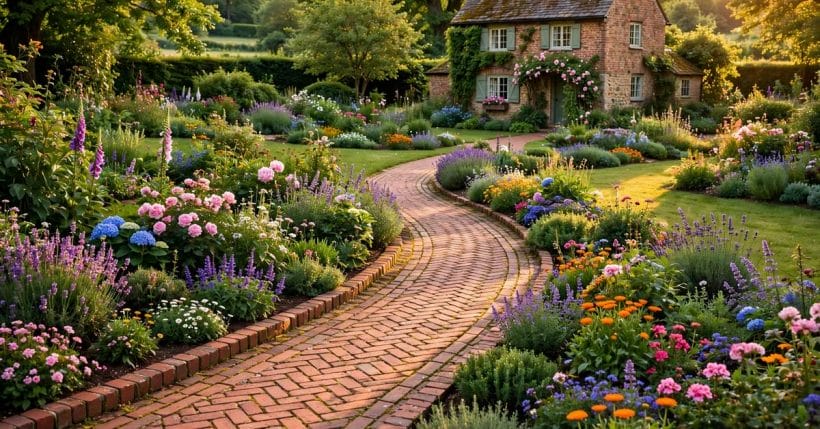
A brick path catching the evening light, a patio that feels like an outdoor room, a bed edge that holds its line through every season: these are the quiet pleasures of brick landscaping ideas, and this survey gathers seventy-five of them in one place. The ideas that follow cover paths, patios, edging, planting, walls, colour, water, light, small gardens, seasonal care and the general drivers of cost, so a reader can weigh the whole subject before choosing a direction for their own garden.
The survey is written for readers who love gardens rather than for builders, and it stays at the level of ideas and general guidance throughout. Where work is structural, involves drainage or water, or touches electrics, the guidance is clear that a qualified professional should handle it, and where planting is concerned the language stays hedged, because gardens vary and no outcome can be promised. Costs are described only as general drivers, with no figures, so the survey can be read anywhere without misleading anyone about local prices.
1. Paths and Walkways
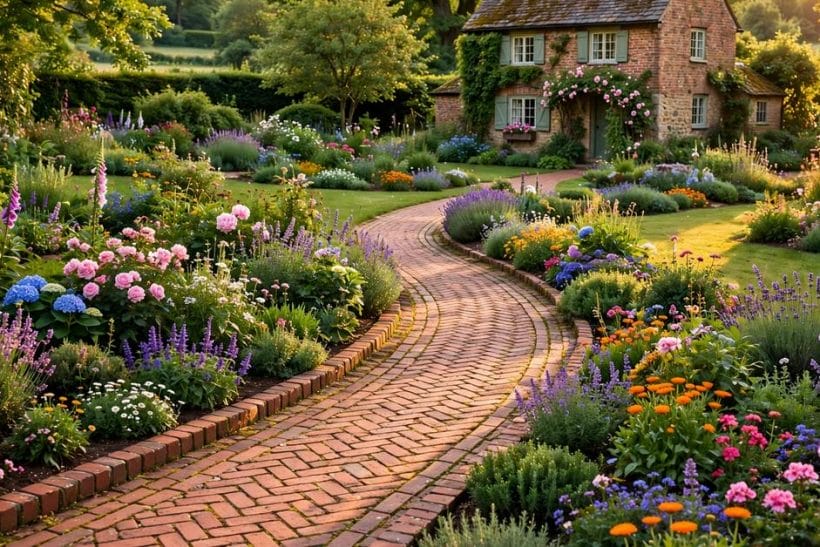
Paths are the skeleton of a garden, and brick gives that skeleton warmth and rhythm. The ideas in this section cover the main path forms, from straight and formal to curved and cottage-like, and each one can be adapted to the size and character of the plot it serves.
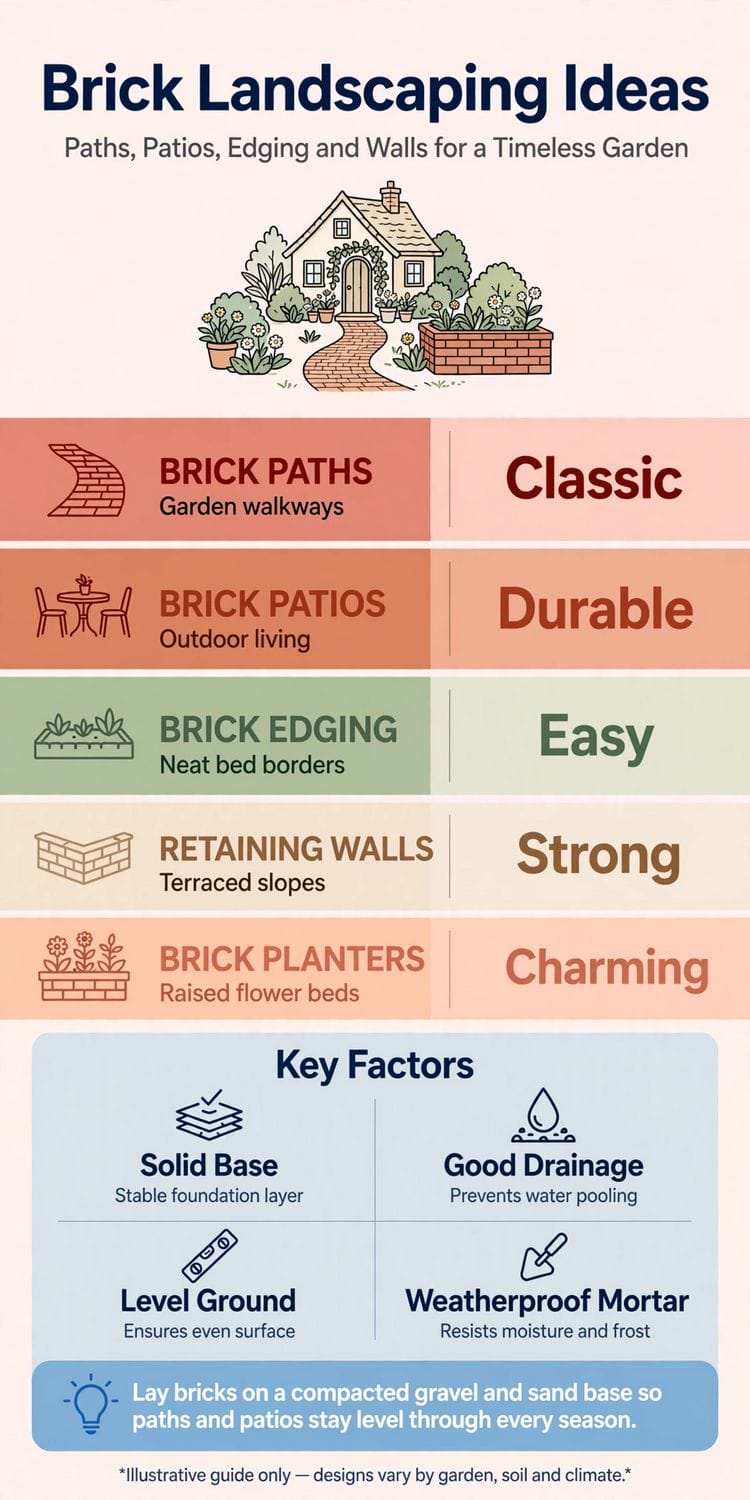
Paths also sit beside other surfaces, and a brick path can meet gravel, stone or lawn at its edges without either material losing its character. Readers weighing a loose surface alongside brick may find the companion survey of decomposed granite landscaping useful, because it covers that surface material in its own right while this survey keeps to brickwork.
| Item | What it is |
|---|---|
| A Straight Brick Garden Path | A straight path gives a garden a clear spine, and brick suits that role because its rhythm reads well from the door and from the far end of the plot. |
| A Gently Curving Walk | A curve slows the walk and hides what lies beyond, which can make even a modest garden feel longer. |
| A Herringbone Path for a Formal Feel | Herringbone reads as tailored and traditional, and it works best where the path itself is meant to be noticed. |
| A Basketweave Path for Cottage Gardens | Basketweave has a woven, homely character that suits cottage planting and informal beds. |
| A Running Bond Path for Everyday Use | Running bond is the quiet workhorse of garden paths, simple to read and easy on the eye. |
| A Path That Widens at a Seating Spot | Widening a path where a bench or a pair of chairs stands turns a route into a destination. |
| Brick Ribbons Through Gravel | Brick ribbons set into a gravel surface give a loose path a firm line to follow and a finished edge to walk beside. |
| A Path That Links the Front and Back Gardens | A side passage path that connects front and back gardens is often the hardest-working route in a home, used for bins, bikes and everyday coming and going. |
| A Brick Patio by the Back Door | A patio by the back door extends the house into the garden and takes the daily traffic of meals, play and quiet sitting. |
| A Round Patio for a Table and Chairs | A round patio suits a table set for conversation, because everyone sits at a similar distance from the centre. |
| A Long Brick Terrace for Entertaining | A long terrace suits a household that gathers in numbers, with room for a table at one end and chairs or a bench at the other. |
| A Patio with a Planting Pocket at Its Centre | A planting pocket cut into a patio brings green into the middle of a paved space and softens the hard surface. |
| A Patio That Steps Down to the Lawn | A patio that sits slightly above the lawn creates a natural threshold between paved and green areas. |
| A Brick Apron Around an Outdoor Fire Bowl | A brick apron around a fire bowl gives a gathering spot a defined floor and a sense of enclosure. |
| A Shaded Patio Under an Existing Tree | A patio beneath an established tree gains shade that no new structure can match, though fallen leaves and shade-tolerant planting will shape how the space is used. |
| A Patio Designed Around Home Design Ideas Already in the House | A patio reads as part of the home when its brick tone, pattern and edging echo details already present in the house, from window sills to garden walls. |
| A Single Brick Edge Along a Lawn | A single course of brick set along a lawn gives a crisp line that mowing and trimming can follow. |
| A Raised Brick Edge for a Flower Bed | A slightly raised edge lifts a flower bed above the lawn and gives planting a frame that the eye can follow. |
| A Brick Edge Beside a Driveway | Brick edging beside a driveway marks the boundary between driving and planting and protects bed edges from wheels and feet. |
| Brick Edging Around a Tree | A ring of brick around a tree gives mulch a boundary and keeps a tidy circle in an otherwise loose lawn. |
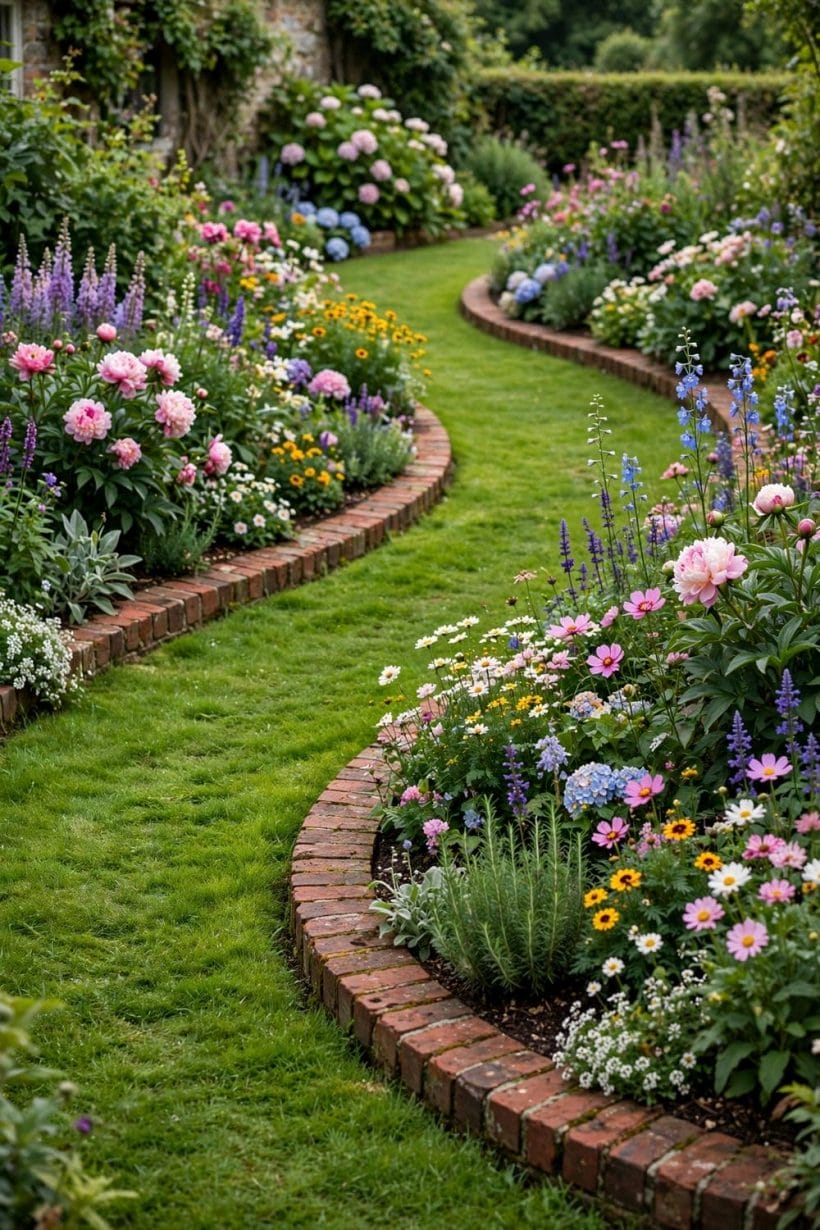
| A Brick Border That Follows a Curved Bed | Curved beds gain definition from a brick border that follows their sweep without kinks. |
| Brick and Timber Edging Used Together | Brick and timber edging can share a garden when each is given its own job, with brick marking formal lines and timber softening informal beds. |
| A Brick Boundary Beside a Cedar Fence | Where a brick edge meets a timber fence, the two materials can complement each other, with the warmth of timber softening the firmness of brick. |
| A Brick Threshold at a Garden Gate | A brick threshold at a gate marks arrival and gives the entrance a finished feel underfoot. |
| A Brick-Rimmed Kitchen Garden | A kitchen garden rimmed in brick gains structure that survives the winter, when crops are sparse and the beds themselves carry the look. |
| A Herb Bed Framed in Brick | Herbs suit a small brick-framed bed near the kitchen door, where picking is a short walk rather than a expedition. |
| A Brick Edge for a Rose Bed | Roses gain from a firm brick edge that frames their upright growth and keeps mulch in place around their roots. |
| A Brick Border for a Shady Bed | Shady beds often rely on foliage rather than flower for their interest, and a brick border gives that foliage a warm frame. |
| A Brick Frame for a Cutting Garden | A cutting garden framed in brick reads as intentional even when rows are picked bare, because the frame holds the shape. |
| Brick Edging That Keeps Mulch in Place | Mulch drifts after heavy rain and during watering, and a brick edge holds it where it belongs. |
| A Brick-Lined Bed in a Natural Landscape Style Garden | Even a naturalistic garden benefits from a quiet brick line where a bed meets a path, because the line keeps the looseness deliberate rather than untidy. |
| A Brick Bed for Seasonal Colour | A bed edged in brick can be replanted through the seasons without losing its structure, because the frame stays constant while the planting changes. |
| A Low Brick Garden Wall | A low brick wall divides a garden into rooms without blocking light or views, and it gives a place to sit, lean or set down a pot. |
| A Brick Raised Bed for Easier Gardening | A raised bed in brick lifts planting to a comfortable working height and warms the soil earlier in the season, which many gardeners appreciate. |
| A Brick Seat Wall Around a Patio | A seat wall around a patio gives guests a place to perch without the need for extra chairs, and it defines the edge of the paved area. |
| A Brick Pier at the End of a Wall | A brick pier marks the end of a wall or the entrance to a garden room, and it gives the wall a visual full stop. |
| A Brick Wall That Shelters a Seating Corner | A low wall that shelters a seating corner from wind can make a patio usable on days when an open terrace would feel exposed. |
| A Brick Retaining Edge for a Gentle Slope | A gentle slope can be held with a low brick edge that terraces the ground in a single modest step, though anything that retains a meaningful bank is structural work. |
| A Brick Column for a Climbing Plant | A brick column gives a climbing plant a firm support and a vertical accent in a flat garden. |
| A Brick Screen Wall for Privacy | A brick screen wall can give a seating area privacy without the need for a tall fence, especially where a partial screen suffices. |
| Classic Red Brick for a Traditional Garden | Classic red brick carries a traditional garden with ease, pairing with green planting and timber details that have been used alongside it for generations. |
| Soft Buff Brick for a Pale Garden | Buff brick lightens a garden and suits pale houses, light gravel and silver foliage. |
| Dark Brick for a Contemporary Garden | Dark brick gives a contemporary garden a grounded, architectural feel, and it pairs well with pale planting and clean lines. |
| Mixed Tones for a Weathered Look | Mixed brick tones give a garden a weathered, collected character, as though the brickwork grew over time rather than arriving all at once. |
| A Basketweave Patio for a Cottage Feel | Basketweave on a patio echoes cottage gardens and pairs well with roses, herbs and loose planting. |
| A Herringbone Patio for a Formal Terrace | Herringbone on a terrace reads as formal and considered, and it suits a house with classical details. |
| Brick Paired with Siding Materials That Go Beautifully With Brick | The way brick meets the house wall shapes the whole garden, and siding that sits comfortably beside brick makes the transition from house to garden feel natural. |
| Brick and Stone Used Side by Side | Brick and stone can share a garden when each is given a distinct role, such as brick for paths and stone for a feature wall. |
| A Brick Surround for a Bird Bath | A brick surround beneath a bird bath gives the feature a firm footing and a tidy circle in the lawn or bed. |
| A Brick Edge Around a Small Pond | A brick edge around a small pond frames the water and gives a place to sit and watch it. |
| A Brick Rill or Narrow Water Channel | A narrow brick-lined channel can carry water through a garden as a quiet feature, linking a patio to a planting bed. |
| Brick Paving That Catches Evening Light | Brick paving catches low evening light beautifully, with warm tones glowing as the sun drops. |
| Low Garden Lights Set Beside Brick Paths | Low lights beside a brick path mark the route after dark and make evening walks comfortable. |
| A Brick Fire Pit Surround for Evening Gatherings | A brick surround for a fire pit gives evening gatherings a focal point and a safe-feeling floor beneath it. |
| A Brick Wall That Holds the Day's Warmth | A brick wall facing the sun absorbs warmth through the day and releases it gently in the evening, which can make a sheltered corner feel pleasant after sunset. |
| A Brick Courtyard for a Tiny Garden | A small courtyard paved in brick can feel like an outdoor room, especially when walls on every side give it enclosure. |
| A Brick Path for a Narrow Side Passage | A narrow side passage gains dignity from brick paving, turning a service route into a garden feature. |
| A Brick Patio for a Balcony-Size Garden | A garden no larger than a balcony still benefits from a brick floor, because the material gives even a tiny space a sense of permanence. |
| A Brick Corner for Pots and Planters | A brick corner set aside for pots and planters gives container gardening a home base and keeps pots off the lawn. |
| A Brick Threshold Between House and Garden | A brick threshold between house and garden marks the step outside and gives wet feet a firm place to land. |
| A Brick Nook for a Reading Chair | A brick nook tucked into a corner, with a chair and a small table, turns an overlooked part of the garden into a retreat. |
| A Brick Floor That Links Indoors and Outdoors | A brick floor that echoes interior flooring or interior colours can blur the boundary between house and garden, especially where doors open wide. |
1. A Straight Brick Garden Path
A straight path gives a garden a clear spine, and brick suits that role because its rhythm reads well from the door and from the far end of the plot. Keep the line true, let planting soften the sides rather than crowd the walking surface, and choose a tone that sits comfortably with the house wall behind it.
2. A Gently Curving Walk
A curve slows the walk and hides what lies beyond, which can make even a modest garden feel longer. Brick follows a gentle curve gracefully when the pattern is kept simple, and the curve should feel deliberate rather than wavering, with planting placed to frame the bend instead of blocking it.
3. A Herringbone Path for a Formal Feel
Herringbone reads as tailored and traditional, and it works best where the path itself is meant to be noticed. Because the pattern is busy, the surrounding planting and edging should stay calm, so the path can carry the detail while the beds provide quiet green around it.
4. A Basketweave Path for Cottage Gardens
Basketweave has a woven, homely character that suits cottage planting and informal beds. It pairs well with loose shrubs and flowers that spill a little over the edge, and it looks most at ease when the brick tone is warm rather than stark.
5. A Running Bond Path for Everyday Use
Running bond is the quiet workhorse of garden paths, simple to read and easy on the eye. It suits routes that are walked every day, from a gate to a back door, where durability and a calm surface matter more than display.
6. A Path That Widens at a Seating Spot
Widening a path where a bench or a pair of chairs stands turns a route into a destination. The wider apron gives feet room and keeps chairs off planting, and a change of pattern at the widening can mark the pause without needing any extra ornament.
7. Brick Ribbons Through Gravel
Brick ribbons set into a gravel surface give a loose path a firm line to follow and a finished edge to walk beside. The gravel between the ribbons keeps the surface open and free-draining in feel, while the brick carries the pattern and the direction.
8. A Path That Links the Front and Back Gardens
A side passage path that connects front and back gardens is often the hardest-working route in a home, used for bins, bikes and everyday coming and going. Brick gives that passage a cared-for look, and a simple pattern with a sturdy edge keeps it practical in all weathers.
2. Patios and Gathering Spaces
Patios are where a garden is lived in, and brick gives them a floor that feels welcoming underfoot. The ideas here range from a modest apron by the back door to a long terrace for gatherings, and each one balances paved comfort with planting close at hand.

9. A Brick Patio by the Back Door
A patio by the back door extends the house into the garden and takes the daily traffic of meals, play and quiet sitting. Brick warms that threshold in a way that pale paving sometimes does not, and a generous apron by the door keeps the transition comfortable underfoot.
10. A Round Patio for a Table and Chairs
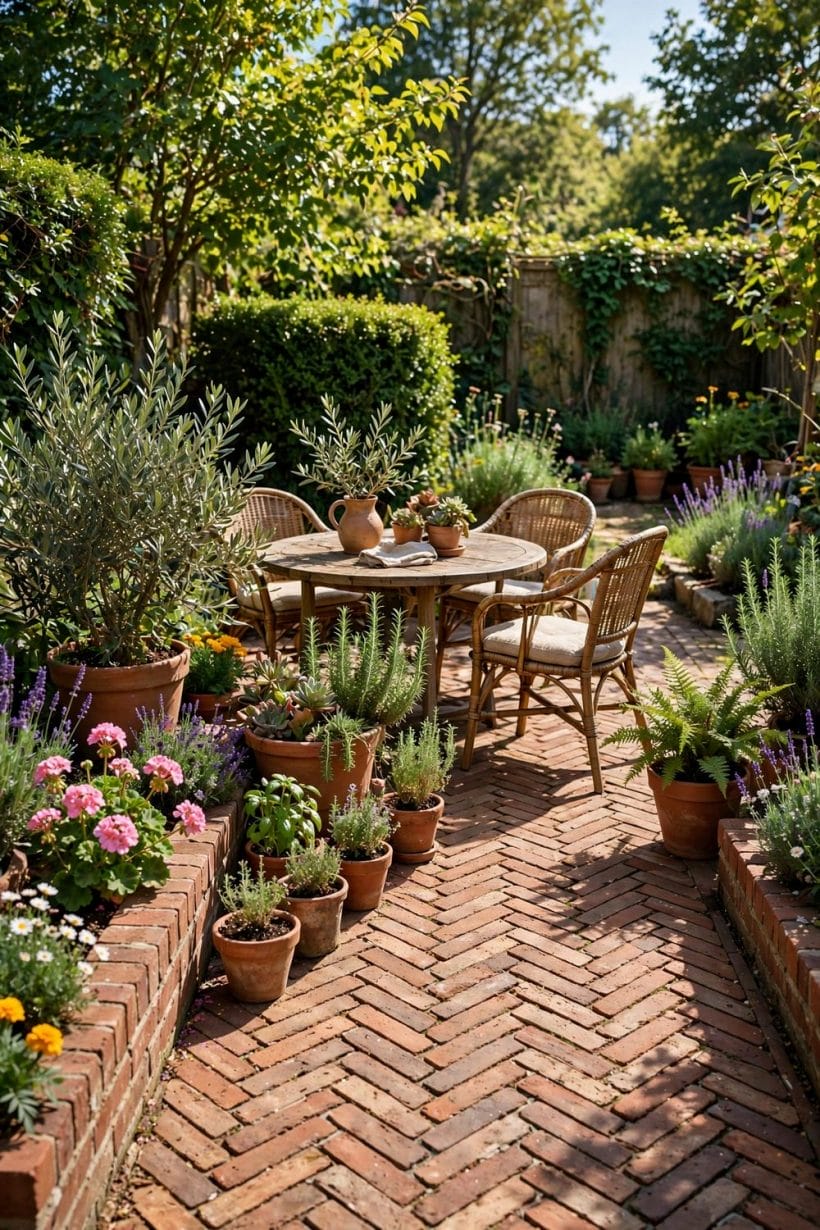
A round patio suits a table set for conversation, because everyone sits at a similar distance from the centre. A circular pattern or a simple ring of edging can mark the shape, while the furniture itself stays light enough to move with the sun through the day.
11. A Long Brick Terrace for Entertaining
A long terrace suits a household that gathers in numbers, with room for a table at one end and chairs or a bench at the other. Brick unifies the length, and planting at the far edge keeps the terrace from feeling like an empty platform.
12. A Patio with a Planting Pocket at Its Centre
A planting pocket cut into a patio brings green into the middle of a paved space and softens the hard surface. A small tree or a bold shrub can anchor the pocket, though its eventual spread should be considered early so roots and canopy do not crowd the seating around it.
13. A Patio That Steps Down to the Lawn
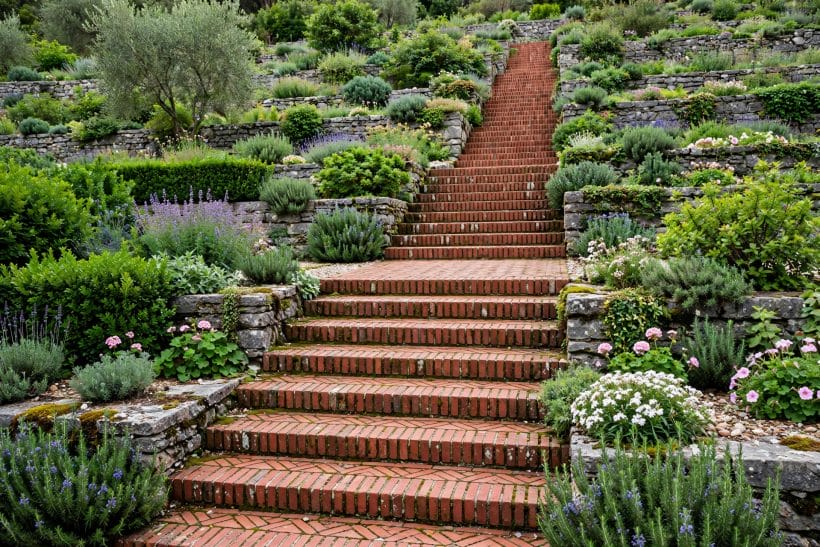
A patio that sits slightly above the lawn creates a natural threshold between paved and green areas. Where a change of level needs steps, that is a separate form with its own considerations, covered in the companion survey of brick steps, and this survey keeps to the flat patio surface itself.
14. A Brick Apron Around an Outdoor Fire Bowl
A brick apron around a fire bowl gives a gathering spot a defined floor and a sense of enclosure. Clearances, fuel and fire safety should follow local guidance and the appliance instructions, and any built fire feature should be left to a qualified professional rather than improvised.
15. A Shaded Patio Under an Existing Tree
A patio beneath an established tree gains shade that no new structure can match, though fallen leaves and shade-tolerant planting will shape how the space is used. Brick tones that read warm in dappled light tend to suit such a spot, and furniture that can be moved lets the space adapt through the seasons.
16. A Patio Designed Around Home Design Ideas Already in the House
A patio reads as part of the home when its brick tone, pattern and edging echo details already present in the house, from window sills to garden walls. That echo need not be exact, and a near match often sits more comfortably than a forced copy.
3. Edging, Borders and Boundaries
Edging is the quiet detail that makes a garden read as cared for, because it draws the lines between lawn, bed, path and boundary. Brick edging does that job with a firm, warm line, and the ideas in this section show how one material can serve many boundaries.
17. A Single Brick Edge Along a Lawn
A single course of brick set along a lawn gives a crisp line that mowing and trimming can follow. The edge reads best when it sits level and continuous, and it helps keep soil and mulch from drifting onto the grass after rain.
18. A Raised Brick Edge for a Flower Bed
A slightly raised edge lifts a flower bed above the lawn and gives planting a frame that the eye can follow. The lift also helps define where bed ends and lawn begins, which makes both easier to care for through the growing season.
19. A Brick Edge Beside a Driveway
Brick edging beside a driveway marks the boundary between driving and planting and protects bed edges from wheels and feet. A sturdy, well-set edge matters here more than ornament, because the boundary takes knocks that a sheltered bed edge never meets.
20. Brick Edging Around a Tree
A ring of brick around a tree gives mulch a boundary and keeps a tidy circle in an otherwise loose lawn. The ring should sit clear of the trunk and allow for growth, because a tight ring can become a constraint as the tree matures.
21. A Brick Border That Follows a Curved Bed
Curved beds gain definition from a brick border that follows their sweep without kinks. The border should be set as one smooth line, and planting inside the curve can then spill softly over it without blurring the shape.
22. Brick and Timber Edging Used Together
Brick and timber edging can share a garden when each is given its own job, with brick marking formal lines and timber softening informal beds. The pairing works when the tones are allowed to weather together rather than competing for attention.
23. A Brick Boundary Beside a Cedar Fence
Where a brick edge meets a timber fence, the two materials can complement each other, with the warmth of timber softening the firmness of brick. Keep the junction tidy and let planting bridge the change of material so the boundary reads as one garden rather than two competing edges.
24. A Brick Threshold at a Garden Gate
A brick threshold at a gate marks arrival and gives the entrance a finished feel underfoot. The threshold should sit level with the path on either side so the gate swings freely and visitors step onto a firm, welcoming surface.
4. Beds, Planting and Growing Spaces
Beds are where brick meets growing things, and the pairing works because brick frames planting without competing with it. The ideas here cover kitchen gardens, herb beds, rose beds and seasonal colour, with the brick edge giving each bed a lasting shape.
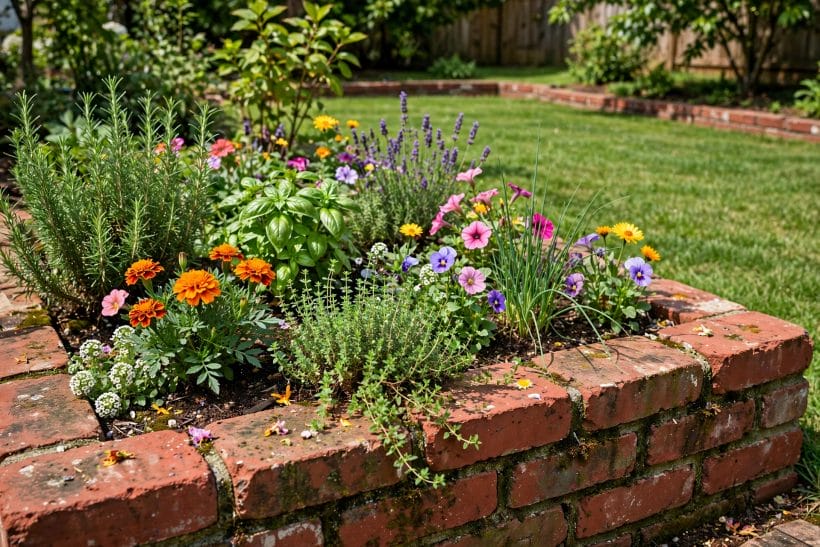
25. A Brick-Rimmed Kitchen Garden
A kitchen garden rimmed in brick gains structure that survives the winter, when crops are sparse and the beds themselves carry the look. The rim also gives a clean edge for paths between beds, which keeps daily picking and watering straightforward.
26. A Herb Bed Framed in Brick
Herbs suit a small brick-framed bed near the kitchen door, where picking is a short walk rather than a expedition. Sun-loving herbs tend to thrive in such a sheltered, warm spot, though individual plants vary and local conditions always shape what does well.
27. A Brick Edge for a Rose Bed
Roses gain from a firm brick edge that frames their upright growth and keeps mulch in place around their roots. The edge also gives a place to stand while pruning and deadheading, which keeps feet off the soil and roots undisturbed.
28. A Brick Border for a Shady Bed
Shady beds often rely on foliage rather than flower for their interest, and a brick border gives that foliage a warm frame. Ferns and shade-tolerant planting tend to soften the brick over time, which suits a quiet corner that is meant to feel settled.
29. A Brick Frame for a Cutting Garden
A cutting garden framed in brick reads as intentional even when rows are picked bare, because the frame holds the shape. Straight rows inside a brick frame are easy to tend, and the frame helps keep paths clear for carrying armfuls of stems to the house.
30. Brick Edging That Keeps Mulch in Place
Mulch drifts after heavy rain and during watering, and a brick edge holds it where it belongs. That simple job matters, because mulch kept in the bed protects soil and roots far better than mulch scattered across a path or lawn.
31. A Brick-Lined Bed in a Natural Landscape Style Garden
Even a naturalistic garden benefits from a quiet brick line where a bed meets a path, because the line keeps the looseness deliberate rather than untidy. Used sparingly, brick can frame wilder planting without taming it, and the contrast between firm edge and loose growth is part of the charm.
32. A Brick Bed for Seasonal Colour
A bed edged in brick can be replanted through the seasons without losing its structure, because the frame stays constant while the planting changes. Spring bulbs, summer flowers and autumn foliage can each take a turn, and the brick provides continuity between them.
5. Low Walls, Raised Beds and Garden Structure
Low walls and raised beds give a garden structure and rooms, and brick suits both because it reads as solid without feeling heavy at a low height. The ideas in this section stay with low, non-structural garden structure, and structural or retaining work is flagged for professional help wherever it arises.
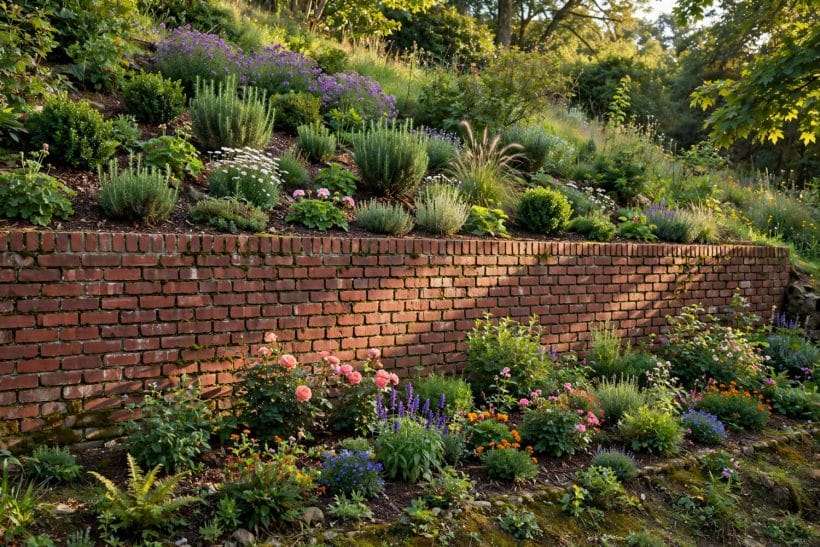
33. A Low Brick Garden Wall
A low brick wall divides a garden into rooms without blocking light or views, and it gives a place to sit, lean or set down a pot. Walls that retain soil or hold back a slope are structural work and should be designed and built by a qualified professional, with drainage and local rules considered in general terms.
34. A Brick Raised Bed for Easier Gardening
A raised bed in brick lifts planting to a comfortable working height and warms the soil earlier in the season, which many gardeners appreciate. Raised beds that retain a substantial depth of soil should be built with sound construction in mind, and professional advice is wise where the bed also acts as a retaining structure.
35. A Brick Seat Wall Around a Patio
A seat wall around a patio gives guests a place to perch without the need for extra chairs, and it defines the edge of the paved area. The wall should be built to a comfortable sitting height in general terms, with a cap that feels smooth and generous under the hand.
36. A Brick Pier at the End of a Wall
A brick pier marks the end of a wall or the entrance to a garden room, and it gives the wall a visual full stop. Piers suit entrances and corners, where a little extra presence helps the garden read clearly from a distance.
37. A Brick Wall That Shelters a Seating Corner
A low wall that shelters a seating corner from wind can make a patio usable on days when an open terrace would feel exposed. The shelter should be low enough to keep light and views, because a wall that towers over its seats can make a corner feel enclosed rather than sheltered.
38. A Brick Retaining Edge for a Gentle Slope
A gentle slope can be held with a low brick edge that terraces the ground in a single modest step, though anything that retains a meaningful bank is structural work. Drainage behind any retaining work should be considered by a qualified professional, because water pressure, not the brick itself, is what most often causes trouble.
39. A Brick Column for a Climbing Plant
A brick column gives a climbing plant a firm support and a vertical accent in a flat garden. The plant should be chosen for the aspect and the space available, since a vigorous climber can outgrow a modest column and need regular attention to keep it in bounds.
40. A Brick Screen Wall for Privacy
A brick screen wall can give a seating area privacy without the need for a tall fence, especially where a partial screen suffices. Local rules on height and boundaries vary and should be checked before building, and planting in front of the wall can soften its face while it does its job.
6. Colour, Pattern and Pairing Brick with the House
Colour and pattern are where brick shows its range, from classic red to pale buff and contemporary dark tones. The ideas here explore those choices and the way brick sits beside the house itself, because a garden reads best when house and garden feel related.
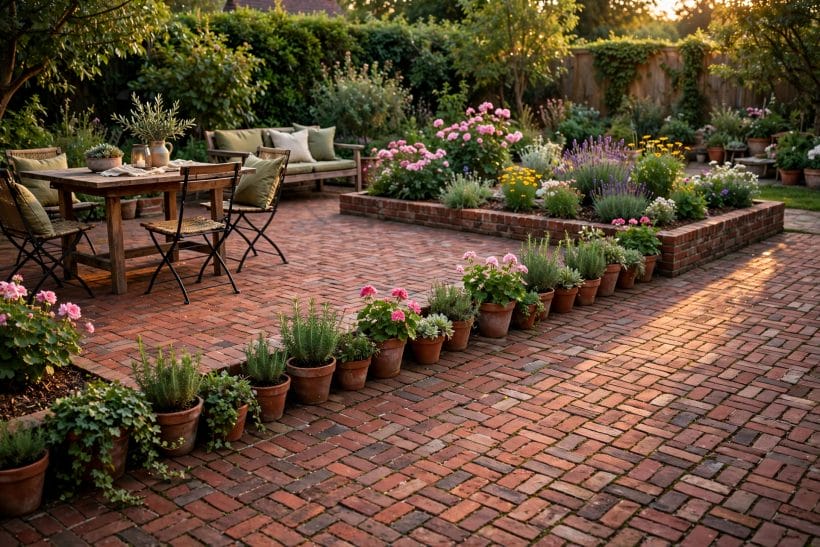
41. Classic Red Brick for a Traditional Garden
Classic red brick carries a traditional garden with ease, pairing with green planting and timber details that have been used alongside it for generations. Its warmth suits houses with red or warm-toned walls, and it reads as familiar rather than fashionable.
42. Soft Buff Brick for a Pale Garden
Buff brick lightens a garden and suits pale houses, light gravel and silver foliage. It reflects light in a way that red brick does not, which can lift a north-facing or shaded corner, though it may show soil and algae more readily and need regular gentle care.
43. Dark Brick for a Contemporary Garden
Dark brick gives a contemporary garden a grounded, architectural feel, and it pairs well with pale planting and clean lines. Used in moderation, dark brick can anchor a space, while used everywhere it can make a small garden feel heavy.
44. Mixed Tones for a Weathered Look
Mixed brick tones give a garden a weathered, collected character, as though the brickwork grew over time rather than arriving all at once. The mix should be blended evenly across the surface, because patches of one tone can read as repairs rather than character.
45. A Basketweave Patio for a Cottage Feel
Basketweave on a patio echoes cottage gardens and pairs well with roses, herbs and loose planting. The woven pattern adds texture underfoot, and it suits furniture that is simple and wooden rather than sleek and metallic.
46. A Herringbone Patio for a Formal Terrace
Herringbone on a terrace reads as formal and considered, and it suits a house with classical details. The pattern rewards a calm setting, with planting kept to structured shrubs and clipped shapes that echo its order.
47. Brick Paired with Siding Materials That Go Beautifully With Brick
The way brick meets the house wall shapes the whole garden, and siding that sits comfortably beside brick makes the transition from house to garden feel natural. Timber, painted boards and pale renders each change the brick’s apparent tone, so the pairing should be judged in daylight against the actual house rather than from a sample alone.
48. Brick and Stone Used Side by Side
Brick and stone can share a garden when each is given a distinct role, such as brick for paths and stone for a feature wall. The pairing works when one material leads and the other supports, because two strong materials competing for attention can make a garden feel busy.
7. Water, Light and Evening Gardens
Water and light transform a garden after the main work of the day is done, and brick provides a warm stage for both. The ideas in this section cover water features, evening light and fire, with professional help flagged for water, drainage and electrical work throughout.
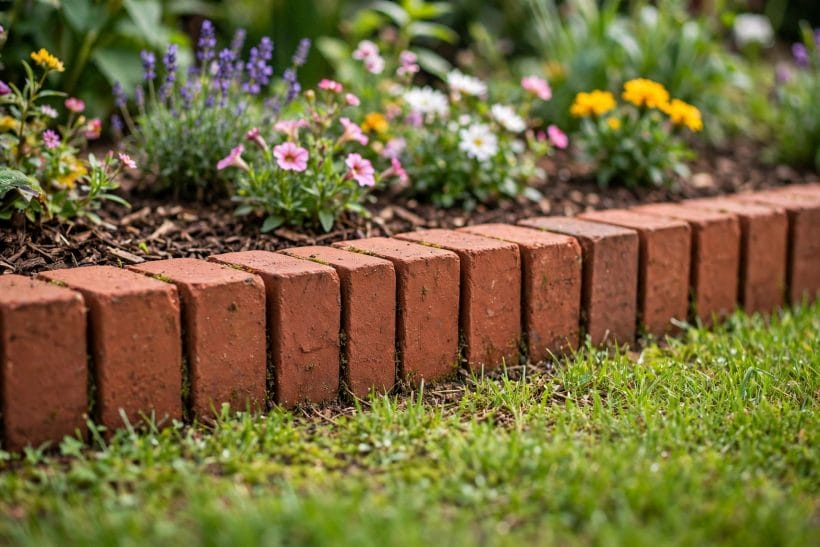
49. A Brick Surround for a Bird Bath
A brick surround beneath a bird bath gives the feature a firm footing and a tidy circle in the lawn or bed. The surround should sit level so the bath stays balanced, and planting nearby can offer birds cover without crowding the feature.
50. A Brick Edge Around a Small Pond
A brick edge around a small pond frames the water and gives a place to sit and watch it. Pond construction, waterproofing and any electrical work for pumps or lights should be left to qualified professionals, and local safety guidance for open water should always be followed.
51. A Brick Rill or Narrow Water Channel
A narrow brick-lined channel can carry water through a garden as a quiet feature, linking a patio to a planting bed. Water features of this kind need sound construction and professional advice on waterproofing and drainage, because a leaking channel can undermine the brickwork around it.
52. Brick Paving That Catches Evening Light
Brick paving catches low evening light beautifully, with warm tones glowing as the sun drops. A west-facing patio or path gains most from this effect, and furniture placed to face the light lets the garden be enjoyed at its best hour.
53. Low Garden Lights Set Beside Brick Paths
Low lights beside a brick path mark the route after dark and make evening walks comfortable. Any electrical work for garden lighting should be carried out by a qualified electrician, with fittings suited to outdoor use and local rules followed.
54. A Brick Fire Pit Surround for Evening Gatherings
A brick surround for a fire pit gives evening gatherings a focal point and a safe-feeling floor beneath it. Fire safety, clearances and fuel should follow local guidance and the appliance instructions, and built fire features should be left to qualified professionals.
55. A Brick Wall That Holds the Day’s Warmth
A brick wall facing the sun absorbs warmth through the day and releases it gently in the evening, which can make a sheltered corner feel pleasant after sunset. Tender plants placed near such a wall may benefit from the shelter, though results vary with aspect and season.
8. Small Gardens, Courtyards and Side Passages
Small gardens ask the most of every surface, and brick rewards that demand by giving even a tiny floor a sense of permanence. The ideas here show how courtyards, side passages and nooks can all gain from brick, without needing a large plot to justify it.
56. A Brick Courtyard for a Tiny Garden
A small courtyard paved in brick can feel like an outdoor room, especially when walls on every side give it enclosure. Brick unifies the floor and walls, and a single bold plant or a small water feature can carry the whole space without clutter.
57. A Brick Path for a Narrow Side Passage
A narrow side passage gains dignity from brick paving, turning a service route into a garden feature. A simple pattern and a light tone can help a shaded passage feel less confined, and planting should be kept to shade-tolerant kinds that do not crowd the walk.
58. A Brick Patio for a Balcony-Size Garden
A garden no larger than a balcony still benefits from a brick floor, because the material gives even a tiny space a sense of permanence. Furniture should be small and foldable, so the floor itself remains visible and the space can change use through the day.
59. A Brick Corner for Pots and Planters
A brick corner set aside for pots and planters gives container gardening a home base and keeps pots off the lawn. The brick floor drains in feel and looks intentional, and grouping pots by water need makes daily care simpler.
60. A Brick Threshold Between House and Garden
A brick threshold between house and garden marks the step outside and gives wet feet a firm place to land. The threshold should connect smoothly with the patio or path beyond, so the journey from indoors to outdoors feels continuous.
61. A Brick Nook for a Reading Chair
A brick nook tucked into a corner, with a chair and a small table, turns an overlooked part of the garden into a retreat. The nook needs only a firm floor, a little shelter and a view of planting, and brick provides the floor with a warmth that suits quiet sitting.
62. A Brick Floor That Links Indoors and Outdoors
A brick floor that echoes interior flooring or interior colours can blur the boundary between house and garden, especially where doors open wide. The link is strengthened when the brick tone relates to the interior design ideas already present in the adjoining room, without copying them exactly.
9. Looking After Brickwork Through the Seasons
Brickwork repays simple, regular care, and the ideas in this section cover the seasonal jobs that keep it looking good. None of them requires specialist products or harsh methods, and anything beyond gentle care is best left to a skilled tradesperson.
63. Sweeping and Clearing Brick Surfaces
Regular sweeping keeps brick surfaces clear of leaves and soil, which helps them dry after rain and keeps their colour visible. Clearing fallen leaves in autumn matters most, because leaves left to rot can stain and hold moisture against the surface.
64. Dealing with Moss and Algae Gently
Moss and algae tend to appear on shaded, damp brick, and gentle cleaning suited to brick is usually enough to keep them in check. Avoid harsh methods that could damage the surface, and follow the guidance of any cleaning product used, without mixing products or improvising treatments.
65. Checking Joints and Edges Each Spring
Joints and edges deserve a look each spring, because frost and movement can loosen a brick or open a joint over winter. Early attention keeps small issues small, and any substantial repair or re-laying should be left to a skilled tradesperson rather than patched over.
66. Keeping Planting from Overwhelming Brickwork
Planting that overhangs brick paths and patios can shade them and drop debris, so a seasonal trim keeps the balance right. The aim is partnership rather than dominance, with planting softening brick without hiding it entirely.
67. Protecting Brickwork in Winter
Winter care for brickwork is mostly about drainage and avoiding standing water, because repeated freezing of saturated brick can cause damage over time. Surfaces that drain freely and are kept clear tend to fare better, and any concern about a specific surface is best raised with a qualified professional.
68. Refreshing a Tired Brick Surface
A tired brick surface can often be refreshed by thorough cleaning and attention to its joints and edges, without any need for replacement. Where colour has faded unevenly, a change of planting or furniture can also shift attention, and a full renewal should be weighed against the cost drivers described in the final section.
69. Planning Seasonal Planting Around Brick
Seasonal planting around brickwork can be planned so that something is always in flower or foliage near the brick, which keeps the garden lively through the year. Brick provides the constant backdrop, and planting provides the change, which is a partnership that suits gardens of every size.
10. Costs in General Terms, and Planning a Project
Costs are often the part of a garden project that feels hardest to pin down, because every garden and every local market differs. This section therefore stays with general drivers only, describing what tends to push a project up or down, and it closes with the practical step of seeking comparable local quotes.
70. How the Size of the Area Shapes Cost
The size of the area is the most obvious cost driver, because a larger patio or path needs more brick, more base material and more labour than a small one. Size also affects how long a project takes and how much disruption it causes, so measuring the area honestly at the start helps every later decision.
71. How Brick Choice Shapes Cost
Brick choice shapes cost through the type, finish and tone selected, because some bricks are made to a higher specification or in smaller batches than others. Reclaimed or unusually coloured bricks may also carry a different cost profile, and availability in the local area can matter as much as the brick itself.
72. How Pattern and Detail Shape Cost
Pattern and detail shape cost because intricate patterns take longer to lay and need more cutting than simple ones. Edging, borders and changes of direction all add time, and a design that looks simple on paper can become detailed once it meets corners, curves and existing features.
73. How Ground Conditions Shape Cost
Ground conditions shape cost because soft, uneven or poorly draining ground needs more preparation than firm, level ground. Access also matters, since a garden that is hard to reach for deliveries and machinery can add time and effort, and existing features that must be worked around add complexity too.
74. How Professional Work Shapes Cost
Professional work shapes cost through skill, time and the assurance that structural, drainage and electrical elements are handled properly. Retaining walls, drainage, pond work and garden lighting are all areas where professional help is not an optional extra but the sensible route, and their cost should be understood as part of the project rather than an afterthought.
75. Getting Comparable Quotes Before Committing
Comparable quotes from local tradespeople give the clearest picture of what a project will cost in a particular area, because local labour, material availability and ground conditions all vary. Asking each quoter to price the same design, pattern and area makes comparison fair, and a written breakdown helps the householder see where the money goes before committing.
Final Considerations
Looked at as a whole, brick landscaping ideas offer a way of giving a garden structure, warmth and a sense of permanence, from the first path to the final patio. The best starting point is usually the route or space that is used most, because improving that one area changes daily life in the garden more than spreading effort thinly across many small projects. From there, edging, planting and colour can follow in stages, with each stage judged against the house, the light and the way the garden is actually lived in.
Before committing to any substantial work, it is worth walking the garden at different times of day, noting where light falls, where water sits after rain, and where feet naturally go. Those observations shape better decisions than any catalogue, and they help a conversation with a local tradesperson stay grounded in the real garden rather than an imagined one. Structural, drainage, water and electrical work should always be left to qualified professionals, planting choices should be made with local conditions in mind, and costs should be tested with comparable local quotes for the same design. Taken in that spirit, brick in the garden is not a single project but a language, one that can grow with the garden for many seasons to come.




0 Comments