

When you search for cheap tiny houses for sale near you, there is no single local list anyone can hand you, because the cheapest tiny houses are rarely sold through one tidy channel. They surface one at a time: a used home on a marketplace, a shell a builder did not finish, a private sale in a local group. Finding a real deal at the low-budget end of the market is therefore a method, not a destination. This guide gives you that method: where listings appear, how to set up a local search that catches them early, the true total cost behind a low asking price, the red flags that turn a bargain into a liability, and the inspection, title, transport, and siting checks to complete before money changes hands. It names no sellers and quotes no listings, because a printed listing would be gone or changed before you could act on it. What does not go stale is the system below.
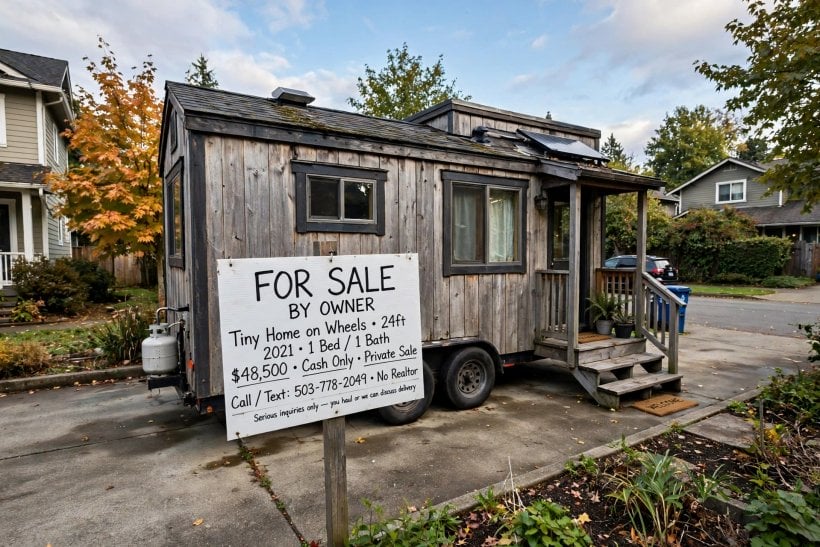
1. What “Cheap” Realistically Means at This End of the Market
At the lowest budgets, you are almost never shopping for a new, finished tiny house from a professional builder: new builds carry the full cost of materials, labor, trailer, and compliance. What a low budget realistically buys falls into a few categories, and knowing them stops you wasting weeks on listings that were never going to fit.
Used homes
A pre-owned tiny house is the most common route to a low price, because the first owner has absorbed the steepest depreciation. Condition varies enormously: some used homes were maintained well, while others hide moisture damage, tired systems, or amateur wiring behind fresh paint. That uneven quality is exactly why the inspection section later matters so much.
Shells and unfinished builds
A shell is a framed, weather-tight structure, sometimes on a trailer, with the interior left to finish. Unfinished projects also appear when a self-builder runs out of money, time, or enthusiasm. They can be priced low for an honest reason, the work still to do, which makes them a real option if you have the skills, tools, time, and a legal place to finish the build. They are a poor option if you would pay tradespeople for every task, because that labor is what the low price was compensating for.
Fixers and older homes
Older tiny houses and homes needing obvious repair also trade at low prices. Some need only cosmetic work; others need structural, roofing, or systems work that costs more than the discount. Section 4 explains how to price that difference before you offer.
Hold one idea firmly: the asking price is only the entry fee. A cheap home needing a new roof, a long tow, and a legal place to sit can cost more in total than a dearer home needing none of those. Our breakdown of how much a tiny house costs maps every cost layer you are about to meet.
2. Where Listings Actually Appear
Cheap tiny houses are scattered across the places people sell everything else locally, plus a few tiny-specific corners. Work all of them, because the right home may appear in only one.
- General online marketplaces: the large buy-and-sell platforms where private sellers list locally, including tiny house and RV categories. Many used homes and shells surface here first.
- Local classifieds and community boards: regional classified sites, neighborhood groups, and noticeboards still carry private sales that never reach the big platforms.
- Tiny-specific listing sites and groups: dedicated tiny house marketplaces and social media groups, where sellers aim at the right audience. Prices can be firmer, but selection is focused.
- RV and park-model channels: dealers, parks, and RV classifieds sometimes list homes a tiny-only search would miss. Our comparison of tiny house versus RV full-time living helps you judge whether an RV-adjacent option suits full-time living.
- Builders and workshops: builders occasionally sell display models, cancelled orders, or trade-ins, and small workshops sell finished shells. A direct call can surface stock listed nowhere.
- Auctions, estates, and repossessions: these sometimes carry small homes, but they are as-is territory with limited inspection access. Treat them as advanced hunting grounds, covered in Section 5.
- Word of mouth: parks, communities, suppliers, and local tiny groups hear about sales before they are listed. Being known as a serious local buyer with funds ready genuinely produces leads.
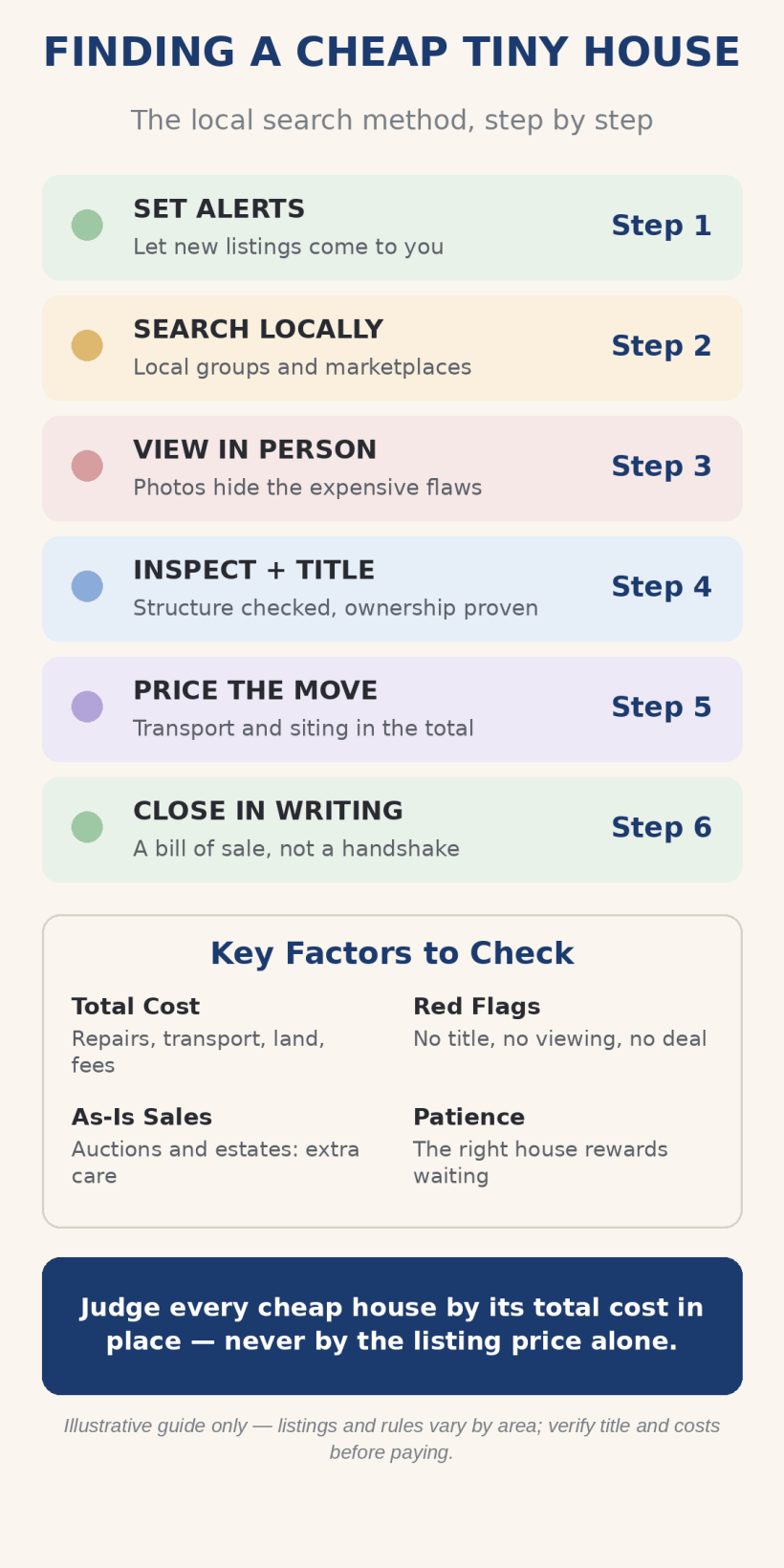
3. How to Search Locally, Step by Step
- Define “near me” as a real radius. Decide how far you can travel to view at short notice and how far you can afford to transport a home. A day’s drive away is not local once towing is priced in.
- Set up saved searches and alerts everywhere. On each platform from Section 2, save your search with your radius and budget, and turn on notifications. The first serious viewer often becomes the buyer.
- Search wider than the obvious words. Sellers describe the same home as a tiny house, tiny home, cabin on wheels, park model, micro home, or a trailer or shed conversion. Misspellings and vague titles hide listings from everyone who only searches the perfect phrase.
- Check daily, briefly. Ten focused minutes a day beats a monthly binge. Regular checking also teaches you local asking prices, which is how you learn to spot a genuine deal.
- Prepare your buying kit in advance. Funds you can actually access, a towing contact, a tape measure, a flashlight, and a short list of questions. Being ready is an advantage you control completely.
- Respond like a good buyer. Reply promptly, say when you can view, ask the essential questions once, and do not haggle hard before seeing the home. Sellers choose the buyer who seems most certain to complete.
- Keep a simple log. Note each serious listing, its asking price, condition, and outcome. The log stops you re-chasing homes you already ruled out.

4. The True Total Cost Behind a Low Asking Price
Before you judge any listing, build its total cost on paper. The items below most often separate a real deal from an expensive mistake, and they are why our comparison of the true cost of tiny houses, prefab versus DIY, is useful background reading.
- Repairs and completion: price the work the home actually needs, not the work the seller mentions. Roofing, moisture damage, flooring, plumbing, electrical fixes, and heating belong in the estimate, with a contingency on top.
- Transport: moving a tiny house on wheels means a suitable tow vehicle or a professional hauler, permits where your route requires them, and planning around height, width, and weight. Get a real quote before you offer.
- Siting and setup: leveling, blocking or foundation work, and utility connections at the destination.
- Land or lot costs: the home needs somewhere legal to be. Lot or land costs, deposits, and connection charges start immediately and continue monthly.
- Insurance and registration: how the home is titled and insured affects cost and whether you can site it at all. Our tiny house insurance guide for wheels versus foundation explains the difference.
- Financing costs, if any: many purchases here are cash or small personal borrowing, and interest, fees, and short repayment terms can quietly erase a bargain. Our guide to financing a tiny house covers the realistic options.
Now compare honestly: the cheap home’s total cost, finished and legally sited, against the next-best option you have actually found. If the gap has closed to nothing, the cheap home was not cheap. Walk away without regret.
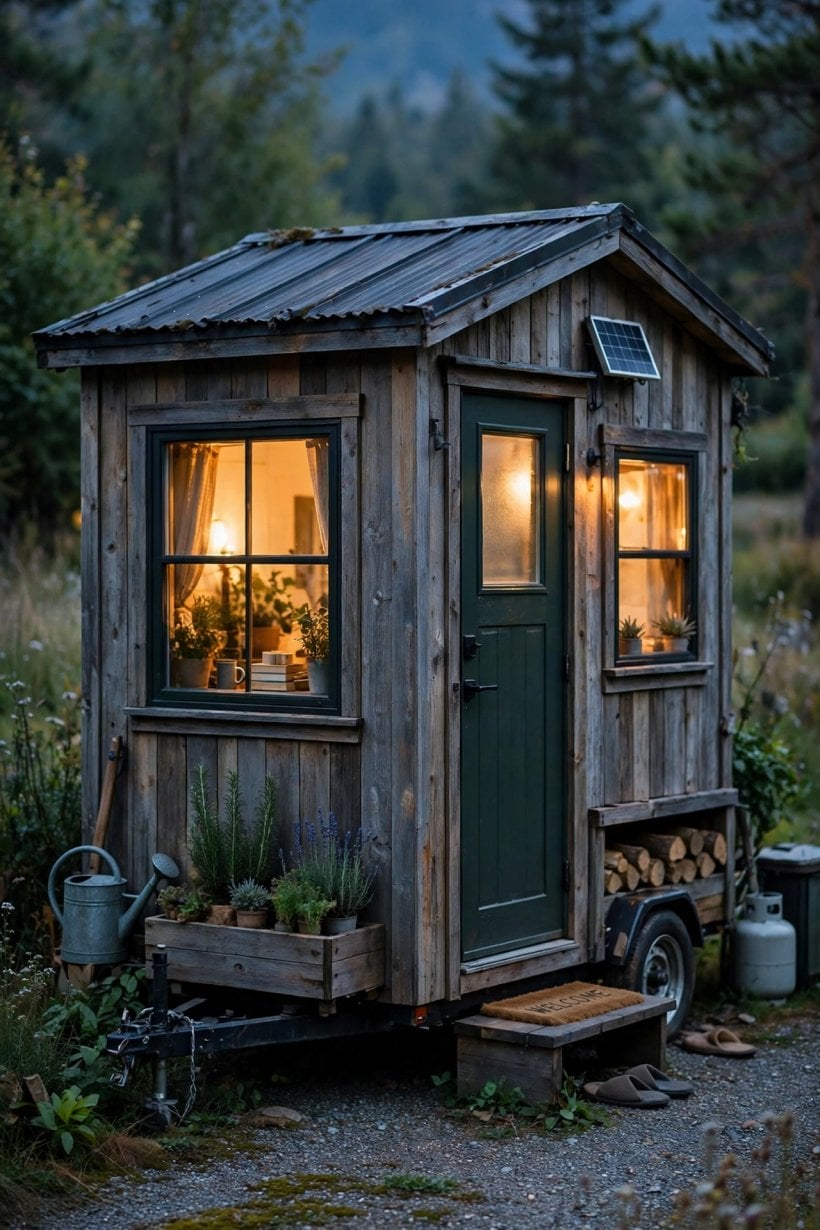
5. Red Flags and Scam Checks
Low prices attract two kinds of trouble: honest homes in poor condition, and dishonest listings for homes that do not exist. The same discipline protects you from both.
Listing red flags
- A price far below everything similar in your log, with pressure to commit unseen.
- Photos that appear in other listings or towns, or that the seller cannot supplement with fresh pictures or a video walk-through.
- A seller who will not meet in person, will not give the home’s location, or keeps changing the story about ownership.
- Requests to wire money or pay a holding deposit to a stranger. Never send unrecoverable money for a home you have not stood inside.
- Vague answers about title or why the home is being sold.
Condition red flags
- Musty smells, soft floors, stained ceilings, or suspiciously fresh paint, all pointing to water damage.
- Sagging, cracking, or a repeatedly patched roof.
- DIY electrical or gas work that looks improvised.
- A trailer with rust damage, tired tires, or a bent frame: the trailer is the foundation everything stands on.
Auctions, estates, and repossessions can be legitimate sources, but sale terms typically limit inspection and make the sale final. Only bid what the home is worth in its worst plausible condition, and never let auction momentum do your thinking.
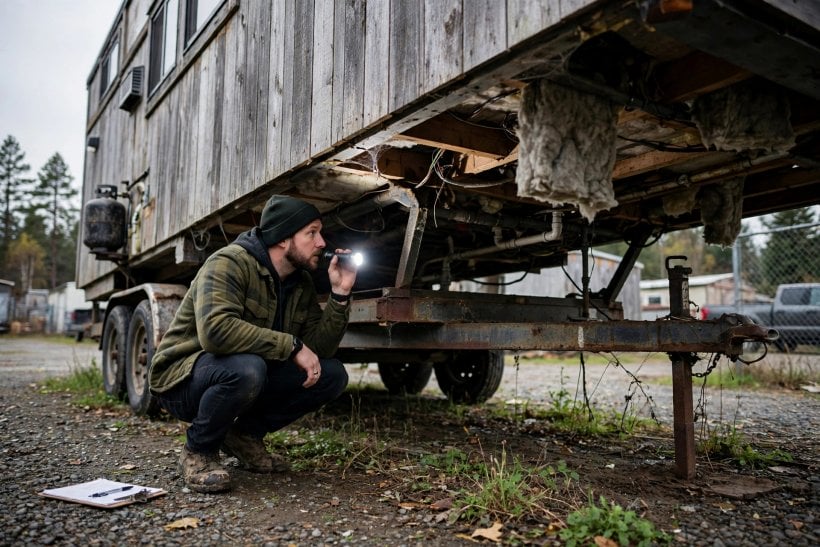
6. Inspection Checks Before You Pay
View every serious candidate in person, in daylight. If it passes your inspection and the price justifies it, pay for a professional inspection too: compared with hidden rot, it is the cheapest money in the purchase.
Structure and moisture
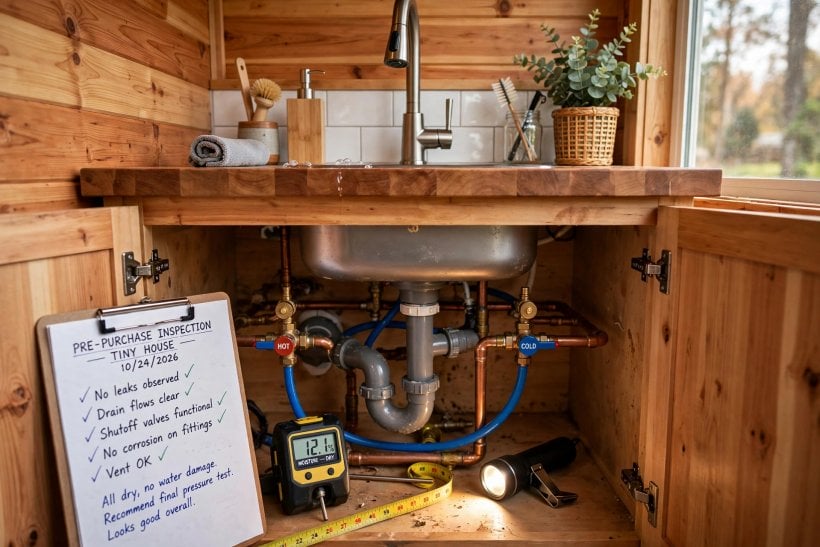
Work from the roof down: damaged or patched roofing, failed seals around vents and windows, any sign water has entered. Inside, press floors near doors, showers, and sinks for softness, check walls and ceilings for staining, open cupboards, and trust your nose. Then examine the trailer: frame, rust, axles, tires, lights and brakes where fitted, and whether the home sits level.
Systems
Ask to see everything running: water in and out, heating, appliances, and electrics under load, not just a light switch. Ask what powers the home and what its water and waste arrangements are, and whether they suit your site. A hookup home and an off-grid home are different purchases, and converting costs money.
Paperwork
Confirm what proves ownership: title where the home is titled, identification numbers that match the paperwork, and a written bill of sale at minimum. Check that the seller is entitled to sell and that no lien travels with the home. If paperwork cannot be produced or does not match, stop, however good the price looks.
7. Transport, Siting, and Permission Checks
A cheap home is only a deal if it can legally and physically get to where you will live in it. Settle these questions before you buy.
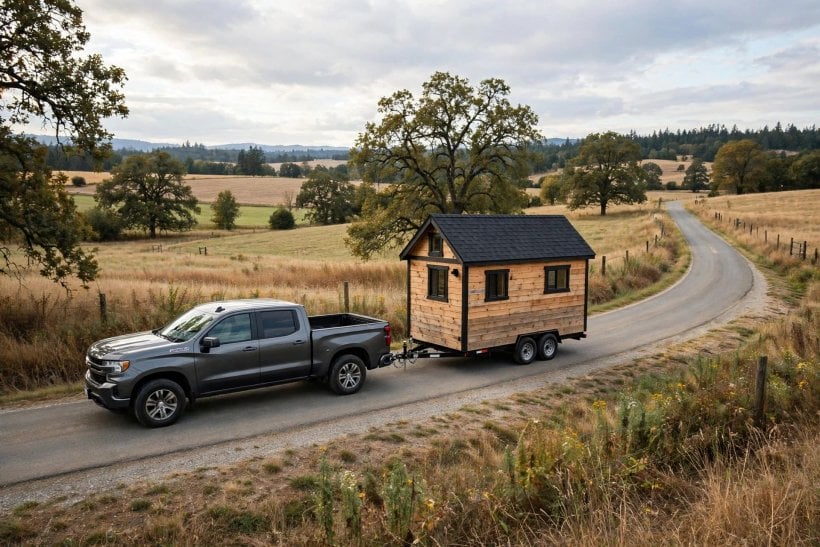
Transport reality. Confirm the home’s dimensions, weight, and trailer condition, and whether it can travel at all. Long-parked homes may need tires, bearings, or lights before a hauler will move them, and some fixers are cheaper to move on a flatbed. Price the whole move, including permits on your route.
A legal place to land. Rules vary widely by place, and a home sited legally where it stands may not be permitted where you plan to take it. Before buying, confirm with the local office that full-time living in that home, on that land, is allowed, and read our overview of tiny house laws by state for the framework. Also confirm delivery access, a suitable base, and water, waste, and power arrangements at the site.
Timing. Secure the site before the home arrives, and arrange the move for a day when both ends are ready, because a tiny house with nowhere to go becomes an expensive problem quickly.
8. Negotiating and Closing Safely
Negotiation here is straightforward: be fair, informed, and ready. Use your log and repair estimates to explain an offer calmly; sellers accept lower offers justified by real costs more readily than bare demands for a discount. Cash and a quick completion are worth money to a motivated seller.
Financing deserves honesty. Small, low-value homes are hard to fund with products designed for conventional houses, and many buyers use savings or small unsecured borrowing. If you borrow, include the full borrowing cost in the Section 4 total. Our financing guide, linked in Section 4, sets out the routes buyers actually use.
At closing, keep everything written: a bill of sale identifying the home, parties, price, and date; payment by a traceable method; ownership documents handed over with the keys; and a receipt. Bring a second person, and do not complete under time pressure.

9. Frequently Asked Questions
Can you really find a tiny house at the lowest budgets?
Sometimes, yes: used homes, shells, and fixers. Do not expect a new, finished, professionally built home at that level. Patience and readiness turn “sometimes” into “found one.”
Where do cheap tiny houses get listed first?
There is no single first place. Sellers start on the marketplaces and groups they already use, which is why Section 3 has you watching all of them with alerts on.
Is a shell or a used home the better buy?
Your skills decide. If you can finish a shell yourself, in a legal place, it can be good value. If you would pay for the finishing labor, a complete used home is usually safer.
What is the biggest risk with a cheap tiny house?
Hidden water damage and bad paperwork. Moisture can quietly destroy structure, and missing or mismatched title can leave you unable to prove ownership or legally site the home. Inspect for the first, verify the second, every time.
Should I buy a tiny house that needs work?
Only with an honest repair estimate, a contingency on top, and somewhere legal to do the work. Structural, roofing, trailer, or systems work should be priced by someone qualified before you commit.

10. A Simple Weekly Routine That Finds Deals
Method beats luck, and a small routine keeps it running. Daily, clear your alerts and scan new listings, saving anything plausible to your log. Twice a week, re-run your varied search terms and check channels that do not offer alerts. Weekly, review your log, follow up quiet seller conversations, and check that funds and transport contacts are still ready. Monthly, reassess: is your radius too tight, or your must-have list excluding every realistic home? Adjust the search, not your standards.

Final Considerations
Cheap tiny houses near you are found by people who treat “near me” as a system: alerts on every channel, search terms broad enough to catch badly titled listings, funds and transport ready before the right home appears, and the discipline to price the whole purchase, repairs, move, siting, insurance, and land, before judging the asking price. Protect it with its non-negotiables: view in person, inspect for water and trailer condition, verify title and seller, confirm a legal place to site the home, and never wire money for a home you have not stood inside. A low price is an invitation to check more carefully, not less. Wait for the listing where the total cost, not just the headline price, is genuinely low. That is a real deal.



0 Comments