

Every winter, tiny house owners fight the same invisible enemy: water. An unvented propane heater warms the room and wets it at the same time, while a vented diesel heater promises dry heat at a price that ranges from gamble-cheap to premium. This guide explains the moisture maths, the three hardware tiers and the altitude trap — then hands you the calculator that settles it.
1. Diesel Heat at a Glance
Two questions decide winter in a tiny house. First, what does your heater do to your air? An unvented propane unit adds water to the room with every hour it runs; a vented diesel parking heater keeps its combustion sealed and pushes its moisture outside. Second, what does the hardware really cost once the headaches are counted? The calculator below was built to settle the “Propane vs. Diesel” debate: it visualizes the moisture unvented propane dumps into your home against diesel dry heat, and prices the famous gamble between the $150 generic heaters and the $1,500 premium names. Pair it with the insulation strategy analyzer when you plan the whole envelope — heat you keep is heat you never buy.
| The debate | Unvented propane vs a vented diesel parking heater |
| The moisture rate | 1.6 lbs of water for every 1 lb of propane burned |
| The propane examples | Unvented units of the Mr. Buddy / Camco type |
| The budget tier | Generic “Chinese” diesel heater (CDH) — $150 |
| The mid tier | Planar / Autoterm — $800 |
| The premium tier | Webasto / Espar — $1,500 |
| The budget card | $120 – $180, and DIY-heavy from day one |
| The premium card | $1,200+, plug & play out of the box |
| The altitude line | Manual tuning above 5,000 ft; automatic adjustment up to 10,000 ft |
| The key input | Hours run per day — the calculator’s own example is 12 |
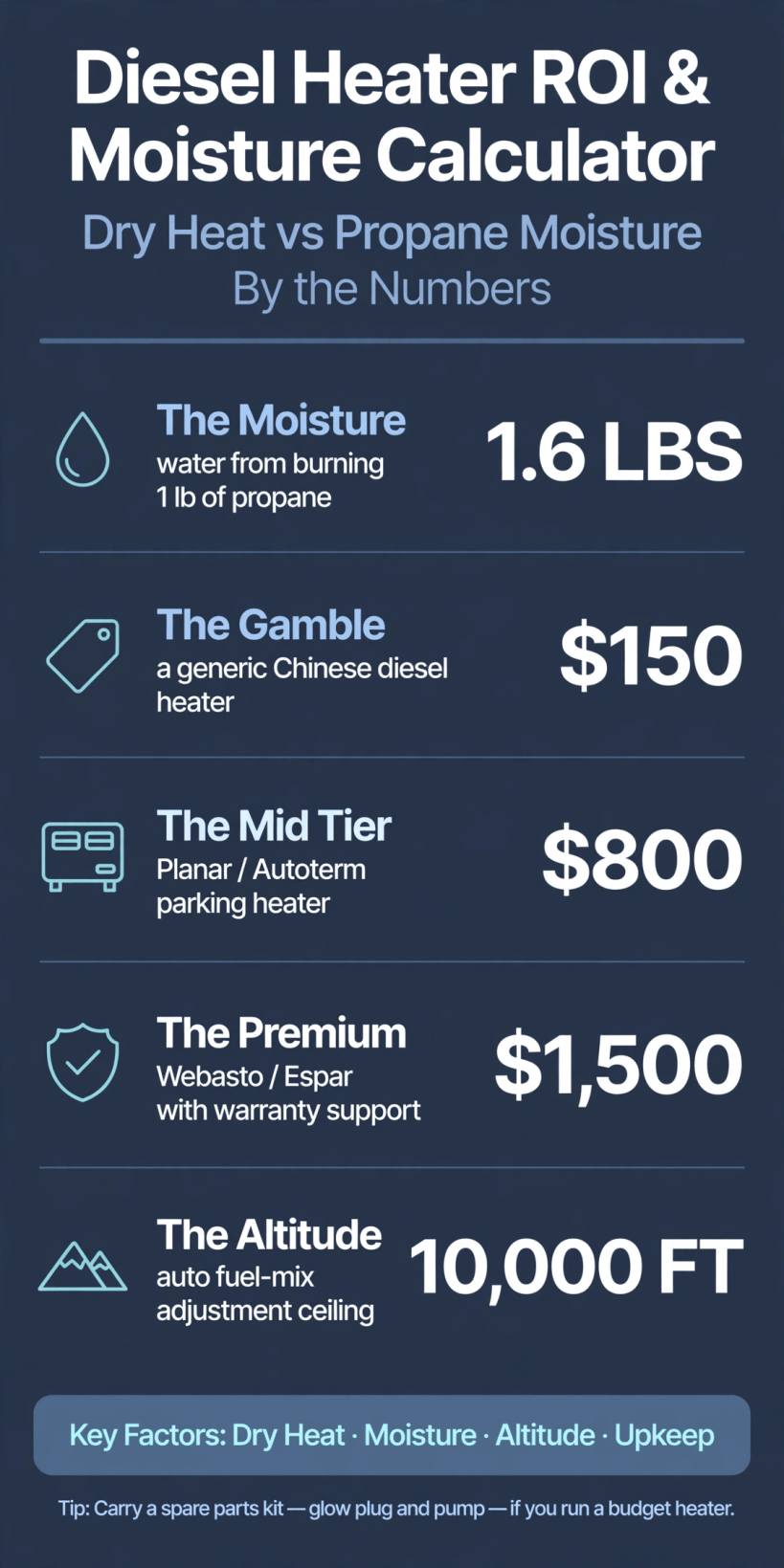
The whole argument on one card: what propane does to your air, what each tier of diesel hardware costs, and the altitude ceiling where the premium units adjust themselves.
2. The Propane Problem: Moisture by the Pound
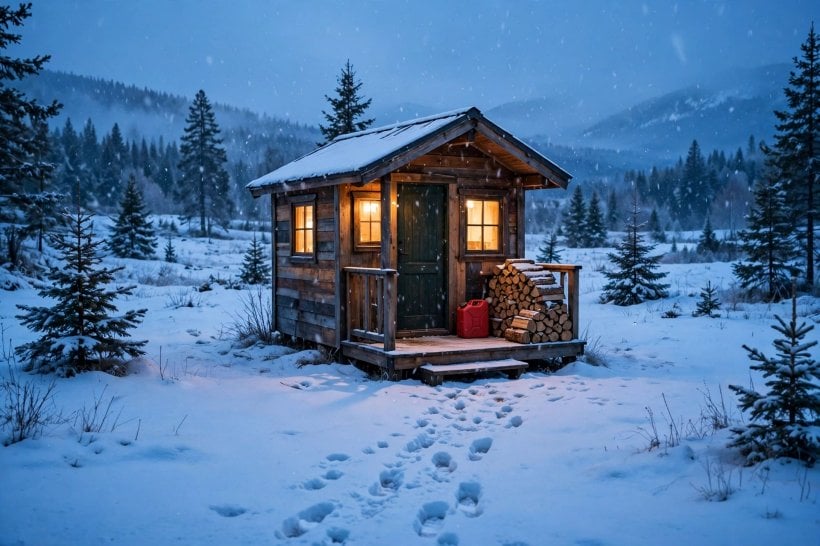
Propane heat feels instant and friendly, which is exactly why the moisture catches people out. The chemistry is unforgiving: burning propane produces two things, heat and water vapor — C3H8 + 5O2 → 3CO2 + 4H2O. For every 1 lb of propane you burn in an unvented heater, you dump 1.6 lbs of water into your tiny house. In a big house that water spreads out. In a tiny house the air volume is small, so the same water saturates it quickly: relative humidity climbs, windows stream, walls sweat, and the calculator calls the result “Rainforest Syndrome” — damp bedding, musty corners and, left alone, mold.
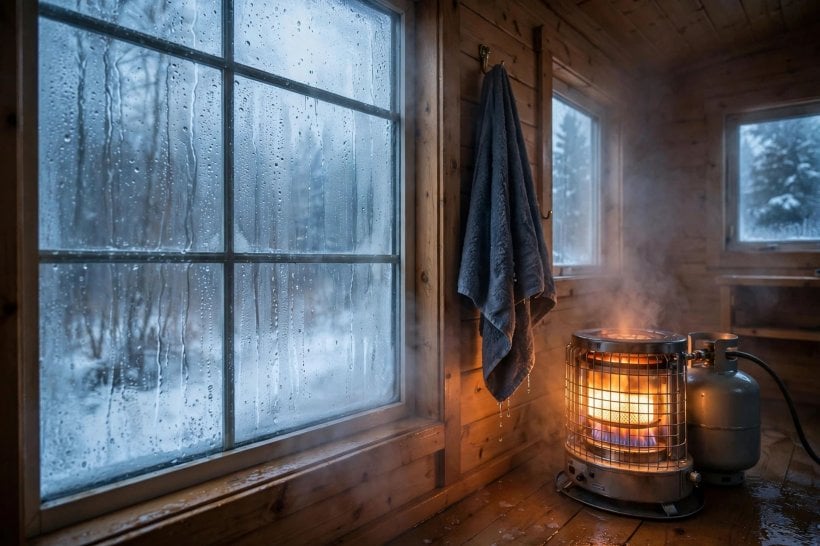
The dose makes the poison. Moisture arrives in proportion to burn time, which is why the calculator’s first question is how many hours a day the heater runs. A short blast adds a little water; the all-day burn of a cold snap adds it by the bucket. Unvented units of the Mr. Buddy / Camco type are the comparison mode the tool starts from, and their weakness is not heat — it is the water that rides along, hour after hour, into the smallest air volume you own.
3. Dry Heat: How a Vented Diesel Heater Works
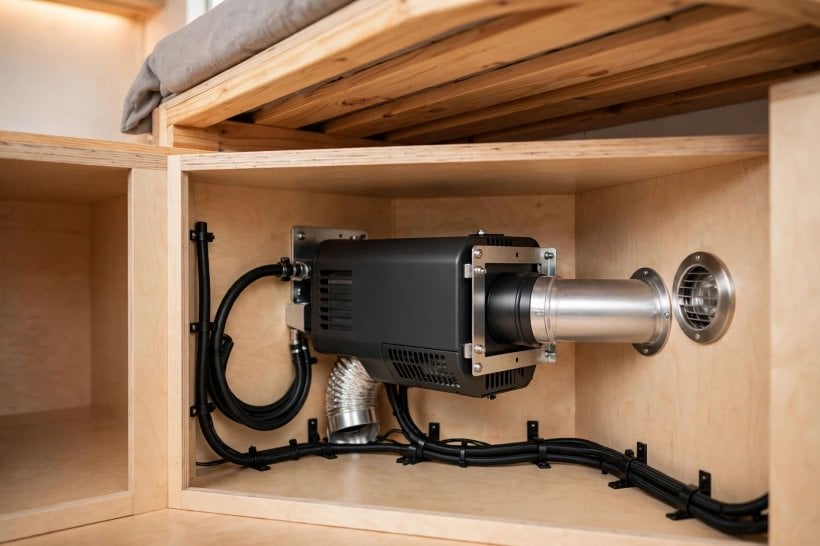
A diesel parking heater answers the moisture problem by refusing to share its air with you. The combustion chamber is sealed from the room. The unit sucks air in from outside, burns its fuel in that sealed chamber, and pushes the exhaust — and the moisture — out through a pipe under the floor. Nothing that burned ever enters your living space. A heat exchanger then warms your indoor air as it passes over the hot chamber — the air you breathe gets warmer without getting wetter.
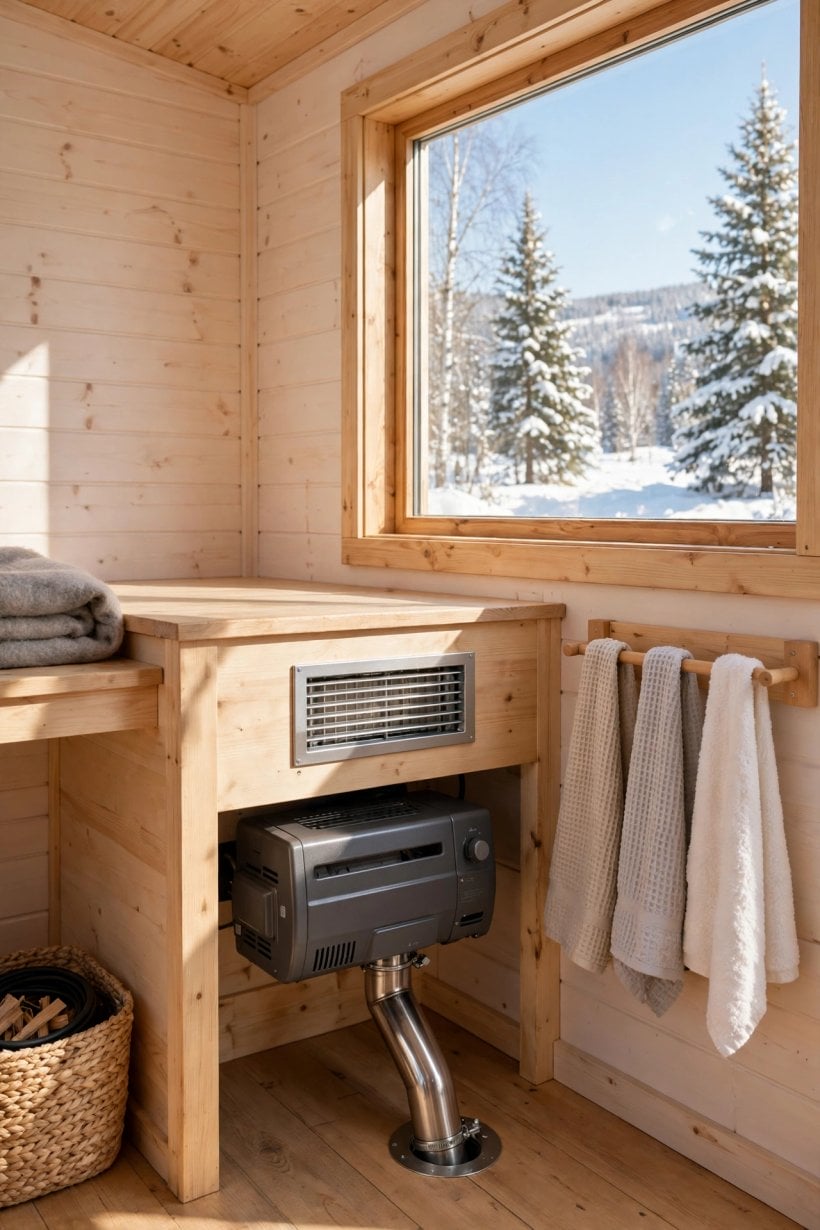
That is why owners call it “dry heat”: warming air lowers its relative humidity, so the room does not just stop gaining water — it starts drying out. Damp towels dry. Window glass clears. The calculator draws the contrast directly, swapping the dripping-window picture for a dry room when you flip the comparison to diesel. It suits self-sufficient setups best — the wider picture is in our guide to living in a tiny house off the grid: when every system lives under one small roof, a heater that manages its own exhaust is one less problem competing for attention.
4. Three Hardware Tiers, One Decision
Choose diesel and the calculator asks its second question: which hardware? Its list holds three tiers. At the bottom sits the generic “Chinese” diesel heater — the CDH — at $150. In the middle, Planar / Autoterm units at $800. At the top, Webasto / Espar (Eberspacher) at $1,500. All three are parking heaters doing the same basic job — sealed combustion, vented exhaust, dry air — so the tenfold price spread is not buying a different kind of heat. It is buying a different ownership experience around that heat.

The calculator stages it as a debate between the two ends of the list, with the mid tier as the priced middle path. What separates the tiers, in the tool’s own comparison, is component quality out of the box, behaviour at altitude, how much of the installation and upkeep lands on you, and whether anyone answers when something goes wrong. The next two sections take the two sides in turn — the gamble first, then the premium case — because the right tier is whichever currency you would rather pay in: money, or time and attention.
5. The Chinese Heater Gamble
The budget card in the calculator prices the generic CDH at $120 – $180 and labels it, without softening, “DIY Heavy.” Expect to replace the fuel lines and clamps immediately — the parts in the box are placeholders, and the real installation budget starts with better ones. Reliability is framed the same way: carry a spare parts kit, specifically a glow plug and a pump, because the support network for a generic unit is the spares shelf you build yourself.
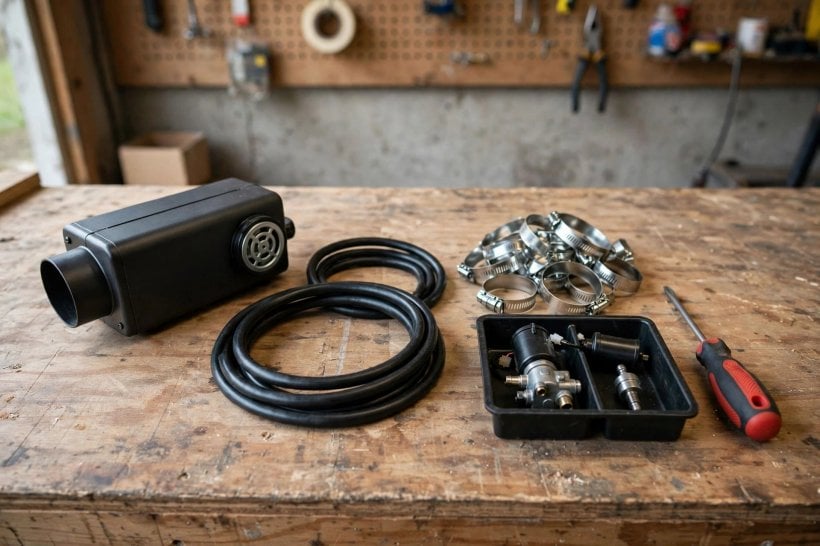
The gamble framing is the original’s own: the trade-off is “Upfront Cost” against “Maintenance Headaches” — error codes, altitude issues and the hands-on tuning the premium brands automate away. None of this makes the CDH a bad buy. It makes it a labour contract: the purchase price is low because a slice of the engineering, quality control and support has been handed to you. Owners who enjoy the DIY side of how to live off grid in a tiny house often take the deal happily. The gamble only turns sour when the buyer expects the $150 box to behave like the $1,500 one — no spares, no tuning, no plan for the first error code on the coldest night of the year.
6. The Premium Case: Webasto and Espar
The premium card prices Webasto / Espar at $1,200+ and leads with the phrase the budget card cannot use: “Plug & Play.” High-quality components come out of the box — fuel lines and clamps you keep rather than replace — and behind the hardware sits the thing the generic market cannot offer: an actual warranty and customer service.
The premium case is therefore not about warmer air. It is about certainty. The sealed combustion, the dry heat and the vented exhaust are the same as any tier’s; what the extra money removes is variance — the dud component, the unsupported failure, the hours of forum archaeology at midnight. Whether that certainty is worth roughly ten times the budget unit’s price is a question about your winter, not your heater: a stationary house with a mild season and a hands-on owner can shrug off a breakdown that would be a genuine emergency for a full-timer parked far from help in deep cold. The calculator cannot make that judgement for you, but by pricing both cards side by side it stops the premium looking like a rip-off and the budget unit looking free.
7. Altitude: Where the Gamble Changes
One attribute quietly rearranges the whole comparison: elevation. Thin air changes how a burner mixes fuel, and the two ends of the market handle it oppositely. The budget card warns that the generic unit needs manual tuning above 5,000 ft, soot being the risk when the mix runs wrong — the owner becomes the altitude sensor. The premium card answers with automation: sensors adjust the fuel mix automatically up to 10,000 ft, and the owner does nothing at all.
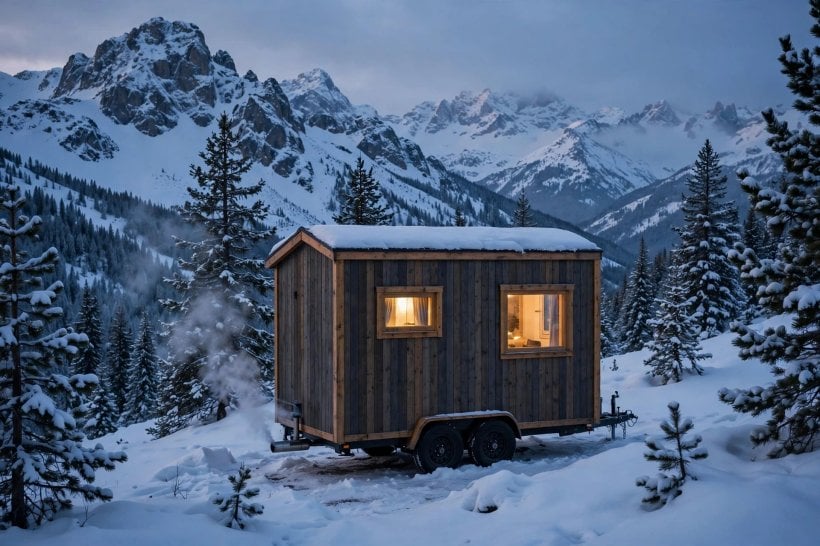
For a tiny house that never leaves the lowlands, this row of the comparison barely matters, and the budget tier keeps its shine. For a house on wheels that follows the seasons into real mountains, it can matter more than price: a heater that soots up at altitude fails exactly where heating becomes safety. This is why the calculator puts altitude inside the hardware debate rather than in a footnote. Read your own map before the price tags: the cheapest heater that mismatches your elevation is the expensive one, and a feature that looks like luxury at sea level can be a plain necessity high in the mountains.
8. Reading the Calculator: Inputs, Outputs and the Room Picture
The tool below asks for three things. First, your heating habits: the hours the heater runs per day, with 12 as its worked example. Be honest rather than hopeful: this number drives the moisture maths, because water and running time scale together. Second, the comparison mode: unvented propane, of the Mr. Buddy / Camco type, or a diesel vented parking heater. Third, if you choose diesel, the hardware choice unlocks — generic CDH at $150, Planar / Autoterm at $800, or Webasto / Espar at $1,500 — and the debate cards apply.

The outputs answer in the same order as the guide. “Moisture Added (Daily)” reports the water your chosen pattern puts into the room, in gallons — the propane figure startles, because it turns the abstract 1.6 lbs per pound of fuel into the bucket-scale reality of a long day’s burn. The “Relative Humidity Impact” readout translates that water into how the room will feel and behave, and the picture makes it visceral: the propane room drips, the diesel room stays dry. Run the tool twice — once with your real hours, once with your hoped-for hours — and the gap between the two results is the truest picture of your winter. It mirrors the summer problem in our tiny home summer prep guide: in July you fight to get moisture out; in January the wrong heater pumps it in.
9. Payback: Upfront Cost against Maintenance Headaches
Return on investment here is not a fuel-price arbitrage — the calculator frames it as a ledger with money on one side and headaches on the other. The budget unit’s true first cost is its $120 – $180 card price plus the fuel lines and clamps you are told to replace immediately, plus the spare glow plug and pump in the parts kit, plus your own hours installing and tuning. The premium unit’s true first cost is $1,200+ — and then, per its card, very little else: components kept, altitude handled, warranty behind it. The gap between the two ledgers is far narrower than the gap between the two stickers.
Then the seasons start paying out or charging interest. Every winter the premium unit’s certainty compounds quietly — no mid-season failures, no tuning sessions in the cold. Every winter the budget unit charges its rent in attention — a bargain if you have attention to spare, and a poor one if a dead heater means a frozen house and an emergency purchase at the worst moment. It is the same shape of decision as the other big off-grid spends — set it beside how much solar panels cost for a tiny house before you commit, because in both cases the cheapest sticker and the cheapest ownership are rarely the same thing. The payback question is really this: how many trouble-free winters must the premium buy before it has earned its price — and how many interrupted winters can the budget unit cause before it has spent its saving?
10. Installation, Sizing and the Mistakes That Cost Money
A parking heater is one of the kinder installations in a tiny house: a compact unit, a sealed combustion chamber, an intake from outside and an exhaust routed out under the floor, with a vent delivering the warmed air to the room. The calculator’s warnings double as the installation checklist. Fuel delivery comes first — on a budget unit, replacing the supplied fuel lines and clamps immediately is not paranoia but the tool’s own advice; a heater is only as reliable as the fuel line feeding it. Spares come second: the glow plug and pump kit lives in the house, not on a wishlist. The electrical side belongs in the same budget conversation — the planning in what size generator do I need is the natural companion read.
Sizing, for this class of heater, shows up in the calculator as a habit rather than a rating: the hours per day you actually run the unit. A house heated around the clock works any unit differently from one warmed morning and evening, so count your real burn pattern before you count tiers. The mistakes that cost money follow from everything above: buying the budget tier and skipping the fuel-line replacement; ignoring altitude until soot and error codes announce it; running unvented propane for long hours without ever counting its water; and choosing hardware before you have counted your hours, your elevation and your appetite for maintenance. Finish the utilities picture with our guide to tiny house utilities — power, water and sewage, and the heating decision sits inside a system instead of standing alone.
The Diesel Heater ROI & Moisture Calculator
Everything above is the argument; the tool below is the verdict with your numbers in it. Enter the hours you honestly heat each day, flip between unvented propane and the diesel parking heater, then walk the hardware from the $150 gamble to the $1,500 premium and watch the two things that matter move: the gallons of water your air would have carried, and the humidity your walls would have worn. When the room in the picture stays dry and the cards match the winter you actually live, you have found your heater.
This tool is designed to settle the “Propane vs. Diesel” debate for tiny house dwellers. It visualizes the massive amount of moisture unvented propane heaters dump into your home versus the “Dry Heat” of a diesel parking heater.
It also includes a “The Chinese Heater Gamble” section, comparing the $150 generic units (CDH) against the $1,500 Webasto/Eberspacher units, visualizing the trade-off between “Upfront Cost” and “Maintenance Headaches” (Error codes, altitude issues).
Diesel Heater Analyzer
Dry Heat vs. Propane Moisture & The “Chinese Heater” Gamble.
1. Heating Habits
2. Hardware Choice (If Diesel)
The “Chinese” (CDH) vs. Webasto Debate
Generic CDH
$120 – $180- DIY Heavy: Expect to replace fuel lines and clamps immediately.
- Altitude: Manual tuning required above 5,000ft (soot risk).
- Reliability: Carry a spare parts kit (glow plug, pump).
Webasto / Espar
$1,200+- Plug & Play: High quality components out of the box.
- Auto-Altitude: Sensors adjust fuel mix automatically up to 10,000ft.
- Support: Actual warranty and customer service.
The Science of “Dry Heat”
Burning propane produces two things: Heat and Water Vapor ($C_3H_8 + 5O_2 \rightarrow 3CO_2 + 4H_2O$). For every 1 lb of propane you burn in an unvented heater, you dump 1.6 lbs of water into your tiny house. This creates “Rainforest Syndrome” and mold.
Diesel heaters are “externally vented.” The combustion chamber is sealed from the room. It sucks air from outside, burns it, and pushes the exhaust (and moisture) out a pipe under the floor. The heat exchanger warms your indoor air, lowering Relative Humidity and drying out damp towels.


1 Comment