

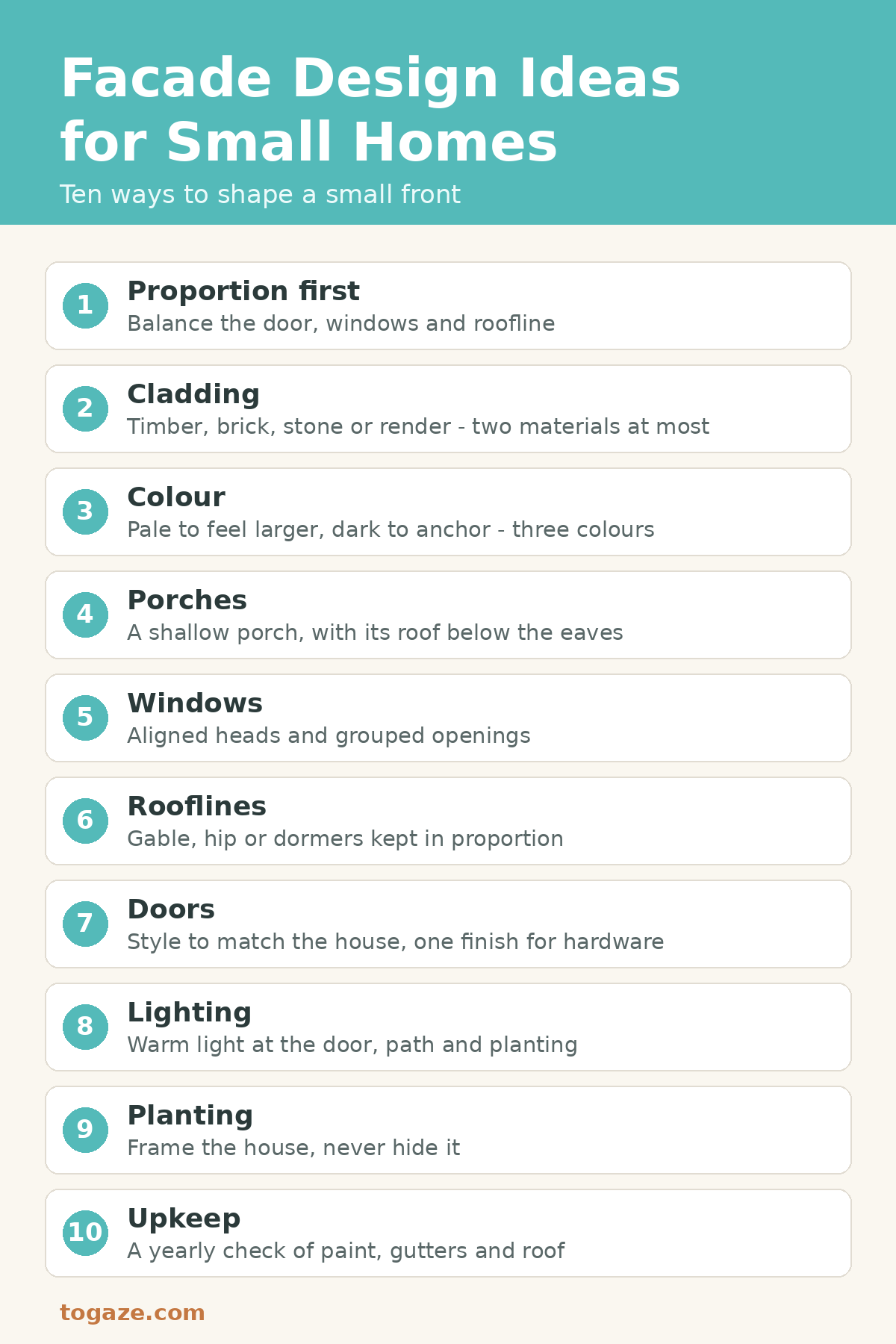
A small home has a small front to work with, and that is an advantage rather than a limitation. A compact facade can be read in a single glance, so every choice on it carries weight: the cladding, the colour, the shape of the roof, the size of the windows and the way the front door sits within the whole. Good facade design ideas start from that simple truth. When each element is chosen to support the others, even a modest frontage can look considered, welcoming and full of character.
Start With Proportion, Not Decoration
Before any material or colour is chosen, the proportions of the front deserve attention. A small home reads best when the entrance, the windows and the roofline sit in a comfortable relationship with one another. A front door that is too tall for the wall around it can make the whole house feel pinched, while windows that are too small for the wall can leave the facade looking blank. Standing across the street and looking at the front as a single composition is the quickest way to spot where the balance is off.
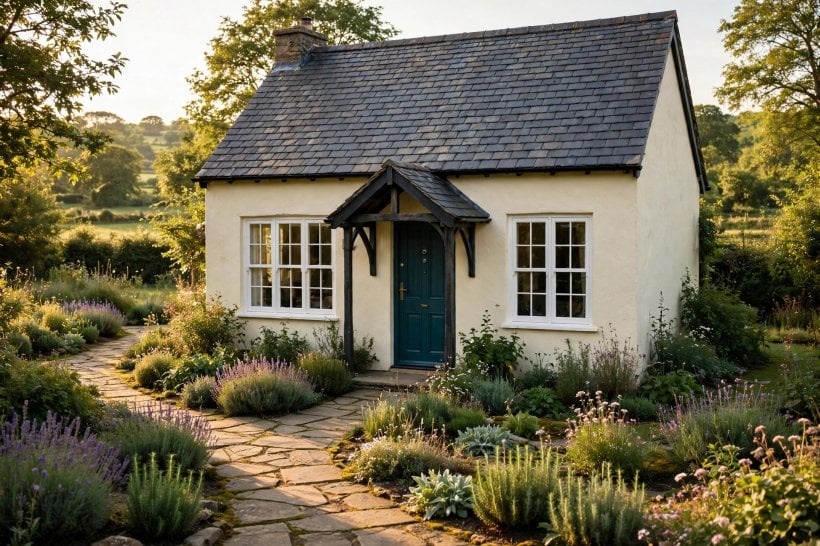
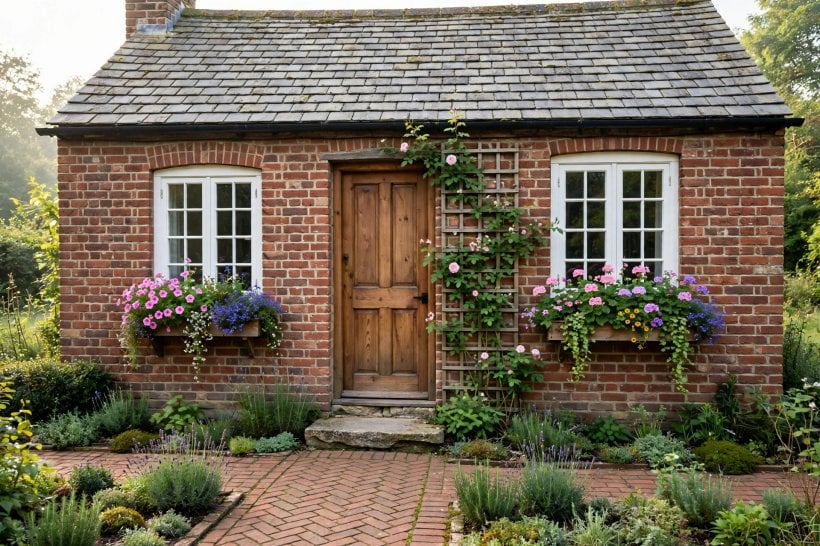
Symmetry is one route to balance, and it suits many small homes, especially cottages and simple gabled forms. A centred door with a window on either side gives the eye a clear anchor and makes a narrow front feel orderly. Asymmetry can work just as well, provided there is a clear focal point. An off-centre door, for instance, can be balanced by a larger window on the opposite side, or by a porch that extends the visual weight in one direction. The aim in either case is a front that feels settled rather than lopsided.
Cladding Materials That Suit a Small Front
The cladding sets the texture and the tone of the entire facade, and on a small home the choice is especially visible because there is less wall to dilute it. Timber boards bring warmth and a handcrafted feel, and vertical boards can add a sense of height to a low front. Horizontal boards have the opposite effect, lending a calm, grounded look that suits wide, low homes. Timber weathers over time, and the way it ages — silvering in sun and rain — can become part of the character of the house, though it does ask for regular care to keep it looking its best.
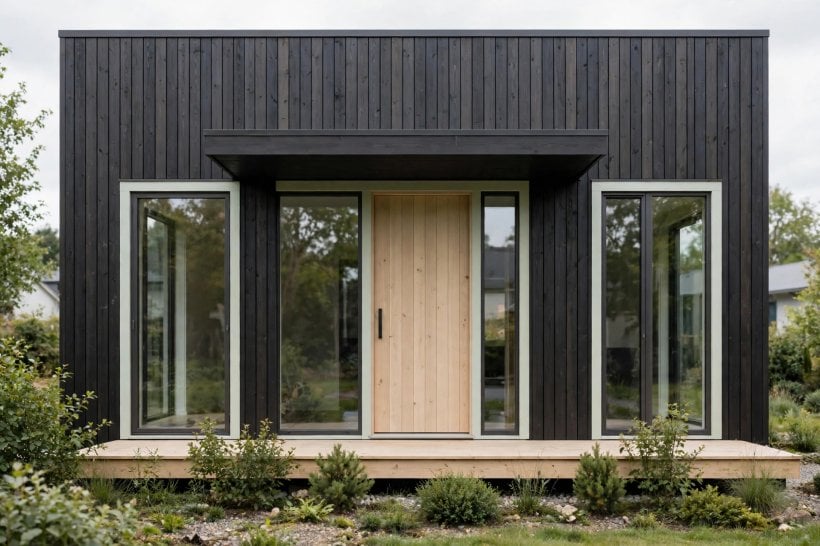
Mixing two materials is often more successful than using three or four. A timber upper storey over a brick base, or a rendered front with a stone plinth, gives the facade a clear structure: a base, a middle and a top. The change of material can mark the line between the ground floor and the upper floor, or it can frame the entrance. Timber cladding, as seen on modern log cabin designs, shows how a single natural material can carry a whole facade when it is used with restraint. Whatever the combination, the join between materials should fall on a natural line — a floor level, a window head, or the edge of the porch — so the change looks deliberate rather than accidental.
Colour Palettes That Make a Small Home Feel Larger
Colour is the fastest and least expensive way to change how a facade reads, and on a small home its effect is magnified. Pale colours reflect light and make a front feel open and airy, which is why white, soft cream and pale grey remain popular for small houses. A pale facade also shows the shadows cast by the roof, the porch and the window frames, and those shadows give the front a sense of depth that a flat, dark surface can lack.
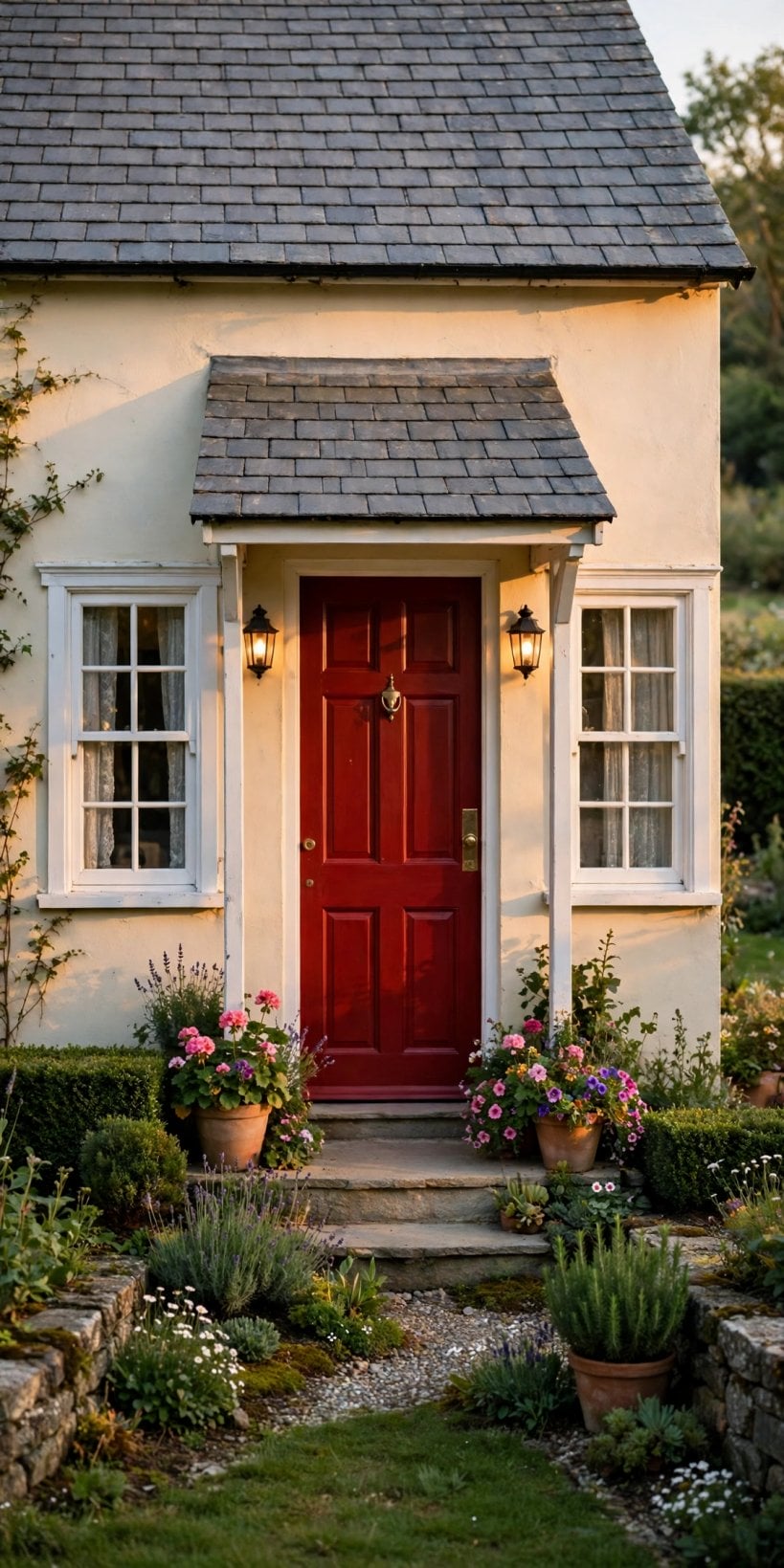
A three-colour approach keeps the palette disciplined: one main colour for the walls, one for the trim and window frames, and one accent for the door. The trim colour is often a shade lighter or darker than the wall colour, which gives the windows definition without shouting. The door is the natural place for a bolder choice — a deep red, a warm ochre, a teal or a navy — because it is a small area, and a strong colour there draws the eye to the entrance, which is exactly where it should go.
Colour should also be judged in the light the house actually receives. A north-facing front gets cooler, softer light, so warm whites and gentle creams keep it from looking cold, while a sun-facing front can take cooler greys and blues without losing warmth. Colourful house exteriors offer plenty of examples of how bold and gentle palettes alike can work when the colours are chosen for the light and the setting rather than in isolation. Testing a colour on a large board held against the wall, and looking at it in morning and evening light, is a far better guide than a small swatch viewed indoors.
Porches and Entryways That Welcome Without Crowding
A porch is the most social part of a facade. It marks the threshold between the street and the home, gives shelter from rain while keys are found, and provides a place to sit on a mild evening. On a small home, a porch must earn its footprint: a shallow porch with a simple roof and two posts can transform the entrance without stealing space from the garden or blocking light from the front windows.
Porch posts and rails deserve the same care as the rest of the facade. Slim, square posts suit a modern front; turned or tapered posts suit a traditional one. A low rail or a pair of planter boxes can define the edge of the porch without closing it in, and a simple bench or a pair of chairs turns the porch into a usable outdoor room. Ideas for decks and outdoor rooms show how even a small raised platform can be arranged as a comfortable sitting area with a clear sense of place.
Windows: Size, Placement and Rhythm
Windows are the eyes of a facade, and their size and placement decide how open or closed a small home feels from the street. Larger windows bring more light into the rooms behind them and make the front look generous, but they also need careful placement: a very large window beside a very small one can look accidental. Keeping windows on the same floor at a similar height, with their heads aligned, gives the facade a calm rhythm that the eye reads easily.
Grouping windows is often better than scattering them. A pair of tall, narrow windows flanking the door creates a symmetrical front, while a wide picture window beside a smaller opening can anchor an asymmetrical design. On the upper floor, windows that sit directly above the ones below reinforce the structure of the house and make the facade feel solid. When the upper windows are offset from the lower ones, the front can feel playful, but the offset should look intentional rather than the result of the rooms inside dictating the outside.
Window frames and trim carry a surprising amount of the facade’s character. Chunky, pale frames make windows stand out against dark cladding, while slim, dark frames recede into the wall and let the glass do the talking. Shutters, where they suit the style of the house, add a layer of texture and a hint of tradition; they should be sized to cover the window they flank, or they look like decoration pasted on the wall. A window box with planting softens the line of the sill and brings a touch of green to the facade itself.
Rooflines That Add Character
The roof is the largest single element of most small homes, and its shape defines the silhouette of the house from the street. A steep gable gives a cottage a storybook quality and sheds rain well, while a low-pitched roof gives a modern home a calm, horizontal line. A hipped roof, sloping on all four sides, can make a small house look neat and complete, and a gambrel or mansard roof adds usable space upstairs while giving the facade a distinctive profile.
Dormers are a classic way to bring light and headroom into the upper floor, and they add rhythm to a roof that might otherwise look plain. A pair of gabled dormers can echo the main gable and give the facade a pleasing symmetry, while a single wide shed dormer suits a modern front. The size of a dormer matters: a dormer that is too large for the roof can dominate the facade, while one that is too small can look like an afterthought. Keeping dormers in proportion with the windows below them ties the roof and the walls together.
The roof covering itself is part of the facade’s colour palette. Slate and dark shingles give a quiet, recessive roof that lets the walls take the lead, while clay tiles in warm tones make the roof a feature in its own right. A roof that contrasts gently with the walls — a mid-grey roof over pale walls, for example — gives the house a clear top and bottom. Rooms with sloped ceilings show how the shape of the roof also shapes the rooms inside, so the roofline is worth choosing for the interior as well as the view from the street.
Doors, Hardware and the Front Entry
The front door is the focal point of almost every small facade, and it repays attention. A solid timber door with panels suits a traditional home, a glazed door brings light into the hallway and suits a modern one, and a stable door or a door with a small window can suit a cottage. The style of the door should match the architecture of the house: a sleek, flush door looks out of place on a period cottage, just as an ornate panelled door looks wrong on a minimalist front.
Hardware is the jewellery of the door. A well-chosen handle, knocker, letterbox and house number, all in the same finish, give the entrance a finished feel. Brushed brass and matte black are both popular, and each suits a different palette — brass warms a dark door, black sharpens a pale one. The house number deserves particular care: it should be legible from the street, sized in proportion to the door, and placed where visitors naturally look, usually at eye level beside the door or on the door itself.
Lighting That Flatters the Facade After Dark
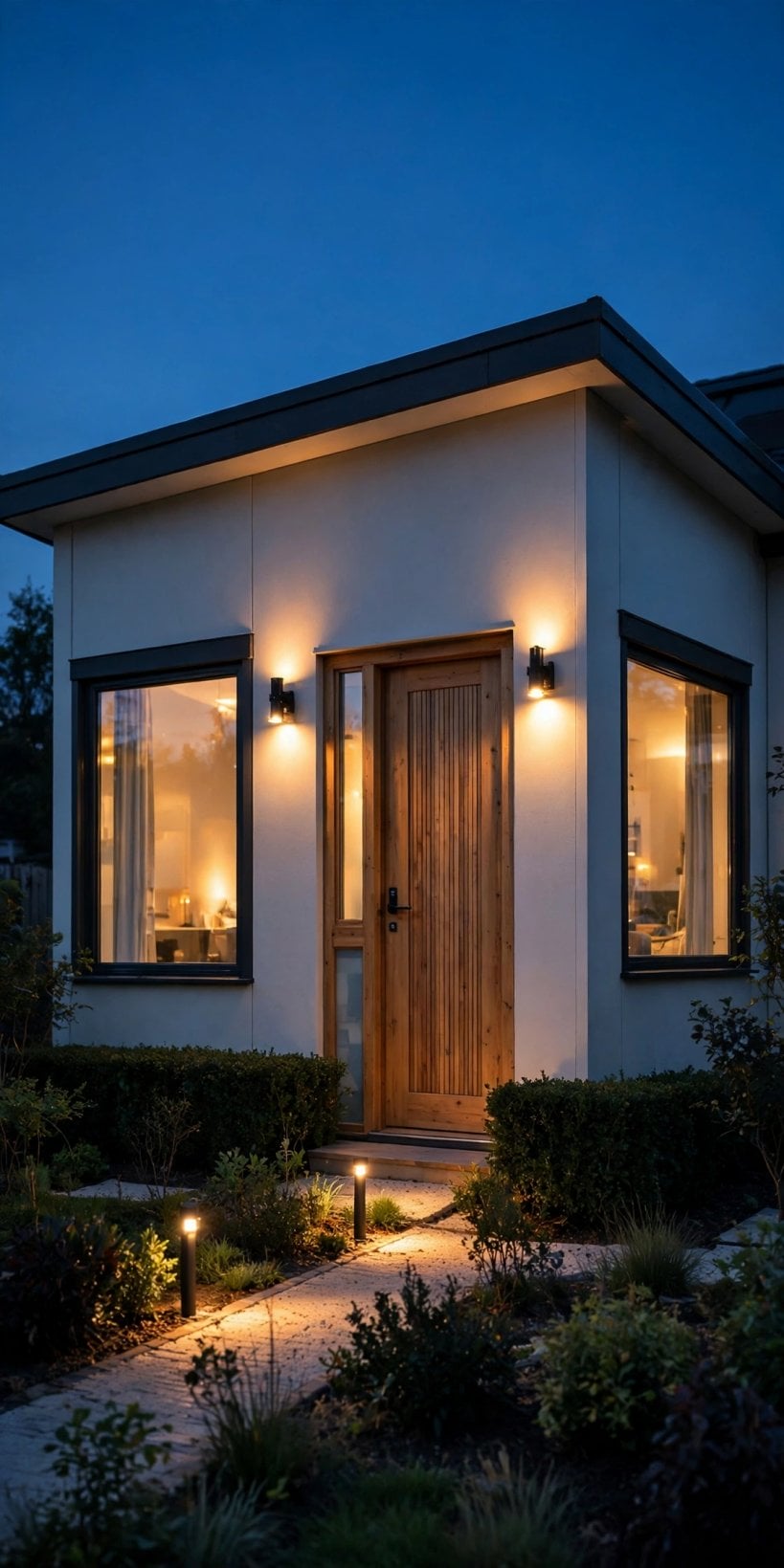
A facade that looks good in daylight can disappear after dark, and a few well-placed lights can give a small home a second life in the evening. The aim is gentle illumination that reveals the texture of the cladding, the shape of the porch and the path to the door, without flooding the front garden or dazzling passers-by. Warm-toned light suits most facades, because it flatters timber, brick and stone alike and feels welcoming rather than clinical.
Wall lights on either side of the front door are the starting point. They mark the entrance, light the step, and cast a soft glow across the wall around the door. A single lantern above the door can do the same job on a narrow front. The fixtures should suit the style of the house — a simple lantern for a cottage, a slim cylinder for a modern front — and they should be sized in proportion to the door, as with every other detail on a small facade.
Uplights at the base of the wall can pick out the texture of stone or brick and give the facade depth after dark, while a light aimed at a tree or a shrub in the front garden creates a soft backdrop behind the house. Path lights, set low and spaced along the walkway, guide visitors safely to the door and add a rhythm of small points of light to the front garden. Outdoor fireplace ideas show how a warm glow in the garden can extend the living space outdoors, and the same principle applies to a small front garden: a little light makes the whole plot feel larger and more inviting.
Planting and Hard Landscaping Around the Front
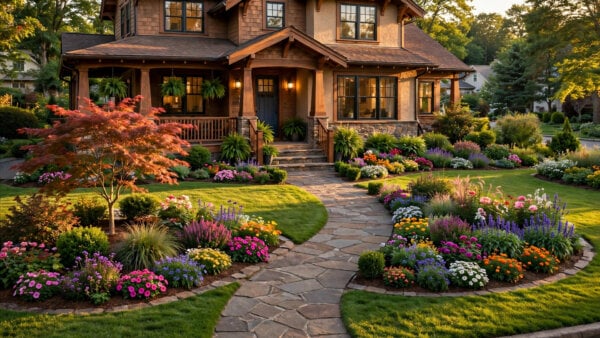
Planting softens the hard lines of a facade and connects the house to its plot. On a small front, the planting should frame the house rather than hide it. A pair of shrubs or small trees flanking the entrance gives the facade a natural frame, while a low hedge along the boundary marks the edge of the plot without building a wall between the house and the street. Climbing plants on a trellis beside the door can cover a plain wall with green and flowers, and they suit a cottage front especially well.
Hard landscaping — the path, the step, the edging and any low walls — should be chosen in sympathy with the cladding of the house. Stone steps suit a stone or brick front, timber edging suits a timber-clad home, and pale pavers suit a pale rendered facade. Retaining wall landscaping ideas show how low walls and terraces can organise a sloping front garden into level, usable spaces, and the same thinking applies on flat ground: a low wall or a raised bed gives the front garden structure and keeps soil and planting where they belong.
A front garden that is easy to maintain will look better for longer than an ambitious one that is left to grow wild. Choosing plants that suit the conditions, mulching beds to keep weeds down, and keeping the path clear and the edges trimmed are small habits that keep the facade framed rather than overgrown. Garden path ideas offer a range of ways to link the gate to the door through planting, so the walk to the entrance becomes part of the design rather than an afterthought.
Keeping the Facade Looking Fresh Over Time
A facade is exposed to sun, rain, wind and frost, and even the best design will fade if it is not looked after. A simple annual routine keeps a small front looking fresh: washing down the cladding, checking the paint on the trim and the door, clearing the gutters, and looking at the roof from the ground for slipped tiles or damaged flashing. Catching small problems early keeps them small, and a front that is checked once a year rarely needs a major overhaul.
Windows and doors also need occasional attention. Cleaning the glass, oiling the hinges, and checking the seals around the frames keep them working smoothly and looking sharp. A window that sticks or a door that drags is a small annoyance that shows in the way the front is used, and fixing it promptly keeps the entrance feeling cared for. Gutters and downpipes, though rarely noticed when they work, show up quickly when they fail: a stained wall below a leaking gutter is one of the most common blemishes on a small facade.
Bringing the Whole Front Together
A successful facade is not a collection of clever features but a single composition in which proportion, materials, colour, windows, roofline and planting all support one another. The strongest small fronts share a discipline: two materials rather than four, three colours rather than six, one clear focal point at the door, and details kept in scale with the house. Within that discipline there is room for real personality — a bold door, a climbing rose, a pair of lanterns, a porch built for sitting — and those personal touches are what stop a well-designed facade from feeling generic.


0 Comments