

The lake house is the home with one job: to be beside the water, beautifully. Everything about it — the deck facing the evening sun, the dock reaching into the shallows, the window wall that turns the lake into the largest picture in the house — serves the shore it stands on.
These 75 lake house ideas gather the best of the breed, from boathouses and beamed hearths to the plain practical wisdom of keeping a house that lives with water, weather and swimmers all year round.
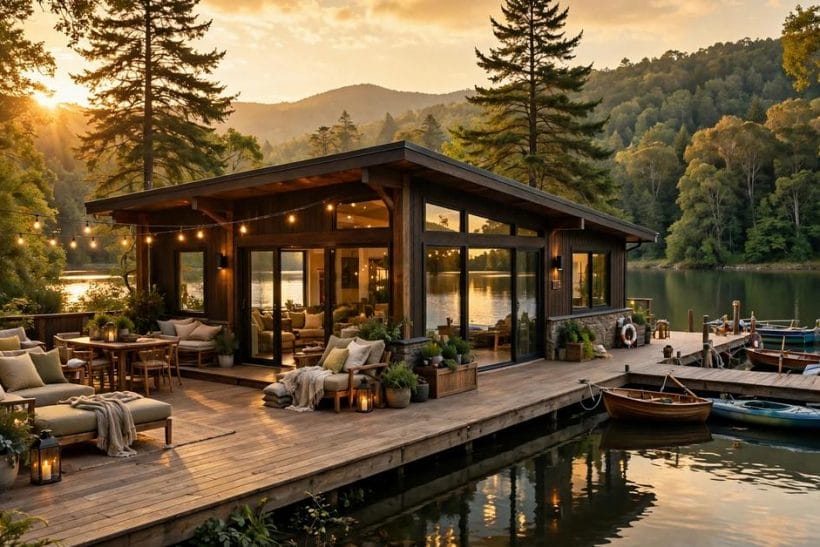
1. Lake House Ideas at a Glance
Scope first. This collection owns the lake house whole — architecture, interiors and shore together. Its neighbours keep their own ground: the decorative layer alone is treated in lake house decor; the cottage interior language is in cottage interior ideas; the classic year-round form is in traditional home; the seaside cousin’s scheme is in coastal home design ideas; and the woodland relative’s rooms are in rustic cabin interior ideas and cabin loft ideas. Here, everything faces the water.
One discipline runs through the collection: the lake is the client. Every decision — where the deck lands, how the windows divide, which materials touch the shore — is judged by what it does for life at the water’s edge, and everything precious, fussy or afraid of wet feet has been politely left inland.
The tour walks the property as a guest would live it: out to the deck and the dock first, then through the glass into the hearth-warmed rooms, and finally into the keeping of the place — the water, weather and maintenance truths that decide whether a lake house stays a pleasure or becomes a penance.
| Lake house element | Defining move | Best suited to |
|---|---|---|
| Deck | Wide boards facing the evening water | Dining and lingering |
| Dock | A straight reach into swimmable water | Boats, swims and sunsets |
| Window wall | Glass framing the lake as the main view | Interiors that live on the view |
| Porch | Screened or open, rocking-chair depth | Slow hours in any weather |
| Hearth | Stone or brick heart for the cold months | Year-round lake living |

2. Decks for Dining and Lingering
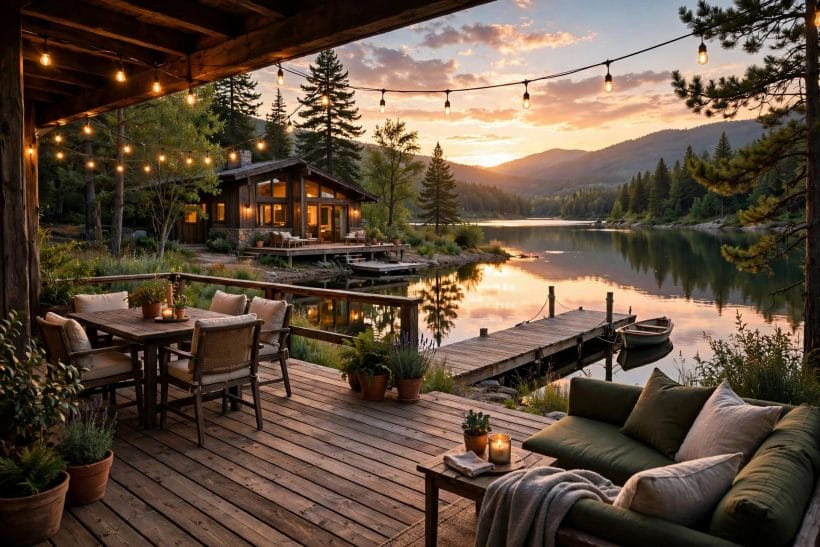
The opening gallery sets the table where lake houses do their best work: a wide deck over the water at golden hour. The deck is the lake house’s true living room for half the year, and this section plans it like one — shade, seating, light and the long evening taken seriously.
1. A dining deck aimed at the sunset
Orient the main deck so dinner ends with the light going down over the water. It is the lake house’s oldest piece of stagecraft, and it never fails: food tastes better, evenings run longer, and guests forgive almost any cooking.
2. Two deck levels: dining above, lounging below
Splitting the deck lets the table keep its ceremony while the loungers sprawl a step down by the shore. The level change also breaks a long drop to the water into comfortable, sittable steps.
3. A pergola edge for shade without a roof
A light pergola over one end of the deck filters the midday sun while keeping the sky. Plant it or leave it bare — either way the shade line it draws is the deck’s natural place for the long chairs.
4. Built-in bench seating along the water rail
Benches built into the deck’s edge seat a crowd without a furniture Tetris, and they keep the view line low and open. Add loose cushions in outdoor fabrics and the bench becomes the most contested seat on the property.
5. An outdoor kitchen corner, kept simple
A grill station, a worktop and a sink at the deck’s end keep the cook inside the party instead of exiled to the house. Lake house outdoor kitchens earn their keep by simplicity — everything washable, everything close.
6. Deck lighting low and warm
Light the deck’s edges, steps and table rather than flooding it: low, warm fittings keep the night water visible and the stars in business. Bright floodlighting is how a lake house forgets it lives somewhere beautiful.
7. A fire bowl for the after-dinner hour
A fire bowl or pit on or beside the deck stretches the outdoor season at both ends. Set on a non-combustible base with seating in a loose circle, it becomes the evening’s second hearth.
8. Storage benches for cushions and games
Lake weather turns quickly; deck storage turns with it. Benches that swallow cushions, throws and board games keep the deck ready in minutes and honest about the climate it lives in.
9. Decking that tolerates wet feet
Choose deck surfaces with bare, wet feet in mind — textured, quick-draining and free of splinters. The route from dock to deck is travelled dripping all summer; the boards should treat that as normal, not as an insult.
3. The Classic Lake House Face
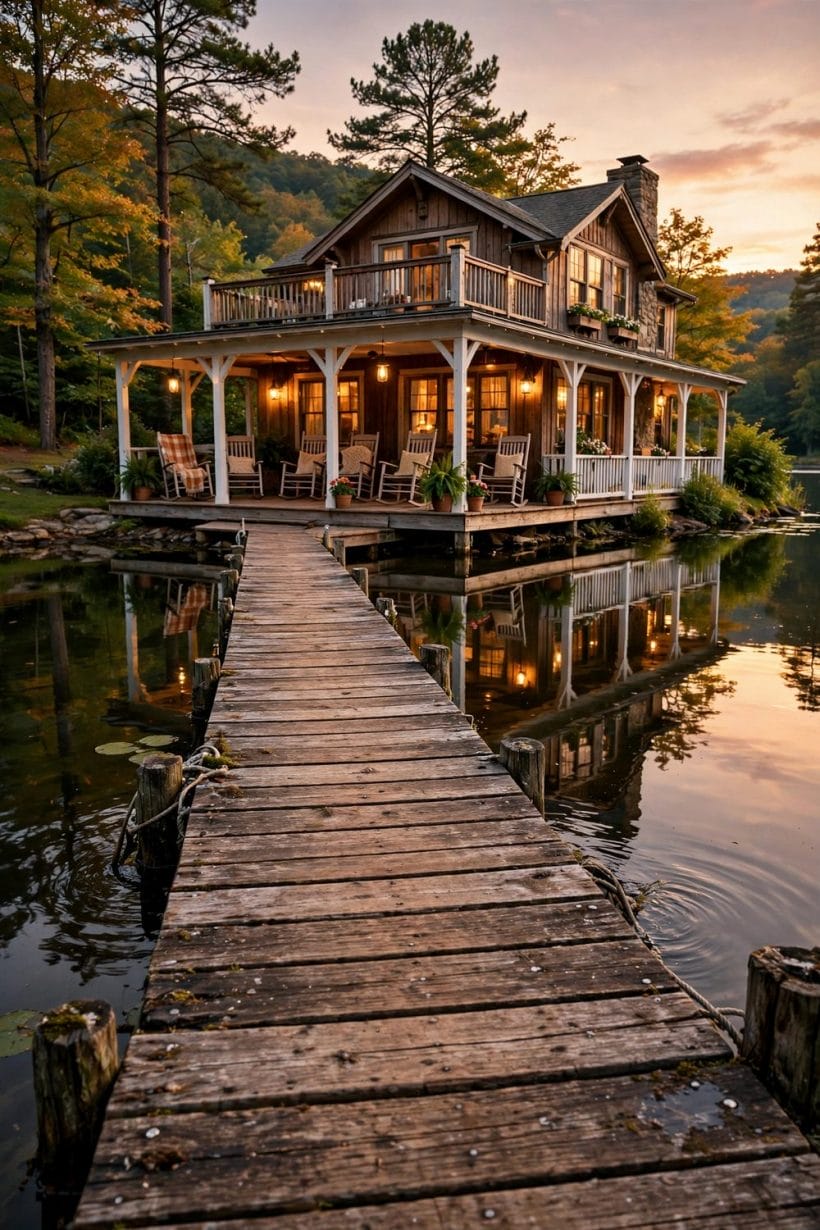
The pin shows the house itself at the end of its dock: gabled, shuttered, unmistakably a lake house. This is the architecture the whole genre hangs on — a welcoming face to the water, a practical one to the land — and this section reads that face element by element.
10. Gables facing the water
The classic lake house turns its gabled, windowed face to the lake and its plain back to the road. The arrangement gives the rooms the view and the arriving guest the surprise — the house reveals its purpose only at the water.
11. A deep porch across the water side
The full-width porch is the lake house’s signature: part room, part shade, part grandstand for weather crossing the water. Deep enough for chairs and a swing, it is the elevation’s main event and the household’s favourite address.
12. Shutters and trim in a shore palette
Painted shutters and crisp trim in watery tones — deep green, slate blue, weathered grey — dress the face without fuss. The palette is borrowed from the shore itself, which is why it never dates.
13. Stone at the base, wood above
A stone or masonry base grounds the house against splash, slope and winter ice, while timber above keeps the building light and repairable. The two-material elevation is the vernacular of northern lakes for good reason.
14. A metal roof shedding lake weather
Standing-seam metal shrugs off the storms that roll across open water, sings pleasantly in rain and asks almost nothing in return. In a deep green or charcoal it also finishes the classic elevation perfectly.
15. Symmetry relaxed, not abandoned
The lake house face is orderly but not stiff: windows balanced, door near the middle, and then a screened porch, a bump-out or a boat shed allowed to break the pattern where life requires it.
16. A flag or lantern marking the house from the water
One signal on the water side — a lantern by the dock path, a flag at the gable — helps swimmers and boaters find home across a big lake. It is the lake house’s lighthouse instinct, in miniature.
17. The land side kept plain and useful
Mudroom, firewood, bins and boats winter on the landward face, where looks matter least. Keeping the working clutter behind the house is what lets the water face stay a portrait.
4. Boathouses, Docks and the Working Shore
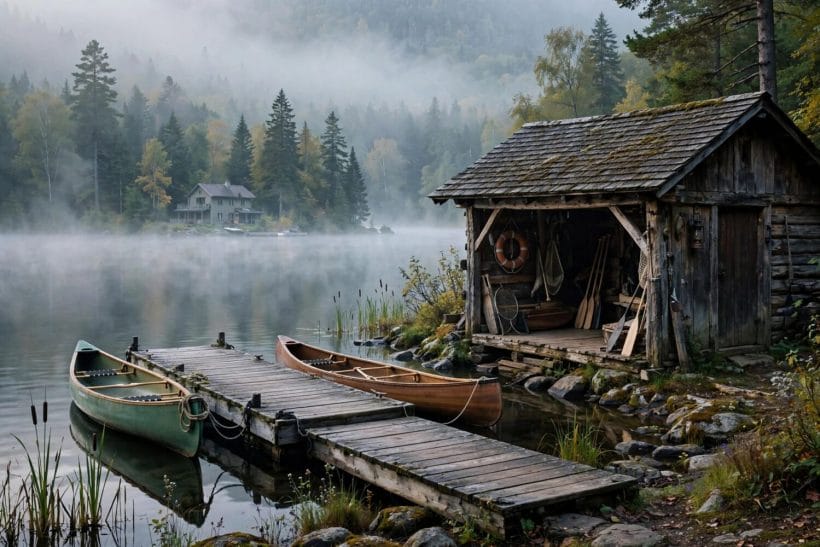
Gallery-2 goes down to the working shore: a boathouse, canoes at rest, a dock reaching out. This is the lake house’s engine room, where the swimming, paddling and fishing actually happen — and it deserves the same design care as the house it serves.
18. A boathouse echoing the house’s materials
Build the boathouse in the main house’s own language — same cladding family, same roof tone — and the shore reads as one composed property. Mismatched outbuildings are how good lake houses look accidental.
19. A dock long enough for deep water
The dock’s job is to reach swimmable, boatable water, whatever the shoreline’s shallows demand. A straight, sturdy reach with a wider platform at its end serves swimmers, anglers and sunset-watchers in one structure.
20. Canoe and kayak storage at the water’s edge
Boats stored steps from the water get used; boats stored in the garage become décor. Simple racks under the boathouse eaves or along the dock keep the paddle craft ready for the ten-minute evening expedition.
21. A swim ladder and a diving-clear end
A ladder at the dock’s end is the swimmer’s front door. Keep the end clear of moored boats and ropes, and the daily swim — the lake house’s core ritual — stays safe, simple and inviting.
22. Bench and locker at the dock’s root
Where the dock meets the shore, a bench and a weatherproof locker hold towels, life jackets and fishing gear at the point of use. It is the shore’s hallway, and it keeps the house’s floors drier.
23. Lighting the dock path, gently
A few low lights along the shore path make midnight swims and late returns safe without turning the shoreline into a runway. The lake’s darkness is part of its value — light the steps, not the water.
24. Winter thinking: ice, levels and lifts
Lakes rise, freeze and push. Docks on lifts or removable sections, and boathouses built for the freeze, are the difference between northern lake wisdom and an annual repair bill — ask the neighbours what the ice does before you build.
25. A fire ring on the shore
A stone fire ring between house and dock gives the property its outdoor hearth: marshmallows, wet hair, stars. Sited on bare ground with seating logs around it, it is the simplest great room a lake house owns.
5. Interiors Open to the Water
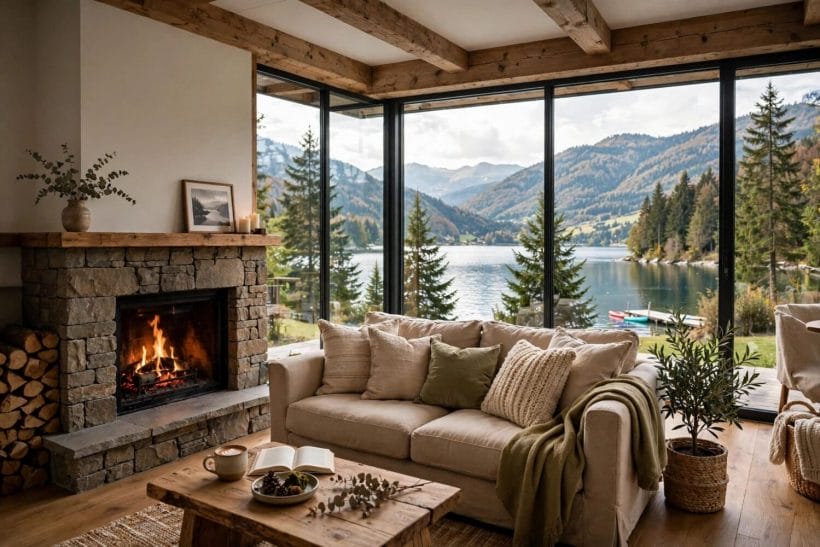
Gallery-3 steps inside to the room the whole house is organised around: glass to the water, a hearth for the cold shoulder of the day. Lake house interiors succeed when they refuse to compete with the view — and this section furnishes that refusal beautifully.
26. The window wall as the room’s painting
Give the main room one great expanse of glass and let the lake be the art. Furniture turns toward it, colours quiet down, and the room gains a view that changes by the hour and outperforms anything hangable.
27. Seats low enough to keep the view
Low-slung sofas and chairs keep sightlines over the sill to the water from everywhere in the room. Tall-backed furniture in front of lake glass is the interior equivalent of standing up in the cinema.
28. Natural materials that forgive lake life
Wood, stone, linen and sisal take wet footprints, sandy towels and dockside mud in their stride. Precious finishes sulk in a lake house; honest ones improve — choose the ones that patina rather than perish.
29. A reading chair in the corner of glass
Every lake house needs one chair placed exactly where the light and the view cross, with a lamp and a small table. It will be claimed by whoever wakes first, every day of the season.
30. Open shelves, not precious cabinets
Lake kitchens and living rooms suit open shelving: dishes, glasses and jars in daily use, nothing behind glass doors. The look is a working holiday house — generous, unbothered and easy for guests to navigate.
31. Indoor-outdoor rugs and washable covers
Specify the soft furnishings for the life they will lead: washable slipcovers, indoor-outdoor rugs, cushions that can be hosed down. The lake house that can’t relax about a wet swimsuit on the sofa has furnished itself wrong.
32. A telescope, binoculars and the lake’s wildlife
Keep optics by the window and a bird book under them. Loons, herons, storms building across the water — the lake provides a daily programme, and the house that equips its audience enjoys it twice as much.
33. Bare floors and a broom by the door
Sand is the lake house’s native dust. Hard floors, a mat at each door and a broom in reach keep the peace; wall-to-wall carpet in a lake house is a long argument nobody wins.
6. Porches and Rocking-Chair Hours
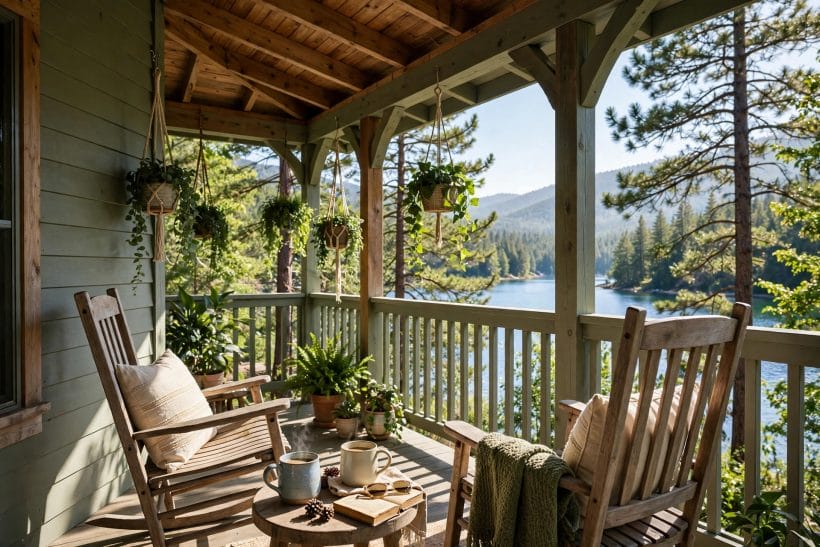
Gallery-4 rocks gently: a porch, a row of rockers, the lake doing its late-afternoon gold. The porch is where lake house time is properly spent — between indoors and out, sheltered and open — and this section furnishes its slow hours.
34. Rocking chairs in a row facing the water
The lake house porch’s essential furniture is a line of rockers aimed at the view. Nothing else is required for the day’s best hour, and adding anything fancier usually subtracts from it.
35. A screened porch for the buggy hours
Insects own the shoreline at dusk in many lake districts; screening reclaims it. A screened section of porch keeps dinners and card games outside through the evening without the smoke and sprays.
36. A porch swing at the quiet end
A hanging swing at the porch’s far end gives the house its nap headquarters. Gentle motion, a cushion, the creak of chains — it is the sound a lake house makes when it is working perfectly.
37. A porch table for cards, coffee and maps
One sturdy table turns the porch from seating into a room: breakfast, board games, the chart spread out for tomorrow’s paddle. It earns more hours than any other piece of furniture on the property.
38. Ceiling fans for still August afternoons
A fan over the porch seating moves the heavy summer air and discourages insects in the same gesture. On a screened porch it is close to air-conditioning, at a fraction of the fuss.
39. Porch lighting that keeps the dark kind
Amber, shaded, downward light — the porch should glow like a lantern, not glare like a porch in town. The night lake, the stars and the fireflies are the entertainment; the lighting is only the usher.
40. A daybed on the porch for the afternoon collapse
A proper daybed — mattress, pillows, a throw — formalises the lake house siesta. Screened porches with daybeds are regularly voted the best bedroom in the house by everyone who has tried one.
41. Storage for porch life: blankets and games
A chest on the porch holds the throws for cool evenings and the games for wet ones. Porch life runs on small provisions kept where they are used, not fetched through the house.
7. Siting the House on Its Shore

Gallery-5 pulls back to the aerial truth: the house in its trees at the water’s edge, the whole composition visible at once. Siting is the lake house decision that outlives all others — this section collects its principles, from the view corridor to the septic tank.
42. The view corridor cleared, the trees kept
Frame the lake view by editing, not clear-felling: a corridor of open view through retained trees gives shade, privacy and a composed picture. The shoreline forest is the house’s setting and its windbreak — keep most of it.
43. Set back from the water with intention
Regulations aside, a thoughtful setback protects the house from spray, ice and flood, and leaves the shore itself natural. The walk from door to dock becomes part of the place’s rhythm rather than a stumble.
44. Orientation for sun over the water
Work out where the sun rises and sets across the lake and place the glass, deck and porch for the hours the house is actually used. Evening light over water is the prize most lake houses are sited to win.
45. The path from door to dock
A clear, drained, gently lit path binds house and shore into one place. Steps where the bank is steep, stepping stones where it is soft — the path is walked a dozen times a day and should feel like it.
46. Parking and arrival kept to the land side
Cars belong behind the house. Arrival at the landward door, bags through the mudroom, and then the reveal of the water — the sequence is the lake house’s hospitality in architectural form.
47. Services thought through: water, waste, power
Shore properties make their own arrangements — wells, septic systems, sometimes long power runs — and all of them have rules and setbacks of their own near water. Establish what is possible before the design falls in love with a site plan.
48. Guest sleeping overflow near, not in, the house
A bunkie, a boathouse loft or a sleeping cabin keeps guests close and the main house serene. Lake hospitality peaks in summer; overflow sleeping is how a modest house feeds a crowd without strain.
49. A sauna or cold-plunge at the shore
Where the tradition runs, a small sauna near the dock completes the lake ritual: heat, plunge, repeat. Even a simple outdoor shower for rinsing swimmers borrows some of the same daily pleasure.
8. Hearths and Beamed Interiors
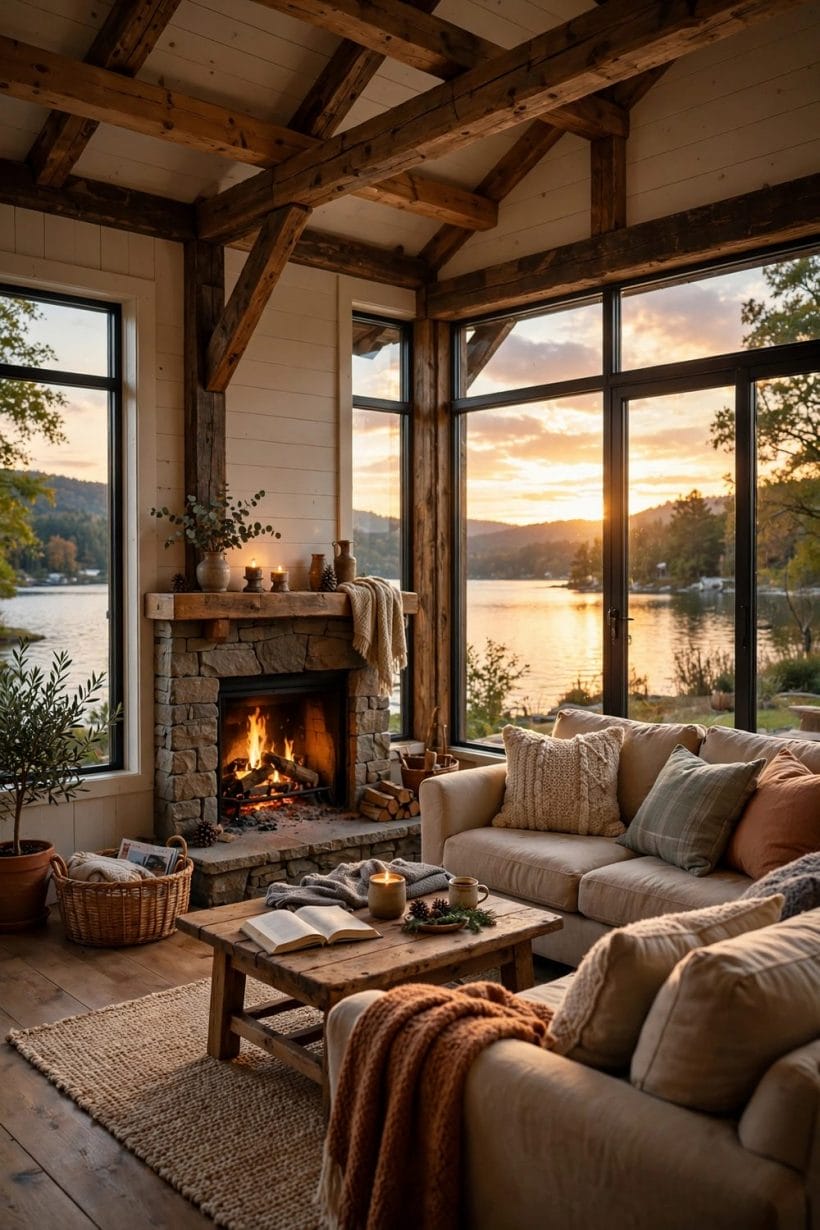
The second pin warms up: beams overhead, a fire in the hearth, the room built for the lake’s other season. Lake houses that live year-round are held together by their hearths, and this section furnishes the cold-month interior that the summer rooms borrow against.
50. A stone hearth as the winter anchor
When the lake freezes, the fireplace becomes the view. A generous stone hearth with room to sit close gives the house its winter living room and justifies the whole year-round enterprise.
51. Beams that carry the room’s character
Exposed beams — structural or honestly added — give lake interiors their grain and scale. Against white or pale walls they do the decorating for the whole room, which can then stay simple and uncluttered.
52. Wood stored as part of the interior
A stacked wood bay beside the hearth is both fuel store and texture: the winter’s warmth on display. It is the lake house’s most practical ornament and the one guests photograph.
53. Layered textiles against the cold glass
Wool throws, cushions and a rug underfoot civilise the big glass room in winter. The same room that wore linen in July wears wool in January, and both wardrobes can live in one storage bench.
54. A bunk room for the crowd
Lake houses sleep their happiest crowds in bunks: a room of built-in berths with curtains and reading lights sleeps cousins by the half-dozen and turns rainy weekends into dens rather than problems.
55. The loft above the great room
A loft over the main space — reached by a ship’s ladder or a proper stair — adds sleeping, reading and storm-watching height. Its railing becomes the room’s balcony, and its window the house’s crow’s nest.
56. A mudroom that handles the seasons
Skis and boots in winter, towels and life jackets in summer: the lake mudroom works all year. Benches, hooks, drainage and a door that shuts on the mess are the whole specification.
57. Warm lighting for long evenings
Winter lake evenings are long and lamp-lit. Layers of warm light — hearth glow, table lamps, a lit kitchen — make the interior feel like the inside of a lantern set down in the snowy dark.
9. The Dock at Dusk
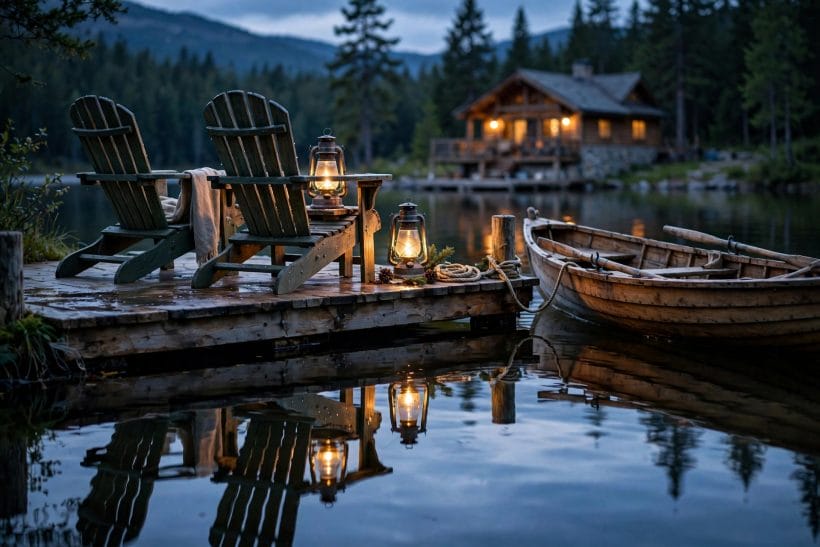
Gallery-6 ends the day where the lake house always ends it: on the dock, in the last of the light, the water gone to glass. This section is the evening programme — swims, fires, stars and stillness — the ideas that explain why people buy these houses at all.
58. The sunset swim as a daily appointment
A lake house organises its evening around the last swim: dinner waits, the dock gathers its audience, and the day closes in the water. Rituals this simple are the real architecture of a holiday house.
59. Chairs that live on the dock
Two chairs stationed at the dock’s end, facing down the lake, are the property’s front row. Leave them there all season; a lake house should always look one minute away from someone sitting down to watch the water.
60. A lantern at the dock’s end
One soft light at the dock’s end marks home for evening paddlers and gives night swimmers their bearings. It is guidance, not illumination — the dock at dusk should stay mostly dusk.
61. Fishing from the dock at first and last light
The dock is a fishing station twice a day: a rod kept ready, a small tackle box in the shore locker, and a house rule about what goes back. The ritual matters more than the catch, and always did.
62. The fire on the shore after dark
When the dock empties, the shore fire takes the evening’s second shift: stories, plans, the lake lapping in the dark. It is the oldest room in any lake house and the one with no walls at all.
63. Stars as the house’s ceiling
Far from town glow, a lake offers the ceiling modern life removed. A blanket on the dock and an hour of meteor-watching is programming no architect can improve — just keep the house lights low.
64. A night paddle in still water
On calm nights the lake turns to black glass and a slow paddle becomes the quietest travel there is. Keep life jackets on and the lantern lit at home dock; the magic is in the slowness, not the daring.
65. Morning mist before the house wakes
The dock’s other great hour is dawn: mist on the water, the lake empty, coffee in hand. Lake houses reward early risers with the best room of the day, and it isn’t in the house.
66. Leaving the shore as you found it
The last idea of the evening is the house rule that protects all the others: what the shore gives in beauty it asks back in care. Clear the fire, lift the chairs from the waterline, and the dock at dusk stays worth returning to.
10. Water, Weather and Keeping the House
No image closes the tour, because this section is the ledger: the water systems, weatherproofing and seasonal rituals that decide whether a lake house is an inheritance or a headache. None of it is glamorous, and all of it is why the good ones stay good.
67. Drinking water from the lake country
Lake houses draw water from wells or the lake itself, filtered and treated as local rules require. Whatever the source, the system needs a keeper — filters changed, quality tested, and the whole arrangement understood by more than one person in the household.
68. Waste water handled far from the shore
Septic systems and shore water are uneasy neighbours, governed by setbacks and inspections that exist for the lake’s protection. Keep the system maintained, pumped and documented; the lake you swim in is downstream of everyone’s decisions, including yours.
69. Roofs, gutters and the storm off the water
Lake weather arrives unobstructed and means it. Sound roofing, gutters that clear the downpour away from the base, and shutters or stored furniture before the big blows are the standing orders — checked each spring, not remembered each storm.
70. Damp is the lake house’s resident enemy
A house beside water lives in humid air. Ventilation, vapour barriers where they belong, and interiors aired through the shoulder seasons keep mould and mustiness at bay — the closed-up smell of a neglected lake house is a maintenance report, not a charm.
71. Opening and closing rituals
Seasonal houses live by their checklists: water on, pipes checked, chimneys swept in spring; water drained, boats lifted, perishables out in autumn. Written down and handed over, the rituals are how a lake house passes between generations intact.
72. Wood, paint and the sun off the water
Reflected light doubles the sun’s work on shore-side paint and timber. Expect the water elevation to need its finishes renewed sooner than the land side, and choose products for the exposure — the lake is beautiful and entirely unsentimental about paintwork.
73. Wildlife as neighbours, managed kindly
Loons on the water and raccoons in the eaves come with the territory. Secure the bins, cap the chimney, store the birdseed like it matters — because to everything with paws, it does — and the wild neighbours stay a pleasure instead of a renovation.
74. Insurance and winter checks
An empty house in a northern winter is an insurable risk only if someone checks it. A neighbour or service walking through after cold snaps — pipes, roof, sump — is the cheapest peace of mind a seasonal owner can buy, and policies often expect exactly that.
75. The lake keeps the final word
Water levels rise and fall on their own schedule, ice rewrites shorelines, and every lake house is a negotiation with a force that was there first. The houses that age gracefully are the ones designed with humility — flexible docks, forgiving materials, and owners who treat the lake as the senior partner it is.
Final Considerations
A lake house is really three buildings in one coat: the summer machine of decks, docks and porches; the winter refuge of hearths and beams; and the shore works underneath both, quietly deciding how long either lasts. The ideas in this collection hold all three together, because at a lake, you cannot have the magic without the maintenance.
Start with the shore and the view, let the rooms open to the water, and keep the keeping-up honest. Do that, and the house gives back what no other kind can: a life organised around light on water, from the first misty coffee to the last swim of the day.



0 Comments