

Stainless, satin nickel, brushed steel — three silvery finishes that look identical in a catalogue and completely different on your wall. Most finish regret is not about quality; it is about mixing them by accident and noticing forever.
This guide names the finishes honestly, compares them by temperature, sheen and upkeep — satin nickel vs brushed nickel included — and sets out the few mixing rules that make a house look deliberate instead of mismatched, room by room and fitting by fitting.
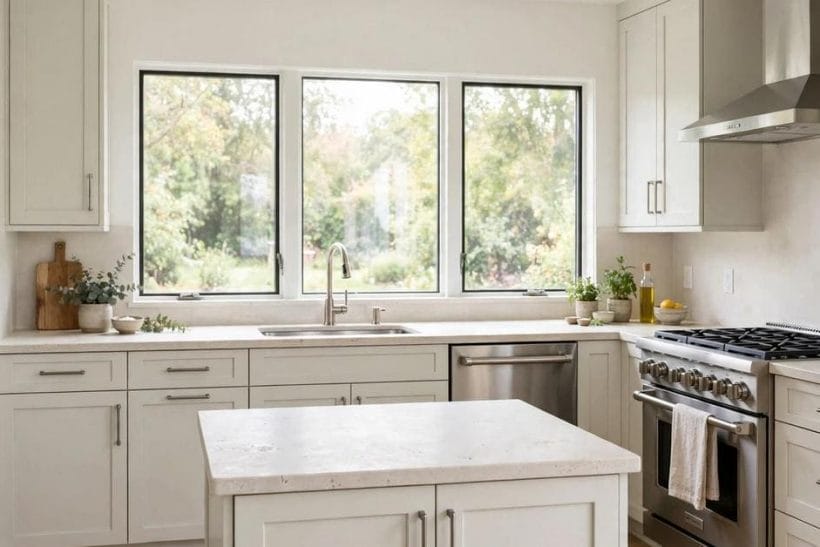
1. Mixing Metal Finishes at a Glance
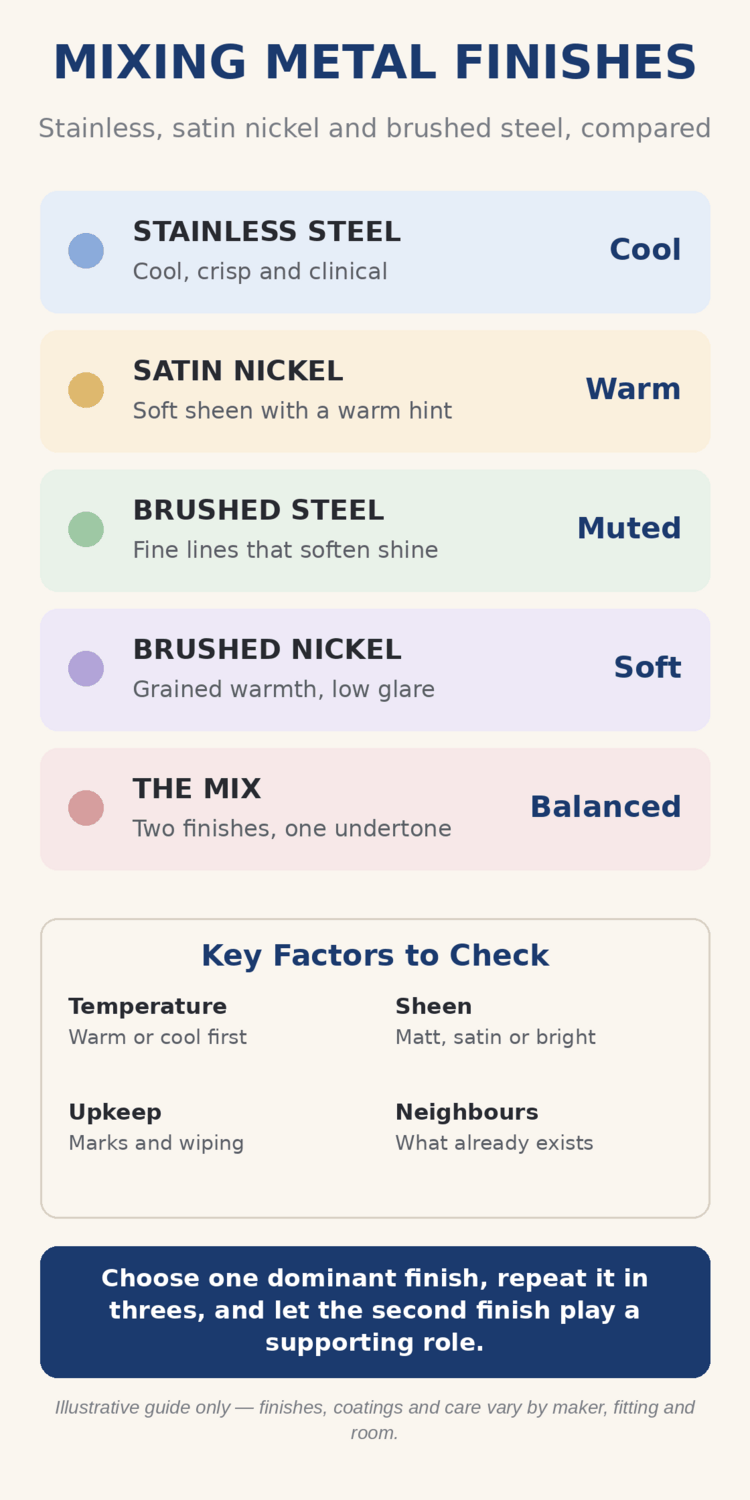
A metal finish is three things at once: a temperature (warm or cool), a sheen (bright, satin or matt) and a surface story (smooth, brushed or grained). Two finishes clash when they disagree on temperature while competing at the same sheen; they harmonise when they share a temperature or clearly divide the jobs between them. The five finishes below are the ones a house actually mixes.
For the rooms where finishes meet most often, start with kitchen ideas.
| Family | Character | What it means |
|---|---|---|
| Stainless Steel | Cool, crisp and clinical | Cool |
| Satin Nickel | Soft sheen with a warm hint | Warm |
| Brushed Steel | Fine lines that soften shine | Muted |
| Brushed Nickel | Grained warmth, low glare | Soft |
| The Mix | Two finishes, one undertone | Balanced |
Scope, so the lanes stay clear: this guide covers the finishes themselves — how they look, feel and age side by side. The rooms they serve are covered by their own posts, bathroom ideas among them, and specific product families — taps, appliances, cabinet hardware — carry their own checks in their own guides. Nothing here ranks brands or quotes performance figures; finishes are compared the way a room experiences them — by eye, by hand and by week.
2. First, Name the Finishes Honestly

Half of all finish confusion is vocabulary. The same words are used loosely by different makers, so start with what each name in this guide actually describes.
Stainless Steel: The Cool, Honest Metal
Stainless steel is a material before it is a finish: the grey metal itself, usually brushed in one direction, cool in tone and clinical in character. It dominates appliances and sinks, reads modern at any scale, and shows its life honestly — every fingerprint and water mark is printed on it until wiped away.
Satin Nickel: Warmth with the Shine Turned Down
Satin nickel is a plated finish with a soft, low sheen and a faintly warm, champagne hint underneath the silver. It is the diplomat of the group: silvery enough to sit with steel, warm enough to sit with timber and brass tones, and forgiving of the small marks that bright finishes advertise.
Brushed Steel and Brushed Nickel: The Grained Finishes
Brushing drags fine parallel lines across the surface, breaking reflections into a soft grain. Brushed steel keeps steel’s cool temperature under that grain; brushed nickel pairs the same grain with nickel’s warmth — the heart of the satin nickel vs brushed nickel question. Side by side, the satin is smoother and more uniform; the brushed shows its lines and hides more of daily life inside them.
Why the Names Drift Between Makers
There is no industry police force for finish names. Plating recipes, base metals and brushing depths differ between makers, so two products with the same name can sit visibly apart, and two with different names can match almost perfectly. This is not a scandal — it is simply why the rest of this guide keeps returning to samples: the eye is the only reliable standard the finishes share.
3. Warm Against Cool: The Undertone Question
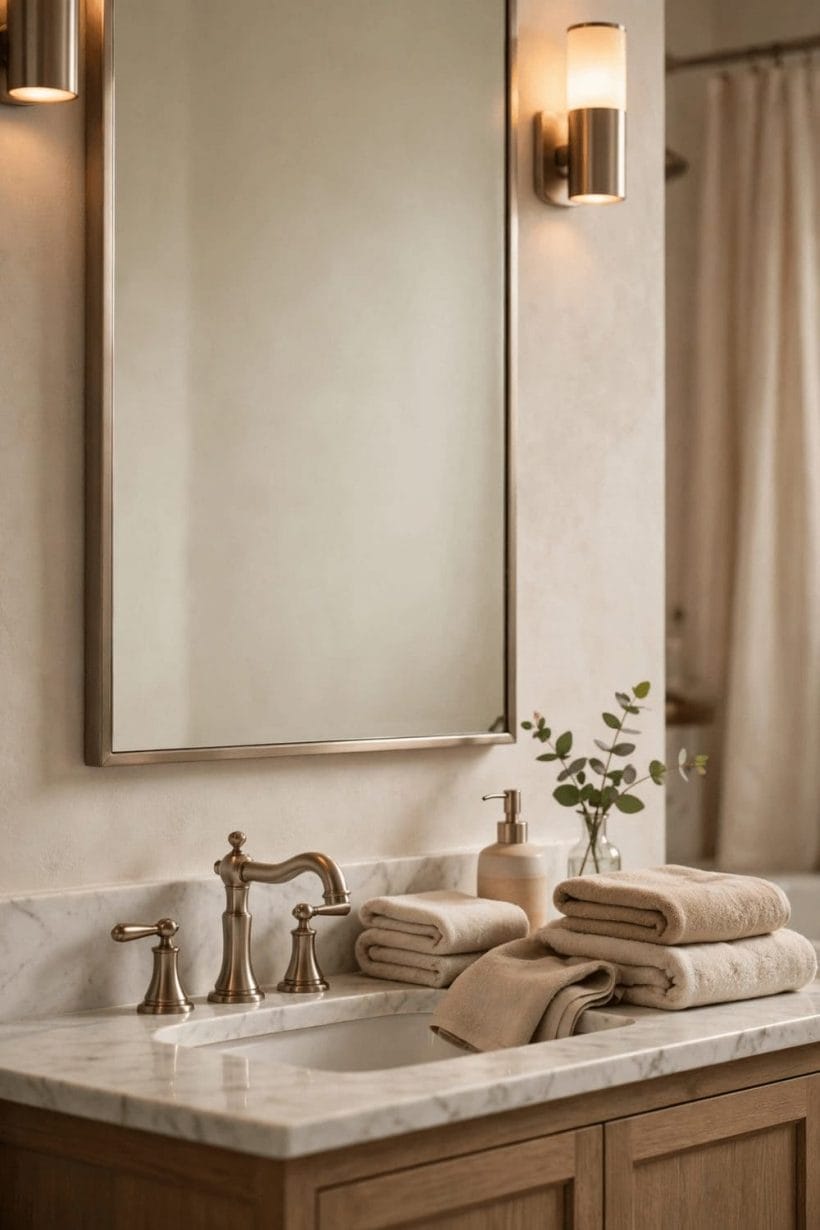
Temperature is the first decision and the one that cannot be fixed later with accessories. Decide whether each room leans warm or cool, and the finish shortlist writes itself.
Every Finish Has a Temperature
Hold the finishes against each other and the temperatures declare themselves: stainless and brushed steel lean cool and blue-grey; the nickels lean warm and faintly golden. Neither is better — but a cool tap over a warm-toned sink surround, or warm handles on cool grey cabinets, creates the low-level wrongness people feel without naming.
Undertone Beats the Label
Labels travel badly between makers: one maker’s satin nickel is another’s brushed nickel, and photographs flatten every difference. The undertone in your hand is the truth. Judge samples, not names — carry them between the rooms they will serve and look at them beside the fixed elements: worktops, tiles, cabinet colours and timber.
Test Against Your Own Light and Timber
Warm timber floors and warm white walls pull every finish warmer; north light and blue-grey walls pull them cooler. A finish that looks neutral in a bright showroom can read distinctly gold or distinctly blue at home. The sample test is unskippable for exactly this reason.
4. Sheen: Matt, Satin and Bright
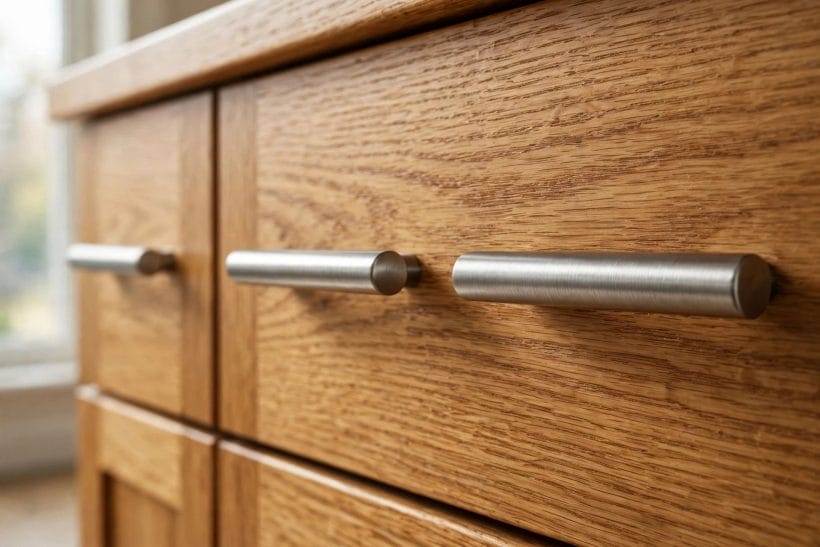
If temperature is the first decision, sheen is the second — and the one that decides how loud each metal speaks in the room.
Bright Finishes Shout, Satin Finishes Talk
A mirror-bright finish reflects the whole room in miniature and draws the eye like jewellery. Satin and brushed finishes absorb and scatter light instead, reading as texture rather than sparkle. In a room of many metals, the brightest one becomes the accent whether you planned it or not — so plan it.
Matching Sheen Matters More Than Matching Metal
Here is the guide’s most useful rule: two different metals at the same sheen and temperature look related, while the same metal at two sheens looks like a mistake. A brushed steel rail and a brushed nickel handle can share a bathroom happily; a bright tap beside a satin rail in the same metal family still argues.
Matt and Dark Finishes at the Edge of the Group
Matt and near-black metals sit just outside this guide’s trio but enter the same conversations. They behave like a punctuation mark: strong, graphic and best used sparingly beside the silvers rather than as a third competitor. If a room already mixes two silvery finishes, a dark accent can separate them — a bridge, as the mixing rules below suggest — but it rarely pays to run three full finish families in one small room.
5. Where Finishes Meet in Kitchens
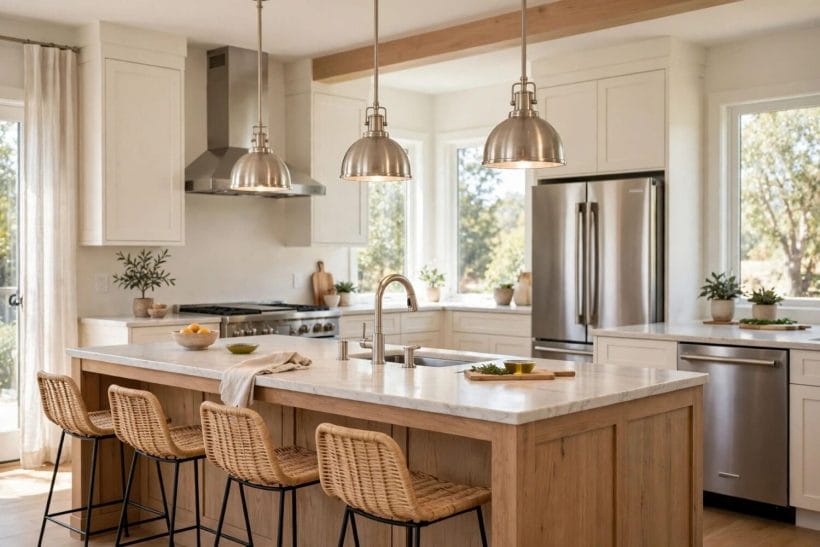
The kitchen is the house’s finish summit: appliances, taps, handles, lighting and sometimes a rail or a hood all meet within a few steps of each other.
Appliances Against Taps and Handles
Appliances usually arrive in stainless and stay for years, so treat them as the kitchen’s fixed finish. Taps and handles are the free choice: echo the steel for a calm, single-metal kitchen, or deliberately answer it with warm satin nickel to soften a cool room — a real decision either way, made once and repeated everywhere.
The Triangle Rule in Kitchens
Whatever the mix, let each finish appear at least three times — tap, handles and pendants, say — so it reads as a scheme rather than a leftover. One lone finish in a kitchen always looks like the piece that arrived from another house. The cabinets carrying all this hardware deserve their own scrutiny too, covered in the kitchen cabinet quality guide.
Open Shelves and Visible Rails
Open shelving and pot rails put metal on display, which raises the stakes: a rail in a third finish will be seen against everything. Keep display metal inside the chosen pair, and let the objects — pans, ceramics, timber boards — supply the variety instead.
Sinks, Hoods and the Big Surfaces
The largest metal areas in a kitchen are not fittings at all: the sink, the hood, sometimes a worktop or a splashback. These big fields set the room’s temperature more than any tap does. A stainless sink and hood make the kitchen cool by default, and warm nickel fittings then read as a deliberate softening; a stone sink and a plastered hood leave the temperature to the fittings themselves.
6. Bathrooms and Wet Rooms

Bathrooms concentrate finishes into the smallest room in the house, add steam and splashes, and punish careless mixing at close range.
Taps, Rails and Shower Metal
In a bathroom the finishes stand within arm’s reach of each other: tap, flush plate, towel rail, shower frame, mirror edge. This is the room to keep to one finish family if anywhere — or one dominant finish with a single, clearly deliberate second. Five near-matching silvers in one small room is the classic bathroom muddle.
Steam, Splashes and Water Marks
Wet rooms are where sheen earns its keep. Bright finishes show every dried droplet as a spot; satin and brushed finishes dissolve the same droplets into their grain. In hard-working family bathrooms, the forgiving finish is usually the right finish, whatever the showroom said.
Mirrors, Edges and the Frame Problem
Every bathroom hides extra metal the fittings list forgets: mirror frames, cabinet edges, shower screens, the trim on tiles. These pieces arrive from different makers at different times and quietly multiply the finish count. Audit them before choosing the headline finish — the frame around the mirror is seen against the tap every single morning.
7. Doors, Rails and the Wider House
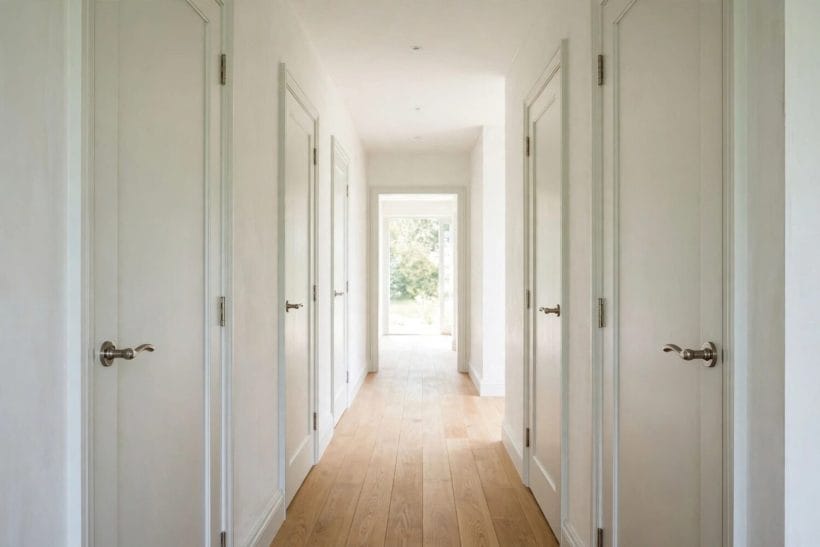
Beyond the wet rooms, finishes run through the house as door furniture, rails and lighting — the connective tissue that either unifies the floors or fragments them.
Door Furniture: The Most-Touched Finish
Handles and hinges are handled a hundred times a day and seen on every landing. Choose one door finish per floor at least, and let it belong to the house’s dominant temperature. It is the cheapest finish to standardise and the one whose inconsistency is felt — literally — most often.
Rails and Balustrades as the House’s Spine
A stair rail runs through the heart of the house, visible from several rooms at once. The railing family has its own design world — modern metal railing ideas for the contemporary end, wrought iron railing for the traditional — and its finish should answer the door furniture it passes, as the steel work in stairs railing designs in steel shows.
8. Fingerprints, Water Marks and Upkeep
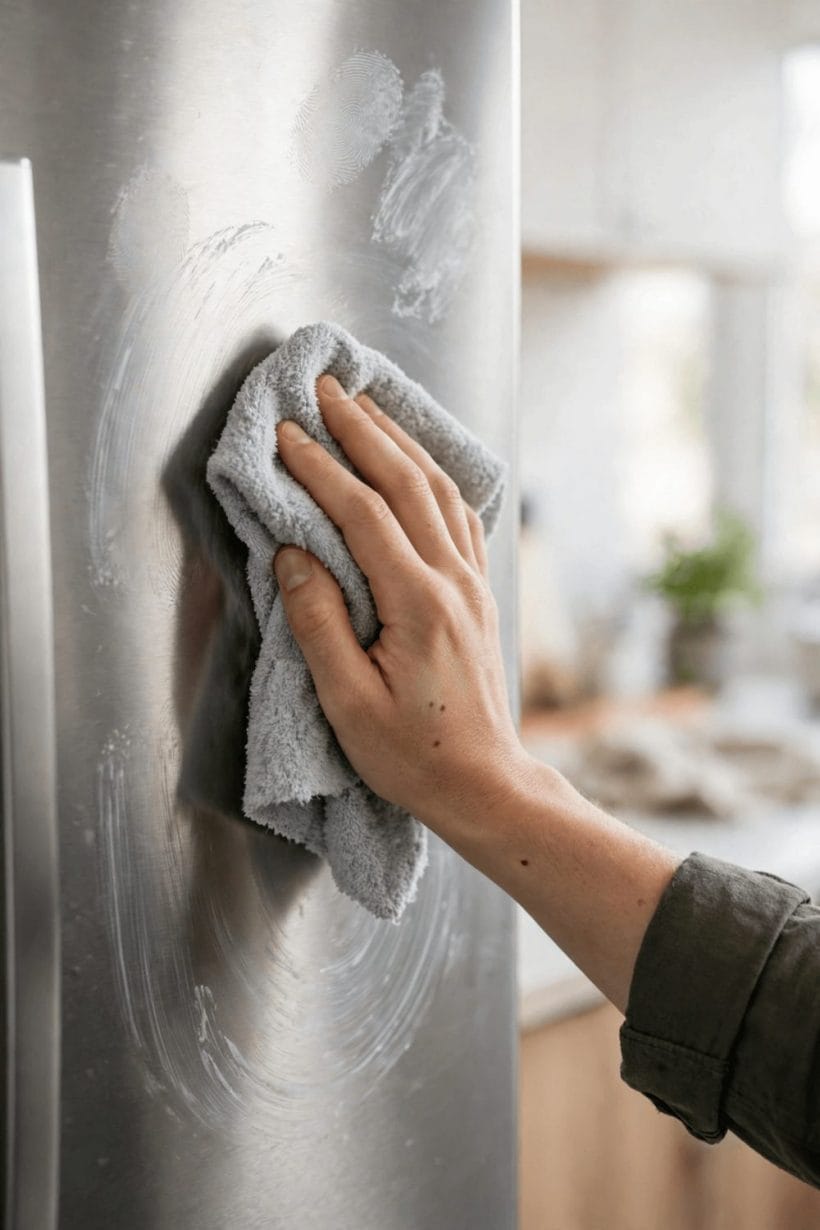
Finishes are maintained, not just chosen. The honest comparison includes what each one asks of you every week — stated generally, because coatings and makers vary.
What Shows on What: Marks and Prints
As a rule of thumb the group divides by temperament: smooth bright and smooth cool surfaces print every touch; grained and satin surfaces forgive. Dark spots from water show most on bright finishes, dust shows most on dark ones, and brushed lines quietly absorb both. Match the finish to the room’s workload and your own tolerance.
Cleaning Without Damaging the Finish
Plated and brushed finishes share one vulnerability: abrasive pads and harsh cleaners can cut through a plating or polish a brushed grain shiny in patches. Soft cloths, mild cleaners and drying after washing are the general discipline; anything stronger belongs to the maker’s own care guidance — the same caution that governs furniture refinishing products applies to metalwork.
9. Mixing Rules That Actually Work

Everything above compresses into three working rules. They will not design the house for you, but they will keep any combination of these finishes out of trouble.
One Dominant, One Supporting
Give each room a lead finish — most of the metal, most of the visual weight — and let the second finish appear as a supporting accent: the tap against the appliances, the rail against the handles. Equal shares of two finishes look undecided; a clear lead and a clear support look designed.
Repeat Each Finish Three Times
The rule from the kitchen works everywhere: a finish that appears once is an accident, twice is a coincidence, three times is a scheme. Count fittings, not intentions — if the supporting finish cannot reach three honest appearances in the room, it probably should not be there.
Bridge with a Third, Quieter Material
Timber, black and stone are the great bridges: a timber handrail can sit between steel balusters and nickel door furniture and reconcile both; a black accent can separate two silvers that are nearly — but not quite — the same. When two finishes argue, do not add a fourth voice; add a bridge.
Know When Not to Mix
Some rooms are better single: a small bathroom, a formal hall, a kitchen where the appliances already provide a strong stainless field. Mixing is a tool for rooms with enough metal to need choreography. Where there are only three or four fittings, matching them exactly is not a failure of imagination — it is the calmest possible answer, and the finishes will look more expensive for it.
10. Checks Before You Buy
Finishes are bought in sets and lived with for years, so the final checks are practical ones, done with samples in hand rather than photographs on a screen. They are also the checks that protect the rest of the house: a finish decision made carefully in the kitchen and bathroom tends to settle the doors, rails and lighting by precedent, while a careless one has to be re-argued in every room.
Samples Before Sets
Buy or borrow one real example of each candidate finish and live with the samples for a few days: on the worktop, against the cabinets, under the bathroom light, beside the appliance they must answer. The finish that survives every room’s light is the finish; the one that only survives the showroom is not.
Keep the Names and the Paperwork
Record exactly what was fitted — maker, finish name, range — and keep it with the house paperwork. Finishes are replaced, extended and matched for years afterwards, and the name on a receipt is worth more than any amount of squinting at a handle in a shop.
Final Considerations
Stainless, satin nickel and brushed steel are not rivals; they are three temperatures and textures of the same silvery idea. Mixed carelessly they niggle at a room for years. Mixed on purpose — one temperature leading, sheens in agreement, each finish repeated until it reads as a scheme — they make a house feel considered from the front door to the bathroom tap. The differences between them are small in a catalogue and large in a life; that is precisely why they reward this much attention.
Start with the sample test in your own light, decide each room’s lead finish, and write the names down. The rest of the mixing is just consistency.



0 Comments