
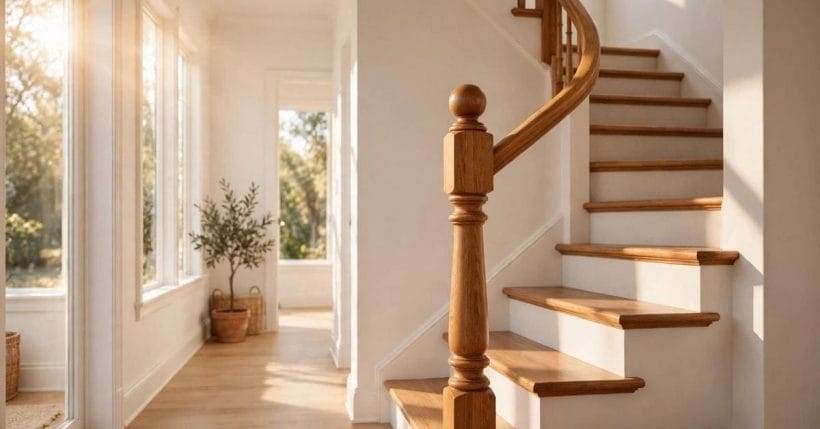
Walk into almost any home with a staircase and your eye lands on the same place first: the solid post at the foot of the stair, where the handrail begins. That post is the newel, the stair post, and it carries more weight than any other single piece of the balustrade. It anchors the handrail, it gives the whole stair a sense of solidity, and it sets the tone for the room before a visitor has climbed a single step. Get the newel right and the stair looks considered; get it wrong and even a beautiful flight can feel unfinished.
This guide is about that post alone. It covers the main forms a newel can take, the finishes that suit each one, the details that lift a plain post into a feature, and the practical questions of layout, care and cost. It does not try to teach stair design as a whole, and it does not offer fitting instructions: anything that holds a handrail in place is structural work, and structural work belongs to a qualified installer who can judge the stair in front of them. What follows will help you choose wisely, brief a professional clearly, and live happily with the result.
| Item | What it is |
|---|---|
| What a Newel Post Actually Does | A stair post stands at the places where a handrail needs a firm end or a firm change of direction: the foot of a flight, the head of a flight, and any landing where the rail turns. |
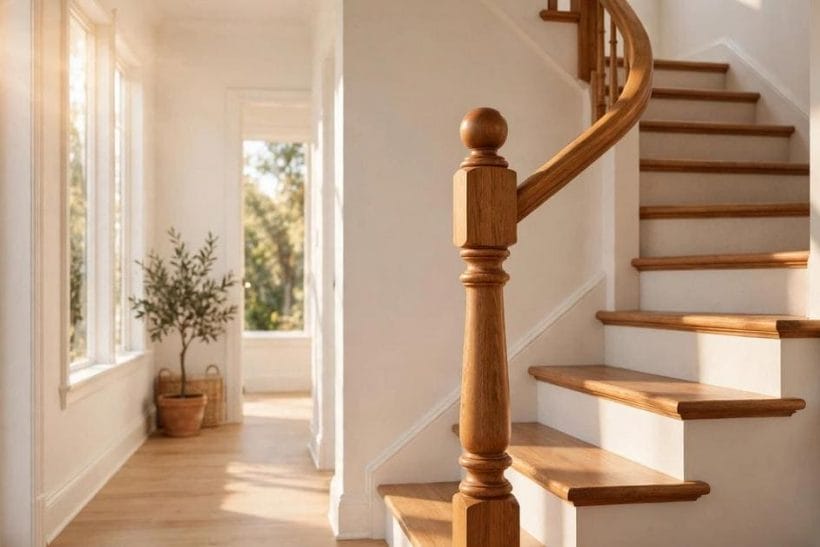
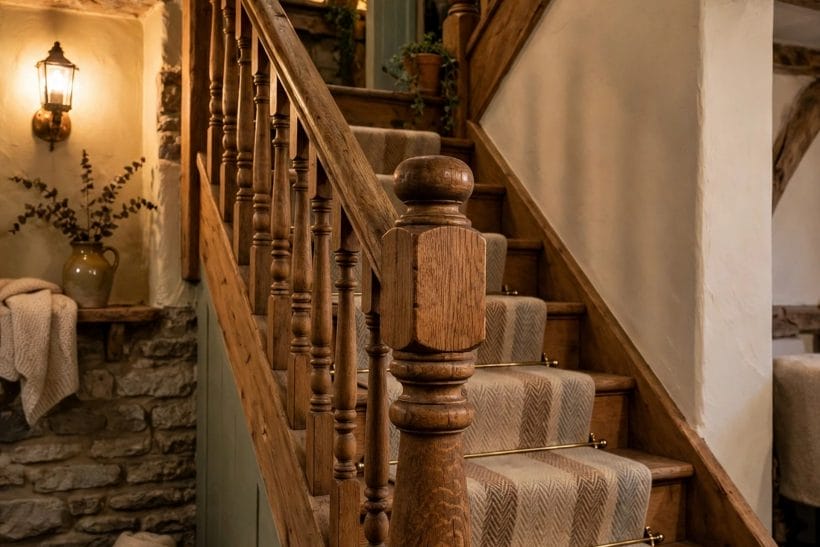
| Turned Posts: The Classic Choice | The turned post is the one most people picture when they think of a staircase: a post shaped on a lathe into curves, collars and a rounded profile, usually in oak or another hardwood, and often finished with a ball or cap on top. |
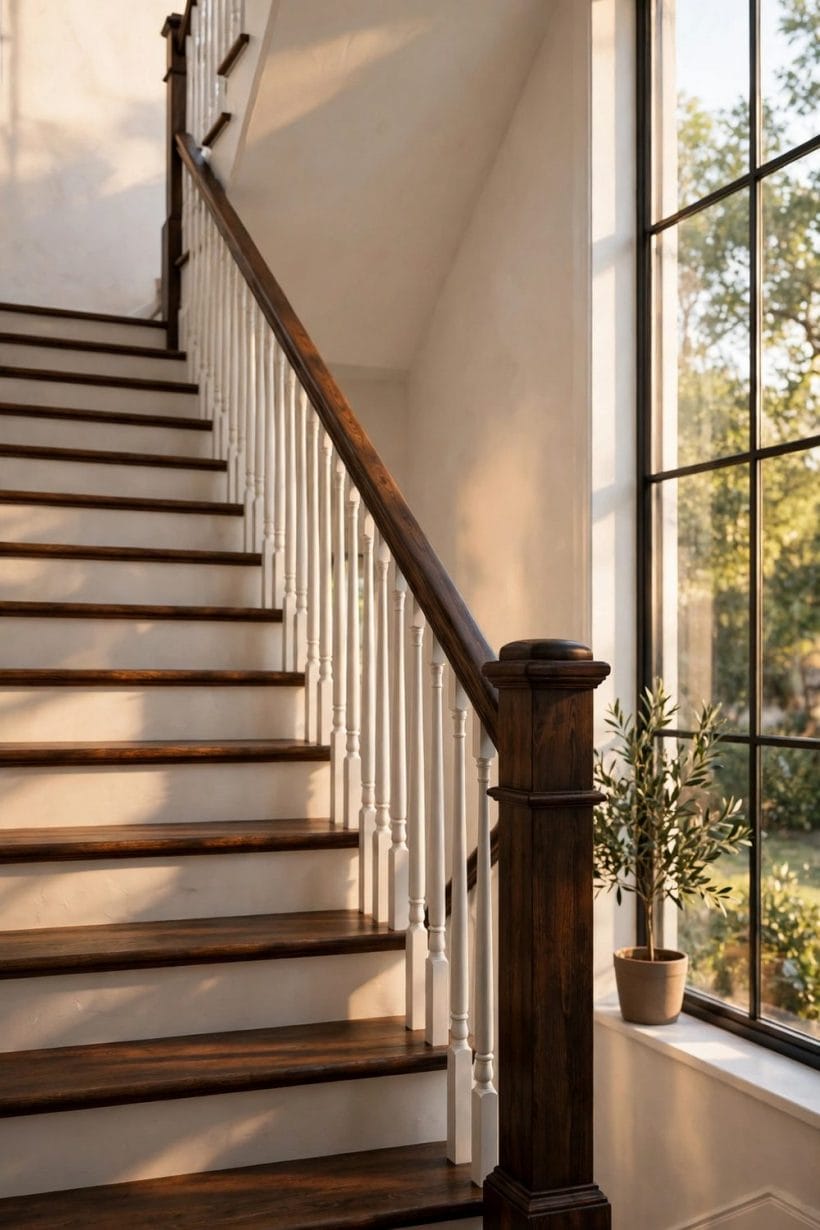
| Box Posts: Clean Lines for Modern Rooms | The box post is the modern answer to the same job: a square, straight-sided post with flat faces, sometimes panelled, sometimes perfectly plain, and usually topped with a flat cap or a simple pyramid. |
| Metal Posts: Slim, Strong and Contemporary | Metal newels suit stairs where timber would look too heavy or too traditional: glass balustrades, cable runs, open-tread flights and industrial-style rooms. |
| Painted and Stained Finishes | Finish is where a newel post either joins the room or argues with it, so it deserves a decision of its own rather than a default. |
| Caps, Finials and the Details That Finish a Post | The top of a newel post is its signature. |
| Landings, Turns and the Case for Two Posts | Most straight flights need two posts, one at the foot and one at the head. |
| Matching the Post to the Room | The best newel post for a room is the one that already looks as though it belongs there. |
| Care, Wear and Everyday Living | A newel post is one of the most touched pieces of woodwork in a house. |
| Costs in General Terms | The cost of a newel post, and of fitting it, is driven by a handful of factors rather than by any single figure. |
1. What a Newel Post Actually Does
A stair post stands at the places where a handrail needs a firm end or a firm change of direction: the foot of a flight, the head of a flight, and any landing where the rail turns. In each spot it does two jobs at once. Structurally, it is the anchor that the handrail and the balusters tie into, so the whole balustrade feels rigid rather than springy when gripped. Visually, it is the full stop at the end of the handrail’s sentence, the piece that tells the eye where the stair begins and where it is going.
That double role is why the newel deserves more attention than its size suggests. A handrail can be slim and elegant precisely because the newel at its end is solid. A run of balusters can look light and rhythmic because the posts at either end give it a frame. Remove the newels and the same stair would look unresolved, like a picture without a frame. When you look at staircases you admire, you are very often admiring their newels without realising it.
Proportion matters more than ornament. A post that is too slim for a grand flight looks lost, while a massive post on a narrow stair crowds the hall. The right post relates to the width of the stair, the size of the handrail, and the scale of the room it stands in. Stair railing ideas show how the post, the rail and the balusters read as one composition rather than as separate purchases, and that composition is the thing to judge when you stand at the foot of a stair and ask whether it feels right.
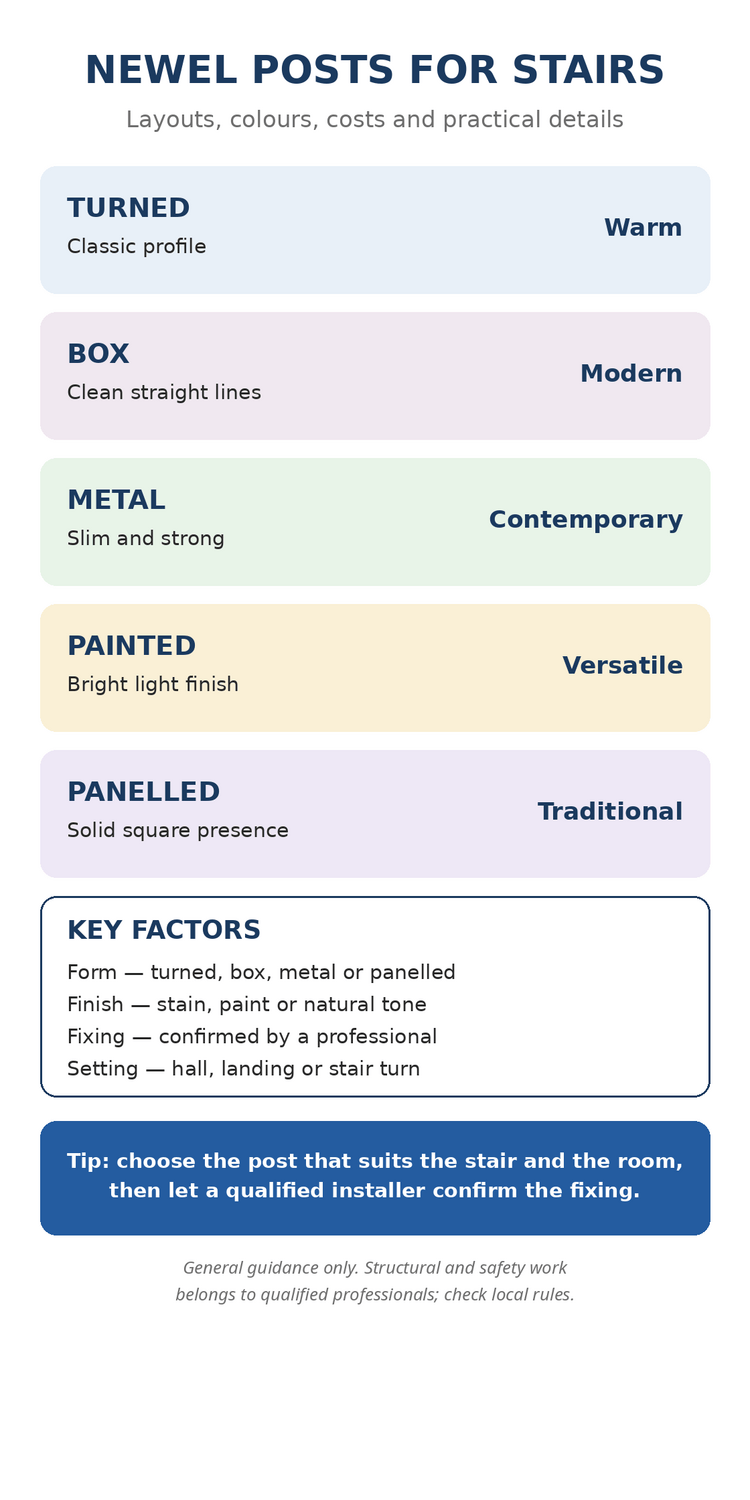
The infographic above sums up the five forms covered in this guide, from the warmth of a turned post to the clean lines of a box post, with the key factors to weigh before choosing.
2. Turned Posts: The Classic Choice
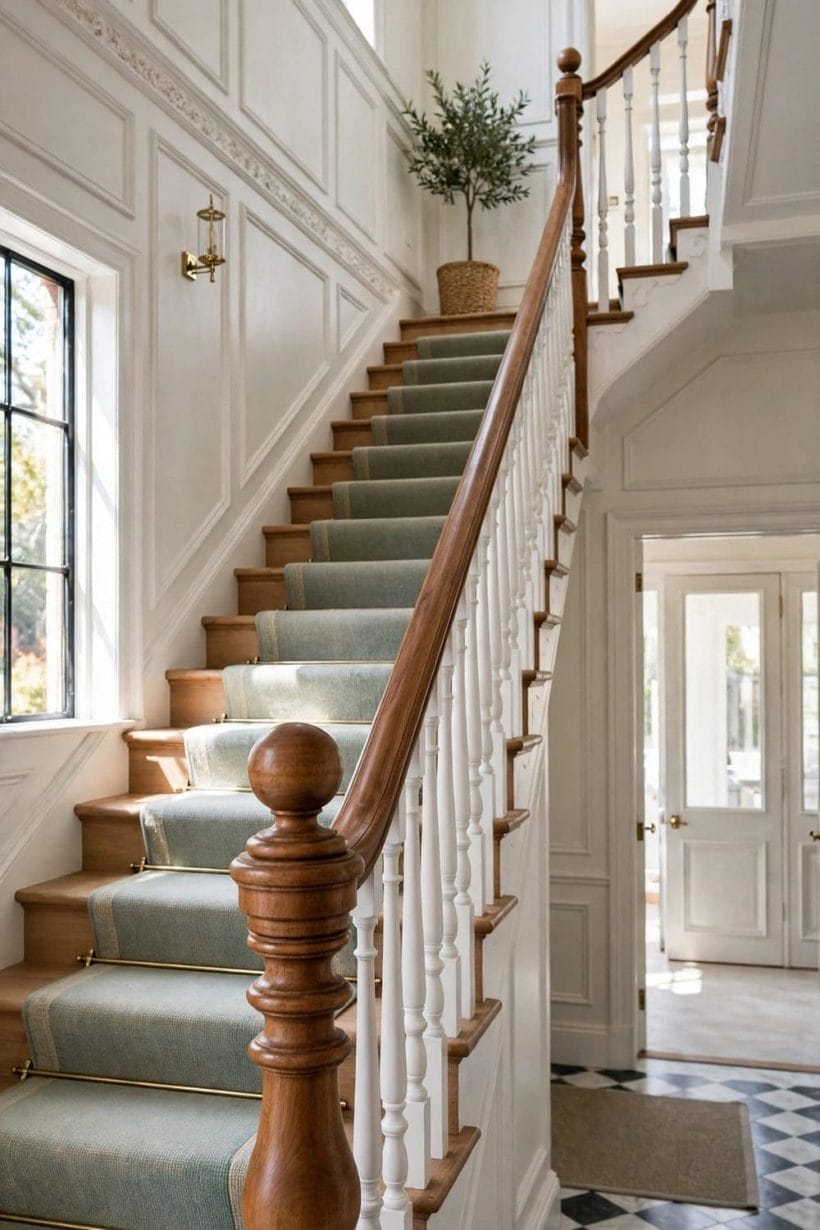
The turned post is the one most people picture when they think of a staircase: a post shaped on a lathe into curves, collars and a rounded profile, usually in oak or another hardwood, and often finished with a ball or cap on top. It suits period homes and traditional rooms, but it is not confined to them. In a plain modern hall, a single well-turned post can be the one piece of craftsmanship that warms the whole space, like a good chair in an otherwise spare room.
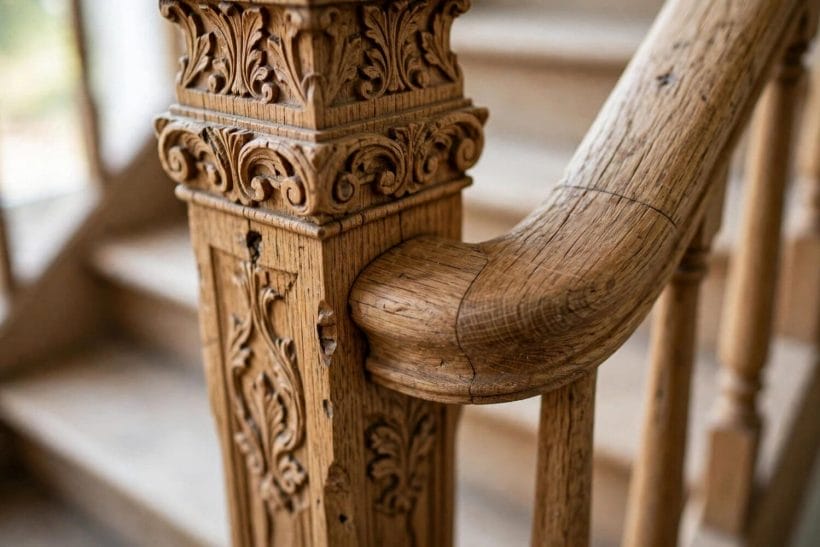
Turned posts vary enormously in richness. At the simple end, a gentle taper with one or two collars reads as quiet and honest. At the elaborate end, deep carving, fluting and a large ball top make the post a deliberate showpiece. Neither end is better in itself; the question is what the room can carry. A heavily carved post in a small cottage hall can dominate the space, while a very plain post in a large entrance can disappear. Wooden staircase designs show turned posts in rooms of many sizes, which helps to calibrate how much detail a given hall actually wants.
Finish changes the character of a turned post more than any other single decision. A clear stain or oil lets the grain speak and suits rooms with other visible timber. Paint softens the turning and lets the shape, rather than the wood, do the work. Either way, the turning itself must be crisp: soft, blurred profiles suggest a post made to a price rather than made with care, and no finish will rescue a shape that was never sharp.
3. Box Posts: Clean Lines for Modern Rooms
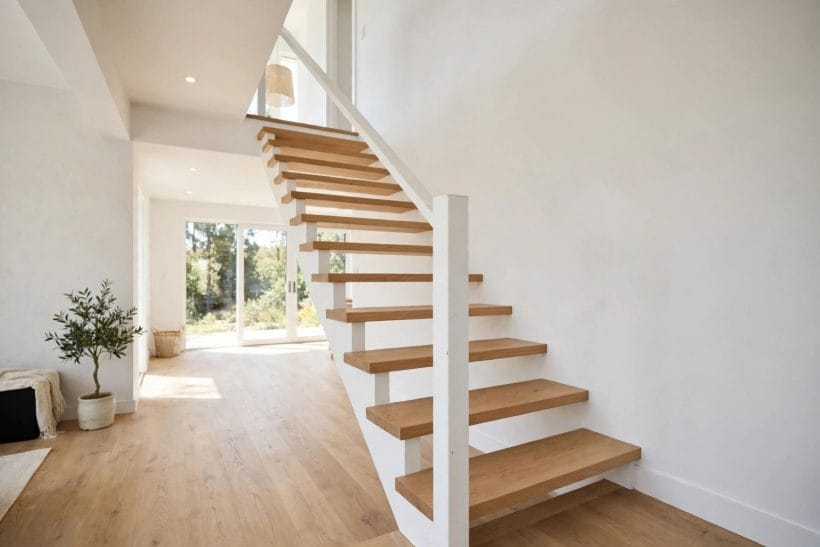
The box post is the modern answer to the same job: a square, straight-sided post with flat faces, sometimes panelled, sometimes perfectly plain, and usually topped with a flat cap or a simple pyramid. Where a turned post announces itself with curves, a box post keeps quiet and lets the stair’s lines and the room’s surfaces speak. In contemporary homes, in converted lofts, and in any hall where the architecture is already doing a lot, that restraint is exactly the point.
Box posts are also the most forgiving choice when a stair has to bridge styles. Painted white, a box post sits happily in a farmhouse hall and in a minimal apartment alike. In a dark stain, it reads as serious and architectural. With a panelled face, it gains just enough shadow and detail to hold its own beside panelled walls or shaker cabinetry without tipping into fussiness. Modern stair railing schemes show box posts carrying this kind of quiet versatility across many different rooms.
Detail on a box post lives in its edges and its cap. A slightly chamfered corner catches light and softens the square profile; a crisp square edge reads as more architectural. The cap is the post’s punctuation mark, so choose it with the same care as the post itself: a flat cap is calm, a shallow pyramid adds a hint of formality, and a ball on a square post can look awkward unless the whole stair leans traditional. Small decisions, but they are the ones you will see every day.
4. Metal Posts: Slim, Strong and Contemporary
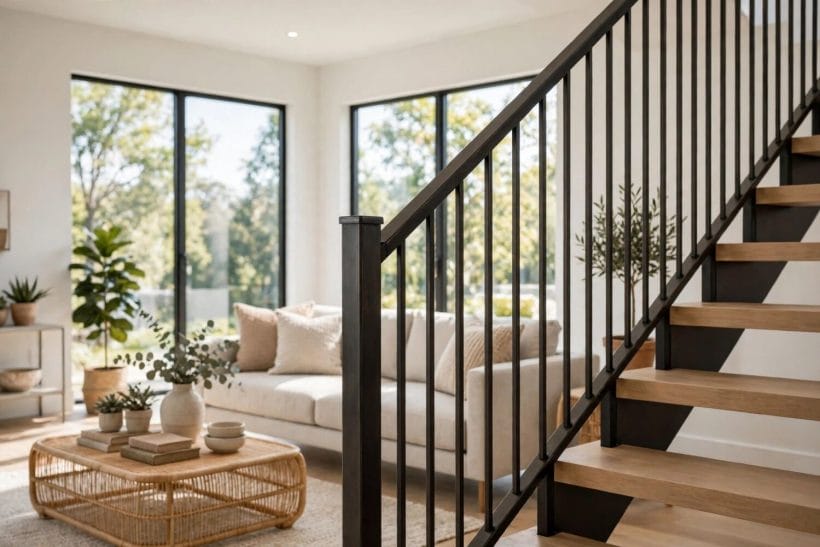
Metal newels suit stairs where timber would look too heavy or too traditional: glass balustrades, cable runs, open-tread flights and industrial-style rooms. A metal post can be far slimmer than a timber one while doing the same anchoring job, which keeps sightlines open and lets light travel through the stair. In a small home, that openness can make the difference between a stair that divides a room and one that belongs to it.
Finish is the main choice with metal. A dark powder-coated post reads as a sharp outline against pale walls. Brushed steel feels cooler and more technical. Brass or bronze tones warm the stair and suit rooms with other metal accents. Whichever finish you favour, consistency matters: the post, the handrail brackets and the baluster fixings should feel like one family, not a collection of near matches that the eye keeps tripping over.
Metal posts also change how a stair feels to the hand. Timber warms quickly to the touch; metal stays cool, which some people love and others notice on winter mornings. A timber handrail over metal posts gives the best of both: the slim strength of metal where it counts, and a warm grip where the hand actually lands. That combination is common for good reason, and it is worth considering before committing to metal throughout.
5. Painted and Stained Finishes
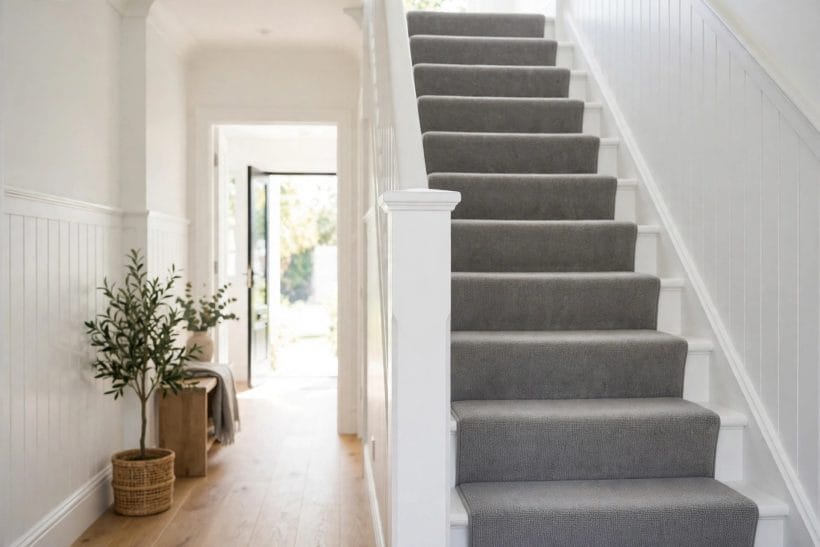
Finish is where a newel post either joins the room or argues with it, so it deserves a decision of its own rather than a default. Paint is the great unifier: a post painted the same colour as the surrounding woodwork, the balusters and the stair string disappears into a coherent whole, and the stair reads as architecture rather than furniture. White and soft off-whites are the usual choices, but a deep green, navy or charcoal post can anchor a hall the way a dark door does, provided the room has the confidence to carry it.
Stain and oil, by contrast, celebrate the timber. They suit posts in oak, walnut and other figured woods, and they pair naturally with timber floors, wooden doors and exposed beams. The trade is maintenance: a stained post shows wear, knocks and sunlight fading more honestly than a painted one, and refreshing it is a bigger job than touching up paint. Wood stair railing ideas show both approaches in real rooms, and comparing them side by side is the quickest way to learn which camp your home falls into.
Whatever the finish, test it on the post itself rather than on a chart. Paint and stain both shift with the light in a hall, which is often darker than a shop or a screen suggests. A sample on the actual post, viewed in morning and evening light, prevents the common disappointment of a colour that looked perfect in the showroom and merely adequate on the stair. This is a small delay that pays for itself many times over.
6. Caps, Finials and the Details That Finish a Post
The top of a newel post is its signature. A ball top is the classic choice for a turned post, and it earns its popularity: it is pleasant to the hand, it finishes the turning gracefully, and it suits almost any traditional room. A flat cap is the modern equivalent, calm and unfussy on a box post. Between those poles sit acorns, pyramids, urn shapes and mushroom caps, each with its own period flavour and each capable of looking perfect or fussy depending on the post beneath it.
Two rules keep caps honest. The first is scale: a cap should relate to the post it crowns, neither so large that it looks like an afterthought nor so small that it vanishes. The second is consistency: every post on one stair should carry the same cap, unless a landing or a turn deliberately marks a change. A stair with three different finials looks like a repair history, not a design, and visitors notice it even if they cannot name what is wrong.
Beyond the cap, look at the collars, beads and panels that break up the post’s length. On a turned post, collars give rhythm. On a box post, a recessed panel gives shadow and depth without ornament. On a metal post, a collar where the post meets the floor or the rail can hide a fixing and make the whole assembly look intentional. These are small elements, but they are what separate a post that was chosen from a post that merely arrived.
7. Landings, Turns and the Case for Two Posts
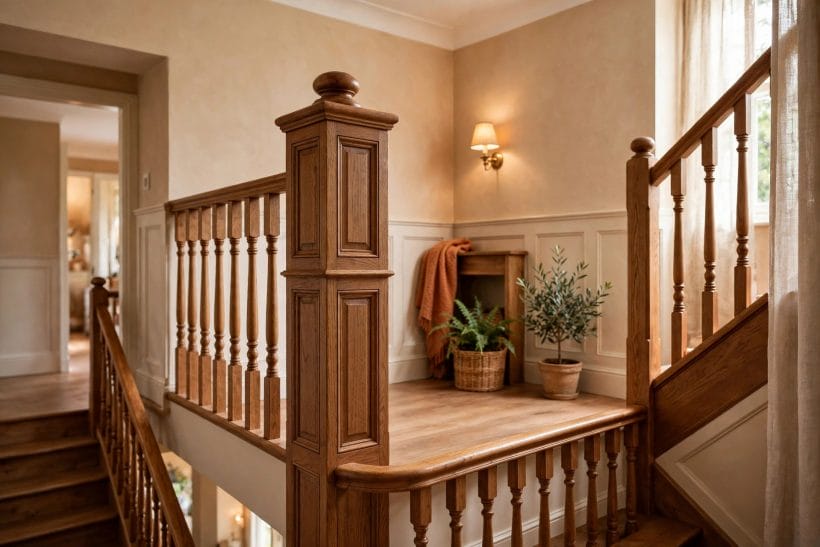
Most straight flights need two posts, one at the foot and one at the head. But stairs that turn, whether at a half landing or a quarter landing, need a post at every change of direction, and that is where newel design gets interesting. A landing post is seen from more angles than a foot post: from below as you climb, from above as you arrive, and from the landing itself as you turn. It has to look good from all three, which argues for a post with a resolved shape on every side, not just its front face.
On a wide landing, a pair of posts framing the turn can create a small moment of architecture, almost like a gateway between one flight and the next. On a tight turn, a single well-placed post keeps the stair feeling open rather than cluttered. The difference is a matter for the person designing or fitting the stair, not for guesswork: the post positions affect how the handrail runs, how the balusters space out, and how the whole assembly holds together. Stair landing ideas show how landing posts shape the rooms they stand in, which is useful context when you discuss positions with your installer.
One practical point is worth stating plainly. A loose or wobbling newel is not a cosmetic problem; it is the sign that the anchor of the handrail needs attention. Do not ignore it, and do not attempt a structural repair on the basis of a general guide. A qualified installer can judge whether a post needs tightening, re-fixing or replacement, and that judgement is worth paying for, because the handrail it supports is a safety feature as much as a design feature.
8. Matching the Post to the Room
The best newel post for a room is the one that already looks as though it belongs there. In a cottage with low ceilings and chunky beams, a turned oak post with a ball top feels inevitable. In a tall Victorian hall with cornicing and panelled doors, a larger turned or panelled post holds its own against the room’s scale. In a new-build hall with plain walls and pale floors, a painted box post keeps the space calm. The post should rhyme with the room, not compete with it.
Look for rhymes in the details you already have. If the doors have panelled faces, a panelled post echoes them. If the architraves are simple and square, a box post continues their language. If the room has ironmongery in a particular finish, a metal post in a matching tone ties the stair into the rest of the house. Small staircase ideas are a good test of this principle, because in a compact hall every rhyme and every clash is magnified, and the posts that work there tend to work anywhere.
Also consider the view from the rooms the stair connects. A newel at the head of a stair is often the first thing seen from an upstairs landing, and a foot post is often visible from the living room or kitchen. Choosing a post that looks right from both ends, and from the side as you pass it in the hall, matters more than choosing one that photographs well from a single angle. Live with the view, not the photograph.
9. Care, Wear and Everyday Living
A newel post is one of the most touched pieces of woodwork in a house. Hands grip it daily, bags brush past it, children swing around it, and pets rub against it. The finish you choose should therefore be judged on how it ages, not just how it looks on the day it is fitted. Paint touch-ups are quick and forgiving. Oiled timber can be refreshed locally. A high-gloss lacquer shows every knock but wipes clean. There is no finish that never wears; there are only finishes whose wear you can live with and repair.
Day-to-day care is simple and undramatic. Dust the post as you dust the rest of the woodwork, wipe marks promptly with a damp cloth, and keep harsh cleaners away from both paint and stain. Sunlight is the slow enemy: a post in a shaft of direct sun will fade or yellow over time, and a rug or blind that softens that light protects the post as surely as it protects the floor. None of this is specialist work, and none of it needs a product more exotic than the cloth you already use.
When wear goes beyond the surface, call in help rather than improvising. A post that has been knocked out of true, a cap that has split, or a fixing that has worked loose all touch the structure of the balustrade, and a general guide cannot judge them safely. A professional can tell you whether a repair is a simple matter or a sign that the post should be replaced, and that advice protects both the stair and the people who use it every day.
10. Costs in General Terms
The cost of a newel post, and of fitting it, is driven by a handful of factors rather than by any single figure. Material comes first: a plain softwood post sits at one end of the range, a carved hardwood post at the other, with metal posts varying by finish and fabrication. Size and complexity come next, since a large or elaborately shaped post takes more material and more workshop time than a plain one. Finish adds its own layer, with paint generally simpler to achieve than a fine stained or oiled result.
Fitting is the other half of the story, and it is the half most often underestimated. A post that simply replaces a like-for-like predecessor on a sound stair is a modest job. A post that anchors a new handrail run, resolves a landing turn, or requires the balustrade to be reworked is a larger one, because the installer is not just fitting a post but re-establishing the rigidity of the whole assembly. Where the stair itself needs work to receive the post, that work belongs in the same conversation and the same budget.
Two cautions keep costs honest. First, compare like with like: a price that covers only the post is not comparable with one that covers the post, the cap, the fixings and the fitting. Second, treat an unusually low figure as a question, not a bargain, since a post that is poorly fixed will cost more in the long run than a post fitted properly the first time. The cheapest post is the one you never have to revisit, and that is usually the one fitted by someone who understood the stair as a whole.
Final Considerations
A newel post is a small piece of joinery with an outsized effect. It anchors the handrail, it frames the stair, and it greets everyone who enters the house. The forms in this guide give you a language for choosing: turned for warmth and tradition, box for clean modern lines, metal for slim contemporary strength, panelled for solid presence. The finish, the cap and the room itself then narrow that language down to a single post that belongs in your home.
Choose slowly, test finishes in the hall’s own light, and leave the structural questions to a qualified installer who can see the stair in person. Done that way, the post you choose will do its quiet job for decades: holding the handrail firm, marking the turn of the stair, and making the whole flight feel finished. That is all a newel post ever needs to do, and it is more than enough.



0 Comments