
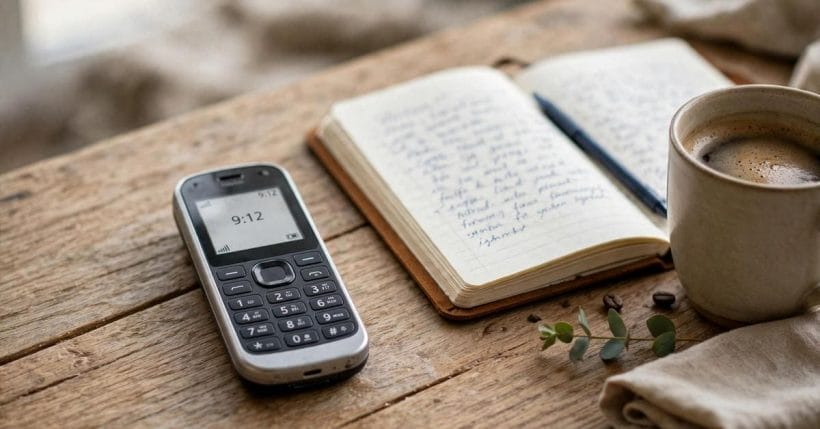
Your phone should be a tool you pick up on purpose, not a feed that picks you up. That is the promise of dumb phones: calls, texts, long battery life and little else, in exchange for your attention back.
This comparison works by type, not by model: basic bar phones, flip phones and minimal smart-lite phones, compared on battery, basics and what you give up, ending with a clear verdict on who should pick which.
1. At a Glance: The Types Compared
Every simple phone on the market falls into one of three families, and the families matter more than any badge. The summary below compares them on the one measure minimalists ask about first, battery life, before the head-to-head sections take each type in turn.
| Basic Bar Phone | Battery — weeks standby |
| Flip Phone | Battery — days to weeks |
| Minimal Smart-Lite | Battery — 2–4 days |
| What You Give Up | Apps and feeds, on purpose |
| Battery (Key Factor) | Long life, easy charging |
| Signal | Works on 2G/4G networks |
| Hotspot | Limited or none on most |
| Durability | Rugged, drop-resistant build |
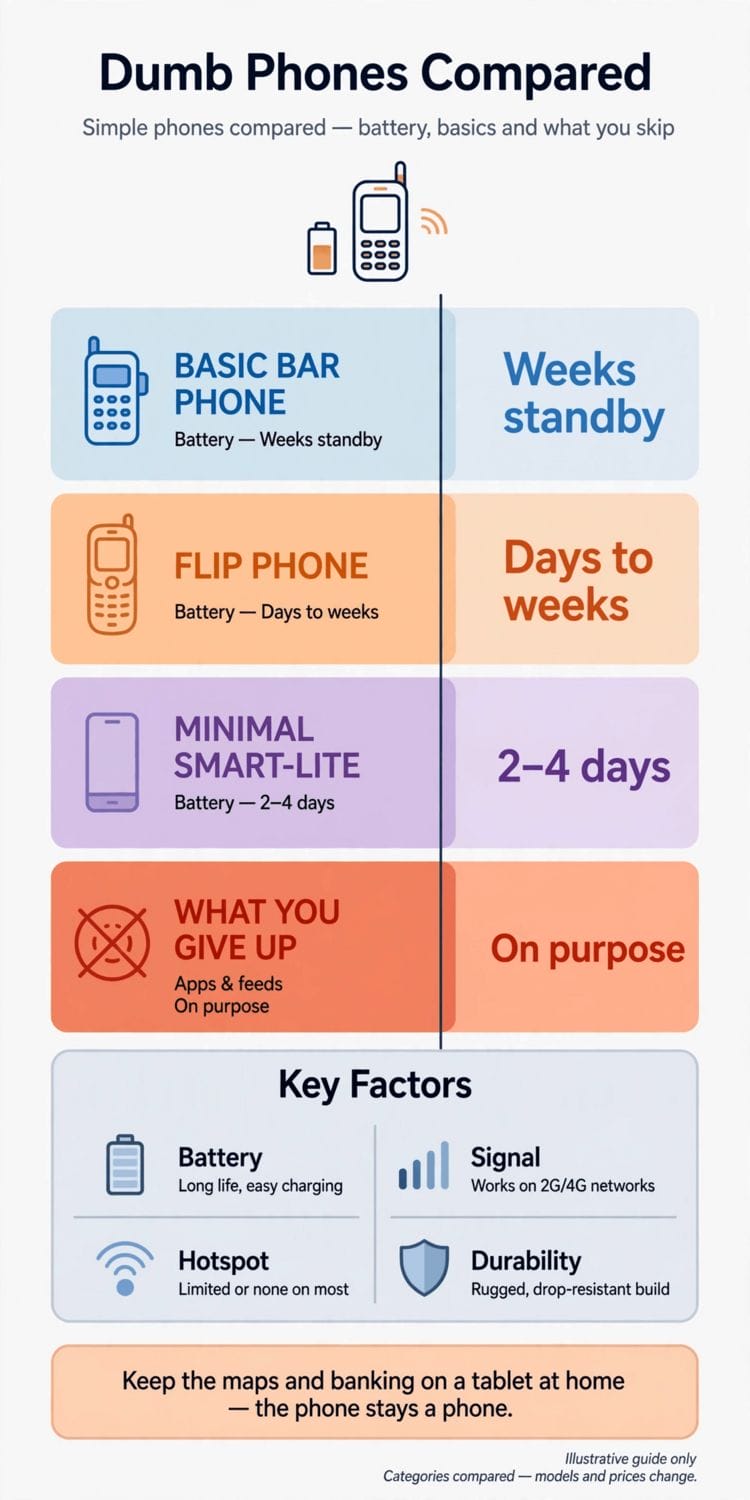
The types at a glance: basic bar phones run for weeks on standby, flip phones for days to weeks, and minimal smart-lite phones for 2–4 days, with apps and feeds given up on purpose.
Two notes frame everything that follows. The comparison is illustrative and by category, because models and prices change while types endure. And the summary’s closing tip is the lifestyle in one line: keep the maps and banking on a tablet at home, and the phone stays a phone.
2. Why Choose a Simple Phone at All?
Start with the honest reason most people switch: the smartphone’s business model is your attention, and no setting fully repeals it. A simple phone removes the arena rather than asking for willpower inside it. There are no feeds to fall into, no badges competing for the lock screen, and no algorithmic escalator from a quick message check to twenty lost minutes, because the machine in your pocket simply cannot run that machinery.
The practical gains stack quietly behind the philosophical one. Battery life measured in days or weeks ends charger anxiety and suits off-grid, travel and emergency-drawer duty perfectly. The devices are typically rugged and drop-resistant, cheap-feeling in the hand in the best way, because dropping one is an event, not a financial incident. And calls and texts, the original jobs, work beautifully, with the summary noting the types work on 2G and 4G networks alike.
None of this requires purity. Most minimalists keep a computer or tablet at home for the tasks that genuinely need one, which is the same division of labour the rest of this site preaches, from the passive design in sunken greenhouse (walipini) build to the seasonal systems of the complete solar oven guide: use the right-sized tool, and let each tool be only that tool.
3. Basic Bar Phone vs the Rest: The Purest Option
The basic bar phone is the archetype: a small screen, a physical keypad, calls, texts, an alarm, perhaps a flashlight and an FM radio, and nothing reaching for your attention. Against the other types its signature advantage is endurance, weeks of standby in the summary’s comparison, because there is almost nothing running to spend the charge. Charge it, forget the charger exists, and rediscover it as a weekly errand rather than a nightly ritual.
Versus the flip phone, the bar wins on simplicity and pocketability and loses on call comfort and the small theatre of opening and closing, which many people genuinely enjoy. Versus the smart-lite type, the bar wins on battery, price-of-entry in spirit, and total freedom from apps, and loses on messaging ease and the few modern conveniences, group threads, slightly better cameras, basic maps, that smart-lite devices cautiously admit.
Choose the bar type if your goal is the cleanest possible break: a phone for being reachable, not entertained. It is the emergency phone, the festival phone, the off-grid cabin phone and the digital-minimalist’s first step, all in one unpretentious slab. Its very plainness is the feature, and for the right owner it never feels like a compromise, any more than the ordered drawers of marie kondo folding for tiny wardrobes feel like a loss of clothes.
4. Flip Phone vs the Rest: The Satisfying Middle
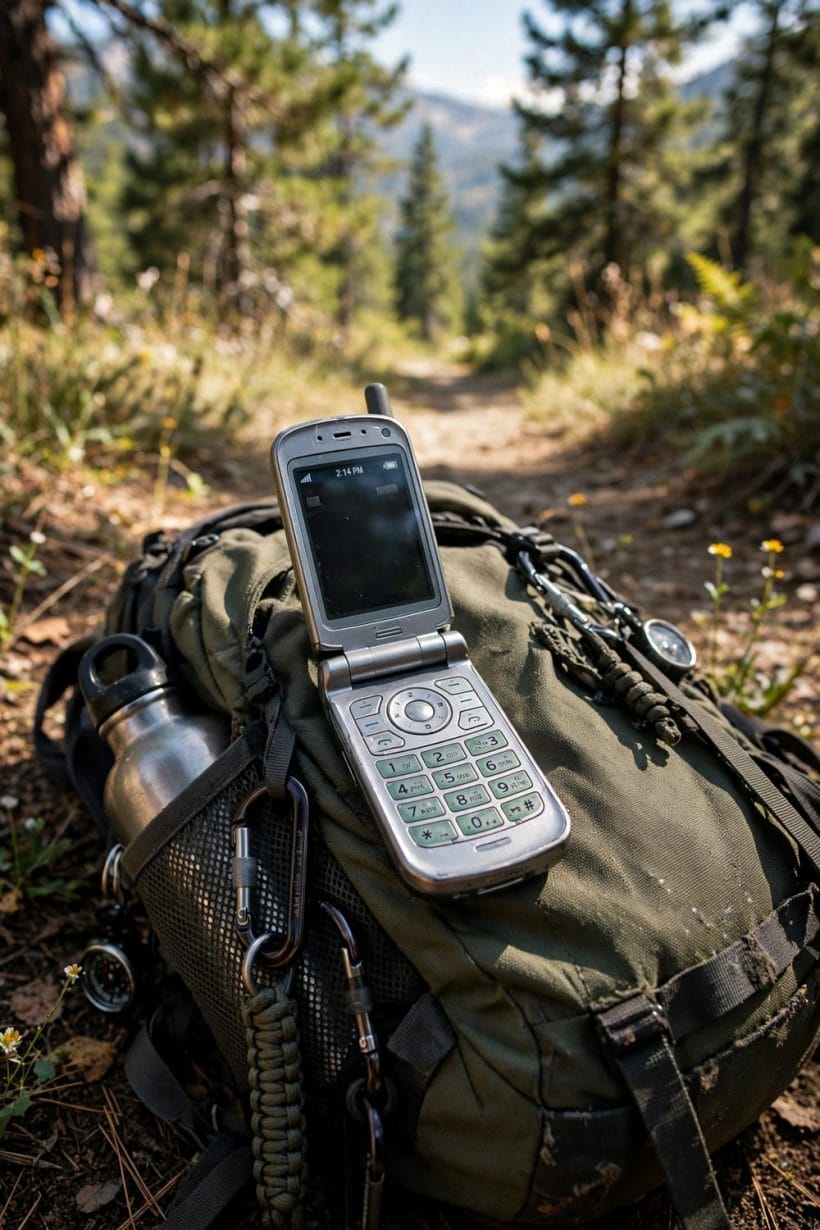
The flip phone adds one moving part and gains a surprising amount of life. Closing it ends a call with finality no touchscreen imitates, the hinge protects screen and keys in the pocket, and the form invites a larger keypad and a slightly more comfortable shape held to the ear. Its battery, days to weeks in the summary, sits between the bar’s weeks of standby and the smart-lite’s days, varying with how much its small outer screen and features are used.
Versus the bar phone, the flip wins on call experience, pocket protection and sheer tactile pleasure, and loses a little on ultimate standby and on having a hinge, a mechanism that can wear where a slab has nothing to wear out. Versus the smart-lite, the flip wins on battery and distraction-freedom and loses on the modern conveniences, exactly the same trade as the bar makes, played at a slightly more comfortable register.
Choose the flip type if you want the break from feeds without giving up a phone that feels good to use all day: the communicator’s simple phone. It suits people whose work is talk, coordinators, carers, traders of voice calls, and anyone who finds that the physical gesture of closing the phone closes the topic too, a small ritual of done that touchscreen life rarely offers.
5. Minimal Smart-Lite vs the Rest: The Bridge Option
The minimal smart-lite type is the deliberate halfway house: a pared-down, deliberately unexciting smart device or simplified handset that keeps a short list of useful tools, typically messaging, simple navigation, music or podcasts, a basic camera, while removing or discouraging the feeds, stores and infinite scroll that make smartphones sticky. It is the type for people who need a few modern functions to work or parent smoothly, but want the machine biased hard toward boredom.
Its cost is written in the summary’s battery line: 2–4 days, far better than a full smartphone’s daily charge, far short of a bar phone’s weeks. That single figure tells the type’s whole story, more capability spending more power, and it sets the owner’s rhythm: a twice-or-thrice-weekly charge, still a liberation, but a routine to keep. Versus both simpler types it also reintroduces a measure of self-management, because a device that can run a messaging app ecosystem needs its owner to keep the gate.
Choose smart-lite if a total break would break something that matters, school and work logistics, two-factor life, essential messaging groups, and you want guardrails rather than gates. It is also the kindest on-ramp for the hesitant, proving the quieter life for a season before, perhaps, stepping down to a flip or a bar, a graded approach as sensible here as in herb garden layouts by bed size and sun, where the right size is the one you will actually keep.
6. Battery Compared: Weeks vs Days to Weeks vs Days
Battery is the headline comparison, so give it its own honest reading. The bar type’s weeks of standby are real-world weeks for light users, because the device spends its life doing almost nothing, beautifully. The flip’s days to weeks span a wider range because the type spans a wider range of screens and habits. The smart-lite’s 2–4 days reflect a real computer idling in your pocket, disciplined but never off duty.
Translate those figures into lives. Weeks of standby means the phone survives trips, outages and neglect, and asks almost nothing of a tiny home’s power budget, a point readers of how much solar power a tiny house needs will appreciate, since every device that sips instead of gulps shrinks the system that feeds it. Days to weeks means a weekly charging habit at worst. Two to four days means the charger stays in your life, just demoted from nightly necessity to occasional chore.
One clarification keeps the comparison honest: standby is not talk time, and heavy calling shortens every type’s run. But the ranking survives heavy use intact, because it is built into what each device is. A bar phone spends its charge on calls and almost nothing else; a flip adds screens and a hinge’s small electronics; a smart-lite runs an operating system that never fully sleeps. Judge your own likely pattern, an hour of calls a day or a handful, against that ranking rather than against the rosiest figure, and the type whose worst case still leaves you comfortable is the type whose battery you will never think about again, which is precisely the intended outcome.
Charging itself is easy across all three types, as the summary notes, long life and easy charging together, usually through common cables and modest power needs. The deeper point is psychological: a phone that is rarely empty and never urgent teaches its owner that connectivity can be calm. Battery anxiety is a modern invention, and every type in this comparison, even the thirstiest, is a cure for it.
7. The Key Factors: Signal, Hotspot and Durability
Signal first, because a charming phone that cannot connect is a paperweight with a keypad. The summary notes these types work on 2G and 4G networks, and the buyer’s one job is matching the type to their own network’s present and future, since older networks are retiring at different times in different places. Check compatibility qualitatively with your carrier before choosing, especially for the simplest types, and the phone will reward you with call quality that often shames glass slabs in fringe areas, thanks to modest demands and honest antennas.
Hotspot is the summary’s clearest caveat: limited or none on most. If your life depends on sharing a connection to a laptop in the field, a simple phone alone will not carry it, and the honest architectures are a separate dedicated arrangement for work connectivity or the tablet-at-home system described later. For most minimalists the absence is a feature wearing a warning label: the phone cannot become the feed’s mule, even by proxy.
Durability is the quiet third factor, rugged, drop-resistant builds across the category. Small screens survive pockets, keys survive bags, and bodies forgive the drops that write off large glass. In tiny, practical, working lives, on building sites, boats, gardens and trails, this toughness is not a bonus; it is the difference between a tool and a liability, and it is one reason these types keep reappearing wherever people work with their hands.
8. What You Give Up, On Purpose
Name the losses plainly, as the summary does: apps and feeds, on purpose. Gone are the social feeds, the video scroll, the shopping portals, the game loops and the notification casino. Gone too, or moved indoors, are the genuinely useful things entangled with them, maps in the hand, banking in the queue, ride-hailing, boarding passes, the two-minute tasks that quietly colonised the pocket. A credible comparison admits both columns of that ledger.
The minimalist answer is not denial but relocation. The summary’s tip carries the whole strategy: keep the maps and banking on a tablet at home, and the phone stays a phone. Tasks become batched and seated rather than ambient and constant; you plan a route before leaving, bank at a table, and carry paper or memory for the rest, which human beings managed within living memory and many still prefer.
What returns in exchange is harder to tabulate and easy to feel: unfilled minutes that become thinking, waiting that becomes looking around, evenings that end when you decide. Owners commonly report the first fortnight as the strange one, phantom reaches and all, followed by a recalibration that feels less like deprivation than like quiet. You give up the feed; you keep the day, a trade our readers weigh in many forms, as in an honest decision guide to getting a tiny house.
9. Living With One: Setup, Contacts and the Home Tablet System
Set up deliberately on day one. Move the contacts that matter, set the few shortcuts your life uses, alarm, flashlight, speed dials for your people, and learn the texting rhythm of a keypad or simplified screen before you need it under pressure. Tell your circle what the change means: calls and texts reach you, app messages may not, and anything urgent should be a call, a clarity most people find refreshing rather than rude.
Build the home side of the system with equal care. A tablet or computer at home holds maps for planning, banking, tickets, and the long messages, answered in seated sessions that begin and end. A paper notebook in the pocket recovers the notes, lists and directions the smartphone used to swallow. This division, pocket for people, home for tasks, is the operating system of the whole experiment, and it takes about a week to stop feeling like a workaround and start feeling like a preference.
Expect two honest friction points and plan for them. Verification codes and app-based logistics will occasionally route you to the home device, solved by keeping it charged and signed in rather than by abandoning the phone. And group conversations organised inside apps need a bridge, one agreed channel that reaches your simple phone, arranged with the same people who will quietly envy your battery by day three.
10. The Verdict: Who Should Pick Which
Here is the verdict, type by type. Pick the basic bar phone if you want the deepest quiet and the longest battery: weeks of standby, the fewest features, the cleanest break. It is the choice for committed minimalists, off-grid and tiny-house dwellers, emergency kits, and anyone whose phone exists to be reachable and nothing more. If in doubt between bar and flip, the bar is the purer medicine.
Pick the flip phone if you are a talker: calls all day, a phone that feels good in the hand and better to close, with days-to-weeks of battery and the same freedom from feeds. It suits carers, coordinators, parents fielding the school-day calls, and romantics who want their technology to have one satisfying moving part. Pick the minimal smart-lite if your logistics genuinely require a few modern tools, messaging groups, light navigation, music on the move, and you accept 2–4 day battery and a little self-management as the price of the bridge.
And pick none of them, yet, if your work truly runs on mobile apps end to end; the honest minimalist move there is to strip the smartphone you have first and revisit the switch when life allows. Every other reader should choose by the battery rhythm they want to live with, weeks, days-to-weeks, or days, because that rhythm, more than any feature list, is what a simple phone actually changes: how often you charge, how rarely you scroll, and how completely the phone returns to being a phone.
Final Considerations
Compare by type, keep the heavy tasks on a tablet at home, and let the pocket device go back to calls, texts and remarkable battery life. Start with the type whose trade-offs match your real week, live with it through one full charge cycle and beyond, and judge by how your attention feels, not by how the handset looks. Simple phones are not a step backwards; for minimalists they are the step sideways, out of the feed and back into the day.

0 Comments