

Illinois rules change by county and city, winters are properly cold, and the right builder type depends on whether you want custom, four-season or a shell to finish yourself. This guide to tiny house builders illinois is a verification system — the checks, questions and red flags to work through before you sign with anyone.
1. Choosing an Illinois Builder at a Glance
Illinois buyers are comparing three kinds of builder, and the state’s split personality — big-city rules in one place, open farmland in another, cold winters almost everywhere — should shape the choice. The summary below follows this guide’s infographic, which compares the builder types and names the four factors that matter most here: county rules, winters, delivery and certification.
| Builder type | Best for | What the infographic highlights |
|---|---|---|
| Custom design-build firms | Fully custom layouts and high-end finishes | Works closely with you on design; a longer timeline and higher cost, in exchange for a unique home tailored to your site. |
| Four-season insulated specialists | Year-round living in the Illinois climate | Advanced insulation and an airtight shell, with heat recovery ventilation for winter comfort. |
| Shell and DIY-finish builders | Hands-on buyers planning DIY work | The fastest shell delivery and the lowest build-out route; you finish the interior yourself to save on build-out. |
Whichever type fits, the verification sequence is the same. Check county and city rules for your exact site, confirm licensing and registration, ask how the home is certified and inspected, test the winter specification, confirm delivery and setup to your property, read the warranty, and study the builder’s local completed homes. The sections below take those checks in order.
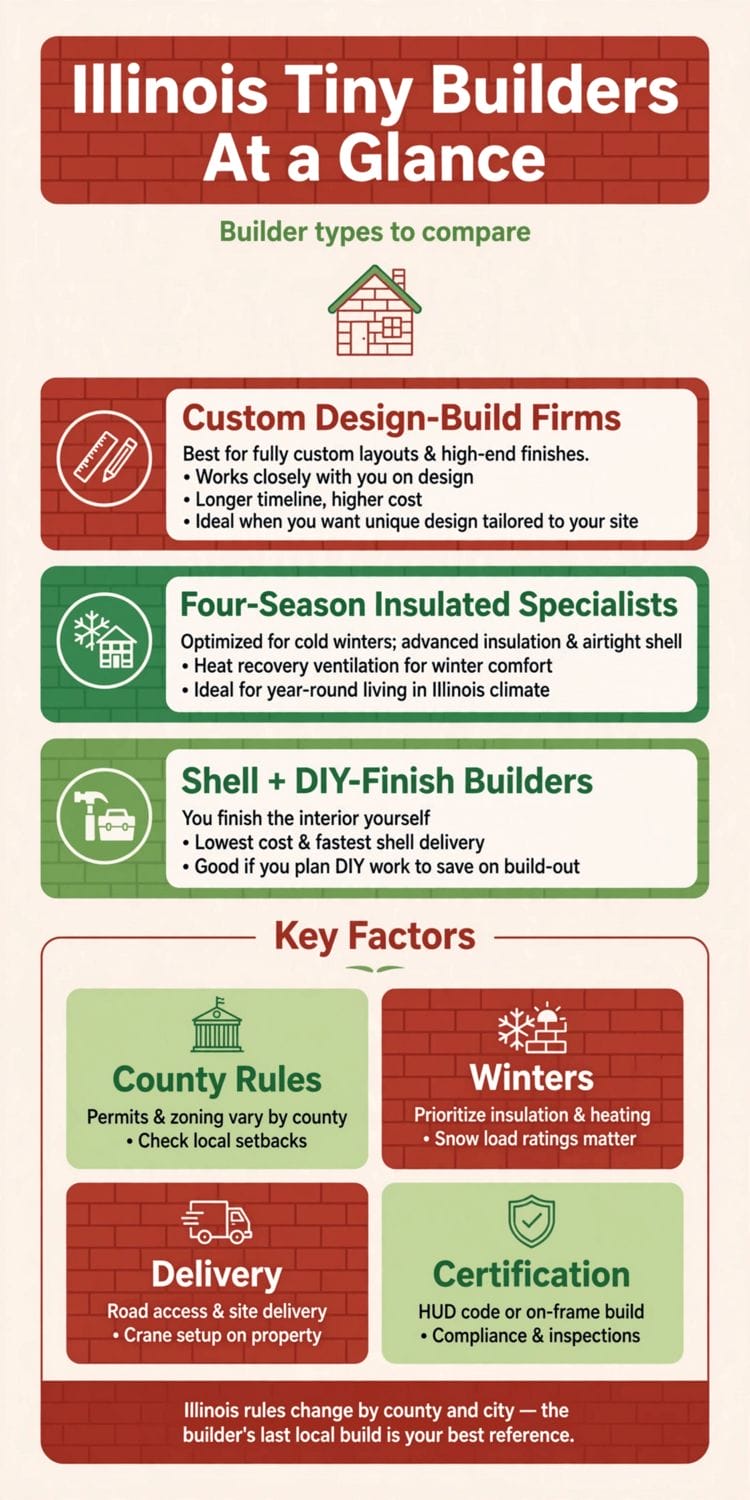
Illinois builders at a glance: three builder types to compare, and four key factors — county rules, winters, delivery and certification — that decide which builder suits your site and your winters.
2. Start With County and City Rules
The infographic puts county rules first for good reason: permits and zoning vary by county in Illinois, and cities and villages add their own layer on top. Setbacks, minimum sizes, foundation expectations and whether a small or movable home counts as a dwelling all change across boundaries that are invisible on the ground. Check the local setbacks and the exact rules for your parcel before a design hardens, and keep the answers in writing — an approval in the next county is not an approval in yours.
Ask each builder what they have placed in your county and what the process demanded. Local experience shows up as fluency: the builder knows which office asks what, which documents travel with the application, and where projects usually stall. If your route runs through an accessory dwelling permission, a foundation build or a park placement, a builder who has done it nearby is worth more than a beautiful catalogue. The full build sequence is covered in our guide to how to get a tiny house built, from first sketch to finished shell. Sign only when the site’s rules and the builder’s plan agree.
3. Verify Licensing, Registration and Certification
Verify the business before the design talk. Ask for the builder’s licensing and registration details, confirm they are current, and check that the legal name on those documents matches the name on your contract. Ask what insurance the operation carries and expect to see paperwork. Serious builders treat the request as routine, because every careful buyer makes it and the documents live within reach.
Certification is the second check, and the infographic frames it concretely for this state: a HUD-code or on-frame build, with compliance and inspections behind it. Ask exactly which route your home will follow, which inspections happen during and after the build, and which certificates and papers you will hold at handover. Ask how a home on wheels will be titled and registered, and who manages that process. Certification carries the home through placement, insurance, financing and resale, so a builder who is vague about compliance and inspections is showing you a problem, not a detail.
4. Four-Season Specification: Winters Done Properly
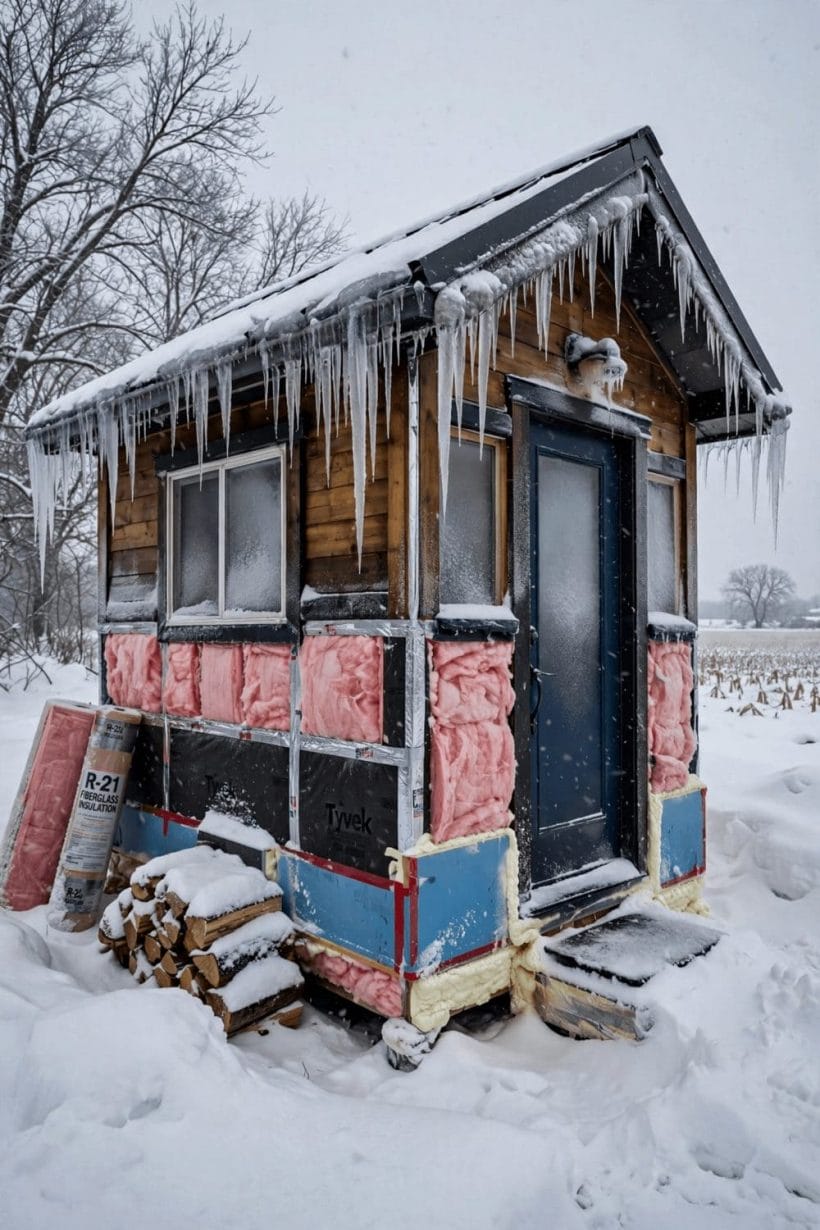
Winters are a headline factor because Illinois cold is not decorative. The infographic’s advice is to prioritise insulation and heating, and to remember that snow load ratings matter. Ask how the builder insulates and seals the shell, what heating system they specify for deep cold, and how heat recovery ventilation keeps a small, airtight home fresh without throwing warmth away. Ask how plumbing is routed and protected against freezes, and what happens to the home in a cold snap if you are away.
Snow belongs in the same conversation, because a winter roof carries real load and the structure — plus the trailer or foundation under it — has to be specified for it. Our reference on what a tiny house weighs and why the trailer sets the ceiling explains how weight and ratings interact. Ask what snow thinking goes into the roof design for your part of the state, since a lake-effect county and a southern county live different winters. A four-season specialist answers with assemblies, ratings and details. A fair-weather builder answers with adjectives, and January will grade the difference.
5. Questions to Ask Before You Sign
A structured interview outperforms any showroom visit. Ask how many homes the builder completes in a typical year, and how many were built for Illinois winters and Illinois rules. Ask who physically builds your home, what is subcontracted, and who is responsible for quality and inspections along the way. Ask what the timeline assumes — custom design-build work runs longer by nature, as the infographic notes — what usually causes delays, and how you will hear about them while there is still time to react.
Then turn to scope and money. What exactly does the quote include, line by line: design work, trailer or foundation, appliances, delivery, crane or setup work, utility connections, taxes? How are changes requested, priced and approved once building starts? What payment schedule is expected, and does each stage correspond to progress you can see? What documentation arrives at handover — certificates, inspection records, manuals, warranty papers? Write the answers down and compare builders on the completeness of their evidence. Consistency under questioning, before any money moves, is the best available preview of consistency during the build.
6. Delivery, Road Access and Site Setup
Delivery is a key factor because the journey’s last stretch decides more than the mileage does. The infographic flags road access and site delivery, including whether a crane setup is needed on the property. Ask what delivery radius the builder actually serves within the state, what the charge depends on, and whether they assess the route and the site in advance: bridge limits, tight rural lanes, soft ground, overhead lines and turning space all belong in the survey, along with the prepared, level spot the home will land on.
Clarify the choreography while you are at it. Who drives, who insures the home in transit, who levels, anchors and connects it on arrival, and who pays if a crane or extra equipment turns out to be necessary? Ask what happens if weather closes in on the chosen day — in an Illinois winter, a builder willing to postpone is showing judgement, not weakness. Agree the answers in writing before the build starts, so delivery day runs like a plan rather than an improvisation. The home you have waited months for deserves a boring arrival.
7. Warranty, Aftercare and References
Read the warranty in the choosing stage, while your questions still carry negotiating weight. Establish what is covered — structure, roof, shell, systems, finishes — for how long, what is excluded, and who performs the work if your home sits far from the workshop. Ask how a claim is raised and how quickly someone realistically attends, then ask about ordinary aftercare: the sealing, settling and adjustment visits a new home needs after its first full winter and summer have tested it.
References in Illinois come with the infographic’s smartest advice attached: rules change by county and city, so the builder’s last local build is your best reference. Ask for recent buyers in your county or a similar one, and ask those owners how placement went, how the home behaved through winter, and how the builder responded when something needed fixing. Keep the full document set — certification, inspection records, warranty, manuals — in one file; it supports insurance and strengthens resale, as our guide to how to sell a tiny house when it is time to move on explains. A builder proud of local work will introduce you to it gladly.
8. Cost Drivers, Discussed Honestly
An honest guide talks about cost drivers, not invented prices, and Illinois offers clear ones. Builder type leads, exactly as the infographic lays out: custom design-build means design time, a longer timeline and higher cost; a shell is the fastest and lowest-cost route to a weathertight box, with the finishing spend transferred to your own time and trades; a four-season specification sits between, its budget carried by insulation, airtightness and heating plant rather than by finishes.
Site and paperwork drivers follow: county-by-county compliance, foundation or setback work, delivery distance, crane setup and utility connections can move a total as surely as the home’s own specification does. Financing interacts with certification and documentation, which is why how to get a loan for a tiny house and tiny house mortgages and how lenders classify these homes reward documented builds. Ask every builder to name the levers on your quote — what raises it, what lowers it, and where they refuse to economise. In a cold state, a builder who refuses to cut the winter specification is telling you something good.
9. Red Flags That Should Slow You Down
The warning signs repeat across every state in this series, and Illinois buyers should know the set. Be careful with a builder who will not put licensing, registration or certification details in writing, who cannot say whether your home follows a HUD-code or on-frame route, or who waves away your county’s rules and urges you to sign first. Pressure is its own flag: a discount that expires today, or a build slot that vanishes if you think overnight, belongs to a sales script rather than a construction business.
Quieter flags matter too. An un-itemised quote cannot be compared and usually conceals exclusions that return later as extras. A payment schedule running far ahead of visible progress moves all the risk onto you. No local completed homes to visit, no references to call and no written warranty are three faces of one problem: nothing verifiable. None of this requires confrontation — simply slow down, put the question in writing, and judge the response. A builder’s behaviour under scrutiny, before they hold your deposit, is the most reliable forecast of their behaviour with your home.
10. Comparing Quotes Like for Like
Final comparisons only mean something when every quote describes the same home on the same site. Align the scope across your shortlist: builder type, design work, winter specification, certification route, trailer or foundation, delivery, crane or setup, connections, taxes and documentation. When one number looks dramatically keener than the rest, hunt for the missing line before celebrating — in tiny house quotes the gap is almost always scope, not generosity. Then score each builder on evidence: county rules checked, documents seen, winter answers specific, delivery surveyed, warranty read, local references called.
This verification-first method is deliberately portable, because only the local variables change. The companion guide to choosing tiny house builders in Utah runs the identical system against altitude and desert questions. Choose the Illinois builder whose paperwork, winter specification and local track record survive your checklist — not the one whose brochure survived your afternoon. In a purchase of this size, the evidence is not homework around the decision. Gathered properly, the evidence is the decision.
Final Considerations
The right tiny house builders illinois choice is the builder who survives verification: licensed and documented, fluent in your county’s rules, specific about winters and certification, honest about delivery and cost drivers, and proud of local finished homes. Work through the checks in order and keep every answer in writing. If your search crosses state lines, the same approach runs through our guides to choosing tiny house builders in Connecticut and choosing tiny house builders in Oklahoma, and the related question of whether you can get a home loan for a tiny house is worth settling before the first deposit moves.


0 Comments