

Oklahoma is tornado country, and that single fact should shape how you choose a builder: anchoring, foundations and storm ratings matter here before floor plans and finishes do. This guide to tiny house builders oklahoma is a verification system — how to compare builder types, what to check, which questions to ask, and the red flags that should slow any signing.
1. Choosing an Oklahoma Builder at a Glance
Oklahoma buyers are comparing three kinds of builder, and the state’s weather should influence which kind leads your shortlist. The summary below follows this guide’s infographic, which sets out the builder types and the four factors that matter most here: storm ratings, foundations, delivery and certification.
| Builder type | Known for | What the infographic highlights |
|---|---|---|
| Custom design-build firms | Fully custom plans, client-driven design | Full design and build, permits and plans included, end-to-end from concept to move-in. |
| Storm-ready and foundation builders | High-wind rated homes, reinforced foundations | Impact-rated structure, anchorage and tie-downs, and storm-code thinking built in. |
| Shell and DIY-finish builders | A weathertight shell you finish yourself | Exterior complete with plumbing and electrical rough-in; you finish drywall, paint and flooring. |
Whichever type fits your project, the verification sequence is the same. Confirm licensing and registration, ask how the home is certified, check the storm and anchoring specification in writing, confirm the builder delivers to your part of the state, read the warranty, and call the references. The sections below take those checks in a practical order, starting with where the home will live.
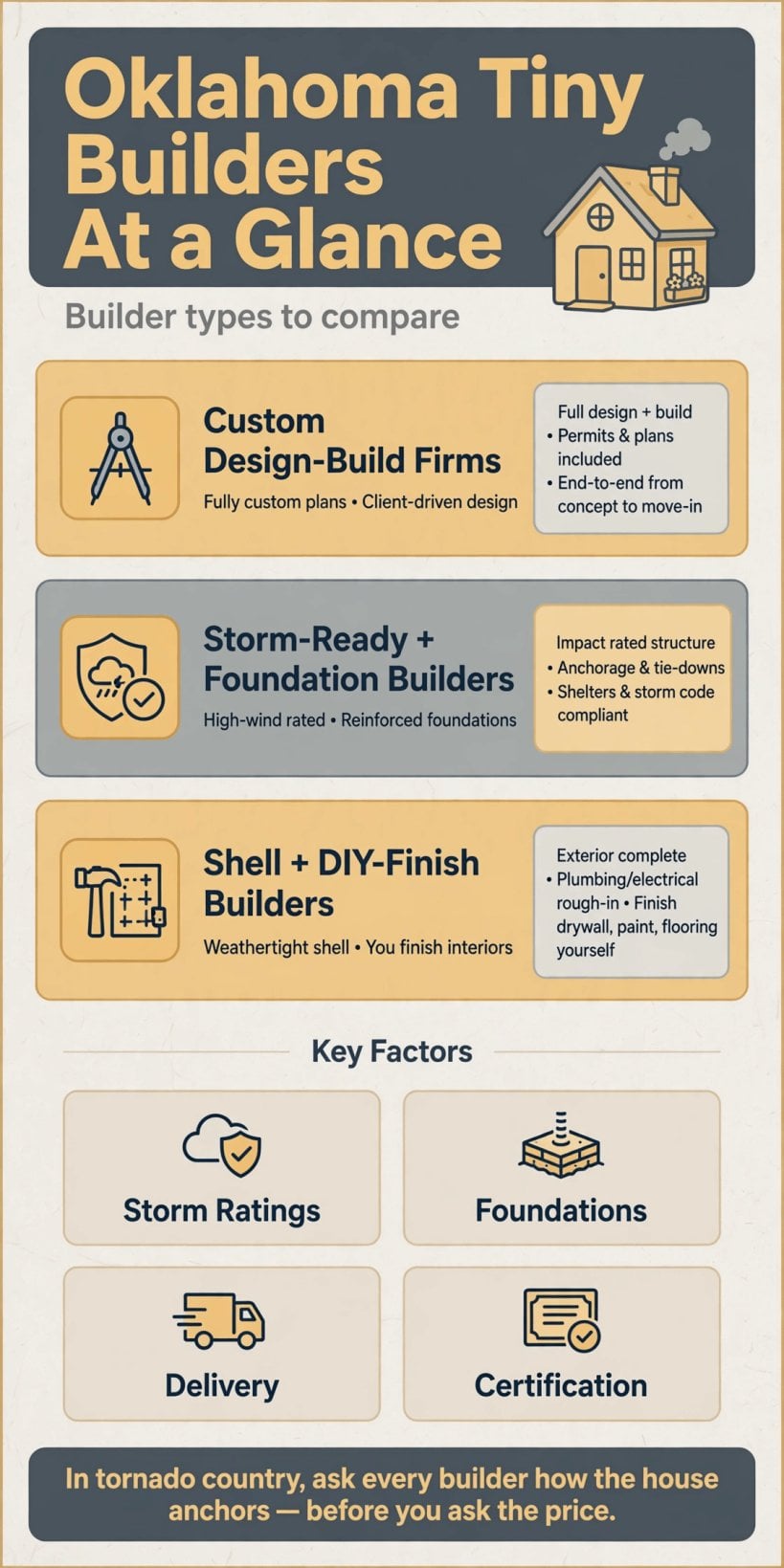
Oklahoma builders at a glance: three builder types to compare, and four key factors — storm ratings, foundations, delivery and certification — that decide which one fits your land and your weather.
2. Start With Placement: Land, Cities and Counties
Before a design conversation, settle where the home may legally sit. Rules for small and movable homes vary between Oklahoma’s cities, towns and rural county areas, and they can differ on minimum sizes, foundations, utility connections and whether a home on wheels counts as a dwelling at all. The builder’s answer to your design brief means little if your land’s answer is no, so run the placement check first and keep the responses in writing.
Ask each builder what placement experience they have in your area and what documentation local offices usually want from the build. Good builders treat this as a normal early step and will tell you plainly when a plan needs a different siting route — a permanent foundation, an accessory dwelling route, or a park setting. The overall sequence, from first sketch to a home you can place, is laid out in our guide to how to get a tiny house built, from first sketch to finished shell. Sign nothing until the land and the build agree with each other.
3. Verify Licensing, Registration and Certification
Verify the business before you admire the portfolio. Ask for the builder’s licensing and registration details, confirm they are current, and make sure the legal name on those documents matches the name that will appear on your contract. Ask what insurance the operation carries and expect documents, not reassurance. A well-run builder answers these questions in minutes, because every serious customer asks them and the paperwork lives in a drawer ready to show.
Certification is the second document check, and the infographic lists it as a key factor because it follows the home forever. Ask how the finished home will be inspected or certified, which standard the build is constructed to, and exactly which papers you receive at handover. If the home will be titled or registered as a vehicle-style unit, ask how that is handled and what you will hold as proof. Certification supports everything downstream — placement, insurance, financing and resale — so treat a vague answer here as the serious warning it is.
4. Storm Ratings and Anchoring: The Tornado Questions
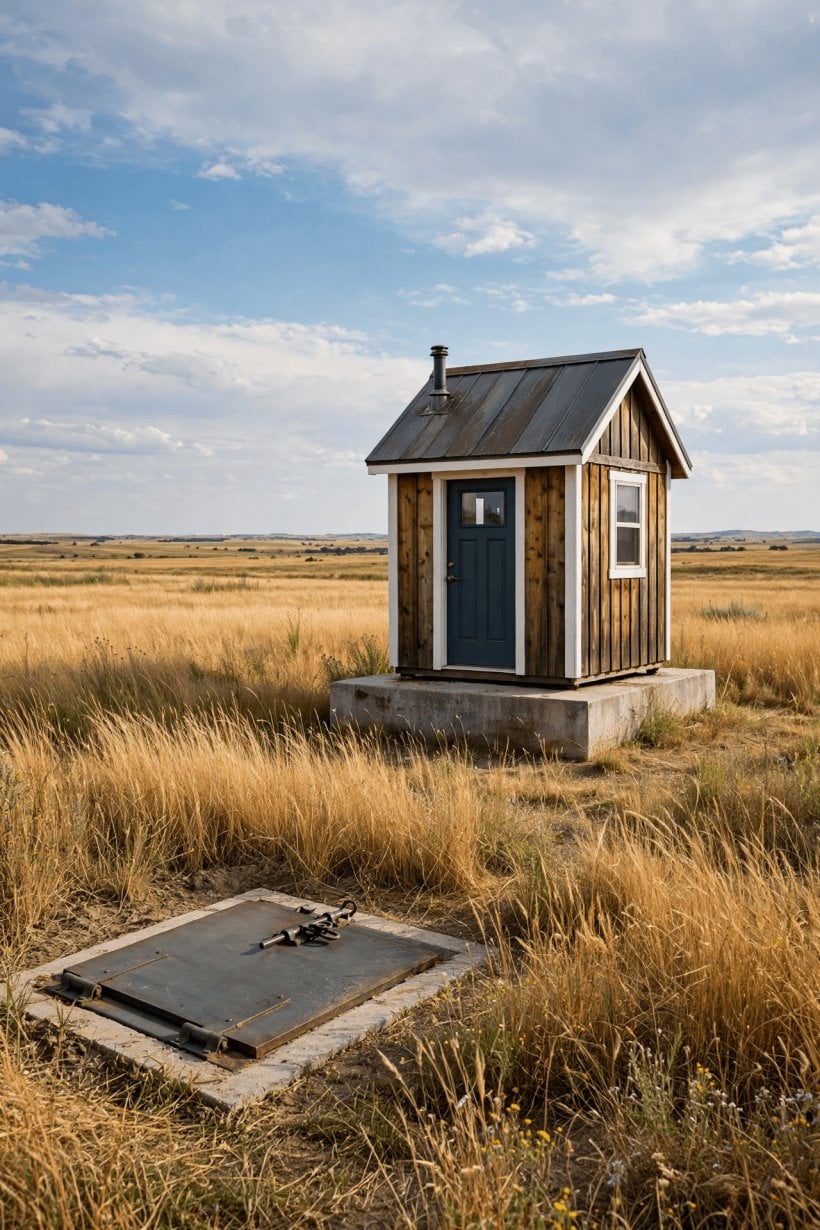
The infographic’s closing advice deserves its own section: in tornado country, ask every builder how the house anchors — before you ask the price. Storm readiness in Oklahoma is not a marketing adjective; it is a specification. Ask how the structure is rated for high wind, what impact resistance the shell and glazing offer, and how the whole system — frame, skin, roof and foundation or trailer — works together when the weather turns violent. Ask what the builder recommends for shelter, and how their completed homes have been specified for storm country.
Then move to anchoring, the detail too many buyers discover after delivery. How does the home tie down? What anchorage and tie-down hardware is included, what does the site need to provide, and who installs and checks it? A builder experienced in this state answers with hardware, diagrams and specifics. A builder who waves the subject away is telling you something important about their priorities. Get the storm specification written into the quote and the contract, because verbal confidence does not hold a roof on.
5. Foundations and Tie-Downs
Foundations are a key factor in their own right, because they decide how a stationary tiny home meets the ground and the wind. Ask each builder what foundation options they build for — piers, slabs, runners or a trailer left in place — and what they recommend for your soil, slope and storm exposure. Ask how the home connects to that foundation: the anchorage path from roof to ground should be continuous and explainable, not a collection of afterthoughts fitted on delivery day.
Weight belongs in this conversation too. How a home is loaded, balanced and secured affects both towing and how it sits on its supports, and our reference on what a tiny house weighs and why the trailer sets the ceiling explains the ratings involved. If the home will stay on wheels, ask how it is levelled, skirted and tied down for the long term; if it will move onto a foundation, ask who handles the lift, the set and the final anchoring check. The ground connection is unglamorous and absolutely decisive — judge builders by how seriously they treat it.
6. Questions to Ask Before You Sign
A structured interview protects you better than any single document. Ask how many homes the builder completes in a typical year, and how many were built for Oklahoma conditions specifically. Ask who physically builds your home, what is subcontracted, and who supervises quality. Ask what the timeline assumes, what the common delays are, and how you will be told about them. Ask for the quoted scope line by line — trailer or foundation work, appliances, delivery, setup, anchoring, hookups and taxes are the places where two similar quotes turn out to describe different homes.
Finish with the questions about change and money. How are mid-build changes requested, priced and approved? What payment schedule is expected, and is each payment tied to a stage you can see? What arrives at handover: certification papers, manuals, warranty documents, photographs of hidden work? Write every answer down and score builders on evidence. The builder who answers calmly and completely before the contract is the one most likely to answer the phone after it, and in a long build that quality is worth more than any showroom feature.
7. Delivery Across the State and Site Access
Delivery earns its place among the infographic’s key factors because Oklahoma projects often sit far from the workshop: rural parcels, long gravel drives and wide-open sites are normal here. Ask what delivery radius the builder actually serves within the state, what the delivery cost depends on, and whether they assess the route and the site before the day. Distance matters, but the last stretch matters more — gates, turns, soft ground after rain, overhead lines and a level, prepared landing spot.
Pin down responsibilities while you are at it. Who drives, who insures the home in transit, who levels and anchors it on arrival, and what happens if weather or ground conditions force a postponement? In storm season, a sensible builder would rather reschedule than tow a finished home across the state into bad weather — ask whether their delivery terms reflect that judgement. Agree the answers in writing before the build begins. Delivery day should feel like a formality you planned months earlier, not an improvisation with your new home on a trailer.
8. Cost Drivers, Discussed Honestly
An honest guide discusses cost drivers rather than inventing prices, because an Oklahoma total is assembled from decisions. Builder type leads: a fully custom design-build carries design and permitting work that a repeat shell does not, while a shell moves cost onto your own finishing time and trades. Storm specification is the state’s signature driver — impact-rated structure, reinforced foundations and proper anchorage are real scope, and cutting them to win a quote is a false economy in tornado country.
Specification, size and site follow. Insulation and glazing standard, cladding, appliances and interior finish level each move the total predictably, and site work — foundation, utility runs, delivery distance and access — can rival the home’s own finishing costs on rural land. Financing interacts with specification and documentation, so read how to get a loan for a tiny house alongside the broader picture in tiny house mortgages and how lenders classify these homes. Ask each builder to name the levers on your quote: what raises it, what lowers it, and where they refuse to save money. That last answer tells you the most.
9. Warranty, Aftercare and References
Read the warranty while you are still a prospect, because that is when your questions carry weight. Establish what is covered, for how long, what is excluded, and who actually performs warranty work — especially the storm-relevant parts: roof, skin, anchoring and structure. Ask how a claim is raised, how quickly someone responds, and whether service reaches your part of the state or the home must travel. Then ask about ordinary aftercare: the settling adjustments, seals and small fixes every new home needs in its first year.
References turn warranty promises into evidence. Ask for recent buyers you may contact, ideally including one who has taken a builder’s home through a storm season. Ask those owners what the build felt like, what went wrong, and how the builder behaved when it did. Keep the full document set — certification, warranty, manuals, anchoring specification — in one file for the home. That file supports insurance and quietly strengthens resale, as our guide to how to sell a tiny house when it is time to move on explains. Proud builders hand over references quickly; note the ones who do not.
10. Red Flags and Comparing Quotes
The red flags are consistent enough to memorise. Slow down for any builder who will not document licensing, registration or certification, who treats anchoring and storm specification as optional extras, or who urges you to sign before your placement questions are answered. Pressure tactics — a discount that expires today, a build slot that evaporates if you sleep on it — are sales devices, not construction practice. So is a quote that refuses to itemise: an unbroken-down number cannot be compared, and usually hides exclusions that reappear later as extras.
For the final comparison, force every quote onto the same scope: builder type, specification, storm and anchoring package, foundation or trailer, delivery, setup and documentation. The cheapest sheet rarely describes the same home as the dearest. This verification method is the same one used in our companion guide to choosing tiny house builders in Connecticut — only the weather and the map change. Score the evidence, call the references, and choose the builder whose paperwork, storm answers and aftercare you can verify. In Oklahoma, trust is built the same way the houses should be: anchored properly.
Final Considerations
The right tiny house builders oklahoma choice is the builder who survives your verification: documented and certified, specific about storm ratings and anchoring, honest about foundations, delivery and cost drivers, and calm when the hard questions arrive. Work through the checks in order and keep every answer in writing. If your search crosses state lines, the same system applies in our guides to choosing tiny house builders in Utah and choosing tiny house builders in Illinois. Choose evidence over promises, and your home starts life anchored — in every sense.


0 Comments