

South Carolina splits into two building worlds: the humid, storm-exposed Lowcountry along the coast and the quieter Upstate inland. A builder who suits one may be a poor match for the other.
This guide to tiny house builders in south carolina is a checking routine: county rules first, the state builder license second, then wind, water and warranty questions before any contract is signed.
1. Choosing a South Carolina Builder at a Glance
Most shoppers here end up comparing three kinds of builder, and this guide’s infographic sorts them by the work they do best. It also picks four factors that decide success in this state: wind ratings, flooding, humidity and certification. Match the builder type to your land — coastal or inland — then test every candidate against those four factors.
| Builder type | Best for | What the infographic highlights |
|---|---|---|
| Custom design-build firms | One-off homes with a Lowcountry character | A full-service route from design to handover, suited to buyers who want a distinctive, finished home. |
| Coastal and hurricane-rated builders | Shore and flood-zone lots | Builds engineered and rated for high winds, with elevation and coastal code compliance at the centre of the design. |
| Shell and DIY-finish builders | Hands-on buyers on a budget | A weather-tight shell you finish inside yourself, reducing the invoice in exchange for your own labour. |
None of the three routes changes the underlying checklist. Confirm your county’s rules for the parcel, verify the builder’s state license and registration, ask how the home is certified and inspected, get wind and elevation specifications in writing, agree the delivery plan, and read the warranty properly before a deposit moves. The sections that follow take those checks in a sensible order.

South Carolina at a glance: three builder types to compare, and the four factors — wind ratings, flooding, humidity and certification — that should shape the choice.
2. Start With County Rules, Coast or Inland
South Carolina counties and municipalities write their own zoning and placement rules, and coastal jurisdictions layer flood and wind requirements on top. Minimum dwelling sizes, setbacks, foundation expectations and whether a small home on wheels is treated as a dwelling, a recreational unit or something else entirely all vary by location. Two identical homes can face completely different paperwork either side of a county line.
Ask your county planning office, in writing, what category your home falls into on your parcel, which permits and inspections apply, and whether flood-zone status, septic approval or a historic or homeowners’ overlay changes the answer. Our walkthrough of how to get a tiny house built, from first sketch to finished home explains the usual build sequence, while our guide to how building codes treat unconventional small homes clarifies why classifications matter. Then ask each builder what they have completed in your county recently — fluency with the local office is easy to recognise and hard to fake.
3. Verify the State Builder License and Certification
South Carolina licenses residential builders through the state, and that license is your first verification stop. Ask for the builder’s license and registration details, confirm they are current and cover the type of work you are buying, and make sure the legal name on the license matches the name on your contract. Ask for insurance evidence in the same breath. A well-run operation produces all of this as a matter of routine, because careful buyers always ask.
Certification is the companion check. Ask which standard the home is built and inspected to, who inspects during construction, and what documentation reaches you at handover — especially for framing, wiring, plumbing and roof connections that disappear behind finishes. Agree on stage photographs as the build proceeds. The same documents-first habit runs through our state coverage, including the Virginia tiny house builders guide, where county answers and licensing open the process in the same way. Paperwork first is not bureaucracy; it is how you know the home behind the render exists.
4. Wind Ratings and Coastal Construction Questions
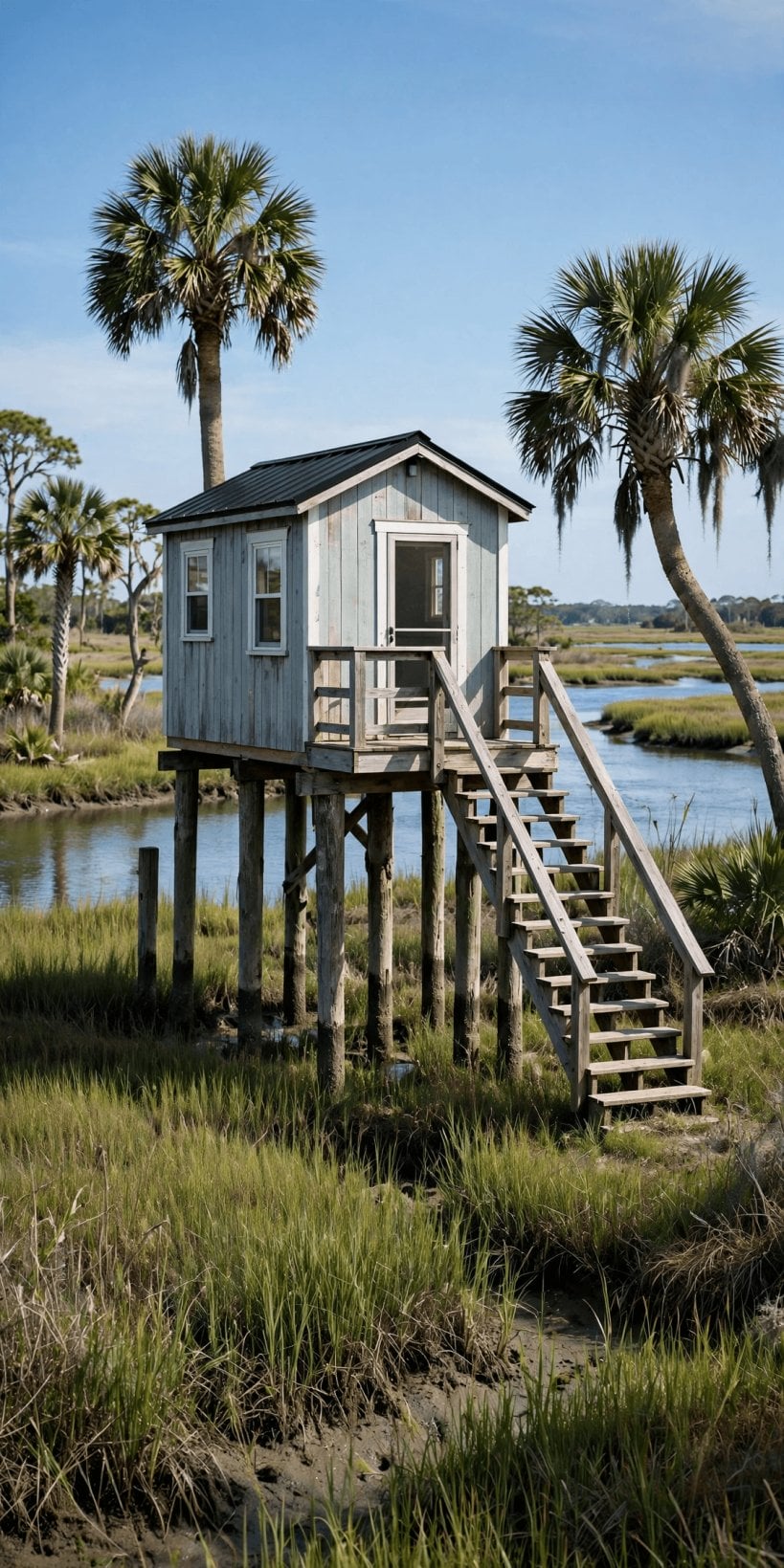
Near the coast, wind is a design load, not a weather topic. Ask what wind rating the structure, roof covering, windows and doors are specified to, how the home is tied down or anchored to its foundation, and what documentation supports those ratings. Coastal code compliance should be a specification you can read, not a reassurance you are asked to trust.
Inland buyers should not switch off during this section: severe thunderstorms and the remnants of coastal storms reach well into the state, and anchoring, roof detailing and water management matter everywhere. Ask how the builder handles roof-to-wall connections, flashing and driven-rain details, and whether completed local homes have come through major storms — then call the owners and ask them yourself. A builder with genuine coastal experience answers these questions in specifics: ratings, connectors, inspection points. Vague confidence about storms is a warning sign in a hurricane state.
5. Flooding, Elevation and Drainage
Lowcountry land can be beautiful and waterlogged in equal measure. Ask where your parcel sits relative to flood zones, what finished-floor elevation is required or advisable, and how the builder proposes to achieve it — piers, stem walls or an engineered foundation. Elevation decisions affect insurance, access, steps and porches, and how the home feels to live in, so they deserve early, deliberate attention rather than a delivery-week improvisation.
Drainage is the quieter half of the same topic: where does storm water go, how is the area beneath the home kept dry and ventilated, and what protects plumbing and ductwork below the floor? Buyers comparing wet-climate states will find the sister discussion in the Mississippi tiny house builders guide, where elevation and moisture planning play the same central role. Whatever elevation and drainage approach is agreed, it belongs in the written specification with responsibilities named — yours, the builder’s, and any site contractor’s.
6. Questions to Ask Every Builder
Ask every shortlisted builder the same questions, record the answers, and compare them side by side afterwards. Consistency is what turns conversations into evidence.
- How many tiny homes have you completed in South Carolina, and where?
- Can I visit a finished home and speak with its owner?
- Is your state builder license current, and may I see it with your insurance details?
- What exactly is included in this quote, and what remains my responsibility?
- What wind rating and elevation specification does this design carry?
- Who manages permits, inspections and certification paperwork?
- What payment stages do you propose, and what triggers each payment?
- What timeline is realistic, and what usually causes your projects to slip?
Weigh the delivery of the answers, not just their content. Documents produced without chasing, references offered early and weak points admitted plainly are the marks of a builder whose projects tend to run the same way. If straightforward questions produce fog now, the fog will be thicker after your deposit has cleared.
7. Humidity, Ventilation and Materials
South Carolina humidity works on a small home every month of the year. Cooking, showers and simply breathing concentrate moisture in a compact volume, so ask each builder how the home is ventilated, how bathroom and kitchen air is extracted, and whether dehumidification is planned or left to chance. Ask what sits behind the finishes: moisture-resistant materials in wet areas, properly sealed penetrations and a wall build-up suited to a hot, humid climate rather than copied from a northern catalogue.
Detailing at the base of the home matters just as much. Ask how sill plates, corners and floor edges are sealed against splash-back, insects and standing damp, especially on elevated builds where the underside is exposed. Our practical guide to how to seal and weatherproof tiny house sill plates and corners shows the junctions where small homes typically fail first. As always, the specification in the contract is the version that counts — verbal upgrades have a way of evaporating by fit-out time.
8. Understand What Drives the Cost
Headline prices conceal more than they reveal, because specification differences do the real work. The consistent drivers are size and design complexity; the certification and inspection route; wind rating and elevation engineering near the coast; moisture and ventilation specification; finish level; and whether the route is full-service, shell-only or something between. A shell quote looks cheaper until you price your own interior work honestly, in money and weekends.
Site spending forms the second budget: foundation or pier work, drainage, delivery distance, placement equipment and utility connections routinely outweigh the difference between two workshops’ prices. If borrowing is part of the plan, read our playbook on how to get a loan for a tiny house and our guide to tiny house mortgages and how lenders classify these homes before you sign, because classification and certification shape which lenders will talk to you at all. Prefer builders who itemise drivers calmly over builders who defend a single unexplained total.
9. Warranty, Service Distance and References
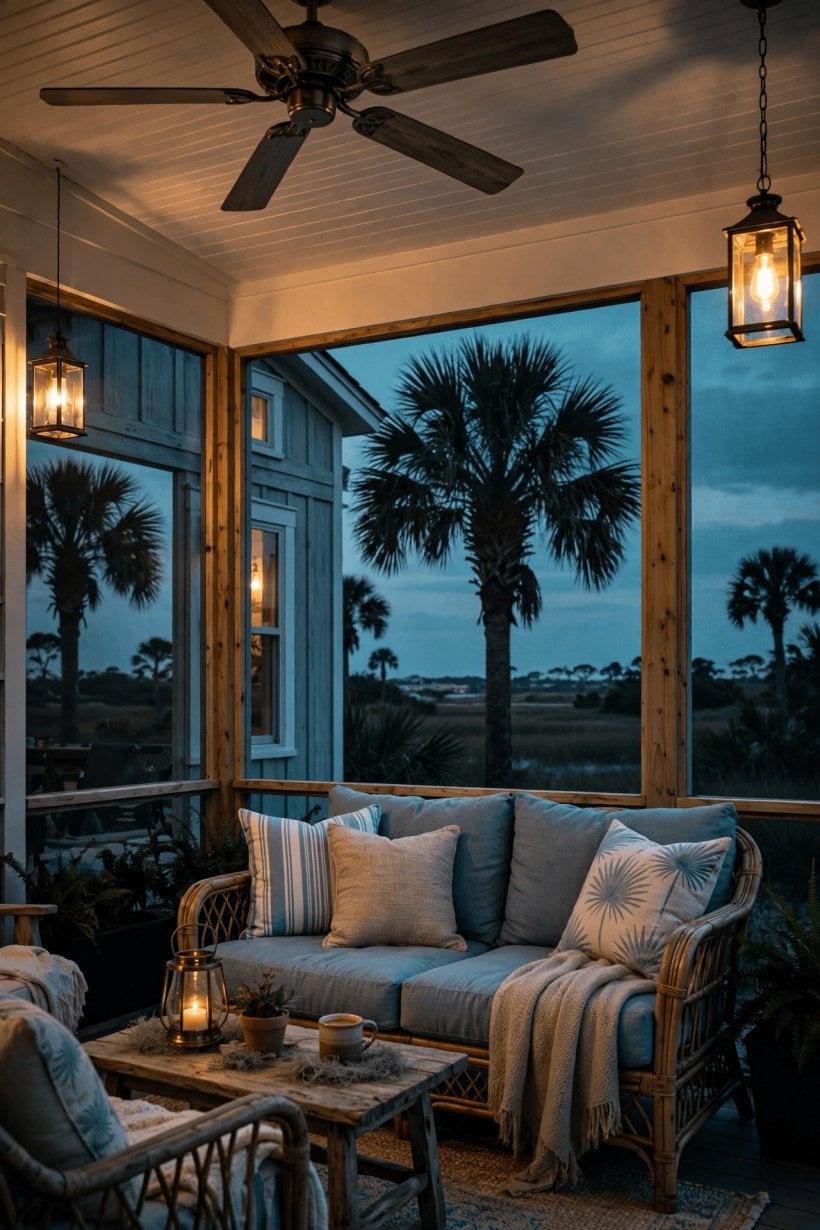
Read the warranty for process as much as coverage. What is included — structure, roof, workmanship, installed systems — how long does each part run, and how does a claim actually get resolved? Geography matters: a builder based in the Upstate serving a coastal home owes you a clear answer on who attends faults, whether local partners are used, and what response times look like in practice. Get that mechanism written into the contract documents.
References let you test every promise cheaply. Ask for recent buyers, including a coastal owner who has seen a storm season and a humid summer in the home, and ask each what went wrong and how the builder responded. Response quality, not perfection, is the trait you are buying for the next decade. While you plan the ownership side, our guide to how to insure a tiny house once it is delivered covers the flood-aware cover questions that belong alongside builder paperwork in a coastal state.
10. Red Flags and the Final Comparison
Walk away from a builder who cannot produce a current state license, who wants most of the money before work begins, whose wind or certification answers change between meetings, or who will not let you see a completed home and call its owner. Pressure tactics, delivery promises made without a single question about your lot, and quotes far below the field with no explanation of the missing scope complete the pattern. Each flag moves risk from the builder’s ledger to yours.
Make the final decision on one page: scope, wind and elevation specification, moisture
Delivery radius deserves its own conversation before you sign. Ask how far within the state the builder delivers, how transport is charged, and what the route to your lot involves: Lowcountry deliveries can mean causeways, older bridges and soft, sandy access tracks, while Upstate sites add gradients and tight rural turns. Share photographs and measurements of the final approach early, and agree in writing who positions, levels and anchors the home on arrival, who connects water, sewer or septic and power, and what site preparation — a prepared base, cleared access, drainage in place — is yours to finish first. A delivery planned on paper weeks ahead rarely becomes a problem on the day.
Finally, keep one project file from the first conversation: the county’s written answers, license and insurance copies, the agreed wind and elevation specification, stage photographs, delivery paperwork and the warranty. That file answers questions for years — for insurers, for warranty claims, for future buyers — and assembling it costs nothing but consistency. Builders who help you build it, unprompted and without impatience, are demonstrating exactly the working style you are hoping to buy.
detailing, certification paperwork, delivery and siting duties, warranty process and payment stages, compared like for like. Readers cross-shopping the region can run the identical test with our guides to tiny house builders in Ohio and tiny house builders in Pennsylvania. Keep one project file — county answers, license copies, photographs, warranty — from the first conversation. In a state where weather audits every home, the builder whose paperwork is watertight is usually the one whose buildings are too.
Final Considerations
The right South Carolina builder is the one whose license verifies, whose wind and elevation specifications are written down, whose delivery plan fits your actual lot, and whose past buyers vouch for the aftercare. Sequence the checks as this guide does — county, credentials, climate, contract — and the home that arrives on your land will be the home you agreed to buy, ready for Lowcountry summers and Upstate winters alike.


0 Comments