

Joining a Florida tiny community is a decision before it is an address: rent or buy, coast or inland, resort or village — and every answer changes the life that follows. This guide works through the decision in order: why Florida, the regions, the true costs, the community types, the rules, the joining process, the storm plan and the sunshine payoff at the end of it.
Tiny House Communities in Florida: At a Glance
Living among tiny house communities in Florida starts with understanding what the state actually offers: one of the country’s largest tiny scenes, spread across four distinct regions, at lot rents that typically run $450–$900 a month. From there the guide follows the decision step by step — the regions compared, the costs totalled honestly, the three community types matched to the life you want, the zoning verified before anything is signed, and the joining process walked through from first tour to welcome. Hurricane planning, cooling, insurance and the land options beyond communities all get their own sections — in Florida they are the decision, not footnotes.
| Topic | What It Covers | Key Fact or Figure |
|---|---|---|
| 1. Why Florida | Weather, scene and affordability | One of the country’s largest tiny scenes |
| 2. The Regions | Central, South, North and the Panhandle compared | Four regions, four different lives |
| 3. The Costs | Lot rent, buy-in and utilities, totalled | Lot rents typically $450–$900 a month |
| 4. The Types | Resort, village and park communities | Three types, matched to the life you want |
| 5. Zoning and Rules | Counties, cities, THOWs and hurricane code | The rules vary — verify the jurisdiction |
| 6. How to Join | Visit, application, interview | Never commit sight unseen |
| 7. Hurricanes | Tie-downs, evacuation and wind insurance | The season runs June to November |
| 8. The Lifestyle | Outdoors, lanai, cooling and seasons | The year-round outdoor life |
| 9. Land and the Move | Private leases, purchases and the move itself | The inland acreage is the affordable |
| 10. Commandments and the Decision | The ten rules, the mistakes, the first year | Visit, verify, join |
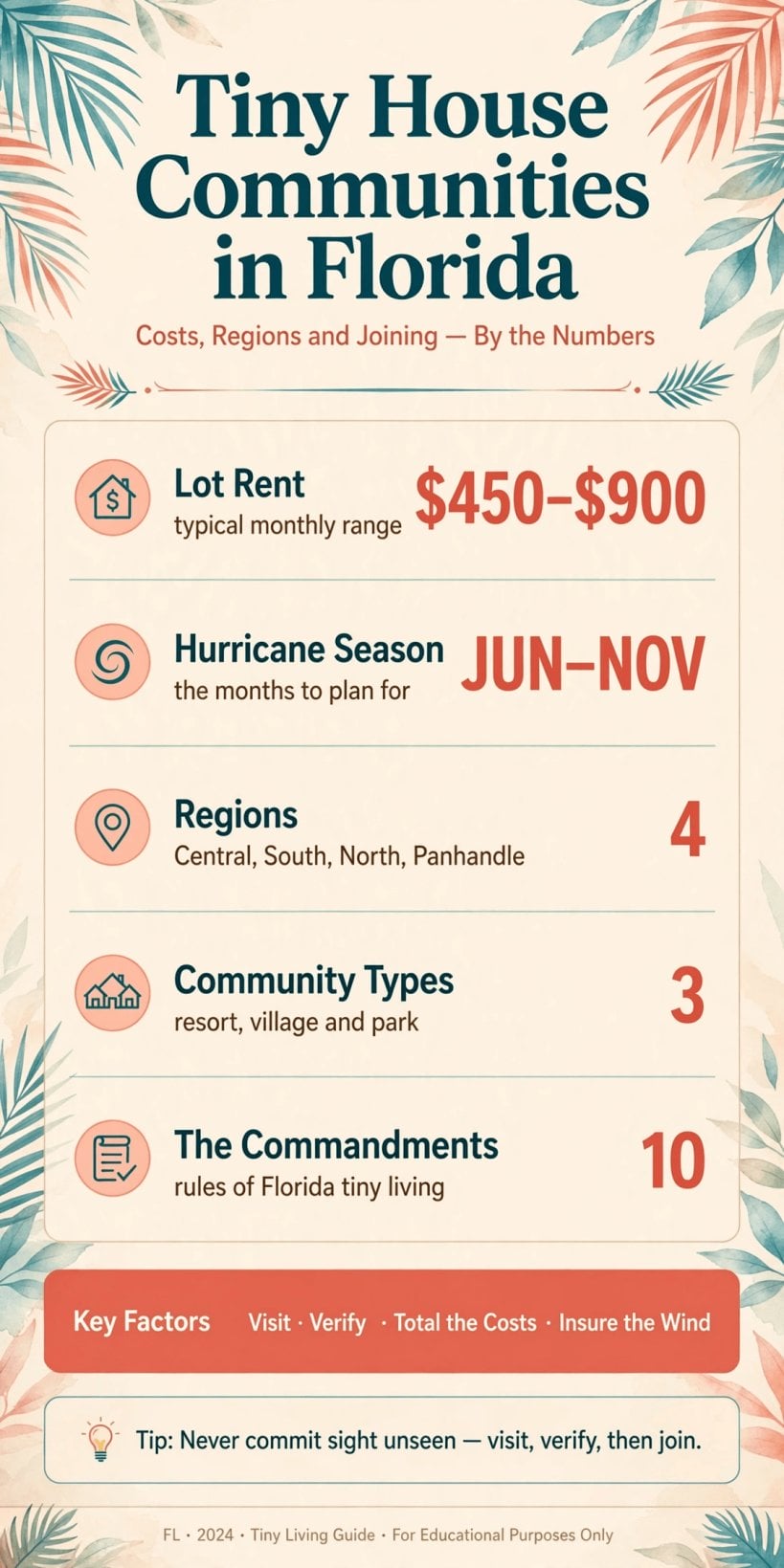
The decision by the numbers: lot rents of $450–$900 a month, a hurricane season that runs June to November, four regions, three community types — and ten commandments that keep the sunshine life working.
1. Why Florida: The Case for the Sunshine State
Why Florida, first — because the decision starts with the state, not the street. The weather is the headline: year-round outdoor living, the lanai as an extra room, the porch coffee at sunrise as a daily event rather than a holiday one. The scene is the second reason: Florida has one of the country’s largest tiny community scenes, established and spread across all of its regions, so the choice is real rather than theoretical — with the standing caution that communities evolve and details change, so every fact about a specific community is verified directly before it is relied on. And the affordability is the third: the pockets exist — the inland counties, the older parks, the private leases — for those who research. The rule the original gives the whole state: Florida is the tiny, the sunny.
Is Florida tiny house friendly, then? The honest answer from the original’s FAQ is the balanced one: the communities are established and the weather is ideal, but the zoning varies by county and the hurricane rules are real. Florida is friendly where it is friendly — which is why this guide treats verification, not enthusiasm, as the method: verify the specific jurisdiction (§5), plan the storms (§7), and the sunshine does the rest.
2. The Regions Compared: Central, South, North and the Panhandle
Four regions, four different versions of the life. Central Florida — the Orlando country — holds the many: the densest cluster of communities, the widest choice of types and rents. The South is the subtropics, the lush: the warmest winters and the most outdoor life, at coastal prices where the coast is involved. The North is the affordable and the spacious: bigger lots, lower costs, room to breathe. And the Panhandle is the beaches and the breezy: Gulf water with a quieter scene around it. The rule is that the regions differ — the researched: the same lot rent buys a different life in each, so the region is chosen before the community is.

Two companion guides go deeper on specific Florida choices: our village-by-village tour of Florida’s tiny communities walks the named villages one by one, and our Florida tiny community locations compared sets the options side by side. This guide stays with the decision itself — which region, at what cost, under which rules — the order the joining actually happens in.
3. The Costs: Lot Rent and the Full Total
The costs come in three layers, and only one of them is advertised. The lot rent is the monthly layer: typically $450–$900 a month, the range the original’s FAQ confirms — plus the cost of the home itself, which sits on top of the rent in almost every arrangement. The buy-in is the second layer: it varies, and it is asked — some communities charge to join, others fold everything into the rent, and the only way to know is to ask directly. The utilities are the third: included in some rents, separate in others, and the difference is real money across a year. The truth: Florida costs — the varied. The location and the amenities drive the price more than the size of the home does, which is why the total — rent, buy-in, utilities, insurance — is the only number worth comparing between communities.
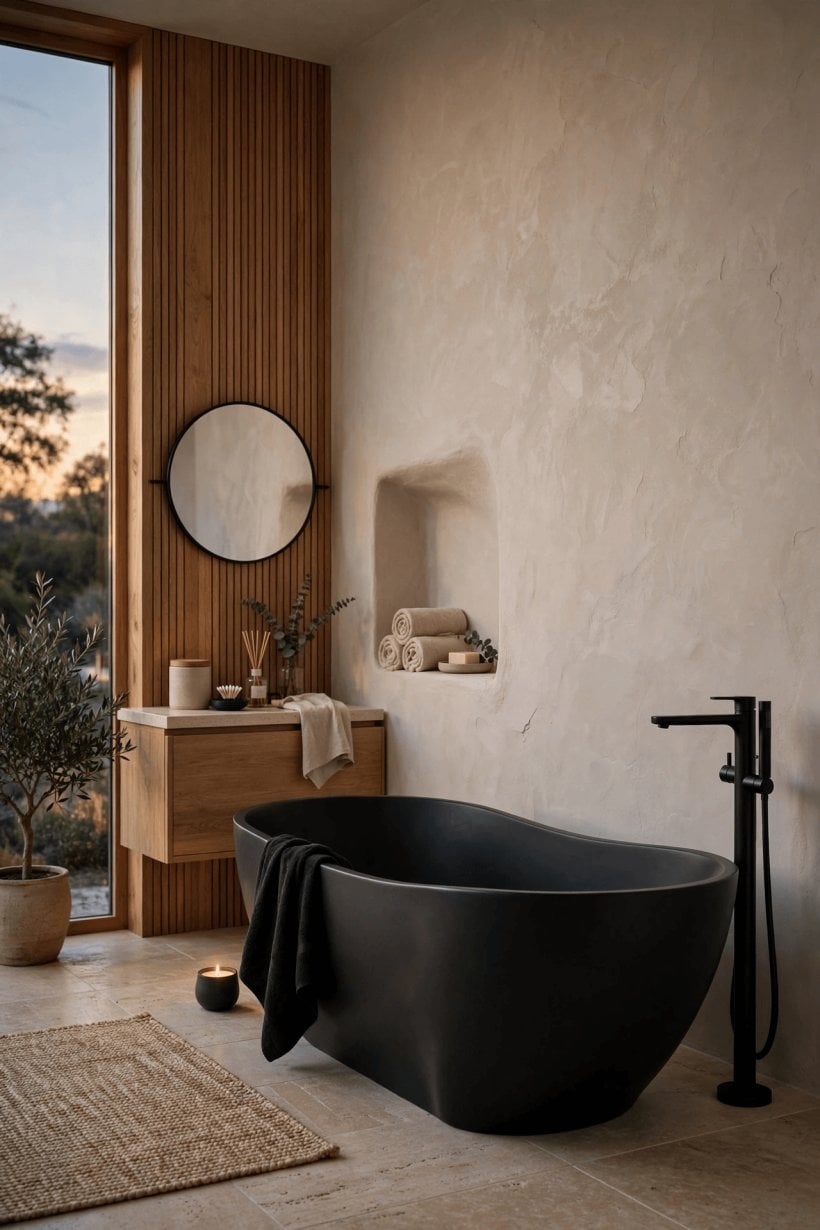
The cheapest way to tiny live in Florida follows from that total: the inland counties over the coast, the private land lease over the resort rent, the older community over the new one. The coast costs; the interior saves. And the home itself is the other half of the budget — our guide to how much a tiny house costs prices the build-or-buy side of the ledger. The cheapest tiny, in the original’s phrase, is the well-researched tiny.
4. Types of Community: Resort, Village and Park
Communities come in three types, and the type decides the daily life more than the lot does. The resort is the amenity-rich and the pricier: the pool that Florida expects, the clubhouse that gathers, the shared laundry that conveniences — the amenities are the justification for the rent, used daily or wasted money. The village is the intimate and the neighborly: smaller, closer, built around the people rather than the facilities. The park is the established and the affordable: the older scene, the lower rent, the settled feel. The rule: the types differ — the matched. Choose the type that fits the life, then the community within it.
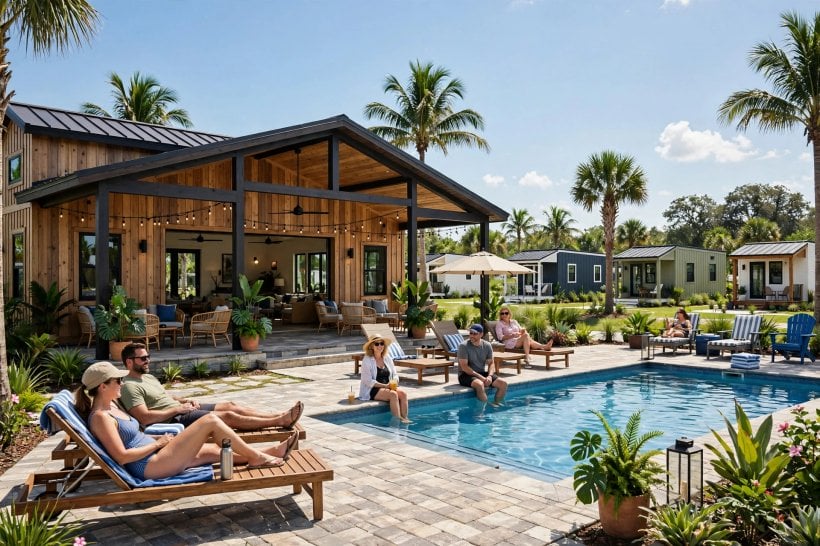
The neighbors are the other half of the type question, because the neighbors are the community. They are the like-minded — the chosen, people who picked this life on purpose — and the diverse: the ages, the stories, the retired and the remote-working side by side. A tour that only inspects the lot has inspected half the purchase; the culture is checked by visiting and talking. The best community, as §6 will insist, is the one that fits — and fit is mostly people.
5. Zoning and Rules: Counties, Cities and THOWs
Zoning is where Florida stops being a mood and becomes a map. The counties are the many — the checked: each county writes its own treatment of tiny houses, and the answer in one is not the answer in the next. The cities vary inside them — the verified: a city rule can differ from its own county’s. The THOW question is the sharpest version: can a tiny house on wheels live here at all? It depends on the county and the city — the rules vary widely, the treatment differs by jurisdiction, and the current local rules are checked before committing, never after. And the hurricanes sit inside the code itself — the respected: tie-down and construction rules written by storm experience, treated in full in §7. The rule over all of it: the rules change — the current. What was true last year is a rumour this year.
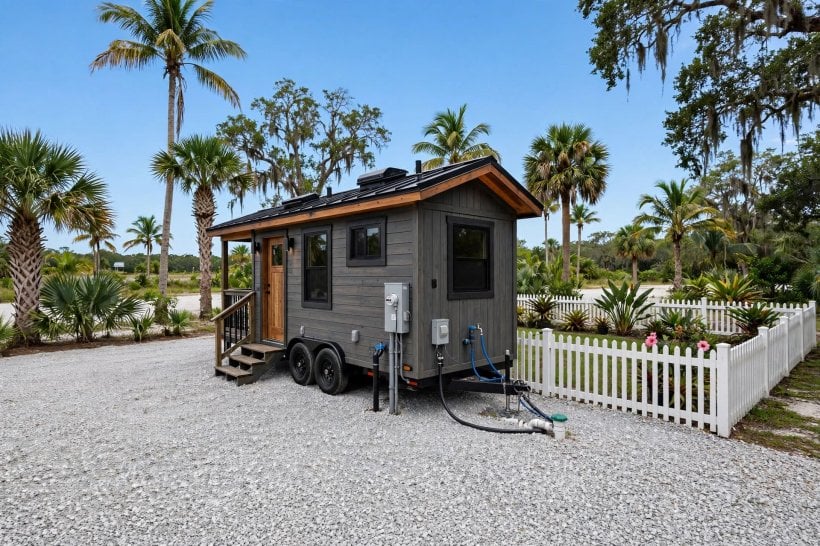
The wider placement picture — where a tiny home can legally live — is mapped in our guide to where you can live in a tiny home. Inside a community, much of the zoning question is answered by the community’s own existence — it is already permitted to be there — which is precisely why communities are the low-friction route into Florida tiny living, and why their own rules (§6) matter as much as the county’s.
6. How to Join: Visit, Apply, Interview
Joining runs in three steps, and the order is the protection. The visit comes first: the tour — the essential. The vibe, the neighbors, the rules are experienced in person, because the tour is where a community stops being a listing. The application follows: the process — the followed, the community’s own paperwork done completely. The interview closes it: the fit — the mutual. The community chooses as much as the applicant does, and that mutuality is a feature: it is how the culture you toured stays the culture you live in. The rule: the community chooses — the joined. And the FAQ’s version is blunter: never commit sight unseen.
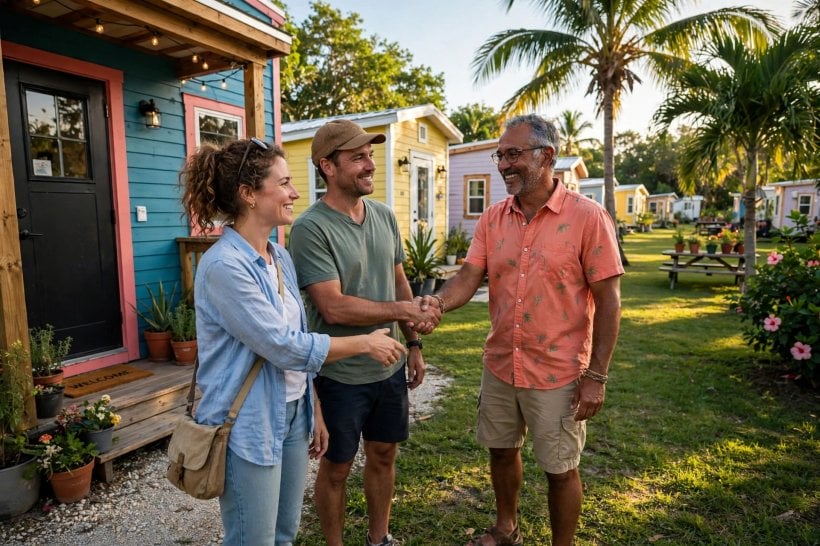
Four questions are asked before signing anything, from the original’s own checklist. The lease: the terms — the read, including how long you can stay — the lease terms vary, monthly, annual and long-term all exist; the right stay is the agreed one, with the renewal and the exit understood. The storm plan: the hurricane — the known (§7). The costs: the all — the totaled (§3). The exit: the terms — the known, before they are needed. Short-term renting belongs on the same checklist: can you Airbnb your Florida tiny house? Where the rules allow — counties and cities regulate short-term rentals differently, and the community’s own rules may restrict it too, so both are verified. The same visit-apply-interview shape appears in our guides to tiny house communities in Asheville NC and the Tulsa tiny house community — the original’s own recommended deeper reading.
7. Hurricanes and the Storm Plan
Hurricanes are the section Florida adds to every tiny decision, and the plan is non-negotiable. The season runs June to November — the watched: half the year carries the possibility, and the community’s storm rhythm is learned in the first season, not the third. The tie-downs are the anchored — the code: the home is secured to its lot to the standard the jurisdiction requires, because an anchored tiny is a shelter and an unanchored one is a liability. The evacuation is the plan — the practiced: where you go, what you take, when you leave, decided in sunshine and rehearsed. And the THOW holds one genuine advantage here: the movable — the driven. A house on wheels can leave ahead of a storm in a way a foundation house cannot, which turns evacuation from abandonment into relocation.
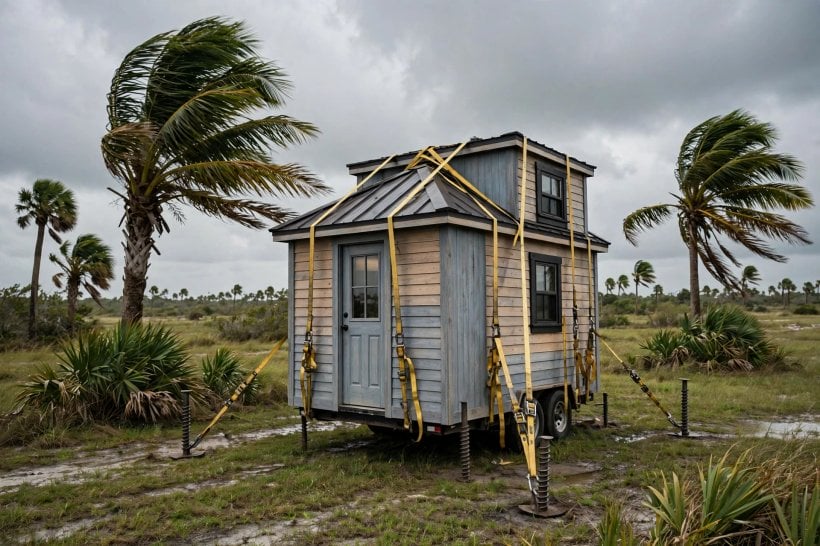
Insurance is the storm plan’s financial half. The wind cover is the separate — the essential: in Florida, wind is insured as its own question, not assumed inside a standard policy. The flood cover is the zoned — the checked: the lot’s flood zone decides the need and the price. And the insurers are the specialists — the tiny, the sought: tiny houses are insured best by those who insure them often. The rule gathers the section: the insured sleeps — the storm. Plan the hurricanes, insure the wind, and the season becomes weather rather than fear.
8. The Florida Tiny Lifestyle and the Seasons
The life itself is the payoff the decision buys, and in Florida it is lived outside. The outdoors are the year-round — the lived: the beaches and the springs as weekly geography, and the lanai — the extended, the room: the screened porch that small Florida homes use as their second living room. The seasons shape the rhythm inside that life. The winter is the perfect — the cherished. The summer is the hot — the cooled. The shoulder seasons are the best — the lived. Two ways of inhabiting the rhythm exist side by side: the snowbird option — the winter in Florida’s perfect, the summer in the north’s cool, the seasonal resident welcomed by communities built for exactly that pattern, the best of both lived in one year — and the year-round resident, the adapted, whose heat is managed and whose community roots run deep: the year-round knows the Florida the snowbird visits.
The practicalities of the life are designed, not endured. Cooling is the designed — the shaded: the mini-split, efficient and essential, doing the heavy work; the shade of trees and orientation doing the free work before it; cross-ventilation finishing the job. Bugs are answered by the sealed tiny — the comfortable: screens everywhere, and every gap caulked, so the outdoor life stays outdoors. Pets live by the checked rule — pet policies vary by community and are verified before joining, and the outdoor space around Florida lots gives the exercised pet its room. Working from the tiny thrives on the connected: the community wifi, tested before it is trusted, makes the remote Florida life possible.
9. Land Beyond Communities, and the Move
Communities are the main road into Florida tiny living, not the only one. The private lease is the landowner — the negotiated: a parcel rented directly, its terms agreed one-to-one, often the cheapest monthly answer in the state (§3). The purchase is the acreage — the inland-affordable: buying land outright, inland, where land is priced for locals rather than the coast. The rule: the options extend — the communities. What changes off-community is the burden of proof: zoning, utilities, tie-downs and insurance become yours alone to arrange, which is why the placement rules in our guide to where you can place a tiny house and our roundup of a tiny house for sale with land are read before the community route is abandoned for the private one.
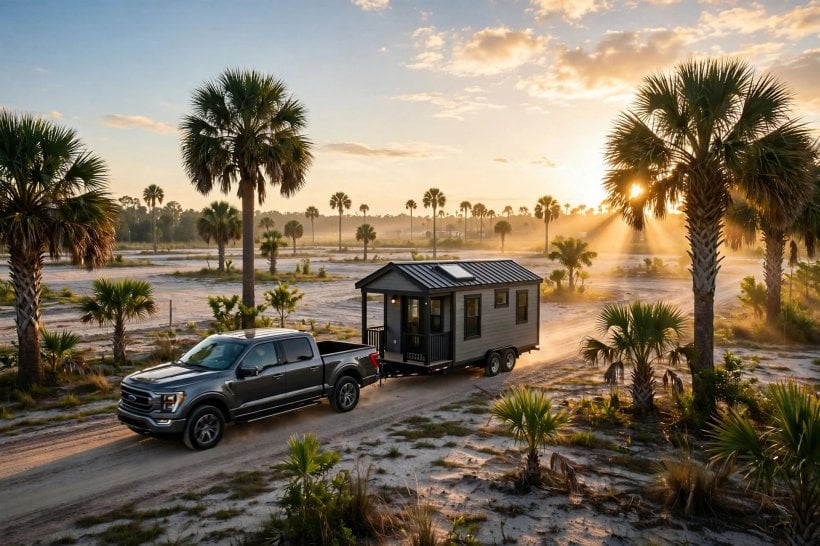
The move itself is planned like everything else in this guide. A THOW is the towed — the placed: driven or hauled to its lot and set. A built home is the delivered — the sited: transported and installed by its builder. The timing is the off-season — the easier: movers, lots and communities all breathe easier outside the peak. The rule: the move is the planned — the smooth. Arrive with the lease read, the storm plan known and the insurance live, and the move is a day; arrive without them, and it is a season.
10. The 10 Commandments, the Mistakes and the Decision
The whole decision compresses into the original’s ten commandments of Florida tiny living: visit before committing; verify the zoning; total the costs; read the rules; plan the hurricanes; insure the wind; cool efficiently; meet the neighbors; know the exit; love the sunshine. The mistakes to avoid are the commandments broken. The unseen commit — the regretted, the visited: signing for a community never toured. The assumed zoning — the fined, the verified. The storm blind — the unprepared, the planned. The heat blind — the miserable, the cooled. The rule under both lists: the verified avoids — the regretted.
The decision, made that way, is the researched — the confident: the visited, the fitted, the matched, the chosen. What follows is the first year — the seasons all experienced, the storms weathered and learned from, the community deepened and loved — and the welcome that starts it: the greeted neighbors, the warm; the oriented rules, the shared; the sunrise on the porch with the coffee, the daily and the golden and the free. The payoff the original promises is the life itself — the sunshine daily and free, the community chosen and loved, the freedom of the tiny Florida way — the good life as the simple and the sunny. The invitation stands as the original wrote it: visit, verify, join — the sunshine awaits.
Final Considerations
Tiny house communities in Florida reward the researched: the regions compared honestly, the costs totalled before they are compared, the zoning verified in the specific jurisdiction, and the community visited, applied to and interviewed with the fit mutual on both sides. Do that work and what remains is the reason the decision was made — the year-round outdoor life, the chosen neighbors, the storm plan that lets you sleep, and the sunshine, daily and free. Note: community details, costs and zoning rules change — verify all current information directly before making decisions.

0 Comments