

Somewhere between the phone cases and the dog treats, Amazon sells houses — twenty thousand dollars, one-click checkout, delivered on a truck. The listing is real and the house is real, but the price on the screen is the beginning of the cost, not the end. This is the honest breakdown: the genuine pros, the minimized cons, and the freight, crane, site-prep and assembly bills that turn $25,000 into $45,000 to $70,000.
1. Buying a Tiny House on Amazon at a Glance
Buying a tiny house on Amazon means buying a manufactured product, not commissioning a build. What arrives is a prefab kit home, an expandable container house, a container conversion or a bare shell — a product optimized for shipping and price, closer to a very nice shed with plumbing than to a builder-crafted tiny house on wheels. The listings are real, the one-click checkout works, and the prices — $15,000 to $50,000 — look impossibly cheap precisely because they exclude almost everything that turns a delivered kit into a usable building: freight, unloading, site preparation, utility hookups, assembly labor, finishing and permits. Price the whole project honestly and a $25,000 listing typically totals $45,000 to $70,000 all-in: still cheap, but not $25,000. The table gathers the whole purchase in one place; the sections after it take each row apart.
| Attribute | Detail |
|---|---|
| The Product | Prefab kit homes, expandable container houses, container conversions and bare shells |
| The Listing Price | $15,000–$50,000 on screen — the beginning of the cost, not the end |
| The All-In Reality | A $25,000 listing typically totals $45,000–$70,000 delivered, assembled and finished |
| The Freight Bill | $2,000–$8,000 depending on size and distance; oversize loads cost more |
| The Unloading Bill | $500–$2,000 for crane or forklift — a 40-foot container does not unload itself |
| The Certification | Virtually none are RVIA-certified, and most do not meet IRC/IBC building codes |
| The Buyer Protection | Amazon’s A-to-z Guarantee applies — real recourse if the product never arrives |
| The Speed | Delivery in weeks and assembly in days, against months for a builder |
| The Best Fit | A guest house, studio, cabin or workshop — not a financeable primary dwelling |
| The First Task | A total-cost spreadsheet and permitting research, both finished before checkout |
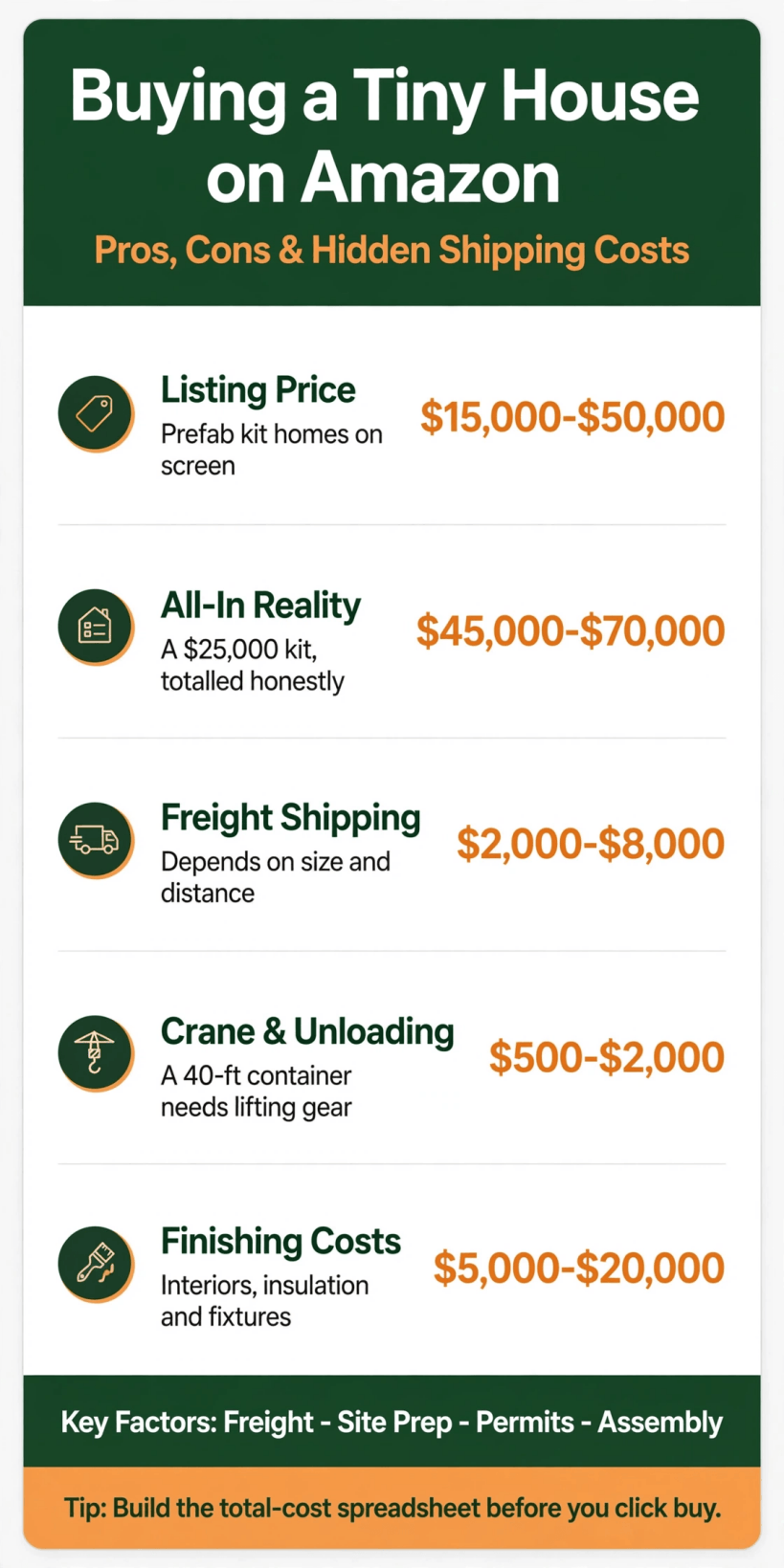
The listing price is the smallest number in the project — freight, lifting gear, site work and finishing decide what the house really costs.
2. What Amazon Actually Sells: The Four Product Types
The marketplace sells four distinct products under one search term, and confusing them is the first buying mistake. Prefab kit homes are the most common listing type: flat-packed panels that you or a contractor assemble on site. Expandable or folding container houses unfold on site and are popular in the $20,000–$35,000 range. Container conversions are fitted-out shipping containers, a different proposition from the ground-up kits — the long-term ownership picture for converted boxes is drawn out in the life of container homes guide. And tiny house shells are structure only, with no systems at all: the cheapest listings buy you walls and a roof, and every wire, pipe and fixture is still to come.
What none of them are is a finished, certified, site-built-quality tiny house. They are manufactured products, engineered first for the truck and the price point, and only second for the occupant. That is not a dismissal — a weather-tight shell for $20,000 to $35,000 is genuinely cheap — but it sets the honest baseline for everything that follows. At the engineered end of the same prefab idea sit modular builds like the Honomobo homes, where the factory product is designed as a dwelling from the first drawing. The Amazon listings start from the opposite end: a shippable box at a headline price, with the dwelling part left largely to you.
3. The Pros: Price, Speed, Simplicity and Buyer Protection
The advantages are genuine, and they explain why the listings sell. Price comes first: a weather-tight shell for $20,000 to $35,000 undercuts every builder-crafted alternative by a wide margin. Speed follows: delivery in weeks and assembly in days, against months for a builder’s queue, design revisions and construction schedule. Simplicity is the third draw — one transaction, no builder vetting, no construction management, no draw schedules. The whole purchase behaves like any other Amazon order, which is precisely the appeal for buyers who want a structure without becoming a project manager.
Two protections soften the risk further. Amazon’s A-to-z Guarantee applies, which means real recourse if the product never arrives — a safety net no private builder deposit offers. And the reviews do quiet due diligence for you: buyer photos and reviews reveal the actual product, unlike builder renderings, which show the product as imagined. Amazon’s marketplace logic reaches further into tiny products than houses — the PodRide on Amazon is the same one-click pattern applied to a micro vehicle. For a hunting cabin, a studio or a guest house, the value proposition is legitimate: a simple structure, honestly matched to a simple job, at a price nothing else touches.
4. The Cons: Quality Variance and the Certification Gap
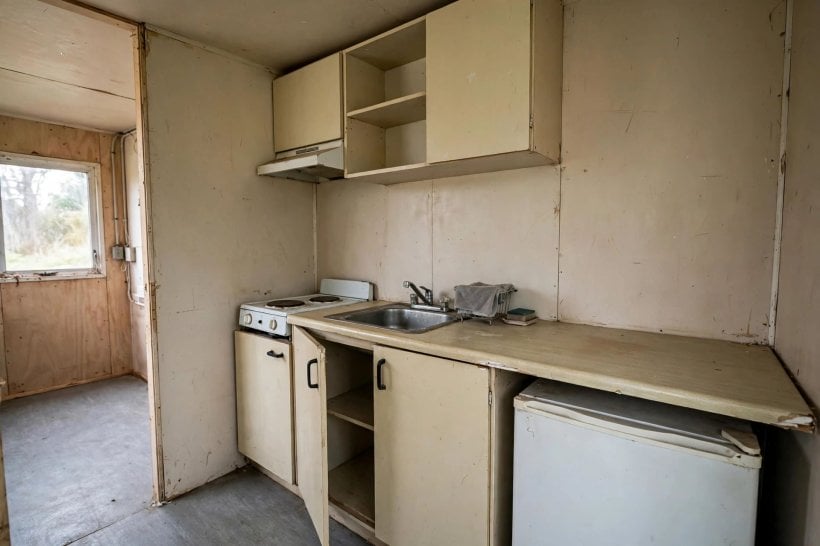
The downsides are just as real, and the listings minimize every one of them. Quality variance leads: thin insulation, budget fixtures and minimal structural engineering are the standard specification at this price, because you get what you pay for. One kit arrives straight and complete; the next arrives with the thin walls and cheap hardware its price implies. There is no consistent standard behind the listings, because there is no single manufacturer behind them either — the marketplace aggregates sellers, and the quality floor is set by the cheapest of them.
The certification gap is the deeper problem. Virtually none of these houses are RVIA-certified, which closes three doors at once: no RV loans, no RV insurance and no RV parks. Most do not meet IRC/IBC building codes either, so permitting one as a dwelling is difficult or impossible in most jurisdictions — §8 takes that problem apart. Assembly is the third minimized cost: the “easy 2-day assembly” in the listing assumes a skilled crew with equipment, so budget for a contractor rather than a weekend. And durability is an open question — 5-year track records do not exist for most listings, and the 20-year question is simply unanswered. The belief that a kit price buys a finished, legal, lasting house is one of the durable tiny house myths: the kit buys a start, and everything else is still ahead of you.
5. Hidden Shipping Costs: Freight, the Crane and the Oversize Load
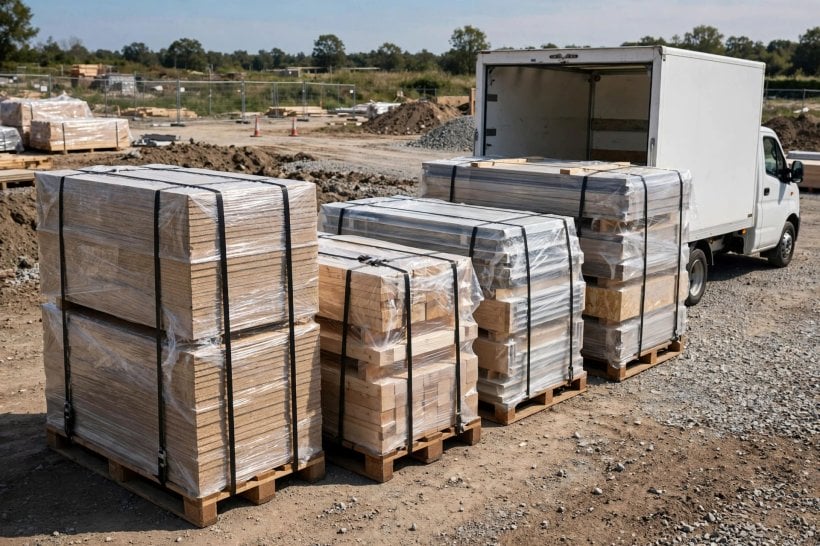
The listing price excludes the journey, and the journey is heavy. Freight shipping runs $2,000 to $8,000 depending on size and distance — and oversize loads cost more, because a house-sized object does not travel at parcel rates. The single most important habit in this entire purchase is also the simplest: always get the freight quote before ordering, in writing, because freight is quoted per shipment and the number can rival the margin you thought you were saving.
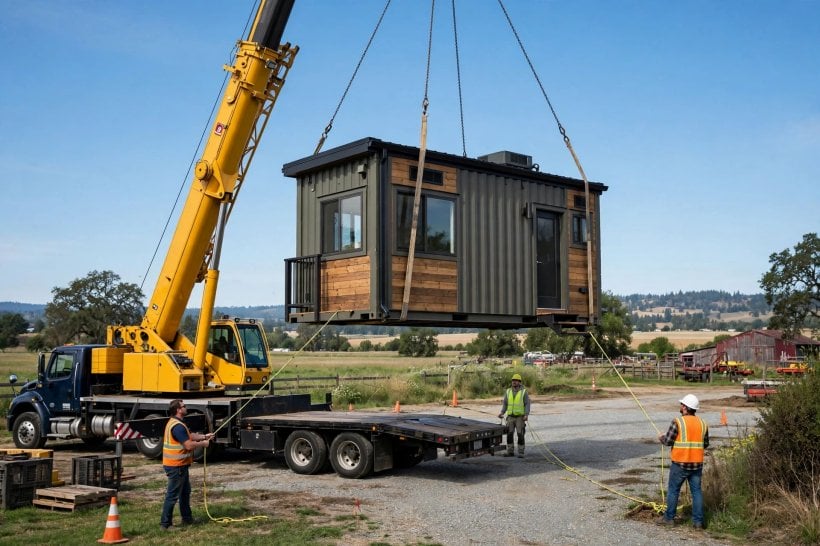
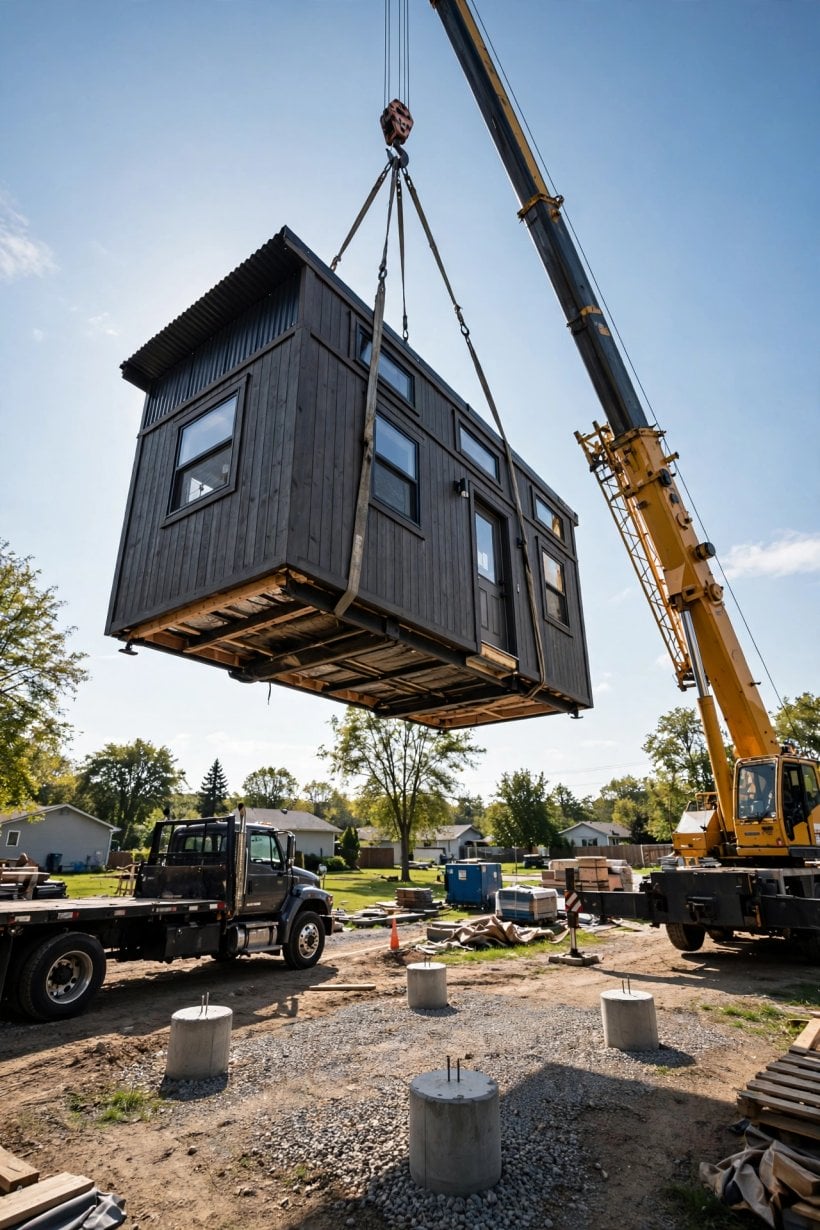
Arrival creates the second bill. Unloading costs $500 to $2,000 for a crane or forklift, because a 40-foot container does not unload itself. The truck’s job ends at your gate; everything between the trailer bed and your foundation is your problem, your equipment hire and your liability. Neither figure appears anywhere near the buy button, yet together freight and unloading can add $2,500 to $10,000 before a single panel is unpacked — the first and purest of the hidden shipping costs, and the reason the worksheet in §6 starts with the journey rather than the house.
6. The Rest of the Bill: Site Prep, Utilities, Assembly and Finishing
Four more cost blocks wait behind the delivery. Site preparation — foundation or piers, and leveling — runs $2,000 to $10,000, because the kit needs somewhere engineered to land. Utility hookups cost $3,000 to $15,000: electrical, water and sewage connections are not included in any listing price. Assembly labor runs $3,000 to $10,000 for contractor assembly of a kit — the realistic version of the listing’s “easy 2-day assembly.” And finishing takes $5,000 to $20,000, because many kits need interior finishing, insulation upgrades and fixture replacements before they are genuinely habitable.
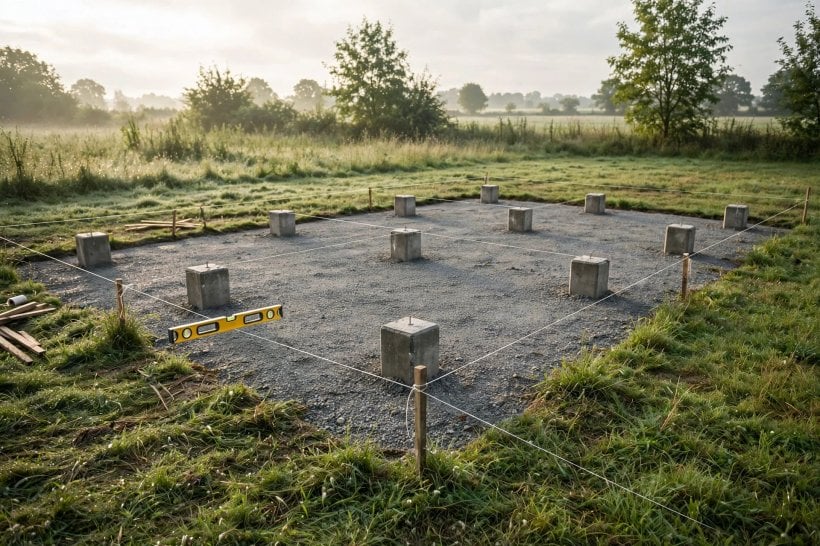
Add the blocks honestly and the arithmetic of §1 explains itself: listing price + freight + unloading + site prep + utilities + assembly + finishing + permits = the real number, and for a $25,000 listing that number lands at $45,000 to $70,000. Build this spreadsheet before clicking buy — it is the same discipline applied line by line in the breakdown of the true cost of tiny houses, prefab vs DIY. The total is still cheap for a structure. It is simply a different number from the one on the screen, and the buyer who knows it in advance is the only buyer the deal actually suits.
7. Quality Inspection: What to Check When the Truck Arrives
Delivery day is an inspection, not a celebration, and it starts before anything leaves the truck. Photograph everything before unloading: freight damage claims need pre-unload photos, and once the load is on the ground the evidence of when damage happened is gone. Then check the packing list against the delivery, item by item — missing panels are common, and they must be reported immediately, while the shipment is still one documented event.
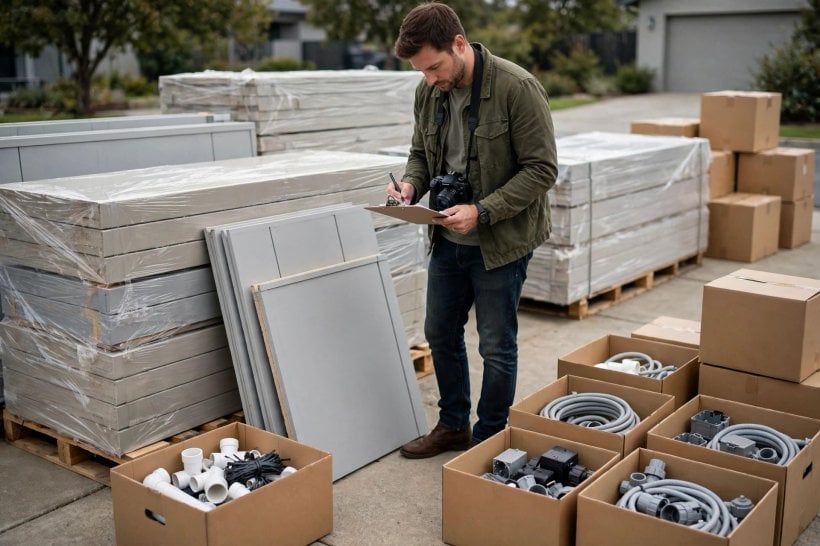
Inspect the structural members next: straight, undamaged, correct dimensions. Verify the electrical and plumbing components — listed and labeled, and the correct voltage — because a mislabeled component discovered after assembly is a rebuild, not a return. Test-fit critical connections before the crew leaves, while the people and equipment who can fix a mismatch are still on site. And respect the clock: Amazon’s return window is short for freight items, so document defects within days, not weeks. The inspection is the last cheap moment in the whole project; every defect caught here is one you do not pay a contractor to discover later.
8. Permitting: The Accessory Structure, the Farm Exemption and the Temporary Route
Here is the hard truth the listings never print: most Amazon tiny houses cannot be permitted as dwellings under the IRC. They carry no engineering stamps and no code compliance documentation, and a permit office cannot approve what it cannot verify. A buyer who needs a dwelling permit and cannot get one has not bought a small house; they have bought a very expensive shed, legally speaking, whatever the listing photographs show.
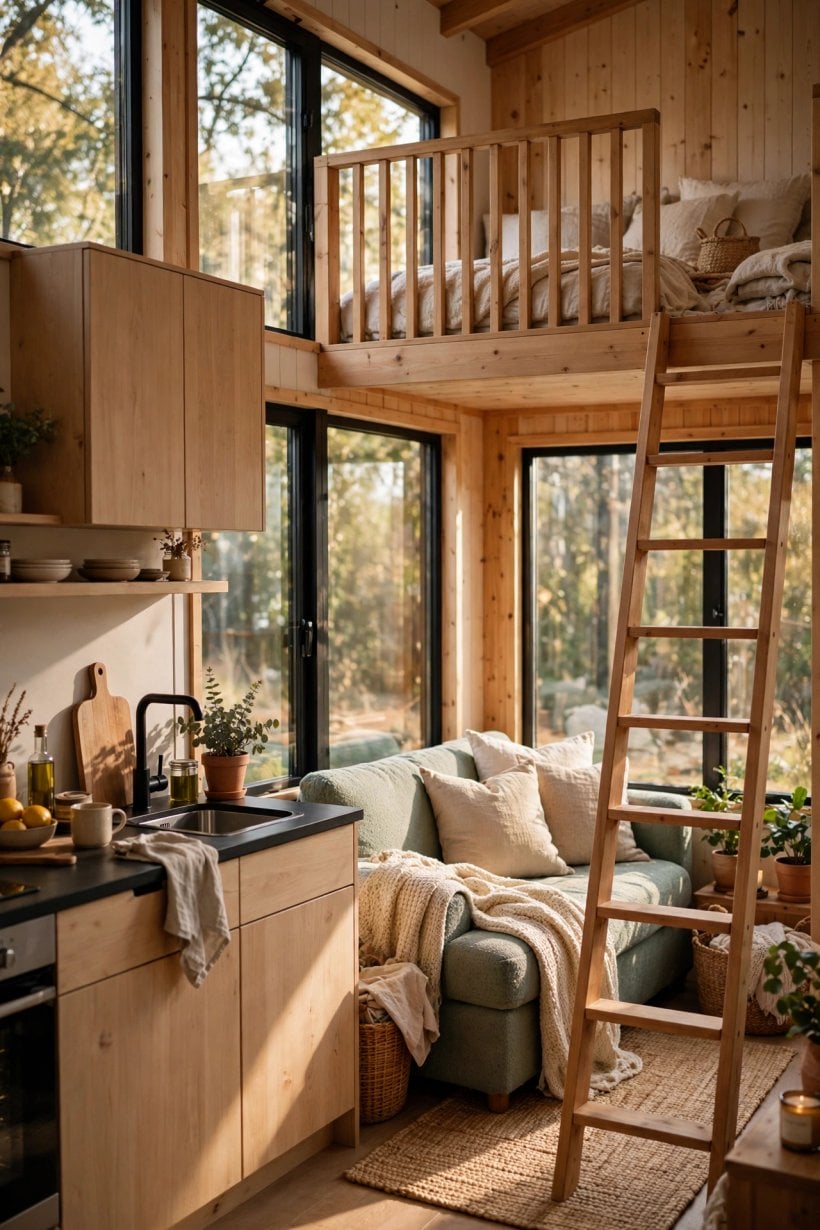
Three permitting paths sometimes work. The accessory-structure route permits the kit as a shed or studio — a classification that needs no dwelling permit where it is allowed. The agricultural exemption covers farm buildings in many jurisdictions. And the temporary-structure route allows limited-duration placement. Each path is jurisdiction-specific, which is why the research order matters: permitting research before purchase, not after delivery. A written answer from the local authority, obtained while the house is still a listing, costs nothing. The same answer obtained after the truck leaves costs the entire purchase.
9. When an Amazon Kit Makes Sense — and When It Does Not
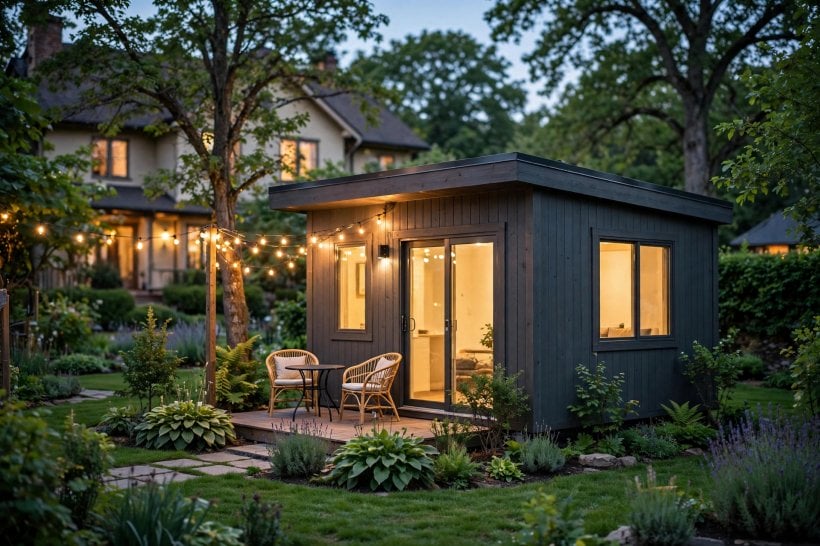
Matched to the right job, the Amazon house is a genuine bargain. It makes sense as a guest house or studio on permitted property, where its legal classification is already settled. It makes sense as a hunting or fishing cabin on rural land, as temporary housing during a main-house build, as workshop or office space, and as a low-stakes experiment in small living — a way to learn whether small space suits you before committing to a real build.
It does not make sense as a primary full-time residence needing financing or insurance, because the certification gap of §4 closes both. It does not make sense in locations requiring dwelling permits, or as RV park placement — no certification, no entry. And it does not make sense for buyers expecting builder-grade quality at kit prices, because that product does not exist at any checkout. The honest weighing of small living’s advantages against its compromises follows the same pattern as the wider pros and cons of living in a tiny house: the format rewards buyers whose use case fits its limits, and punishes buyers who discover the limits afterwards.
The dividing line is stakes. Every use case on the “makes sense” list shares one trait: if the structure disappoints, the buyer’s life is not inside it. A guest house that weathers badly is an annoyance; a primary residence that cannot be insured, financed or legally occupied is a crisis bought at checkout. The temporary-housing case shows the same logic from the other side — during a main-house build, the kit’s speed is the whole point, its limitations have an expiry date, and the household’s permanent home is rising next door. Match the product to a job where its weaknesses stay theoretical, and the weaknesses stop mattering. Match it to a job where they become daily facts, and no listing discount is large enough to compensate.
10. The Alternatives and the Smart-Purchase Checklist
Before buying, hold the kit against three alternatives at the same money. A used tiny house on wheels costs $30,000 to $60,000 — certified, equipped and movable, with its depreciation already taken by someone else. A shed conversion by a local builder runs $25,000 to $50,000 and is code-compliant as an accessory structure. A park model RV costs $40,000 to $80,000 — RVIA-certified, financeable and insurable, the three things the kit is not. At the engineered extreme, the luxury prefab homes show what factory building looks like when legality and finish are designed in from the start. The Amazon kit wins on novelty and speed; the alternatives often win on legality, quality and total cost.
If you proceed anyway, proceed as the smart buyer. The checklist: a total-cost spreadsheet, all-in rather than listing price; permitting research with written confirmation from the jurisdiction; the freight quote in writing; an assembly plan with a contractor lined up, not hoped for; review analysis that reads the 1-star reviews first, because they describe your likely experience; and an exit plan — if it does not work, what is the resale, given that kits depreciate like cars? Buyers still choosing the underlying layout can run their household, mobility and style answers through the tiny house floor plans calculator before any of this. Buy with eyes open and the Amazon house can be a genuine bargain; buy on the listing price alone and it is an expensive lesson.
Final Considerations
Amazon tiny houses are real products at real prices with real limitations. They democratize access to small structures — a genuine good — but they are not shortcuts to a legal, financeable, insurable tiny home. The product fits the guest house, the cabin, the studio and the experiment; it does not fit the financed primary residence or the permit-strict plot. Price the whole project, permit before you purchase, and match the product to a use case it can actually serve. The one-click house is convenient; the informed purchase is smart. Be the informed buyer.


0 Comments