
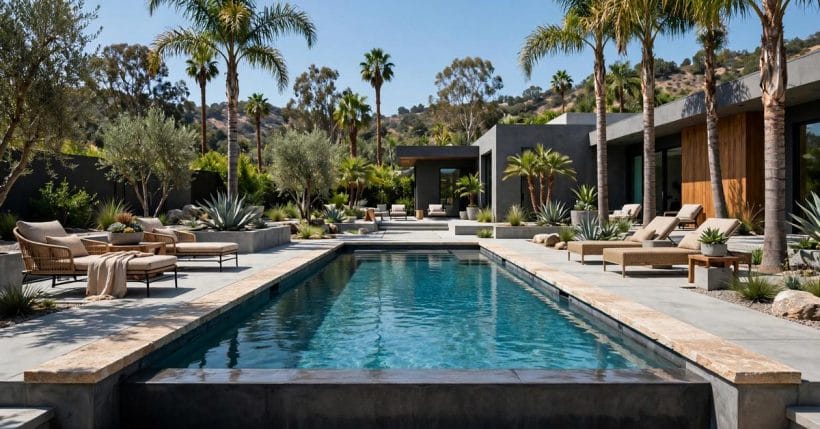
Concrete pools are the most flexible pools you can build. Because concrete is shaped on site rather than delivered as a fixed shell, a concrete pool can follow your garden’s shape, fit an awkward corner, step down a slope, or curve around a favourite tree. That freedom is also the reason to plan carefully: every shape, finish and feature is a decision, and the best concrete pools are the ones where those decisions were made together, before construction began.
These 75 ideas walk through shapes, finishes, surrounds, water features, lighting, planting and outdoor rooms, so you can borrow what suits your garden and leave the rest. Construction, structural work, plumbing and electrics belong to qualified professionals throughout, and local rules should be checked early; this guide covers design ideas, not building instructions.
Use the ideas as a menu, not a checklist. No garden needs all 75, and the best pools borrow a handful of ideas and carry them through consistently — one shape language, one finish family, one approach to shade and planting — rather than sampling everything at once. Note the ideas that suit your garden’s size, sun and style as you read, and let those few become the backbone of your own pool’s design.
1. Classic Rectangular Pools
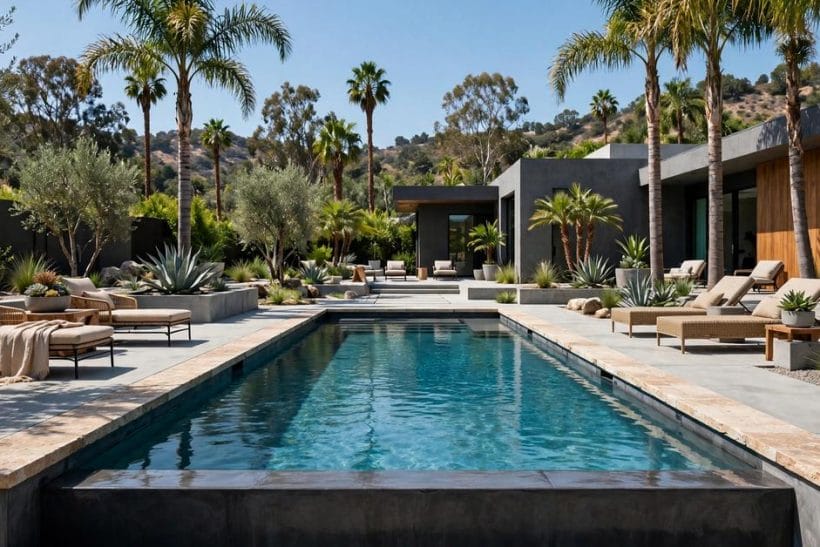
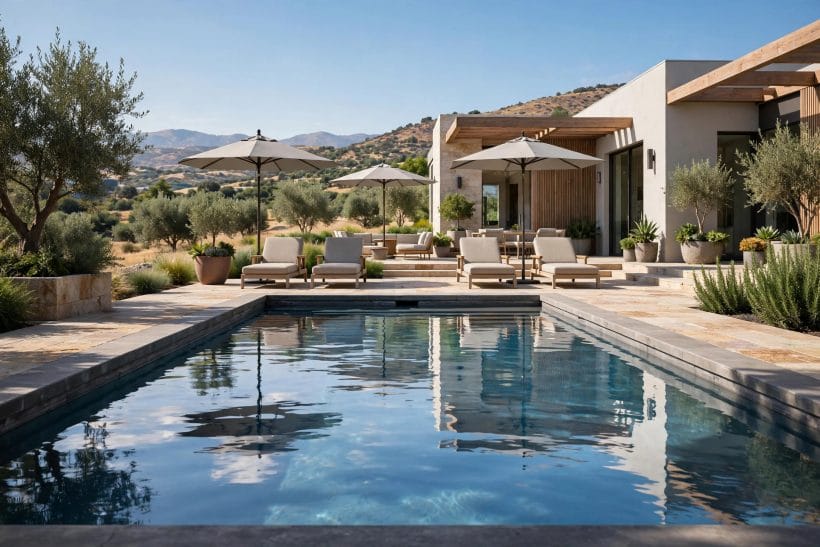
Rectangular pools are the timeless choice, and their simplicity is their strength. Clean lines suit modern houses, formal gardens and small plots alike, and a rectangle is easy to furnish, cover and plant around. These ideas show how much variety lives inside the classic shape.
Proportion is what separates a good rectangle from a merely adequate one. A rectangle that relates to the house — echoing a wall length, aligning with a terrace edge, or sitting parallel to the main view — feels intentional, while a rectangle dropped into a garden without reference to anything around it feels stranded. Orientation matters too: a rectangle that catches the afternoon sun on its main seating side will be used far more than one that sits in shade when the day is at its best. Think about the rectangle’s relationship to the house, the garden’s boundaries and the sun’s path before fixing its position, since concrete, once placed, does not move.
1. The Long Lap Rectangle
A long, straight rectangle dedicated to swimming lengths, with a simple surround and minimal fuss. Its beauty is in its discipline: one clear shape, one calm surface, and nothing to distract from the swim itself.
2. The Courtyard Rectangle
A rectangle set into a walled courtyard, where the walls shelter it from wind and give it privacy. The courtyard makes even a modest pool feel like a private resort.
3. The Raised Rectangle
A rectangle raised above its surround, so the waterline sits at seat height and the pool reads as a piece of garden architecture rather than a hole in the ground.
4. The Rectangle With a Shallow Shelf
A rectangle with a shallow ledge at one end for sitting, paddling and cooling off without a full swim. The shelf doubles as a step into the deeper water.
5. The Narrow Urban Rectangle
A slim rectangle fitted to a narrow city garden, proving that a small plot can still hold a serious pool when the shape is disciplined and the surround is kept simple.
6. The Rectangle Framed by Lawn
A rectangle set in a generous lawn, where the green frames the blue and the garden feels open and calm. The lawn also gives children and guests room to play beside the water.
7. The Double-Depth Rectangle
A rectangle with a clearly defined shallow end for families and a deeper end for confident swimmers, so one pool serves a whole household’s different needs.
8. The Rectangle With Dark Plaster
A rectangle finished in a dark plaster tone, giving the water a deep, reflective, mirror-like quality that suits modern architecture and evening light.
2. Freeform and Lagoon Shapes
Freeform pools follow the garden instead of fighting it. Curves, bays and organic outlines suit informal gardens, sloping sites and plots with trees or features worth designing around. These ideas show how freeform shapes earn their curves.
The difference between a graceful freeform pool and a shapeless one is intention. Every curve should answer to something — a tree, a view, a seating bay, a change in level — rather than wandering for its own sake. A curve that wraps a seating area feels designed; a curve that bulges for no reason feels accidental. Sketch the shape against the garden’s real features, walk the outline on the ground, and check it from the house windows as well as from the garden, since a freeform pool is seen from above and from the side, and it should please from both.
9. The Gentle Kidney
A soft kidney curve that feels natural in a planted garden, with the curve creating a sheltered bay for seating at one end and open water at the other.
10. The Lagoon With Rock Edges
A lagoon outline edged with natural stone, where the pool melts into its planting and feels more like a garden water feature than a built structure.
11. The Curve Around a Tree
A freeform outline that bends around an existing tree, keeping the shade and character the tree gives while gaining a pool that could never be rectangular.
12. The Figure-of-Eight Pool
A figure-of-eight outline that creates two linked bays: one for swimming, one for lounging, joined by a narrower middle that keeps the shape feeling like one pool.
13. The Bay for Seating
A freeform pool with a rounded bay that holds a bench or a shallow seating ledge, so swimmers and sitters share the same water comfortably.
14. The Wandering Edge
A pool whose edge wanders like a shoreline, with planting pockets and stone outcrops along it, giving the garden a natural, discovered feel.
15. The Freeform Pool on a Slope
A freeform shape that steps down a sloping garden, using the slope for terraces and views rather than fighting it with a flat, formal outline.
16. The Pond-Like Pool
A freeform pool planted and edged to read like a natural pond, where the boundary between pool and garden is deliberately soft and green.
3. Small Pools and Plunge Pools
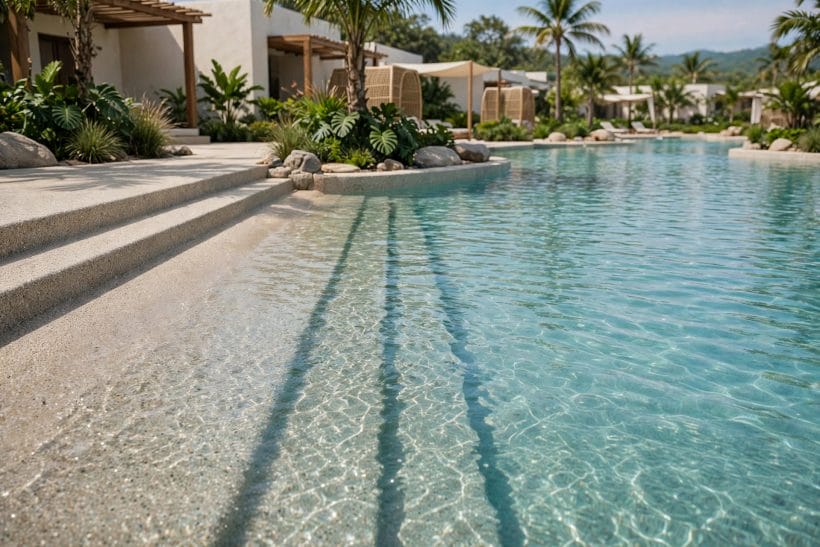
Small pools suit small gardens, courtyards and households that want cooling and relaxation more than lengths. A plunge pool is a different pleasure from a lap pool, and these ideas show how much can fit in a compact footprint.
Small pools feel generous when their edges are generous. Wide steps, a comfortable bench, a proper surround and room to sit beside the water matter more than a few extra feet of length, and they are what turn a small pool from a tub into a garden room. Depth deserves thought too: a plunge pool deep enough to immerse fully gives a very different pleasure from a shallow splash pool, and the choice should follow how the household will actually use it — cooling off, soaking, exercising gently, or all three at different times of day.
17. The Courtyard Plunge Pool
A compact plunge pool in a walled courtyard, deep enough to cool off completely, small enough to fit where a full pool never could.
18. The Plunge Pool With Steps
A plunge pool with generous steps that double as seating, so the pool is as much a place to sit and soak as a place to swim.
19. The Narrow Plunge Lane
A slim plunge lane along a garden boundary, giving a cooling dip and a visual waterline without taking over the garden.
20. The Round Plunge Pool
A circular plunge pool, simple and sculptural, that reads as a garden feature even when no one is swimming.
21. The Plunge Pool Beside a Terrace
A plunge pool set directly beside a terrace, so stepping from table to water takes a single step and the pool becomes part of outdoor living.
22. The Raised Plunge Pool
A raised plunge pool whose walls form seating around its edge, turning the pool’s structure into garden furniture.
23. The Plunge Pool With a Jet
A plunge pool with a gentle water jet for movement and sound, giving a small pool the sensory richness of a larger one.
4. Concrete Finishes and Colours
Finish is what you see and feel every time you use a pool. Concrete accepts a wide range of finishes, from smooth plaster to exposed aggregate, and the finish sets the water’s colour, the pool’s character and how it ages. These ideas cover the main choices in general terms.
Finish also decides how a pool ages, and ageing should be part of the choice. A pale plaster shows marks sooner but is easy to refresh; a darker finish hides marks but shows dust and debris more readily; an aggregate finish wears gracefully but feels rougher underfoot. Ask how each finish is maintained, how it responds to the local water, and how it will look in five years rather than on the day it is finished. The finish that looks best when new is not always the finish that looks best lived with.
24. Classic White Plaster
Smooth white plaster for a bright, clean, classic pool where the water reads as clear blue and the garden feels fresh and open.
25. Soft Grey Plaster
A soft grey plaster that gives the water a calm, muted tone and suits gardens with stone, timber and natural planting.
26. Deep Blue Plaster
A deep blue plaster for a rich, lagoon-like water colour that looks striking in strong sun and atmospheric at dusk.
27. Exposed Aggregate
An exposed aggregate finish that shows the stone within the concrete, giving a textured, natural surface and a speckled, riverbed feel.
28. Polished Concrete Finish
A polished concrete finish for a sleek, contemporary pool where the surface itself is part of the design statement.
29. Tiled Waterline
A tiled band at the waterline that adds colour, pattern and a clean edge, and makes the waterline easier to keep looking sharp.
30. Mosaic Accents
Mosaic accents — a medallion on the floor, a patterned step, a decorative border — that give a concrete pool a crafted, personal signature.
5. Coping, Decking and Surrounds
What surrounds a pool matters as much as the pool itself. Coping, decking and paths frame the water, carry bare feet, and set the garden’s tone. These ideas show surrounds that work hard and look calm.
Surrounds should be planned as a system, not as separate materials. The coping, the terrace, the paths and the lawn or planting beyond them should meet cleanly, drain sensibly and feel consistent underfoot. Levels deserve particular care: a surround that puddles, tilts toward the house, or trips at every threshold will annoy daily, however beautiful its stone. Think about drainage in general terms from the start, keep thresholds level and safe, and let one or two materials carry the whole surround rather than a patchwork of competing surfaces.
31. Wide Stone Coping
Generous stone coping that doubles as informal seating around the pool’s edge, giving swimmers somewhere to sit and the pool a finished frame.
32. Timber Decking Beside the Pool
Warm timber decking that softens the pool’s hard edges and feels kind under bare feet, with boards laid to drain and dry quickly.
33. A Gravel Surround
A gravel surround that drains freely, needs little care, and gives the pool a relaxed, Mediterranean feel.
34. Large-Format Paving
Large-format paving for a calm, contemporary surround with few joints, where the pool and its terrace read as one composed surface.
35. A Lawn Edge to the Water
A lawn that runs to the pool’s coping, softening the pool’s geometry and giving the garden a fresh, open feel.
36. A Raised Terrace Overlooking the Pool
A raised terrace that looks over the pool, giving spectators a view and the garden a layered, terraced structure.
37. Textured Surfaces for Grip
Textured surround surfaces chosen for sure footing when wet, since a pool surround is walked on barefoot and wet more than any other part of the garden.
38. A Continuous Indoor-Outdoor Floor
A surround material that continues inside the house, blurring the boundary between indoors and out and making the pool feel part of the home.
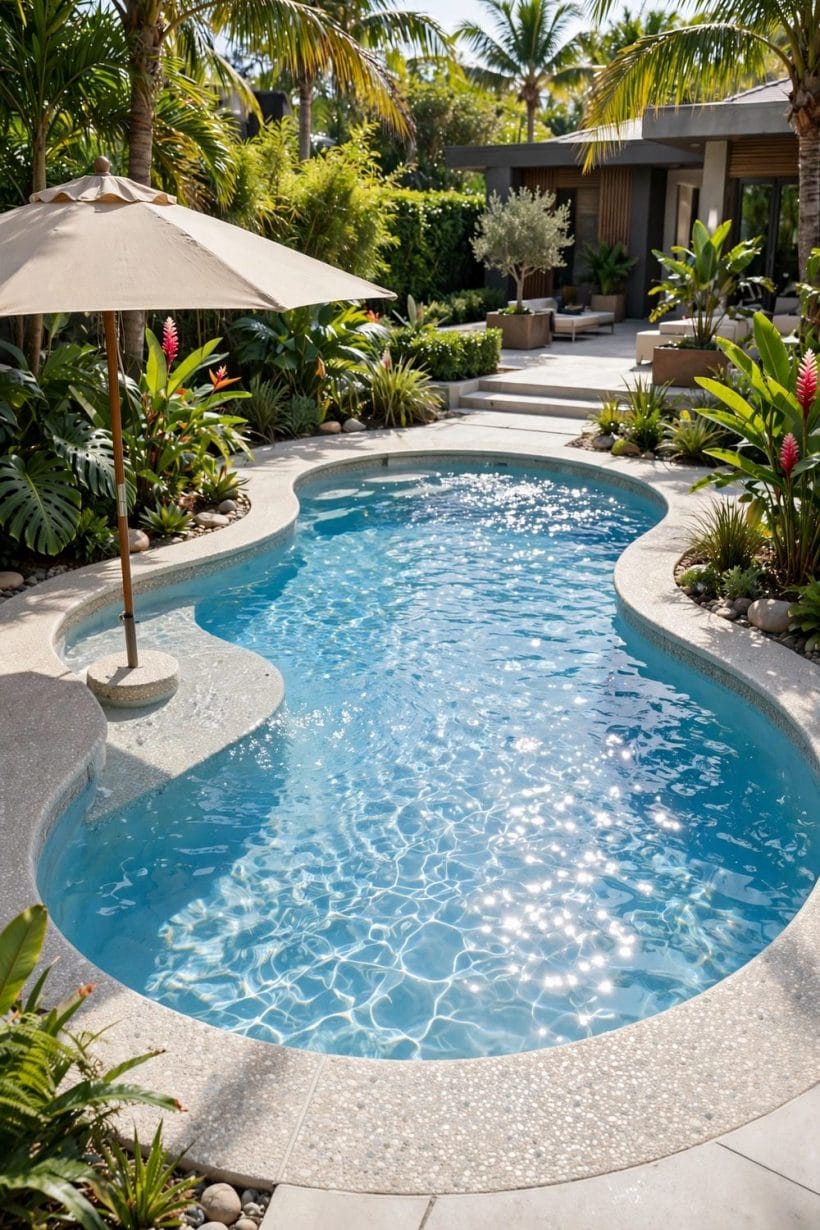
6. Steps, Benches and Beach Entries
How you get into a pool shapes how you use it. Steps, benches and beach entries are not afterthoughts; they are where children play, adults sit, and everyone enters and leaves the water. These ideas make entries generous and inviting.
Entries should serve the whole household, not just confident swimmers. Children need shallow, obvious places to enter and play; older users need steady, well-marked steps and something to hold; everyone benefits from entries that are wide, well-lit and easy to find in the water. A pool with one narrow ladder as its only entry is a pool that excludes people daily, while a pool with generous steps and a bench invites everyone in. Plan entries for the least confident user first, and the pool becomes welcoming for all.
39. Wide Corner Steps
Broad corner steps that welcome swimmers in gradually and give children a safe, obvious place to enter and play.
40. A Full-Width Step
A step that runs the full width of one end, turning the pool’s entry into a grand, easy gesture rather than a narrow afterthought.
41. A Submerged Bench
A bench built into the pool’s edge below the waterline, where adults can sit chest-deep, chat and cool off without swimming.
42. A Beach Entry
A gently sloping beach entry that lets swimmers walk into the water gradually, like entering a lake, and gives small children a shallow play zone.
43. A Corner Seat in the Shade
A submerged corner seat placed where the pool’s shade falls, giving a cool resting spot on hot days.
44. Steps With a Handrail
Steps fitted with a discreet handrail, giving less confident swimmers and older users a steady, dignified way in and out.
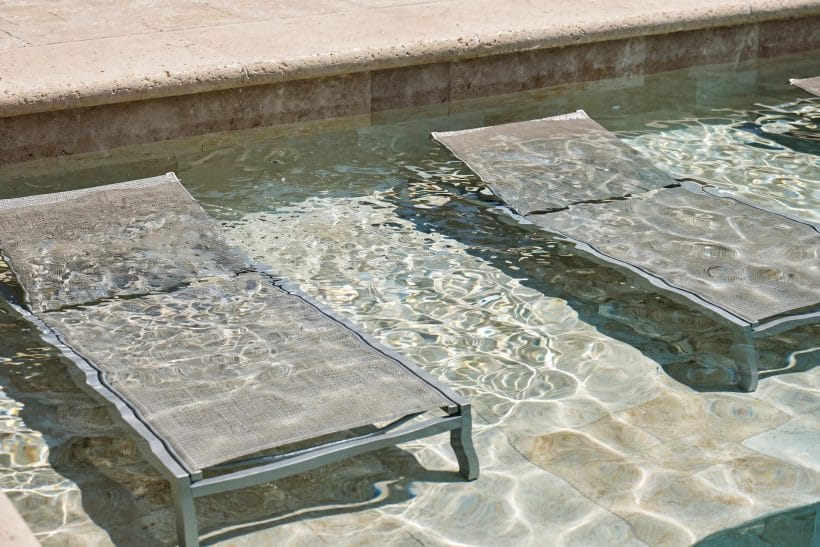
45. A Sun Shelf for Loungers
A shallow sun shelf that holds loungers in a few inches of water, so sunbathing and cooling off happen at the same time.
7. Water Features and Movement
Moving water adds sound, sparkle and life to a pool, and it can be as simple as a single spout or as elaborate as a waterfall. These ideas add movement without overwhelming the pool’s calm surface.
Sound is the part of a water feature most often misjudged. A feature that sounds delightful for ten minutes can become tiring over a whole afternoon, especially in a small garden where neighbours hear it too. Choose features whose sound can be adjusted or switched off, and consider how the sound carries to seating areas and to neighbouring gardens. A gentle, adjustable feature that can be enjoyed or silenced at will is worth more than a dramatic one that cannot be tamed, and its equipment should be accessible for servicing by qualified professionals.
46. A Single Sheer Descent
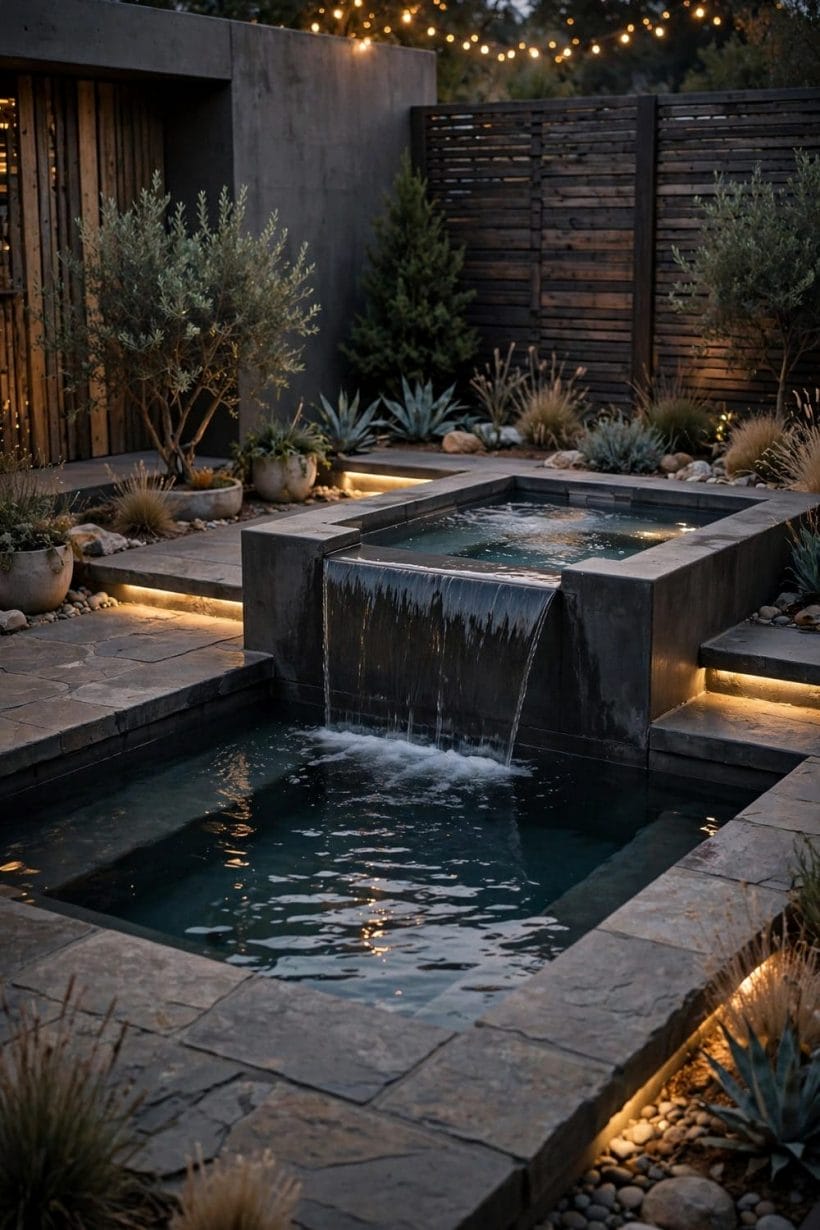
A sheer sheet of water falling from a raised wall into the pool, giving a clean visual line and a gentle, continuous sound.
47. A Rock Waterfall
A waterfall over natural rock at one end of the pool, giving a freeform pool its wild, garden-born character.
48. Deck Jets
Arcs of water jetting from the deck into the pool, playful by day and beautiful when lit at night.
49. A Raised Spa Spillover
A raised spa that spills over into the main pool, linking two water features in one flowing composition.
50. A Bubbler on a Shelf
A gentle bubbler on a shallow shelf, giving children a play feature and the pool a sparkling, moving centre.
51. A Rain Curtain
A curtain of falling water from an overhead beam or pergola, creating a water doorway that swimmers can pass beneath.
52. A Still Reflecting Pool Beside the Pool
A still, shallow reflecting basin beside the main pool, giving the garden a quiet water mirror to balance the active swimming water.
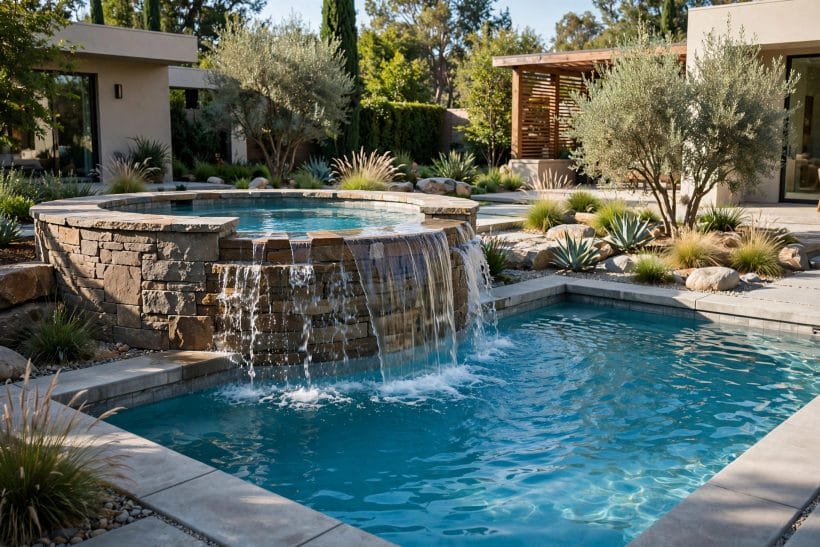
8. Lighting After Dark
Pool lighting transforms a garden after dark, turning the pool into a glowing centrepiece and extending swimming into the evening. All pool lighting and electrical work belongs to qualified professionals; these ideas cover the effects, not the wiring.
Glare is the enemy of good pool lighting. Lights that shine into swimmers’ or spectators’ eyes ruin the effect and make the pool harder to use safely after dark, while lights that wash surfaces and glow from within the water flatter everything. Layer the lighting — underwater glow for the pool itself, low lights for paths and steps, soft uplighting for planting — and keep any single source from dominating. Dimmers and separate controls for each layer let one garden shift from a bright family evening to a quiet late swim without rewiring anything.
53. Underwater Lights for a Glow
Underwater lights that make the whole pool glow from within, turning the water into a lantern for the garden.
54. Colour-Changing Light
Lights that shift the pool’s colour through the evening, letting one pool feel different at a dinner party than at a family swim.
55. Lit Steps and Benches
Small lights that mark steps, benches and entries, making night swimming safer and the pool’s shape legible after dark.
56. Uplighting for Trees
Uplights on the trees and planting around the pool, so the garden glows around the water rather than leaving it isolated in darkness.
57. Lanterns on the Surround
Lanterns and low lights on the pool’s surround, giving a warm, human-scale glow that suits evenings beside the water.
58. A Lit Water Feature
A waterfall or jet lit from within or behind, so moving water sparkles after dark and becomes the garden’s evening centrepiece.
59. Moonlighting From Above
Lights placed high in trees or on the house that wash the pool and garden in soft, moon-like light, avoiding harsh glare.
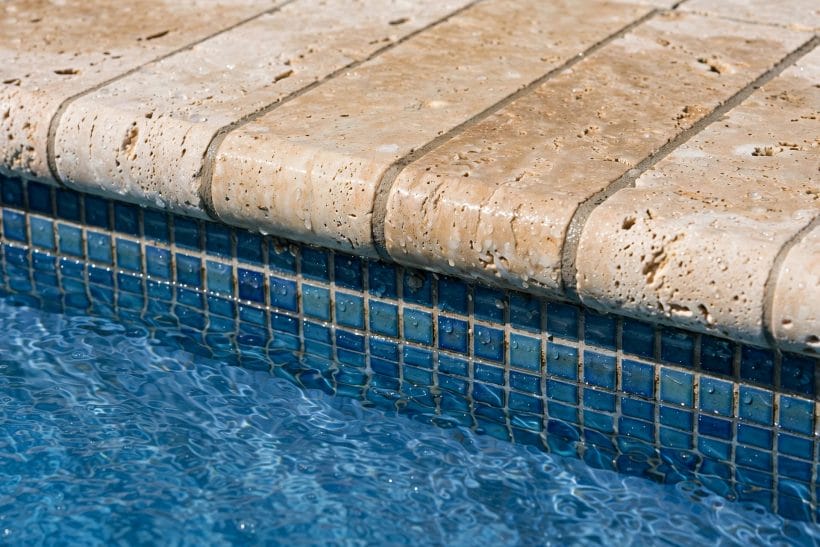
9. Planting Around Concrete Pools
Planting softens concrete, frames water and gives a pool garden its character, but pool planting must tolerate splashes, sun and the occasional ball. These ideas plant for beauty and for survival beside water.
Pool planting fails most often on two counts: debris and roots. Plants that drop leaves, flowers or fruit constantly will fill the pool and strain its filtration, while plants with aggressive roots can disturb surrounds and plumbing over time. Choose plants whose litter is light and seasonal rather than constant, keep heavy shedders away from the water’s edge, and site trees where their roots have room without threatening the pool’s structure. A planting plan that respects the pool’s machinery lasts longer than one chosen on flowers alone, and it keeps maintenance a pleasure rather than a chore.
60. Palms for Height
Palms that give a pool garden instant height, shade and a holiday feeling, planted where their fronds will not drop into the water constantly.
61. Grasses for Movement
Ornamental grasses that sway beside the pool, softening its hard edges and giving the garden movement even when the water is still.
62. Scented Planting by Seating
Jasmine, gardenia or lavender planted beside pool seating, where their scent can be enjoyed on warm evenings.
63. Hedges for Privacy
Dense hedging that gives the pool privacy without a fence’s hard look, and shelters swimmers from wind.
64. Pots for Flexibility
Large pots that let pool planting move with the seasons, be rearranged for parties, or be sheltered in winter.
65. Ground Cover Instead of Lawn
Low ground cover around the pool that needs no mowing, tolerates occasional splashes, and keeps the surround green without grass clippings in the water.
66. A Feature Tree in a Gravel Bed
A single feature tree — olive, palm or a sculptural native — set in gravel near the pool, giving the garden a focal point that is not the pool itself.
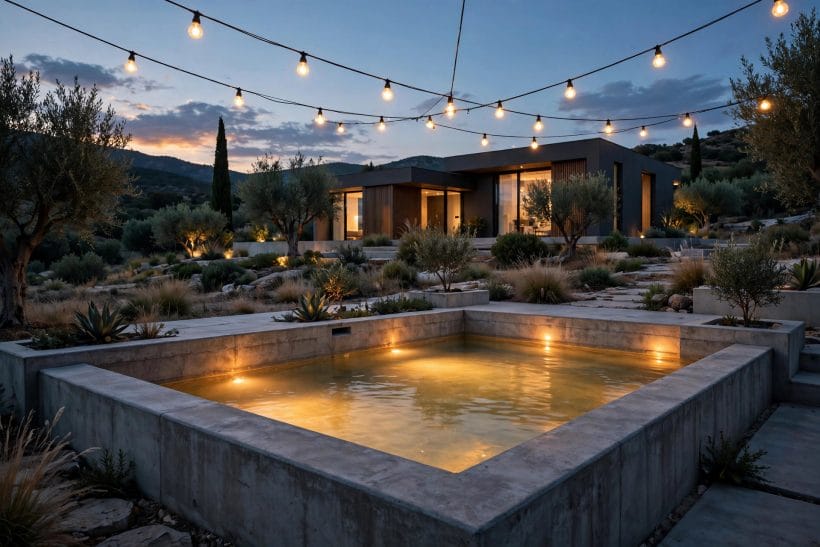
10. Seating, Shade and Outdoor Rooms
A pool is only half the pleasure; the other half is everything around it. Seating, shade and outdoor rooms turn a pool from a place to swim into a place to spend the day. These final ideas complete the picture, with a nod to the wider outdoor living that surrounds any good pool.
Zone the poolside day the way you would zone a house. A sunny zone for morning swims, a shaded zone for midday lounging, a dining zone for long lunches, and a quiet zone for reading or napping give a pool garden the variety that keeps it used all day rather than for a single swim. Each zone needs only a few things — shade, a seat, a surface for a drink — but each zone needs them deliberately placed. A pool garden without zones is a garden where everyone competes for the same two chairs; a pool garden with zones is one where a whole household spreads out happily.
67. A Shaded Daybed by the Water
A daybed under shade beside the pool, for long, lazy afternoons within sight and sound of the water.
68. A Pergola Over the Seating Area
A pergola that shades the pool’s seating zone, with climbers for greenery and dappled light that suits hot days.
69. An Outdoor Kitchen Near the Pool
A simple outdoor kitchen or barbecue area near the pool, so meals and swimming share the same outdoor day.
70. A Poolside Dining Table
A dining table set for long lunches beside the pool, where the water is the view and the meal is the occasion.
71. A Fire Feature for Evenings
A fire bowl or fireplace near the pool that extends pool evenings into cooler nights, giving warmth and light after swimming ends. Our patio fireplace ideas show how fire zones are arranged for conversation.
72. A Changing and Storage Nook
A small changing area or storage nook near the pool for towels, toys and equipment, keeping the pool surround tidy and the house dry.
73. A Hammock Between Trees
A hammock strung between trees near the pool, for the deepest relaxation a garden offers, within earshot of the water.
74. A Poolside Shower
An outdoor shower near the pool for rinsing off before and after swimming, keeping chlorine and garden dirt out of the house.
75. One Hero View, Framed
A single framed view — to the garden, the sunset or the house — that the pool’s layout deliberately celebrates, so the pool feels composed rather than merely placed. For the wider outdoor living around any pool, Mediterranean pool ideas, sunken spa patio ideas, bluestone patio ideas, tiny house porch ideas, exterior entryway ideas and Tuscan style homes show how water, stone, planting and outdoor rooms fit together across a whole garden.
Final Considerations
A concrete pool rewards the planning it demands. Choose a shape that follows your garden, a finish that suits your light, a surround that is kind to bare feet, and entries that welcome everyone who will use the water. Add movement, light and planting in layers, and build the seating and shade that turn swimming into a whole day outdoors. Keep construction, plumbing and electrics with qualified professionals, check local rules early, and let the pool’s design serve the garden it sits in. Done that way, a concrete pool is not just a place to swim — it is the garden’s centre, all summer long.
When you are ready to move from ideas to plans, take this guide’s shortlist to a qualified pool professional and walk the garden together. The ideas that survive that conversation — the shape that fits the slope, the finish that suits the light, the entries that welcome the whole household — are the ones worth building. A concrete pool is a long-lived piece of a garden, and the time spent choosing well is repaid every summer for years.

0 Comments