

Two sofas can look identical in a showroom and be strangers underneath — one built on a hardwood frame with joints that will outlive its owner, the other stapled together around board and hope. The difference is not visible in the fabric. It is in the construction, and construction can be checked.
This guide is the what-to-check version of furniture construction: frames, joinery, suspension, fillings and finishes, and the questions that reveal how a piece was actually made. No brand verdicts, no invented test results — just the build, read properly.
1. Furniture Construction at a Glance
Scope first, because this cluster has three neighbours and each owns a different question. The furniture quality guide judges the finished piece in front of you — the visible signs of quality when you inspect. The cabinet pricing guide explains what drives the cost of fitted work. This post owns the third question: how furniture is built — the frame, the joints, the springs and the fillings underneath the upholstery — and how to check them before the piece is yours.
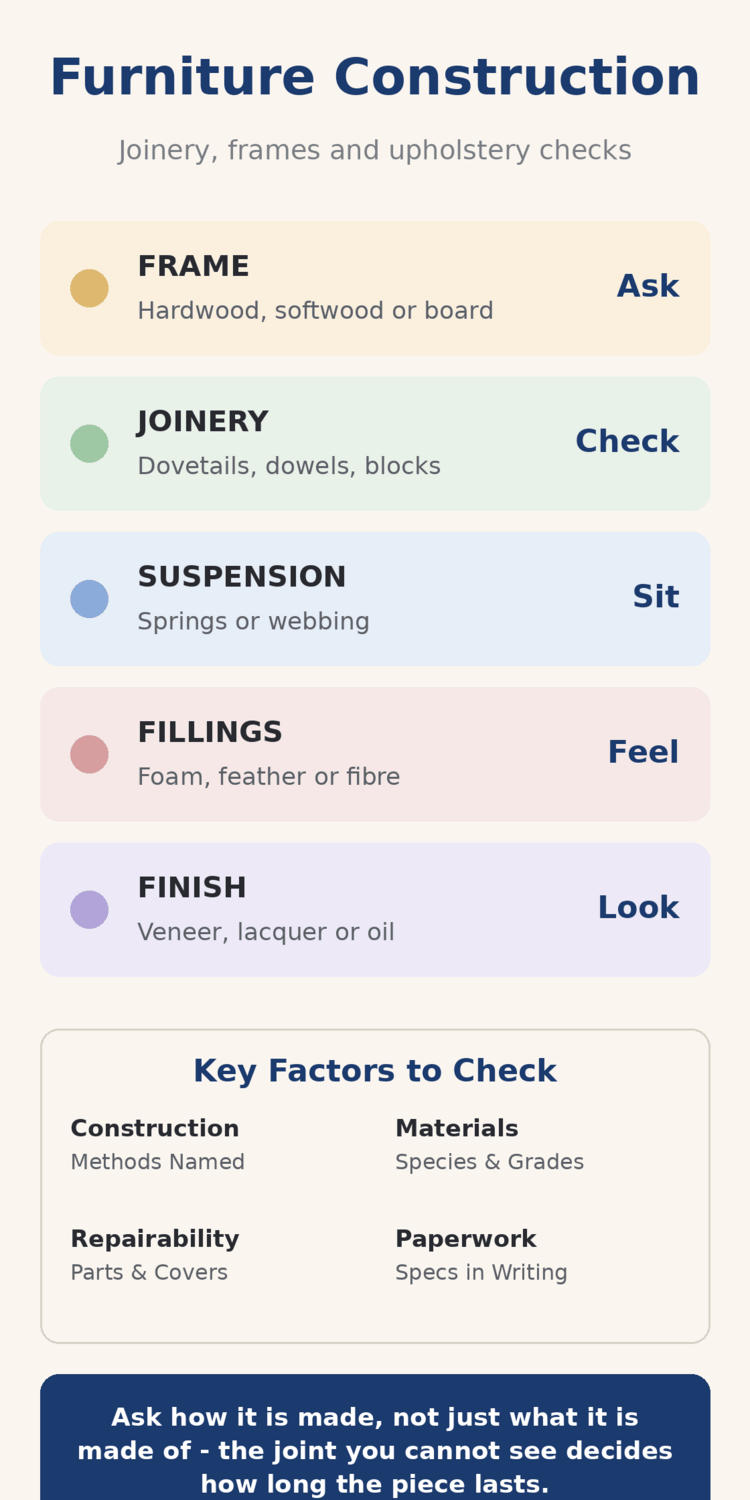
The five checks in the table are the whole construction in miniature. Work down them in order and most furniture descriptions become easy to test.
| Check | Character | What it means |
|---|---|---|
| Frame | The Skeleton | Hardwood, softwood or board decides the piece’s strength and lifespan |
| Joinery | The Handshake | Dovetails, dowels and corner blocks decide whether joints loosen or last |
| Suspension | The Support | Springs or webbing decide how the seat carries weight over years |
| Fillings | The Comfort Core | Foam, feather or fibre decides how cushions feel and how they age |
| Finish | The Skin | Veneer, lacquer or oil decides looks, protection and how repairs behave |
2. Frames: What the Skeleton Is Made Of
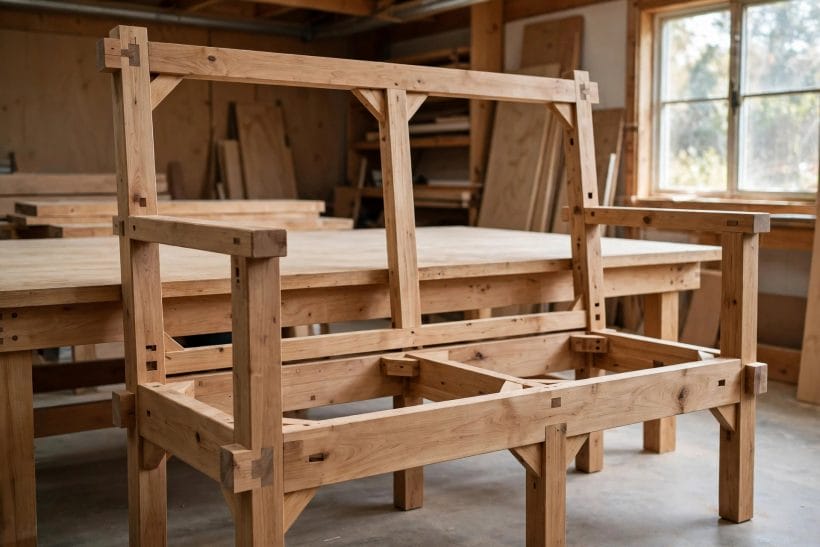
Everything hangs on the frame — literally. Upholstery can be renewed and cushions replaced, but a frame that racks and twists takes the whole piece with it, so this is the first and most important check.
1. Hardwood frames are the traditional benchmark
Kiln-dried hardwood — beech, ash, oak and their relatives — has been the frame-maker’s choice for centuries because it holds screws and joints firmly, resists warping when properly dried, and survives the leverage of daily sitting. Ask for the species by name; ‘solid wood’ without a species is a description with the useful part removed.
2. Softwood and board have honest places too
Pine frames and well-made engineered board appear in lighter, simpler pieces — occasional chairs, flat-packed storage, children’s furniture — and serve well within their loads. The check is proportion: a family sofa asked to carry a decade of evenings deserves more skeleton than a guest-room chair.
3. The lift and twist test
Lift one front corner of a sofa or chair a few centimetres. In a rigid frame, the other front leg rises with it almost immediately; in a weak one, the piece twists and the far leg stays planted. It is the simplest showroom test there is, and honest makers welcome it.
3. Joinery: How the Corners Hold
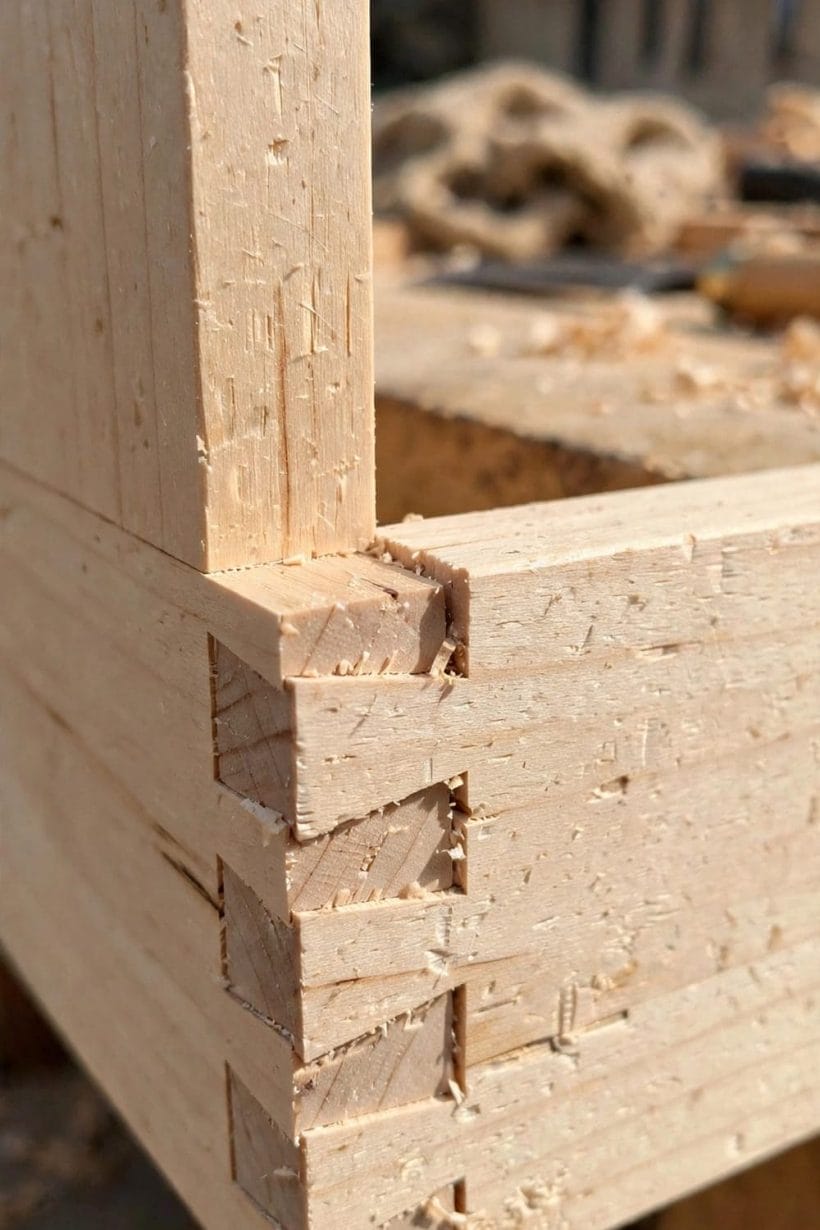
Joints are where furniture quietly succeeds or fails. Frames are levered thousands of times a year, and the joint method decides whether that movement tightens the piece’s resolve or works it loose.
4. Mortise, tenon and dowel: the strong family
Traditional interlocking joints — mortise-and-tenon, dowelled and glued joints, corner blocks screwed and glued at the angles — spread loads across wood-to-wood contact. They are the methods behind furniture that gets reupholstered rather than replaced. Ask which method the frame uses; the answer should be a word, not a shrug.
5. Dovetails where drawers work hardest
In cabinet pieces, dovetailed drawer boxes signal a maker who expects the drawer to be opened ten thousand times. The kitchen cabinet quality guide reads the same joints in fitted work — the principle travels: interlocking corners outlast pinned ones wherever hands pull daily.
6. Staples alone are a warning, not a crime
Staple-only construction appears at the budget end and in pieces designed to be light and short-lived. It is a legitimate way to build a cheap chair; it is not a way to build an heirloom. Match your expectation to the method, and your price to both.
4. Seats: Springs, Webbing and Support
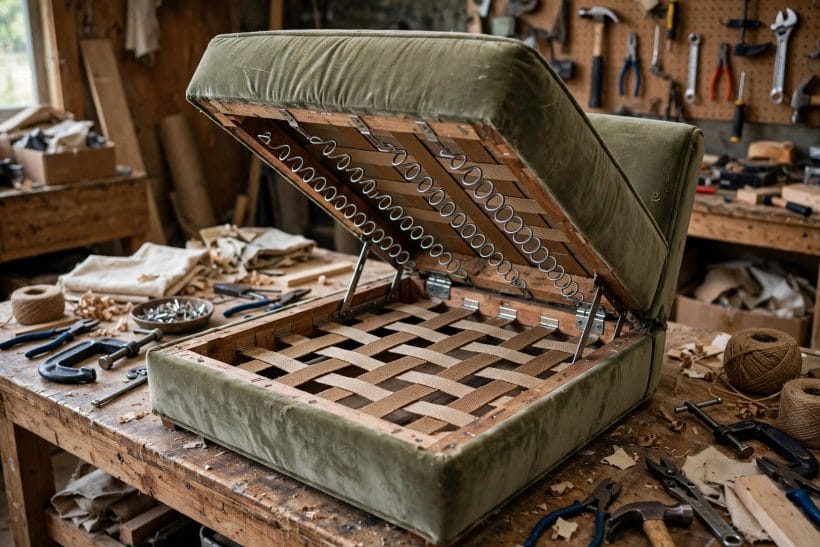
Under every cushion sits a support system doing silent work. You cannot see it in the showroom, which is exactly why it must be asked about by name.
7. Sinuous springs for the modern standard
Zigzag steel springs, clipped at close intervals, are the workhorse of modern upholstery — supportive, consistent and economical to build well. Their quality lives in the gauge of the steel and the spacing; a seller who knows the specification is telling you something good about the factory.
8. Webbing, done properly, is no poor relation
Woven elastic webbing, properly tensioned and densely spaced, gives a slightly softer sit and serves slimmer, lighter frames where springs will not fit. Sagging webbing in a second-hand piece is replaceable; in a new piece, ask how it is fixed and whether it can be renewed.
9. Hand-built springing for the traditional end
Fully sprung seats — coils tied by hand — remain the connoisseur’s construction: labour-rich, deeply comfortable, and repairable by any good upholsterer decades later. It appears in traditionally made pieces like the chaise and daybed family, where craft is the point of the purchase.
5. Cushions and Fillings
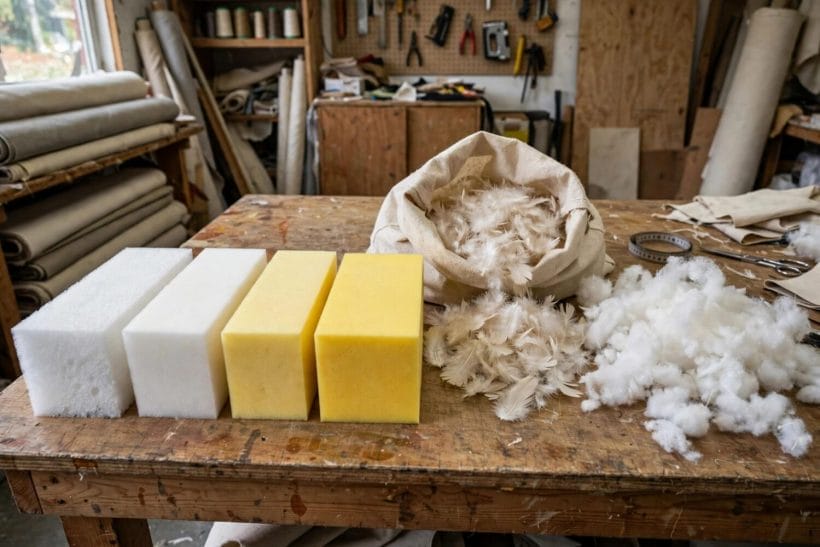
Fillings decide the first sit and the five-hundredth. Each material has a character and a maintenance rhythm, and the showroom sit only ever demonstrates the first of the two.
10. Foam for shape and support
Foam cores hold their lines, suit tailored upholstery, and come in densities that trade softness against longevity — denser generally lasts longer. Ask what density and whether the core is wrapped; a fibre or feather wrap over foam gives the tailored core a softer first welcome.
11. Feather for the sink-in sit
Feather and down cushions give the luxurious slump that photographs beautifully and needs daily plumping to keep. That ritual is the honest price of the comfort. Households that will not plump should not buy feather, however lovely the first sit feels.
12. Fibre for softness at a lighter price
Blown fibre fillings are soft, light and comparatively inexpensive, and they compact faster than foam or feather. They suit occasional chairs and guest pieces well. For the main family sofa, ask how the filling behaves in year three, not month three.
6. Upholstery and Fabric Checks
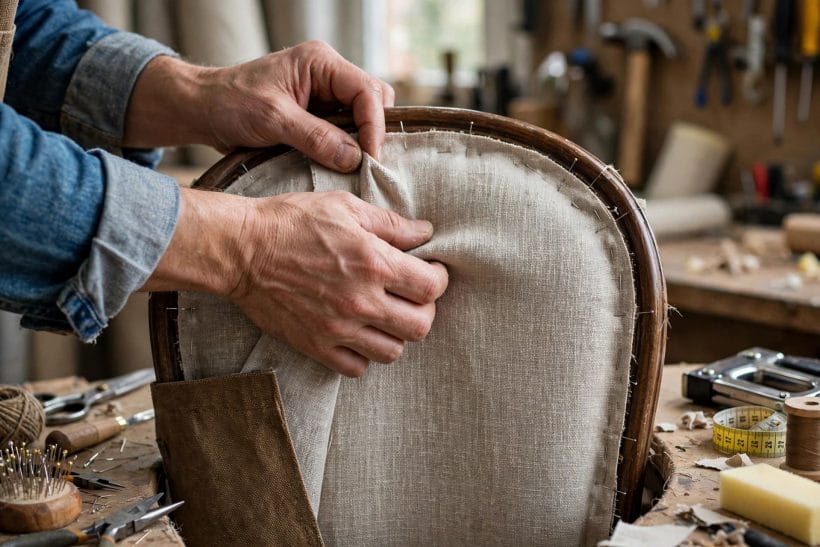
The covering is the construction layer you touch. Its checks are part craft, part housekeeping: how it is fixed, how it is matched, and how it will be cleaned and repaired.
13. Pattern matching shows the maker’s care
Stripes that run true across cushions and arms, patterns centred and mirrored, seams that sit straight — matching is labour, and labour is a proxy for the care taken in the parts you cannot see. A maker casual about visible matching is rarely meticulous about hidden joints.
14. Removable covers change the cleaning story
Covers that unzip for washing or dry cleaning transform a pale sofa from a risk into a choice, especially in houses with children, dogs or red wine. Check whether replacements can be bought later — a cover you can renew doubles the upholstery’s practical life.
15. Rub counts and real life
Fabric durability is described in general terms such as light, general or heavy domestic use. Match the description to the household honestly: a delicate weave on the family’s only sofa is a disappointment scheduled, while the same fabric on a bedroom chair may serve for decades.
7. Drawers, Doors and Fittings
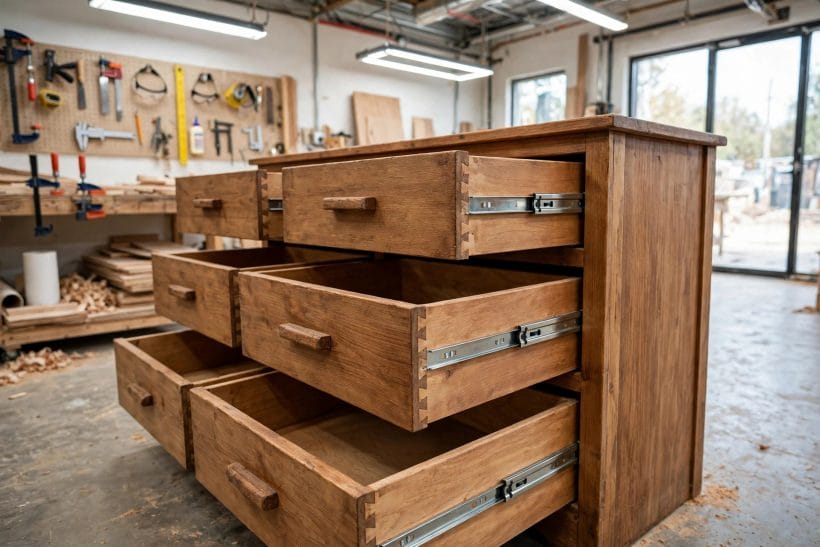
In cabinets, chests and dressers, the moving parts give the construction away. Open everything in the showroom — the piece will tell you its quality in its own voice.
16. Drawers that run true
A good drawer opens with one hand, runs level, and closes without persuasion. Timber runners, quality metal slides and soft-close mechanisms each have their place; wobble, scrape and racking at the first touch do not improve with age, they announce it.
17. Doors that hang and stay hung
Door gaps should be even, hinges firmly seated, and adjustable where the design allows. In a room scheme — a converted spare room closet, for instance — fitted doors work this test daily, so the same checks apply there word for word.
18. Backs and undersides tell the truth
Turn your attention where showrooms do not light: the back panel, the underside, the inside of the base. Finished, tidy hidden surfaces are the mark of a maker who builds for the piece’s life, not for its photograph. Rough, afterthought hidden work rarely coexists with fine visible work. Ask the staff before you start tipping pieces over — good showrooms expect it, and will often steady the piece and join the inspection with a torch of their own.
8. Finishes and Veneers
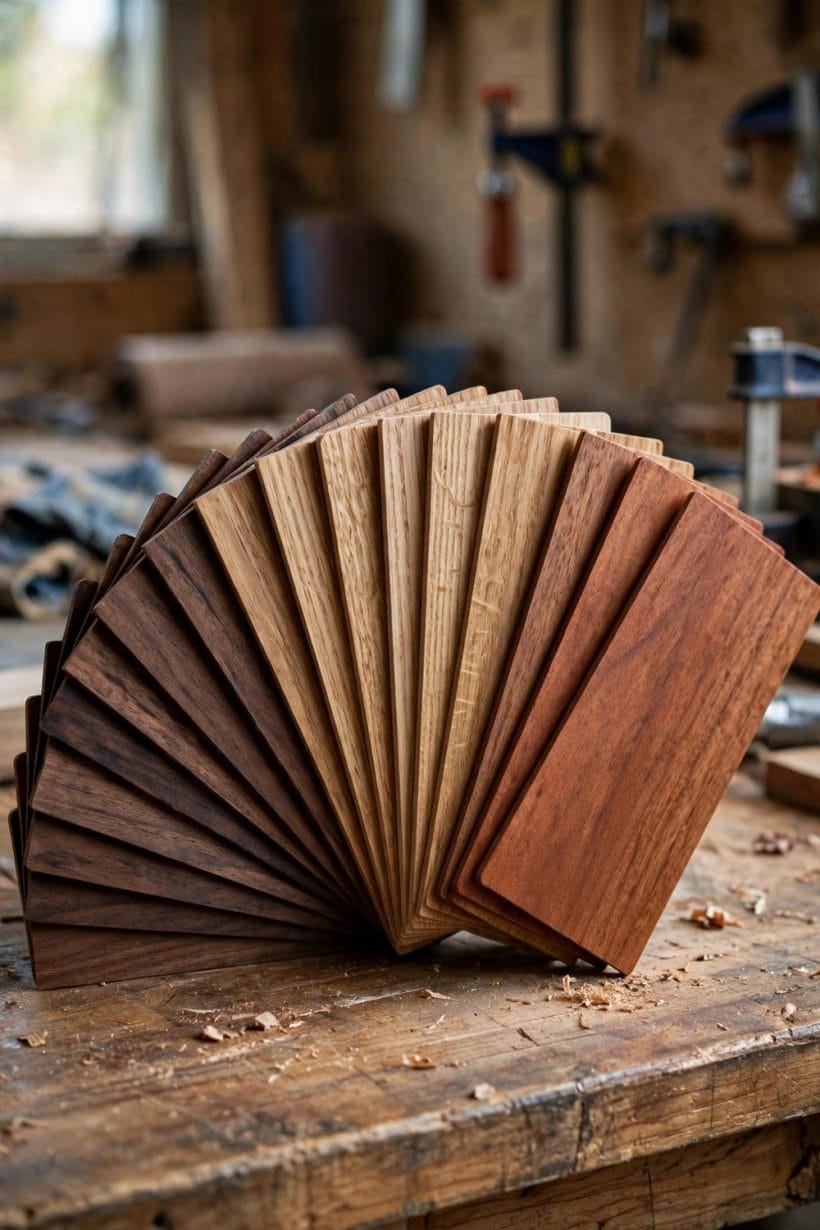
Finishes protect the timber and decide how the piece meets light, touch and time. None of the families is simply ‘best’ — each is a trade, and the check is whether the trade suits your household.
19. Veneer is a craft, not a cheat
Fine veneers let rare and beautifully figured timber cover a stable core, and have done for centuries of fine furniture — the furniture reviews guide makes the same point for readers learning to judge review claims. Judge veneer by its matching, its edges and its honesty of description, not by the word itself.
20. Lacquer and paint for protection
Hard lacquers and painted finishes shrug off rings, spills and sticky fingers, which is why they dress so much family furniture. Their repair story is the check: some touch in invisibly, others show every mend, so ask before the first accident conducts the experiment.
21. Oil and wax for repairable warmth
Oil and wax finishes sit in the wood rather than on it, feel warm to the hand, and can be renewed and spot-repaired by the owner indefinitely. The trade is upkeep — expect to feed the finish periodically, and the piece will look better at ten years than at one.
9. Care, Repair and Longevity
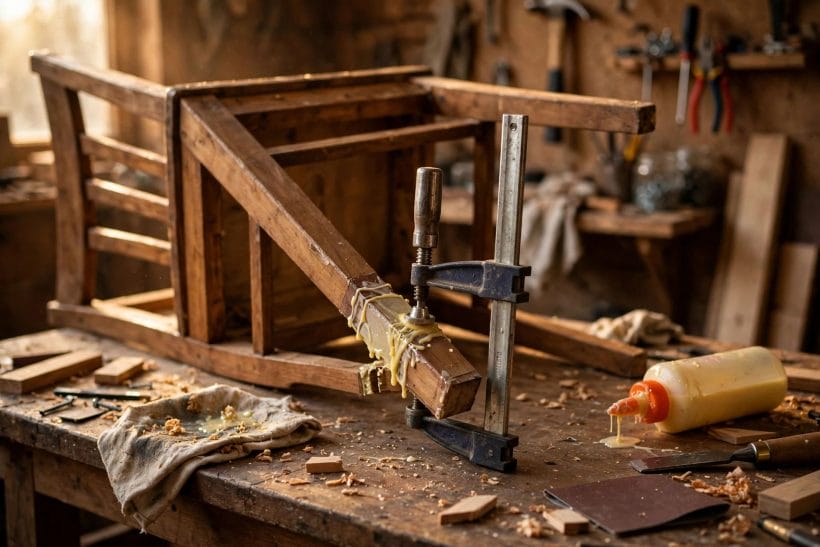
Construction quality reveals its full value at the first repair. Pieces built with real joints, standard fittings and documented materials can be mended almost forever; pieces built as sealed mysteries cannot be mended at all.
22. Repairability is a construction feature
Ask the reupholstery question: can this frame be stripped and recovered, can the suspension be renewed, can a leg or a runner be replaced? Makers of well-built furniture answer easily, because their pieces come back to workshops and return to service.
23. Spares and specifications on paper
The specification — frame material, joint method, filling, fabric — should exist in writing, as should the route to spare parts and matching fabric. Paper that exists at purchase is help that exists at repair; memory is neither.
24. Care that matches the construction
Each construction family carries its own care rhythm: oiled finishes to feed, feather to plump, webbing to inspect, lacquer to wipe rather than soak. Buy the rhythm you will actually keep. The best-built piece in the wrong household still disappoints.
10. Questions to Ask Before You Buy
Finish with the questions that surface every hidden layer. Sellers of well-built furniture answer them with pleasure, because the answers are their best argument.
25. The frame questions
What species is the frame, how is it dried, and how are its corners joined? Three precise answers describe the skeleton completely. Vague warmth in place of species and method is the sound of a frame that would rather not be discussed.
26. The comfort questions
What supports the seat, what fills the cushions, and how does each behave in three years? Ask for the materials by name and the maintenance by description. Comfort that cannot be described cannot be compared, and cannot be repaired when it fades.
27. The paper questions
What is guaranteed, what is excluded, and what arrives in writing with the piece? Close the purchase the way the cluster’s other guides close theirs — specification first, verdicts earned, everything on paper. Furniture built to be checked is furniture built to last.
Final Considerations
Construction is the part of furniture you cannot see, cannot photograph, and will live with longest. The checks in this guide exist to make it visible anyway: a lifted corner, an opened drawer, a named species, a described joint. None of them needs expertise — only the habit of asking how a thing is made before asking what it costs.
Buy the piece whose maker can describe its skeleton with pride. Frames, joints and fillings decide whether a sofa is a decade’s companion or a season’s regret, and the difference was built in long before it reached the showroom floor.



0 Comments