

A lattice fence can turn a plain boundary into the prettiest line in the garden: open enough for light and climbing leaves, patterned enough to feel finished from every angle.
These 75 lattice fencing ideas stay with fencing itself — patterns, panels, toppers, gates, finishes and planting — so you can choose a boundary that suits your garden.
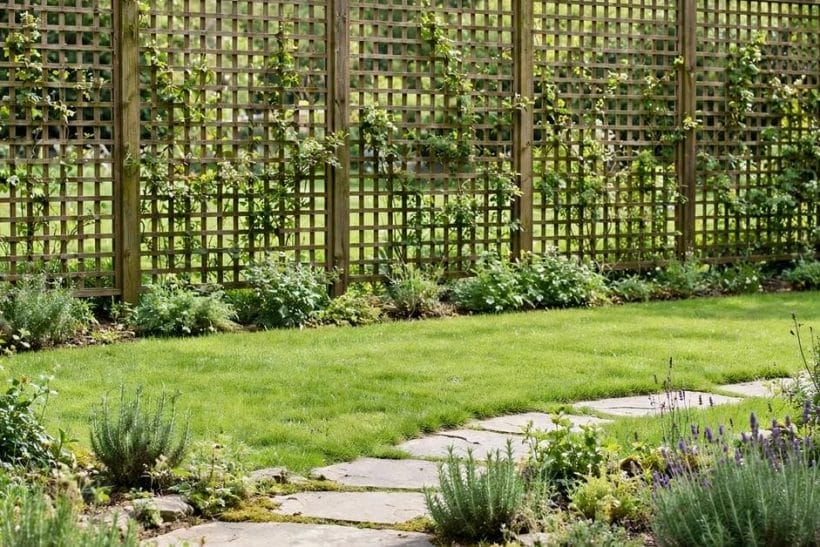
1. Lattice Fencing at a Glance
Scope first. This post owns lattice as fencing only: panels as boundary fences, toppers above solid fences, lattice gates, and lattice around decks and patios. The neighbouring privacy fence ideas lane covers solid boundaries; this post stays with the open, patterned family.
The splits are simple. Lattice as a patio privacy wall or screen is a different job, in its own post. The privacy screen ideas lane likewise lives in its own post — this post returns always to the fence line.
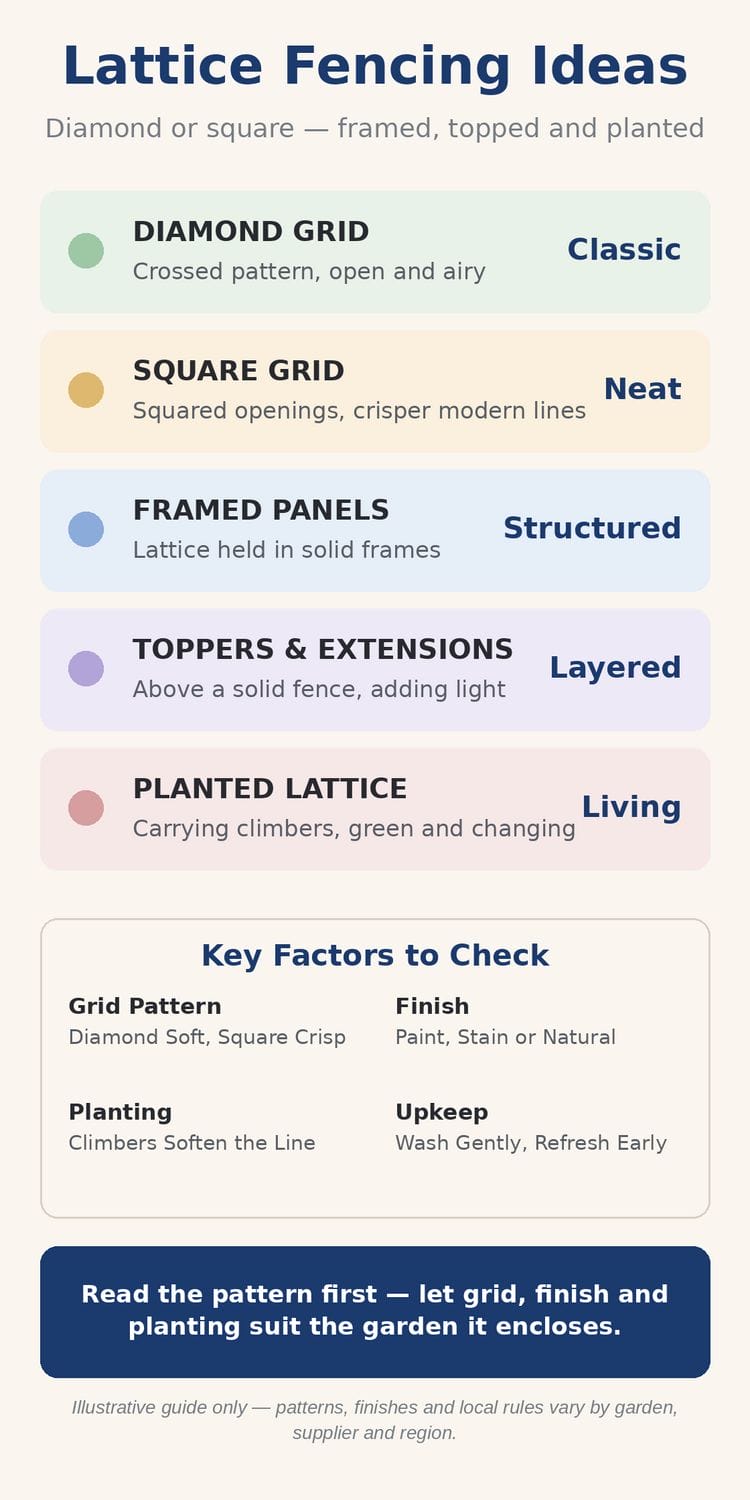
Read the pattern first. The grid decides how open the boundary feels and how planting shows through it. The table names the five families this post returns to.
| Family | Character | What it means |
|---|---|---|
| Diamond Grid | Classic | Traditional crossed pattern, open and airy |
| Square Grid | Neat | Squared openings, crisper modern lines |
| Framed Panels | Structured | Lattice in solid frames, panel after panel |
| Toppers and Extensions | Layered | Lattice above solid fencing, for height and light |
| Planted Lattice | Living | A fence line carrying climbers, green and changing |
2. Diamond and Square Grids
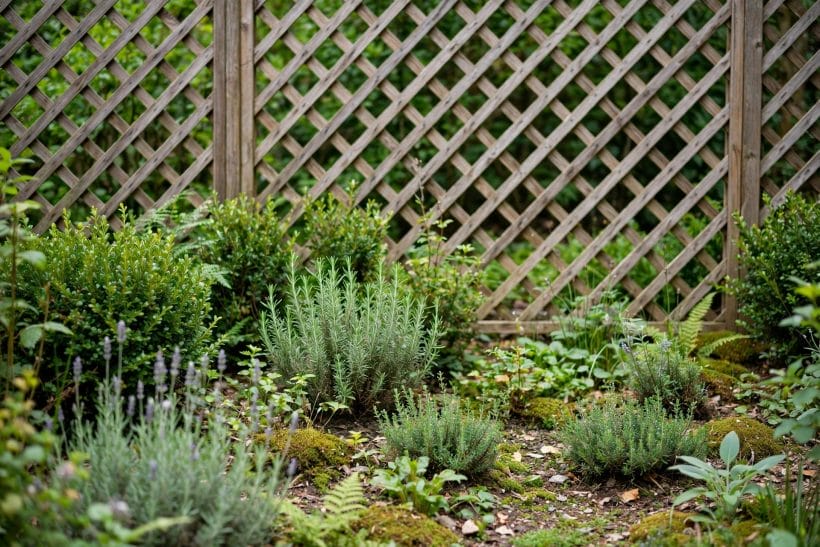
Every lattice boundary begins with its grid. Diamond crossings feel traditional and soft, squared openings neat and calm, and choosing early settles the character of everything that follows.
1. Classic diamond grid along a garden boundary
A classic diamond grid is where most gardeners begin, and for good reason: the crossed pattern softens a straight boundary, lets planting show through in glimpses, and suits cottages and family gardens alike without ever feeling plain or unfinished.
2. Square grid for a crisper modern line
A square grid gives a boundary its tailored edge. The upright openings read calm and orderly beside modern planting and clean paths, and the fence feels designed rather than decorated, especially where the garden itself favours straight lines.
3. Diamond lattice softened by planting in front
Planting set just in front of a diamond pattern takes the hardness out of the line beautifully. Leaves overlap the crossings, shadows move across the grid, and the boundary feels grown into the garden instead of drawn across it.
4. Square lattice with a clean painted frame
A painted frame around square lattice gives each panel its border, much like a picture frame settles a print. The frame colour does the defining work while the grid stays light, and runs of panels read as one idea.
5. Open diamond pattern where light matters most
Where light matters as much as enclosure, an open diamond pattern earns its place daily. Sun passes through in changing shapes, planting behind stays visible, and the boundary marks the edge without stealing the brightness from borders nearby.
6. Tighter square pattern for a calmer screen
A tighter square pattern closes the view more while keeping the lattice character intact. It suits seating corners and quieter parts of the garden, where a calmer backdrop matters more than seeing everything beyond the boundary at once.
7. Diamond grid turning a gentle corner
Corners decide whether a boundary feels continuous, and diamond lattice turns them kindly. The pattern carries the eye around the bend instead of stopping it, and a corner softened becomes a small feature rather than an awkward join.
8. Alternating diamond panels on a long run
On a long boundary, alternating the depth or finish of diamond panels gives the run a rhythm. The eye travels panel to panel instead of tiring on one endless stretch, and the garden feels longer and more considered.
3. Framed Panels and Full Lattice Boundaries
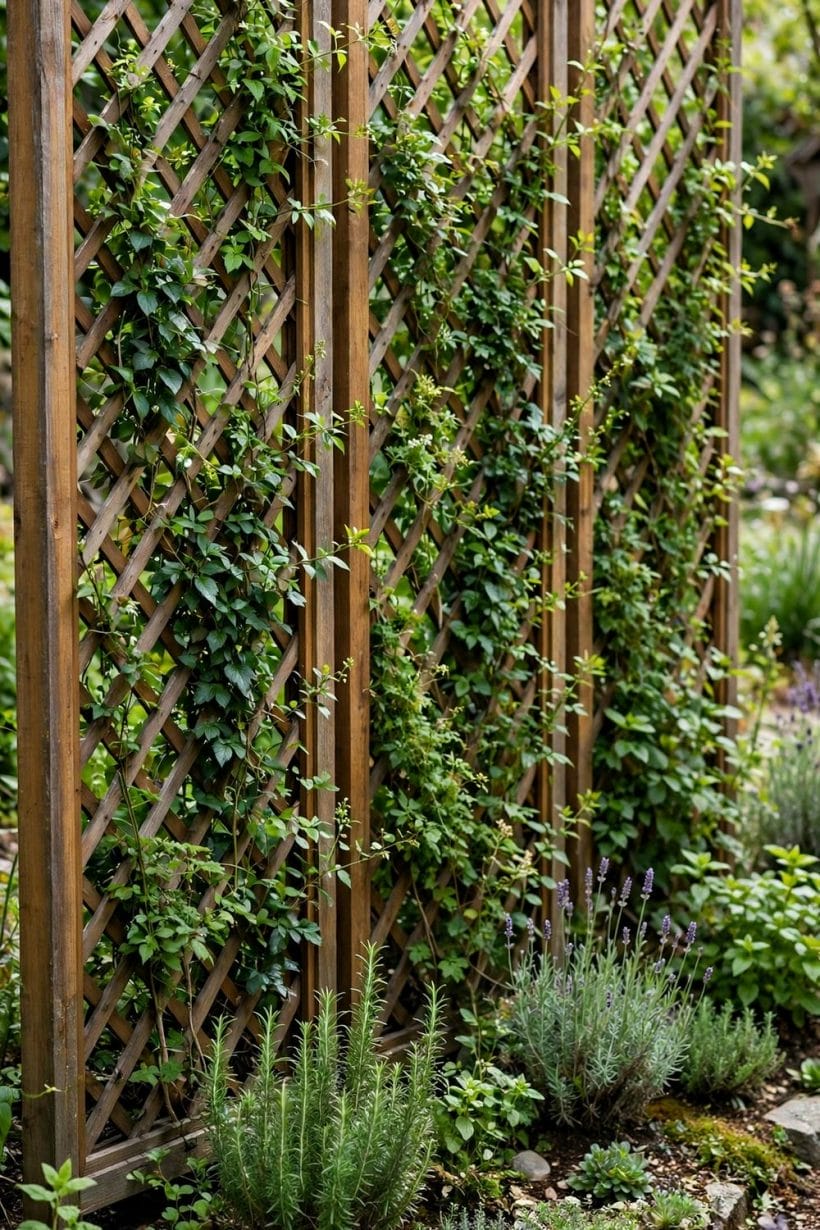
Framing turns lattice from a sheet into a fence. A solid border gives each panel structure, lets runs step and turn, and makes a full boundary feel built to belong.
9. Framed panels in a repeating rhythm
Repeating framed panels along a boundary creates the rhythm that makes lattice fencing feel settled. Each frame repeats the same promise, the grid stays consistent, and the garden gains a backdrop that planting and paths can play against.
10. Full lattice boundary for a cottage garden
A full lattice boundary suits a cottage garden, because the pattern matches the informal planting it holds. Climbers wander, borders billow toward the line, and the fence feels like part of the garden’s growth rather than its container.
11. Tall framed panels for a private back garden
Tall framed panels give a back garden its sense of retreat while keeping the openness that solid fencing loses. The height holds the boundary, the grid keeps light moving, and the garden feels private without feeling shut away.
12. Low front garden lattice panels
A low run of framed lattice at the front keeps the welcome open while marking the edge. Passers-by see the pattern and planting together, the house keeps its friendly face, and the boundary never feels like a barrier.
13. Panels stepping along a sloping garden
On sloping ground, framed panels stepping with the garden keep the fence line graceful. Each panel holds its own level, the steps read as deliberate design, and the boundary follows the land instead of fighting against its fall.
14. Framed lattice beside a quiet seating corner
Beside a seating corner, framed lattice does quiet, useful work: it shelters the spot visually, gives climbers somewhere to wander, and turns a plain corner into the place everyone chooses for morning coffee or an evening pause outdoors.
15. Double-sided panels pleasing both gardens
A framed panel can look finished from both sides, and that matters on a shared boundary. Neighbours see the same care from their garden, the frame hides any unevenness, and goodwill grows along a line that often causes friction.
16. Panels with a contrasting frame colour
Painting the frames a shade apart from the lattice itself gives a run of panels its tailored detail. The contrast outlines every panel gently, works beautifully in white and green pairings, and lifts a simple fence into something considered.
4. Toppers and Extensions Above Solid Fences
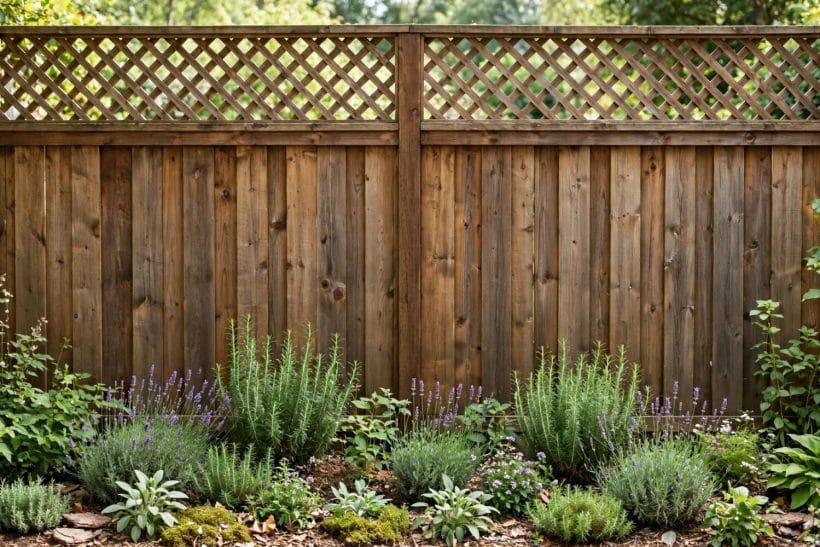
A lattice topper is the kindest way to raise a boundary: the solid fence below keeps its shelter, while the extension above adds height, light and a place for climbers.
17. Diamond topper above a solid fence
A diamond topper above a solid fence softens the hardest line in many gardens. The solid part keeps its shelter, the crossing pattern above lets light and sky return, and the boundary feels taller yet friendlier than before.
18. Square topper for a neat extension
A square topper extends a solid fence with discipline. Its upright openings match fences and gardens with straighter tastes, and the extension reads as part of the design rather than an afterthought added when privacy started to matter.
19. Painted topper matching the fence below
Matching the topper’s paint to the solid fence below makes the extension disappear into one calm idea. The eye reads a single tall boundary with a lighter crown, and the garden keeps a unified backdrop for planting and paths.
20. Contrasting topper crowning the boundary
A contrasting topper crowns a boundary, turning height into a design feature. Dark lattice above pale boards, or white above deep stain, draws a finishing line along the garden, and neighbours notice the care rather than the height.
21. Topper carrying light climbing plants
Light climbers and a lattice topper belong together: the growth threads through the extension, softens its edge against the sky, and flowers along the top of the boundary where they catch the last of the evening light most evenings.
22. Arched topper panels along the run
Arched topper panels lift a plain extension into something graceful, the gentle curve repeating panel after panel above the solid fence. The rhythm suits cottage gardens especially, where straight hard lines rarely feel like the right finishing touch.
23. Lattice extension above a low garden wall
Above a low garden wall, a lattice extension completes the fence line without heaviness. The wall gives the boundary its base, the pattern above keeps views and light alive, and the two materials settle together like old friends.
24. Staggered toppers along a long boundary
Staggering toppers along a long boundary breaks the run into pleasing chapters. Heights rise and settle gently, planting can climb higher in places, and a fence that could have felt endless instead feels paced, varied and quietly interesting throughout.
5. Painted, Stained and Natural Finishes
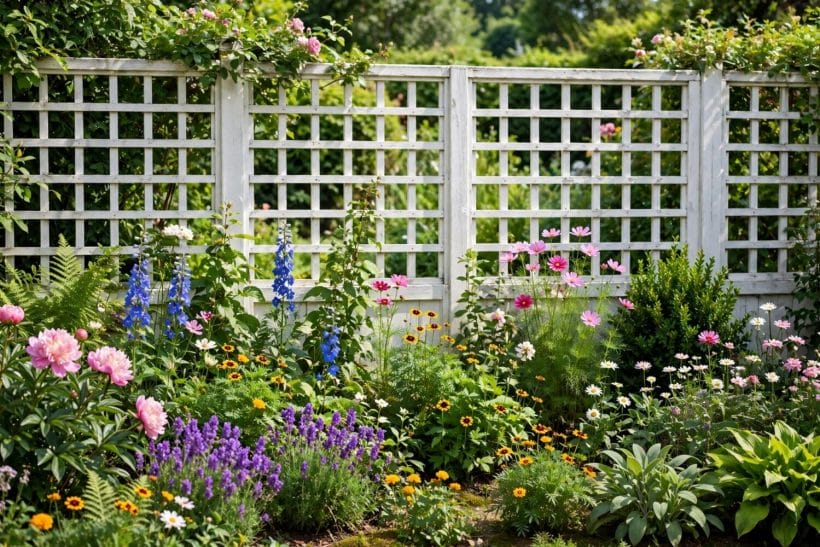
Colour changes lattice completely. Paint makes the pattern crisp or calm, stain deepens it into the planting, and natural timber lets weather write its own finish.
25. White painted lattice in a cottage garden
White painted lattice is the cottage garden classic: the pattern reads crisp against green planting, flowers show beautifully in front of it, and the boundary feels bright even on dull mornings when the rest of the garden stays quiet.
26. Soft green painted lattice among planting
Soft green paint lets lattice melt into its planting while keeping the pattern just visible. The fence stops competing with borders and lawn, climbers blend across it kindly, and the boundary feels like scenery rather than structure all season.
27. Dark stained lattice for depth and contrast
A dark stain gives lattice real depth, turning the fence into a backdrop that makes pale flowers and fresh leaves glow. It suits modern and woodland gardens alike, and the pattern stays readable as shadow rather than line.
28. Natural timber left to weather gently
Natural timber lattice weathers toward a soft silvered tone that many gardeners love best of all. The change is gradual and honest, the pattern stays but the colour quietens, and the fence settles into mature planting with real grace.
29. Black painted lattice as a graphic backdrop
Black painted lattice makes the boldest backdrop in this post: a clear graphic grid against which planting reads like a display. It flatters architectural leaves and pale blooms, and gives even a small boundary a confident, composed personality.
30. Cream painted lattice for a warm welcome
Cream softens white’s brightness into something warmer, and lattice painted cream welcomes without glare. It pairs kindly with stone paths and timber gates, suits sunny front gardens, and keeps the boundary feeling hospitable rather than formal or stark.
31. Stained lattice matching a timber deck edge
Matching the stain of lattice to a neighbouring timber deck ties two garden elements into one thought. The tones carry from floor to fence line, the planting sits between them comfortably, and the whole corner feels deliberately composed.
32. Two-tone lattice with frame and field apart
Two tones on one fence — a deeper frame around a lighter field, or the reverse — give plain panels their quiet sophistication. The split is subtle enough for traditional gardens, yet lifts the run above ordinary single-colour fencing.
6. Gates, Corners and Garden Openings
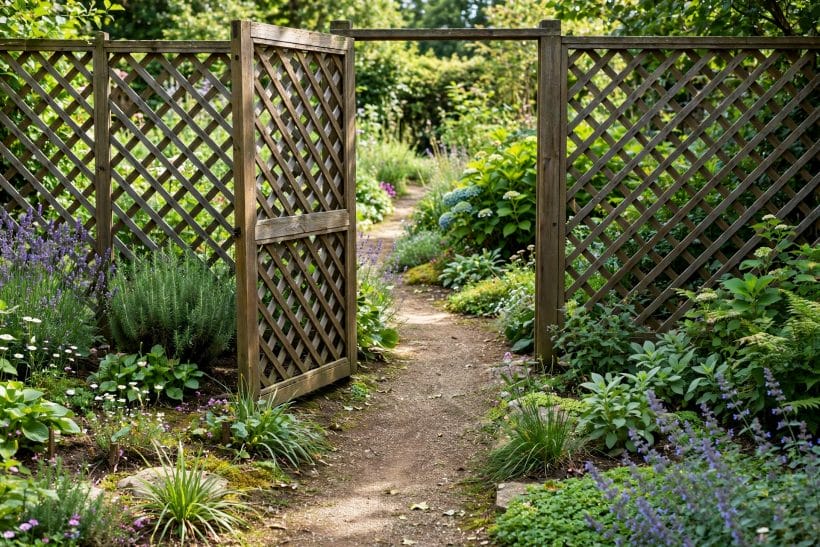
Openings decide how a boundary feels to live with. A lattice gate keeps the pattern unbroken, corners turn the line kindly, and beyond many a gate, pergola ideas wait.
33. Lattice gate matching the fence pattern
A gate that repeats the fence’s own pattern keeps the boundary unbroken when closed. Visitors read one continuous line, the opening reveals itself only by its handle, and the garden keeps the composed feeling the panels worked to create.
34. Square gate set within a diamond run
Setting a square-grid gate inside a diamond run marks the entrance without shouting about it. The change of pattern signals the way through, guests find the opening instinctively, and the contrast adds a small, pleasing moment of design.
35. Arched-top gate in framed style
An arched top gives a lattice gate its storybook moment, echoing arched toppers and cottage planting around it. The curve softens the entrance, climbers can frame the arch in season, and passing through feels like a small occasion daily.
36. Corner panels wrapping a bed of planting
Corner panels that wrap around a planted bed turn a corner into a feature. The planting gains a backdrop on two sides, the corner stops feeling wasted, and the fence line flows rather than jolting around the bend.
37. Angled corner for a softer turn
An angled corner panel softens a turn that a right angle would harden. The line eases around the garden, views open gradually as you walk, and the boundary feels landscaped rather than surveyed into place by lines alone.
38. Wide double gate in framed lattice
A wide double gate in framed lattice suits garden entrances that need access without losing charm. Closed, the pair reads as two handsome panels; open, the garden welcomes barrows, gatherings and furniture with equal, unhurried ease every time.
39. Side passage gate in quiet lattice
A side passage deserves better than an afterthought, and lattice answers kindly every time. The gate keeps light moving down a narrow way, matches the main boundary’s pattern, and turns a practical passage into a small, cared-for transition.
40. Opening framed to hold a view beyond
Sometimes a lattice opening should frame a view rather than close it: a borrowed tree, a church spire, a stretch of countryside. Keeping that section open or lower lets the garden claim the view as part of itself.
41. Gate softened by climbing planting
Planting climbing beside a gate softens its edges and scents the passing-through each day. The gate itself stays clear and usable, the growth frames it in season, and arrivals feel welcomed by the garden before they reach the door.
7. Decks, Patios and Boundary Fence Lines
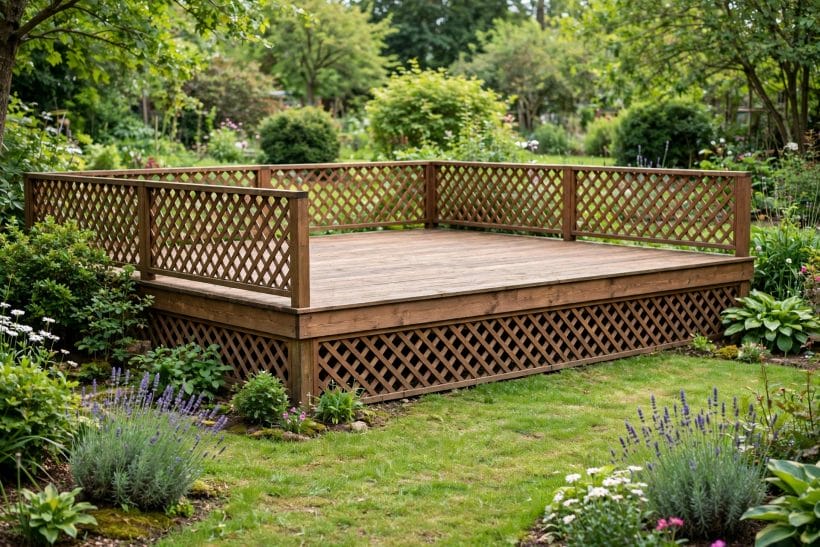
Decks and patios need boundaries that shelter without enclosing. The ground matters too: stone landscaping ideas covers natural edges, and paver patio ideas the paved floors.
42. Lattice line around a deck edge
Around a deck edge, a lattice line gives the platform its finished room-like feeling. The pattern shelters seating without darkening it, climbers can soften the corners, and the deck reads as a garden room rather than a platform.
43. Deck skirting in lattice as fence line
Lattice skirting beneath a deck edge doubles as the fence line itself, closing the shadowed gap with pattern instead of plain boards. The deck looks finished from the lawn, the boundary continues unbroken, and the whole structure feels lighter.
44. Patio boundary lattice with seating inside
A patio boundary in lattice makes seating inside feel sheltered yet open, a balance solid fences rarely manage. Diners get their backdrop, planting shows through the grid, and evening light falls patterned across the chairs and table nearby.
45. Lattice along a raised terrace edge
Along a raised terrace edge, lattice marks the level change with pattern rather than bulk. The fence line keeps the terrace feeling like a destination, views across the garden stay alive through the grid, and planting softens the drop.
46. Lattice behind outdoor dining
Behind outdoor dining, lattice gives the table its scenery: a patterned wall of green and shadow that photographs beautifully and shelters conversation. Add climbers in season and the dining corner becomes the garden’s most invited-to spot each summer.
47. Corner deck wrapped in a square grid
Wrapping a corner deck in square-grid lattice gives the platform a crisp, modern enclosure. The squared pattern echoes deck boards and furniture lines, corner planting softens the geometry, and the space feels purposeful from every seat upon it.
48. Patio fence carrying shade-loving climbers
A shaded patio fence can carry climbers that love exactly those conditions, turning a dim boundary into a leafy asset. The lattice supports the growth, the pattern disappears pleasantly beneath leaves, and the patio gains its green backdrop.
49. Low lattice edging a sitting area
Low lattice edging around a patio sitting area marks the territory without fencing anyone in. Guests read the boundary instinctively, the pattern keeps the edge pretty from the lawn, and the sitting area holds its identity in the garden.
8. Climbing Plants on Lattice Boundaries
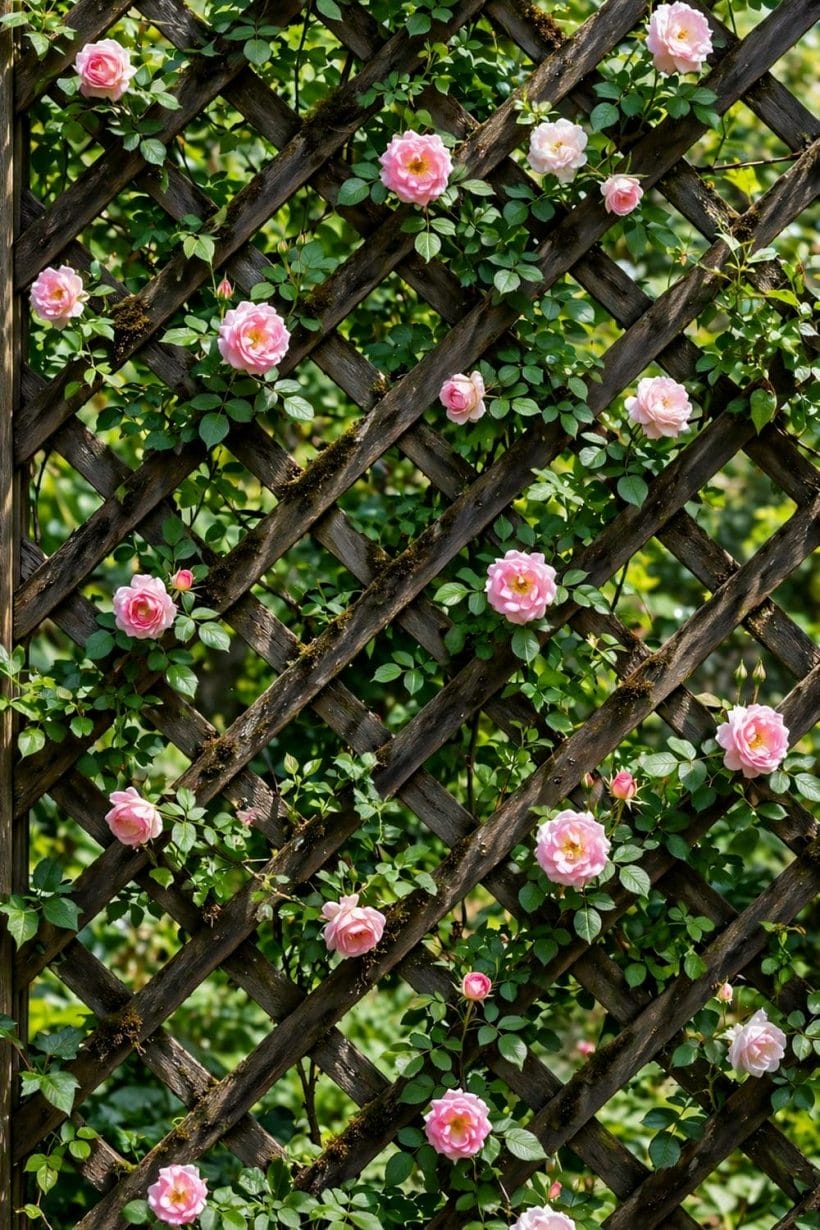
Lattice and climbers were made for each other: the grid offers endless holds, and plants repay it with leaf, flower and scent. The flowering vines for summer blooms guide covers the choices.
50. Roses trained across a diamond pattern
Roses across a diamond pattern make the oldest lattice picture in gardening, and it still stops visitors mid-path. Blooms sit inside the crossings like pictures in frames, foliage fills between, and the boundary becomes the border’s crowning glory.
51. Evergreen climbers for winter cover
Evergreen climbers keep a lattice boundary dressed through winter, when deciduous gardens bare their structure. The fence line stays green and composed, the pattern peeks through the leaves, and the garden holds its shape in the quietest months.
52. Flowering climbers in full summer colour
In summer, flowering climbers turn a lattice boundary into the garden’s main event. Colour climbs the whole line, scent drifts across nearby seating, and a fence chosen plainly in spring becomes the backdrop every photograph wants behind it.
53. Leafy climbers softening a square grid
Leafy climbers soften a square grid’s crispness into something more romantic, leaves overlapping the upright openings until the geometry whispers instead of stating it plainly. The balance suits gardens caught happily between modern order and cottage looseness in style.
54. Scented climbers beside a seated corner
Plant scented climbers where people actually sit, and the lattice boundary starts giving pleasure beyond looks. Evening scent settles over the corner, the fence disappears behind leaves and blooms, and the seat becomes the garden’s favourite reservation all summer long.
55. Climbers on the garden side only
Keeping climbers on the garden side only leaves the pattern clean for the street or the neighbour beyond. Inside, the fence is green and living; outside, it stays neat and patterned — one boundary pleasing two audiences quite differently.
56. Autumn colour climbers on a boundary
Climbers chosen for autumn colour give a lattice boundary its second season of glory. Leaves turn copper and crimson against the pattern, low sun lights the whole line, and the fence earns compliments long after summer planting finished.
57. Young climbers given room to spread
Young climbers on fresh lattice look sparse for a while, and that patience is part of the design. Given room along the line, each plant spreads to fill its share, and the boundary matures into fullness without crowding or tangling.
9. Borders, Shade and Privacy
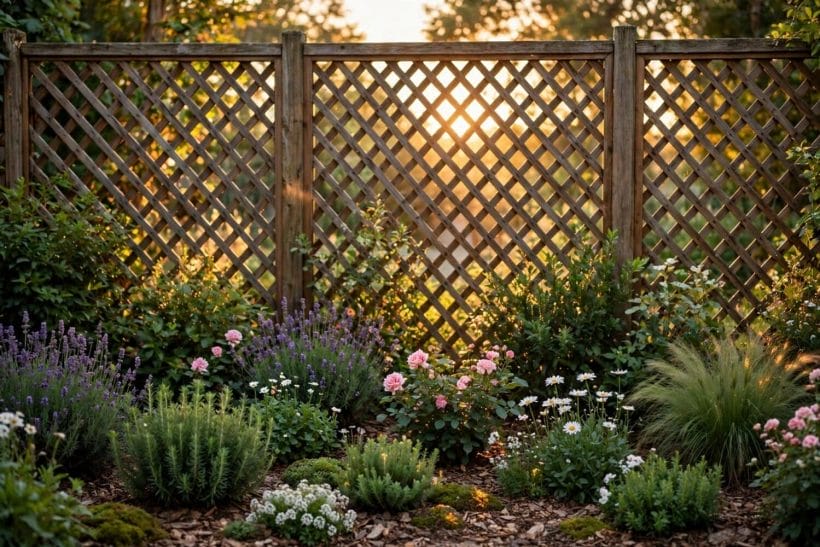
What grows along the fence decides how the boundary works. Beds, layered planting and ground care — the mulch landscaping ideas lane covers mulching in full — turn pattern into privacy.
Lattice does a second job besides fencing the boundary: as a patio privacy screen it shelters seating rather than marking a line. The two jobs are kept apart on purpose — fencing here, screening there — and the privacy lattice ideas post covers the screening side in full, with the same distinction drawn from its side.
58. Planted border softening the fence foot
A planted border at the fence foot hides the join between lattice and ground, where boundaries often look unfinished. Plants spill gently toward the lawn, the pattern rises clean behind them, and the whole line feels planted rather than installed.
59. Layered shrubs in front of open lattice
Layered shrubs in front of open lattice build privacy gradually and prettily: taller growth behind, softer mounds in front, the pattern glimpsed between. The boundary feels deep instead of thin, and the garden gains a backdrop with real dimension.
60. Lattice backed by tall planting for privacy
Backing lattice with tall planting inside the boundary gives privacy a living second layer. The grid holds the line, the planting fills the view kindly, and the result shelters the garden without the closed feeling of a solid wall.
61. Reading the shade patterns a grid casts
Sun through lattice casts shade in moving diamonds and squares, and placing seating or tender planting with those patterns in mind is quiet garden craft. The fence decorates the ground all day, changing its pattern as hours pass.
62. Quiet corner enclosed by planted lattice
A quiet corner enclosed by planted lattice becomes a garden within the garden: a seat, soft growth on the pattern, and the sense of being held. It is the spot for reading, resting and watching the garden unobserved.
63. Lattice and hedge as a double boundary
Lattice in front of a hedge makes a double boundary with the best of both: the hedge gives depth, privacy and winter body, while the pattern gives the line its finished face. Together they read richer than either alone.
64. Sunny border plants against dark lattice
Against dark-stained lattice, sunny border plants shine like exhibits: pale blooms, silver leaves and golden grasses all read brighter. The fence recedes into shadowed pattern, the planting takes all the applause, and the border feels designed in pleasing layers.
65. Mulched bed keeping the fence foot tidy
A mulched bed along the fence foot keeps the boundary’s base tidy and planting settled, with weeds quieted and soil shaded kindly. The dark, even ground line flatters pale lattice especially, and the whole run looks cared for.
66. Evening light through lattice onto a patio
Evening light through lattice falls across a patio in patterned pieces, turning the fence into a sundial of shade and gold. Seating placed to catch it gains a daily performance, and the boundary ends the day as decoration.
10. Upkeep, Weather and Lasting Looks
Lattice asks for gentle, regular kindness rather than hard work: finishes watched as they age, growth guided before it tangles. These last ideas cover upkeep generally.
67. Painted lattice as the finish ages
Painted lattice ages first where sun and rain meet the pattern, and watching those spots kindly is the whole secret. A finish refreshed while wear is still gentle keeps the colour even and the boundary looking deliberate rather than neglected.
68. Gentle washing for lattice panels
Lattice gathers dust, pollen and garden splash in its crossings, and gentle periodic washing restores its brightness surprisingly fast. Soft tools and shady timing suit the pattern best, and clean lattice makes the planting in front look fresher too.
69. Refreshing stained timber as colour fades
Stain fades gradually in sunshine, lightening the pattern season by season until the fence looks tired rather than weathered. Refreshing the tone while the timber is still sound keeps the depth gardeners chose, and neighbours notice the renewal immediately.
70. Guiding climbers before they tangle
Climbers reward a little guidance while growth is young and pliable, spreading stems across the grid before weight and tangle set in. The pattern stays visible beneath the leaves, the plants flower better for the light, and upkeep stays gentle.
71. Checking the boundary after winter
After winter weather, a kind walk along the boundary tells you everything: which panels moved, which finishes suffered, which climbers need attention. Catching small troubles in spring keeps them small, and the fence starts the season ready for growth.
72. Refreshing one tired panel within a run
When one panel tires before the rest, refreshing that panel alone keeps the whole run looking cared for. Matching the pattern and finish to its neighbours matters more than perfection, and the boundary regains its composure without fuss.
73. Keeping planting from overwhelming the pattern
Planting should soften lattice, not swallow it, and a boundary disappears when growth wins completely. Keeping some pattern visible preserves the design everyone chose, balances leaf against line, and lets the fence and its climbers share the credit gracefully.
74. Finishes that age gracefully together
Fences rarely age alone: gates, decking and garden furniture weather beside them. Choosing finishes that mellow at a similar pace keeps the garden composed for years, instead of one bright newcomer arguing with its gentle, silvered neighbours every season.
75. Lattice that still looks right in winter
The final test of a lattice boundary is a bare winter morning, when climbers rest and borders sleep. A well-chosen pattern and finish still draw a handsome line against the sky, and the garden keeps its structure until spring returns.
Final Considerations
Choose the pattern for the garden first and the finish second. How open the grid should be, how private the line must feel, and how much planting will share it decide whether lattice delights for years. Walk the line at different hours, in winter as well as summer.
Whether the result is a white cottage boundary wreathed in roses or a dark square grid behind quiet seating, let the line suit its garden and pair pattern with planting in restraint — lattice repays that choice.




0 Comments