

Almost every garden has one seat that feels watched: the lounger in view of an upstairs window, the dining terrace overlooked from next door’s raised lawn, the hot tub corner that never quite relaxes. Privacy screening is the art of answering those exact sightlines — no more, no less.
These privacy screen ideas work in the order a real garden demands: find where privacy is actually lost, then choose among living screens, timber, modern panels and seasonal fabric, and finally layer them so the garden feels held rather than fenced. The goal is a seat that feels private by lunchtime, not a boundary that looks defensive for a decade.
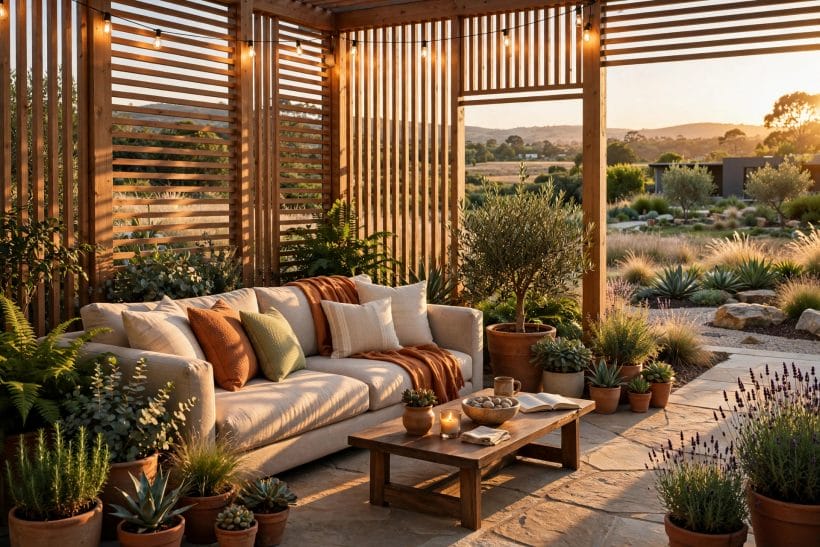
1. Privacy Screen Ideas at a Glance
A privacy screen is any structure or planting that interrupts a sightline into a garden’s used spaces, and its attributes are the sightline it answers (across, from above, at an angle), its substance (living, timber, metal, composite or fabric), its permanence (fixed, seasonal or movable) and its layers (boundary, middle planting and the close screen at the seat). It is a garden-wide discipline that serves the terrace collections — the patio ideas pillar among them — rather than a room of its own: this page owns the screening itself, and the rooms it protects keep their own pages.
| Question | Short answer |
|---|---|
| What is the best privacy screen for a garden? | The one matched to the actual sightline: hedges and slatted timber for eye-level views, canopy, sails or trees for overlook from above. |
| Do privacy screens need permission? | Heights near boundaries are regulated in many areas — check the local rules before building, especially for tall or solid screens. |
| What is the fastest privacy screen? | A climber on a trellis, reed screening on an existing fence, or a sail over the seat work within days; hedges are the slow, permanent answer. |
| How tall should a garden screen be? | Only as tall as the sightline demands — measure from the seated eye, not from habit; over-height screens waste money and light. |
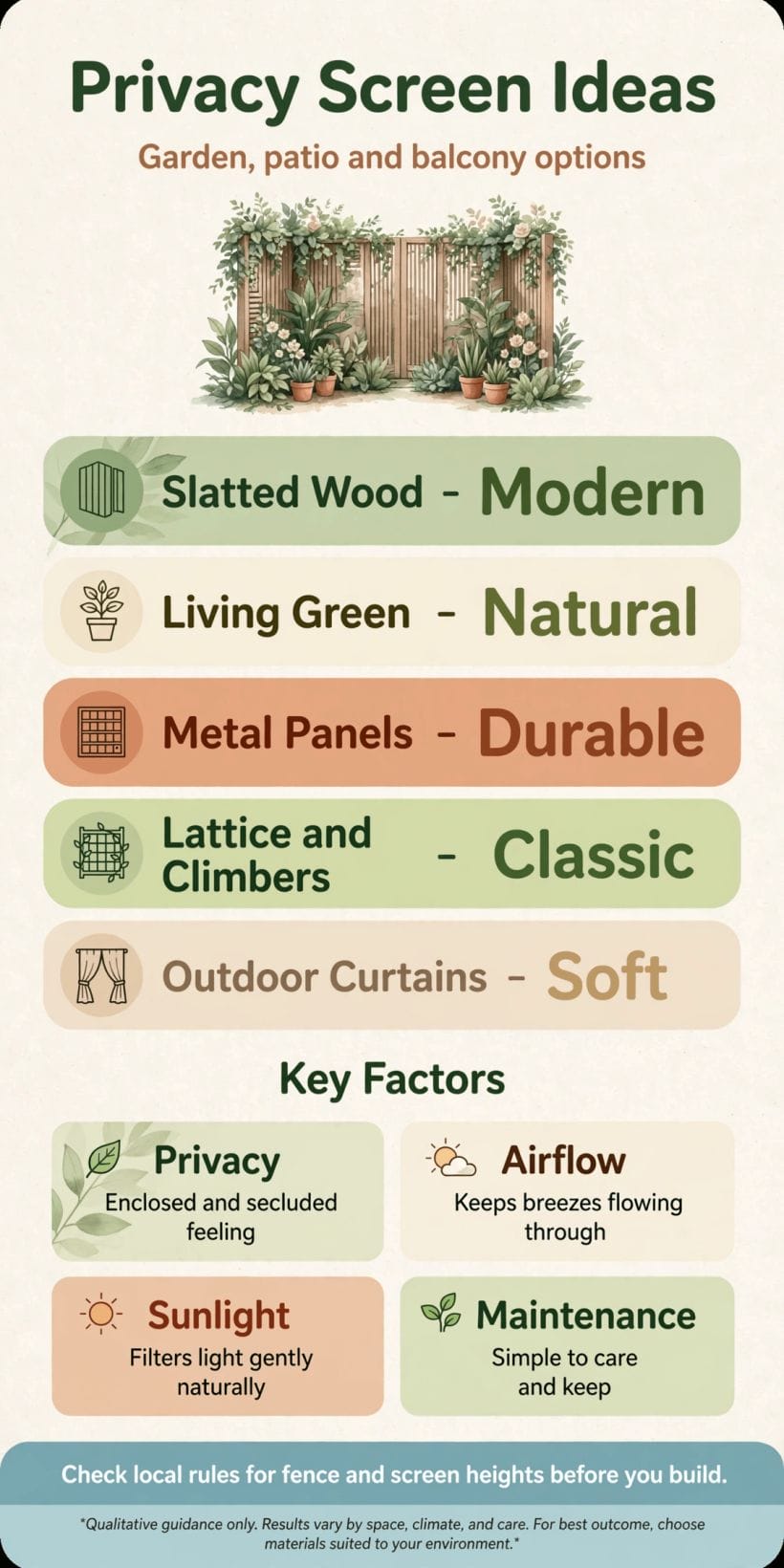
2. Reading the Overlook: Where Privacy Is Actually Lost
Most gardens do not need screening everywhere — they need it in three or four exact places where sightlines land: the seating terrace seen from an upstairs window, the hot tub corner, the kitchen table’s view of the bins. This section finds those places honestly, because a screen in the right metre of garden outperforms a fortress around all of it.
1. Sit in the seat and look back
Privacy is lost from specific chairs, not from gardens in general.
2. Check the view from above, not just across
Upstairs windows overlook more gardens than any fence can fix at eye level.
3. Walk the boundary at your neighbours’ height
Stand on the other side of the fence, at your neighbours’ ground level, and look back.
4. Screen the hour, not just the place
Some spots are only exposed at certain times — the morning terrace under a neighbour’s bathroom window, the evening seat in a low sun gap.
5. Protect the pool and hot tub first
Swimming and soaking are the garden’s most private activities and the ones guests ask about. Screen those zones with the most generous margin; a dining terrace tolerates a little theatre, a hot tub tolerates none.
6. Leave the sociable sightlines open
Not every view of a neighbour is an intrusion: the wave over the fence, the borrowed view of their flowering tree.
7. Note the wind before choosing anything
Screens and wind are old enemies: a solid panel in a windy gap becomes a sail, a fence line takes the strain, and a planted screen filters instead of fighting.
8. Check what the rules allow before designing
Fence and screen heights near boundaries are regulated in many places, and the details vary by area.
9. Decide whether you need visual or actual privacy
A screen that breaks the sightline — slatted, layered, planted at an angle — usually delivers all the privacy a garden seat needs, at half the bulk of a solid barrier.
10. Photograph the problem spots
Photographs from the exposed seats, in morning and evening light, become the design brief for everything that follows. They also become the before pictures — the most satisfying pair in the garden album.
11. Plan for the garden’s growth, not its infancy
Young hedges and climbers screen little this year and everything in three years. Placing a light temporary screen for the growing seasons is not a compromise; it is how planted privacy has always been built.
3. Living Screens: Hedges, Grasses and Climbing Plants
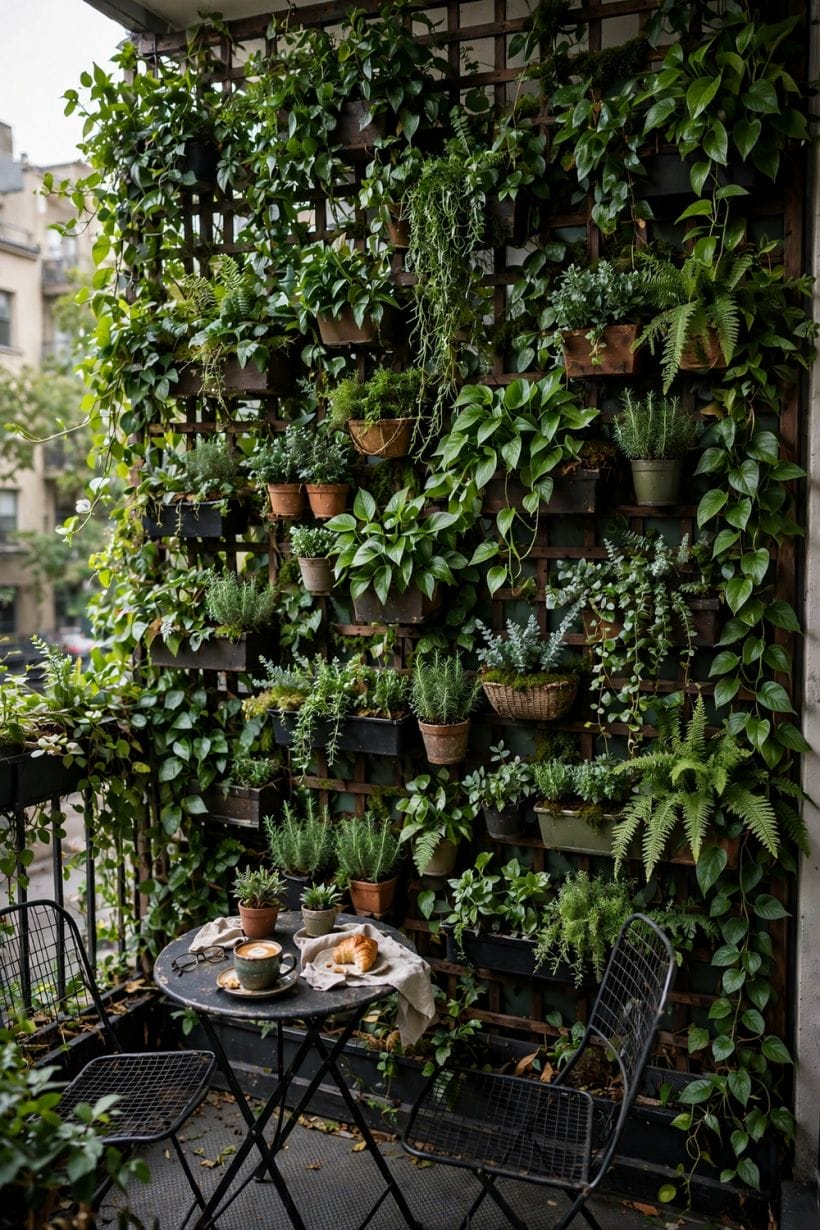
A planted screen is the only barrier that improves with age, shelters wildlife and changes beautifully with the seasons. Its costs are patience and shears. The living options run from instant-impact pleached trees to the humble climbing rose, and the front yard landscaping ideas collection shows the same planting logic working at the garden’s public face.
12. Plant a hedge where permanence matters
A clipped evergreen hedge is the garden’s most complete privacy: dense in winter, soft in outline, kind to sound. It asks for width, patience and regular clipping, and repays all three for decades.
13. Use pleached trees for privacy above fence height
Pleached trees — clear stems with a trained leafy canopy at height — screen upstairs sightlines while keeping the ground beneath open and usable.
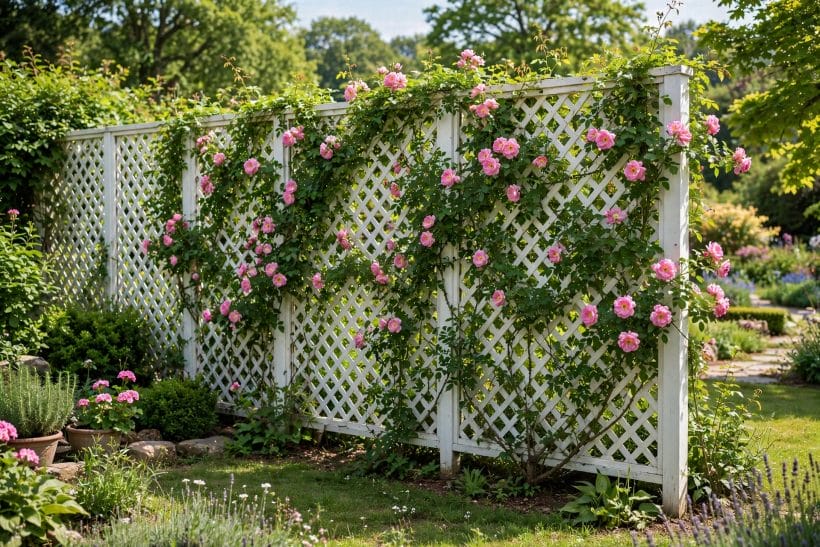
14. Grow a climber over a simple trellis
The fastest planted screen is a climber on a trellis panel: jasmine, honeysuckle or a climbing rose will clothe a panel in a season or two and add scent as a bonus.
15. Screen with tall grasses for movement and light
Tall ornamental grasses give a summer screen that filters rather than blocks, moving in every breeze and glowing backlit at evening. Cut down in late winter, they remind the garden that privacy, too, can be seasonal.
16. Plant a mixed native screen for wildlife
A loose screen of mixed shrubs — chosen for staggered flowering, berries and evergreen bones — screens the garden while feeding it life. Informal in outline, it suits country gardens and relaxed households best.
17. Use bamboo only with its manners planned
Running bamboo is the fastest screen in the catalogue and the least forgiving of careless planting. Clumping varieties or a proper root barrier keep it a neighbourly plant; without them, it becomes a correspondence.
18. Espalier fruit against a sunny boundary
Fruit trained flat against wires or a wall screens the garden and feeds it from the same square metre. The blossom, the leaf cover and the harvest make it the hardest-working privacy in this section.
19. Layer two heights of planting
A low hedge in front of tall shrubs, or grasses before a tree line, screens at seated and standing eye level together and looks like a garden rather than a fortification.
20. Give new screens a temporary partner
A reed or willow hurdle panel in front of a young hedge carries the privacy for the first seasons and composts gracefully when the hedge takes over. Temporary screens are a strategy, not an admission of failure.
21. Feed and water like the screen matters
Young hedges fail from thirst more than from any pest. A season of honest watering and a mulch at the roots is the difference between a screen in three years and a row of regrets.
22. Accept the deciduous bargain knowingly
A deciduous screen gives summer privacy, winter light and a season of blossom or autumn colour. Where winter seclusion matters less than winter sun, it is the generous choice — made knowingly, never by accident.
4. Timber Screens: Slats, Panels and Woven Hurdles
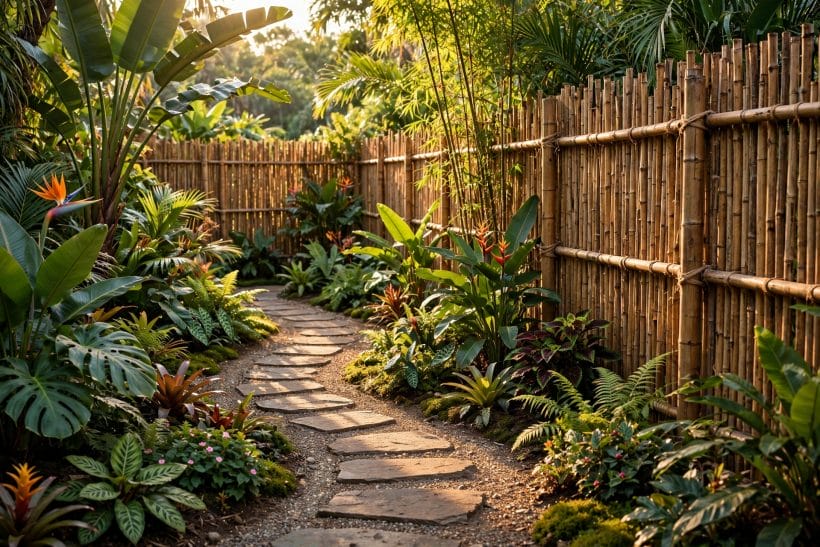
Timber is the screening material most gardens reach for first: warm to look at, workable with ordinary tools, and available in styles from woven country hurdles to the crisp horizontal slats of the modern garden. Its rules are simple — keep it off the wet ground, let it breathe, and choose the gap pattern for the privacy you actually need.
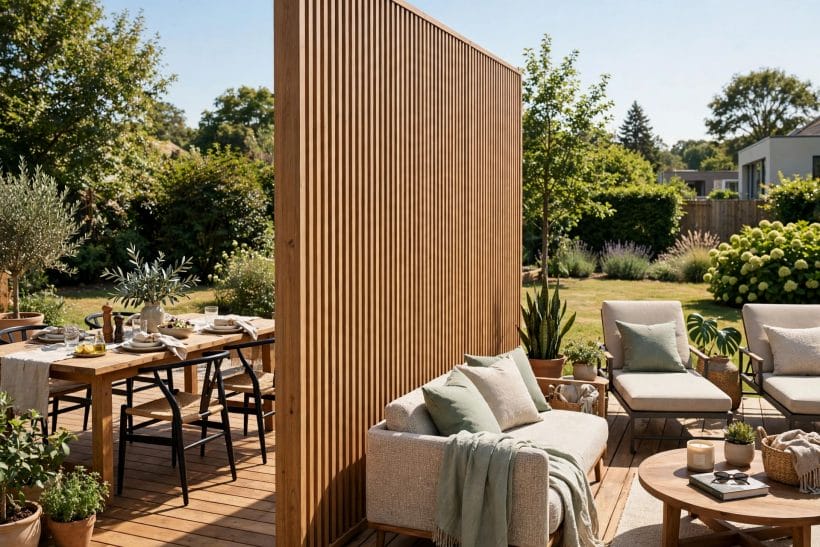
23. Run horizontal slats for the modern look
Narrow horizontal boards with shadow gaps give privacy that still breathes: sightlines blocked at standing distance, air and dappled light passing through. It is the screen style that flatters contemporary houses and small gardens most.
24. Vary the gap to tune the privacy
The gap between slats is a dial, not a default: closed at seated eye level, more open above and below.
25. Weave hurdles for the country garden
Woven willow or hazel hurdles bring instant, soft-textured screening that suits cottage and country gardens and can be replaced panel by panel. Their rustic irregularity is precisely their charm beside planting.
26. Build a hit-and-miss fence for wind country
Boards fixed alternately on both sides of the rails let wind filter through while sightlines stay blocked — the classic answer where a solid fence would take a battering.
27. Lift panels off the soil on gravel boards
Timber that touches wet ground rots from the bottom up. A gravel board or a masonry kerb at the base lifts the fence line out of the splash zone and adds years to every panel above it.
28. Choose vertical boards for height and formality
Vertical boarding reads taller and more formal, suits traditional houses and sheds water honestly down its grain. In narrow gardens it also leads the eye upward, which is free spaciousness.
29. Stain or oil instead of painting where grain matters
A penetrating oil or stain keeps the timber’s figure visible and never peels; film paints give stronger colour and a maintenance promise. Decide which relationship with the wood you want before the first coat chooses for you.
30. Screen the bins and the boiler with the offcuts
The same slat pattern, repeated on a small screen for the bins, the oil tank or the heat pump, turns the garden’s ugliest corner into part of the design.
31. Fix panels so they can be replaced singly
Screens live outdoors and panels age at different rates. A fixing system that lets one panel come out without dismantling the run — screws, clips, removable posts — is maintenance designed in rather than suffered later.
32. Soften new timber with planting immediately
A new timber screen is a wall until planting leans on it: a climber started the same week, grasses at its foot, a shrub breaking its line.
33. Mind the view from the other side
Every screen has two faces, and one of them belongs to your neighbours’ garden.
5. Metal, Composite and Modern Panels
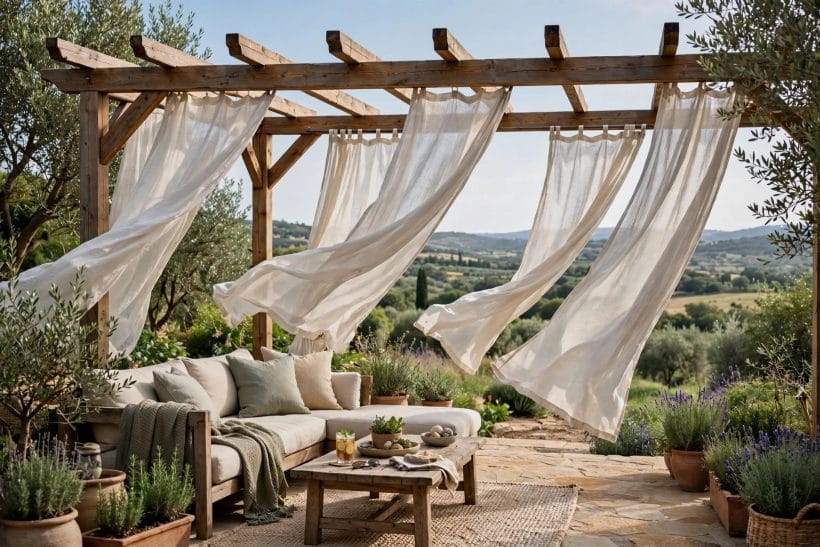
Where timber is warm, metal and composite panels are precise: crisp edges, repeatable patterns and surfaces that ask almost nothing in maintenance. The modern screen family includes laser-cut art panels, corrugated profiles borrowed from farm buildings and composite boards that imitate timber without its appetite for oil — each with a distinct temperament to match to the house.
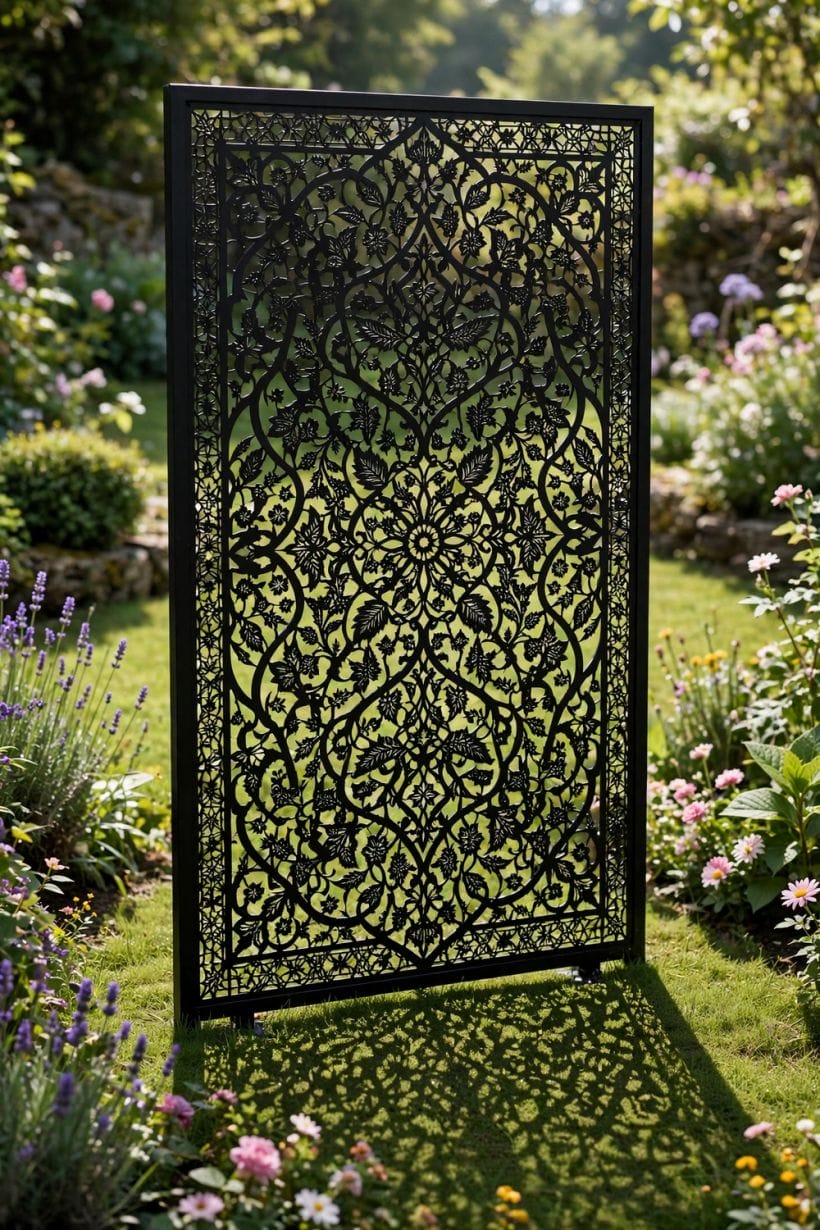
34. Use laser-cut panels as screened art
A laser-cut metal panel blocks sightlines with pattern: leaves, geometry, waves. It screens, decorates and throws patterned shadow in one object, and works best used sparingly — a bay or two as the screen’s jewellery.
35. Run corrugated metal for the working garden
Corrugated profiles bring an honest, agricultural crispness that suits modern rustic gardens and outbuildings. Powder-coated in a deep colour, the profile’s shadow lines do the decorating; the material just shows up for decades.
36. Choose composite boards for a maintenance-free timber look
Composite slats give the horizontal-slat look without staining, warping or rot, at a higher first cost and a lower lifetime effort. For households who would rather garden than maintain, the exchange is usually worth it.
37. Frame panels in posts that carry the design
In panelled screens, the posts are the architecture: chunky timber, black steel or rendered masonry piers set the rhythm the panels merely fill. Spend the design effort on the frame and the infill can stay simple.
38. Mix materials in one run for a designed feel
Timber slats below, a metal art panel at the seating bay, planting at the ends: a screen assembled from a small palette of materials reads as designed rather than erected.
39. Angle louvre panels to block sight and keep air
Fixed louvres angled like a venetian blind block the view from one direction while passing air and some light.
40. Use frosted panels where light must pass
Frosted acrylic or glass panels screen a overlooked side passage or a bathroom-facing boundary while still passing daylight to both gardens. They are privacy with the light left on — rare and valuable where plots are tight.
41. Anchor metal panels against their drum skin
Large flat metal panels can drum in wind and rain if fixed loosely. Sound fixings, a backing frame and the maker’s specified spacing keep the screen silent — a detail nobody photographs and everybody hears.
42. Let corten steel weather as the finish
Weathering steel arrives bright and settles to a deep rust that flatters planting and needs no paint. Keep its early runoff off pale paving, and the patina becomes the screen’s whole, handsome surface.
43. Repeat the panel pattern somewhere else
A motif echoed — the same cut pattern on the gate, the same slat spacing on the bin store — knits a garden’s screening into a single design language.
44. Buy one panel and live with it first
Modern panels are a commitment of taste as much as money.
6. Fabric, Sails and the Temporary Screen
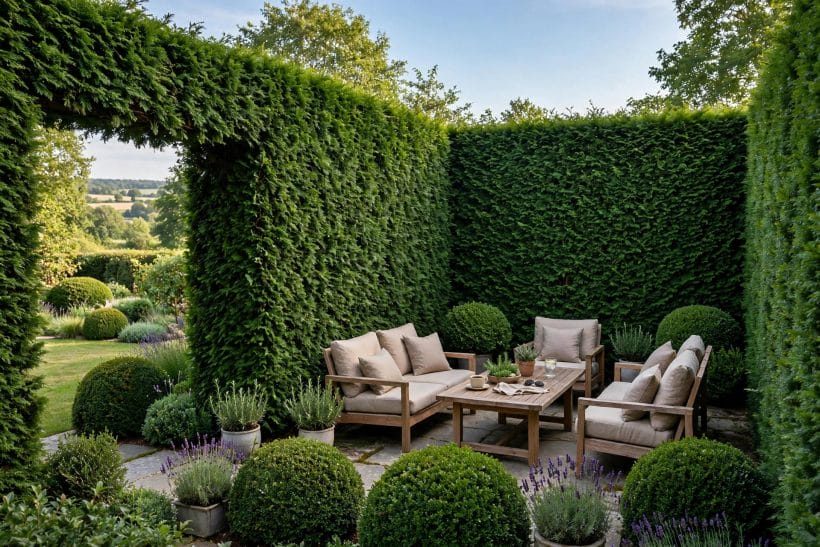
Not all privacy needs to be permanent. Renters, new gardens waiting for hedges, seasonal hot tubs and the one overlooked week of a family visit all call for screens that go up in an afternoon and come down without evidence. The small patio ideas collection leans on the same light-touch family for its rental-friendly shade, and the principles travel.
45. Stretch a shade sail for privacy from above
A triangular sail angled over the seating corner blocks the upstairs sightline, casts real shade and reads as a holiday rather than a defence. It is the first answer to try wherever the overlook comes from above.
46. Hang outdoor curtains on a wire or rail
Weatherproof curtains drawn across a pergola side or a balcony rail give privacy that opens and closes like a room’s. Drawn, they soften sound and light as well; open, the garden gets its openness back.
47. Set reed or brushwood rolls against an open fence
Natural screening rolls wired to an existing open fence turn a see-through boundary into a soft, textured screen in an afternoon.
48. Use a parasol as a movable screen
A large, tilting parasol placed between the loungers and the overlooking window is privacy that follows the sun and folds away in winter. Underused as a screen, it is often the only one a small garden needs.
49. Stand potted screens where the problem is
Tall plants in substantial pots — grasses, a small tree, bamboo in its container — can be wheeled to the exact sightline and away again. Potted privacy is the renter’s superpower and the new garden’s bridge.
50. Rig a canvas windbreak for the exposed weeks
The striped windbreak of beach memory, on poles around a seating patch, gives a season of cheerful, effective screening for almost no money.
51. Screen the balcony with a rail-side panel
Balconies overlook and are overlooked vertically, and a rail-height fabric or slat panel answers both directions at once. Fixings should be the removable kind where the building’s rules require it — check before drilling.
52. Borrow the pergola for seasonal screening
A pergola’s open side can carry a seasonal screen — a sail, a curtain, a roll of reed — through the months of heavy use and stand open the rest of the year.
53. Keep one screen purely for guests
A folding screen stored flat and deployed when the hot tub has visitors, or the guest room’s terrace is in use, gives privacy on the occasions that need it without fencing the family in all year.
54. Match the temporary to the permanent palette
Temporary screens look intentional when their colour and texture rhyme with the garden’s permanent materials. A cream sail over a cream-and-timber garden reads as design; a random blue tarpaulin reads as apology.
55. Plant the screen’s successor the same week
Where a fabric screen is standing in for a hedge or climber, plant the living screen alongside it immediately. The temporary then has a known retirement date, and the garden’s permanent privacy starts its clock at once.
7. Screens on Patios, Decks and Balconies: Fixings, Wind and Weight
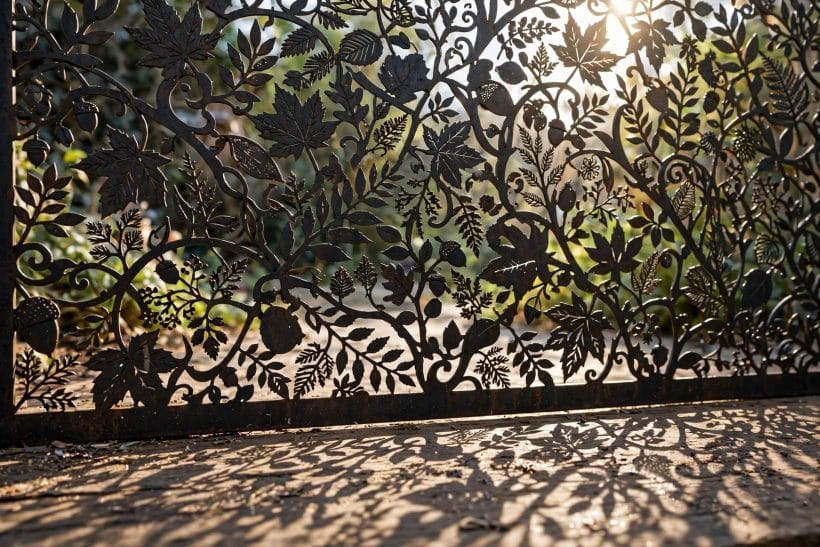
Elevated and paved spaces complicate screening: fixings must respect decking and waterproofing, wind loads multiply with height, and a balcony’s structure was not designed by you. The balcony ideas and deck ideas collections carry the structural cautions in full; this section keeps to the screening decisions themselves, stated generally and safely.
56. Prefer freestanding screens where fixings are doubtful
A weighted, freestanding screen frame asks nothing of the building and leaves nothing behind. On balconies and rented decks it is the default choice, and modern weighted designs stand honestly in all but serious wind.
57. Take wind seriously at height
Wind that is a breeze at ground level is a force on a fifth-floor balcony, and a solid screen is a sail by another name.
58. Fix to the structure, never to the weatherproofing
Where fixings are allowed, they belong in joists, posts and masonry — never through membranes, flashing or deck surfaces that keep water out. If the fixing point is in doubt, the freestanding answer is the right one.
59. Screen the deck’s edge with planters
Substantial planter troughs along a deck edge carry both the plants and the screen posts, ballasting the whole arrangement with soil. Planted ballast is the prettiest engineering in this entire page.
60. Keep balcony loads honestly light
Balconies have load limits set by their designers, and wet soil, stone planters and a crowd add up quickly.
61. Use the deck’s own pergola posts as the screen frame
Where a pergola already stands over the deck, its posts are the natural frame for slat or fabric infill.
62. Let the screen stop at seated eye level where views matter
On a deck with a borrowed view — hills, water, rooftops — a screen that rises just past seated eye level preserves the panorama while hiding the loungers.
63. Choose fixings that come out clean
Stainless fixings, removable brackets and clamp systems suit screens that may move house one day. The screen you can take with you is the screen you can buy well without hesitation.
64. Check the management rules before the catalogue
Apartments and managed developments often rule on balcony screening — colours, heights, materials. The rules are checked first, in writing, so the beautiful screen is also the permitted one.
65. Test the arrangement through one storm
However a high screen is fixed, its first real wind is an examination. Check fixings after the first storm, tighten what the weather loosened, and the arrangement earns its permanence honestly.
8. Layered Privacy: Combining Screen, Planting and Distance
The most private gardens rarely own the tallest fence. They layer: a boundary screen for the far sightlines, planting for the middle distance, and a small, close screen — a panel, a hedge shoulder, a curtain — around the seats themselves. Layering is also the forgiving strategy, because each layer can be modest when the others are present.
66. Build the three layers in order of distance
Far layer at the boundary for the long sightlines, middle layer of shrubs and small trees to break the middle ground, close layer at the seat itself.
67. Let the close layer do the delicate work
A single slatted panel, a clipped shrub or a curtain at the very seat can be beautiful, because it only answers one sightline. Close screens are furniture; treat them with furniture’s care for material and finish.
68. Angle screens instead of squaring them
A panel set at an angle to the boundary blocks its sightline with less length, catches light more kindly and reads as design rather than defence. The angled screen is the professional’s favourite trick in small gardens.
69. Use the house itself as one layer
A seat placed in the house’s own shadow line — against its wall, under its eaves — starts with one direction already private.
70. Screen with sound in mind as well
Dense planting, a solid close panel and even a small water feature all soften the sense of being overheard, which is half of what privacy means.
71. Borrow height from trees beyond the boundary
A neighbour’s mature tree or a street tree may already block the worst sightline for half the year. Design around borrowed privacy gratefully — and plant your own layer for the day the borrowed one is pruned.
72. Keep one deliberate view framed
A garden screened on every side can feel like a bunker; a single framed opening — to a hill, a church spire, a fine tree — proves the privacy was chosen.
73. Light the layers for the evening
Low lights in the planting and a lit close screen make layered privacy work after dark, when windows glow and sightlines reverse. The evening garden is seen from lit rooms; screen for that audience too.
74. Review the layers each spring
Growth moves sightlines: a shrub gains a foot, a tree is pruned, a new window appears next door. A spring walk with this section’s first ideas in mind keeps the layers honest with one adjustment a year.
75. Stop when the seat feels held, not hidden
The test of finished screening is a feeling: sitting in the garden’s main seat, held and unobserved, with the sky and the planting still present. More than that is fortification; the art is stopping at enough.
9. Checks and Mistakes: Before the First Purchase or the First Stone
The first mistake is screening the whole boundary when three metres of it were the problem. Blanket fencing costs the most, pleases the least and often breaches the height rules that a targeted screen would have sailed under. Find the sightlines first, then spend on those.
The second mistake is forgetting the view from above. A tall fence under an overlooking window is privacy theatre: the seat still feels watched, because it is. Where the eyes are upstairs, the answer leans upward too — canopy, tree, sail or pergola roof.
Finally, check the screen from the other side and from the calendar. A screen is a neighbourly object or an unfriendly one depending on its far face, and a deciduous or seasonal screen is a bargain only if its winter state was chosen knowingly. Walk both sides, in both seasons, before calling it done.
10. Costs and Pulling It Together
Screening costs divide into the instant and the patient: built screens charge money now, planted screens charge time and a modest plant bill, and the layered gardens in this page usually mix both — a built close screen for this summer, a hedge growing toward the boundary for the summers after. Staging is not a compromise here; it is the method.
Maintenance belongs in the same ledger: timber wants oil, metal wants a wash, hedges want clipping and fabric wants storing dry. Choose the screen whose upkeep fits the household’s honest appetite, because a neglected screen advertises itself more than a modest one ever will.
Pull the project together around the seats, not the boundary: privacy is something felt in a chair, at an hour, in a season. Screen those moments generously, leave the rest of the garden open to the sky and the neighbours’ best trees, and the result is the rarest garden luxury — feeling alone without feeling enclosed.
Final Considerations
Start with the seat and the sightline, let the materials follow the garden’s own character, and check the rules before the first post goes in. Privacy built that way never needs apologising for — to the neighbours, to the garden or to the household that sits inside it.
The garden’s wider design story continues through the patio ideas pillar and the front porch ideas collection, with the home design ideas hub tying the frontier together.


0 Comments