
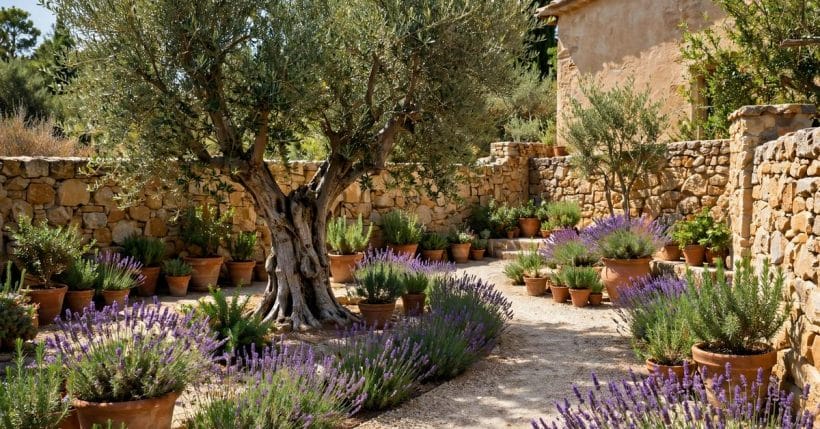
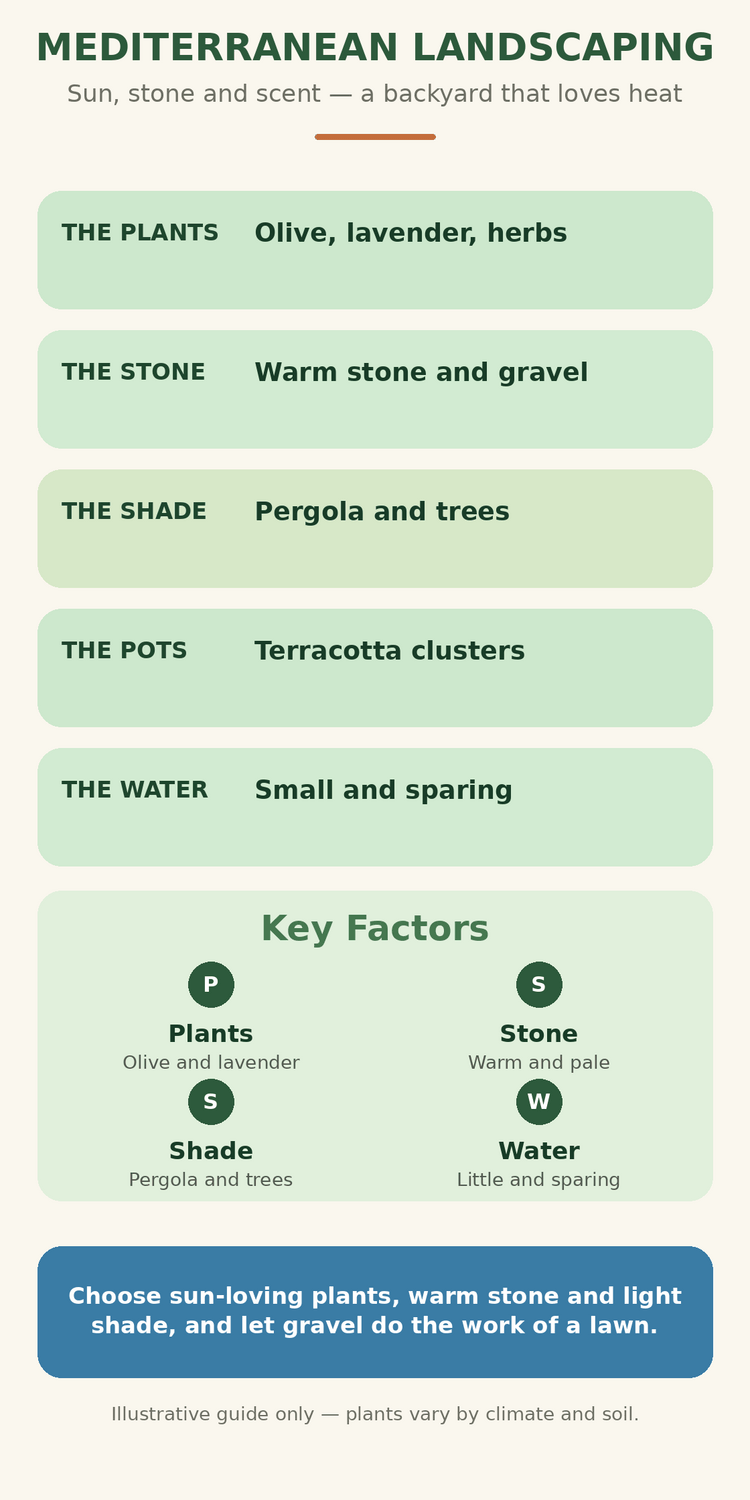
Mediterranean landscaping is a style that loves heat, shrugs at drought, and looks better the less you fuss over it. Olive trees, lavender, terracotta, gravel and warm stone: the palette is simple, the plants are tough, and the result is a backyard that feels like a holiday without demanding constant work. This guide walks through the elements that make the style work, how they fit together, and how to keep it distinct from the pool-centred Mediterranean look, which is a different post with a different job.
The scope here is the backyard itself — planting, stone, shade, pots and paths — in a Mediterranean spirit, built from plants and materials that suit sun and dry spells.
1. The Mediterranean Feeling
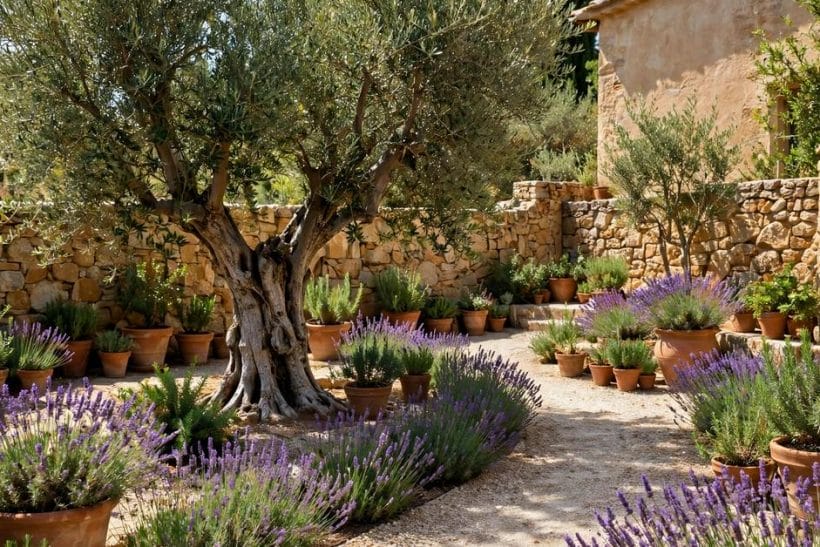
The Mediterranean feeling comes from restraint. A few strong elements — an olive tree, a stone wall, a sweep of lavender — do more than a crowded collection of features, and the spaces between them matter as much as the features themselves. Gravel, bare earth and stone are not empty ground waiting to be filled; they are part of the design, giving the eye rest and the garden its sun-baked calm.
Colour in a Mediterranean backyard is warm and dusty rather than bright. Terracotta, ochre, sage green, dusty blue and the silver-green of olive foliage make the palette, with flowers as accents rather than the main event. A garden that chases bright bedding colour all summer will fight the style; a garden that lets foliage, stone and terracotta lead will feel Mediterranean even in a cool climate.
Scent matters as much as sight. Lavender, rosemary, thyme and jasmine are the signature scents of the style, and planting them where people brush past — beside a path, by a seat, near a doorway — gives the garden a presence that photographs cannot capture. Our Mediterranean pool ideas show the water-led side of the same tradition, while this guide stays with the planted backyard; the two split cleanly, pool only there, landscape only here.
2. Olive Trees: The Anchor
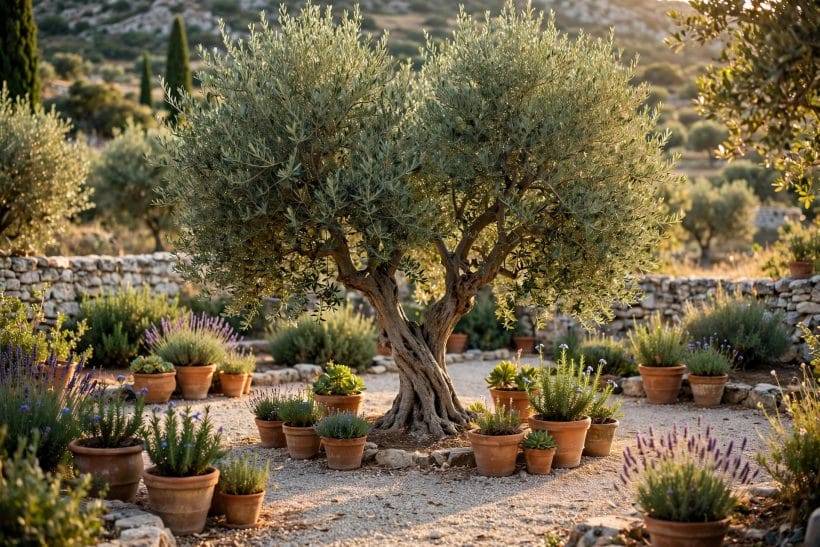
An olive tree is the single most Mediterranean thing you can plant, and it anchors a backyard like nothing else. Its silver-green foliage, gnarled trunk and open canopy give structure all year, and it asks for little beyond sun, good drainage and room to grow. Even a young olive in a large terracotta pot gives a courtyard instant character.
Place an olive where it can be seen from the house and from the main seating area, since it is the garden’s centrepiece. Give it space: an olive crowded against a wall or under a larger tree loses the open shape that makes it beautiful. In cooler climates, a potted olive that can be moved to shelter for the coldest spells is the wiser choice, and a pot also suits small backyards where a planted tree would outgrow its space.
Underplant an olive simply. Gravel, a few low herbs or a ring of lavender suit it far better than fussy bedding, and they keep the ground beneath it dry and clean, which is what an olive prefers.
3. Lavender, Herbs and Dry-Loving Planting
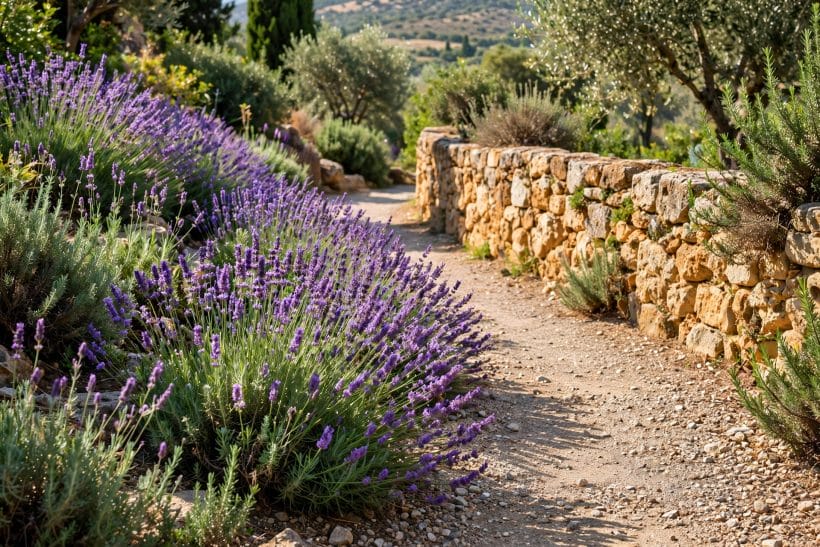
Lavender is the workhorse of Mediterranean planting: fragrant, tough, beautiful in flower and attractive out of it, and happy in poor, well-drained soil. Plant it in drifts along paths, at the front of borders, or in pots by seating, where its scent can be enjoyed and its flowers can be brushed as people pass.
Herbs belong beside lavender. Rosemary makes a fine low hedge or a large pot specimen, thyme creeps between stones and softens paths, and sage adds silver foliage that echoes the olive. These plants share the same needs — sun, drainage, and not too much water or rich feeding — so they grow well together and ask for little once established. Their kitchen use is a bonus, not the reason to plant them; the garden comes first.
Be honest about your climate. True Mediterranean plants sulk in cold, wet winters, so in cooler regions, choose the hardiest varieties, plant in the sunniest, best-drained spot, and accept that some plants will need shelter or replacing after a hard winter. A Mediterranean garden that adapts to its climate is truer to the style than one that fights it.
4. Stone, Gravel and Warm Surfaces
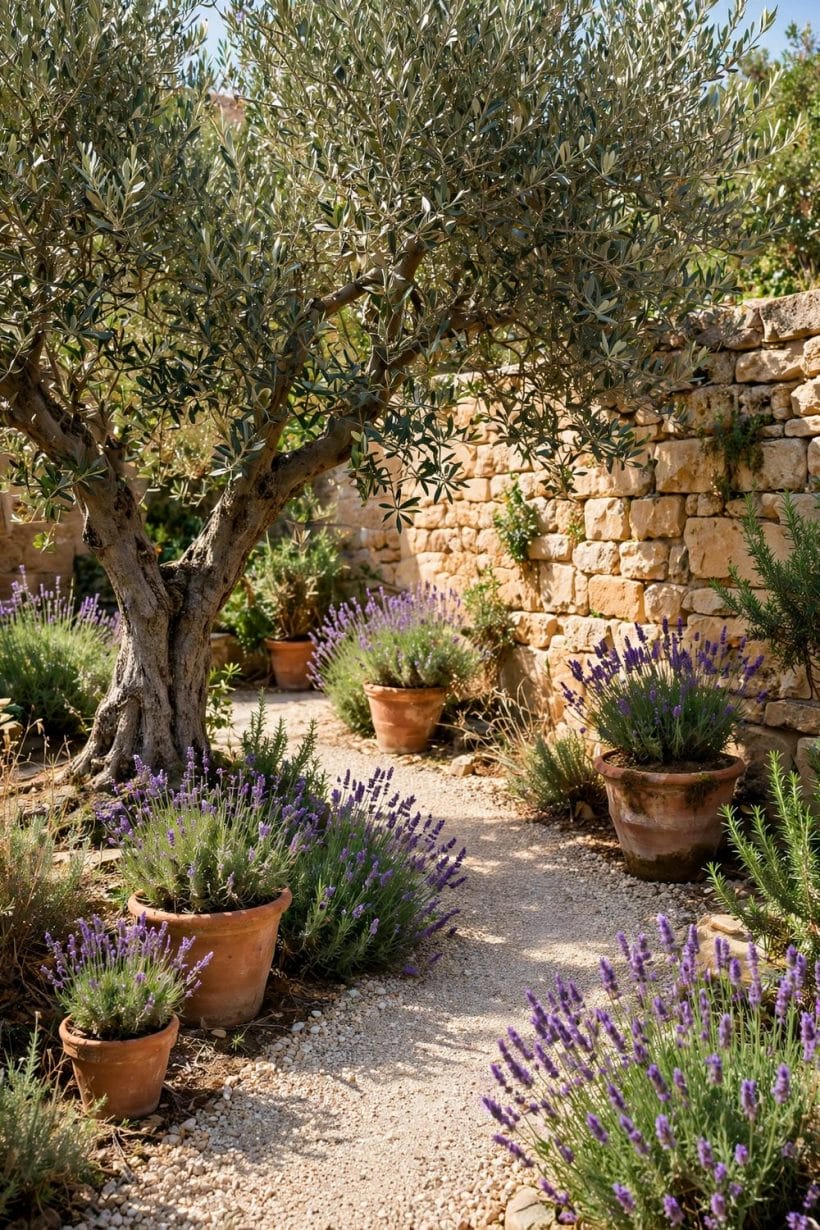
Stone and gravel are the bones of a Mediterranean backyard. A gravel courtyard, a stone path, a low stone wall or a set of broad stone steps give the garden its structure and its sun-warmed feel, and they need almost no maintenance beyond an occasional rake or sweep. Warm-toned stone suits the style best; cold grey slabs can look stark against terracotta and olive foliage.
Use gravel generously and confidently. A large gravel area with a few strong features — a pot cluster, a bench, a single tree — looks deliberate and calm, while a small patch of gravel surrounded by lawn looks like an afterthought. Gravel also suits dry gardens practically, since it suppresses weeds, drains freely and never needs mowing.
Paths should be wide enough to walk comfortably side by side and direct enough to invite use. A path that wanders pointlessly or narrows to a squeeze will be ignored, however pretty its edging. Our bluestone patio ideas show how stone surfaces are laid out for living, and the same generous-width thinking applies to Mediterranean paths and courtyards.
5. Terracotta Pots and Clusters
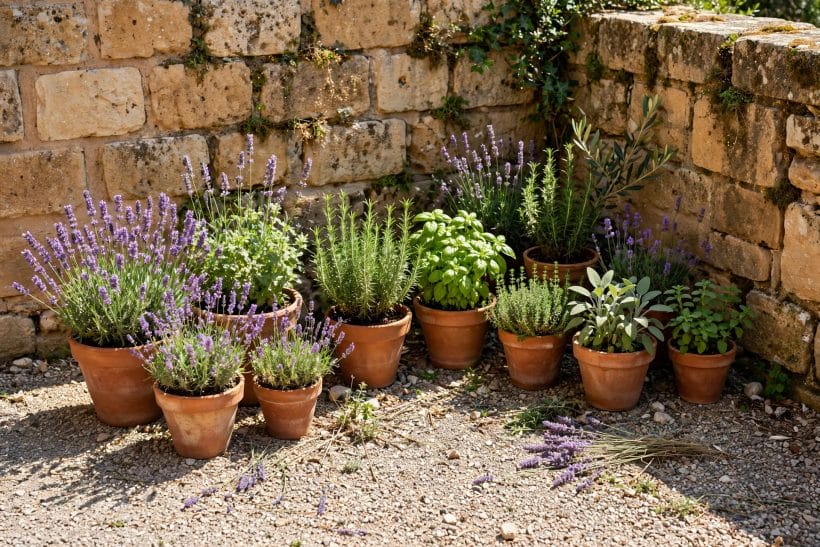
Terracotta pots are the Mediterranean garden’s furniture. Their warm colour echoes the soil and the stone, their porous walls suit dry-loving plants, and they age beautifully, gaining character with every season. A cluster of pots in different sizes, grouped rather than lined up in a row, looks like a garden that grew rather than one that was arranged.
Group pots by the door, at the foot of a wall, beside a bench or at a path junction — places where people pause and look. Fill them with plants that suit pots: olives, citrus in warm climates, lavender, rosemary, agaves and trailing herbs all thrive in terracotta, provided the pots drain freely and are not left standing in water.
Empty pots have a place too. A large, beautiful empty pot is a sculpture in its own right, and a few empties among planted ones give a cluster rhythm and breathing room. Do not fill every pot for the sake of it; restraint is the style.
6. Shade: Pergolas, Trees and Walls
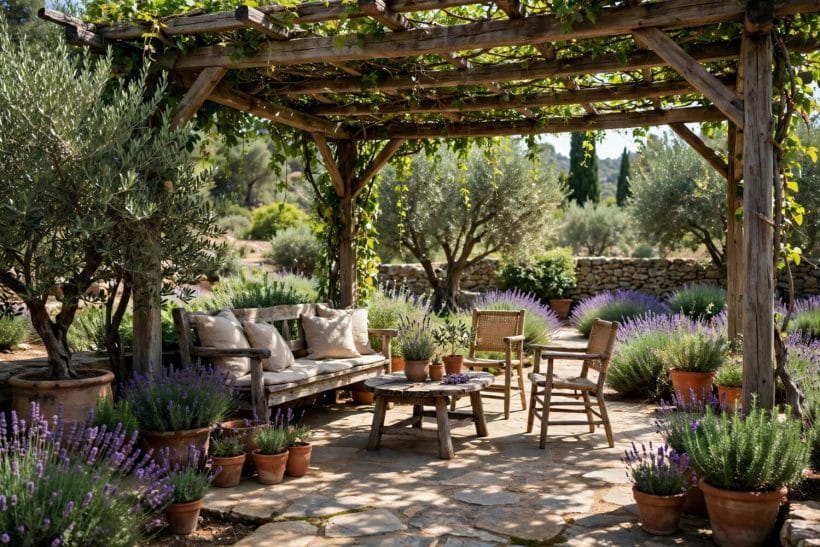
Shade makes a Mediterranean backyard usable through the heat of the day, and it should be planned as carefully as the planting. A pergola with a climber, a tree placed to shade the afternoon seating, or a high wall that throws shade at the right hour can transform a garden that is empty at noon into one that is lived in all day.
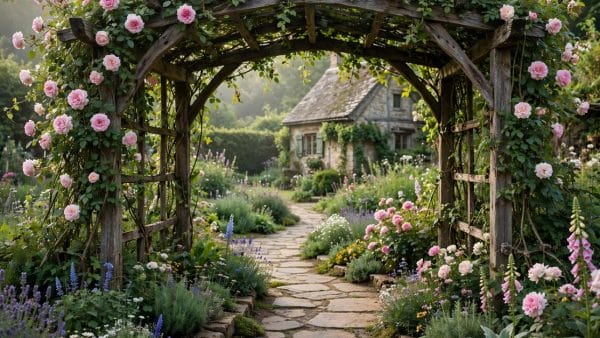
Pergolas suit the style particularly well, since they give structure without enclosure and carry the climbers — grape, jasmine, wisteria in suitable climates — that are part of the Mediterranean picture. Our patio fireplace ideas show how shaded outdoor rooms are zoned for gathering, and a Mediterranean pergola benefits from the same approach: shade first, seating second, planting to soften both.
Walls shade too, and a Mediterranean garden often uses them deliberately. A low wall that shelters a seating corner from wind, a high wall that shades a path in the afternoon, or a whitewashed wall that bounces light into a shady corner are all working parts of the design, not just boundaries.
7. Water, Used Sparingly
Water in a Mediterranean garden is a small, precious feature, not a large one. A wall fountain, a stone basin, or a narrow rill gives the sound and sparkle of water without the thirst of a large feature, and it suits the dry-garden ethic of the style. A small water feature near seating, where its sound can be enjoyed, is worth more than a large one at the far end of the garden.
Keep water features simple and easy to maintain. A feature that needs constant cleaning, topping up or repair will be switched off and resented, while a simple basin that can be emptied and cleaned in minutes will run all summer. Place it where it can be seen and heard from the main seating, and where its splash does not soak a path or a seat.
This is also where the split from the pool post matters most. A pool is a major water feature with its own engineering, safety and maintenance demands, and it belongs in its own guide, separate from this landscape treatment. A landscape water feature is a different, smaller thing, and keeping the two apart keeps both guides honest.
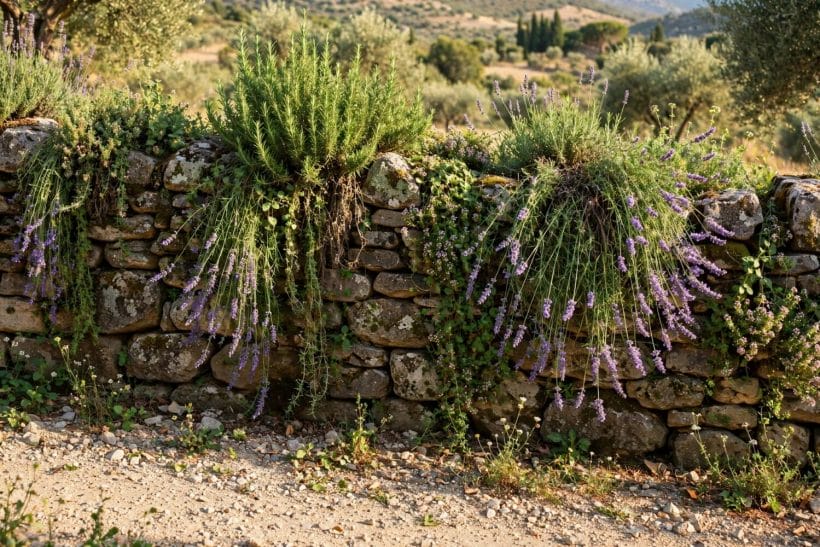
8. Courtyards and Enclosed Gardens
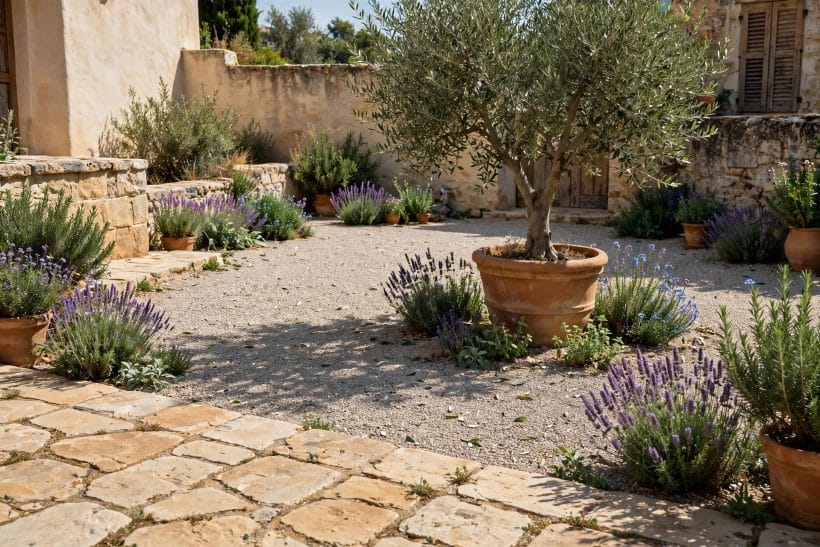
The courtyard is the Mediterranean garden’s natural form: an enclosed outdoor room, sheltered from wind, warmed by walls, and private enough to live in. Even a small backyard can borrow courtyard thinking, with a wall, a hedge or a trellis defining the space and giving it the sheltered, inward-looking feel that makes Mediterranean gardens so restful.
Enclosure does not mean darkness. A courtyard should still catch sun for part of the day, and its walls should be warm in colour — whitewash, warm render or natural stone — so they reflect light rather than absorbing it. A courtyard that is dark and damp has missed the point; the goal is sheltered sun, not shade.
Furnish a courtyard simply: a bench or a pair of chairs, a table for drinks, a few pot clusters, and room to move. A courtyard crowded with furniture loses the calm that makes it special, while a courtyard with too little feels empty. Two good seats and a table are often enough.
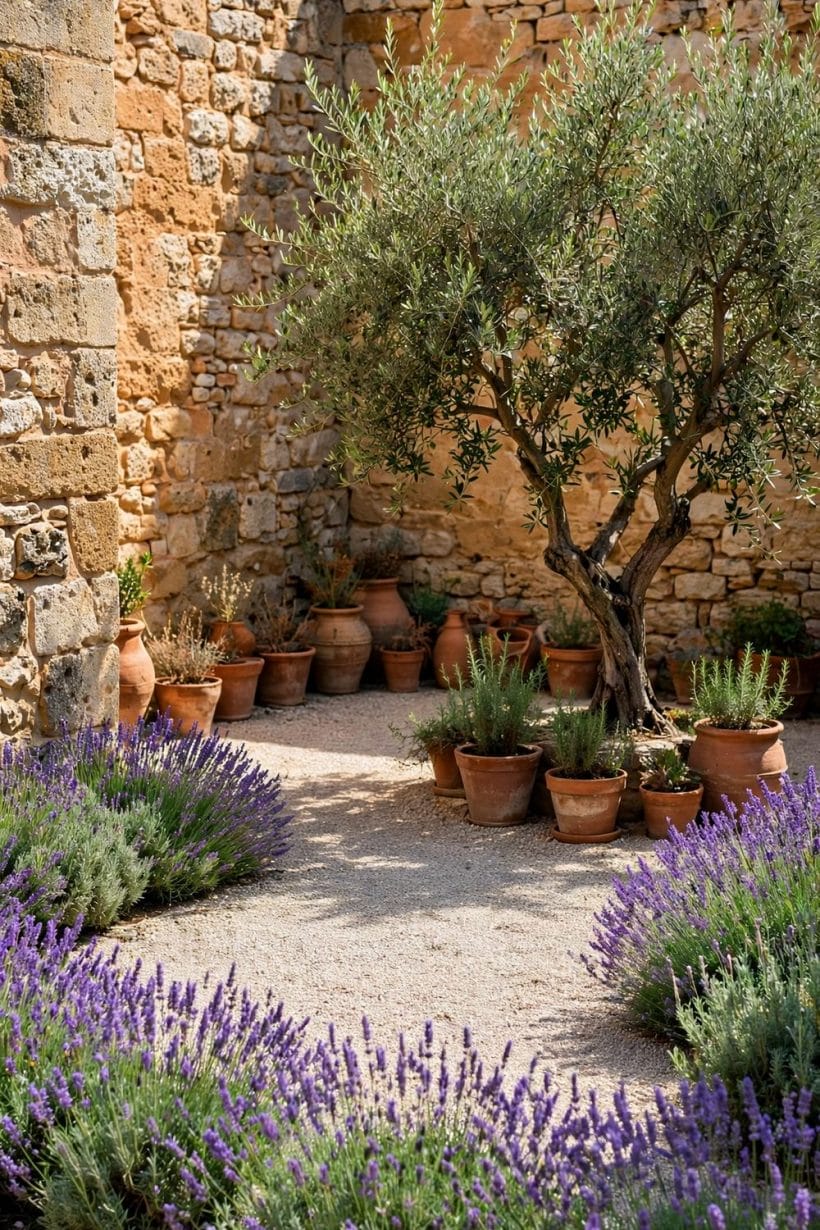
9. The Tuscan Connection
Mediterranean landscaping overlaps with Tuscan style, and the two are often confused. The honest distinction is scope: Tuscan is one region’s version of the wider Mediterranean tradition, with its own palette of cypress, stone farmhouses and rolling hills, while Mediterranean landscaping draws from the whole basin, from Spain to Greece. A garden can be both, but it helps to know which story you are telling.
If your garden leans Tuscan — cypress sentinels, a stone farmhouse feel, terracotta and olive — our Tuscan style homes guide and Tuscan bathroom ideas show how the same palette works indoors and across a whole house. A Mediterranean backyard that borrows Tuscan notes should do so deliberately, with cypress or stone as accents, rather than drifting into a theme.
Whichever direction you lean, keep the plant palette honest to your climate. A Mediterranean garden in a cool, wet region will always be an interpretation, and the best interpretations adapt — hardier lavenders, sheltered olives, gravel that drains — rather than pretending the climate is something it is not.
10. Care Through the Seasons
Mediterranean gardens are low-maintenance, not no-maintenance, and their care follows the seasons. Spring is for pruning lavender and rosemary after the cold, refreshing gravel, and checking pots for drainage. Summer is for watering wisely — deeply and infrequently for established plants, rather than a daily sprinkle — and for enjoying the garden at its best.
Autumn is for tidying, for planting new lavender and herbs while the soil is still warm, and for moving tender pots to shelter before the first frost. Winter is for leaving the garden alone as much as possible, beyond clearing fallen leaves from gravel and checking that pots are not sitting in water. A Mediterranean garden that is pruned, watered and fed like an English cottage garden will be overworked and unhappy; restraint in care matches restraint in design.
Feed sparingly. Mediterranean plants evolved in poor soils, and rich feeding produces soft, leggy growth that flops and suffers in winter. A light feed for potted plants, and little or none for plants in the ground, is usually enough, and it keeps the garden’s tough, compact character.
Final Considerations
Mediterranean landscaping succeeds on restraint: an olive for structure, lavender and herbs for scent, stone and gravel for bones, terracotta for warmth, and shade planned as carefully as planting. Keep water small, keep the palette warm and dusty, and keep the garden honest to your climate. Done that way, a Mediterranean backyard is not a theme but a way of living outdoors — sun, scent and stone, with room to breathe.
Start with the bones before the planting. Lay out the gravel areas, the stone paths and the seating corners first, and live with that structure for a little while before filling it with plants. A Mediterranean garden whose bones are right will look composed even in its first season, while a garden planted before its structure is settled often needs redoing within a year. Choose the olive’s position with care, since it anchors everything else, and let the lavender, herbs and pots gather around it naturally. For the wider outdoor picture, tiny house porch ideas and exterior entryway ideas show how a planted backyard connects to the house it serves, from the front approach to the porch beyond.

0 Comments