

A small entry is the hardest-working corner of the home: coats, shoes, post and keys all land there, yet the space itself is often the narrowest in the house.
These small entryway ideas stay with compact entries only, showing how slim storage, mirrors, colour and careful layouts make a tiny hall, foyer or corner feel calm, useful and welcoming.
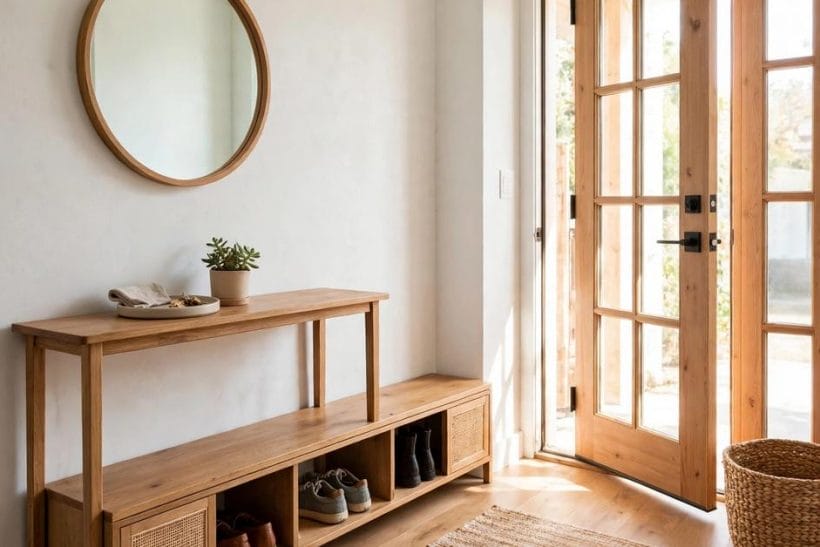
1. Small Entryways at a Glance
Scope first. This post owns the small entryway lane only: narrow hall entries, compact foyers, apartment entries, under-stair nooks and tiny entry corners. The wider pillar on entryway ideas covers entries in full; here, small leads.
The splits are simple. Vestibule ideas cover the enclosed entry chamber, foyer ideas own the formal entry room, mudroom ideas cover the working back entry, and staircase ideas own stairs themselves — this post is the room, not the stairs.
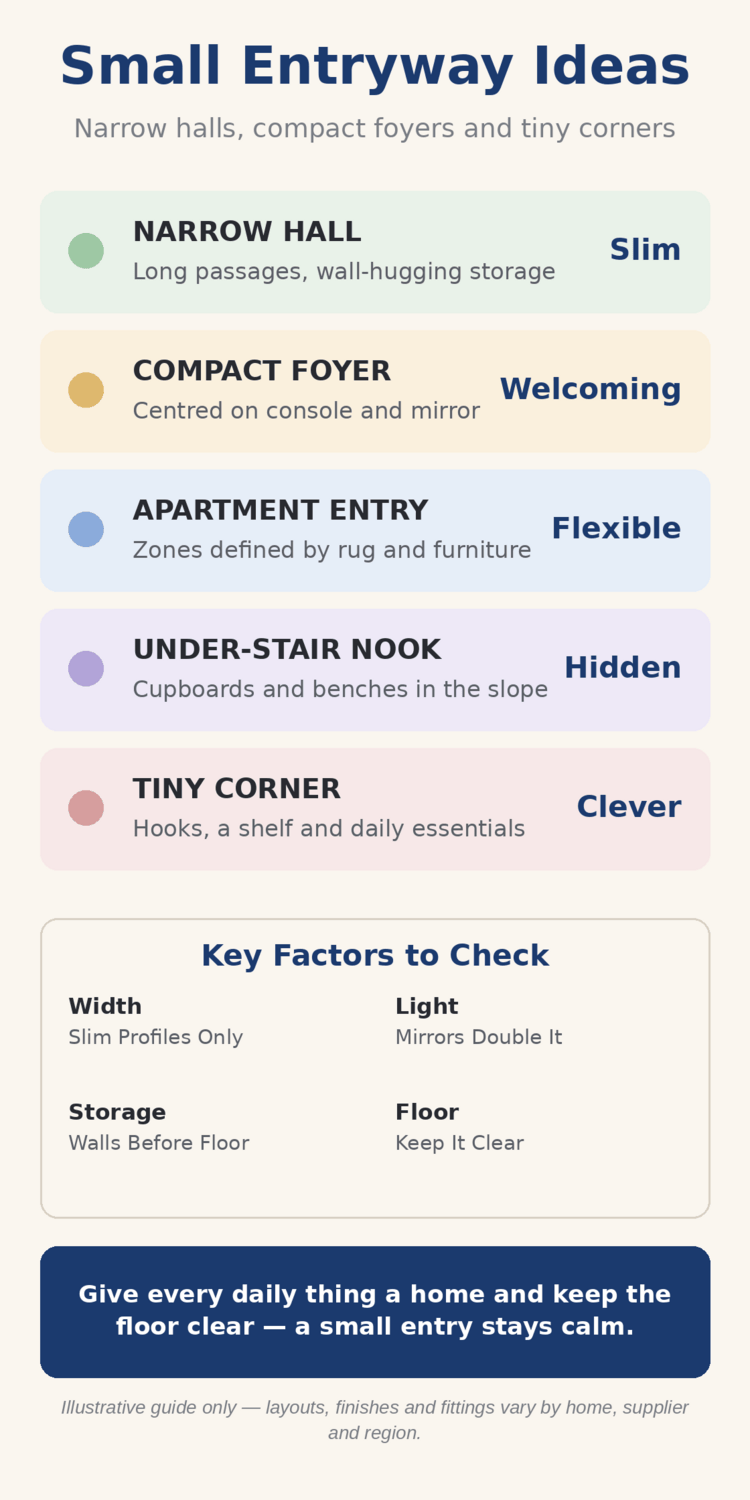
Read the entry before the details. Width, light and door swing decide what storage fits and what will feel in the way. The table below names the five families this post returns to, so later sections can speak of each by name.
| Family | Character | What it means |
|---|---|---|
| Narrow Hall | Slim | Long tight passages that need wall-hugging storage and clear walking room |
| Compact Foyer | Welcoming | Small square entries centred on a console, mirror and place to pause |
| Apartment Entry | Flexible | Open-plan entries defined by furniture and rugs rather than walls |
| Under-Stair Nook | Hidden | Awkward space below stairs turned into cupboards, benches and storage |
| Tiny Corner | Clever | A single corner by the door with hooks, a shelf and daily essentials |
2. Slim Lines for Narrow Halls
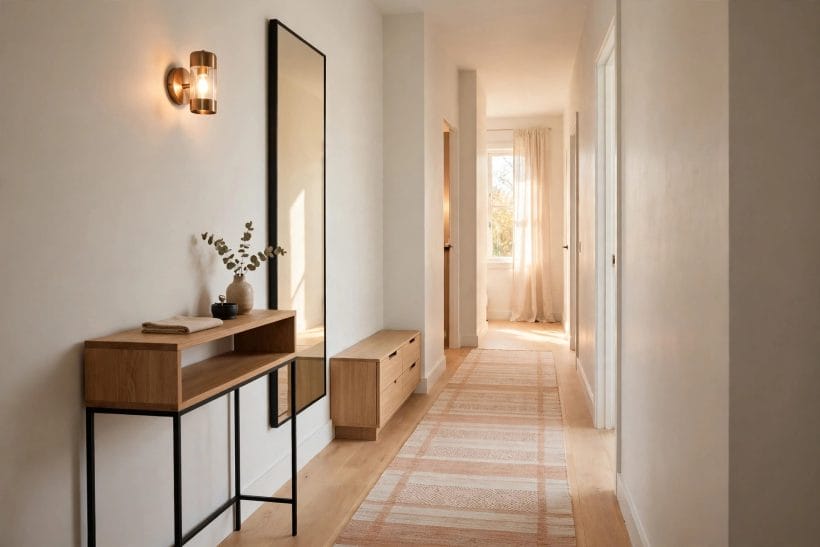
A narrow hall asks for everything to hug the wall and leave the walking line clear. Slim consoles, shallow cabinets and mirrors earn their place here, adding storage and light without stealing room.
1. Slim console hugging the wall
A slim console hugging the wall gives a narrow hall its landing spot without blocking the walk through. Keys, post and a small lamp sit within reach, the surface stays shallow, and the hall keeps its clear, easy line every day.
2. Wall shelf as a landing spot
A wall-mounted shelf can do the work of a table where floor room runs out. Set it beside the door for keys and post, keep a small tray on top for clutter, and the entry stays tidy with no furniture in the way.
3. Narrow bench for sitting down
A narrow bench gives tired legs and small children somewhere to sit while shoes come on and off. Choose a seat that tucks close to the wall, add a cushion, and store shoes below so nothing spreads across the floor.
4. Mirror panel to widen the view
A tall mirror panel makes a tight hall feel wider the moment it goes up, bouncing light from the door along the passage. Keep the frame simple and pale, and the reflection does the widening work quietly all day long.
5. Recessed niche for keys and post
A shallow recessed niche turns dead wall depth into useful storage for keys, post and small daily bits. Nothing projects into the hall, so the walking line stays clear, and a small dish inside keeps contents from looking scattered.
6. Low shoe cabinet, shallow profile
A low shoe cabinet with a shallow profile hides the daily pile while asking very little of the hall. Shoes stand upright inside, the top doubles as a shelf for a plant or tray, and the front stays calm.
7. Runner rug leading the eye through
A runner rug leads the eye through a narrow hall, giving the passage a clear direction from door to rooms beyond. Choose a flat, hard-wearing weave in a warm tone, keep the edges straight, and the hall feels longer.
8. Single light above the console
One well-placed light above the console gives a narrow hall a focal point and a pool of welcome after dark. Warm light flatters the mirror beside it, shadows soften, and the passage feels considered rather than merely passed through.
3. Compact Foyers That Welcome
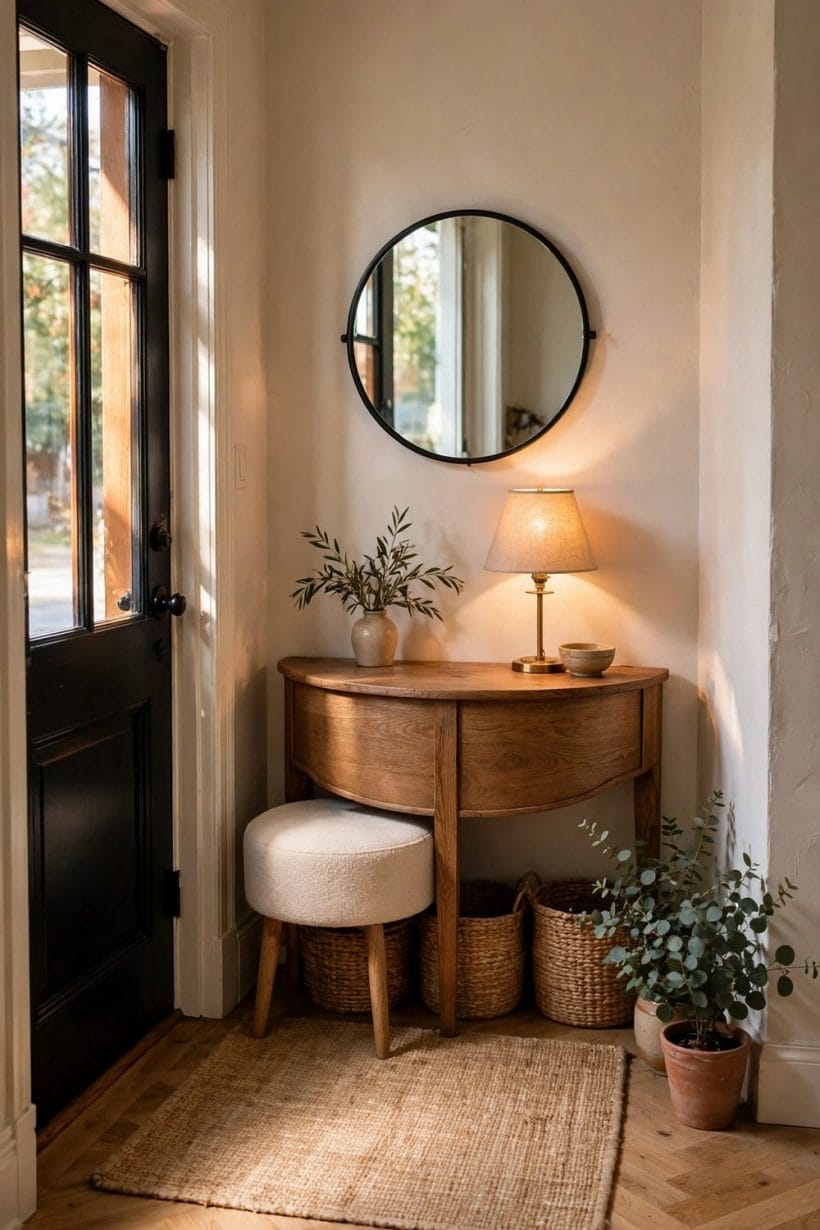
A compact foyer is small but square, and that shape is its gift: there is room to pause, turn and greet. A console, mirror and soft light make the little room feel complete.
9. Round mirror above a compact console
A round mirror above a compact console softens a small square foyer and gives everyone a last look before leaving. The curve breaks up straight walls kindly, reflects lamplight in the evening, and makes the entry centre feel composed.
10. Small round table at the centre
Where a compact foyer allows it, a small round table at the centre gives the room a true middle. A bowl for keys or a vase sits well there, and circulation flows around it with no sharp corners to catch.
11. Stool tucked beneath the console
An upholstered stool tucked beneath the console waits quietly until someone needs to sit, then slides out in a second. It adds softness, keeps the floor clear day to day, and suits foyers too small for a proper bench.
12. Basket pair for scarves and gloves
A matching pair of baskets beneath the console swallows scarves, gloves, hats and dog leads without a murmur. They keep seasonal clutter gathered in one place, look calm from the door, and make the morning search considerably shorter.
13. Tray and dish for daily essentials
A tray and a small dish on the console give keys, coins, cards and sunglasses one agreed home. Contained clutter reads as order, the surface stays clear for post and parcels, and leaving stops involving a hunt through pockets.
14. Art ledge instead of a sideboard
A shallow art ledge on the foyer wall holds framed prints and photographs without the depth of a sideboard. Pieces can lean and swap with the seasons, the floor below stays empty, and the small room gains personality at eye level.
15. Half-moon console for a tight square
A half-moon console fits flat against the wall while its curved front removes corners a square foyer cannot spare. It holds a lamp and a tray, leaves turning room in the middle, and feels tailored rather than squeezed in.
16. Warm lamp light for the evening
A small lamp on the console changes a compact foyer after dark, replacing harsh ceiling light with a warm pool at human height. The welcome feels softer, faces look kinder in the mirror, and coming home becomes calmer.
4. Shoe Storage and Benches
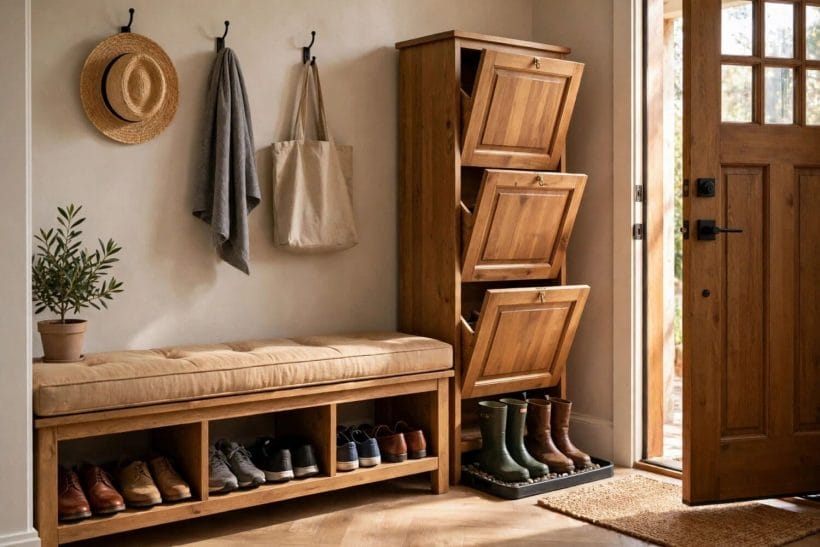
Shoes are the small entry problem that never goes away, so they deserve a planned home rather than a heap. The working storage in mudroom ideas suits a back entry; here, neater benches serve the front door.
17. Tilt-out shoe cabinet by the door
A tilt-out shoe cabinet by the front door hides pairs behind a calm, closed front while asking little depth. Each compartment tips forward for easy reach, the top holds keys and post, and the entry keeps its tidy impression.
18. Bench with shelves below the seat
A bench with open shelves below the seat pairs the two things an entry needs most: somewhere to sit and somewhere for shoes. Pairs line up visibly, wet ones can air, and the seat stays clear for people.
19. Labelled boxes stacked neatly
Labelled boxes stacked neatly suit entries where shoes rotate with the seasons. Each pair keeps its place, dust stays off, and finding the right shoes becomes a matter of reading rather than rummaging through a growing heap.
20. Open tray for wet weather days
An open tray by the door gives wet boots and dripping shoes a safe place to land on rainy days. Raised edges hold the water, the floor stays dry, and the tray lifts out easily when the weather improves.
21. Cubby bench for family pairs
A cubby bench gives every person a square of their own for shoes, and the system holds because the places are obvious. Children manage their own cubby, guests see where things go, and the top stays free for sitting.
22. Slim shoe tower in a corner
A slim shoe tower turns an unused corner into vertical storage, stacking pairs upward where the entry cannot spread outward. Everyday shoes sit at easy height, occasional pairs higher up, and a clutter corner becomes hard-working storage.
23. Boot tray beneath the bench
A boot tray tucked beneath the bench catches the mud and meltwater tall boots bring home. Hidden from first view, it protects the floor and slides out for a quick rinse whenever it starts to look tired.
24. Cushioned bench top, washable fabric
A cushioned bench top in washable fabric makes sitting to pull on shoes a small pleasure rather than a perch. Spills and muddy marks wipe or wash away, the colour can echo the rug, and the bench invites use.
5. Hooks, Rails and Door-Side Storage
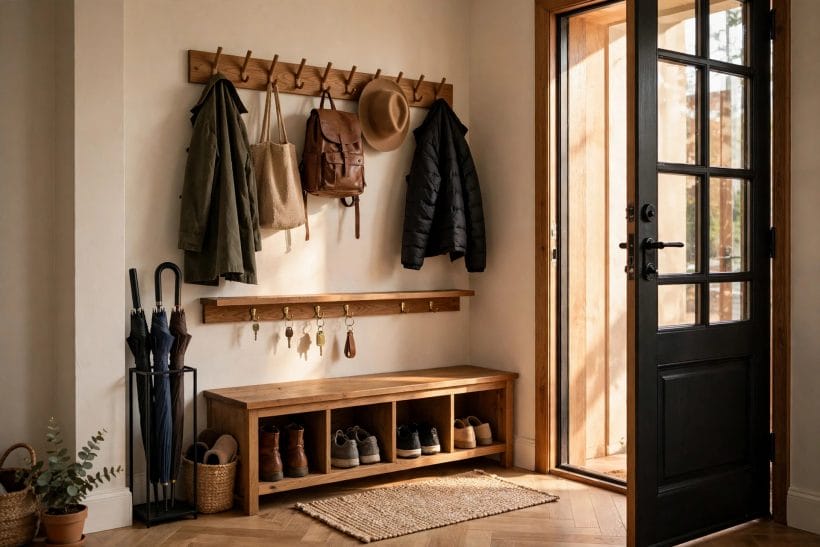
The door wall itself can work harder. Hooks and rails hold coats where they are used, while the details around the front door — and the bold look in black front door ideas — set the tone.
25. Row of hooks at varied heights
A row of hooks at varied heights serves tall adults, small children and everyone between without a struggle. Coats hang clear of the floor, bags find the lower row, and the door wall becomes storage nobody thinks about.
26. Peg rail for coats and bags
A simple peg rail is the small entry classic: coats, hats, bags and leads all hang in one honest line. Timber pegs feel warm and sturdy, and everything stays visible, reachable and off the floor every day.
27. Over-door hooks for guests
Over-door hooks add hanging room for guests without drilling a hole or giving up wall space. A rack inside the door holds extra coats on busy evenings, then comes away cleanly, making it ideal for rented homes.
28. Hook and shelf combined
A hook and shelf combination stacks two kinds of storage on one stretch of wall: hats and post above, coats and bags below. The shelf keeps small things from migrating, and the arrangement reads as considered furniture.
29. One hook each, clearly owned
Giving every person one clearly owned hook sounds simple, and that is exactly why it works. Coats stop migrating between pegs, children learn the system quickly, and a spare hook for guests keeps visitors from joining the pile.
30. Warm metal hooks as a detail
Warm-toned metal hooks add a quiet detail that lifts plain walls and tired paintwork. Repeated in a row, they read as a deliberate rhythm rather than hardware, catch light gently, and pair well with timber shelves nearby.
31. Slim umbrella stand by the door
A slim umbrella stand in a simple cylinder keeps wet umbrellas upright, contained and off the floor. Tucked beside the door it takes almost no room, a drip tray protects the boards, and rainy arrivals stop leaving puddles.
32. Key hooks and letter cage together
Key hooks beside a letter cage give the two most-lost things in the house a fixed address by the door. Post lands in the cage, keys hang where hands expect them, and mornings lose their frantic edge.
6. Under-Stair Nooks and Hidden Corners
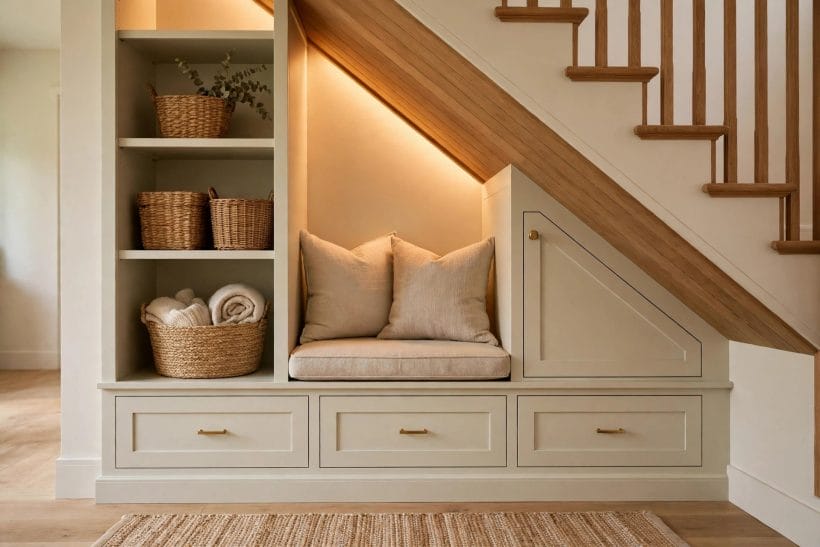
The space beneath the stairs is the small entry hidden reserve. As the staircase ideas guide covers stairs themselves, this post stays with the room below: drawers and benches fitted into the slope.
33. Drawers that pull out deep
Drawers fitted beneath the stairs pull out deep into space cupboards waste, bringing shoes, bags and seasonal kit within reach. Each drawer can own a category, fronts sit flush and calm, and the awkward slope earns its keep.
34. Cupboard with a fitted door
A cupboard with a door fitted to the stair slope hides household overflow behind one tidy front. Coats, the vacuum and sports kit disappear from view, and the strangest-shaped storage in the house becomes the most useful.
35. Reading bench beneath the stairs
A bench tucked beneath the stairs turns the nook into a small retreat for lacing shoes slowly or reading while waiting. A cushion, a throw and soft light make the slope feel sheltering, and children claim it first.
36. Shoe drawers following the slope
Shoe drawers stepped to follow the slope use every level the stairs allow, shallow where the ceiling drops, deeper where it rises. Pairs stay paired and visible, and the morning routine runs in one tidy place.
37. Open shelves for baskets and books
Open shelves in the under-stair nook hold baskets, books and folded blankets where everyone can see them. The openness keeps the space feeling airy, baskets hide untidy categories, and the shelves change jobs as the household changes.
38. Coat cupboard in the tallest part
The tallest part of the under-stair space is the natural home for a coat cupboard, where long coats hang without dragging. A rail, a shelf above and room for boots below turn the slope peak into proper storage.
39. Small desk nook beneath the stairs
A small desk nook beneath the stairs gives post, lists and laptop work a perch that is not the kitchen table. A shelf desk, stool and lamp fit the slope well, and paperwork leaves the console free.
40. Pet corner beneath the stairs
A pet bed and bowl corner beneath the stairs gives animals their own address in the entry without blocking the door. Leads hang on a hook above, and pets gain a calm, draught-free spot of their own.
41. Lined nook with soft lighting
Lining the under-stair nook with pale boards or paint and adding soft lighting turns a dark cupboard feeling into a small, bright room. Contents become easy to find, and the storage feels designed rather than discovered.
7. Colour, Paint and Paper for Narrow Halls
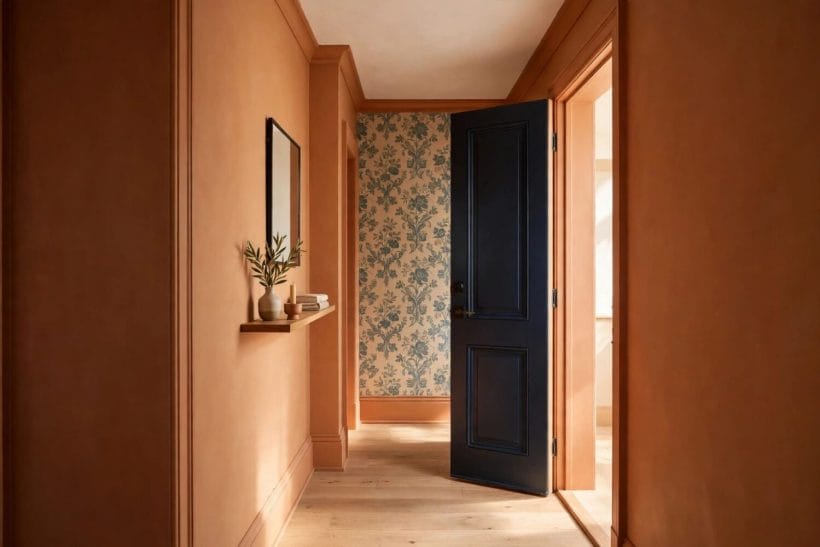
Colour does the heavy lifting where furniture cannot fit. Pale walls borrow light, deep tones add drama at the door end, and one patterned surface can carry a whole small entry alone.
42. Pale walls that borrow light
Pale walls borrow whatever light a small entry receives and hand it back around the room, softening shadows in corners. Warm pale tones feel welcoming rather than stark, pair with any door colour, and make narrow halls feel wider.
43. Colour drenching walls and door
Colour drenching paints walls, trim and the inside of the door in one tone, wrapping a small entry in a single calm mood. Unbroken colour blurs the edges, and the tiny room feels larger and more deliberate for it.
44. Dark below, pale above
A dark tone on the lower wall with pale walls above gives a narrow hall toughness and light. The darker band hides scuffs where bags brush past, the pale upper half keeps the hall bright, and a trim line joins them.
45. Paper on the end wall only
Patterned paper on the end wall only gives a narrow hall a destination and a sense of depth. The pattern draws the eye forward, side walls stay plain and calm, and one roll does work a whole room would overwhelm.
46. Painted door interior, deep tone
Painting the inside of the front door in a deep tone gives a small entry its moment of drama at the threshold. The colour frames every arrival, echoes in a cushion or rug, and costs little beyond the paint.
47. Warm pale ceiling lifting the entry
A warm pale ceiling lifts a low entry by drawing the eye and the light upward. Paired with slightly deeper walls, the space feels taller and airier, flattering both daylight from the door glass and lamplight after dark.
48. Contrasting trim drawing the eye up
Contrasting trim around the door and skirting draws a line the eye follows upward, giving a small entry structure and height. Keep the contrast gentle for calm or stronger for character, and repeat it on frames nearby.
49. Patterned floor carrying a plain entry
A patterned floor can carry a plain small entry almost alone, giving the eye interest at ground level while walls stay simple. A patterned runner hides daily marks kindly and sets the colours for everything hung above.
8. Rugs, Lighting and Floor Details
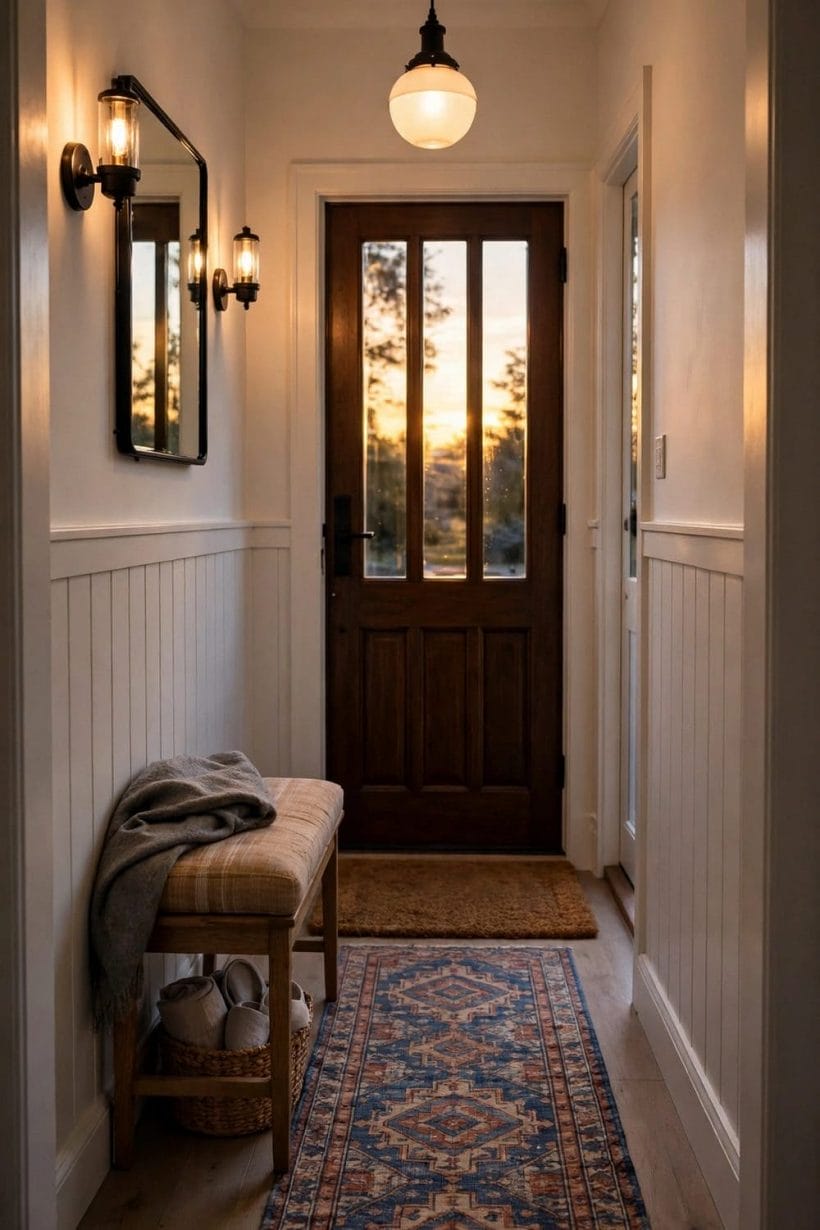
Floors and light decide how a small entry feels underfoot and after dark. A washable runner, layered mats and well-placed light turn a rushed passage into a room that welcomes.
50. Washable runner for everyday wear
A washable runner is the hardest-working textile in a small entry, catching mud, rain and daily grit at the door. When it tires it goes in the wash and returns fresh, and a warm pattern makes the hall feel finished.
51. Layered mats at the threshold
Layering a sturdy mat outside with a softer one just inside the door gives dirt two chances to stay behind. The pairing protects pale floors, feels generous underfoot, and lets each mat do the job it suits best.
52. Pendant light centred over the entry
A pendant light centred over a compact entry gives the small room a ceiling worth glancing at and a warm pool below. Choose a shade that spreads light softly, and keep it high enough to clear the door.
53. Wall sconces where ceilings are low
Wall sconces suit entries where a ceiling light would feel low or harsh, washing the walls with gentle sideways light instead. A pair flanking a mirror doubles the glow and makes narrow halls feel wider in the evenings.
54. Textured mat that traps dirt early
A textured mat at the door traps dirt, grit and moisture in its fibres before shoes reach the good floor beyond. The deeper the texture, the kinder it is to pale boards, and a regular shake keeps it working.
55. Pale flooring reflecting borrowed light
Pale flooring reflects borrowed light from the door back into a small entry, lifting the whole space without a single lamp. It shows marks honestly, so pair it with good mats and a washable runner at the door.
56. Patterned tile for busy entries
Patterned tile gives a busy small entry beauty and forgiveness in equal measure, hiding dust and paw prints between cleans. The pattern can stay quiet in soft tones, and hard tile shrugs off wet boots without complaint.
57. Mirror and light paired together
Placing a mirror beside or opposite the entry light doubles the glow without doubling the fittings, sending warmth into corners a small hall keeps dark. The pairing flatters faces at the door and calms the evenings.
9. Apartment Entries Without Walls
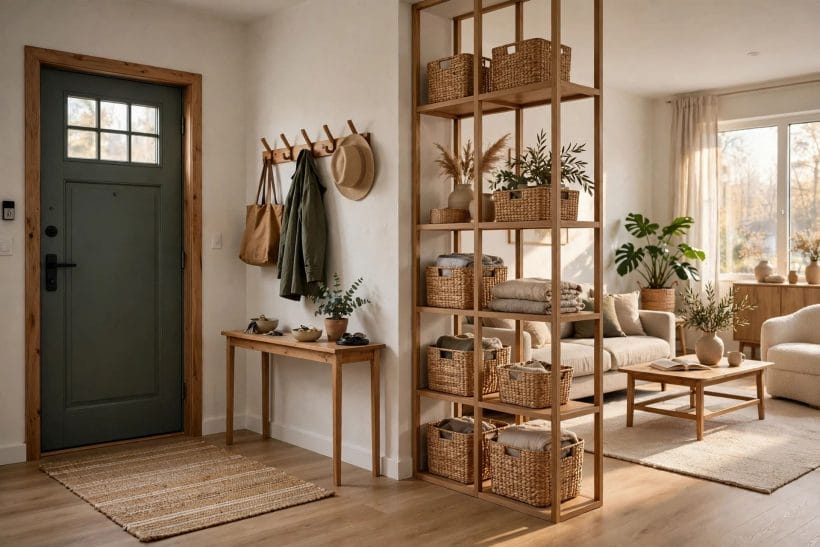
An apartment entry often has no walls of its own, just the space inside the front door. A rug, console and divider draw the boundary kindly, giving coats and keys a home.
58. Console and rug defining the zone
A console and a rug together define an entry zone in an open-plan apartment more clearly than any sign could. The rug marks where outside ends, the console holds daily essentials, and the living space beyond stays calm.
59. Open shelf divider as a boundary
An open shelf unit between entry and living area draws a boundary you can see through, keeping the apartment feeling spacious. Baskets fill the lower shelves, coats hang at the entry side, and both rooms gain storage.
60. Temporary hooks that leave no marks
Temporary hooks that leave no lasting marks let renters hang coats and bags with confidence. Adhesive and over-door options hold surprising weight, come away cleanly at moving time, and turn a blank wall into storage within minutes.
61. Folding bench for a rented corner
A folding bench gives a rented entry corner a seat for shoes that can vanish when space is needed. Lean it flat against the wall between uses, and the corner serves gatherings as gracefully as weekday mornings.
62. Entry cart on casters, moved at will
An entry cart on casters holds shoes, bags and post in tidy tiers and moves whenever the apartment needs it to. Roll it aside for cleaning or company, park it by the door daily, and no corner is wasted.
63. Curtain screen hiding the coats
A curtain screen across an entry alcove hides coats, shoes and the honest clutter of arriving home behind one soft fall of fabric. It costs little, suits renters, adds colour to a plain corner, and opens easily.
64. Mirror and hooks on one wall panel
Mounting a mirror and hooks together on one wall panel gives an apartment entry a complete station in a single stretch. Coat off, keys down, last look — everything daily happens there, and the rest of the room stays free.
65. Mat and tray marking the threshold
A mat and a boot tray just inside an apartment door mark the threshold where shoes stop and home begins. The small ritual protects floors in wet weather, gives guests a clear cue, and keeps the habit alive.
66. Basket tower for daily clutter
A basket tower stacks the categories of arriving home — post, shoes, bags, seasonal extras — into one vertical footprint. Each basket keeps its contents honest, the tower suits a door corner, and the apartment floor stays clear.
10. Finishing Touches, Care and Everyday Ease
The best small entries stay good because small habits hold them, not because they were styled once. These last ideas cover finishing touches, gentle upkeep and lessons that keep a tiny entry calm.
67. One plant and one scent
One plant and one gentle scent are enough finishing touches for a small entry; more becomes clutter at this scale. The plant softens hard storage, the scent greets arrivals kindly, and both can change with the seasons.
68. Rotating pieces with the seasons
Rotating a few pieces with the seasons keeps a small entry feeling fresh without buying more storage. The summer tray holds sunglasses and hats, the winter basket holds gloves and scarves, and the swap becomes a pleasant reset.
69. Weekly reset keeping it clear
A weekly reset of a few unhurried minutes keeps a small entry honest: shoes back in place, post sorted, surfaces cleared. Small spaces drift quickly, so little and often beats the rare big tidy, and calm survives busy weeks.
70. Spare hook kept empty for guests
Keeping one spare hook deliberately empty is a small hospitality guests feel immediately on arrival. Their coat has a place that is not a chair or banister, household hooks stay undisturbed, and the entry reads as ready.
71. Labels inside drawers and cupboards
Labels inside entry drawers and cupboards keep a shared system alive long after the organising weekend fades. Everyone can see where things belong, returning items takes no thought, and the quiet order survives busy family members.
72. Soft-close details for quiet mornings
Soft-close hinges and quiet hooks are small kindnesses in an entry used by early risers and late returners. Doors settle without a bang, coats hang without clatter, and the household sleeps better for considerate hardware.
73. Floor clear as the first rule
Keeping the floor clear is the first rule every other small entry idea depends on, because floor clutter makes tiny spaces feel chaotic. If it lives on the floor, it needs a home on a wall or shelf.
74. Testing the layout by living first
Testing a small entry layout by living with it before fixing anything permanently saves money and regret. Tape the console outline, use temporary hooks, notice where things land, and only then commit to the chosen arrangement.
75. Small entry, generous feeling
A small entry can still feel generous when everything in it has a place, a purpose and room to breathe. Clear floors, warm light and contained storage add up to a welcome far larger than the space itself.
Final Considerations
Choose for the traffic first and the look second. How coats land, where shoes gather and how light reaches the far wall decide whether a small entry works daily, more than any single piece of furniture.
Whether the result is a slim hall with a quiet console or an under-stair nook fitted with drawers, the principle holds: give every daily thing a home, keep the floor clear, and a small entry repays the care with calm at every arrival.

0 Comments