

Choosing a floor plan is the decision every other tiny house decision hangs on — and it is the hardest one to make from photographs alone. These tiny house blueprints solve that problem differently: instead of static pictures, the explorer below renders ten complete layouts you can switch between, zone by zone, with dimensions, costs and weights updating as you compare.
1. At a Glance: 10 Layouts From 16 to 32 Feet
The explorer holds ten distinct layouts spanning every major archetype: Solo, Couple, Family, No-Loft and Gooseneck. At the small end sits a 16 ft micro-studio listed at 7,000 lbs; at the large end, a 32 ft gooseneck family home at 17,000 lbs. Sleeping capacity runs from one person to five. The table below gathers all ten so the whole range can be read in a single pass before the sections that follow take each archetype in turn.
| Model | Length | Sleeps | Estimated DIY Cost | Towing Weight | Key Feature |
|---|---|---|---|---|---|
| The Solo 16′ | 16 ft | 1 | $15k – $25k | 7,000 lbs | Wet Bath + Daybed (No Stairs) |
| The Couple 20′ | 20 ft | 2 | $25k – $40k | 10,000 lbs | Full Kitchen + Queen Loft |
| Off-Grid 20′ | 20 ft | 2 | $30k – $50k | 11,000 lbs | Utility Room + Wood Stove |
| Digital Nomad 24′ | 24 ft | 2 | $35k – $55k | 12,500 lbs | 8ft Desk + Storage Stairs |
| Park Model 24′ (10ft Wide) | 24 ft | 2 | $60k – $85k | 16,000 lbs | 10ft Width (Massive Feel) |
| The Entertainer 26′ | 26 ft | 2 | $40k – $60k | 13,500 lbs | Gourmet Kitchen + Breakfast Bar |
| The Family 28′ | 28 ft | 4 | $50k – $75k | 14,500 lbs | Dual Lofts (Master + Kids) |
| No-Loft 28′ | 28 ft | 2 | $45k – $70k | 14,000 lbs | Private Downstairs Bedroom |
| The Bunkhouse 30′ | 30 ft | 5 | $55k – $80k | 15,500 lbs | Separate Bunk Room |
| Gooseneck 32′ | 32 ft | 4 | $65k – $95k | 17,000 lbs | Standing Height Bedroom |
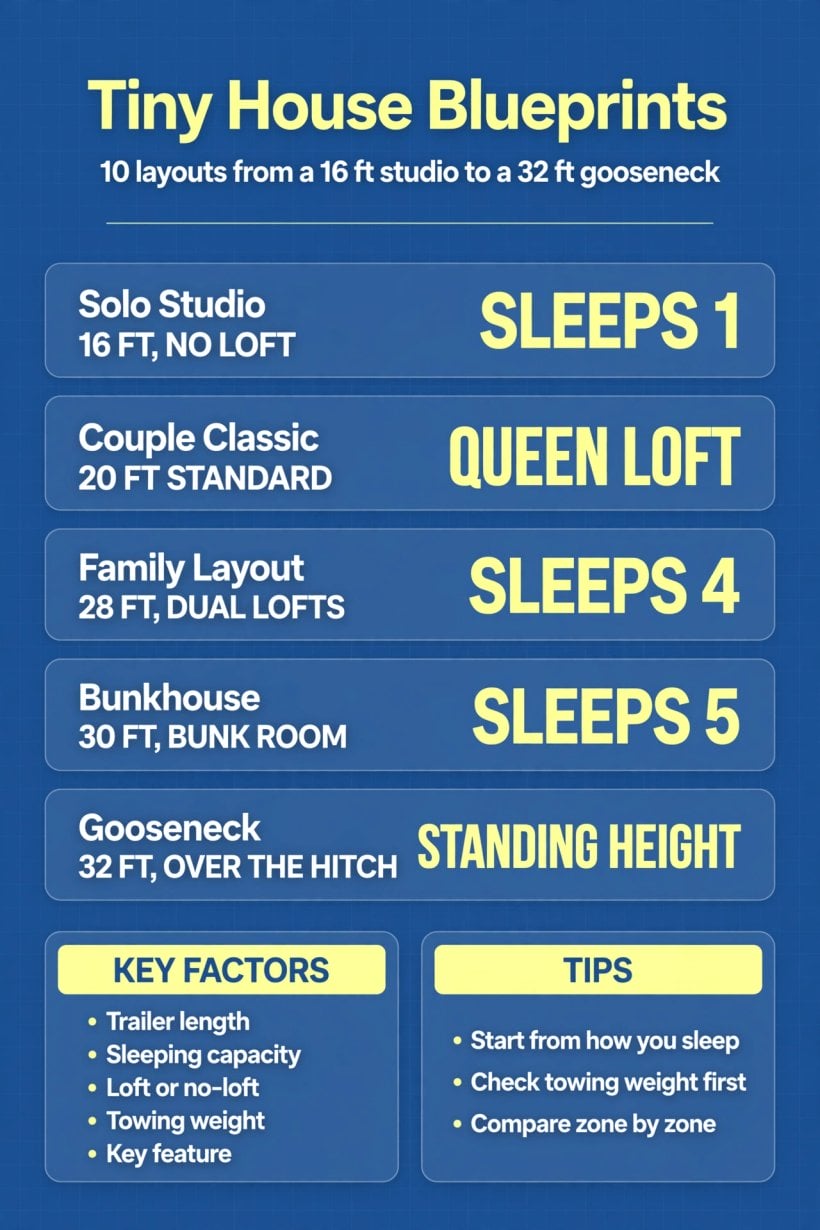
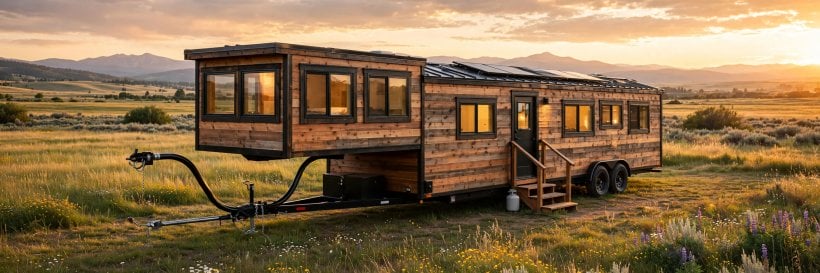
Five of the ten layouts at a glance: the solo studio, the couple classic, the family layout, the bunkhouse and the gooseneck — the full set of ten is one click away in the explorer below.
2. Reading the Zones: Living, Kitchen, Bath and Sleeping
A blueprint only becomes useful when you can read it, and this one is built to be read at a glance. A Dynamic SVG Blueprint Engine renders each floor plan in real time, drawing the layout as a strip of color-coded zones rather than a static image. The smart legend sorts every part of the home into four zone types: Living / Lounge, Kitchen / Utilities, Bath / Wet Room and Sleeping Loft. Select a model and the zones redraw themselves, so the proportion of the home given to cooking, washing, living and sleeping is visible before a single number is read.
Those proportions are the real information. In The Solo 16′, for example, the zone strip divides the trailer into 7 ft of lounge/bed, 6 ft of kitchen and 3 ft of bath — the three lengths adding up to the full 16 ft. Reading layouts this way trains the eye to ask the right question of any plan: not how the home looks, but how its feet are divided. Underneath the drawing, a list of layout components names the actual fittings the plan assumes, from a 30-inch wet bath to an under-counter fridge and a fold-down table. A guide to designing your own tiny house layout is the natural next step once the zone habit is formed, because a plan you can read is a plan you can adapt.
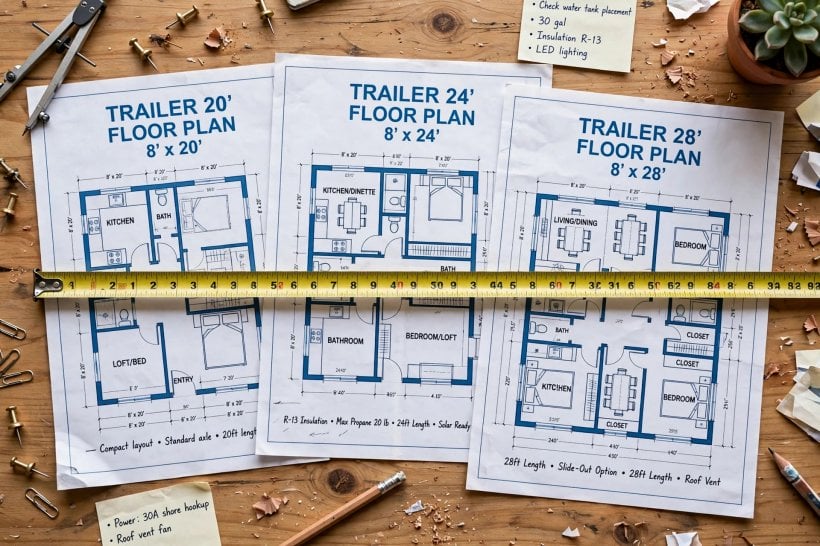
3. Length First: What 16 to 32 Feet Actually Changes
Every comparison in the explorer starts from the same variable: trailer length. The ten models step from 16 ft to 32 ft, and the spec sheets show what each extra step tends to bring with it. The 16 ft solo studio is listed at 7,000 lbs and an estimated $15k – $25k; the 32 ft gooseneck is listed at 17,000 lbs and $65k – $95k. Between those poles, weight and cost climb with length — but not in lockstep, because what fills the length matters as much as the length itself. The two 20 ft models prove the point: The Couple 20′ is listed at 10,000 lbs, while the Off-Grid 20′, with its utility room full of equipment, is listed at 11,000 lbs on the same footprint.
Length also decides who the home can serve. Sleeping capacity across the set runs from one to five, and the layouts that sleep the most are not simply the longest — the 30 ft Bunkhouse sleeps five, one more than the 32 ft Gooseneck, because its feet are spent on a dedicated bunk room instead of a standing-height master bedroom. That is the comparison the explorer is really for: understanding how different lengths affect livability, in the original description’s own words. If you are still deciding how large a home you can sensibly build and tow, our overview of the biggest tiny house you can build sets the outer limits that these ten layouts sit inside.
4. The Solo 16′: A Complete Studio With No Loft at All
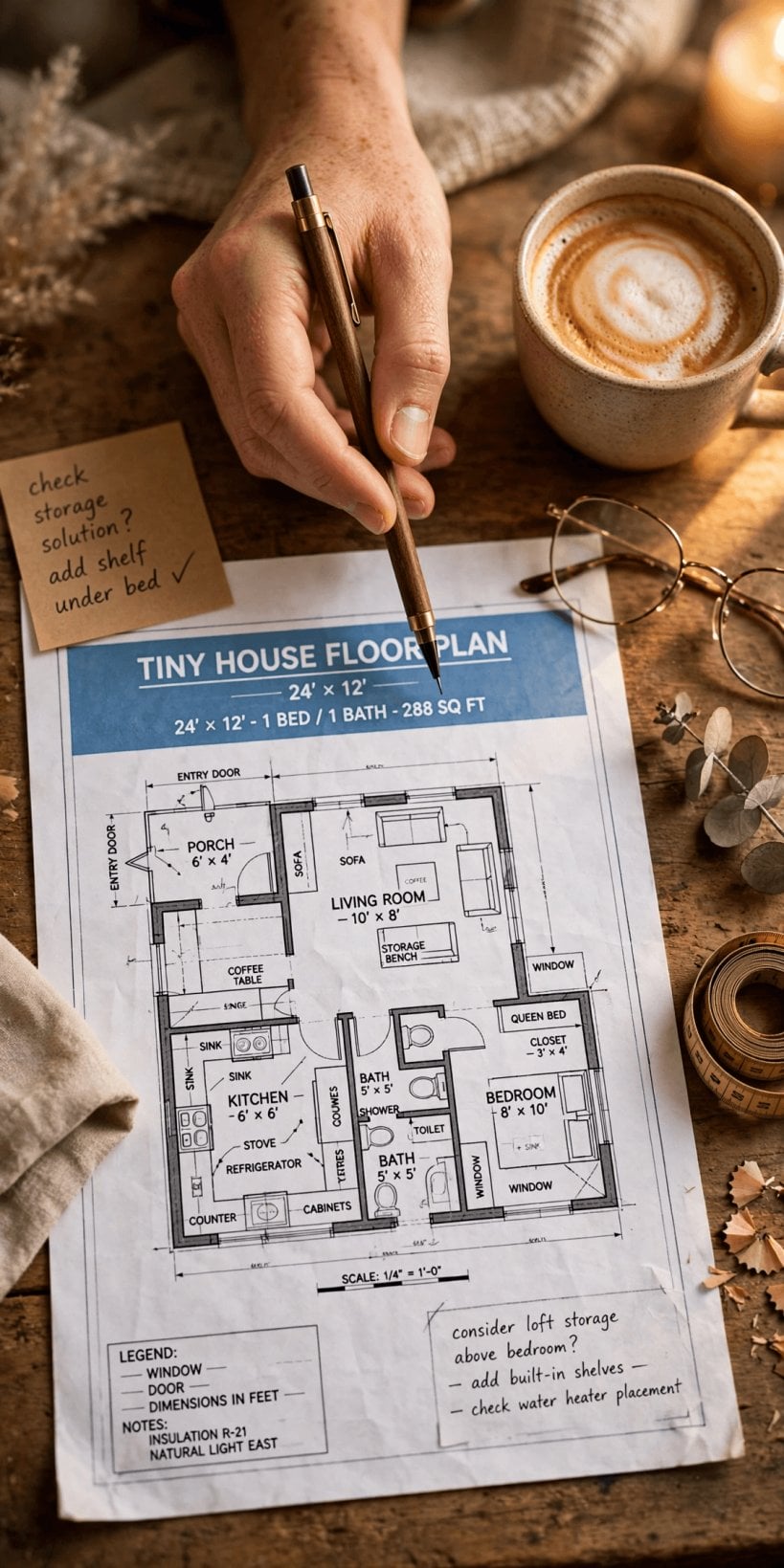
The smallest blueprint in the set is also the most radical: The Solo 16′ skips the loft entirely. Described as an ultra-compact studio that is perfect for travel, it sleeps one person and keeps everything on a single level. The key feature is the pairing of a wet bath with a daybed — no stairs, no ladder, no climbing to bed. Its component list shows how a complete home fits into 16 ft: a 30-inch wet bath with the toilet in the shower, a single burner induction cooktop, an under-counter fridge, a daybed with drawers beneath it, and a fold-down table that disappears when it is not in use.
The trade-offs are honest ones. A wet bath saves the feet a separate shower stall would consume, and a daybed serves as sofa by day and bed by night, but there is no separate bedroom and no room for a second person. What the layout buys in return is the lightest towing weight in the set at 7,000 lbs and the lowest estimated cost, $15k – $25k.
5. The Couple 20′ and the Digital Nomad 24′: Lofts and Work Space
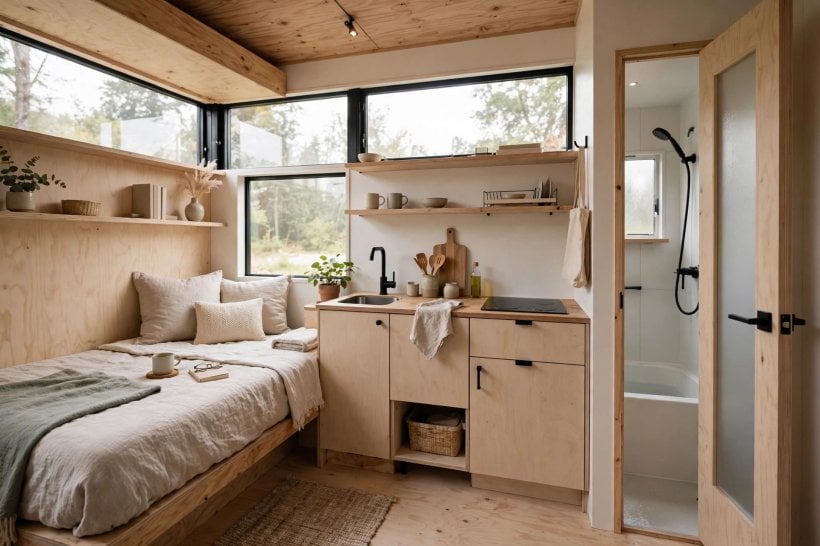
If the Solo is the specialist, The Couple 20′ is the template. The explorer calls it the industry standard: a loft bedroom that creates a spacious living area below, a full kitchen, and a queen loft as its key feature. It sleeps two, is listed at 10,000 lbs, and carries an estimated cost of $25k – $40k. This is the arrangement most people picture when they picture a tiny house — sleep above, live below, cook in a real kitchen — and its position in the middle of the range makes it the benchmark every other layout is compared against.
The Digital Nomad 24′ starts from that benchmark and spends its extra four feet on work. Its key feature is an 8ft desk, with storage stairs in place of a ladder, and its description promises dedicated office space with separation from the living area. It still sleeps two, but the listed weight rises to 12,500 lbs and the estimate to $35k – $55k — a fair picture of what a home office costs in a tiny house, measured in feet, pounds and dollars rather than in compromises discovered later. Anyone planning a loft of their own will also want the structural side of the picture, covered in our guide to framing a tiny house loft for span and load capacity.
6. The Entertainer 26′: When the Kitchen Leads the Plan
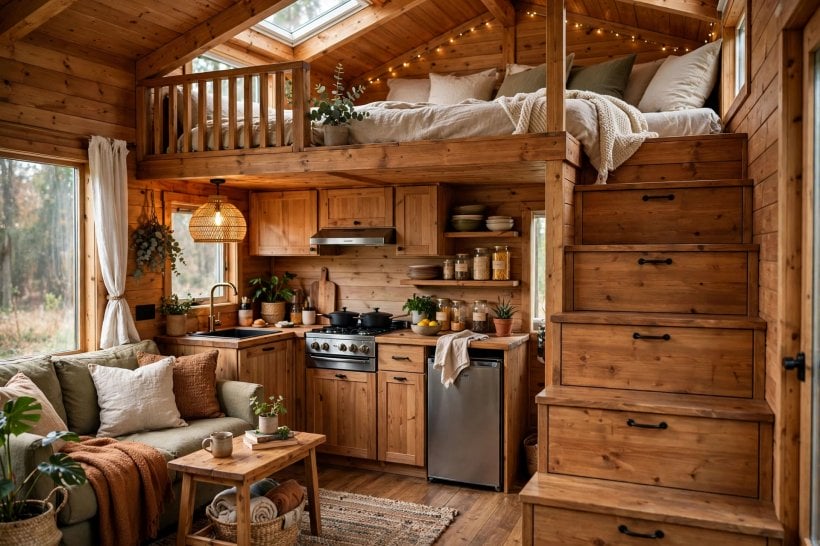
Most layouts are organized around sleeping. The Entertainer 26′ is organized around cooking and hosting, and its blueprint shows what that priority does to the zone strip: the kitchen grows. The key feature pairs a gourmet kitchen with a breakfast bar, and the description specifies a U-shaped kitchen — the arrangement that wraps counter space around the cook on three sides. It sleeps two, is listed at 13,500 lbs, and is estimated at $40k – $60k.
The lesson of this model is that a floor plan is a statement of priorities before it is anything else. The same 26 ft could have bought a bigger bathroom or a second sleeping nook; this plan spends it on the room its owner will actually live in. Comparing The Entertainer against The Couple 20′ in the explorer — toggling between the two and watching the kitchen zone swell — is the fastest way to feel how six extra feet and a different priority reshape a home.
7. Family Layouts: The Family 28′ and The Bunkhouse 30′
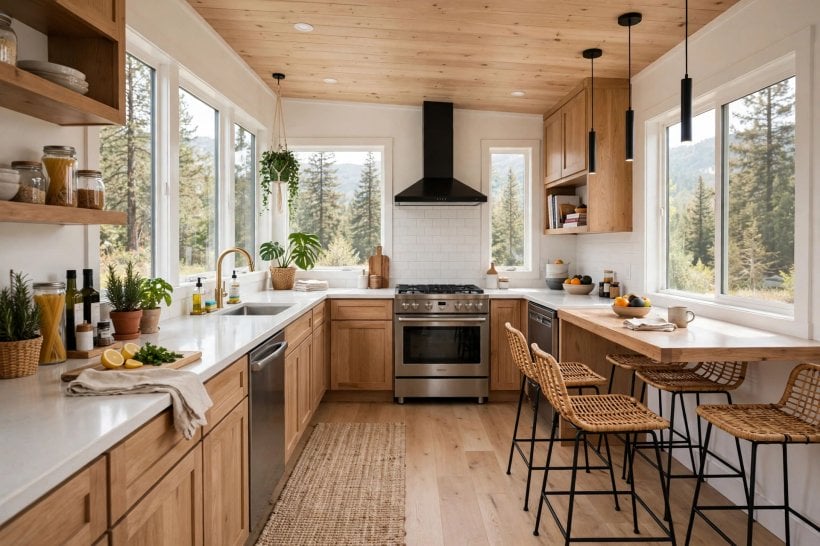
Two models in the set are designed for more than two people, and they solve the family problem in opposite ways. The Family 28′ puts the extra sleepers up: dual lofts, a master loft at one end and a kids’ loft at the other, giving two separate sleeping spaces with privacy between them. It sleeps four comfortably, is listed at 14,500 lbs, and is estimated at $50k – $75k. The Bunkhouse 30′ keeps the children down instead: a dedicated bunk room downstairs for the kids, plus a master loft above. It sleeps five — the most in the set — at 15,500 lbs and an estimated $55k – $80k.
Toggling between these two blueprints is a short course in family trade-offs. Dual lofts keep the whole family on one level of plan, but every sleeper climbs; a downstairs bunk room gives small children a door they can close and no ladder to negotiate at night, but it consumes ground-floor feet that the living area then has to spare. Neither answer is better in the abstract — the right one depends on the ages of the children and how long the layout needs to serve them. For more double-loft inspiration at a similar scale, see our collection of 300 sq ft tiny house plans with double lofts.
8. No-Loft and Park Model: Single-Floor Space and Extra Width
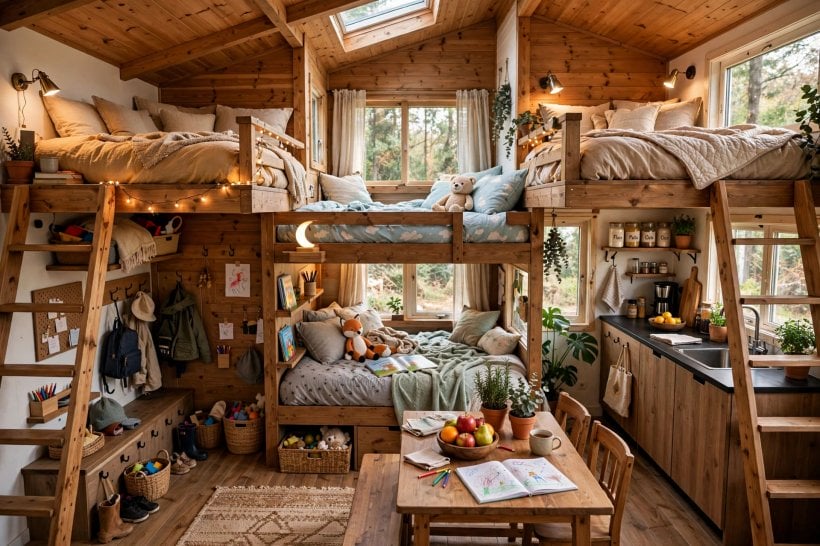
The No-Loft 28′ answers a question the loft layouts cannot: what if nobody wants to climb? Its key feature is a private downstairs bedroom, and its description is simply single floor living, bedroom downstairs. It sleeps two, is listed at 14,000 lbs, and is estimated at $45k – $70k — noticeably more than The Couple 20′, which is the honest price of giving a bedroom full standing height inside the same road-legal height. Accessibility, aging in place, or a simple dislike of ladders all point to this archetype, and our roundup of single-story tiny house plans with no lofts explores the pattern in more depth.
The Park Model 24′ breaks a different rule: width. At 10 ft wide instead of the usual trailer width, it is described as feeling like a real apartment — and its key feature, the 10 ft width itself, is labeled a massive feel. The catch is stated just as plainly in its description: a wide load permit is required. It sleeps two, is estimated at $60k – $85k, and at 16,000 lbs it is the second-heaviest model in the set despite being only 24 ft long. Width, the spec sheet makes clear, is expensive in every currency a tiny house has: money, weight and paperwork.
9. The Gooseneck 32′ and the Off-Grid 20′: Specialists at Both Ends
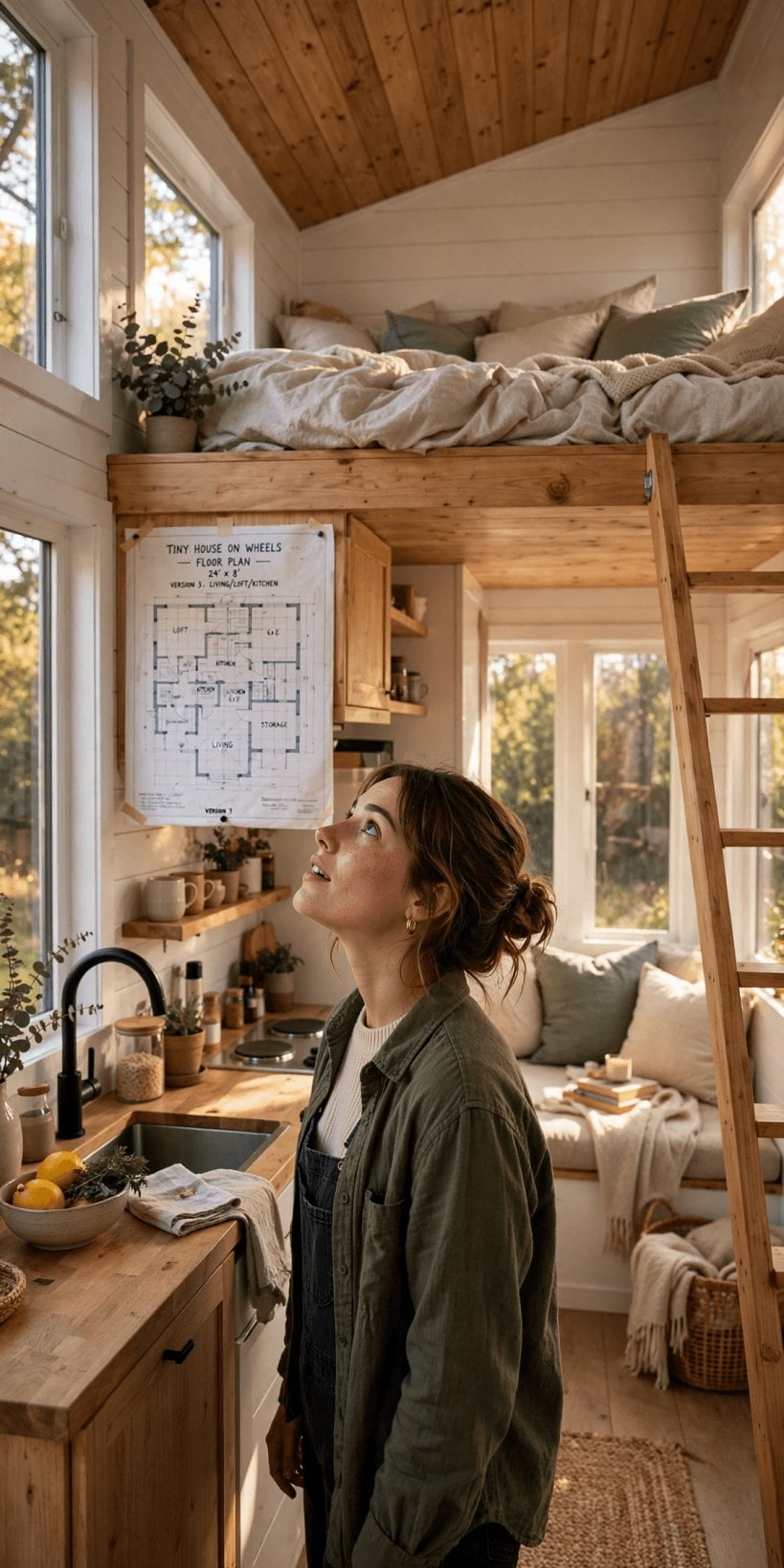
The longest blueprint in the set earns its length in a specific place. On the Gooseneck 32′, the master bedroom sits over the hitch, and because the gooseneck platform raises that section, the bedroom gains standing height — the model’s key feature, and something no loft in a bumper-pull trailer can offer. It sleeps four, is listed at 17,000 lbs, the heaviest in the set, and is estimated at $65k – $95k. Our dedicated collection of gooseneck tiny house floor plans shows more ways to use that over-hitch platform once the idea appeals.
At the other extreme of intent sits the Off-Grid 20′: the same length as The Couple 20′, but utility focused instead of living focused. Its key feature is a utility room plus a wood stove, and its description specifies a large mechanical room for batteries and tanks — space deliberately taken from the living zones and given to the systems that let the home run away from hookups. It sleeps two, is listed at 11,000 lbs, and is estimated at $30k – $50k. Side by side in the explorer, the two off-grid and couple models make the set’s deepest point: identical dimensions, entirely different houses.
10. How to Compare Layouts in the Explorer
The explorer rewards a method. Start with the model whose archetype matches your household — solo, couple, family, no-loft or gooseneck — and read its zone strip before its spec sheet, because proportions are harder to change than fittings. Then read the spec sheet itself: length, sleeping capacity, estimated cost and towing weight, all updating automatically for the model on screen. Check the component list to see what the plan actually assumes; a layout that only works with a fold-down table and a wet bath is a different commitment from one with a full kitchen and a queen loft. Finally, toggle to the nearest rival — the other 20 ft model, the other family plan — and watch what changes.
Two checks deserve special care. The first is weight: towing weight across these tiny house blueprints runs from 7,000 to 17,000 lbs, and the right comparison for your tow vehicle matters as much as the layout itself; the analysis in our gooseneck vs. bumper pull weight analyzer goes deeper on that side of the decision. The second is the transition zones a plan lives or dies by in daily use — where boots, coats and gear land when you walk in. Our collection of tiny house floor plans with mudrooms and gear zones shows how the best layouts answer that question. Compare zone by zone, and the ten models stop being pictures and start being decisions.
Final Considerations
A floor plan is the one part of a tiny house that cannot be renovated cheaply, which is why comparing complete layouts before building matters more than comparing finishes or fixtures. These ten blueprints cover the honest range of answers: a 16 ft studio with no loft at all, an industry-standard couple’s loft home, a desk-first nomad layout, a kitchen-first entertainer, two different family plans, a single-floor home, a wide park model, an off-grid utility build and a gooseneck with a standing-height bedroom. Start from how you sleep, check the towing weight before falling for any layout, and let the zones — living, kitchen, bath and sleeping — argue their case in feet. The explorer below is ready when you are.
Tiny House Floor Plan Explorer
Select a model below and watch the blueprint redraw itself: the zones, the spec sheet and the component list all update for the layout you choose, from The Solo 16′ to the Gooseneck 32′.
This is a comprehensive interactive tool that showcases 10 distinct tiny house layouts (from 16ft micro-studios to 32ft gooseneck family homes).
Instead of static images, it uses a Dynamic SVG Blueprint Engine to render the floor plans in real-time. Users can toggle between models to compare layouts, see specific dimensions, and understand how different lengths affect livability.
Features:
- 10 Unique Blueprints: Covers every major archetype (Solo, Couple, Family, No-Loft, Gooseneck).
- Smart Legend: Color-coded zones for Sleeping, Cooking, Hygiene, and Living.
- Spec Sheet: Automatically updates with estimated cost, weight, and sleeping capacity for each model.
Tiny House Floor Plan Explorer
10 Popular Layouts with Component Breakdowns.
Select a Model
—

5 Comments