

Boise suburbs, panhandle lake country, high-desert farm towns and mountain valleys: Idaho compresses several climates into one state, and a tiny home built for the Treasure Valley can be dangerously under-specified for a snowy lot an hour into the hills.
Choosing among tiny house builders idaho is therefore about matching the builder type and the winter specification to your county, your elevation and your lot — not about finding a statewide winner.
1. Idaho Builders at a Glance
This guide’s infographic compares four builder types and names no companies, because the type decision shapes your budget, your timeline and the work that lands on you far more than any individual name. Custom builders provide full design-build and the most control. Semi-custom builders adapt plans plus options, in the mid-range. Shell builders hand over a weather-tight shell for a DIY finish. Kit and plan sellers supply the package or the plans, you build, and the cost is lowest. Each step down the ladder transfers work and responsibility — design, finishing, project management — from the builder to you, and the honest question is how much of that transfer your time, skills and site can absorb.
| Builder type | What they deliver | What the infographic highlights |
|---|---|---|
| Custom builders | Full design-build | Most control over design, siting and winter specification |
| Semi-custom builders | Plans plus options | Mid-range, adapting proven floor plans |
| Shell builders | Weather-tight shell | DIY finish, with the interior work yours |
| Kit and plan sellers | You build | Lowest cost, with construction in your hands |
The four key factors on the graphic are snow load, insulation, delivery and warranty. Snow load earns its place at the top: it is a structural question set by your elevation and your county’s ground conditions, and a roof rated for the valley floor is not automatically a roof rated for the mountains above it. The tip printed on the infographic is the section in miniature — mountain winters set the spec, so ask about roof snow load and insulation before layout. An Idaho search that starts with those four factors will sort builders more honestly than weeks spent comparing kitchen photographs.
Idaho at a glance: four builder types compared, and the four key factors — snow load, insulation, delivery and warranty — to test every candidate against.
2. Start With Your County and Your Elevation, Not Floor Plans
Idaho placement is written locally across forty-four counties: county zoning carries much of the weight on unincorporated land, cities apply their own ordinances, and fast-growing Treasure Valley communities in Ada and Canyon counties work to different expectations than rural counties in the panhandle or the east. The decisive questions are the familiar ones, asked of the planning office that covers your exact parcel: minimum dwelling size, setbacks, foundation expectations, whether a home on wheels is treated as a dwelling or as a recreational vehicle, and whether a small second home is permitted behind an existing house. Add elevation to every answer, because it changes the snow load, the frost depth and the building season that the rest of this guide depends on. Keep our building a tiny house checklist open while you ask, and get the classification in writing before design money moves.
Add the services layer before you fall for a design. Rural Idaho parcels commonly depend on a septic system suited to the soil and a well — or a community water system — rather than city utilities, and winter access to those systems matters as much as their summer feasibility. Low ground along the Snake River plain and the state’s many creeks deserves a flood question, while forested lots raise a wildfire question about defensible space and access for emergency vehicles that your county can answer precisely. Buyers comparing Idaho with the Midwest entries in this series will find the same county-first pattern in our tiny house builders in Indiana guide: the parcel and its services quietly decide the project.
3. Find Builders, Then Check Certification and Licensing
Idaho’s builder base follows its growth: custom and semi-custom shops around Boise and the Treasure Valley, builders serving Coeur d’Alene and the panhandle, workshops in eastern Idaho around Idaho Falls, and smaller outfits in mountain and farm towns across the state. Range rewards a wide first list: talk to more than one type, because a custom design-build shop, a semi-custom yard and a shell builder are quoting different products even when the floor plans look alike. Ask each candidate who actually builds the home, who inspects it, and — critically in Idaho — what snow load and insulation specification their standard build carries, and for which elevations they will warrant it.
Certification decides what the finished home legally is. A tiny house on wheels is usually evidenced through third-party inspection and certification schemes for recreational vehicles and park models, or through independent inspection services that check the build at stages. A tiny house on a foundation is inspected under the local building permit process, with the county’s snow load and energy requirements inside that conversation, and a manufactured route follows its own federal housing standards and state installation oversight. The routes are not interchangeable, so pin down which standard your home will carry, who issues the documentation, and whether your county, your lender and your insurer will each accept it — in writing, before a deposit changes hands. Mountain-state buyers will recognise this discipline from our tiny house builders in Alaska guide, where the winter specification is likewise the first conversation, not the last.
4. Mountain Winters Set the Spec: Snow Load and Insulation
The infographic’s tip deserves a full section, because in Idaho the structure and the envelope are winter equipment. Snow load starts with the roof: pitch, structure and the rating the builder designs to for your county and elevation, including how the roof sheds — a roof that dumps its snow load onto the entry side, the propane line or the service connections is a design fault you will live with every winter. Drift matters where wind moves snow against walls and additions, and ice at the eaves matters where freeze-thaw cycles work on every junction. Ask the builder to state the rating they are building to and to show you where that figure comes from for your lot, rather than accepting a generic four-season claim.
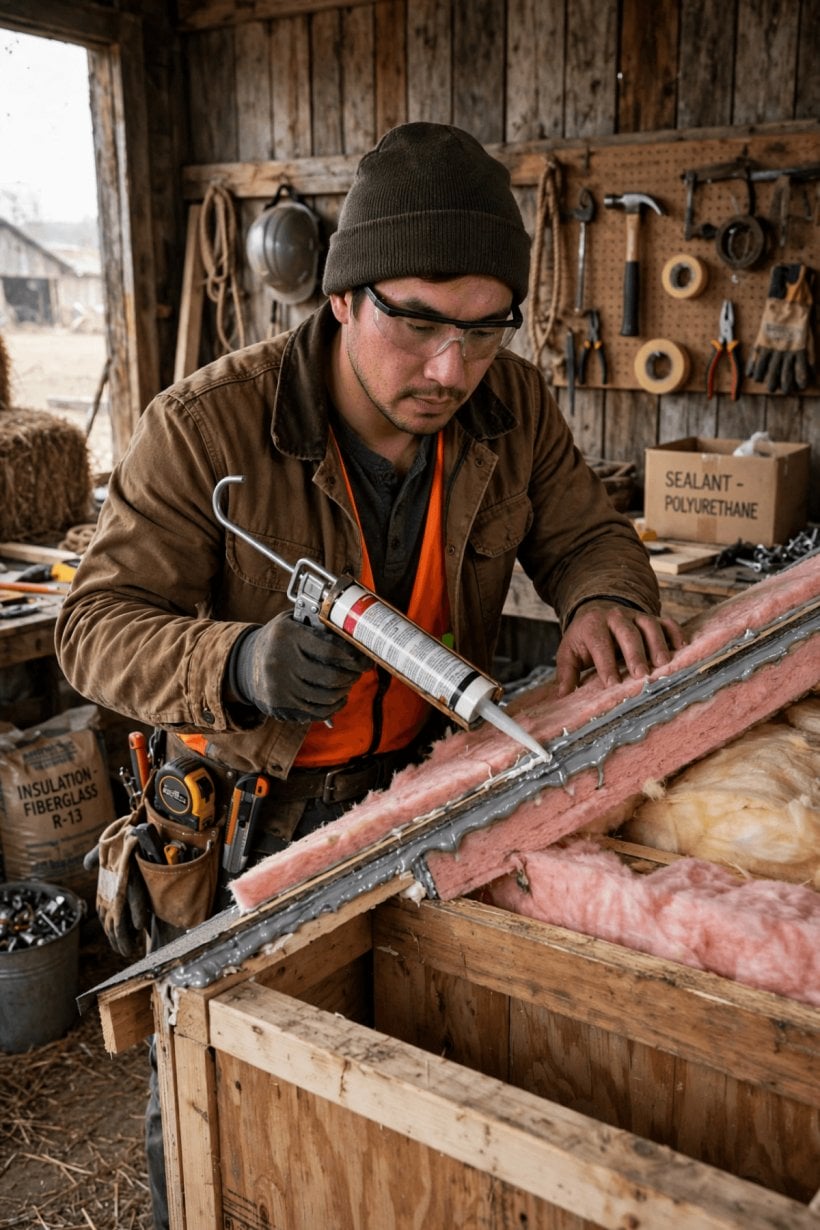
Insulation is the second half of the same specification, and it is a system, not a single number: floor and underside, walls, roof, the air sealing between them, and the protection of every water line inside the warm envelope or in properly heated and insulated runs. Skirting or a foundation detail that stops wind washing beneath the home changes winter comfort and fuel use more than most interior upgrades, and heating should be discussed for the coldest night your elevation delivers, with a backup plan for outages. Southern Idaho’s high-desert lots add hot, dry summers to the same envelope conversation. Prairies buyers working through the identical logic — anchoring and insulation quoted together — will find it in our tiny house builders in Iowa guide: cold climates fail small homes at the floor and the pipes first.
5. Eight Questions to Ask Before You Sign
Ask these in writing, keep the answers with the contract, and treat an evasive answer as an answer:
- What roof snow load is this home rated for, and is that rating right for my county and elevation?
- How is the envelope insulated — floor, walls and roof — and how are the water lines protected from freezing?
- Which certification or code standard will this home carry, and who issues the paperwork?
- What exactly is included in the price — and what is excluded that buyers commonly assume is included?
- Who handles delivery, siting, levelling and connection to services, and who pays for each stage?
- What foundation, pad or tie-down specification must my site provide before the home arrives?
- How are change orders priced and approved once building has started?
- What warranty covers structure, envelope, appliances and workmanship, and who honours it locally?
The answers sort builders faster than any showroom visit. A good Idaho builder answers the snow question with a figure and a source, prices the extras instead of waving at them, and expects to be asked. If a candidate cannot say what load their standard roof carries — or offers a valley specification for a mountain lot without blinking — that tells you how disputes, and January, will go later. Believe it, and keep looking while your deposit is still in your own account.
6. Delivery Day Is an Idaho Logistics Problem
Idaho delivery is measured in elevation as much as miles. Valley highways are the easy part; the last stretch climbs — mountain grades, switchbacks, forest roads, long private drives that are gravel in summer and snow or mud in the shoulder seasons. Walk the route as the driver will see it: turning room, overhead lines and branches, bridge and culvert limits, the grade the tow vehicle must pull, and the firmness of the ground where the home will sit. Agree who supplies mats, machinery or a crane if the final position cannot be reached, and choose the delivery date with the season honestly in mind — a frozen January week and a spring-breakup week are very different propositions on an unpaved road.
Put the logistics in the contract, not in a phone call. Who books any required permits or escorts for an oversize load, who carries the risk if weather closes the route, what a failed delivery attempt costs, and who levels, blocks, skirts and ties down the home on arrival all belong in the written scope. Site preparation should be finished before the truck is loaded: pad or foundation ready, access cleared and, where winter delivery is unavoidable, snow cleared to the siting point. Desert-state readers will find the mirror image in our tiny house builders in Arizona guide, where the delivery calendar is written by heat instead of snow.
7. Warranty, Snagging and Life After Handover
Warranty is the infographic factor buyers test last and need first. Read it as two different promises: a shorter workmanship and systems promise, and a longer structural promise, and check which one answers when a roof junction leaks under snowmelt, a line freezes in a cold snap or an appliance fails. Ask who physically does warranty work on a home sited hours — or a mountain pass — from the workshop, whether travel is charged, how a claim is logged, and what response time the builder will commit to in writing. In a state of long distances, a warranty is only as good as the arrangement standing behind it.
Build the handover like an inspection, not a celebration. Walk the home slowly with the contract and the snagging list in hand: run every tap and appliance, open and close every window and door, check the roof junctions, the underside enclosure and insulation, photograph the certification plates and record serial numbers before final payment is released. Agree the snagging list, the fix dates and the paperwork pack — certification documents, manuals, warranty terms — on the day, in writing. If delivery lands in winter, add one discipline: re-walk the home at spring thaw, if the builder will agree it in the contract, because meltwater finds the faults that a frozen handover day hides.
8. What Tiny Houses Cost to Build in Idaho
Money follows the ladder on the infographic. Custom design-build carries the highest cost because professional time, one-off engineering and full finishing sit inside the price. Semi-custom work sits in the middle, spreading design cost across proven plans while charging for options and upgrades. A shell transfers the interior budget — insulation detail, lining, kitchen, bathroom, flooring and the trades to fit them — to you, so compare a shell price only against the finished cost of your own completion, honestly costed, not against a finished home. Kits and plans look cheapest at checkout and grow through materials, tools, hired help, inspection and the time the build consumes — and in Idaho, through the shortened building season a self-build must fit inside.
The swing item in Idaho is usually the site rather than the house. A septic system, a well, an electrical service run across a large lot, driveway work and snow-season access, permits and fees, delivery over mountain distance and foundation or pad work can together rival a large share of the build itself — and upgrading a valley-priced winter specification to a mountain one belongs in the same early estimate. Get site costs priced before the house quote is believed, and hold a real contingency for the ground you cannot see into. Our tiny house builders in Hawaii guide makes the same point with freight in place of frost: everywhere, the lot writes half the budget.
9. Warning Signs and Safer Ways to Pay
The warning signs repeat in every state because they are about behaviour, not geography. Be careful with a builder who quotes one winter specification for every lot in the state, who wants a very large share of the price before work begins, who cannot show certification paperwork for recent builds, whose contract leaves the snow load and insulation specification vague while the deposit is precise, or who pressures you to sign before your county has confirmed the placement route. In mountain country, vagueness about the winter spec is not a personality trait — it is the product telling you what the first hard winter will feel like.
Safer payment is mostly structure. Tie stage payments to completed, inspectable stages rather than calendar dates, keep the final payment until after delivery, siting and snagging are agreed, pay by traceable methods, and keep every promise inside the signed contract rather than in messages and calls. Verify the business exists as claimed, visit the workshop if you possibly can, and speak to a recent buyer whose home has been lived in through an Idaho winter at a similar elevation to yours. The farm-state version of this same caution is in our tiny house builders in Arkansas guide — the weather changes, the payment structure should not.
10. Compare Quotes Until They Are Like for Like
Quotes only become comparable when the specification underneath them is identical, so build a small worksheet and make every builder price the same home: same size and layout, same certification route, same snow load rating stated as a figure, same insulation specification, same appliances and finishes, same delivery distance and siting scope, same site assumptions stated in writing. The cheapest quote is often simply the one with the most missing underneath it — a thinner roof rating here, floor insulation quietly lighter there — and the worksheet exposes the gaps before they become your invoices, or your January.
Score the worksheet on the infographic’s four factors alongside price: a snow load rating matched to your lot, insulation specified as a whole envelope, a delivery plan that survives your actual access in your actual season, and a warranty someone local can honour. Readers working across this state series can set this worksheet beside our tiny house builders in Georgia guide, where humidity replaces snow as the first factor, to see how completely the four factors reorder themselves. The builder who wins on paper and on those four factors is usually the builder who wins in year three, long after delivery day is a photograph.
Final Considerations
Idaho rewards buyers who sequence the decisions correctly: placement and elevation confirmed with the county first, snow load and insulation specified before layout is admired, builder type chosen honestly against your own time and skills, and site costs priced before the house quote is believed. Work through the four factors — snow load, insulation, delivery and warranty — with every candidate, keep the answers in writing, and let the worksheet rather than the showroom make the final call. Do that, and the small home that reaches your lot will be the one you thought you bought, ready for the winter that is certainly coming.


0 Comments