

Every homeowner has heard the story: the builder who vanished with the deposit, the bathroom that took a year, the quote that doubled by the second week. What the stories rarely mention is that the warning signs were almost always there before the contract was signed.
This guide is the what-to-check version of hiring: how to define the job, verify credentials and insurance, read references and reviews properly, and get quotes and agreements in writing that actually protect you. No platform verdicts, no horror stories — just the checks, in order.

1. Vetting a Tradesperson at a Glance
Scope first. This post owns the hiring decision itself — finding, checking and contracting any local trade, from a roofer to a kitchen fitter. Its neighbours handle the projects being hired for: the cabinet pricing guide explains how to compare quotes like-for-like once they arrive, while here everything serves the person behind the quote.
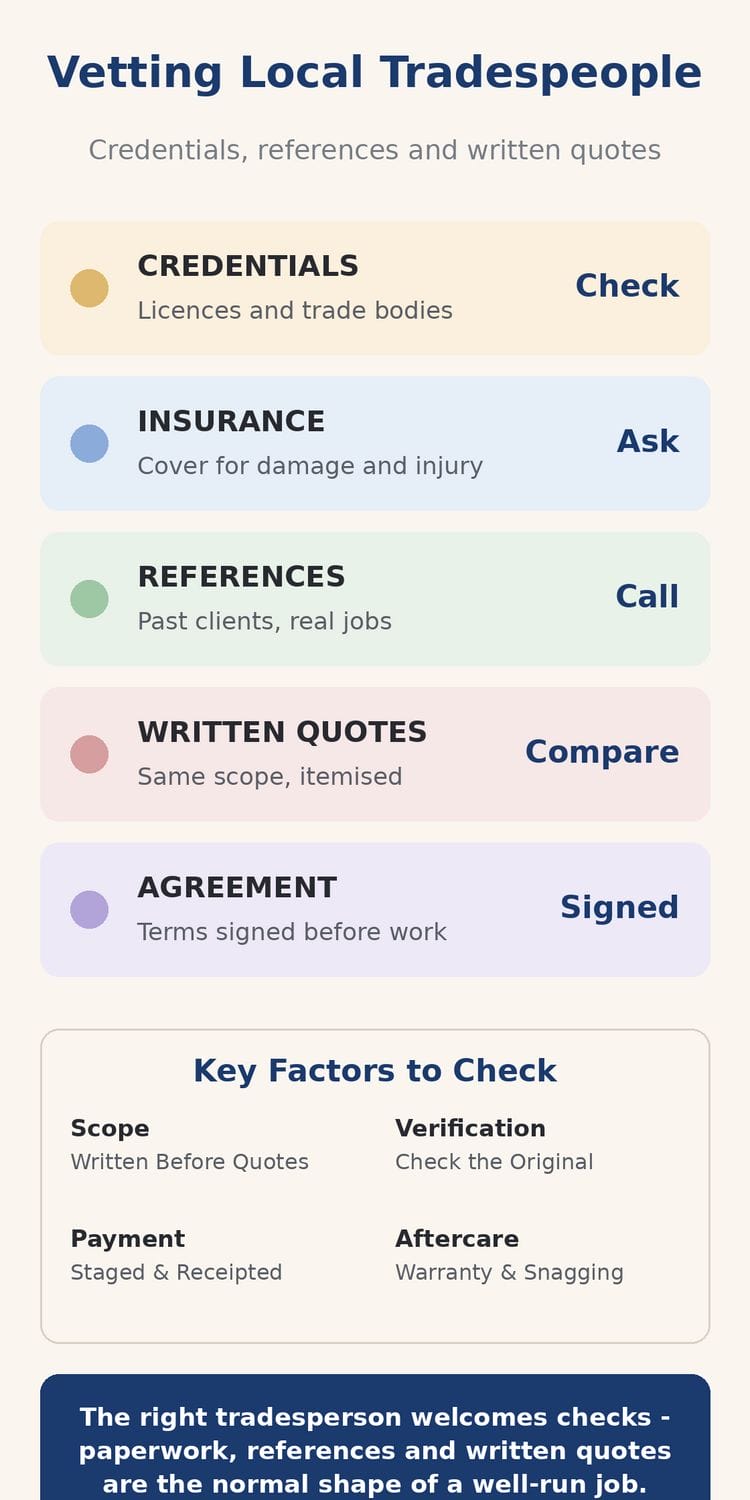
The five checks in the table are the whole process in miniature. Work down them in order and most hiring mistakes become visible before they cost anything.
| Check | Character | What it means |
|---|---|---|
| Credentials | The Paper Identity | Licences, certifications and trade-body membership you can verify independently |
| Insurance | The Safety Net | Cover for damage and injury, current and appropriate to the job |
| References | The Track Record | Past clients and real finished work, checked by you, not quoted at you |
| Written Quotes | The Comparable Offer | The same scope, itemised the same way, from everyone you ask |
| Agreement | The Shared Memory | Terms, stages and responsibilities signed before the work begins |
2. Start With the Job, Not the Search

Most bad hires begin before the search does, with a job described loosely enough to mean different things to different people. Define the work first and every check that follows becomes sharper.
1. Write the scope before you ask for prices
Put the job in writing: what is included, what is excluded, who supplies materials, what finish is expected. One page, honestly written, turns three vague conversations into three comparable quotes. It also reveals the jobs you have not thought through — better now than mid-build.
2. Know which trade the job actually needs
A leak, a rewire and a remodel are three different professions wearing similar vans. Match the job to the right trade’s qualifications from the start; a brilliant tiler is not an electrician, and asking the wrong trade is how unqualified work sneaks into a house.
3. Decide your red lines in advance
Before meeting anyone, know what would end the conversation: no written quote, no insurance, cash-only with no paperwork, pressure to decide today. Red lines decided calmly at the kitchen table hold up far better than instincts tested by a confident salesperson. Write them down, too — a red line that exists only as a good intention has a way of dissolving the first time a charming candidate explains why their case is different.
3. Credentials and Insurance to Check

Credentials are only worth what your verification makes them worth. Logos on a van are decoration; a licence number checked against the issuing body’s register is a fact.
4. Verify licences with the issuer, not the leaflet
Where your area licenses a trade, ask for the number and check it against the official register yourself. Confirm it covers the work you are hiring for and has not lapsed. The check takes minutes, and a genuine tradesperson expects it rather than resenting it.
5. Ask what insurance covers, and see it
Request evidence of liability cover appropriate to the job’s scale and check the dates are current. Insurance is the difference between an accident becoming a claim and an accident becoming your problem. For larger work, ask how subcontractors are covered too.
6. Trade bodies are a signal, not a guarantee
Membership of a recognised trade association usually means the business submitted to some vetting and a code of practice, and it gives you a complaints route. Treat it as one signal among several — it supports the other checks, it never replaces them.
4. References and Past Work

References are the closest thing hiring has to a test drive. The key is that you choose which ones to follow up, and you ask the questions that politeness usually skips.
7. Speak to the last client, not the best client
Ask for the most recent jobs, not the greatest hits, and follow up at least two. Recent clients remember the truth about tidiness, timing and how problems were handled. A refusal to provide contactable references is itself a complete answer.
8. Ask the questions that reveal character
Did the work start and finish when promised? Did the price move, and were changes agreed before they happened? How did the tradesperson respond when something went wrong? The answers matter more than praise for the finished shelves.
9. See finished work if you can
Photographs help; standing in a completed job helps more, and many proud tradespeople will arrange it. Look at the details marketing shots avoid: edges, junctions, the finish where two materials meet, and how the space has aged since completion.
5. Reviews, Read Properly

Online reviews are evidence, but noisy evidence. Read them the way you would read references — for patterns, specifics and the company’s behaviour when criticised — never as a single score to obey. Remember, too, what reviews cannot tell you: they say nothing about insurance, licences or paperwork, and a business with a charming review profile can still be the wrong business to hand a deposit. Reviews sit in the middle of the process, after credentials and before quotes, and they should never be asked to do the whole job alone.
10. Read the pattern, not the score
Twenty reviews praising punctuality say something real; a perfect average with three reviews says almost nothing. Look for repeated specifics — communication, tidiness, snagging handled well — and for whether the complaints cluster around one behaviour.
11. Weigh the response to criticism
Every good business collects an unfair review eventually. What distinguishes them is the reply: factual, calm, offering to put things right. Defensive or mocking responses to criticism are a preview of your own difficult conversations.
12. Check more than one source
A business can look immaculate in one place and ordinary in another. Cross-check reviews across at least two independent places, and give extra weight to the sources that verify reviewers actually hired the firm.
6. Getting Quotes That Compare
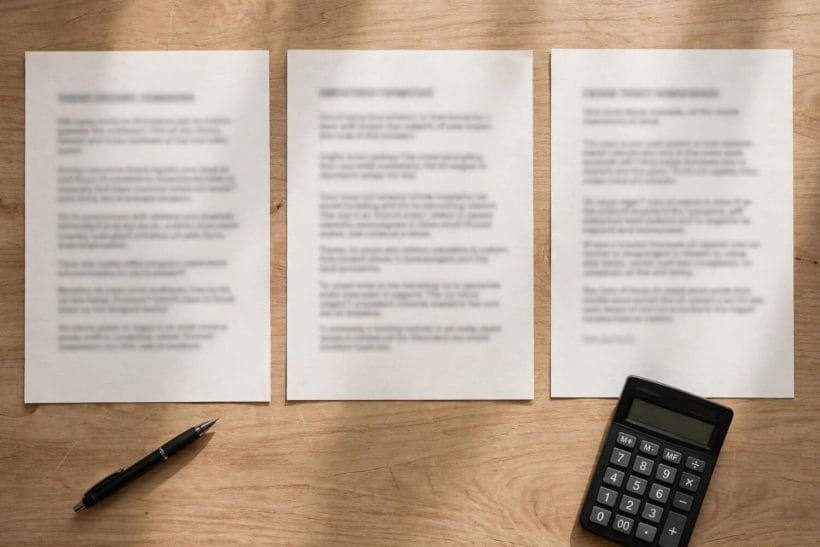
A quote is a description of work wearing a price. If the descriptions differ, the prices cannot be compared — and the cheapest quote usually wins by quietly leaving things out.
13. Give everyone the same written scope
Send every candidate the same written scope from section 2 and ask each to price exactly that. The discipline feels bureaucratic for an afternoon and saves the entire project. It is the same like-for-like principle that makes major appliance quotes honestly comparable.
14. Insist on itemised, not lump-sum
An itemised quote shows labour, materials, disposal, making-good and the exclusions in plain sight. When one line looks wildly different from the others, you have found the conversation to have — before signing, while it can still change the outcome.
15. Ask what is not included
The most useful question in hiring costs nothing: what does this quote leave out that the job will need? Permits, scaffolding, waste removal and finishing are the classic absentees. An honest tradesperson lists exclusions readily; a vague one discovers them later, at your expense.
7. The Written Agreement

Verbal agreements are remembered differently by everyone who heard them. The written agreement is the job’s shared memory — and on larger projects, like a ranch addition, it is the document the whole build will be managed against.
16. Scope, price and stages on paper
The agreement should carry the agreed scope, the total price, what triggers each payment stage, and the responsibilities for materials, access and waste. If it is not in the document, it is not in the deal — however warmly it was discussed.
17. Changes get written before they happen
Every project changes. The safe rule: no change is real until its effect on price and timing is written down and agreed by both sides. This single habit prevents most end-of-job disputes, because surprises are priced while they are still choices.
18. Start, finish and what ‘finished’ means
Agree the start date, the expected duration, working hours, and the completion standard — including snagging: how defects are listed, and within what understanding they are put right. Vague endings are where good jobs sour.
8. Money: Deposits and Stages
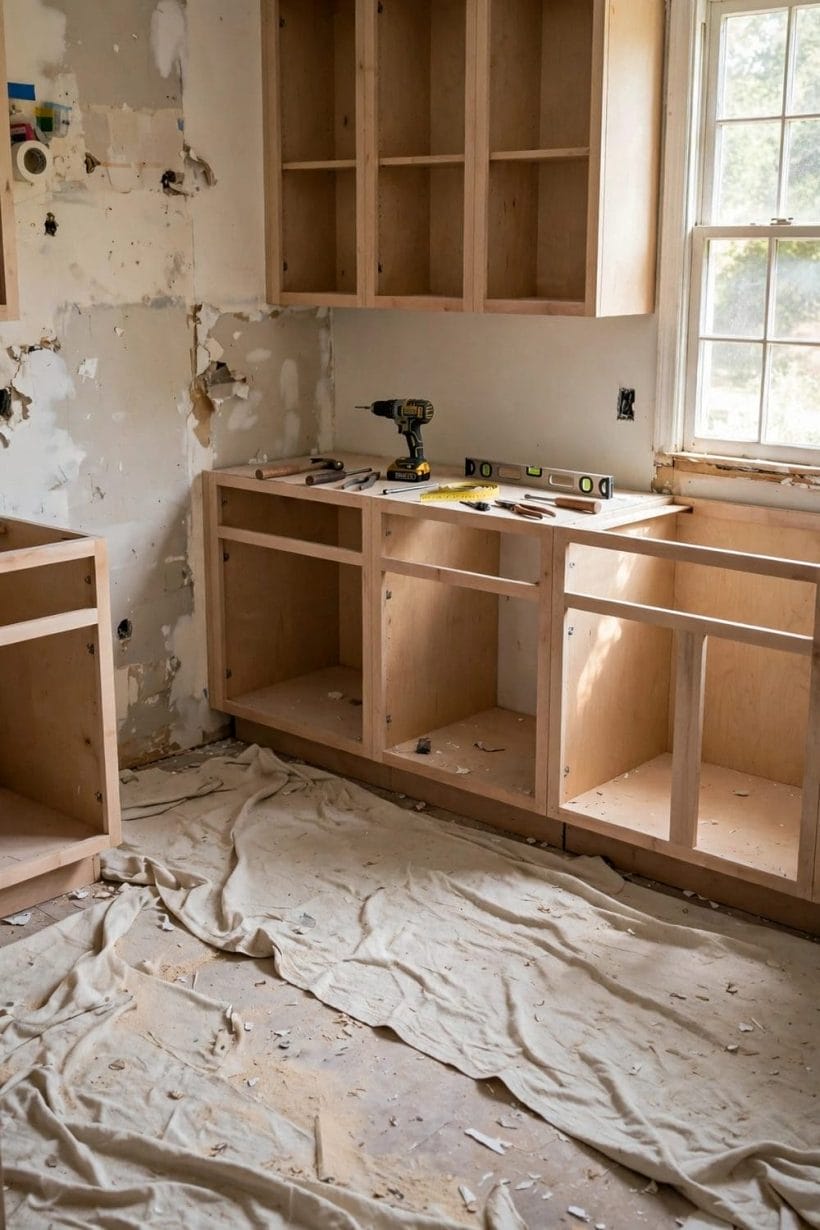
Money is where trust is tested, so structure it so that trust is never the only protection. The principles are simple and apply at every scale of job.
19. Deposits should have a reason
A deposit that books the diary or buys job-specific materials is reasonable; a large deposit with no explanation is a risk you are choosing. Whatever the arrangement, the deposit and what it covers belong in the written agreement, with a receipt.
20. Pay in stages against progress
Stage payments tied to completed, visible milestones keep both sides honest: the tradesperson is never far out of pocket, and you never pay for work that does not exist yet. The final stage should follow completion and snagging, not precede them. If a tradesperson proposes a schedule that runs well ahead of the work — most of the money before most of the building — treat the proposal itself as a vetting result, whatever the reviews said.
21. Keep a paper trail for every payment
Pay in ways that leave records, get receipts, and keep the agreement, the quotes and the change notes together. If a dispute ever comes, the folder decides it — and the mere sight of a tidy folder settles many arguments early.
9. During the Work
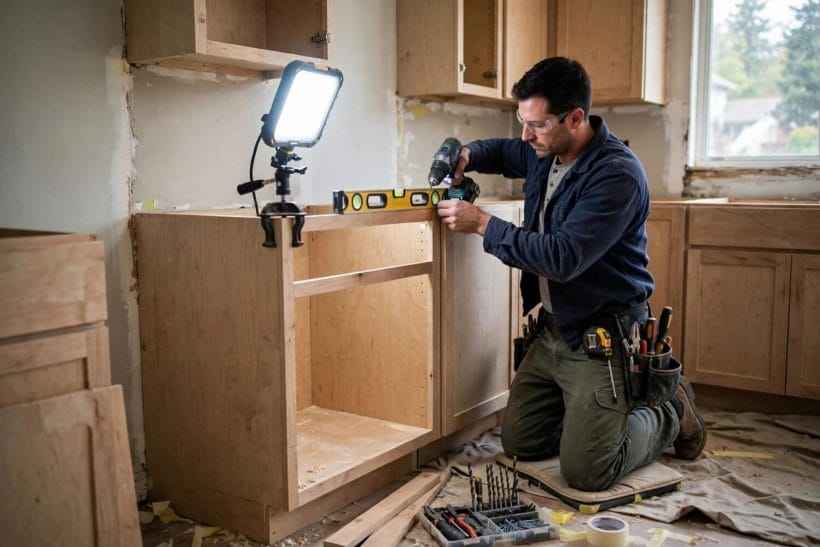
Vetting does not end at the signature. The first days on site confirm or correct everything the paperwork promised, and small corrections made early are the cheapest ones.
22. Agree communication before the noise starts
Who do you call with a question, how are decisions confirmed, and when will you be told about problems? Settle it on day one. Most site friction is not bad work — it is a decision made silently that should have been a conversation.
23. Watch the protections, not the worker
You can judge a professional setup in five minutes: floors protected, dust contained, tools organised, the site left safe each evening. Hovering helps nothing; noticing standards helps everything, and raising a concern early is a favour to both sides.
24. Problems surface — judge the handling
Hidden rot, a cracked tile, a supplier failure: problems are normal, concealment is not. The tradesperson who tells you promptly, shows you the issue and prices the options is demonstrating exactly the character your checks were hunting for. The same professional framing applies on structural work like building on a hillside, where engineer and builder alike should be vetted this way.
10. Questions to Ask Before You Commit
Finish with the questions that gather everything into one conversation. Ask them of your preferred candidate, and let the quality of the answers — precise or evasive — make the final decision.
25. The credential questions
May I see your licence and insurance documents? Who exactly will do the work — you, your team, or subcontractors I have not met? Two minutes of directness here is worth more than an afternoon of impressions.
26. The commitment questions
When can you start, how long will it take, and what else are you running at the same time? Honest answers may be slower than you hoped; that honesty is the point. A diary described truthfully is a schedule you can plan a life around, whether for a bathroom or a metal building conversion.
27. The aftercare questions
What do you guarantee, for how long, and how do I reach you if something needs attention after the final payment? The answer describes the business you are really hiring. And if a job ever turns into a basement conversion or a basement project next year, the tradesperson who passed these checks has earned the first call.
Final Considerations
None of these checks requires expertise in the trade itself. They require paper, questions and the patience to verify — the same diligence applied to the person that the person will apply to your home. A genuine professional is not inconvenienced by any of it; most are relieved to meet a client who hires carefully, because careful clients pay properly and recommend widely.
So hire slowly and build quickly. The week spent on credentials, references and written quotes is the cheapest insurance a home project can buy, and it is bought entirely with attention.




0 Comments