

Show a building official a yurt and watch the pause. It is not a house under most codes, not a tent under most zoning, and not an RV unless someone certified it as one. That ambiguity is either your problem or your opportunity — and which one it becomes depends almost entirely on the paperwork you do before the yurt ever reaches the land.
Is Yurt Living Legal: At a Glance
So, is yurt living legal? Sometimes, somewhere, with paperwork. Yurts occupy the most legally ambiguous corner of alternative housing, and whether yours is lawful turns on three separate questions that are too often collapsed into one. Zoning asks: can a dwelling go on this parcel at all? The building code asks: does this structure qualify as a safe place to live? And classification asks the question underneath both of them: what does the law think a yurt actually is? A dwelling, a temporary structure, an RV and a farm building are four different legal objects with four different rulebooks, and the same canvas roundhouse can be legal or illegal depending on which box the official checks. This guide works through all three questions in the order an official will, then lays out the practical paths — the temporary permit, the ADU route, the agricultural exemption — and the enforcement triggers that undo careless yurt dwellers. If you are still learning how these conversations go, our guide to talking to zoning officials about tiny house laws is the right primer before your first planning-office visit. The table below is the whole landscape on one screen; the sections after it walk each row in turn.
| Topic | The Short Version | Key Fact |
|---|---|---|
| 1. The Classification Problem | Dwelling, temporary structure, RV or farm building — the box checked decides legality | Most yurts are not RVIA-certified, so the RV box rarely applies |
| 2. Zoning | Easiest in unzoned rural and agricultural zones; hardest in cities and HOA subdivisions | Research the county planning office first, in writing, before buying |
| 3. Building Codes | The IBC covers membrane structures, but its provisions were written for tents, not dwellings | IBC Section 3102; an engineer’s letter costs $1,000–2,500 |
| 4. The Temporary Structure Strategy | Many jurisdictions allow temporary structures for a limited season | Up to 180 days, sometimes renewable — a bridge, not a foundation |
| 5. Yurts as ADUs | A yurt permitted as an accessory dwelling unit rides liberalized ADU rules | Size limits often 800–1,200 sq ft — generous for a yurt |
| 6. Agricultural Exemptions | Farm buildings and farm worker dwellings are often exempt from residential codes | Requires genuine agricultural activity, sometimes a minimum acreage |
| 7. What Triggers Enforcement | Enforcement is almost always complaint-driven, not patrol-driven | Visibility, zero paperwork, sewage and commercial use are the triggers |
| 8. Sewage, Water, and Power | Health departments and utility companies are the real regulators | Approved septic, legal water and proper electric get you 80% of the way |
| 9. Insurance and Financing | Standard homeowner’s policies generally do not cover yurts; specialty insurers do | Specialty cover runs $500–1,200/year; financing is loans and HELOCs |
| 10. The Compliance Roadmap | A month-by-month path from the planning office to occupancy | Five months: research, engineering, permits, site work, inspections |
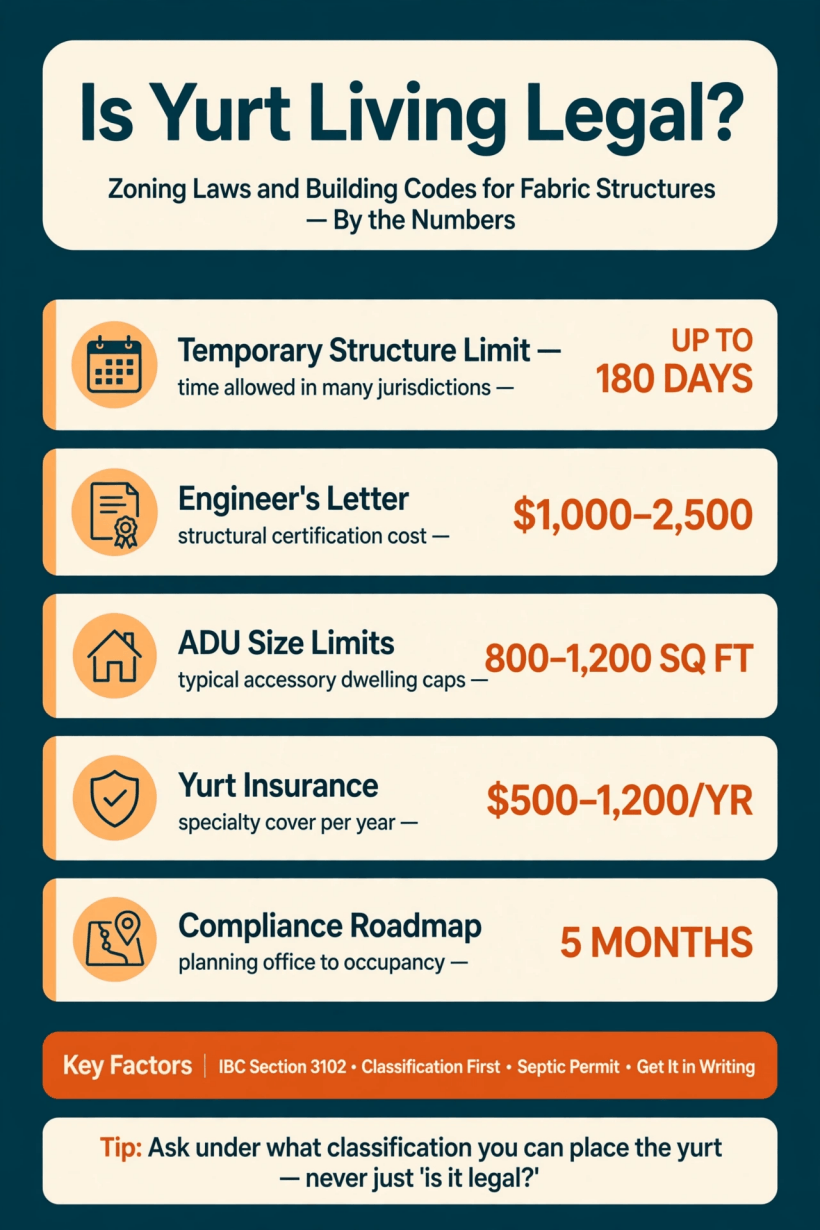
The numbers that frame yurt legality: a temporary structure limit of up to 180 days, an engineer’s letter at $1,000–2,500, ADU size limits of 800–1,200 sq ft, specialty insurance at $500–1,200 a year, and a five-month roadmap from the planning office to occupancy.
1. The Classification Problem
Every legal analysis starts with classification, and yurts confound the categories. A building official seeing a yurt must decide: is it a dwelling, subject to the residential building code? A temporary structure, subject to time limits that often run to 180 days? An RV, subject to RV park rules — and only if it is RVIA-certified, which most yurts are not? Or an agricultural building, exempt in many jurisdictions? The yurt itself does not change between those four answers. The paperwork, the permitted lifespan and the rules it must satisfy change completely.
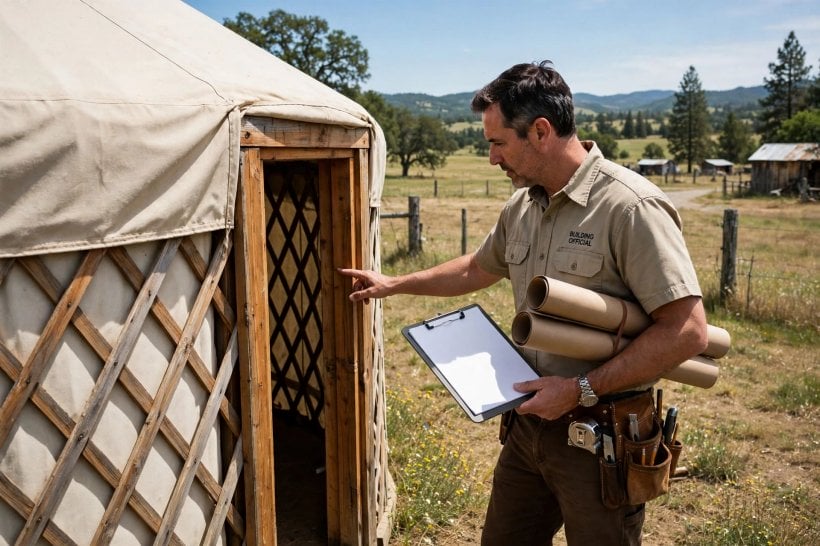
Your job, therefore, is to help the official check the right box — with documentation. That leads to the single most useful move in this entire guide: never ask “is a yurt legal here?” The answer to that question is usually no, or I don’t know, because you have asked the official to invent a category on the spot. Ask instead: under what classification and requirements can I place a fabric structure as a dwelling on this parcel? Specific questions get useful answers. You are no longer asking for a verdict on an oddity; you are asking which existing rulebook applies, and officials answer that kind of question every working day.
2. Zoning: Where Yurts Are Easiest
Zoning is the first of the three questions, and its answer varies more by map than by yurt. Yurts are easiest to site where zoning is loosest: unzoned rural counties, where no ordinance stands between you and a dwelling; agricultural zones, which often carry farm-dwelling exemptions; and jurisdictions that explicitly permit alternative dwellings or temporary dwellings. In those places the conversation starts from permission and works toward conditions.
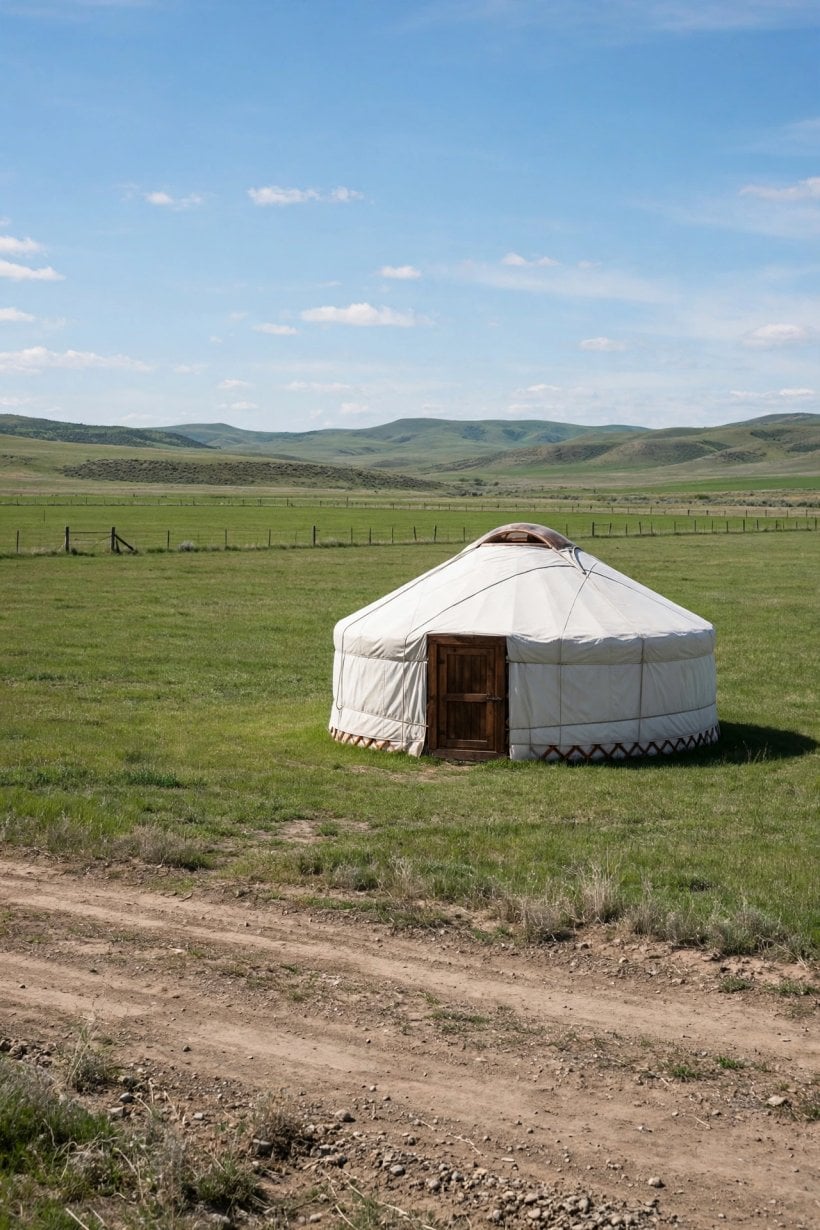
They are hardest in three settings. Incorporated cities frequently impose minimum square footage rules that a small round house cannot meet. HOA subdivisions are governed by covenants that almost always prohibit fabric structures outright, and no permit from the county overrides a private covenant you agreed to when you bought. Coastal and high-hazard zones layer wind and flood rules on top of everything else. The research sequence protects you from all three traps: county planning office first, in writing, before buying the yurt. The same discipline applies to any small dwelling, and our overview of where you can place a tiny house walks the placement question for wheeled and foundation homes alike. A parcel that cannot legally hold the yurt is not a bargain at any price.
3. Building Codes and the Membrane Structure Problem
Suppose zoning says a dwelling may go on the land. The building code then asks what the dwelling is made of — and here the yurt meets its second ambiguity. The International Building Code does have provisions for membrane structures, in Section 3102, but they were written for tents and stadiums, not dwellings. Most residential codes have no yurt category at all. The structure is not rejected so much as unaddressed, which is why the practical pathways matter more than the code book’s table of contents.
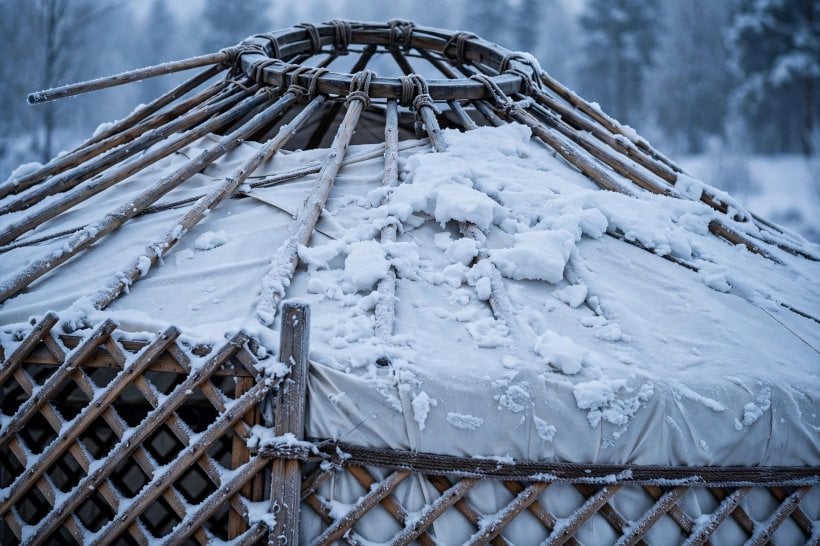
Three pathways work in practice. The first is engineered approval: a structural engineer’s letter certifying that the yurt meets local snow, wind and seismic loads. It costs $1,000–2,500, and it is the single most persuasive document you can put in front of an official, because it converts an unfamiliar structure into stamped numbers. The second is manufacturer certification: reputable yurt makers provide engineering packets for their models, so buy from a maker that does. The third is a signal rather than a pathway — IRC Appendix Q, written for tiny houses rather than yurts, whose very existence shows officialdom opening toward alternative dwellings. Bring the engineer’s letter and the maker’s packet to the meeting, and the membrane problem usually shrinks to a checklist.
4. The Temporary Structure Strategy
Many jurisdictions allow temporary structures for up to 180 days, sometimes renewable. That allowance is the most accessible first permit a yurt can get — and the most misunderstood. Some yurt dwellers operate in a rolling cycle of temporary permits, renewing season after season. It can work for years. It is also fragile: a neighbor complaint or an official’s bad day ends it, because a temporary permit confers no right to stay when the term runs out.
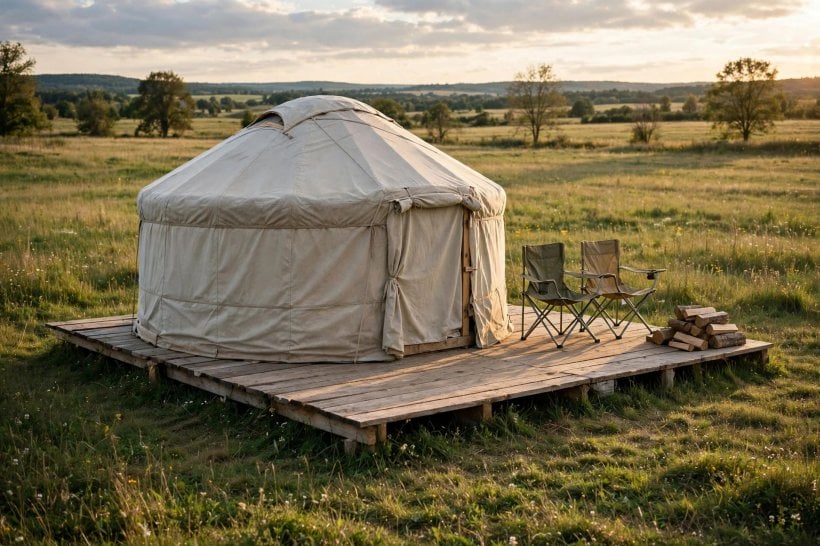
The stronger play is to use the temporary permit as a bridge while pursuing permanent approval. “We’re permitted temporarily while the engineered plans are reviewed” is a common and honest strategy: the county sees a cooperative applicant mid-process rather than a squatter hoping not to be noticed, and you get to live on the land while the permanent file moves. What you must never do is build a life on a permit you cannot renew. A yurt raised on a 180-day clock with no permanent path behind it is not a home with a paperwork problem; it is a countdown. Treat the temporary permit as scaffolding for the real approval, and it serves you well. Treat it as the approval itself, and it eventually serves you an eviction timeline instead.
5. Yurts as ADUs
An increasingly viable path runs through a rulebook written for somebody else: the accessory dwelling unit. Permitting the yurt as an ADU on a parcel with an existing primary home gives it the strongest legal footing available, because ADU law is the one corner of housing regulation that has been deliberately liberalized. Many states and cities have loosened their ADU rules — California, Oregon, Washington and Vermont among others — and a yurt ADU rides those rules rather than fighting for a category of its own.
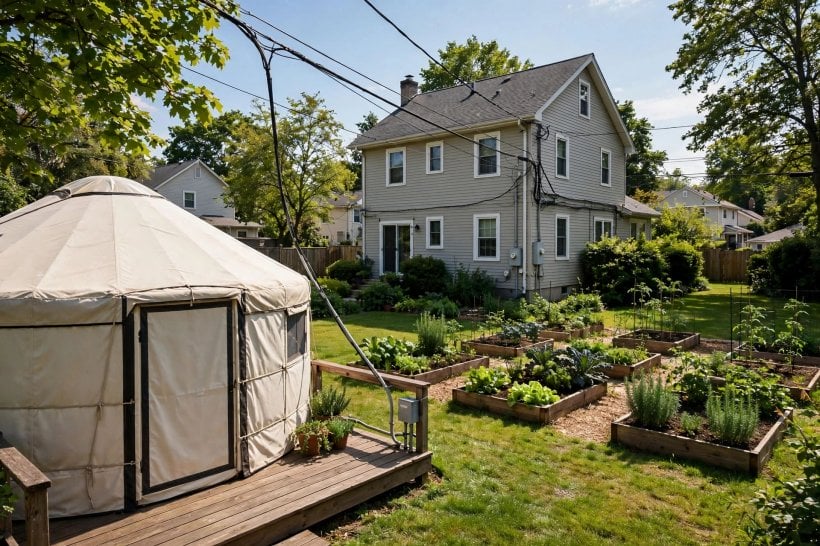
The typical requirements suit a yurt well. The owner usually must occupy the primary dwelling, which keeps the arrangement residential rather than commercial. Size limits often run 800–1,200 sq ft — generous for yurts, whose footprints sit comfortably under the cap that constrains conventional cottages. Utility connections are required, which simply formalizes the septic, water and power work that Section 8 argues you should do anyway. The trade-off is that you need a parcel with a primary home on it, which makes this a path for backyard dwellers, family land and guest quarters rather than for raw-land homesteads. If the ADU route fits your land, design the interior around it from the start — the layouts in our collection of yurt floor plans show how much living fits inside an ADU-sized circle.
6. Agricultural Exemptions
In most states, genuine agricultural operations enjoy broad exemptions from residential building codes for farm buildings — and in many jurisdictions, for farm worker dwellings as well. That makes a yurt housing farm workers, or the farmer, on a bona fide farm operation often the legally simplest yurt in America. It never has to argue that it is a house. It is a farm building on a farm, and the code largely leaves farm buildings alone.
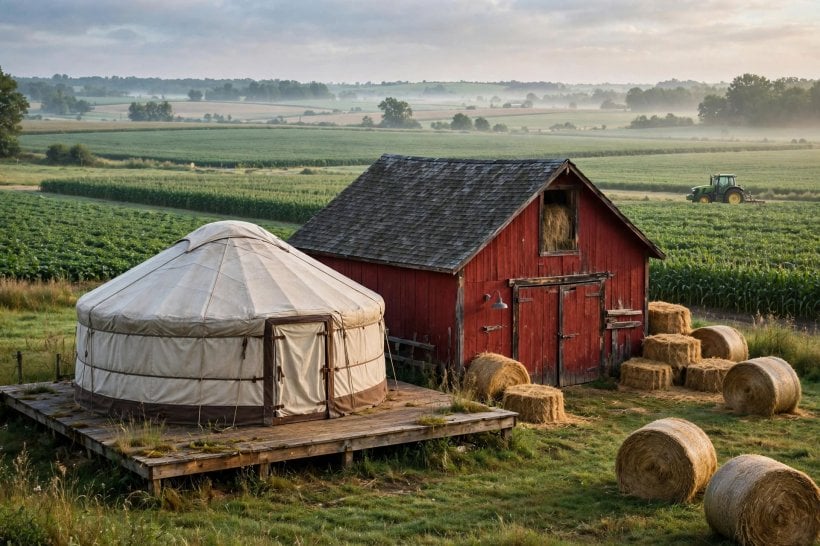
Two requirements guard the exemption, and both are about honesty. First, there must be real agricultural activity — a genuine operation producing genuine farm output, not a garden labeled a farm for the paperwork. Officials and courts can tell the difference, and a sham farm poisons the application it was meant to carry. Second, some jurisdictions set a minimum acreage before the exemption applies. Beyond those gates, the details vary enormously from state to state, which is why the original advice on this path is worth repeating verbatim in spirit: consult an agricultural attorney in your state. The exemption is powerful precisely because it is old, broad and jurisdiction-specific — three qualities that reward local legal advice and punish internet generalizations.
7. What Triggers Enforcement
New yurt dwellers often imagine enforcement as patrols: an inspector driving country roads, hunting round roofs. Reality is quieter and more predictable. Yurts rarely get inspected spontaneously; enforcement is almost always complaint-driven. Which means the practical question is not “will they find me?” but “what makes somebody call?” Four triggers account for nearly every case.
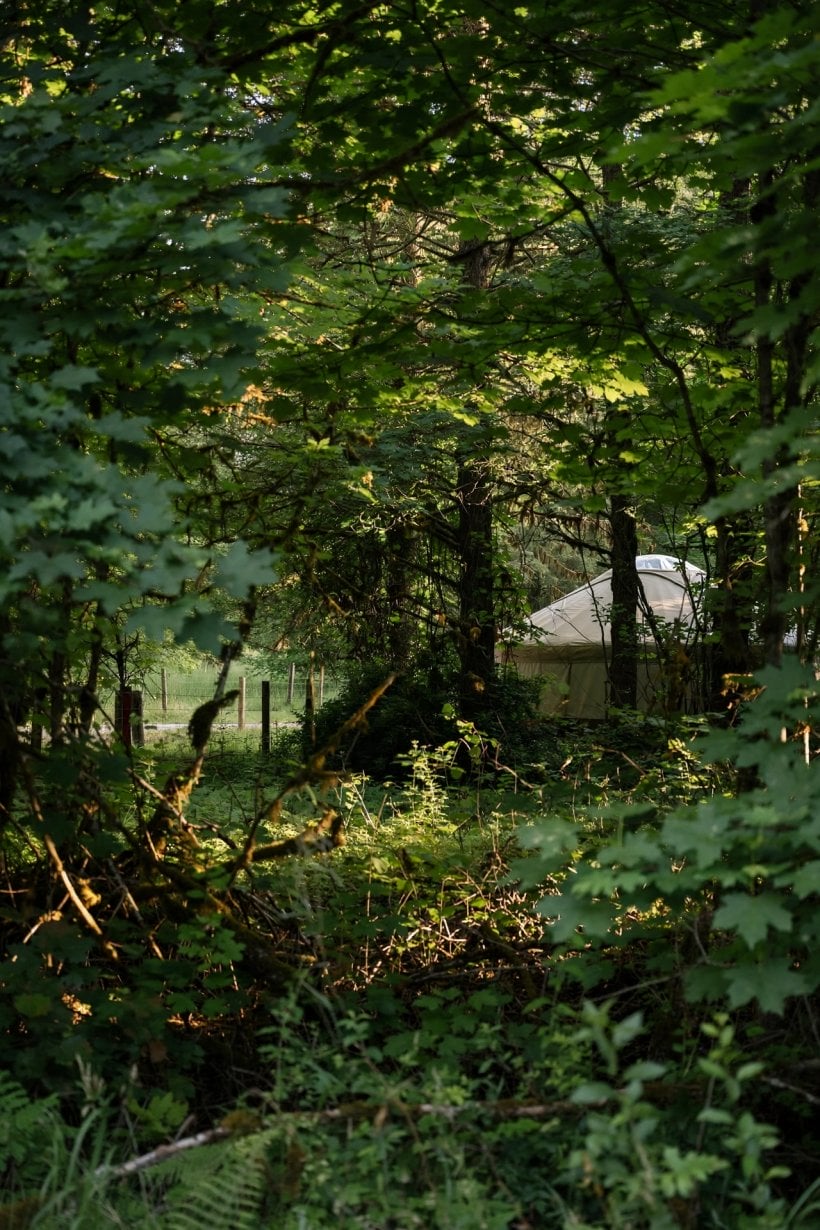
Visibility is the first: a yurt in a neighbor’s window line generates the calls that a yurt behind a tree line never does — out of sight really is out of mind. The second is a total absence of paperwork; officials act fastest when there are literally no permits of any kind on file. The third is sewage: graywater on the ground or an unpermitted septic draws health department attention faster than any zoning question. The fourth is commercial activity — renting the yurt on Airbnb without permits multiplies scrutiny, because now strangers, reviews and revenue all make the structure public. Against that list, the compliant yurt with a septic permit and a building permit is rarely bothered. Add the neighbor strategy and the odds improve further: introduce yourself, show them the yurt plans, explain the septic and the timeline. Most complaints come from surprise, not from yurts.
8. Sewage, Water, and Power: The Real Regulators
Ask experienced yurt dwellers who actually regulates their lives and few will name the zoning office. Health departments, through sewage rules, and utility companies, through power and water connections, regulate yurts more practically than zoning ever does. A yurt with an approved septic system or sewer connection, a legal water source, and a proper electrical setup is 80% of the way to being left alone — because every agency that might visit finds its own question already answered.

The converse is just as reliable. A yurt with an outhouse and an extension cord is a health department visit waiting to happen: the two most visible signs of an unpermitted dwelling are exactly the two things inspectors are trained to act on. So budget the infrastructure like a house, because legally, the infrastructure is what counts. The platform, the trench, the septic tank and the panel are not unglamorous extras after the real purchase; they are the purchase, legally speaking. This is the same lesson wheeled-home owners learn when choosing where to park a tiny house with proper hookups: services first, structure second, and the paperwork follows the plumbing.
9. Insurance and Financing Realities
A yurt can be fully permitted and still fail the last two tests: can you insure it, and can you finance it? Standard homeowner’s insurance generally does not cover yurts — the underwriting categories have no more room for a fabric roundhouse than the building code does. Specialty insurers, and some farm insurers, do write the risk, typically classifying the yurt as “other structures” or folding it under a farm policy, at $500–1,200/year.
Financing is similarly niche. There is no conventional mortgage product for a yurt, so buyers work with personal loans and HELOCs drawn on the primary property. None of this is disqualifying, but it must be priced into the decision honestly. The cheap yurt gets expensive if it cannot be insured against the risks that actually threaten it — fire and wind above all. A dwelling you cannot insure is a dwelling whose entire value rides on nothing going wrong, and fabric structures, for all their resilience, are not the place to self-insure by default. Readers weighing cover for small homes generally will find the broader picture in our guide to how to insure a tiny house, where the same wheels-versus-foundation logic applies.
10. The Compliance Roadmap
Everything above compresses into a five-month sequence. Month 1 belongs to the county planning office: visit in person, determine which classifications are viable on your parcel, and get the requirements in writing. Month 2 is engineering: engage the structural engineer for the certification letter and request the manufacturer’s engineering packet for your model, so the two documents can support each other.
Month 3 is applications: building, septic and electrical permits filed together, and — in the same weeks, not as an afterthought — the neighbor introductions. Month 4 is when the system pays you back: permits issued, the yurt ordered, and site work under way on the platform and utilities. Month 5 and beyond is installation, inspections and occupancy. The ongoing duties are small but real: permit renewals if your approval is temporary, insurance maintained without a lapse, and records kept — every letter, permit and inspection report in one file, because the file is what turns a future official’s question into a five-minute conversation. Notice the order of operations. At no point does the roadmap buy a yurt before the land has answered, and at no point does it dig before the permits exist. The sequence is the strategy.
Final Considerations
No state has a yurt code, but several are functionally friendly, and knowing them helps you read the map. Alaska offers minimal rural oversight. Vermont and New Hampshire carry strong ADU and alternative-dwelling traditions. Oregon pairs liberal ADU rules with yurt-friendly counties. Parts of Colorado, New Mexico and Hawaii have alternative building cultures with real precedent behind them. Friendly still means paperwork; it just means the paperwork has been done before, by people whose files the officials remember. Community-scale versions of the same idea appear in the tiny home communities that have already negotiated their legal footing.
So the honest answer to is yurt living legal is the one this guide opened with: sometimes, somewhere, with paperwork. Yurt legality is a solvable administrative puzzle, not a gamble — for the dweller who does the research, gets the engineering, pulls the permits and befriends the neighbors. The yurt’s ambiguity is a feature for the prepared, who can choose their classification, and a trap for the casual, who end up with no classification at all. Do the paperwork, and the round house stands on solid legal ground — ready for the practical pleasures, like the ones in our guide to how to live in a yurt in winter, that made you want one in the first place.



1 Comment