

Every keeper daydreams about the perfect layer: reliable eggs, a calm nature, and a bird that thrives in their weather. The honest truth is that no single breed wins everywhere, which is why comparing the best chicken breeds for eggs by temperament, climate fit, and feed sense matters far more than chasing headline numbers.
This guide compares the main families of layers side by side, then walks the beloved individual breeds inside each family, so you can match birds to your household, your climate, and your patience — and start a flock that actually suits your life.
1. The Comparison at a Glance
Start with the four families, because family traits predict more than any individual name. Hybrid layers are bred for output above all; heritage dual-purpose breeds lay steadily while carrying the size and temperament for a long, useful life; calm breeds trade a little peak output for peace in family gardens; and hardy breeds earn their place wherever winters bite or summers scorch. The table below summarises the families exactly as the companion chart presents them, and output everywhere in this guide is described honestly: it varies by bird, by season, and by care, as the chart itself notes.
| Family | Known for | Best for |
|---|---|---|
| Top Layers | Hybrid layers | Most eggs |
| Heritage | Dual-purpose breeds | Steady layers |
| Temperament | Calm breeds | Family friendly |
| Climate Fit | Hardy breeds | Cold or heat |
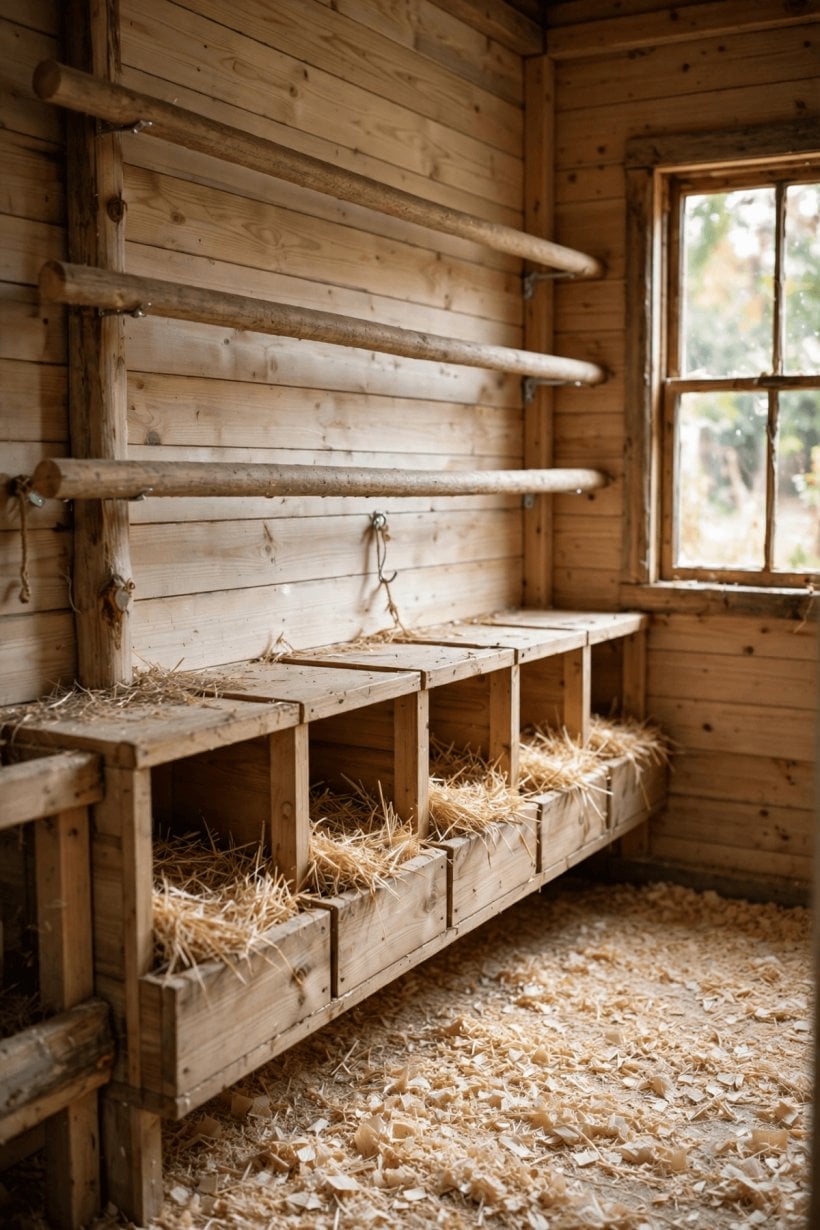
Layers compared by output and temperament: the four breed families, the key factors, and the tip that choosing starts with climate and patience.
The key factors to weigh are output, temperament, climate, and feed use, and their order matters: climate first, because a bird fighting the weather lays poorly whatever her pedigree; temperament second, because you live with these birds daily; output third, honestly assessed; and feed use last, refining the choice between near-equals. The chart’s tip distils the whole philosophy: match the breed to your climate and patience — the best layer is the one that thrives with you. A modest layer content in your garden out-produces a champion stressed by it, every single season.
One expectation to set before the families: pullets begin laying at around point of lay and build to their rhythm over the first weeks, the first laying year is a bird’s most productive, and output eases gently with age and dips with the moult and the dark months. Those patterns hold across every family below, and the keepers who plan around them — staggering ages, accepting winter’s slower basket — are never disappointed by birds that are simply being birds.
2. Hybrid Layers: Maximum Eggs, Minimum Fuss
Hybrid layers are the birds behind most commercial eggs, bred by crossing selected lines for one purpose: converting feed into eggs with remarkable efficiency. The common red hybrids sold under cheerful names at every farm store share the profile: medium build, early maturity, an early start to laying, and a first year of genuinely impressive, near-daily production. For a household whose priority is a full egg basket from the smallest possible feed bill, hybrids are the straightforward answer, and beginners love their predictability.
The trade-offs are equally consistent and worth stating plainly. Hybrids are bred for a brilliant first act rather than a long career: production typically falls away more steeply after the first year or two than a heritage bird’s does, and the intense laying life can leave them spent sooner. They are also rarely broody, which suits egg-focused keepers but frustrates anyone hoping a hen will raise chicks. Plan a hybrid flock as a rotation: add a few pullets each year or two, retire or rehome the elders kindly, and the basket never empties.
Housing and feeding hybrids follows the standard this cluster teaches: a coop sized by floor space and roosts, layer feed with grit and calcium available, and clean water always — the routine detailed in our guide to how to raise chickens from day one. Hybrids reward exactly that consistency; their efficiency assumes good management, and shortfalls in feed or water show in the basket faster than in hardier birds. Give them the routine and they will give you eggs with almost comic reliability through their prime.
3. Heritage Dual-Purpose Breeds: The Steady All-Rounders
Heritage dual-purpose breeds are the farmyard originals: birds kept for generations because they laid respectably, foraged willingly, dressed out as a table bird when their laying days ended, and raised their own replacements under a broody hen. Breeds in this family — the barred and white Plymouth Rocks, Rhode Island Reds, Wyandottes, Sussex, Orpingtons, and Australorps among them — share a larger frame, a calmer metabolism, and a laying life measured in good years rather than one brilliant season.
Their laying pattern is the tortoise to the hybrid’s hare: a strong but not frantic rate in the first years, easing gradually, with many hens still contributing usefully well beyond the age a hybrid has retired. For self-reliant homesteads this steadiness, plus broodiness in many lines, makes the flock self-renewing: a hen hatches next year’s pullets, the old girls become the soup pot with gratitude, and no hatchery order is ever placed. That closed loop is the heritage family’s deepest appeal and the reason acreage flocks so often centre on it.
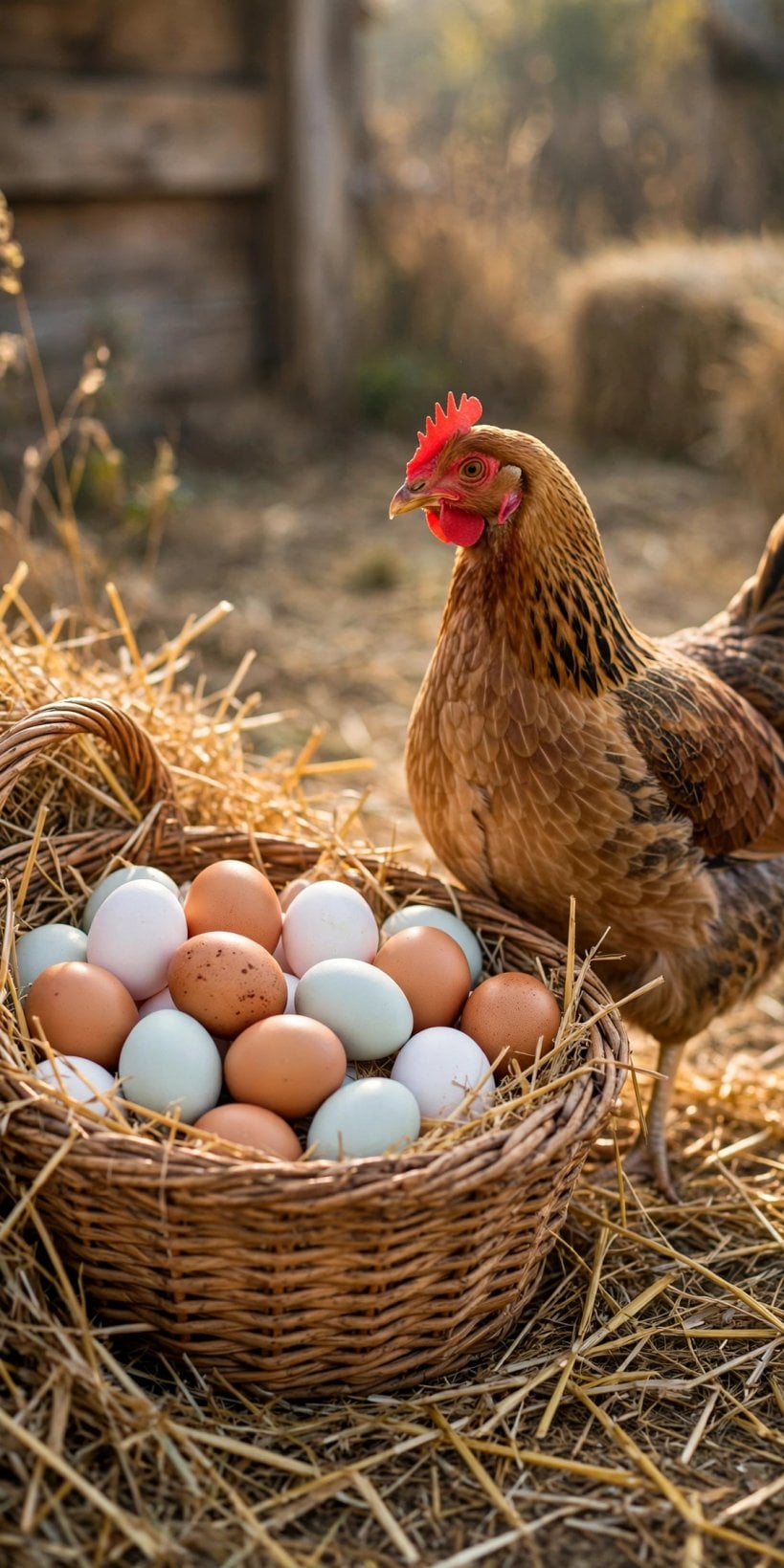
Heritage hens in the yard: dual-purpose breeds lay steadily and carry the calm, substantial build of the traditional farm flock.
Within the family, flavours differ. Rhode Island Reds are famously hardy, self-assured layers that shrug off weather; Plymouth Rocks are steady, friendly, and handsome in the run; Wyandottes add cold-climate credentials with their rose combs and dense feathering; Orpingtons and Australorps bring the gentlest temperaments of the group alongside their laying. Choosing among them is mostly about climate, looks, and which grandmother’s farm you are channelling — all will fill a basket and a homestead’s idea of itself.
4. The Calm Breeds: Layers for Family Gardens
Plenty of flocks live steps from the back door, share the garden with children and dogs, and need neighbours on side — and for those keepers, temperament outranks raw output. The calm breeds answer: Orpingtons in their cloud of feathers, Australorps with their beetle-green sheen and unhurried ways, Sussex hens that follow you hopefully for treats, and gentle giants like Brahmas and Cochins whose laying is modest but whose personalities are pure therapy. These birds make chicken keeping a pleasure instead of a chore, which is a production trait of its own — flocks that delight their keepers get better care.
Calm breeds suit first flocks with children especially: hens that tolerate handling become ambassadors, eggs get collected by small hands, and the daily routine turns into the family’s favourite fifteen minutes. The laying is honestly a step below the hybrids’ — these are good layers, not machines — but for a household eating its own eggs with some to share, a handful of contented hens in a family garden produces plenty, and produces it for years thanks to the heritage blood most calm breeds carry.
Docility has management footnotes. Gentle birds sit lower in mixed-flock pecking orders and can be bullied by assertive breeds, so keep temperaments matched: all-calm flocks are harmonious, while a single bossy hybrid can tyrannise a pen of Orpingtons. Calm, heavy breeds also range less boldly and need the predator discipline of any flock — the secure housing chosen from sound chicken coop plans, shut faithfully at dusk. Given that, the calm family rewards its keepers with the friendliest egg supply in the poultry world.
5. Hardy Breeds: Layers for Cold and Heat
Climate is the filter the chart puts first, because no laying pedigree survives a bird spending her energy on survival. For cold country, the hardy profile reads: a compact rose or pea comb that resists frostbite, dense feathering over a substantial body, and a temperament content in a well-ventilated coop through long winters. Wyandottes are the textbook answer, with Chanteclers — bred in Canada for exactly this — Buckeyes, and Dominiques close behind; heavy heritage breeds generally winter better than slight ones, and the coop’s high, draft-free ventilation matters as much as the bird.
Heat asks for the opposite build: a lighter body, a large single comb that sheds warmth, clean legs, and an active foraging style. Leghorns are the classic hot-climate layer — Mediterranean birds, lean and tireless, laying white eggs with famous feed efficiency wherever summers scorch. Andalusians, Minorcas, and other Mediterranean breeds share the profile, and in genuinely hot regions these light breeds out-lay heavy feathered birds that simply wilt. Shade, cool water refreshed through the day, and airy housing complete the hot-climate system; the breed alone cannot beat the sun.
Between the extremes, most dual-purpose heritage breeds cover temperate climates without special pleading, which is why they dominate homestead flocks. The matching exercise is honest self-assessment: keepers in cold regions who choose Leghorns for their laying fame will nurse frostbitten combs and disappointed baskets; keepers in hot regions who choose feathery giants will watch them pant through summer and lay accordingly. The chart’s tip again: the best layer is the one that thrives with you — climate is not a detail, it is the decision.
6. Coloured Eggs and Character Breeds
Some keepers choose with their hearts and their breakfast plates, and the coloured-egg breeds exist for them. Ameraucanas and their barnyard cousins the Easter Eggers lay blue and green eggs that make a basket look like spring itself; Marans produce famously dark chocolate-brown shells; Welsummers lay rich terracotta, often speckled; and Cream Legbars add sky-blue eggs with the bonus of chicks that can be sexed by colour at hatch. None of these is the flock’s output champion, and all of them lay respectably while turning egg collecting into a daily small celebration.
Character breeds earn places the same way: the crested Polish whose headdress delights children, the fluffy Silkie — a modest layer but the finest broody and foster mother in chickendom — and the giant Brahma, gentle as a dog. A flock is allowed to be partly a collection; keepers who love their birds keep them well, and a couple of characters among the workers costs little. The planning rule is proportion: let the working families form the flock’s core, and add the characters as the garnish they are, with eyes open about their laying.
Coloured eggs also carry a gentle practical warning: shell colour has no bearing on flavour or nutrition — a brown egg, a white egg, and a blue egg from hens on the same feed are the same breakfast in different wrapping. Choose colours for joy, breeds for fit, and never pay a premium believing the shell changes the egg. What changes the egg is the hen’s diet and range: hens that forage greenery and insects lay the deep-orange yolks that make keepers smug, whatever breed laid them.
7. Feed Efficiency and the Cost of an Egg
Feed is the laying flock’s main running cost, so feed use — the chart’s fourth key factor — separates the families economically. Light, active breeds like Leghorns and the purpose-bred hybrids convert feed to eggs most thriftily: small bodies cost little to maintain, and nearly every mouthful beyond maintenance becomes an egg. Heavy heritage breeds eat more simply being large, and part of their ration maintains a frame built for two jobs; their eggs cost a little more in feed, repaid partly at the table when their laying days end.
Range changes the arithmetic for every family. Birds on good pasture or a generous run harvest a real share of their diet — greens, seeds, insects — and foraging breeds range further and harvest more than placid ones. Heritage and Mediterranean breeds typically forage hardest; heavy calm breeds stroll and scratch close to home. On acreage, choose keen foragers and the land subsidises your eggs; in a small garden, the subsidy is tiny whatever the breed, and the efficient light families win the feed argument outright.
Whatever the family, the feeding system stays the one this cluster repeats: a proper layer ration as the base once hens are laying, grit for the gizzard, oyster shell on the side for strong shells, kitchen scraps and garden surplus as treats rather than staples, and water treated as the nutrient it is — a hen off water is a hen off lay within days. Keepers weighing other poultry for the homestead will find the same principles in our notes on what turkeys eat, and smaller birds compared in our quail coop ideas — every species pays for honest feeding with production.
8. Mixing Breeds: Building a Balanced Flock
Almost nobody keeps a single breed, and a thoughtfully mixed flock combines the families’ strengths: a few hybrids or Leghorns for the basket’s backbone, heritage hens for steadiness and broodiness, a calm breed or two for the children’s sake, and a character bird because she makes you smile. Mixed flocks also spread risk — breeds peak and moult on slightly different schedules, so the basket rarely empties all at once — and they spread the seasons, hardy birds carrying winter while lights breeds shine in summer.
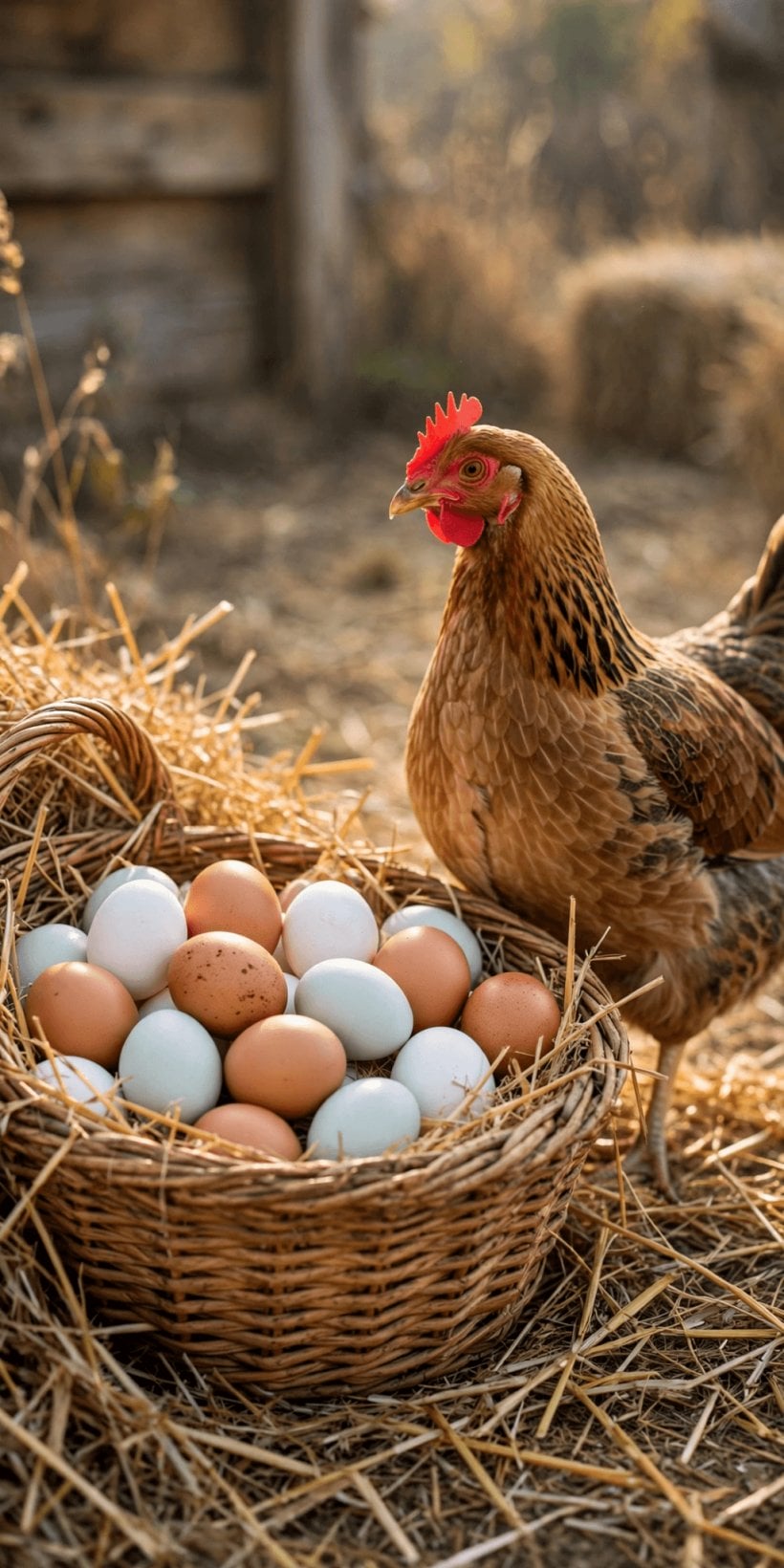
A mixed flock at the feeder: combining families balances eggs across seasons and spreads the flock’s strengths.
Mixing has rules. Match sizes and temperaments roughly, because the pecking order is real and a pen of giants will humble bantams and bully the meek; introduce new birds gradually, through a fence first, ideally at similar ages; and keep the rooster question honest — most laying flocks need no rooster at all, and where one is kept, choose his breed for temperament above plumage, since personality is hereditary in both directions. Numbers matter too: a rooster serves a group of hens, not a pair, and harmony is easier in a flock sized to its housing.
Record keeping turns a mixed flock from a guess into a system: note which breeds actually lay through your winters, which go broody when you want chicks, and which eat like horses for pet-bird output. Leg bands or simply a notebook by the feed bin build, over two seasons, the only breed trial that matters — yours. The next pullet order then writes itself, weighted to the birds that thrived with you, which is the chart’s tip operating as a yearly habit rather than a one-off decision.
9. Where to Source Birds and What to Look For
Breeds chosen, the birds themselves come from hatcheries, local breeders, or farm-store chick bins, and each source suits a stage. Hatcheries offer the widest breed lists and sexed pullets at a price, with chicks travelling by post surprisingly well; local breeders offer birds already suited to your climate, often from hardier, longer-lived lines than mass production, plus advice worth more than the birds; farm stores offer immediacy and hybrid staples each spring. For heritage breeds especially, a good regional breeder is gold — the breed name is the same, but the line is the bird.
Whatever the source, inspect before you commit: bright eyes, clean vents, smooth legs, an alert stance, and a body that feels solid in the hand. Avoid birds that sit hunched, sneeze, or show scaly legs or lice around the vent. Quarantine newcomers away from an existing flock for a few weeks — the dullest chore in poultry and the one that prevents the worst disasters — and introduce them only when they have stayed visibly healthy. Sourcing discipline protects every bird you already keep.
Starting points differ by patience: day-old chicks are cheapest and bond you to the flock, but need brooding and months of feeding before the first egg; started pullets at point of lay cost more and begin paying rent within weeks; a retiring keeper’s adult flock occasionally offers instant layers of known breeds. And when the new birds come home, names follow within the hour in most families — our collection of chicken names has ended more than one household debate on the subject, usually in favour of the children.
10. Breeds for Small Gardens vs Homesteads
Space is the final filter, and it sorts the families cleanly. Small gardens suit the calm and light families: a few Orpingtons or Australorps behind a terraced house will convert a modest run into eggs without drama, hybrids in a compact coop-and-run setup produce bravely in little space, and bantam versions of laying breeds halve the footprint for keepers who count eggs in handfuls rather than dozens. Quiet, contented birds matter where neighbours are close, which pushes the choice to the calm end of every family.
Homesteads can host the whole orchestra: heritage flocks ranging paddocks behind the rotation described in our livestock farm layout, foraging breeds harvesting real feed from real land, broody hens raising replacements in the corner of the barn. On acreage the heavy dual-purpose breeds come into their own — their table value matters, their ranging feeds them, and their size ignores weather that would trouble lighter birds. The same flock that would eat a small garden bare becomes, on land, a self-renewing system.
The matching rule across both settings is the one this whole guide keeps circling: honest counts. Count your household’s egg appetite before the pullet order, not after; a family that eats a dozen a week needs a small handful of good layers, not a barnyard of them, and surplus eggs are a chore dressed as a blessing unless neighbours, barter, or a farm-gate honesty box absorb them. Start with fewer birds of the right families, keep the notebook, and expand toward the breeds that proved themselves — enthusiasm is easier to add than to subtract.
Final Considerations
Comparing laying breeds is really an exercise in self-knowledge: your climate, your space, your household’s appetite, and the kind of daily company you want from your birds. Hybrids maximise the basket, heritage breeds maximise the system, calm breeds maximise the pleasure, and hardy breeds maximise the fit with difficult weather — and the wisest flocks borrow from several families at once, then let two seasons of notebook entries refine the mix. Choose for the keeper and the place first, let output follow, and the eggs will come from birds that were always going to thrive with you.


0 Comments