

Choosing meat birds for a small homestead is a decision about pace, flavour and daily care, not just size. The best meat chickens for your ground are the ones whose growth, appetite and temperament match the space, feed and time you can honestly give them.
This guide compares the three broad families side by side, so you can pick a type with open eyes and raise it well from chick to table.
1. Meat Chickens at a Glance
Every meat bird you can raise at home belongs to one of three broad families. Cornish cross types are bred for one job: fast, efficient growth. Heritage dual-purpose breeds are the traditional farm chickens, kept for eggs first and the table later, growing slowly on the same feed a laying flock eats. Ranger types sit between the two, active birds that forage keenly and grow at a steadier, more moderate pace. Neither family is right or wrong in itself. Each one simply asks for a different kind of management, a different amount of patience and a different daily routine from the person raising it.
| Type | What It Is | Known For |
|---|---|---|
| Cornish cross type | Fastest-growing meat type | Fastest growth |
| Heritage dual-purpose breeds | Traditional farm breeds | Slower, tastier |
| Ranger types | Active foragers | Middle ground |
| Care key | Leg health and feed | Watch growth |
Four factors decide which family suits your homestead: growth pace, feed use, temperament and space. A fast bird converts feed quickly but needs that feed managed and room to move, because growth rate is a care decision as much as a breeding one. A slow bird asks for more weeks of feeding and patience, yet fits the rhythm of an ordinary backyard flock. Read the sections that follow with your own ground in mind: your climate, your available range, your feed store and the hours you can give the birds each day matter more than any breed name on a hatchery page.
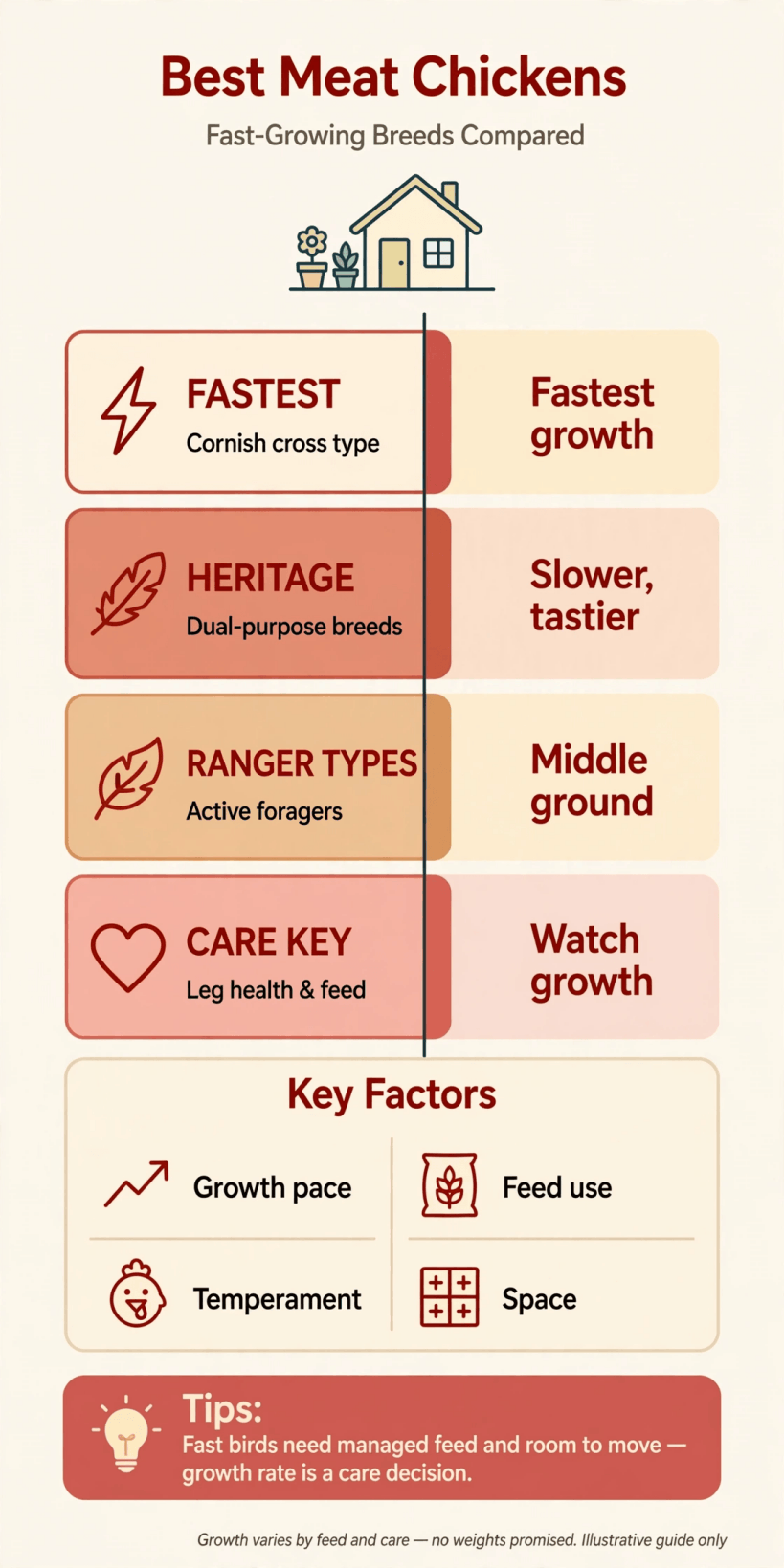
The three meat bird families at a glance, with the care key that matters most for fast-growing types.
2. Cornish Cross Types: The Fastest Growth
The Cornish cross is the bird behind almost all commercially raised chicken, and it earns its place on homesteads for the same reason: nothing else grows as fast or as efficiently. These birds are broad-breasted, heavy-set and remarkably placid. They spend much of the day near the feeder, eating, resting and growing, and they show little interest in ranging far, flying or scratching for a living the way a laying hen does. For a homestead that wants a batch of table birds raised in a defined season, with predictable feed use and a clear end point, that focus is a genuine virtue.
Speed, though, is a management commitment. A bird that grows this fast puts real strain on its legs and heart, so it must never simply be fed without limit and left to its own devices. Managed feed, clean dry litter, constant fresh water and room to move at its own pace are what keep a fast batch healthy to the finish. These birds are also a terminal cross: they are raised for one season and not kept on as breeding stock or long-lived flock members. Treat them as a short, carefully watched project, give them shade and airflow in warm weather, and their efficiency rewards the attention.
3. Heritage Dual-Purpose Breeds: Slower and Tastier
Heritage dual-purpose breeds are the chickens farms kept long before specialised meat birds existed. Hens lay through the season, surplus cockerels are raised on for the table, and the whole flock earns its keep in more than one way. Growth is slow compared with a Cornish type, and the finished bird is leaner and more strongly flavoured, with a firmer texture many people prefer for roasting and slow cooking. These are proper, active chickens: they range, dust-bathe, squabble, roost and behave like a flock, which makes them a pleasure to keep as well as to eat.
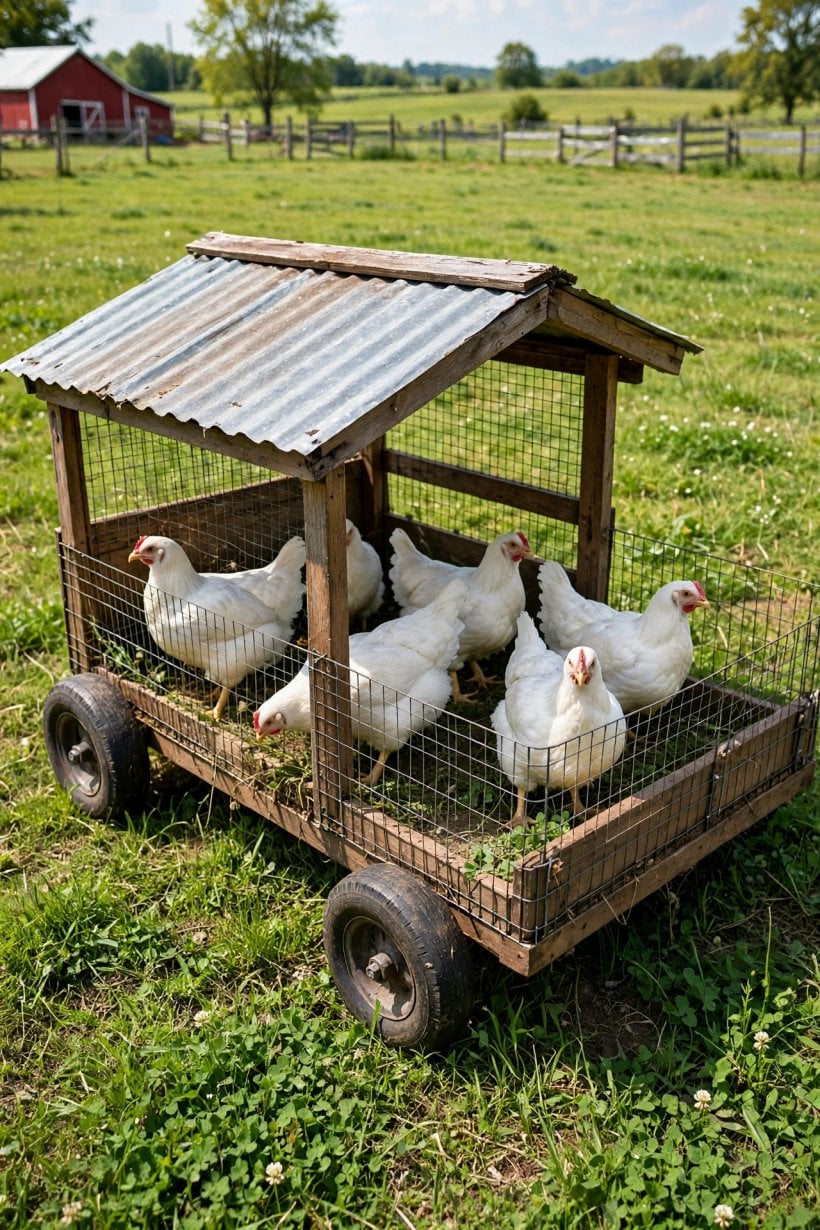
Heritage birds take their time, and repay patience with flavour and a flock that earns its keep twice over.
The trade-off is time and feed. A slow bird eats for much longer before it reaches the table, so its true cost is measured in months of grain and care rather than in speed. In return you get birds that can breed on, hens that join the laying flock, and a system that renews itself without buying in chicks every season. If you are learning the wider craft, start with how to raise chickens from chick to adult, because dual-purpose birds reward exactly those everyday husbandry skills: observation, routine feeding and calm handling.
4. Ranger Types: The Middle Ground
Ranger types were developed for keepers who wanted a bird that behaves like a chicken and still finishes in a reasonable season. They are coloured, active foragers that range willingly, scratch for insects and greens, and grow at a pace between the Cornish cross and the heritage breeds. Their temperament is alert and busy rather than placid, legs stay stronger because the birds keep moving, and many keepers find them hardier outdoors in changeable weather. For a homestead with pasture to offer, a ranger batch turns that ground into part of the ration.
Rangers suit a system built around movement: a secure pen or mobile shelter, fresh ground in rotation, and feed offered as a supplement to forage rather than the whole diet. They will not match the fastest birds for sheer pace, and they will not lay like a heritage hen, so judge them on their own terms: steady growth, good flavour and an active, robust bird that is enjoyable to watch. Planning where a ranging batch fits among your other animals is worth doing early, and a clear livestock farm layout helps you place pens, water and fencing so daily moves stay quick and easy.
5. Growth Pace, Feed Use and Feed Management
Feed is the largest ongoing cost of any meat batch, and how a bird uses it differs by family. Fast types convert feed into growth very efficiently, but only while their ration is managed: unrestricted feeding around the clock pushes growth faster than legs can support, so many keepers offer feed in defined periods with water always available. Heritage birds convert feed slowly and spend much of it simply living, ranging and laying. Rangers fall between, offsetting part of their ration with whatever they find on range in the growing season.
Whatever the family, the basics do not change. Chicks start on a suitable starter ration, growing birds move to a grower feed, and clean water matters as much as the grain itself, because birds drink far more than beginners expect and growth stalls quickly when drinkers run dry or foul. Keep feed dry, store it away from rodents, and watch the birds rather than the bag: a good batch is bright, active for its type and evenly grown. Feeding principles transfer across poultry, too. If you keep other table birds, comparing rations with what turkeys eat shows how growth stage, not species alone, drives protein and portion decisions.
6. Housing, Space and Range for Meat Birds
Meat birds need housing that is dry, draught-free at bird level and very well ventilated above them, because fast-growing birds produce a great deal of heat and moisture. Space matters twice over: crowded birds soil litter quickly, compete at feeders and pile on stress, while birds with room move more, stay cleaner and grow more evenly. Heavy types need low, wide access to feed and water and should never have to jump down from height, which strains legs and breast. Shade in summer and shelter from driving rain complete a simple, effective setup.
Range, where you have it, suits rangers and heritage birds best, but even fast types benefit from a roomy pen and fresh air. Plan the structure before chicks arrive: a secure coop or mobile shelter, a run that can be moved or rested, and fencing that keeps birds in and everything else out. Working through tested chicken coop plans before you build saves the usual beginner mistakes of small pop doors, poor ventilation and nowhere sensible to put a feeder. Build for the adult batch, not for the fluffy chicks that arrive in the box, because meat birds outgrow cramped quarters faster than any other poultry.
7. Temperament, Leg Health and Daily Care
Temperament shapes your daily experience of a batch. Cornish types are calm to the point of laziness, easy to handle and untroubled by people, but that inactivity is exactly why their legs and overall fitness need watching. Heritage birds are independent and lively, sometimes flighty, and cockerels can be bold as they mature. Rangers are busy and confident outdoors. None of this is good or bad; it simply tells you how much handling, supervision and separation of maturing males your routine will need as the batch grows.
Daily care is short but non-negotiable. Check water first, then feed, then the birds themselves: is everyone up, moving and interested? Legs deserve a particular look on fast birds. A bird that sits constantly, walks with difficulty or is being left behind at the feeder needs prompt attention, dry bedding and easy access to feed and water close by, and veterinary advice where a problem does not resolve. Clean, dry litter prevents most foot and breathing trouble before it starts. Keep advice general and safe: good hygiene, space, fresh air and early attention to any bird that looks unwell will carry a batch further than any remedy.
8. Choosing by Homestead Goal: Speed, Flavour or Self-Reliance
Start from the goal, not the catalogue. If the goal is a freezer filled from one short, efficient batch each year, the fast Cornish type is built for exactly that job, provided you can give it the managed feeding and close watching it needs. If the goal is flavour, tradition and birds that belong to the place, heritage dual-purpose breeds fit a slower homestead rhythm and fold meat production into the laying flock you already keep. If the goal is balance, a ranger batch offers table birds that still range, forage and behave like chickens on pasture.
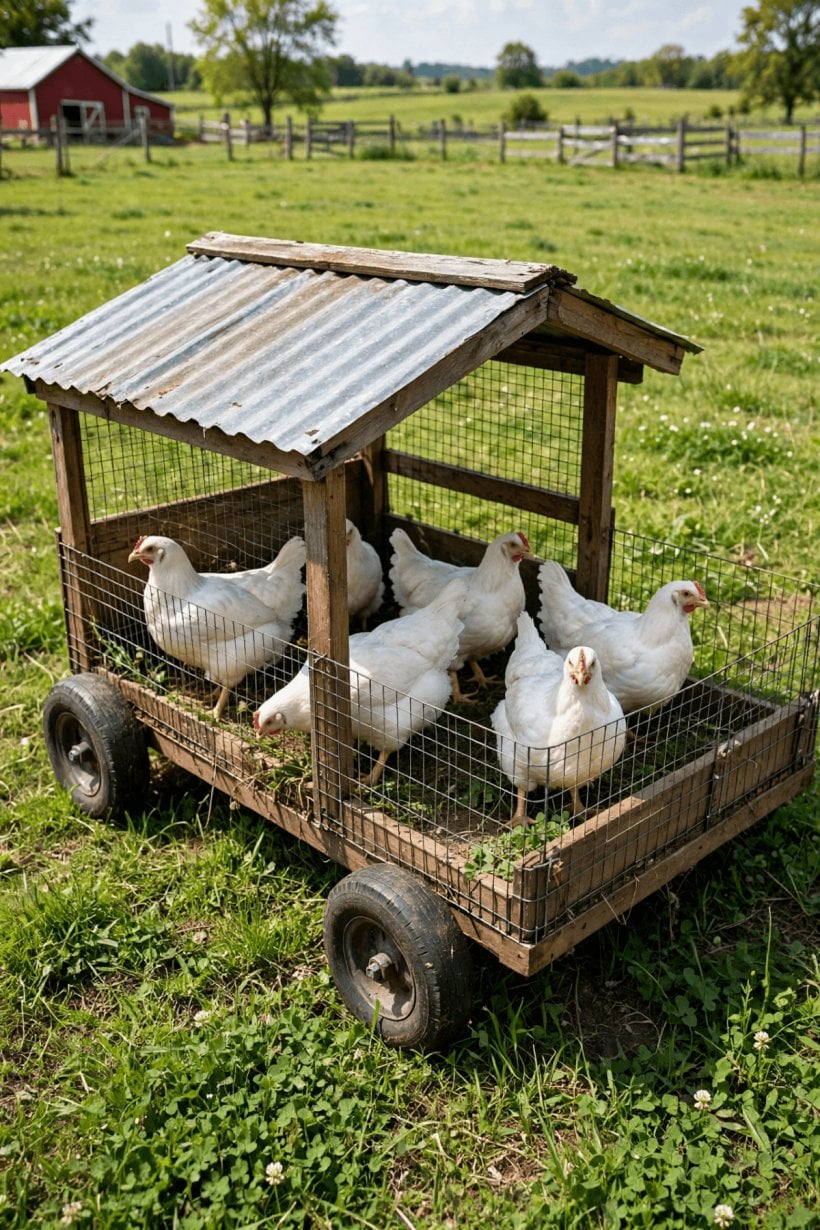
Fast, slow or in between: the right type is the one that matches your ground, your feed and your time.
Many homesteads end up combining approaches over time: a fast batch in one season, heritage birds woven into the laying flock in another. The two systems complement each other, and experience with layers sharpens your eye for meat birds. If eggs are the other half of your poultry plan, compare the laying side in our guide to the best chicken breeds for eggs before you order anything, because a flock planned as a whole, layers and table birds together, is cheaper to house, easier to feed and far more satisfying to run than two flocks planned in isolation.
9. Sourcing Chicks and Planning a Batch
Order or hatch for the season you can manage, not the season you wish you had. Spring and early summer batches grow through the best ranging weather, while a late batch may finish in cold, wet conditions that make litter management hard work. Decide the batch size from your housing, freezer space and feed budget, and resist adding a few extra of everything at the order screen. Mixed batches of fast and slow birds rarely thrive together, because their feeding and finishing times diverge; one family per pen keeps management simple and fair.
Heritage and ranger chicks can come from your own breeding flock as well as from a hatchery, which is where hatching skills pay off. Working through how to incubate chicken eggs step by step lets you set eggs from your best dual-purpose hens and raise their sons for the table, closing the loop on a self-reliant flock. And once a batch of named youngsters is running around the pen, you will understand why our readers love browsing chicken names even for birds with a job to do. Keep records either way: hatch or arrival date, feed used and how the batch finished.
10. Mistakes to Avoid and a Simple Decision Checklist
The commonest mistake is choosing on speed alone and discovering that fast growth is a daily workload, not a shortcut. Close behind it come overcrowding a pen because the chicks looked small in week one, feeding without any plan, letting litter stay damp, and keeping a fast batch far beyond its comfortable finish because processing day kept slipping. Heritage keepers make the opposite error: expecting layer-type feed and a layer-type timetable to finish table birds well. Every one of these mistakes is avoided by the same habit of deciding the whole season, housing, feed, finish and freezer, before the chicks arrive.
Use this simple checklist. One family chosen for a clear goal. Housing built or ready before arrival. Feed bought in, stored dry and offered on a plan. Water checked twice a day without fail. Security sorted, because a growing batch is a magnet for predators, so read up on chicken predator protection before the birds move outside. If smaller poultry appeals as a gentler first project, look at quail coop ideas for a compact alternative. Then commit to the batch you chose, watch the birds daily, and let their condition, not the calendar alone, confirm your decisions.
Final Considerations
There is no single winner here, only a right match. Fast Cornish types reward close management with efficiency, heritage breeds reward patience with flavour and self-renewal, and rangers reward ground and forage with steady, active growth. Choose the family whose needs fit the time, space and feed you genuinely have, raise them cleanly and kindly, and the best meat chickens for your homestead will be the ones you can care for well from the first morning to the last.


0 Comments