

The front entry staircase is the first piece of architecture a guest actually meets: it fills the view from the door and sets the tone before any room beyond it is seen.
These seventy-five ideas stay with that entry moment only, covering layout, colour, runners, railings, walls and light in general terms, so the stair feels chosen rather than inherited.
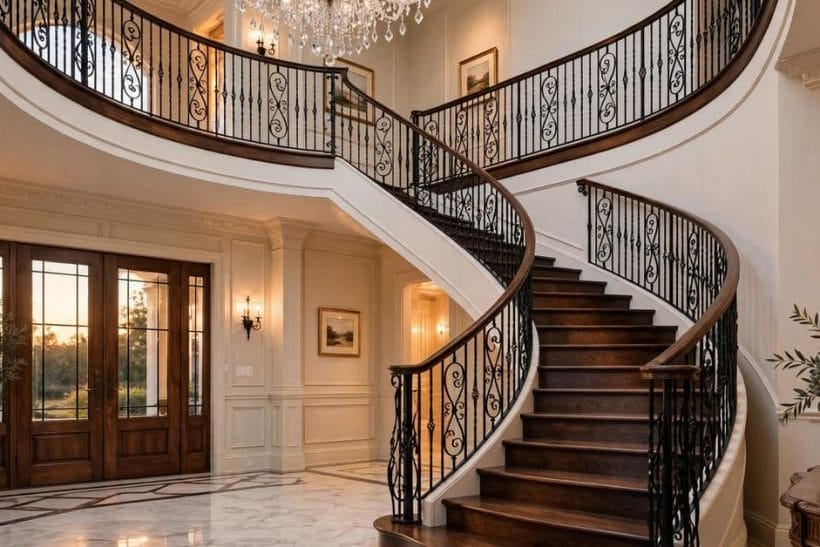
1. Entry Staircase Ideas at a Glance
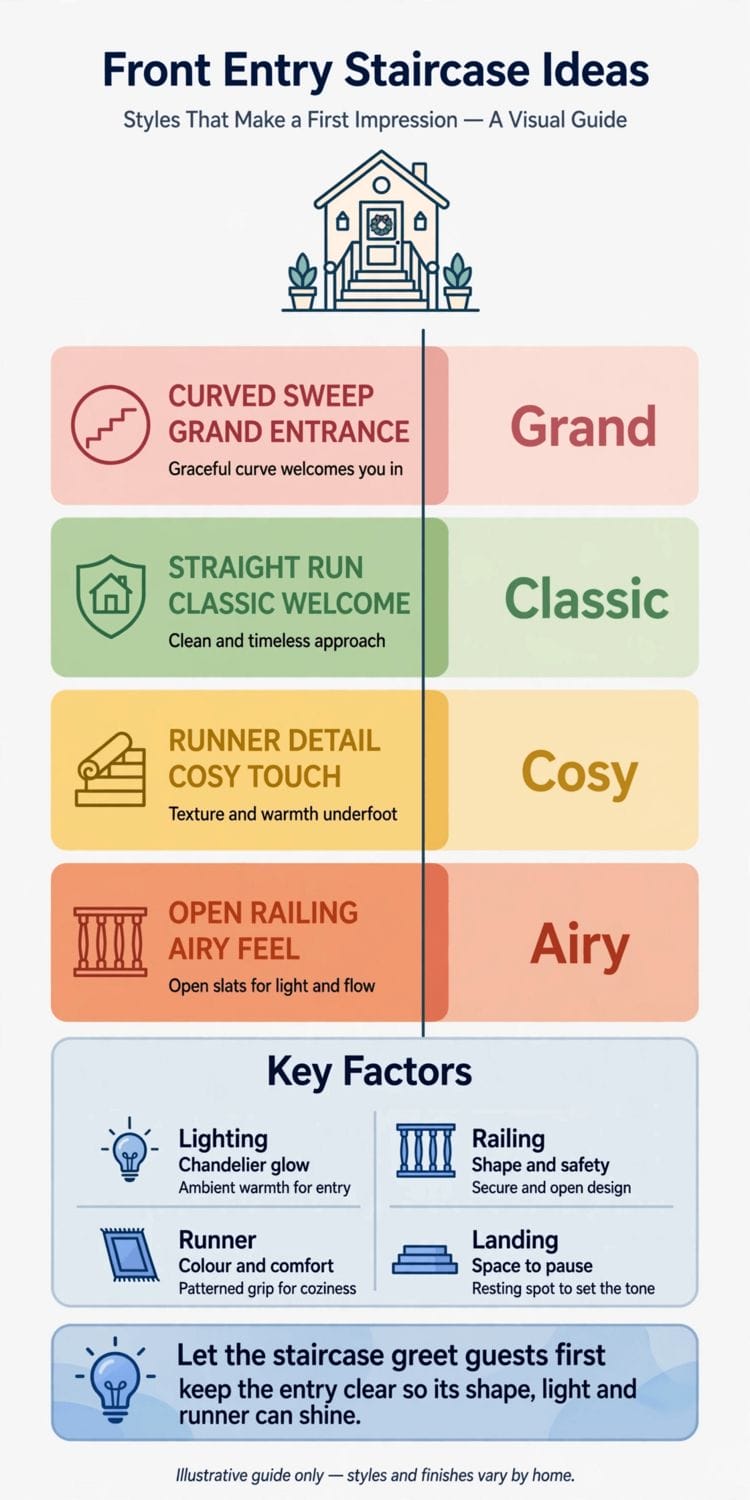
An entry staircase belongs to one of five broad families: a curved sweep, a straight run, a split return, an open modern flight and a runner-led classic. Choose the family first, then colour, railing and light, and the foyer reads as one composed arrival.
For staircase design in full, start with staircase ideas, the general pillar this post sits under; everything here narrows that ground to one place only, the staircase as it is seen and used at the front entry.
| Family | Character | What it means |
|---|---|---|
| Curved Sweep | A graceful arc filling the foyer view | Grand |
| Straight Run | A clean, direct rise from the hall | Classic |
| Split Return | Twin flights meeting at a landing | Formal |
| Open and Airy | Light treads and an open guard line | Airy |
| Runner Detail | Pattern and texture leading the eye up | Cosy |
Splits, so the lanes stay clear: marble staircases belong to marble staircase ideas, curved staircases in depth belong to curved staircase ideas and traditional staircases belong to traditional staircase ideas. This post does not re-teach staircases generally; it stays with how any of those families behaves when it stands in the entry, facing the front door.
One more boundary matters: small entryway ideas covers the room around the stair, its storage, seating and doors, not the stair itself. Here the room appears only where it frames the flight. Costs are handled in general terms only throughout: layout, material, finish and detailing all shift what an entry staircase costs, and honest comparison weighs those drivers, not a headline figure.
2. Layouts Seen From the Front Door
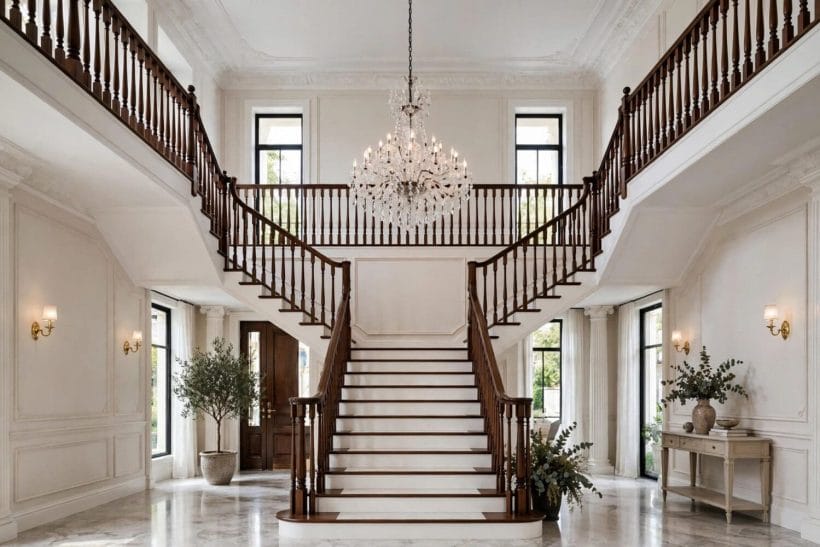
The layout is what the open door reveals first. The approach from outside sets the sequence, and gable roof front porch ideas shows the covered arrival leading into these foyer views.
1. A Curved Sweep Facing the Door
A curved staircase facing the front door makes the arrival feel ceremonial without saying a word. The arc fills the foyer view, softens the geometry of the hall and gives guests one clear, beautiful direction to look and to move toward.
2. A Straight Run Rising Ahead
A straight run rising directly ahead of the door is the clearest layout of all. The eye travels up in one line, the hall feels ordered and the stair becomes a calm backdrop for the door, the floor and the light together.
3. A Split Stair with a Shared Landing
Twin flights rising to a shared landing give a wide foyer its symmetry. The arrangement feels formal and balanced, suits generous halls best and turns the landing into a gallery moment halfway up.
4. A Stair Turning Away from the Door
A flight that turns away from the door keeps the upper floor private and the entry view intriguing. Guests see the first steps and railing line before the stair turns away, which suits houses preferring a quieter welcome.
5. An L-Shaped Entry Stair
An L-shaped stair hugs two walls and leaves the centre of the foyer open for arrival. The turn suits tighter halls, and the corner landing offers a small pause straight runs cannot provide.
6. A Stair Along One Wall
Running the stair along one wall keeps the rest of the foyer free for a console, a bench and everyday coming and going. The wall side feels secure, the open side carries the railing and the hall keeps a clear line.
7. A Central Stair as the Foyer Centrepiece
Where the hall is wide enough, a central stair becomes the centrepiece the whole entry is arranged around. Doors, art and lighting take their cues from it, and the house announces its character at once.
8. A Compact Straight Stair for a Modest Hall
A modest hall still deserves a composed stair: one straight, well-proportioned flight with a calm railing and good light. Kept plain and tidy, it feels deliberate and welcoming rather than squeezed into leftover space.
3. Colour and First Light
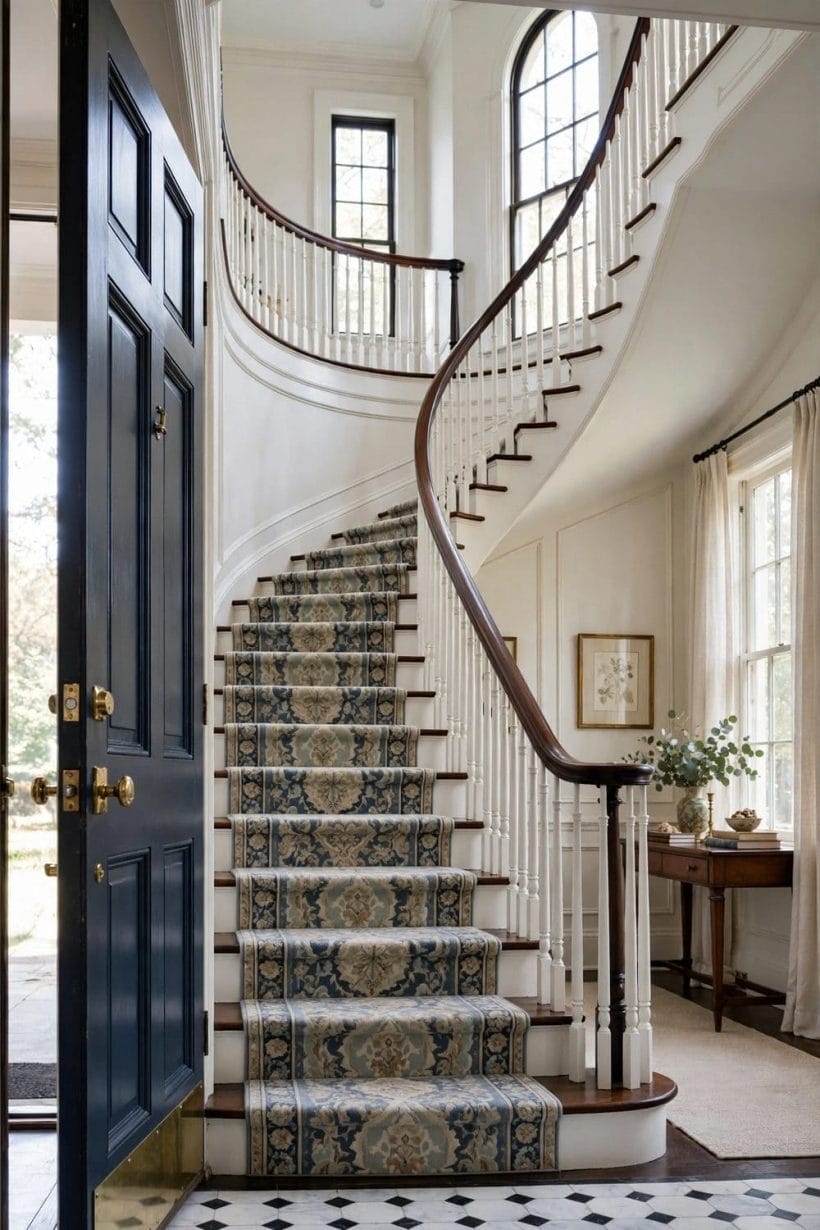
Colour decides whether the entry stair glows, grounds or quietly disappears. Daylight changes every tone through the day, so the calmest schemes suit the light the hall actually receives.
9. White Risers with Warm Timber Treads
White risers beneath warm timber treads keep an entry stair bright at its face and warm underfoot in appearance. The contrast defines every step clearly and suits classic and modern foyers equally well.
10. An All-White Entry Stair
An all-white stair dissolves into a bright foyer and lets the railing, the runner and the light do the decorating. It suits small, sunlit entries, where a darker scheme would narrow the hall.
11. Dark Treads Anchoring a Pale Hall
Dark treads anchor a pale hall and give the stair a confident, grounded line. The depth hides everyday marks gracefully and makes pale walls and green plants nearby look fresher by contrast.
12. A Two-Tone Stair, Dark Below and Light Above
Dark tones low and lighter tones above split the stair in a way that flatters tall foyers: solid below, airy above.
13. Soft Grey for a Calm, Even Welcome
Soft grey is the diplomat of entry colours: it sits happily with timber, stone, white paint and patterned runners alike. In shaded halls it keeps the welcome even and restful without turning cold.
14. Warm Wood Left as the Colour
Where the timber itself is beautiful, letting the wood be the colour keeps the entry honest and warm. A clear, calm finish protects it while the grain provides all the pattern needed.
15. A Deep Painted Stair for Drama
A deep painted finish, in a rich dark tone, turns a modest entry stair into a deliberate statement. Keep walls and floor calmer around it and the drama stays elegant rather than noisy.
16. Colour Matched to the Front Door
Repeating the front door colour on the stair, or on its railing alone, ties the arrival together in one glance. The guest reads the pairing instantly, and door to first step feels designed as one gesture.
4. Treads, Risers and Runner Feel
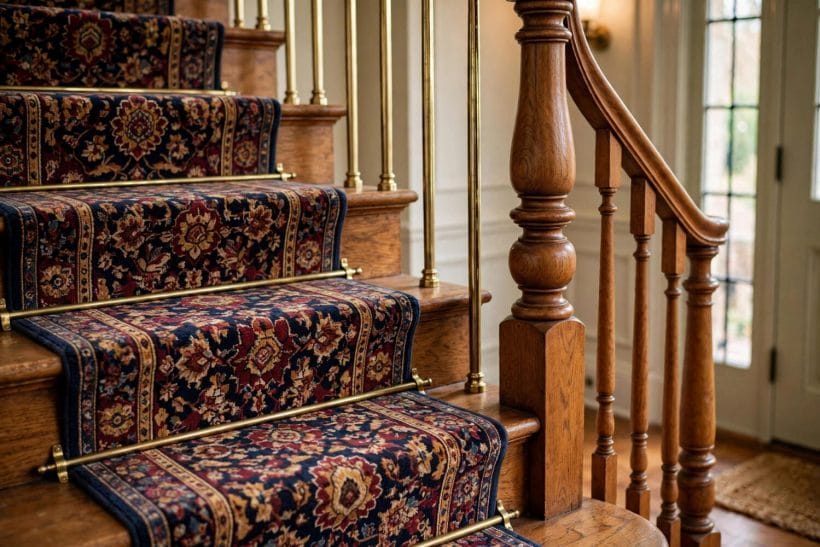
After layout and colour, touch is what people remember: the tread, the runner and the definition between steps. These choices shape comfort and character at the hardest-working surface in the hall.
17. A Patterned Runner Leading the Eye Up
A patterned runner draws a clear, inviting path from the front door to the rooms above. Pattern hides daily wear gracefully and gives a plain stair its personality in one welcoming band.
18. A Plain Runner in a Deep, Calm Tone
A plain runner in a deep tone feels tailored and calm, letting the stair shape and railing carry the interest. It suits patterned hall floors where one more motif would be too many.
19. A Light Runner for a Bright Stairwell
A light runner keeps a bright stairwell feeling open and lifts darker timber treads without repainting anything. It asks for regular care, and in return the entry feels fresher and more spacious.
20. Bare Timber Treads, Kept Honest
Bare timber treads show the material plainly and suit households that prefer a crisp, uncarpeted line. The stair reads more architectural, and the grain becomes the quiet decoration of the foyer.
21. Painted Risers as the Quiet Detail
Painting only the risers, while treads stay timber or carpeted, adds definition step by step without overwhelming the hall. It is a gentle, easy-to-refresh way to introduce colour.
22. A Runner Paired with a Hall Rug
When the runner and the hall rug share a family of colour or pattern, the entry reads as one dressed floor from door to top step. Keep the pairing related, not identical, and the effect stays relaxed.
23. Carpeted Steps for a Softer Arrival
Fully carpeted steps soften sound and feel gentle in a busy family entry. The stair becomes quieter underfoot and warmer in character, while railing and walls keep the look composed.
24. Stone-Look Treads for a Cool, Formal Entry
Pale, stone-look treads give a formal foyer a cool, composed footing that pairs beautifully with white walls and dark railings. The effect is grand; the detailed marble conversation belongs to its own collection elsewhere.
5. Railings, Balusters and the Handrail Line
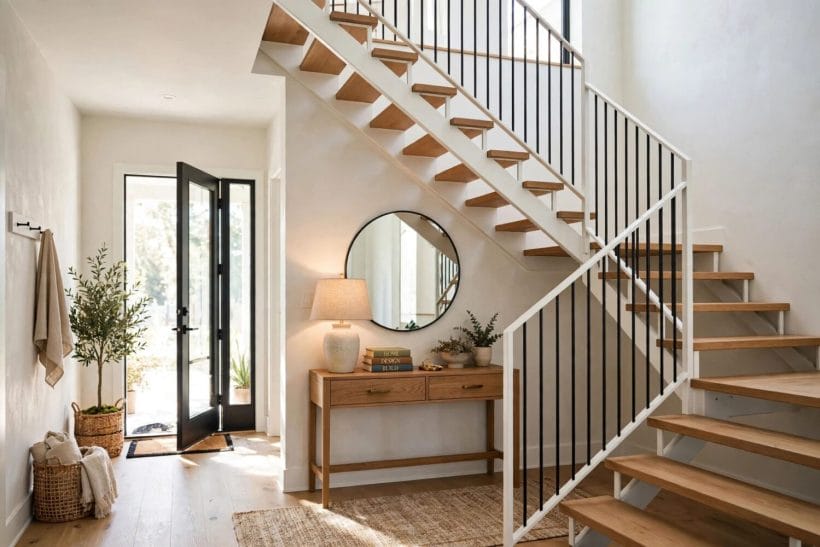
The railing is the line the eye follows from the door, and the handrail is what every guest touches. Both are covered here in general terms only, as design character.
25. Slim Dark Balusters Against White
Slim dark balusters against white walls and risers draw a crisp, rhythmic line up the stair. The contrast feels classic and modern at once, keeps the guard light and flatters curved and straight flights.
26. Turned Timber Balusters for a Classic Hall
Turned timber balusters bring a crafted, traditional rhythm to the entry stair. Their shaped profile catches light step by step, suiting paneled halls and warmer timber schemes.
27. A Glass Guard for an Open View
A clear glass guard keeps the foyer view open from door to landing and lets daylight travel through the stair. The flight feels lighter, the hall larger and the treads become the visible feature.
28. Simple Square Balusters, Kept Calm
Square balusters in a plain, even rhythm are the quiet choice that suits almost every entry. Nothing competes with the stair shape itself, and the look ages gracefully.
29. A Continuous Timber Handrail Line
A smooth timber handrail following the flight in one continuous line feels warm and reassuring to the hand. Its unbroken sweep is often the most elegant line in the foyer.
30. A Dark Handrail over Pale Balusters
A dark handrail floating over pale balusters gives the stair a clear, readable top line from the front door. The contrast guides the eye upward and suits two-tone stairs particularly well.
31. Delicate Metalwork with a Slim Profile
Delicate metal balusters with a slim profile keep a formal entry feeling light rather than heavy. A restrained pattern reads as texture from the door and rewards a closer look.
32. A Solid Half-Wall Guard for a Modern Entry
A solid half-wall in place of open balusters gives a modern foyer a sculptural, calm edge. It suits open contemporary flights that prize clean planes.
6. Walls, Panelling and What Frames the Stair
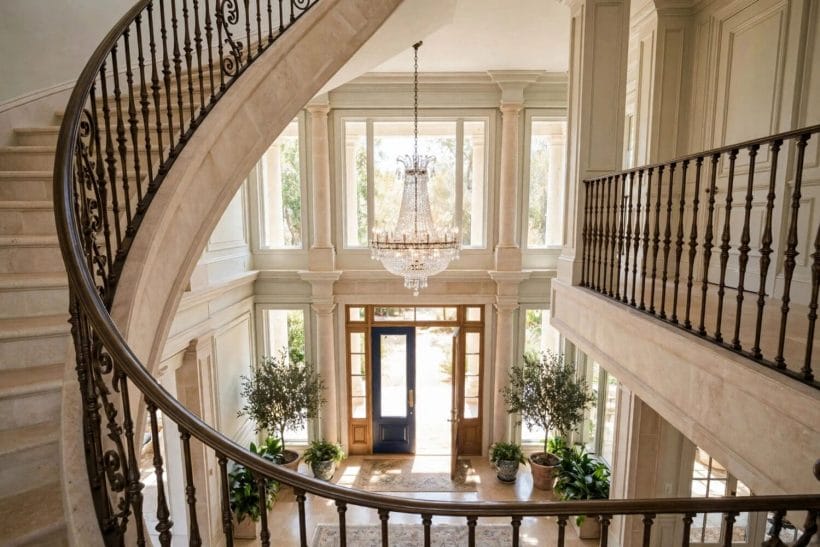
The stair is only half the picture; the walls decide whether it looks framed or forgotten. Panelling, colour and art turn the passage upward into the foyer’s main composition.
33. Wall Panelling Following the Rise
Panelling that follows the rise of the stair gives the wall the same crafted care as the flight itself. The angled line feels tailored and suits classic and transitional entries especially well.
34. A Gallery Wall Climbing with the Stair
Pictures climbing the wall in step with the flight turn the journey upstairs into a small gallery. Keep frames in a related family and the collection rewards both the daily climb and the first glance.
35. One Large Picture on the Landing Wall
A single large picture on the landing wall gives the entry stair a destination. Seen from the door, it anchors the composition and gives the foyer a focal point beyond the steps.
36. A Mirror Brightening the Stair Wall
A mirror on the stair or landing wall borrows light from the door and windows and returns it to the hall. It widens narrow entries and gives departing guests a last useful surface.
37. Two-Tone Walls Split at Handrail Height
Splitting the stair wall into a deeper tone below and a paler tone above echoes the two-tone stair itself. The lower band grounds the flight, the upper keeps tall walls light.
38. A Calm Patterned Wallpaper Above the Stair
A calm, small-scale pattern above the stair adds texture without crowding the foyer. Keep the palette close to the stair colours and the pattern reads as atmosphere from the door.
39. Exposed Brick or Stone beside the Flight
A natural brick or stone wall beside the flight gives the entry texture and age that paint cannot imitate. Timber treads and a simple railing sit beautifully against it.
40. Plain White Walls Letting the Stair Speak
Plain white walls are a deliberate frame: they hand all attention to the stair’s shape, timber and runner. In bright foyers this restraint feels gallery-like, and changing the look later needs only new art or planting.
41. A Painted Stair Wall in a Deep Accent Tone
One deep accent wall behind the flight makes pale treads and railings stand forward in relief. The foyer gains depth, while the remaining walls stay pale so the accent never darkens the welcome.
7. Lighting the Entry Stair
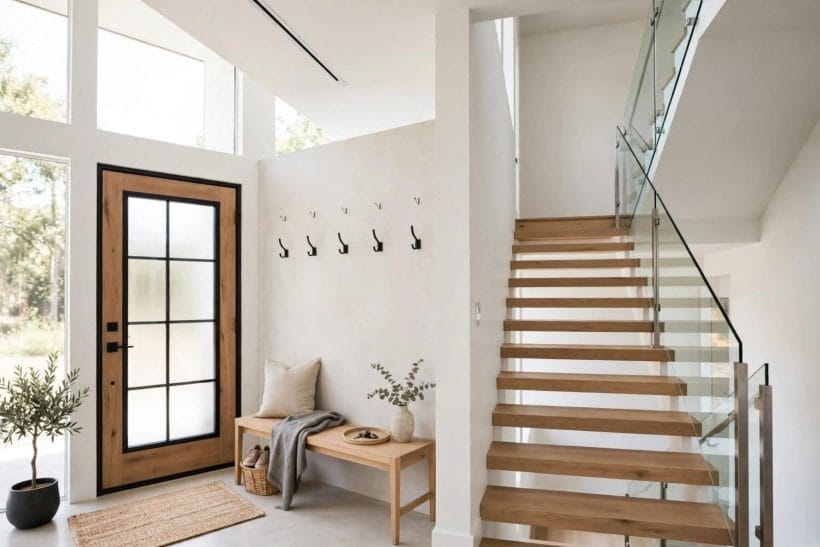
Light is what turns a good entry stair into a memorable one, morning and evening alike. The aim is a welcoming glow that flatters the materials, defines the route upward and makes the foyer feel inhabited from the moment the door opens.
42. A Chandelier Centred over the Foyer
A chandelier centred over the foyer is the classic partner to an entry stair: it fills the tall space, sparkles against the railing line and gives the arrival its ceremony. Scale matters more than ornament in its character.
43. A Pendant Low over the Landing
A pendant hanging over the landing marks the halfway point of the climb with a pool of warm light. It gives the landing purpose, flatters any picture on its wall and breaks a tall stairwell into human-scaled moments.
44. Wall Sconces Climbing with the Flight
Wall sconces stepping up beside the flight spread light evenly where it is needed and look beautiful doing it. Their rhythm echoes the balusters, and the stair feels accompanied rather than merely lit from a single distant source.
45. Daylight from a Tall Stair Window
A tall window on the stair wall is the finest light an entry can have: daylight washes the treads, animates the runner’s pattern and changes the foyer’s mood kindly through the day. Keep its dressing simple and sheer.
46. A Glazed Front Door Borrowing Light
A glazed front door lends its daylight directly to the foot of the stair, so the welcome begins bright even in a hall without windows. Frosted or patterned glazing keeps privacy while the glow does its quiet work.
47. Warm Light for Evening Arrivals
Warm-toned lighting in the evening turns the entry stair into the house’s hearth: timber glows, deep colours deepen kindly and guests feel sheltered at once. Layer it gently rather than brightly and the foyer stays restful.
48. A Small Lamp on the Hall Console
A small lamp on a console near the foot of the stair adds a low, domestic glow that overhead lights cannot give. It signals that the house is lived in and loved, and it softens the stair’s lower steps kindly.
49. Subtle Step Emphasis for a Clear Route
Gentle emphasis at the steps themselves, through light and contrast in general terms, makes the route upward read clearly at a glance. The effect should feel like guidance, not display, supporting the chandelier or daylight above it.
8. The Foot of the Stair: Newel, First Step and Landing Pause
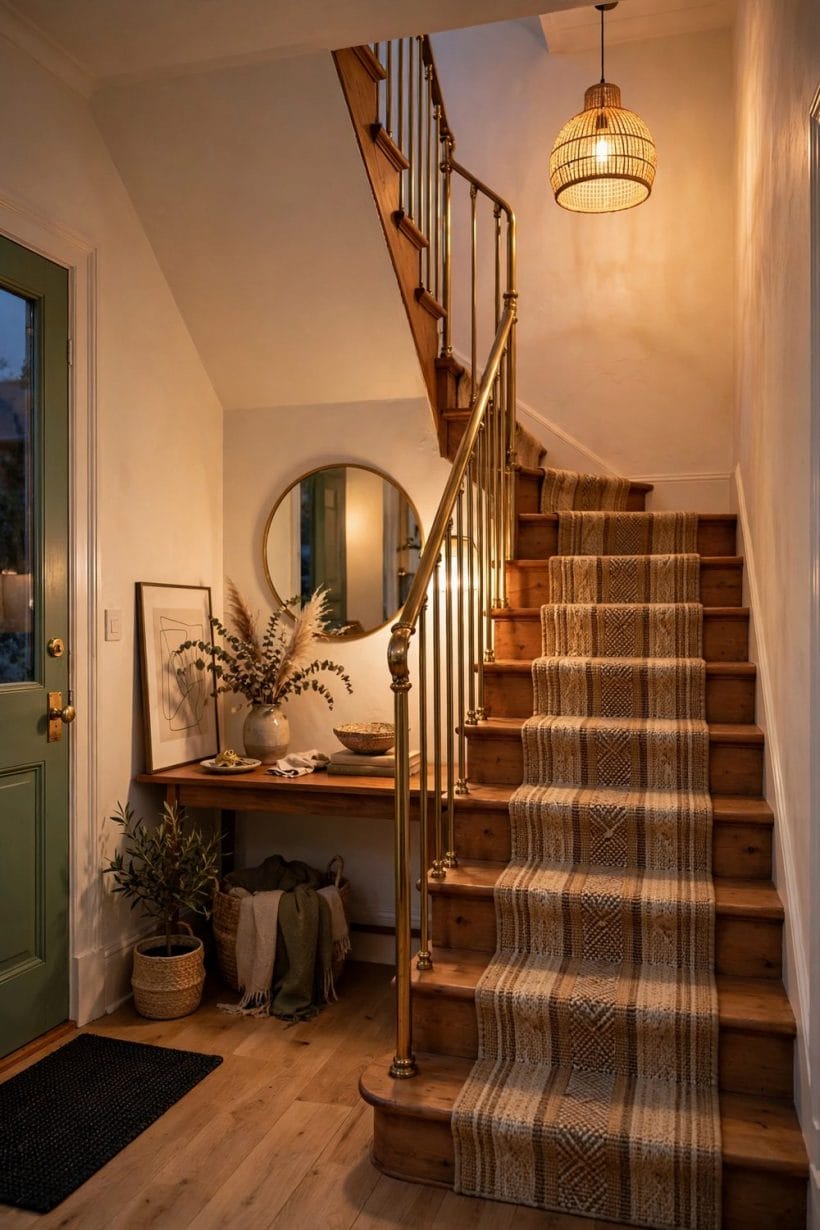
Guests pause at the foot of the stair, coats in hand, taking in the house. That small zone, the newel, the first step and the landing above, carries more first-impression weight per square moment than anywhere else in the entry.
50. A Substantial Newel Anchoring the Flight
A substantial newel post at the foot anchors the whole flight visually and gives the hand a confident first hold. Its scale should suit the stair: generous in a grand foyer, neat and plain in a modest one.
51. A Rounded First Step Inviting the Climb
A first step that curves or softens at its edge invites the climb and widens the welcome at the exact point guests commit to it. The gesture is small, gracious and especially kind in curved and formal entries.
52. A Bench Beside the Foot of the Stair
A bench beside the foot of the stair gives arrivals somewhere to sit, set bags down and take off shoes without crowding the flight. It also gives the foyer a furnished, settled feeling that a bare hall cannot match.
53. A Console Table Framing the Stair Base
A slim console against the wall at the stair base holds a lamp, a bowl for keys and one beautiful object. It frames the flight like furniture in a room, because that is exactly what a good foyer is.
54. A Plant Softening the Newel Corner
One generous plant at the newel corner softens the junction between floor, stair and wall. Greenery at this exact spot photographs beautifully, welcomes naturally and keeps even the grandest entry feeling like a home rather than a set.
55. The Landing as a Small Gallery Pause
Treating the landing as a pause, with a picture, a small chair or a window seat in character, rewards the climb halfway. Guests notice the care, and the stair becomes a journey with a middle, not just a means.
56. A Runner that Starts the Story at the Door
Where the hall floor, a rug and the stair runner are planned as one sequence, the story starts at the threshold and never breaks. Related tones carry the eye from door to landing in one unbroken, welcoming line.
57. A Clear, Uncluttered Foot of the Stair
The simplest foot-of-stair idea is restraint: no stored clutter, no obstacles, just the newel, the first step and room to turn. A clear base makes every stair look better and every arrival feel calmer, whatever its size.
9. Small, Narrow and Shared Entries
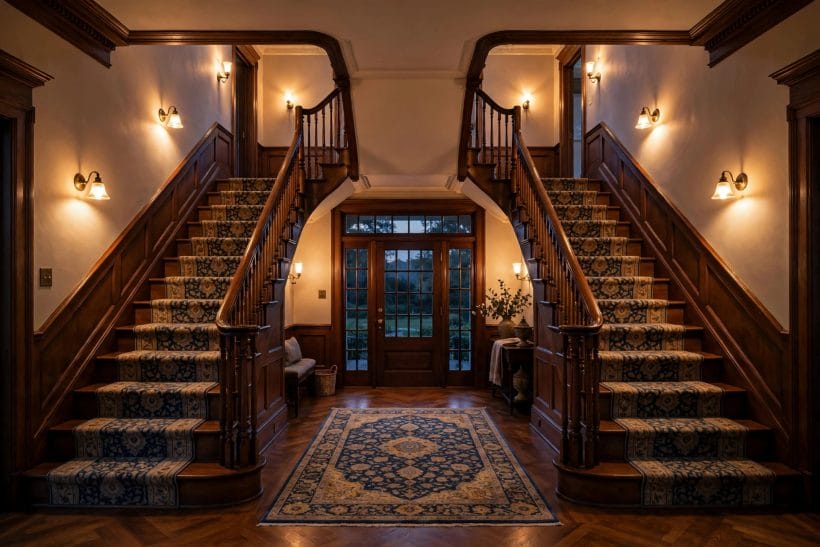
Not every entry is a grand foyer, and the stair in a small or shared hall deserves the same design respect. The room-side thinking sits with the entryway collection already noted; here the flight itself is made to feel generous in tight company, much as front porch ideas makes a small arrival outside feel considered.
58. A Pale Scheme Widening a Narrow Stair
Pale treads, risers and walls widen a narrow entry stair by refusing to absorb its light. Keep the railing slim in profile and the runner, if any, light in tone, and the tightest hall breathes noticeably easier daily.
59. An Open-Riser Look Lightening a Tight Hall
An open-riser look lets light and sight pass through the flight, so a small foyer keeps its sense of space. The stair feels like furniture rather than structure, and the floor beneath stays visible, useful and calm.
60. A Slim Railing Keeping Every Bit of Width
In a narrow hall the railing’s profile matters: a slim, simple guard keeps the flight feeling as wide as it is. Plain balusters or a neat half-wall both serve, so long as nothing bulky crowds the passage.
61. Storage Tucked Beneath Without Bulking the Stair
The space beneath an entry stair can hold coats, shoes and household overflow in general terms, but its face should stay calm from the door. Flush, quiet fronts keep the foyer composed and the stair itself the feature.
62. A Mirror and Light Doubling a Small Entry
In a small entry, a mirror near the stair and good warm light together double the sense of space more honestly than any structural change. The flight looks intentional, the hall feels twice as welcoming and guests relax.
63. A Short Runner Adding Warmth Without Weight
A runner in a small entry should add warmth without visual weight: a calm pattern, a related tone and tidy edges. It softens sound in a hard-working hall and gives the compact stair its finished, cared-for feeling.
64. The Stair as the Only Decoration Needed
A small foyer often needs no decoration beyond a well-kept stair, one plant and good light. Restraint keeps the arrival clear, the cleaning simple and the stair’s own shape, honestly the best feature, entirely in charge.
65. A Shared Entry Kept Bright and Neutral
Where an entry is shared or leads to several rooms, a bright, neutral stair scheme pleases everyone and dates slowly. Timber warmth, white paint and one calm runner colour compose a welcome that no household member tires of.
66. A Tiny Foyer with a Grand Gesture
One grand gesture, a beautiful newel, a striking runner or a fine light fitting, lifts a tiny foyer out of apology entirely. Keep everything else quiet around it and the small entry feels chosen, even a little proud.
10. Everyday Living: Comfort, Care and Costs in General Terms
An entry stair is climbed more often than any other in the house, carrying shopping, children, guests and laundry. These final ideas weigh daily comfort, honest upkeep and cost drivers in general terms, so the beautiful choice is also the livable one.
67. Quiet Steps for a Peaceful House
A stair that feels solid and sounds quiet underfoot lifts the whole house’s sense of quality. Carpet, runners and well-kept timber all contribute in character; in daily life the calm of a quiet climb is noticed by everyone.
68. A Runner Chosen for Busy Traffic
The entry runner works harder than any carpet in the house, meeting outdoor shoes at the door. A forgiving pattern, a deeper or mottled tone and a dense, practical character keep it looking cared for between cleans.
69. Timber Treads that Age Gracefully
Timber treads gather the marks of family life and, chosen well, wear them as patina rather than damage. A finish the household is happy to maintain honestly matters more than any promise of perfection at the start.
70. Painted Parts Refreshed Seasonally
Painted risers, balusters and walls near the stair take the scuffs of daily passage. The kind scheme is one whose refresh is simple in character, so a weekend’s attention returns the whole entry to its composed best.
71. Lighting Kept Warm and Welcoming Daily
Everyday lighting should serve the ordinary evening as kindly as the grand arrival. Warm, layered light at the stair means the last climb of the day feels as considered as a guest’s first one in the morning.
72. Cost Drivers Weighed Honestly
In general terms, layout complexity, material choice, finish quality and detailing level are what move an entry staircase’s cost, far more than any single fitting. Weighing those drivers calmly at the start prevents every later surprise.
73. Spending First on Shape and Light
If priorities must be set, shape and light repay spending longest: a well-proportioned flight and a beautiful fitting outlast fashionable finishes. Runners and paint can evolve with taste; the stair’s bones and glow are forever.
74. Keeping the Pillar in View for Bigger Questions
Bigger staircase questions, structures, styles beyond the entry and full-family comparisons, belong with the general pillar linked at the start of this post. Returning there keeps this collection what it promises to be: the entry, in depth.
75. The Stair that Greets Like a Host
The final idea is the whole post in one line: let the entry stair greet like a host. Clear at its foot, warm in its light, honest in its materials and calm in its colours, it welcomes everyone home.
Final Considerations
An entry staircase succeeds when its layout, colour and light were chosen together, for the actual hall, door and household that meet at its foot every day. Grand or modest, it needs no excess, only proportion, warmth and care in the details guests can see and touch.
Start from the door, decide what the first glance should hold, and keep the foot of the stair clear and kindly lit. Do that, and the flight stops being a way upstairs and becomes what it should be: the house, greeting you properly.

0 Comments