

Before the first wall goes up, one decision quietly fixes your tiny house’s weight, warmth and lifespan: what the frame is made of. Timber, light-gauge steel and SIPs each build a different house on the same trailer — and the trailer chassis beneath them has its own contest, steel against aluminum. This guide compares every frame material honestly, then hands you the analyzer.
1. At a Glance: The Frame Decision in Brief
A tiny house actually has two frames: the trailer chassis it rides on, and the wall and roof framing that forms the shell. Both choices ripple through everything else — how much payload is left for furniture and water, how warm the walls stay in January, how the structure ages, and how easily it can be repaired at the side of the road. The honest way to choose is to run every candidate through the same set of attributes — weight, strength, insulation fit, build skill and durability — which is exactly what a frame material analyzer does, and what this guide works through in words. The table below is the short version.
| Material | Character | Watch out for |
|---|---|---|
| Timber framing | Familiar, forgiving, easy to modify | Heavier than steel; needs moisture discipline |
| Light-gauge steel | Light, straight and precise | Conducts heat — thermal bridging must be designed out |
| SIPs | Structure and insulation in one panel | Heavy panels to lift; openings must be planned precisely |
| Steel trailer frame | The industry standard chassis | Heavier; needs corrosion protection |
| Aluminum trailer frame | The weight saver | Costs more; finite fatigue life under road stress |
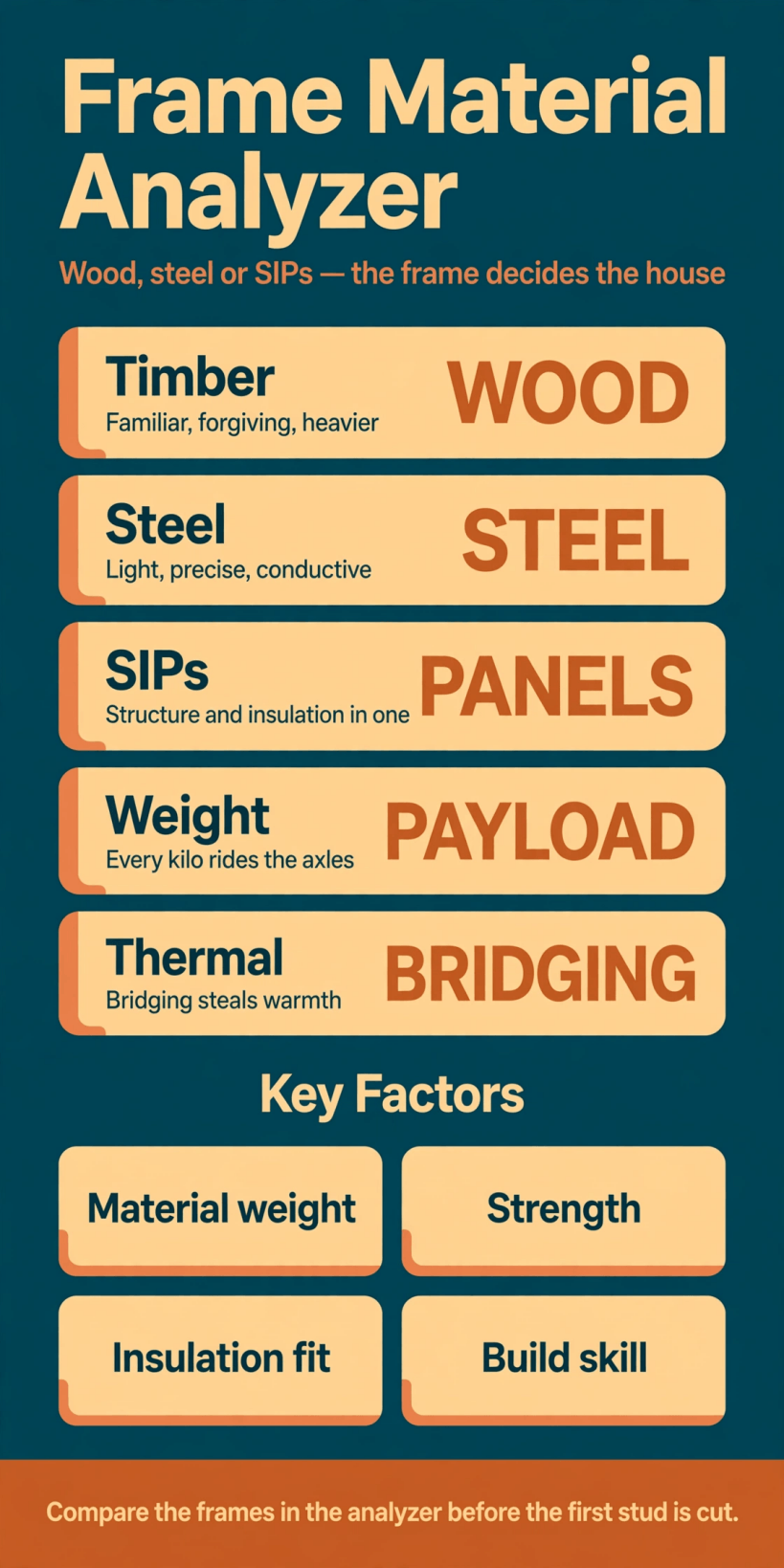
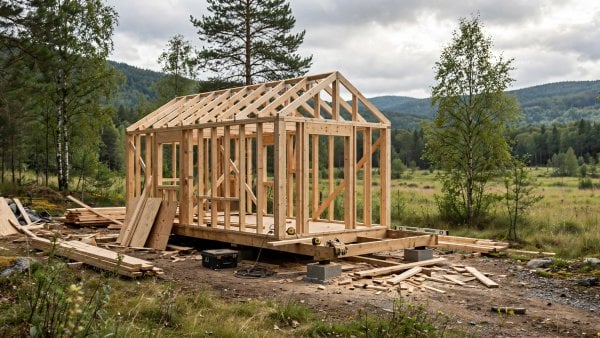
The frame decision at a glance: three ways to frame the shell, and the two attributes — payload and thermal bridging — that punish a careless choice.
2. Two Frames, One Decision: Chassis and Shell
Start by separating the two decisions, because they answer to different forces. The trailer frame is a vehicle component: it flexes over bumps, carries the whole house on its axles, and lives in road spray and weather. The shell framing is a building component: it holds insulation, carries the roof, and decides how the interior feels. Builders sometimes optimise one and forget the other — saving weight in the walls while the chassis eats the payload anyway, or speccing a featherweight trailer under a heavy timber shell.
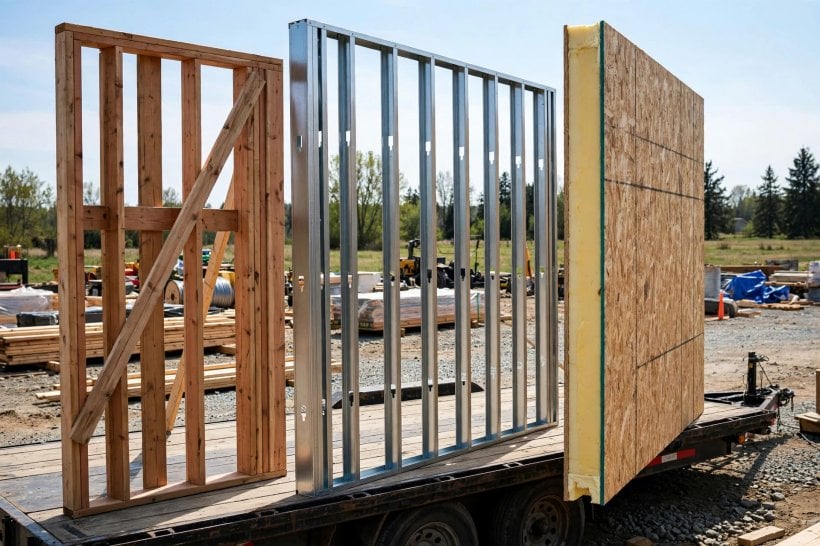
The order of operations matters. Set the payload budget first: the trailer’s rated capacity minus everything the finished house will weigh decides how much frame you can afford, in every sense. Then consider how the house will live — a home that moves monthly stresses its chassis completely differently from one parked for good — and only then compare materials attribute by attribute. Our side-by-side steel vs wood framing weight comparison shows how quickly the shell materials alone diverge on the scales.
3. Timber Framing: Familiar, Forgiving, Heavier
Timber is the default for good reasons. The skills are everywhere, the tools are ordinary, and the material forgives small errors: a stud cut a fraction short can be packed, a misplaced nail can be pulled, and a wall can be modified years later with nothing more exotic than a saw and a drill. For a first-time self-builder, that forgiveness is worth real money, because it converts mistakes from structural problems into afternoon fixes.
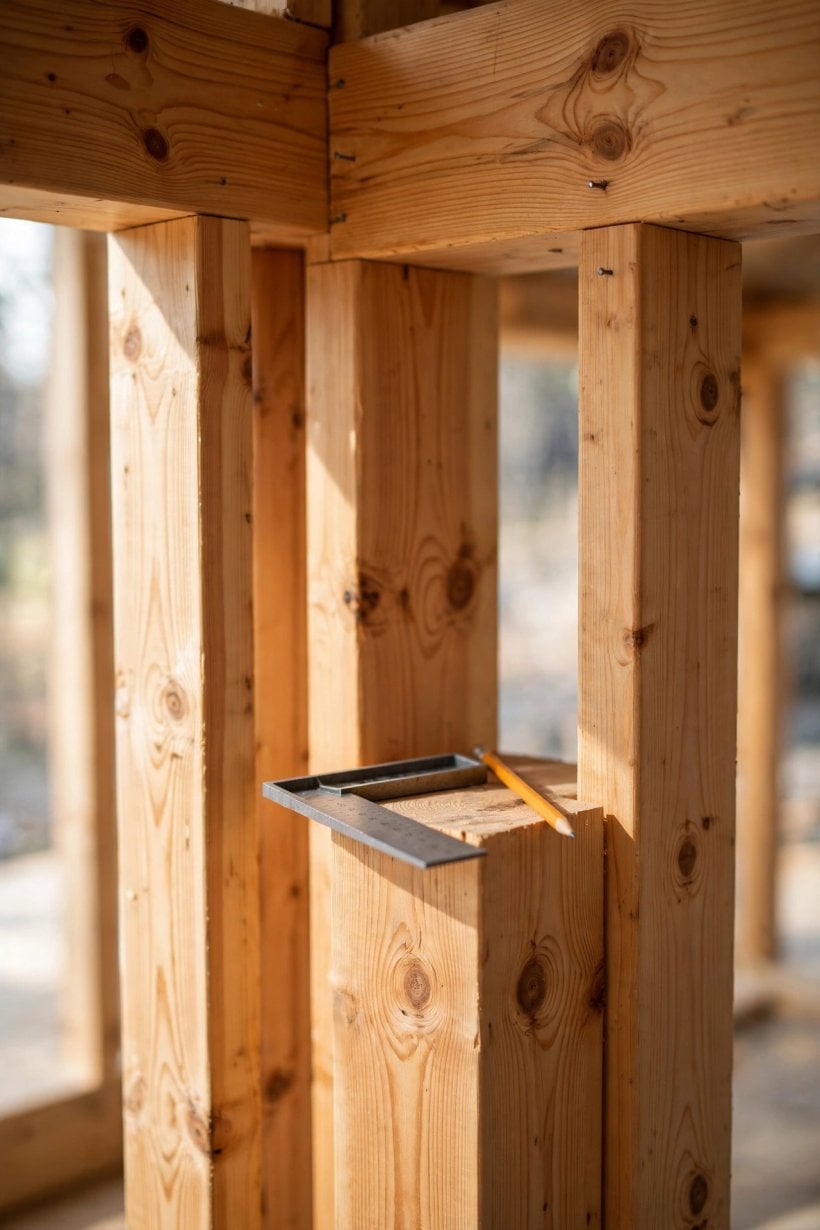
Timber also grades and sources easily. Structural lumber is sold in standard sizes everywhere, so a build can start without special orders, and a damaged or mis-cut member can be replaced the same day from almost any supplier. Offcuts become blocking, bracing and firewood rather than waste. For a builder working far from a city — which describes a good share of tiny house build sites — that availability is a genuine structural advantage, not a convenience.
The costs of timber are weight and moisture. A timber shell is typically the heaviest of the three shell options, and every extra kilo is payload the trailer can no longer spend on tanks, batteries or belongings. Timber also asks for discipline: keep it dry during the build, detail the wall so any moisture that gets in can get out, and it will serve for decades. Let it sit wet inside a sealed wall and the frame quietly becomes the problem. Timber’s thermal behaviour sits between its rivals — it conducts far less heat than steel, so bridging is gentler, though the stud lines still show up on a thermal camera on a cold night.
4. Light-Gauge Steel: Light, Precise, Conductive
Light-gauge steel framing replaces sawn studs with cold-formed C-channels, and the personality changes completely. Every member arrives straight, true and identical — no crowned studs, no twisted boards, no sorting the pile. The shell that results is typically lighter than its timber equivalent and will not rot, warp or feed insects, which is why steel keeps winning converts among builders who plan to keep their house for a long time.
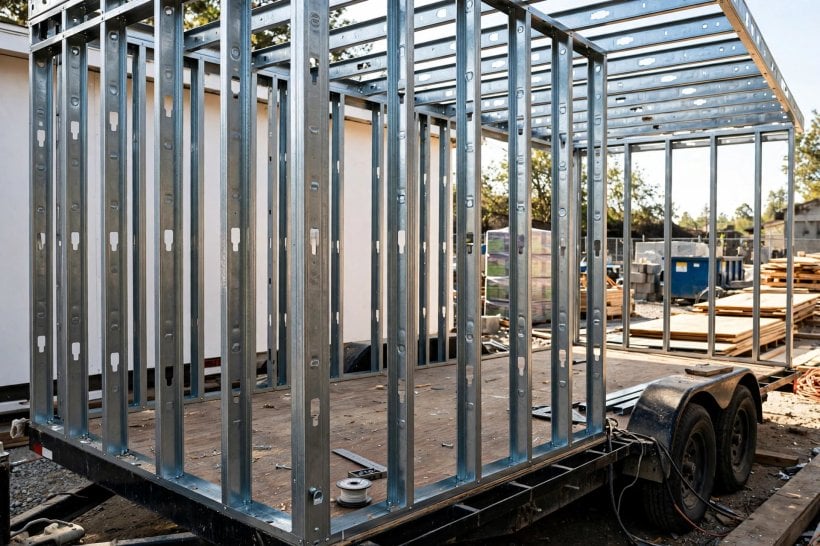
The trade is conductivity. Steel moves heat eagerly, so an uninterrupted steel stud is a thermal bridge from the warm interior straight to the cold exterior skin — a problem the next sections return to, because it is manageable but never ignorable. Steel also changes the fastening logic: screws instead of nails, self-drilling points instead of a nail gun’s instant grip, and cuts made with snips or a chop saw rather than a quick pass over the mitre saw. Nothing about it is harder, exactly — it is simply a different craft, and it rewards builders who measure precisely over those who prefer to adjust as they go.
5. SIPs: Structure and Insulation in One Panel
Structural insulated panels take a different route entirely: instead of a frame that is later filled with insulation, the panel is the frame and the insulation at once — a rigid foam core bonded between two structural skins. A SIP shell goes up fast, because whole wall sections arrive as single pieces, and the finished envelope is continuous in a way stick-built walls rarely achieve: no stud lines, no cavities, no gaps where insulation was stuffed carelessly around a wire.
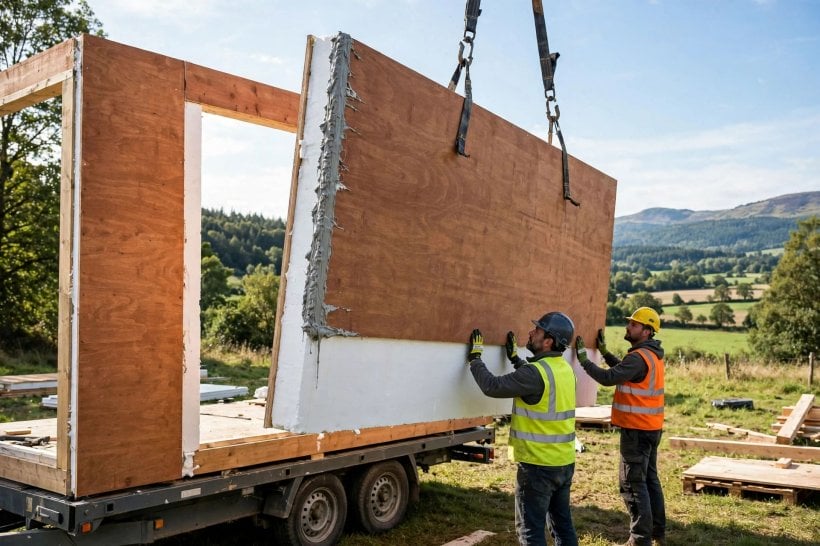
The demands are front-loaded. Panels are typically made to order for the design, so the drawings have to be finished — really finished — before the order goes in, and lead time joins the build schedule as a fixed appointment rather than a flexible one. Panels are heavy and awkward, so lifting help or equipment becomes part of the plan. Openings for windows and doors must be decided precisely and early, because cutting a new hole in a finished panel is a much bigger conversation than moving a stud. Joints between panels carry the whole airtightness story — splines, tapes and sealants at every seam, done carefully once, because they will be buried behind linings. The SIPs vs stick framing analyzer on this site walks through that head-to-head in tool form if you want the comparison quantified before you commit.
6. Weight and Payload: Every Kilo Rides the Axles
On a foundation, frame weight is mostly an engineering footnote. On a trailer, it is the budget everything else is paid from. The axles and tyres set a hard ceiling, and the frame — chassis plus shell — is the first and largest withdrawal. What remains is your life: water, batteries, appliances, books, people. This is why the analyzer below treats the trailer frame itself as a weight decision: on its own comparison, an aluminum chassis typically saves a substantial share of the frame weight — the tool works on a saving in the region of thirty to forty percent — while typically costing around twice as much as steel.
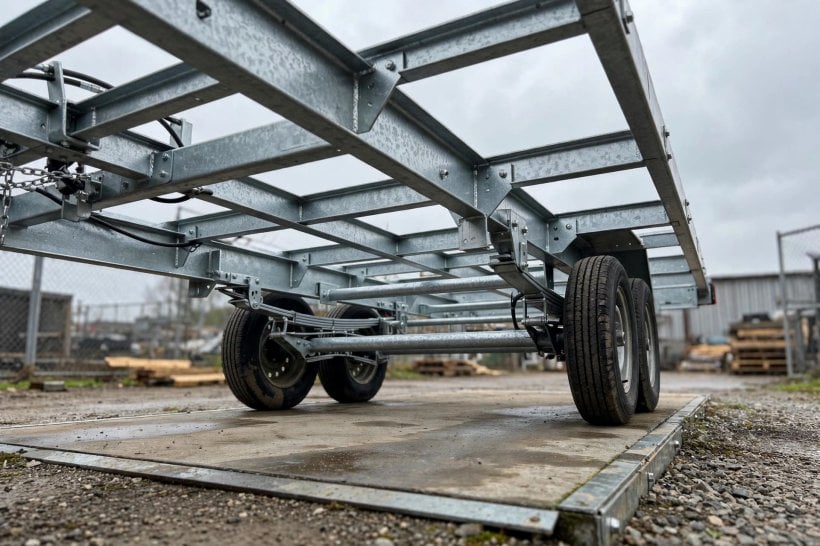
Distribution matters as much as the total. Weight placed high or far from the axles changes how the house tows, which is why frame choice and layout planning belong in the same conversation — our axle placement guide for tiny house trailers covers how the load should sit over the axles for safe towing. The practical rule: weigh the frame decision early, while it is still a spreadsheet, because after the walls are up the only remaining weight savings come out of your belongings.
7. Thermal Bridging: The Warmth That Leaks Through the Frame
Insulation gets the attention, but the frame decides how much of it counts. Every stud, plate and rafter is a path through the insulation layer, and heat takes it — flowing out along the framing in winter and in along it in summer. The effect is called thermal bridging, and its size depends on the material: steel bridges aggressively because it conducts so well, timber bridges modestly, and a SIP wall barely bridges at all except at its joints and openings.

The counters are known and buildable. A continuous layer of insulation outside the frame breaks the path entirely, whichever material you chose. Inside, the insulation between studs still has to be fitted without gaps or compression — the material comparison in our guide to insulating a tiny house with spray foam, rockwool or sheep’s wool shows how each fill behaves inside real cavities. And because bridged studs run cold, they are where condensation gathers first, which ties the frame decision directly to the moisture logic in our vapor barrier placement guide: a cold frame inside a wet wall is the failure the whole system exists to prevent.
8. Skills and Tools: What Each Frame Asks of the Builder
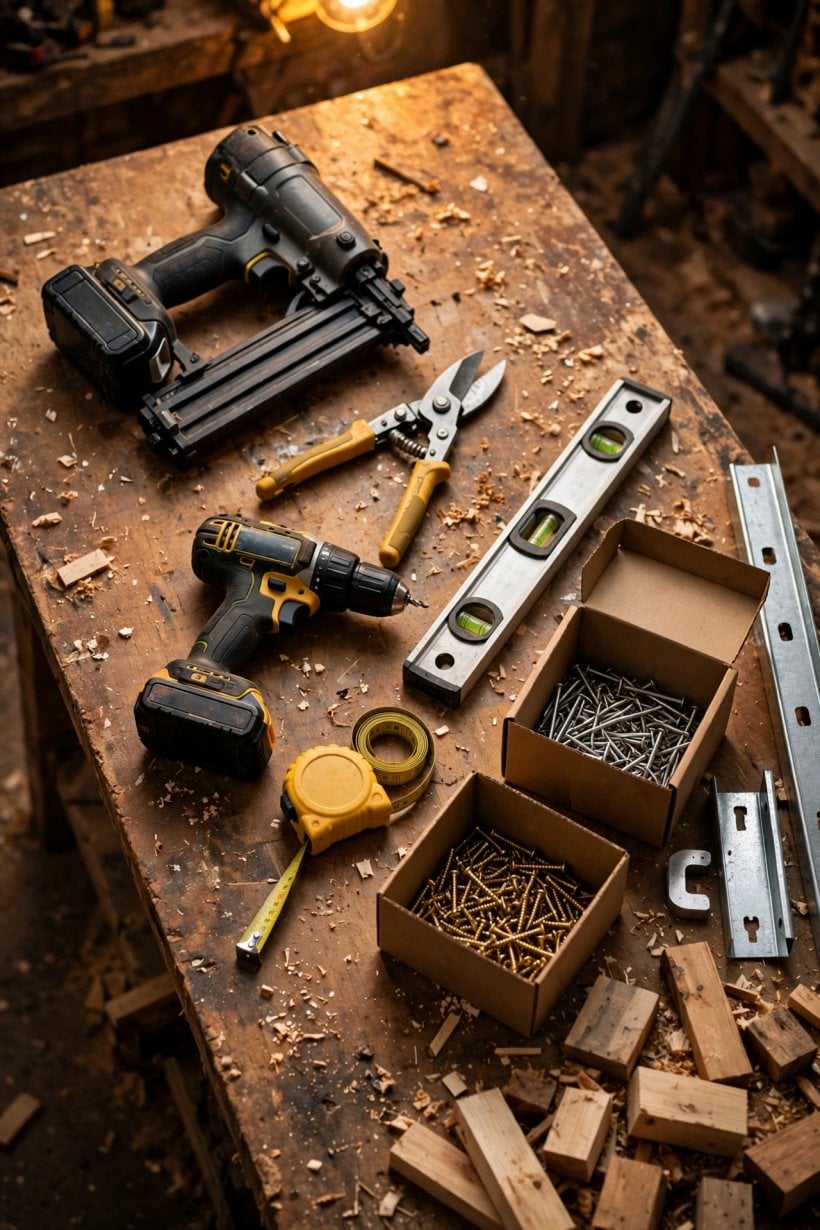
Every material is buildable; they simply ask for different hands. Timber asks for the classic carpentry kit — saws, a nail gun or hammer, a square and a level — and for skills that can be learned from a weekend of practice walls. Steel asks for snips or a metal-cutting saw, a screw gun with the right bits, clamps to hold channels while they are fixed, and the patience to work to tighter tolerances, because steel does not compress or shave down the way timber does. SIPs ask the least daily craft and the most logistics: accurate setting-out, lifting help, and careful sealing at every joint.
Be honest about which builder you are. A material whose craft you enjoy will be built carefully; a material you fight will be built approximately, and approximate framing shows up later as sticking doors, cracked linings and cold stripes. If you are hiring the build out, the question flips: choose the material your builder knows best, because a familiar frame built expertly beats a theoretically better frame built hesitantly, every time.
9. Durability and Repair: Fatigue, Rust and the Long Haul
Frames fail slowly, in characteristic ways. The trailer chassis lives the hardest life, and the guide beneath the analyzer names its central issue: fatigue. Steel, as the original explainer puts it, has an endurance limit — if stresses stay below a certain threshold, it can flex effectively indefinitely without cracking. Aluminum has no such limit: every bump in the road adds a microscopic amount of cumulative damage, a work-hardening that can eventually start cracks. That is why the tool asks how often you will move before it compares anything.
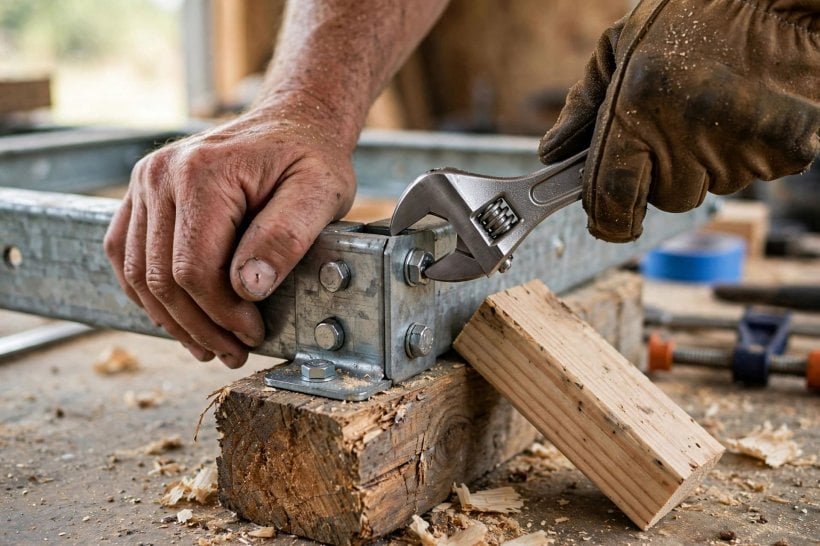
Corrosion is the second front. Aluminum’s rust-free reputation is real, but the original guide’s counterpoint deserves repeating: a hot-dip galvanized steel trailer offers similar corrosion resistance — rated by its makers for fifty years and more — while keeping steel’s structural behaviour and costing less than aluminum. As for repair, timber wins on pure convenience: a damaged stud can be sistered or replaced anywhere with ordinary tools. Steel members can be unbolted and swapped with the same craft that built them. SIP repairs are the most involved, since structure and insulation are one piece. Whichever frame you choose, its flex behaviour over the subfloor matters — the trailer frame rigidity and subfloor visualizer shows how chassis stiffness and the floor above it interact.
10. Using the Analyzer and the Mistakes to Avoid
When you reach the frame material analyzer below, feed it honest inputs. It asks for your trailer length and how often you will move — stationary, seasonal, or nomadic with monthly travel — because that single answer changes the fatigue maths completely. It returns estimated weights and costs for the steel and aluminum frames side by side, the weight you would save, and the premium you would pay for saving it. Run it for the life the house will actually live, not the life in the brochure: a stationary house buys nothing with aluminum’s weight saving, while a nomadic one must weigh that saving against aluminum’s finite fatigue life.
The mistakes repeat reliably. Choosing on material price alone, ignoring that the frame decides payload, warmth and repair for decades. Forgetting the chassis and optimising only the shell. Ignoring thermal bridging until the first winter’s cold stripes appear. Assuming aluminum means maintenance-free, when its real question is fatigue, not rust. And copying a frame from a house that lives a different life — a parked show home and a monthly-travelled nomad need different frames, and the analyzer’s movement question exists precisely to catch that.
Final Considerations
There is no best frame material — there is a best match between a material, a payload budget, a climate and a pair of hands. Timber forgives, steel stays straight and light, SIPs seal the envelope in one move, and beneath them all the chassis choice trades steel’s endurance against aluminum’s saved kilos. Decide the movement pattern first, the payload second, and the material third. Then scroll down to the tool this page was built around and run your own trailer length through it — the numbers it returns are the ones your axles will have to live with.
Aluminum vs. Steel Frame Analyzer
Aluminum vs. Steel Frame Analyzer
Weight Savings vs. Fatigue Life: Make the right choice.
1. Build Parameters
Frequent travel stresses the metal (Fatigue).
Aluminum typically costs 2x more but saves 30-40% weight.
Steel Frame Industry Standard
Aluminum Frame Weight Saver
You save 0 lbs!
+$0 Premium
The Fatigue Problem
Steel has an “endurance limit.” If stresses stay below a certain threshold, it can cycle infinitely without failing. Aluminum does not. Every single bump in the road contributes to cumulative microscopic damage (work hardening), eventually leading to cracks.
People choose aluminum to avoid rust. However, a Hot-Dip Galvanized Steel trailer offers similar corrosion resistance for 50+ years, maintains the structural benefits of steel, and is still cheaper than aluminum.



0 Comments