

You can own the land, plant the seeds, and still get a citation from the city. Some municipalities welcome front-yard gardens, chickens and rain barrels; others treat a tomato plant like a zoning violation. The code on the books — not the soil, not the climate — decides what your homestead dream is allowed to be. Grow where you’re legal.
1. Which US Cities Have the Best Urban Agriculture and Sustainable Living Codes at a Glance
Ask which US cities have the best urban agriculture and sustainable living codes and you are really asking a question about permission. Urban homesteading lives or dies by municipal code: chickens, bees, front-yard gardens, rainwater and composting are permitted in one city and fined in the next, and the difference is written down in ordinances anyone can read before they move. This guide scores cities on five permissions, names the leaders and the strong seconds, exposes the laggards and the hidden HOA layer, and closes with the rural alternative and the activist’s playbook. The table below is the whole ranking logic on one screen; the sections after it take each layer apart.
| Attribute | Detail |
|---|---|
| The Test | Five permissions — chickens, bees, front-yard gardens, rainwater, composting; the city that allows all five is the sustainable city |
| The Hen Standard | 4–6 hens with roosters banned — the gateway livestock rule by which codes are judged |
| The Leaders | Portland, Austin, Seattle, Detroit and Minneapolis — codes written for growers |
| The Strong Seconds | Denver, Chicago, Baltimore and Atlanta — generous, and still reforming |
| The Landmark Reform | Minneapolis overhauled its code in 2012 — the model other cities copy |
| The Laggards | HOA suburbs, aesthetic weed ordinances and blanket livestock bans |
| The Hidden Layer | The HOA — private rules that can forbid what the city code allows |
| The Hierarchy | State law outranks city code — a city cannot legalise what the state restricts |
| The Rural Alternative | Unincorporated county land and the 30-minute ring — services plus freedom |
| The First Check | A 10-minute municipal code search — “[city] chicken ordinance” — before the coop, not after |
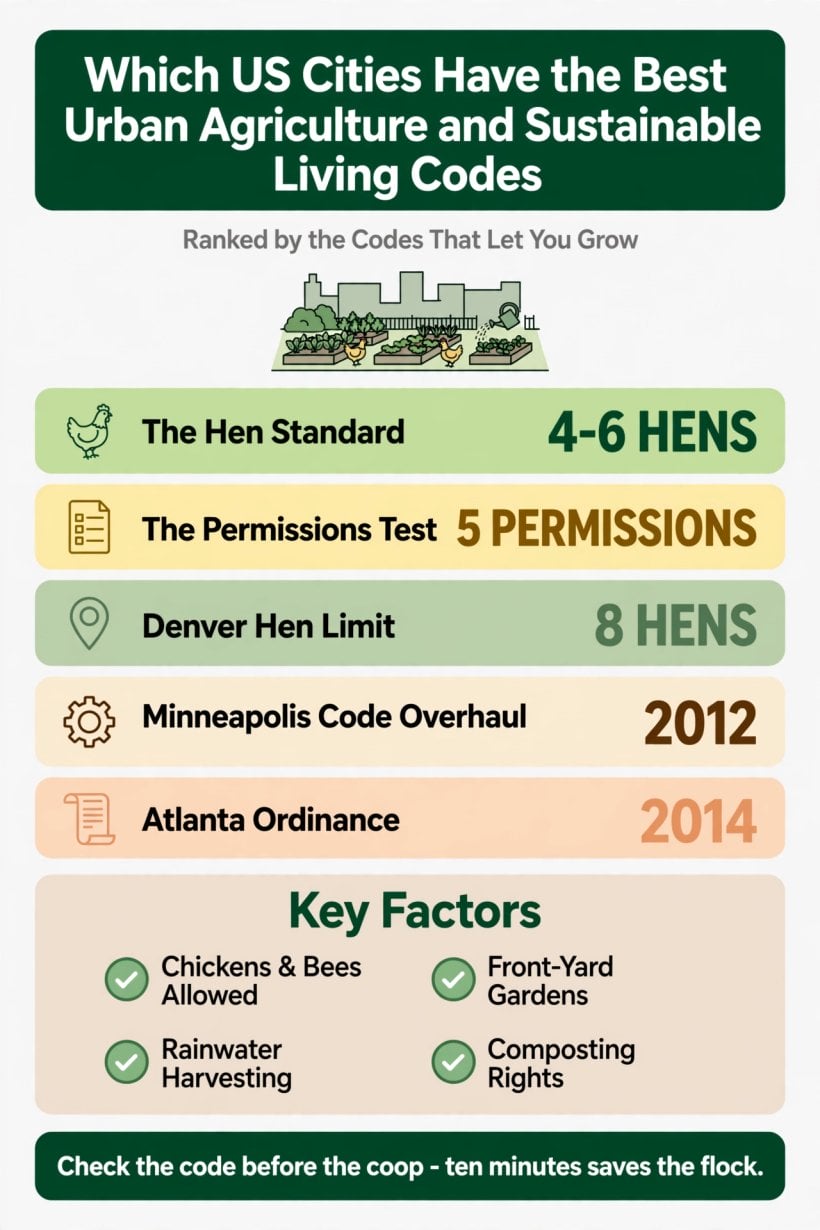
Five permissions decide the ranking: a 4–6 hen standard, Denver’s 8 hens, a 2012 overhaul in Minneapolis and a 2014 ordinance in Atlanta.
Read the table as three questions in sequence. First, what does the code permit — the five permissions of the next section, scored without sentiment. Second, who governs the permission — because a city code is only the top layer, and an HOA beneath it or a state law above it can reverse the answer. Third, what does the pattern predict — the leading cities share progressive councils and available land, and the laggards share private bans and aesthetic enforcement, so a city’s trajectory can be read from its politics and its vacant lots. The sections that follow work through the criteria, the cities in both directions, the checks beyond any list, and the two escape routes.
2. The Five Permissions: What a Sustainable Code Actually Allows
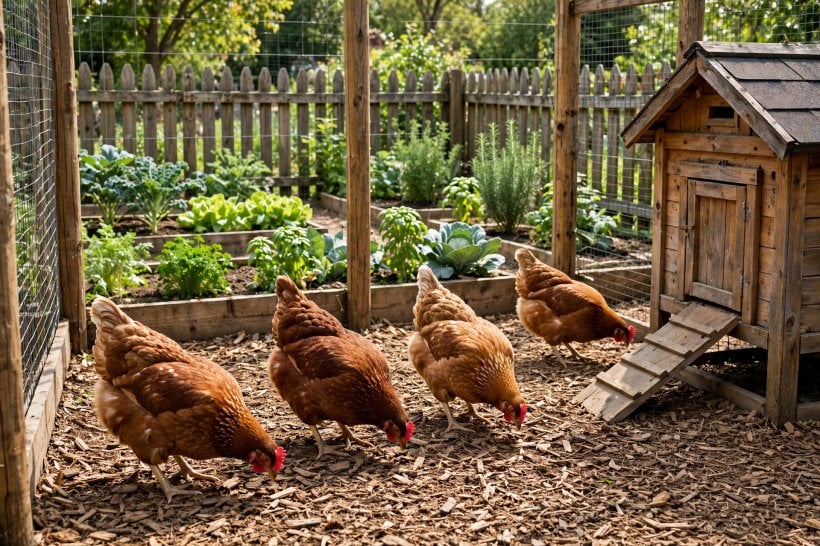
Every ranking in this guide rests on five permissions, and the first is chickens — the gateway livestock. Hens are the animal that tests a code’s philosophy: a city that has thought about urban agriculture has a hen rule, and the standard form is 4–6 hens allowed with roosters banned, a compromise that grants the eggs and the pest control while legislating against the dawn noise that turns neighbours into complainants. Where it bans them outright, the code has answered the larger question too, because a council that fears six hens rarely welcomes anything further down the homestead list.
The second permission is bees — the pollinator permission — and its mature form is a pair of working rules: setback rules that place hives a respectful distance from property lines and footpaths, and registration, so the city knows where its colonies live. The third permission is the visible one: front-yard gardens. The vegetable bed out front is banned in suburbia and permitted in the leader cities, and the distinction is philosophical — whether food growing is treated as a legitimate use of residential land or as an eyesore to be screened behind the house. A city that allows the garden where the sun actually is has understood the grower’s arithmetic; a city that confines it to the shaded backyard has permitted the word and forbidden the thing.
The fourth permission is rainwater — the harvesting — and it is the one permission a city cannot grant alone, because it depends on state + city alignment: the barrel under the downspout sits at the junction of two legal layers, a hierarchy Section 7 takes apart. The fifth is composting: the bins allowed, in their mature form extending to vermicomposting indoors, — the cycle the composting guide to turning organic waste into soil works through in practice, and the water side of the loop is sized in the rainwater harvesting and tank sizing guide. Scoring is then brutally simple: five permissions, counted honestly. The city that allows all five is the sustainable city; everything below that is a partial answer, and the sections on the leaders are simply the roll of cities that score at or near five.
3. The Leaders, Part One: Portland and Austin
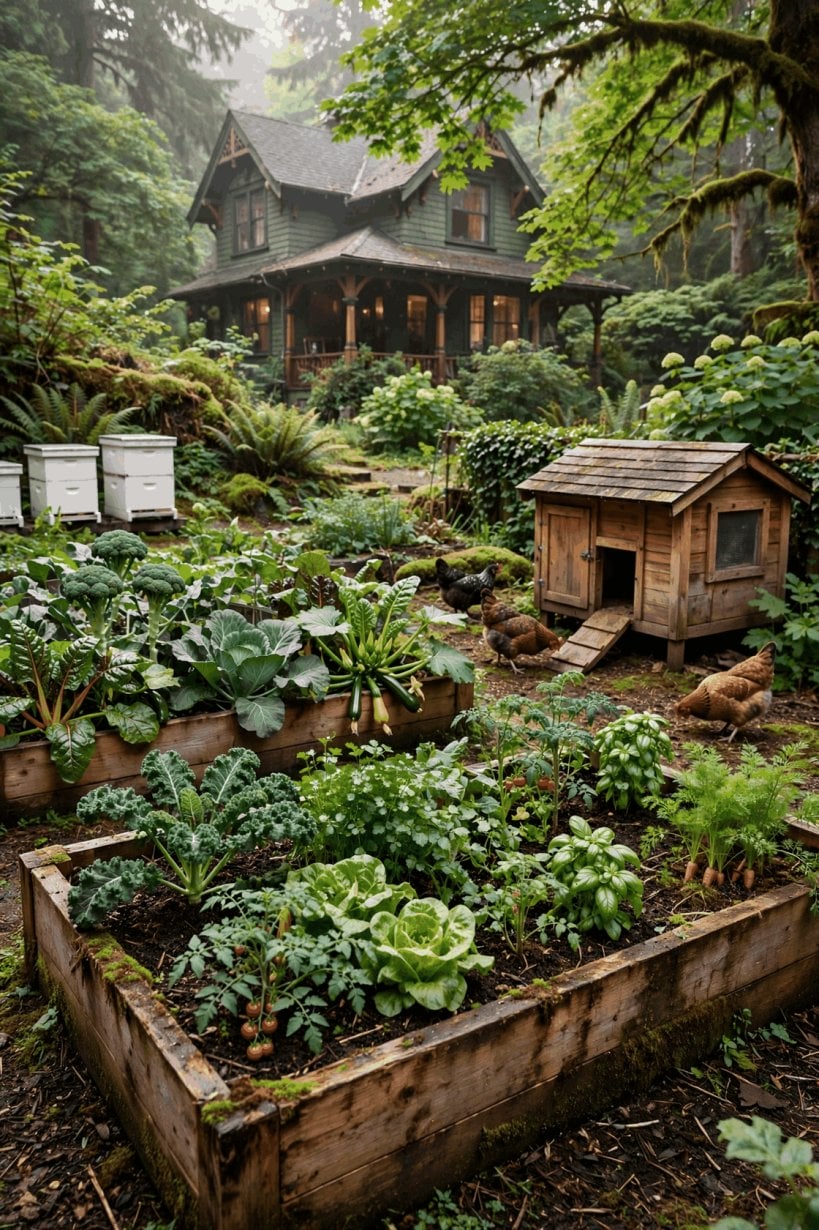
Portland, Oregon is the pioneer — the city whose code was written for growers before most cities knew growers existed as a constituency. Its urban agriculture zoning treats food production as a planned use of the city rather than an exception to be tolerated: chickens, bees and front-yard gardens all sit inside the code’s ordinary permissions. Portland’s lesson is about authorship. A code written with the growing community in the room reads differently from one written about them — the permissions are explicit, and the planning starts from yes.
Austin, Texas is the permissive counterweight — proof that the leader profile is not a regional monopoly. Austin’s homestead exemptions sit inside a wider Texas freedom culture: chickens, bees and gardens are broadly workable, and the green culture of the city supplies the constituency that keeps the code permissive — gardeners who vote, organise and show up. Read together, Portland and Austin describe the two roads to the top of this ranking. One city got there by planning — zoning drafted around urban agriculture as a deliberate civic project. The other got there by temperament — a live-and-let-live code in a city that likes its independence homegrown. Either road arrives at the same place: the five permissions, granted so plainly that residents rarely have to think about them — the true mark of a leader city.
4. The Leaders, Part Two: Seattle, Detroit and Minneapolis
Seattle, Washington is the comprehensive leader — the institutional model. Its urban agriculture program pairs the code with the p-patches, the city’s community garden plots, so the permission to grow comes with somewhere to grow it. That pairing matters: a resident without land of their own is not excluded, because the program holds land in common and allocates it as gardens. Seattle demonstrates that a sustainable code is not only a list of allowances — it is an infrastructure, maintained the way a city maintains any other public good, with the code as its charter.
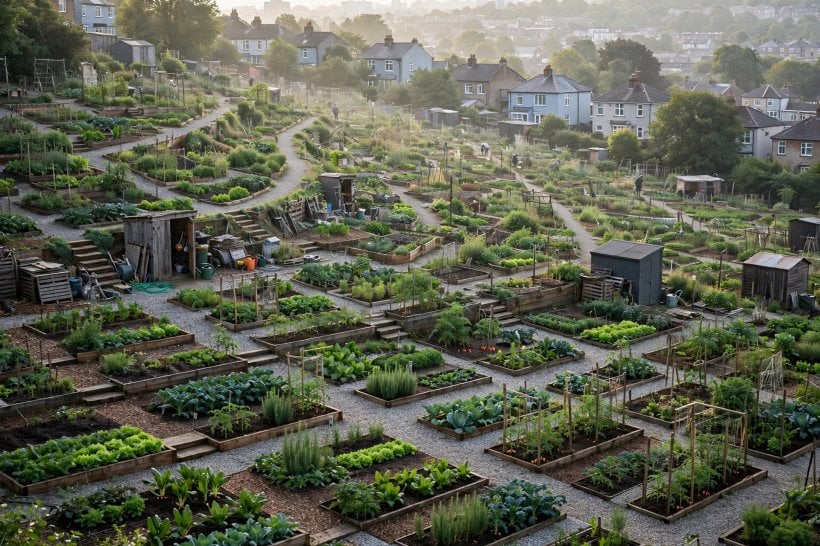
Detroit, Michigan is the vacant-land leader — the urban farming capital that circumstance built. Where land is cheap and lots stand empty, the code’s permissiveness meets the grower’s scarcest resource in surplus, and a movement grows in the space between the two: urban farming at a scale no land-tight city can imitate. Minneapolis, Minnesota is the reformed leader, and for most cities the most relevant of the five, because Minneapolis was not born permissive — it rewrote itself. The 2012 code overhaul brought chickens, bees and market gardens into a modernised code in one deliberate act, — the documented proof that an ordinary city’s code can be opened by ordinance, and the fact Section 10’s activist playbook is built on.
5. The Strong Seconds: Denver, Chicago, Baltimore and Atlanta
Below the leaders sits the tier that decides where the ranking is heading: the strong seconds, cities whose codes are generous and still reforming. Denver, Colorado is the generous one — its 8-hen allowance is the most liberal hen number in this guide, two birds beyond the 4–6 standard, with goats permitted in some zones, a step into real livestock that most urban codes never take.
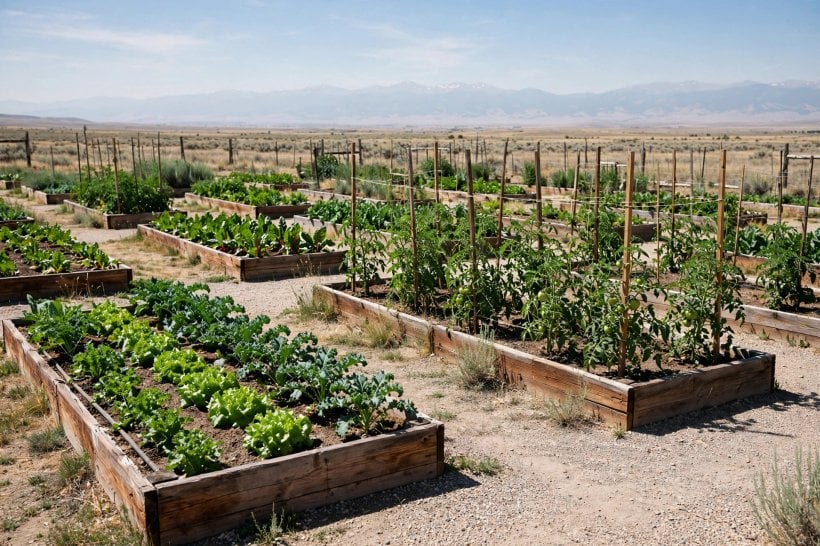
Chicago, Illinois is the community model at scale: a garden program with city-lot leases, turning municipal land into cultivated plots by agreement — the institutional route again, but run as a leasing system across a very large city. Baltimore, Maryland is the farming institutionalist of the South-east: an urban agriculture plan backed by tax credits, the city paying, in forgone revenue, to make growing happen. Atlanta, Georgia is the Southern shift made legible: its 2014 ordinance brought chickens and gardens into the code of a major Southern city, evidence that the reform wave is national rather than coastal. The pattern across all four is the one the original names: progressive councils plus land availability — the formula, and the momentum.
6. The Laggards: HOA Suburbs, Weed Ordinances and Blanket Bans
The laggards fail in three distinct ways, and the first is the most deceptive: the HOA suburb, where the private ban overrides the public permission. The municipal code may allow hens, gardens and barrels — and the homeowners’ association forbids them anyway — the stricter layer. This is the trap that catches buyers who did only the city check: they read the ordinance, found their dream permitted, bought the house, and met the covenant. The defence is unglamorous and absolute: read before you buy — the HOA documents are part of the code stack, and in the suburbs they are usually the binding part of it.
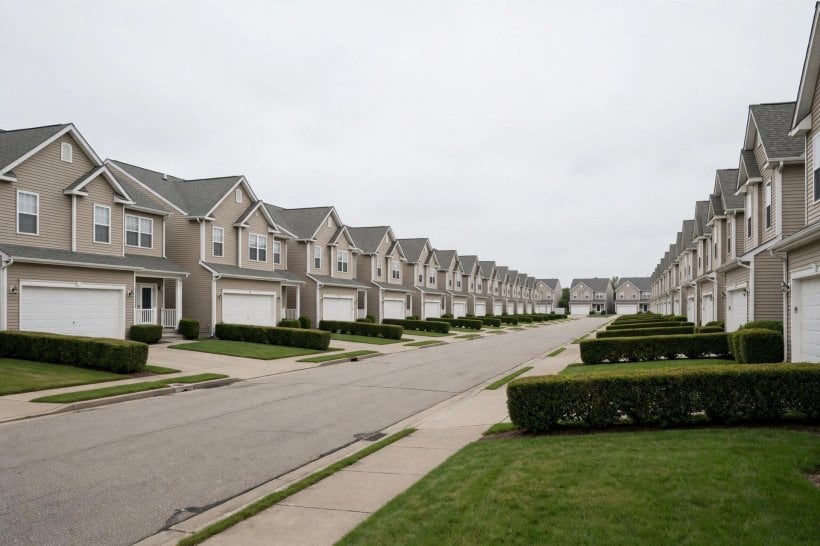
The second failure is the aesthetic city, where the enforcement instrument is the weed ordinance. A front-yard garden, to an inspector working from a tidiness code, reads as “weeds” — and the citation follows the reading. Growers in such cities fight a definitional battle — the bed is deliberate, the plants are food — against an ordinance written to punish neglect. The third failure is the simplest: the blanket livestock ban, the no-chicken cities, holdouts whose codes answer the gateway question with a flat no. They are changing — the national trend runs the other way — but slowly, ordinance by ordinance, which is why the check in Section 9 exists: never assume the trend has reached the specific city, suburb or subdivision you are about to plant in.
7. Beyond the List: Tiny Houses, Solar Permits, State Water Law and Selling the Harvest
No ranking of codes is complete with the five permissions alone, because a sustainable life has four more legal surfaces. The first is tiny houses, and the instrument is the ADU rule — the accessory dwelling unit provisions by which a city decides whether a small dwelling may share a lot with a main house. The ADU rule is the city’s tiny-friendliness expressed in a single clause: where accessory dwellings are permitted plainly, small-footprint living has a legal urban form; where they are banned or strangled by conditions, the tiny house is exiled to the county. The second surface is solar, judged on permitting: the solar-friendly city streamlines it — same-day permits are the benchmark of a system that treats a rooftop array as routine paperwork rather than a special event.
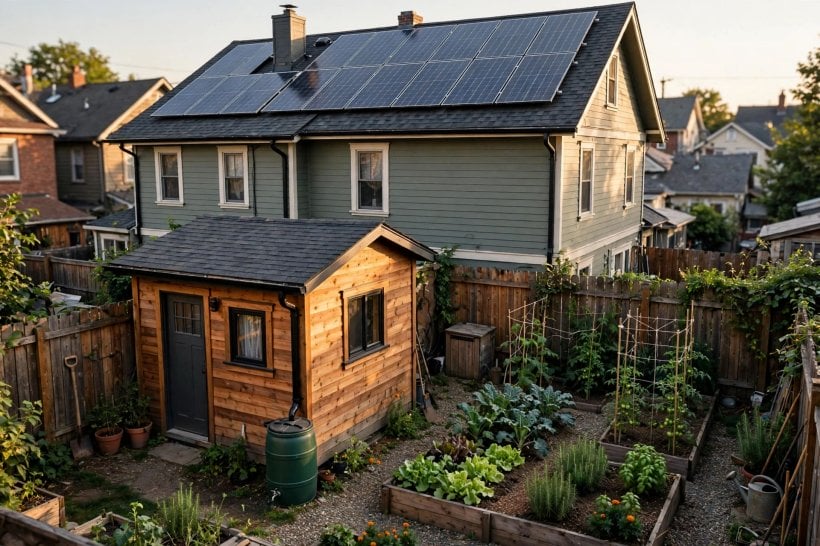
The third surface is water, and it teaches the hierarchy that governs this whole field: the rainwater rule is state law, and the city can’t override a state ban. A permissive city inside a restrictive state cannot legalise your barrel; a restrictive city inside a permissive state can only slow it. The state-by-state position is laid out in the guide to the legality of collecting rainwater, and once the water may legally be kept, the generation side is sized in how much solar power a tiny house needs. The fourth surface is selling: farmers markets and the cottage food rules that govern home-produced food — the income layer, which decides whether a garden may become a livelihood or must remain a hobby the law tolerates. Check all four surfaces alongside the five permissions; a city can pass the first test and fail the second.
8. The Rural Alternative: Unincorporated Counties, Small Towns and the 30-Minute Ring
There is an escape from the entire ranking: skip the city. Unincorporated county land is the freedom option — county rules are often minimal, the land is agriculture-zoned, and the five permissions are less a code question than a climate one. The check still applies, because “often minimal” is not “absent”, but the county homesteader’s legal life is typically a short document rather than a thick one. The scoring habit transfers intact: the framework in the land scoring system for eco-living weighs water, law and access for a parcel exactly as this guide weighs them for a city, and the money side of the move is modelled in the homesteading economics guide.
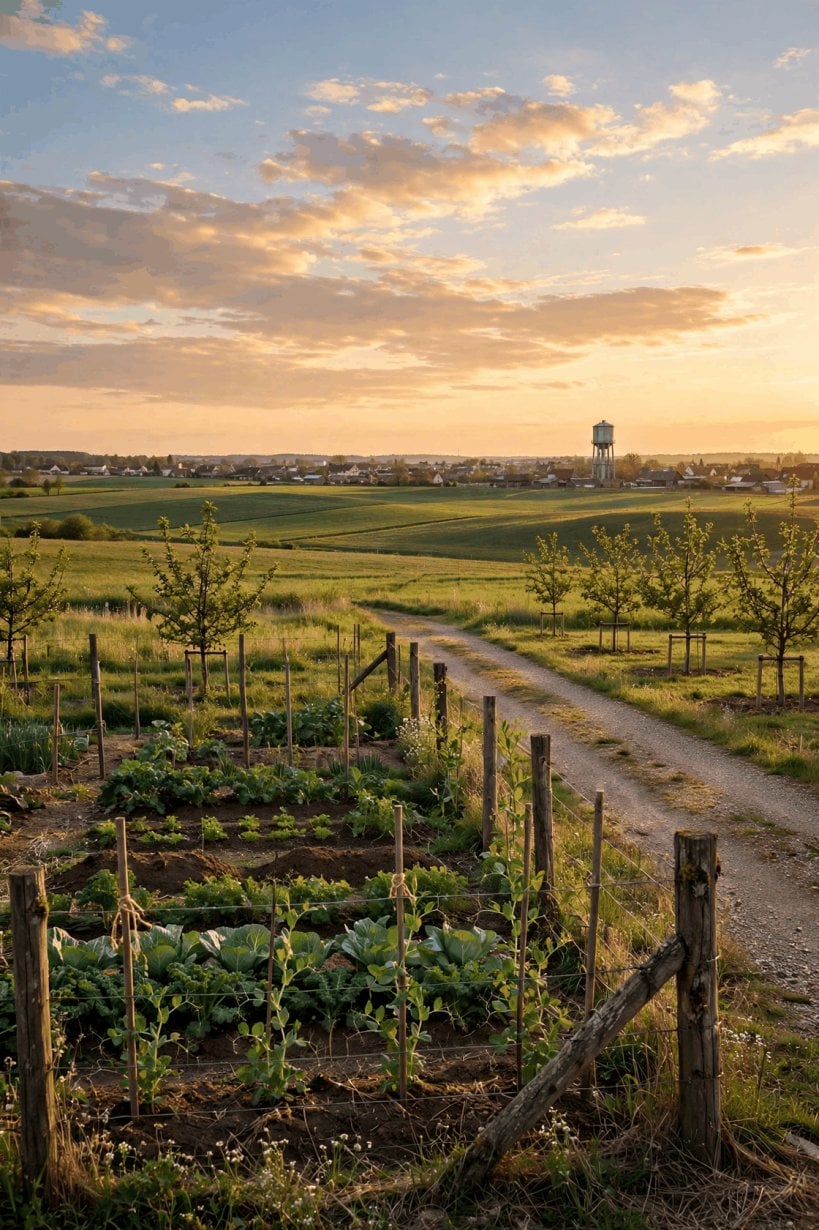
Small towns are the mixed middle: the permissive code of a place that never banned what it never imagined, combined with the services a remote homestead lacks — the sweet spot for many growers. The trade that governs the whole rural question is the commute: the city’s jobs against the county’s freedom. Remote work is the resolution that has redrawn this map in a generation — the job no longer has to live where the garden does, a shift worked through practically in the guide to off-grid internet. The strategy that falls out of the arithmetic is the 30-minute ring: land just outside a town or small city, close enough for services, work and markets, far enough out for county freedom — town-adjacent, the optimal compromise. For many homesteaders the best “city” on the list is the ring around one.
9. Reading the Code Before You Move: The 10-Minute Check
Every caution in this guide compresses into one habit: the 10-minute municipal code check, run before the move, before the purchase, before the coop. The method is a search — “[city] chicken ordinance” is the original’s own example query — into the city’s published municipal code, reading the actual ordinance text rather than a summary, a forum post or a neighbour’s belief. Then the same discipline applied one layer down and one layer up: the HOA documents if the property carries them, and the state law on the surfaces where the state rules — rainwater above all. Ten minutes per layer is genuinely about what it costs; the information is published, indexed and free.
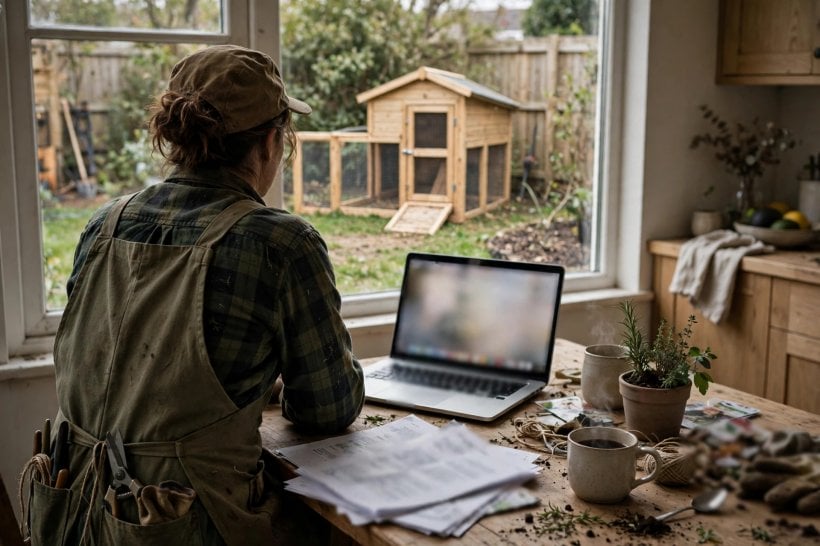
Reading code is a skill, but a shallow one: ordinances are written in a formula — definitions first, then permissions, then conditions — and the grower’s questions map onto it directly. Is the animal, structure or use named at all? If named, is it permitted, conditional, or prohibited? If conditional, are the conditions livable — the setbacks, the registration, the hen number? The worked approach to this kind of document, written for unconventional structures, is the guide to building codes for eco-structures. The code before the coop is not caution as a personality trait; it is the cheapest ten minutes in the entire homesteading budget.
10. Changing the Code: Model Ordinances, Coalitions and Pilot Programs
The final possibility is the one the laggard cities make necessary: if the code says no, change the code. The activist’s toolkit starts with the model ordinances — the templates. Successful cities’ codes are public documents, and reformers copy them: the language that carried chickens in one city, adjusted to local definitions, is the draft that gets tabled in the next. Minneapolis’s 2012 overhaul is the standing exhibit — an entire code, opened in one act, already road-tested for any city that wants to follow.
The second tool is the coalition: the gardeners plus the beekeepers, organised — the constituencies of the five permissions showing up together, because a council that hears one hobbyist hears a complaint, and a council that hears the gardeners, the beekeepers, the composters and the market growers hears a public. Council testimony is where the coalition speaks, and its most persuasive evidence is the third tool: the pilot. The temporary trial program — hens permitted for a trial period, a garden program on a sunset clause — converts the argument from prediction to experiment; the proof accumulates quietly, the sky does not fall, and the permanent ordinance follows the evidence. The wins are the momentum: chicken ordinances are passing nationwide, city by city, in a trend any determined local group can join.
Final Considerations
Portland, Austin, Seattle, Detroit and Minneapolis lead because their codes grant the five permissions — chickens, bees, front-yard gardens, rainwater, composting — as a coded welcome rather than a grudging exception. The HOA suburbs lag regardless of what the city allows, because the private ban is the stricter layer, and the unincorporated county often beats them all on freedom alone. Score any city on the permissions, read its code stack — state, city, HOA — before you commit, favour the 30-minute ring when the county calls, and where the code is wrong, borrow a better one and organise. The best urban agriculture city is the one whose code was written by gardeners — and codes, unlike climates, can be rewritten.




1 Comment