

No quacking at dawn, no fuss at the gate — just a large, calm duck that wags its tail at you like a dog and then gets on with its day.
The muscovy duck is the quiet self-starter of the poultry world, and this guide covers its temperament, its modest needs, its eggs and its famous broodiness in full.
1. The Muscovy Duck at a Glance
Our infographic explains why keepers choose this breed by setting out three traits — its temperament, its self-reliance and the smallness of its needs — supported by four key factors that shape day-to-day care: flight clipping, housing, feed and broodiness. Everything in this guide hangs on those three traits, so they are worth meeting properly before any duck arrives.
| Trait | What the keeper gets | What it means in practice |
|---|---|---|
| Temperament | Silent — quiet, with no quacking | Hisses, tail-wagging and soft chirps instead of a dawn chorus; neighbours are rarely disturbed. |
| Self-reliant | Easy — broody mothers and strong foragers | Hens hatch and raise their own ducklings, and the flock finds much of its own living on range. |
| Needs | Low — perches, shade and modest water | No pond required; a perch to roost on, shade to rest in and water deep enough to dunk a head. |
The four key factors translate those traits into jobs. Flight clipping exists because this quiet, modest bird can, surprisingly, fly very well. Housing is simple but specific, built around perches rather than the floor-level sleeping most ducks prefer. Feed is straightforward — a waterfowl base widened by serious foraging. And broodiness is the breed’s defining gift: a Muscovy hen’s urge to sit is so reliable that keepers plan whole breeding seasons around it.
Hold those three traits together and the breed’s character emerges: this is a duck that asks for little, complains about nothing audibly, and repays its keeper with eggs, ducklings, slug control and company. It is not a petting duck in the main — it is a working partner with feathers, and keepers who respect its independence tend to be rewarded with its trust, one tail-wag at a time.
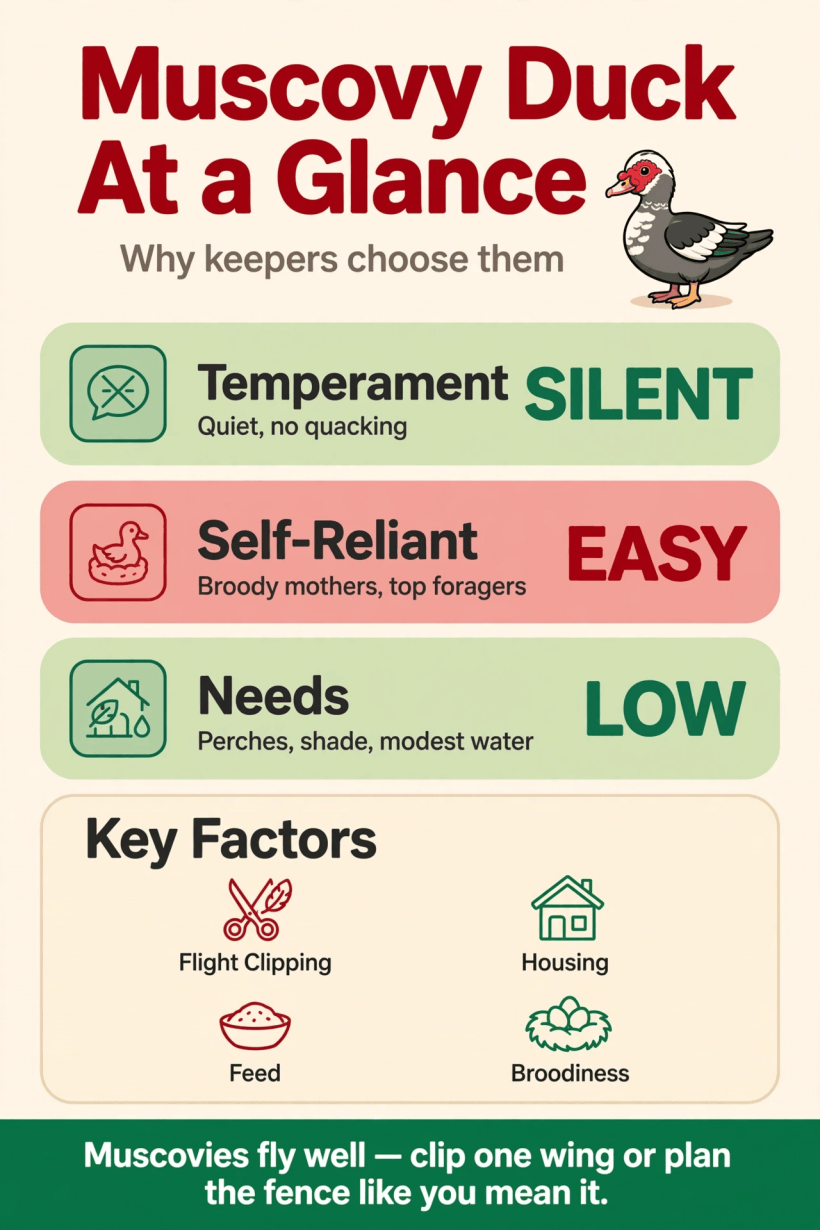
The Muscovy at a glance: a silent temperament, easy self-reliance as broody mothers and foragers, and low needs — perches, shade and modest water — with flight clipping, housing, feed and broodiness as the key factors.
2. Temperament: The Quiet Duck
The first thing every keeper notices is the silence. Muscovies do not quack: the hens communicate in soft chirps and trills, the drakes in a breathy hiss, and greetings are delivered with an unmistakable whole-body tail wag that has earned the breed a reputation as the dog of the duck world. For keepers with near neighbours, or with their own preference for a quiet yard at dawn, this single trait ends most comparisons before they begin.
Calm is the second thing. A settled Muscovy flock goes about its business unhurriedly — foraging, bathing, resting in the shade — and startles far less readily than most poultry. Individuals have strong characters: a confident drake surveying his hens from a low perch, a senior hen who runs the flock’s social order with a look, youngsters who follow their mother in a line that would credit a drill square. Handling, when needed, should match the temperament — slow, low and unhurried, herding rather than grabbing, because a bird this strong in the wing is not built for wrestling.
That quiet confidence has a practical edge worth planning for. Muscovies bond to their home ground and their flock rather than to people, they are slow to panic, and they hold their ground against minor nuisances — all of which makes them steady yard birds that integrate well into a mixed holding. Introduce them gradually to dogs, children and other poultry, let relationships form at fence-line distance first, and the famous calm will do the rest of the work for you.
3. Housing: Perches, Shade and Shelter
Housing a Muscovy overturns one duck-keeping assumption: this breed likes to roost. Where other ducks sleep on the floor, Muscovies take to low, sturdy perches like the tree ducks they are, so their house should offer broad, low roosting bars or platforms, set where every bird can get up and settle without competition. Give the house a dry, draught-free sleeping area, deep bedding on the floor for the birds that prefer it, and a door wide enough for a broad-breasted drake to use comfortably.
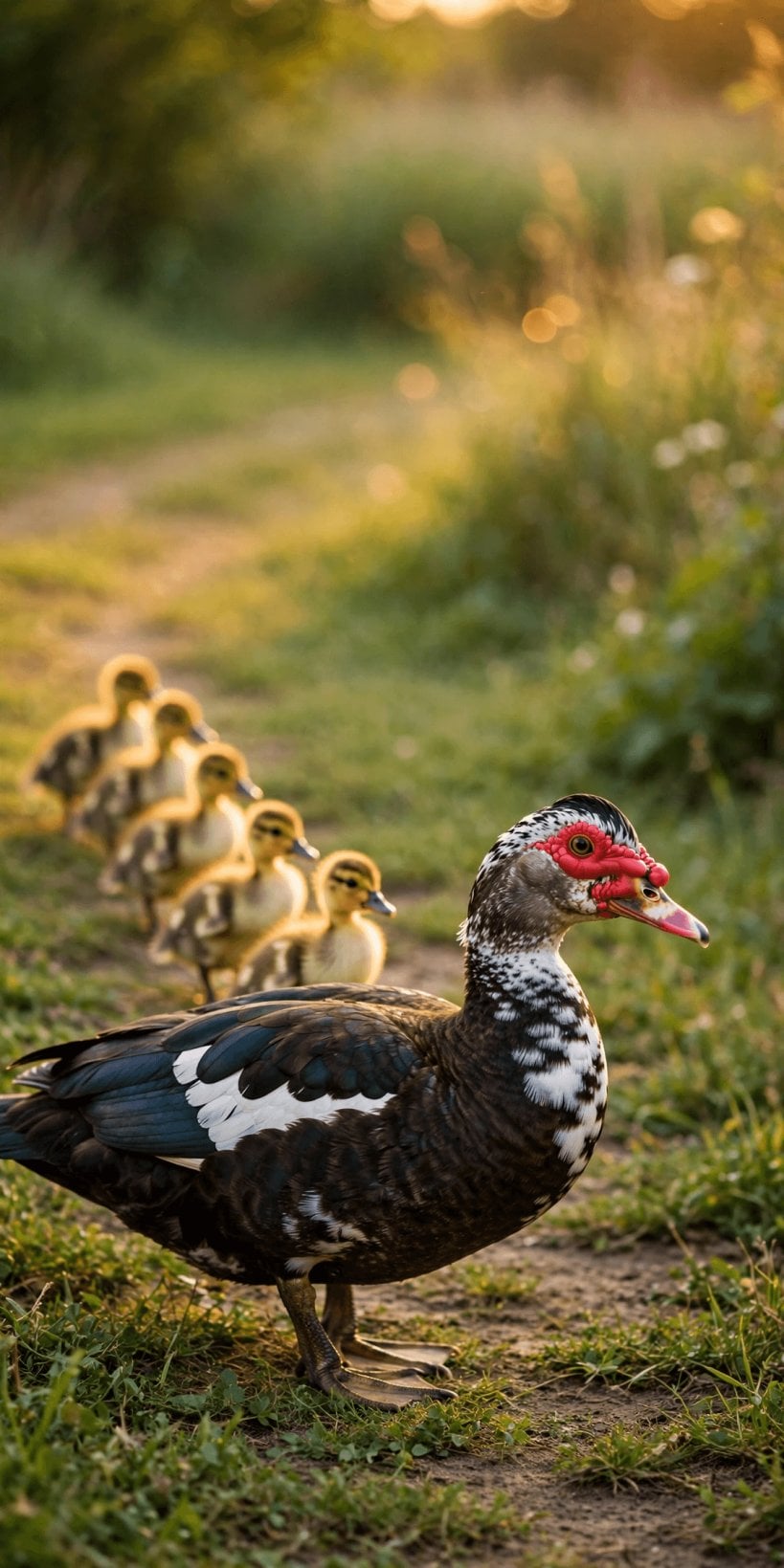
Shade is named in the infographic for good reason: a large, dark-feathered bird that rests through the heat of the day needs genuine shade in its run, not a token corner. Site housing where summer shade falls naturally or add a simple roofed shelter in the pen, and remember water and feed stations belong in that shade too. Ventilation follows the usual rule — fresh air high up, no draughts at roosting height — and the whole structure needs the same honest predator proofing as any poultry house, since a sleeping duck on a low perch is trusting the building entirely.
Where the house stands shapes how well all this works. Our half acre homestead layout with zones for gardens, animals and water shows how waterfowl housing sits best near water points and garden edges, where the flock’s foraging does the most good. For a smaller-scale contrast in housing logic, our guide to quail coop ideas for housing, space and predator proofing works through the same decisions — space, floors, proofing — at the opposite end of the size range, and the discipline is identical even if the perches are not.
4. Flight: Clip One Wing or Fence Like You Mean It
Here is the surprise the infographic saves for its closing line: this big, placid, ground-loving duck flies — well. Hens especially, being lighter than the drakes, can clear an ordinary fence with a run-up and a following wind, and a Muscovy that discovers the garden, the neighbour’s pond or the roof of the house has learned a lesson it will not unlearn. Flight is therefore a management decision to make on day one, not after the first escape.
The standard answer, named among the key factors, is flight clipping: trimming the flight feathers of one wing only, so flight becomes unbalanced and the bird stays home. Done calmly, after the wing is fully feathered and never while new feathers are growing in with their blood supply, it is a painless trim of feathers, like cutting hair — repeated as feathers regrow with each moult. Clip one wing, not both: a bird clipped on both sides can often still fly by working harder, which defeats the entire exercise.
The alternative is architecture: fences planned as seriously as if you meant it, with height and, for determined fliers, a covered run. Keepers building for several species at once will find the overlap instructive — our turkey coop and shelter ideas for roosts, runs and space deals with another large bird that roosts high and tests fences, and the shared lesson is that containment designed honestly at the start saves a season of chasing, coaxing and apologising to neighbours.
5. Feeding: Foragers With a Waterfowl Base
Feed is the third key factor, and its shape follows from the breed’s self-reliance: a Muscovy is a working forager that will graze grass, hunt slugs, snails and insects, and glean around the garden all day, but that industry widens a diet — it does not replace its base. Keep a proper waterfowl or poultry ration available as the flock’s anchor, offered fresh daily with clean water beside it, and let range and garden do the enriching around it.
The foraging itself is half the reason keepers choose the breed. A few Muscovies turned through a vegetable garden after harvest will clear slug and snail populations that defeat other methods, work the edges and manure lightly as they go, and ask for nothing but the gate opened in the morning. Protect young seedlings and soft fruit while fruit is forming, by simple fencing or timing, and the rest of the garden is safe — these are grazers and hunters, not diggers and wreckers like some poultry.
For the full picture of the base ration this section leans on, our guide to what do ducks eat for backyard ducklings and adult ducks sets out the everyday feed, treats and never-feed list for waterfowl in detail, and Muscovies sit squarely within it. The comparison with other foragers is also useful: our guide to what do turkeys eat for poults, growers and adult turkeys shows turkeys working range in the same spirit — a solid measured ration at the trough, and everything the land offers counted as the bonus, never the foundation.
6. Water: Modest Needs Are Not No Needs
The infographic calls the breed’s water needs modest, and compared with other ducks they are: a Muscovy does not need a pond, does not insist on swimming, and is content with far less bathing water than its mallard-derived cousins. That modesty is one of its great conveniences — a Muscovy pen does not have to be built around a lake, and winter care does not involve breaking ice on water the birds were determined to live in.
Modest, however, is not none. Every Muscovy needs constant drinking water, and water deep enough to dunk its whole head — to clear its nostrils and wash its eyes, which is basic duck hygiene whatever the breed. Provide a sturdy, tip-proof container deep enough for head-dunking, refreshed daily and scrubbed regularly, plus a wider bath if you can manage one, because a bird that can bathe when it chooses keeps its feathers, and its mood, in visibly better order.
Place water on ground that can take the mess: ducks of every kind turn a water station into a mud studio, and gravel, slabs or a drained spot save the pen’s surface and the keeper’s temper. In freezing weather, the daily ritual is fresh water carried out and ice broken or replaced — a modest need, faithfully met, is still a need that appears on every day’s list, including the coldest and the busiest.
7. Eggs: Laying in Clutches and Seasons
A Muscovy hen lays the way she lives — steadily, seasonally and on her own terms. Expect eggs in clutches through the warmer part of the year rather than the near-daily rhythm of a laying chicken: a hen builds a clutch in a chosen, secluded corner, laying an egg a day into her hidden pile, and the keeper who wants those eggs for the kitchen must learn the flock’s favourite corners and check them like a detective with a basket.
The eggs themselves are large, rich and excellent in the kitchen, and a hen in full lay is a generous provider for a household that cooks with the seasons. Provide temptation in the right direction: quiet, straw-filled laying spots in the house, secluded enough to satisfy a bird that values privacy, and collect daily so eggs stay clean and clutches stay where you can find them. A hen allowed to keep every egg she lays will simply do what section 8 describes — which is either your problem or your plan, depending on the season.
Judge a laying flock by its health rather than a tally. Bright eyes, glossy feathers, steady appetites and hens that come out of lay to moult and rest in the quieter months are the marks of ducks being kept at the pace their breed sets. Forcing a seasonal layer into a production rhythm with rich feeding and fuss usually buys a few eggs at the price of a worn-out bird; the Muscovy way — a good base ration, range, rest — keeps hens laying happily for season after season.
8. Broodiness: The Sitting Instinct
Broodiness is the fourth key factor and the breed’s legend. A Muscovy hen does not merely go broody; she commits — settling on her clutch with a hissing, feather-fluffed determination that has made her the foster mother of choice on farms for generations. Hens will sit their own eggs, other ducks’ eggs, and have been known to hatch chickens, guinea fowl and anything else entrusted to that warm, patient underside.
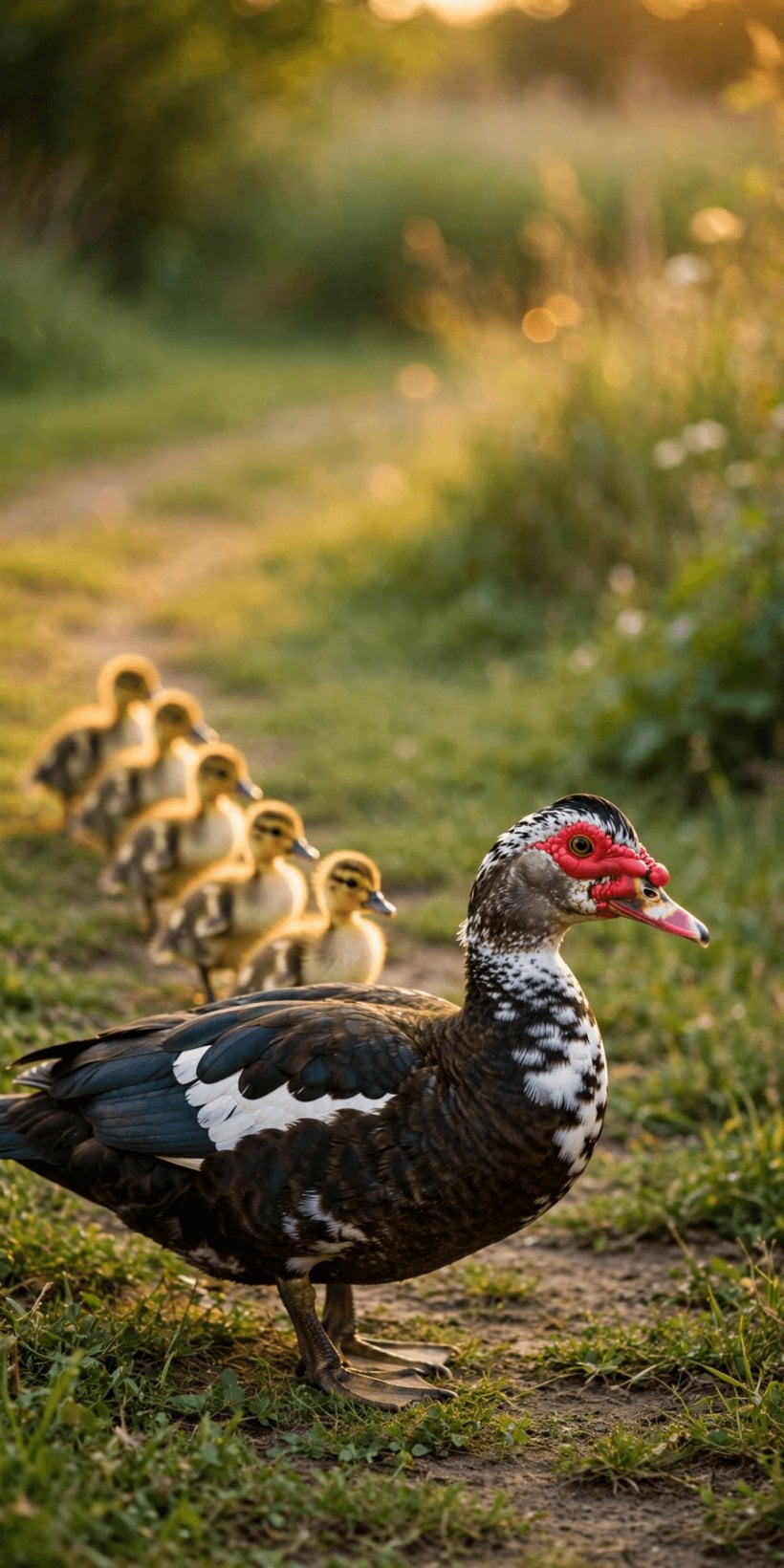
Work with the instinct and it runs your breeding programme. Give a sitting hen a quiet, draught-free corner of her own, with food and water in reach so she need not leave the nest long, and mark the calendar rather than disturbing her: she will leave briefly each day to eat, drink and bathe, and will otherwise hold the nest against all comers, including you. A drake should be kept from pestering a sitter, and other hens from adding eggs to a clutch already underway, because a nest that keeps growing hatches unevenly or not at all.
Break the instinct only when you are sure you do not want ducklings that season, and do it kindly and promptly — a hen moved to a cool, bright, nest-less space for a few days will usually give up the idea without harm. But think before you break it at all: a reliable sitting hen is a living incubator that never has a power cut, turns her eggs perfectly, and teaches the results to be ducks. Many keepers, having watched one Muscovy raise a line of ducklings across a yard, would not trade her for any machine.
9. Ducklings: Mother Knows Best
A Muscovy mother raises her ducklings with the same self-reliance she does everything else. She leads them out within a day or so of hatching, teaches them where the feed and water are, calls them to found insects, and broods them under her wings at night and through cold snaps — a complete upbringing in which the keeper’s jobs are reduced to providing the right feed, safe water and a secure pen, and watching the show.
The keeper’s contributions still matter. Offer a starter feed suited to young waterfowl where mother and babies can eat together, with water shallow and safe for the smallest duckling — deep enough for their mother to dunk her head, arranged so the little ones cannot get into trouble in it, which usually means a shallow drinking step for the young and the deeper vessel where only the hen can reach. Keep the family pen proof against predators and against being trampled by other stock, and give the hen a dry, sheltered corner for night brooding.
Compare that light-touch system with the brooder work other youngsters need, and the breed’s easy rating is explained. Our guide to what to feed baby quail in the first six weeks, from starter feed to grit describes weeks of heat lamps, fine grinding and pebbles in water dishes — devoted work a Muscovy mother simply does for you. Ducklings raised by their mother grow up knowing how to be ducks, forage from their first week, and slide into the flock’s order without the introductions hand-reared birds require.
10. Drakes, Hens and Flock Harmony
Know your birds apart and flock life gets easier. Drakes grow considerably larger than hens, with more pronounced red facial caruncles — the breed’s distinctive bare, warty-looking face furniture — while hens are neater, sleeker and quicker into the air. Sexing youngsters takes a few weeks of watching size and stance, and by the time it matters, for breeding groups and for the table, the difference walks around announcing itself.
Balance the flock around the drake’s size and enthusiasm. One drake is company enough for a group of hens, and extra drakes, especially in the breeding season, are a recipe for squabbles and worn hens — bachelor groups kept apart, or a drake rehomed, keep the peace better than hope does. Watch feather condition on the hens’ backs and necks as your early warning, feed and water in more than one place so no bird guards the whole supply, and give the flock enough range that everyone can put distance between themselves and a disagreement.
Finally, enjoy them properly, and name them: a flock this characterful names itself in a fortnight — the sentinel drake, the hen who always sits, the youngster who wags hardest. Our collection of chicken names for hens, roosters and the whole flock offers plenty of raw material. A named flock is an observed flock, and with Muscovies observation is a pleasure rather than a chore: there are few better ways to end a working day than watching them process, silently and in good order, home to their perches at dusk.
Final Considerations
Choose a Muscovy and you choose the quiet life: a silent, self-reliant duck that forages for much of its living, asks for perches, shade and modest water, hatches its own ducklings better than any machine, and only asks the keeper to decide about its wings before it decides about the fence. Meet its few needs faithfully and it will staff your yard — pest patrol, brooder, egg supplier and evening entertainment — for years.


0 Comments