

Backyard ducks are cheerful, hardy foragers, and a well-fed flock repays its keeper with rich eggs, steady slug patrol and years of garden company.
This guide to what do ducks eat walks through the everyday base every keeper should rely on, the greens and extras that keep a diet varied, the treats worth rationing, and the foods that never belong in a duck’s bowl.
1. Feeding Ducks at a Glance
Our infographic divides duck feeding into three simple groups, and this guide follows the same map: an everyday base fed daily, occasional treats kept small, and a short list of foods that should never be offered. It also names four key factors that shape every feeding decision — niacin, grit, water, and the age of the bird.
| Feeding group | Role | What the infographic highlights |
|---|---|---|
| Everyday feed | The daily base diet | Waterfowl pellets plus greens as the main food source, fed daily for full nutrition and balanced health. |
| Treats | Occasional extras | Peas, corn and oats in moderation — a small handful a few times a week, scattered in water, good for training and enrichment. |
| Never feed | Always off the menu | Bread, salty or mouldy food: it causes malnutrition, pollutes water, attracts pests and can sicken ducks and wildlife. |
The four factors deserve their own introductions, since they recur throughout this guide. Niacin matters most for young birds, supporting sound leg and wing development. Grit — small stones the birds pick up themselves — helps digestion by breaking food down in the gizzard. Fresh water must always be available, both for eating and for cleaning bills. And age changes the ration: ducklings and adults need different feed and nutrients. Keep those four in mind and the details below will make sense as variations on one pattern.
Keep the table above as a fridge-door summary: if a food is not obviously in the everyday or treat columns, default to not offering it until you have checked. Most feeding accidents come not from daring experiments but from habit — the guest arriving with bread, the mouldy bag nobody thought to check — so making the safe list the visible list protects the flock without any extra effort.
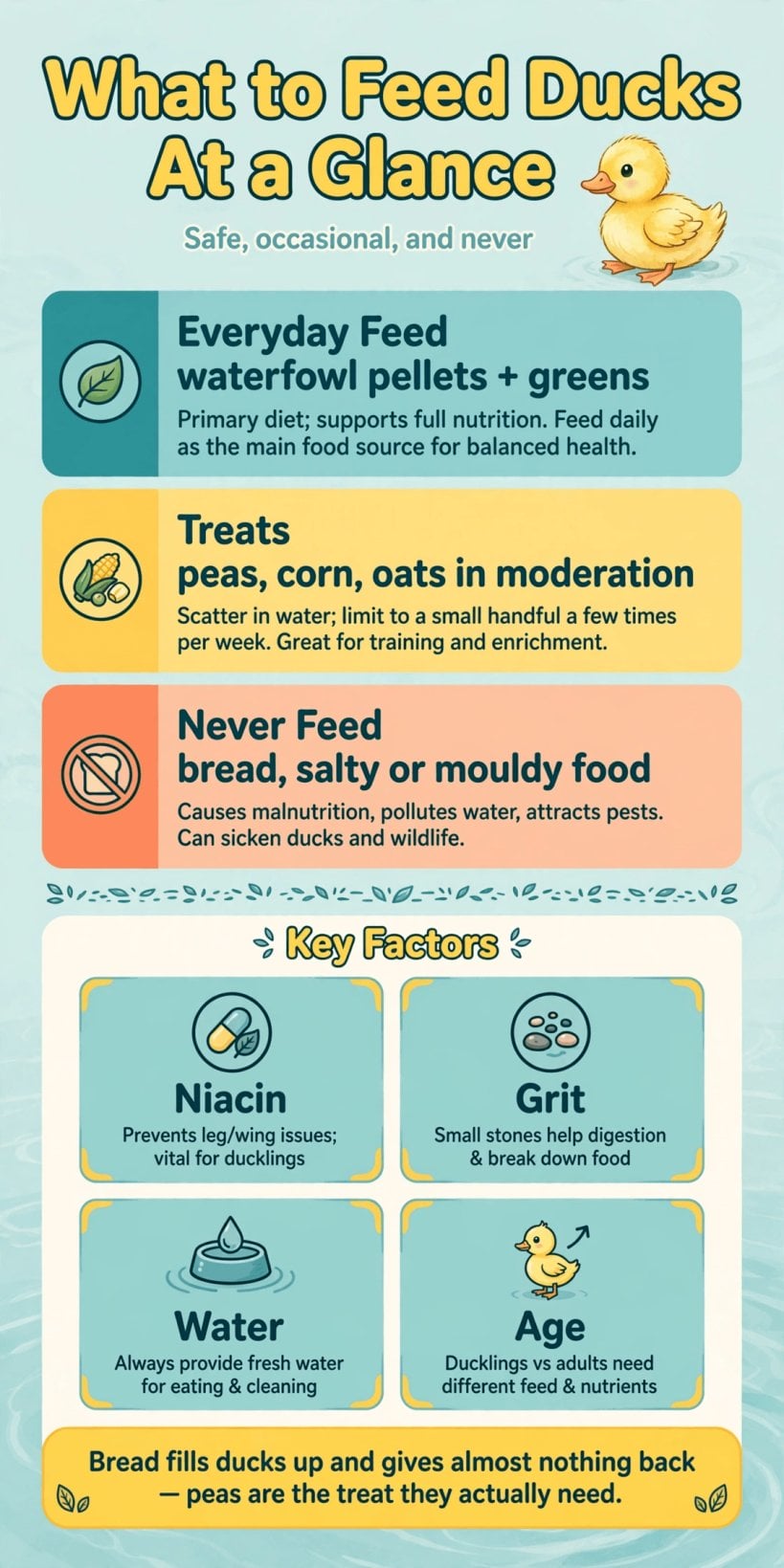
Feeding at a glance: everyday feed as the daily base, treats kept small and occasional, and foods to never offer — with niacin, grit, fresh water and the bird’s age shaping every decision.
2. The Everyday Base: Waterfowl Feed
The foundation of a duck’s diet is a feed formulated for waterfowl, offered fresh every day as the main food source. A proper waterfowl feed is built around what ducks actually need — a balance that supports steady growth, feather condition, egg production and general health — which is why it earns the daily-base position in the infographic’s hierarchy. Keep the feeding routine consistent: a measured daily ration keeps birds in condition without waste, and leftovers that sit damp or soiled belong in the compost, not back in the feeder.
Store feed somewhere dry, cool and sealed against pests, and buy quantities your flock will finish within a reasonable time; stale or damp feed loses its quality long before it looks alarming. If your ducks forage across a garden and a pond through the day, the feeder is still the anchor — foraging is the bonus, not the base. Our half acre homestead layout with zones for gardens, animals and water shows how a feeding station sits comfortably inside a planned smallholding, with water and forage within easy waddling distance.
Watch how eagerly the feeder empties and adjust the ration to the birds rather than to the bag: a trough licked clean every morning suggests the ration is light, while feed lingering into the evening suggests it is generous. Steady condition — not a full or an empty trough — is the measure that matters, and it is read in feathers and eggs, not in scoops.
3. Greens, Vegetables and Forage
Greens are the everyday companion to pellets. Chopped leafy greens, duckweed skimmed from a clean pond, and tender grass clippings all suit ducks, and scattering greens in shallow water plays to their instincts — dabbling, rinsing and sifting is how ducks prefer to meet their food, and it keeps feeding lively rather than frantic. Rotate what you offer through the season so the diet stays varied without any single item dominating it.
A ranging flock harvests a surprising amount of its own variety: grazing grass, picking at weeds, and snapping up slugs, snails and grubs. This is the enrichment a confined bird misses, so even part-day access to a run with living ground pays visible dividends in condition and contentment. If chickens share the holding, note that their feeding needs differ from ducks’; our sibling guide to chicken names, with one hundred ideas for the whole flock will help you keep the two flocks’ paperwork and personalities straight.
4. Grains, Seeds and the Protein Question
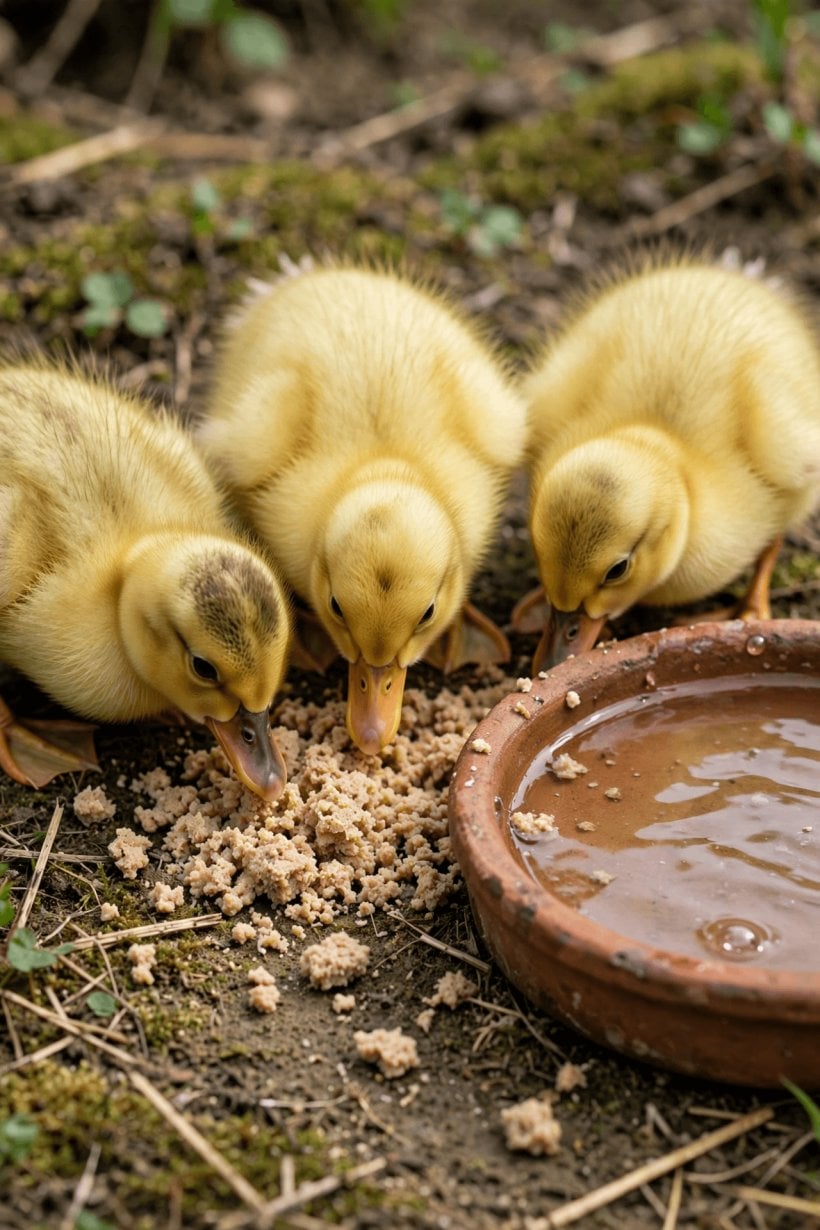
Whole grains and seeds are best treated as the side dish they are: useful variety and welcome energy, but not the base. Oats and corn sit in the infographic’s treat column rather than the everyday column, scattered in water in small amounts a few times a week. Handled that way they enrich the week without displacing the balanced feed that does the heavy nutritional lifting.
Protein arrives mostly through forage. A ranging duck hoovers up slugs, worms and insects with obvious enthusiasm, and that natural protein is one of the strongest arguments for giving ducks access to ground with life in it. Planted or planned garden space multiplies this effect, and our 1 acre homestead layout for zones, gardens and livestock shows how a garden, an orchard edge and a water feature can combine into a duck’s foraging paradise. What you should not do is chase protein with concentrated supplements of your own invention — keep it natural, keep it varied, and let the formulated feed do the balancing.
Sprouting grains for the flock is another gentle way to add winter variety: soaked oats, sprouted and fed fresh, give birds green growth in the months when pasture has little to offer, and the daily ritual of rinsing and sprouting becomes a pleasant part of the keeper’s own routine rather than a chore.
5. Treats: A Handful at a Time
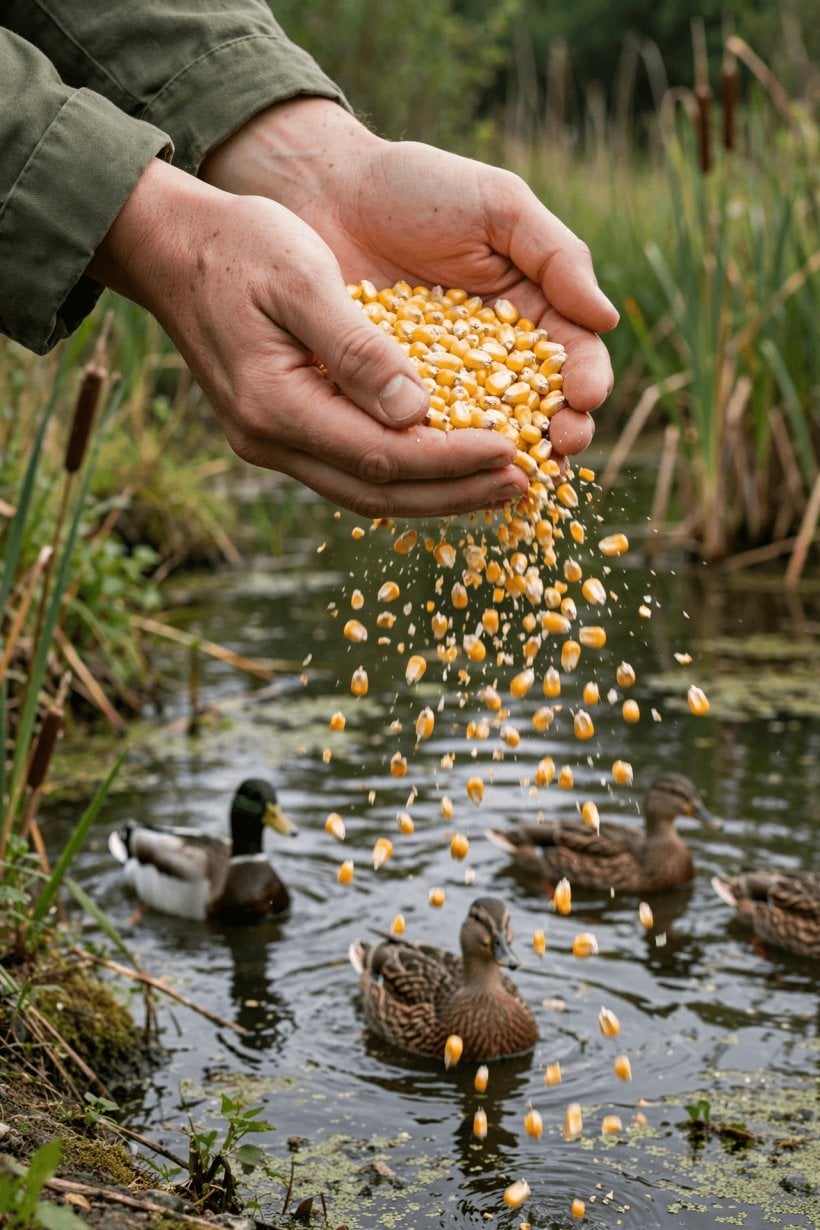
Treats have their proper place: training, bonding and enrichment. A small handful a few times a week, scattered in water so the birds work for it, turns feeding into a game and teaches ducks to come when called — genuinely useful at lock-up time. Peas are the standout of the infographic, singled out as the treat ducks actually need, and frozen peas thawed in a bucket of water are the classic keeper’s trick for winning over a new or nervous flock.
The discipline is in the portion. A treat that becomes a second dinner quietly unbalances the diet and teaches birds to ignore the feeder, which is the opposite of the aim. Offer treats late in the day, after the main ration has been eaten, and keep the handful genuinely small. Children love the pea ritual best of all, and a weekly treat routine shared with young helpers is how a family’s first flock of ducks becomes a family’s lasting flock.
6. Foods to Never Offer
The never list is short and worth memorising. Bread tops it: as the infographic puts it, bread fills ducks up while giving almost nothing back, and the malnutrition it causes is slow and easy to miss until a bird is visibly struggling. Beyond the empty calories, bread pollutes the water it lands in, uneaten scraps attract rats, and feeding it to wild ducks spreads the harm beyond your own fence.
Salty foods and anything mouldy complete the never list. Salt is hard on birds in any quantity worth mentioning, and mouldy or spoiled feed can sicken ducks quickly — the compost heap, not the feeder, is the place for anything past its best. Apply the same caution to leftovers from the human table: if you would not confidently eat it yourself, do not offer it to the flock. Our 2 acre homestead layout with space for animals and water includes room to keep the compost station well away from the ducks’ feeding area, which is exactly where it belongs.
7. Water: For Drinking and for Washing
Fresh water is not an accessory to duck feeding; it is part of it. Ducks wash each mouthful down, rinse their nostrils clear, and keep their bills and eyes clean in the same water they drink from, which is why the infographic insists on fresh water for both eating and cleaning. Provide drinkers deep enough for a duck to submerge its bill, keep them shaded in summer so the water stays cool, and change them often — slimy, stale water is a health risk dressed as a convenience.
Swimming water and drinking water serve different purposes, and it helps to keep them distinct. A paddling pool or pond is for bathing, dabbling and sheer joy; the drinkers beside the feeder are for clean intake. If space allows, give the flock a run with a dedicated water point rather than letting them drink exclusively from the pond they bathe in. Our quarter acre farm layout for a compact productive plot shows how a small footprint can still separate clean drinking water from splashier pursuits.
In freezing weather, swap drinkers twice daily rather than once: a thin sheet of ice denies a duck the washing it needs, and lukewarm refills are welcomed with the enthusiasm ducks reserve for anything that splashes.
8. Ducklings Versus Adults and Layers
Age changes the ration, exactly as the infographic’s key factors warn. Ducklings grow astonishingly fast, and their feed should be formulated for young birds rather than borrowed from the adult feeder — niacin is the detail to watch here, since the infographic flags it as vital for ducklings, supporting sound leg and wing development during the weeks when everything is doubling in size. Keep ducklings’ feed, water and grit-sized particles appropriate to their tiny scale, and brood them somewhere clean, warm and dry until they feather out.
Adults settle onto the everyday base described above, and laying females benefit from a calcium source offered free-choice on the side — crushed oyster shell in a separate dish is the traditional answer — so each bird can take what she needs without unbalancing anyone else’s ration. For the economics of keeping layers well fed without waste, our guide to homesteading economics and financial independence off-grid helps feed costs earn their place in the household budget.
9. A Sensible Daily Routine
A routine keeps both ducks and keepers honest. Morning brings fresh feed in clean troughs and a water check; midday is for foraging, treats and observation; evening tops up feed and water before lock-up, when a small scatter of peas doubles as a recall cue. Refill from stored dry feed, scrub troughs regularly, and watch the birds themselves — bright eyes, smooth feathers and steady laying tell you the routine is working before any weighing ever could.
Adjust through the year. Winter shortens foraging and increases appetite; moulting birds look rough whatever you feed them but recover faster on a steady ration; broody or resting ducks need less. Keep notes through the first year — which feeds, which greens, which seasons — because next year’s flock will benefit from this year’s observations far more than from any generic chart.
10. Feeding Setup and Common Mistakes
Good feeding is half logistics. Site the feeder under cover so rain cannot spoil the ration, raise troughs off the ground to slow contamination, and keep feed storage sealed, dry and out of reach of rats, raccoons and the weather. Feed little and often rather than piling a day’s ration in at dawn; ducks waste less and eat better when the trough is refilled fresh.
The common mistakes are all variations on excess: too many treats, bread from well-meaning visitors, mouldy corners in a neglected feeder, and water left unchanged until it is more soup than drink. A simple sign for guests — no feeding the ducks, the keeper has it covered — saves more arguments than you would expect. Set the system up cleanly once, and daily feeding becomes the pleasant five minutes of the day it should be. For flocks with room to roam, our 3 acre homestead layout planned step by step gives feeding stations, forage and water their own well-planned places.
Final Considerations
Feed the base daily, vary it with greens and forage, ration the treats, and keep bread, salt and mould away from the flock — that is the whole philosophy on one line. Give ducks clean water deep enough to wash in, mind the ducklings’ extra needs in their first weeks, and let observation fine-tune what this guide sketches. Do that, and your ducks will do the rest: laying generously, foraging busily, and greeting you each morning like the day’s best news. And when neighbours ask what those eager birds are eating, this guide — and its infographic — makes a handier answer than a long explanation over the fence.


0 Comments