
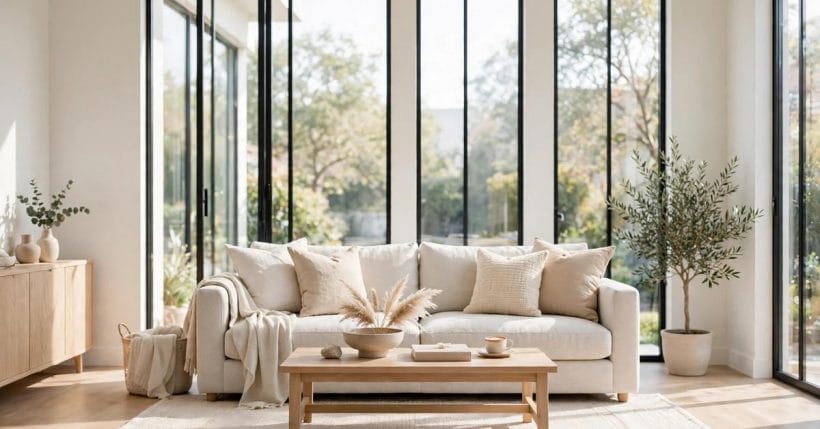
Two tins with the same name on the colour card can behave like different paints entirely — one lifts a dark hall, the other seems to swallow what little light it had. The difference is usually a number most buyers never look at: the paint’s LRV.
This guide explains what light reflectance value means, where a manufacturer publishes it, and how to use it — without quoting a single brand’s lab figures — to choose paint that does what you expect in the room you have.
1. Paint LRV at a Glance
LRV — light reflectance value — is the share of light a painted surface bounces back into the room, set against the share it absorbs. It is the quiet number behind most paint disappointments and most paint triumphs, and it sits behind the colour-cluster choices in posts like timeless paint colour families: the families endure partly because their reflectance behaviour is predictable.
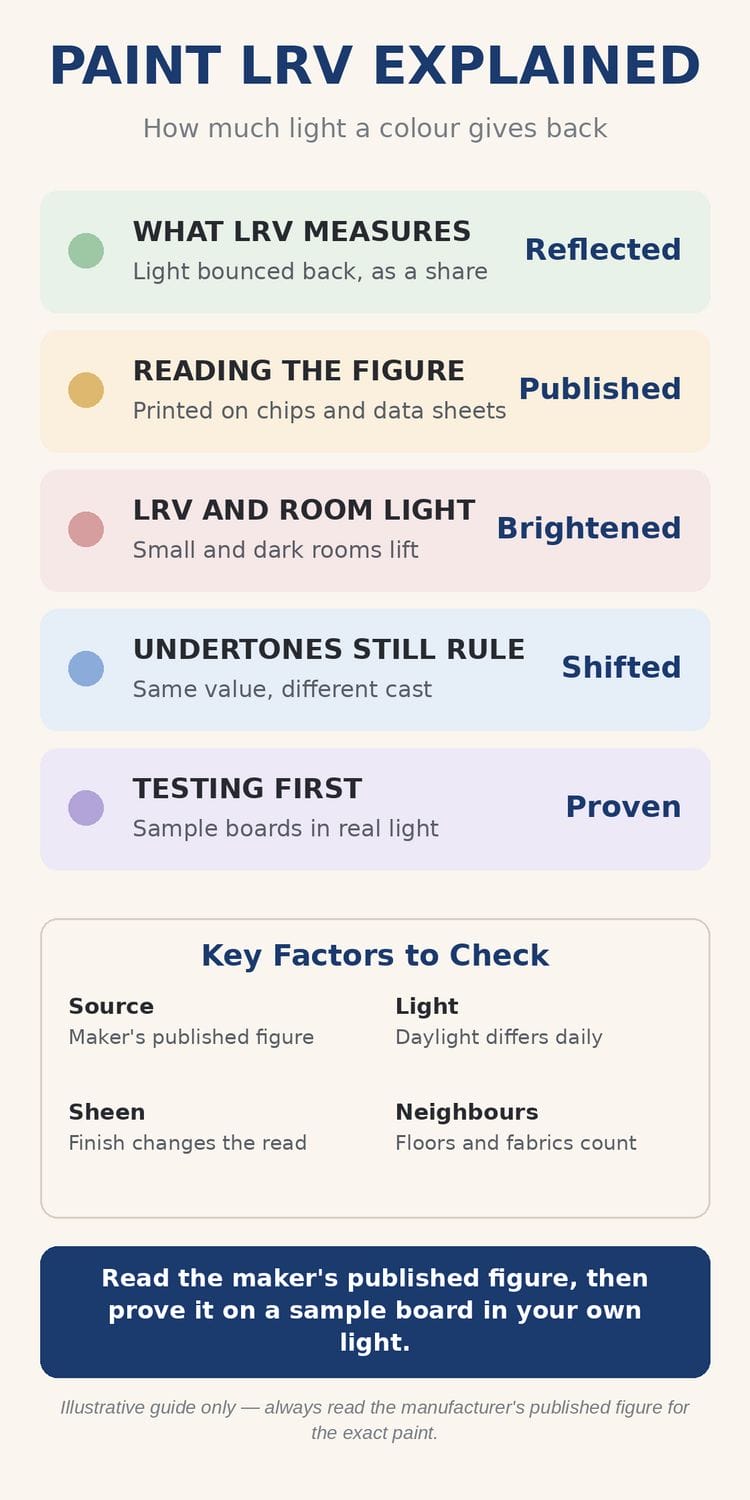
The five parts in the table below are the whole idea in miniature. Learn them and you can walk up to any manufacturer’s colour card, in any shop, and read it the way a decorator reads it.
| Family | Character | What it means |
|---|---|---|
| What LRV Measures | Light bounced back, as a share | Reflected |
| Reading the Figure | Printed on chips and data sheets | Published |
| LRV and Room Light | Small and dark rooms lift | Brightened |
| Undertones Still Rule | Same value, different cast | Shifted |
| Testing First | Sample boards in real light | Proven |
One promise before we start: this guide quotes no specific figure for any named paint. LRV values belong to manufacturers’ published data, and the honest place to read a paint’s number is on that manufacturer’s card or data sheet — this guide teaches you how to read it, and what to do with it once read.
2. What Light Reflectance Value Actually Measures
Shine light on a painted wall and two things happen: some of the light reflects back into the room, and the rest is absorbed by the pigment and turns, in effect, into nothing. LRV is the proportion that comes back, expressed on a percentage scale that runs from the near-total absorption of true black at the bottom to the near-total reflection of pure white at the top.
A Property of the Colour, Not the Room
LRV belongs to the paint colour itself, measured under standard conditions by the manufacturer. It does not change because your room is small or north-facing — what changes is how much light there is for the walls to work with. That distinction matters: LRV tells you how hard a colour will work with the light it gets; the room decides how much light that is.
Why the Middle of the Scale Feels So Wide
Human eyes read differences in reflectance unevenly. The step between a deep colour and a mid-tone transforms a room; the same numerical step near the top of the scale, between two near-whites, is subtler but still visible — it is the difference the pure white vs extra white comparison is really about.
Absorbed Light Is Not Wasted Light
A low-LRV wall is not a mistake. Deep colours absorb light and give back atmosphere: intimacy, enclosure, drama. The number simply tells you the price — a room painted deep will need more light, from windows or fittings, to do the same work as a pale room. Choose the trade knowingly and it stops being a surprise.
3. Where to Find a Paint’s Published Figure
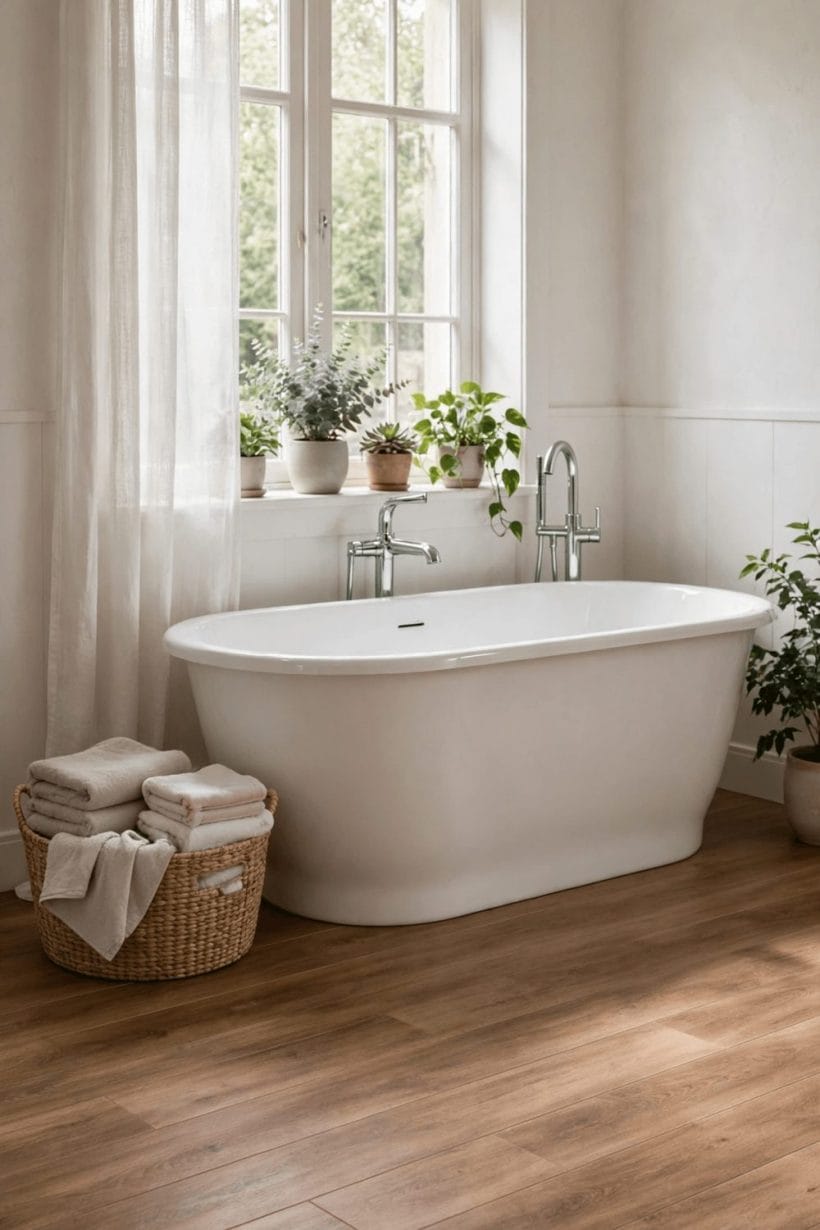
Because LRV is measured, not estimated, manufacturers publish it — the skill is knowing where they put it. Not every brand prints it in the same place, and a colour card that hides the figure is not hiding a secret; the data sheet will carry it.
On the Chip, the Card and the Website
Many manufacturers print LRV on the back of the colour chip or in the index of the colour card, often in small type beside the colour’s name and code. Online, it usually appears in the colour’s specification or data section. If a figure cannot be found in either place, the manufacturer’s technical helpline can give it — it is standard published data, not a trade secret.
Read the Figure for the Exact Colour
LRV belongs to a specific colour in a specific range, not to a colour name in the abstract. Two paints called by near-identical names in different ranges can sit measurably apart. When you compare figures, compare the full identity — range, name and code — or you are comparing strangers.
Treat Third-Party Lists With Care
Blogs and forums quote LRV figures freely, and some of those quotations are wrong, outdated or transcribed from a different range. Use them to shortlist, never to decide. The figure you paint by should come from the manufacturer’s own current publication for the exact tin you intend to buy.
4. How LRV Changes a Room
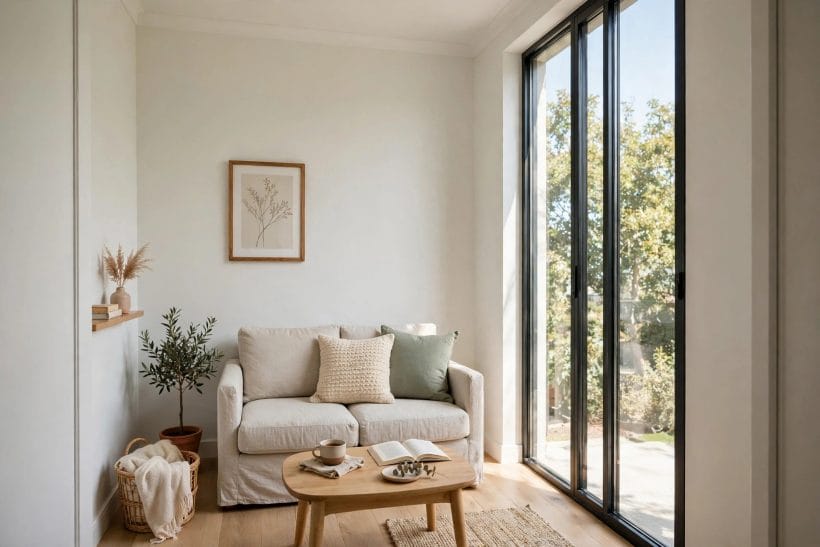
Walls are the largest light-handling surface in most rooms. Their combined reflectance decides whether the light that enters — from windows or fittings — circulates and lifts the whole space, or lands once and dies.
The Ceiling and Floor Are Part of the Sum
LRV thinking does not stop at the walls. A pale ceiling bounces light back down where it is wanted; a dark floor absorbs its share before it can circulate. The wall colour is the biggest lever, but the room’s brightness is always the sum of all its surfaces — the reason a pale wall over a near-black floor feels moodier than the same wall over pale boards.
High LRV Stretches the Light You Have
In a room short of daylight, a high-LRV scheme makes every lumen work twice: light reflects from wall to wall instead of being absorbed at the first surface. This is the whole strategy behind how to lighten a dark room — the paint is not decoration there, it is part of the lighting system.
Low LRV Needs Light Planned In
A deep-coloured room can be glorious, but it must be lit on purpose: more fittings, aimed well, because the walls will return little. Decide that when you choose the colour, not after the first dark evening. The budget for a dramatic room includes its lighting, every time.
5. LRV and Natural Light
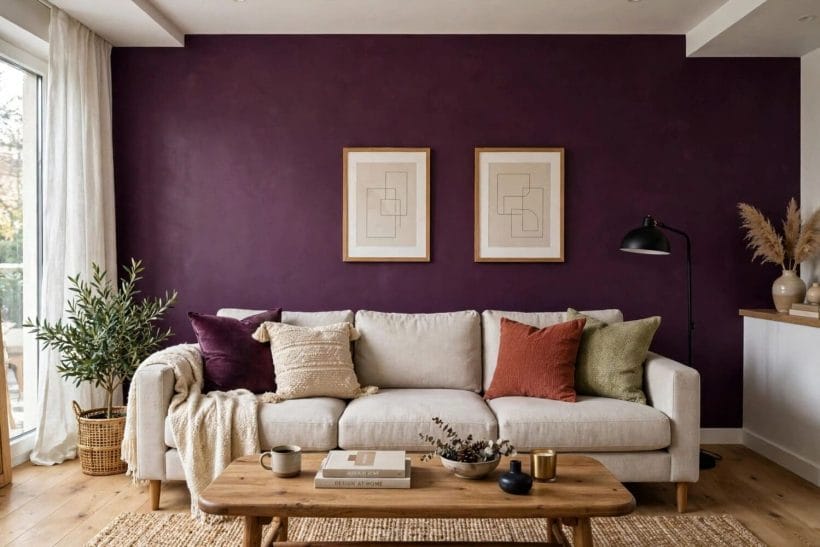
The same paint, at the same LRV, behaves differently under different daylight. Aspect — the direction the windows face — changes both the quantity of light and its colour, and LRV tells you how much of that light the room will keep.
Cool Light Asks for Warmth or Value
Rooms lit mainly by a northern sky receive a cool, diffuse light that greys colours down. A pale paint with a warm undertone, or a step up in reflectance, compensates. The deep accent in the plum color post works because the scheme around it was chosen with exactly this bargain in mind.
Strong Sun Forgives Almost Everything
A room flooded with southern or western sun can carry colours that would sulk elsewhere — mid-tones and even deep shades keep their richness because there is light to spare. In such rooms LRV matters less for brightness and more for glare: very pale walls under very strong sun can dazzle, and a step down in value can feel calmer.
Watch the Colour Through the Day
Daylight is not one light but several — morning, noon, dusk, overcast. A colour that delights at breakfast may brood by four o’clock. LRV predicts the brightness half of that behaviour; only living with a sample predicts the rest, which is why section 10 of this guide refuses to be skipped.
6. LRV, Undertones and Sheen
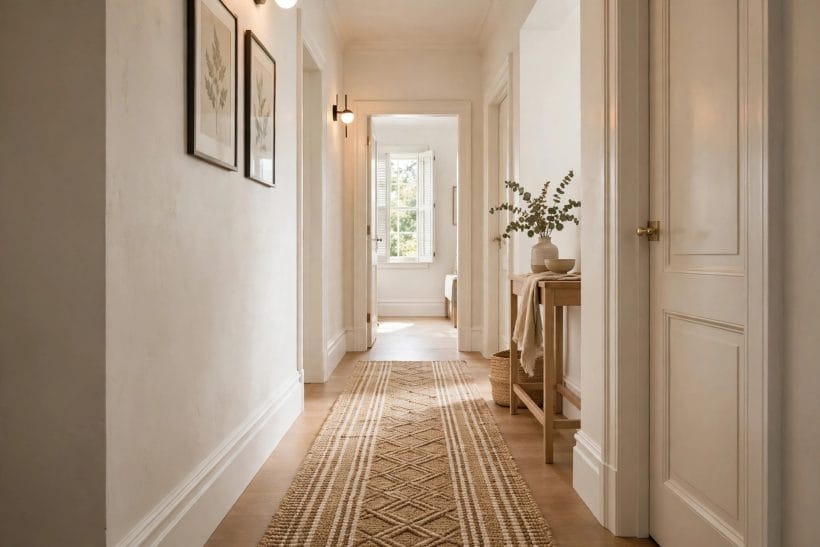
LRV is one dimension of a colour, not the whole of it. Two paints can share a reflectance value and look entirely different on the wall, because value says how much light returns — undertone and sheen decide what that returning light looks like.
Same Value, Different Cast
A grey and a beige at the same LRV return the same amount of light, but one returns it cool and the other warm. This is why the pairing problems in brown couch, grey walls are undertone problems wearing value’s clothing: matching the depth is easy, matching the cast is the skill.
Sheen Changes the Read
A glossier finish reflects more light specularly — mirror-fashion — which can make a colour read lighter at some angles and darker at others, and shows every flaw in the wall. Flatter finishes scatter light evenly and read closer to the chip. When you test a sample, test it in the finish you intend to use, or the test is only half done.
Neighbours Shift Everything
Colours are judged by the eye against their surroundings. A mid-tone wall beside white trim reads deeper than the same wall beside timber; flooring, fabric and even the view through the window all vote. LRV gives you the constant in the equation — the comparisons still have to be made in the room, among the room’s own things.
7. Whites and Off-Whites by LRV
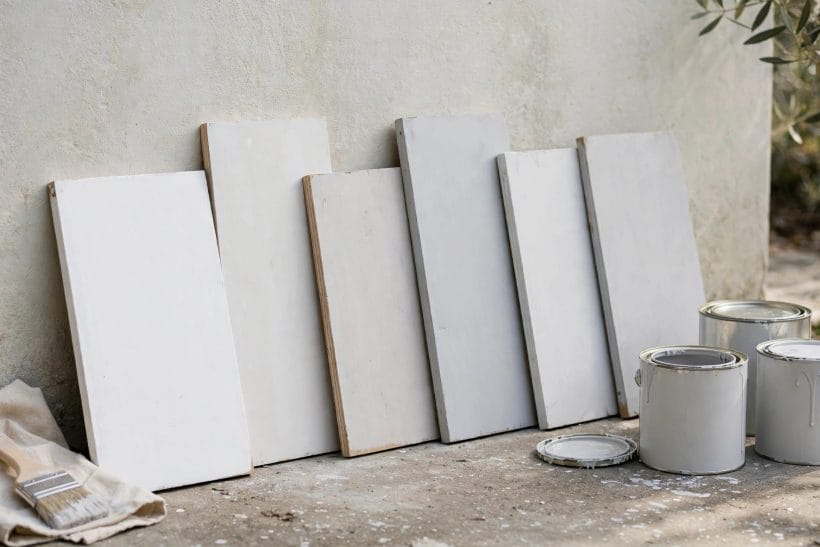
Nowhere is LRV more useful than at the top of the scale, where the eye struggles most. Whites and off-whites that look identical on the card separate clearly by their published figures, and the figure predicts which will feel crisp, which creamy, and which quietly grey.
The Crowded Top of the Scale
Most whites cluster high on the scale, within a narrow band of each other — yet rooms feel the differences keenly, because at high reflectance small steps change how shadows and skin tones read. When two whites look the same in the shop, choose by figure and undertone together: the warmer one for cool light, the cleaner one where whites must match tiles, baths and appliances.
Ceiling White Is Its Own Question
Ceilings receive the least direct light and give back the most useful bounce. A ceiling white at the top of the scale is the usual choice, and pairing it with walls a step or two deeper gives a room its gentle gradient. The beige family discussions in beige paint ideas show the same ladder working in warmer territory.
Trim: Contrast or Continuity
Trim painted a touch brighter than the walls reads as deliberate architecture; trim at the same value in a glossier finish reads as calm continuity. Either is right — but decide by the figures, not by the tin names, so the relationship survives when the light changes.
8. Deep and Saturated Colours by LRV
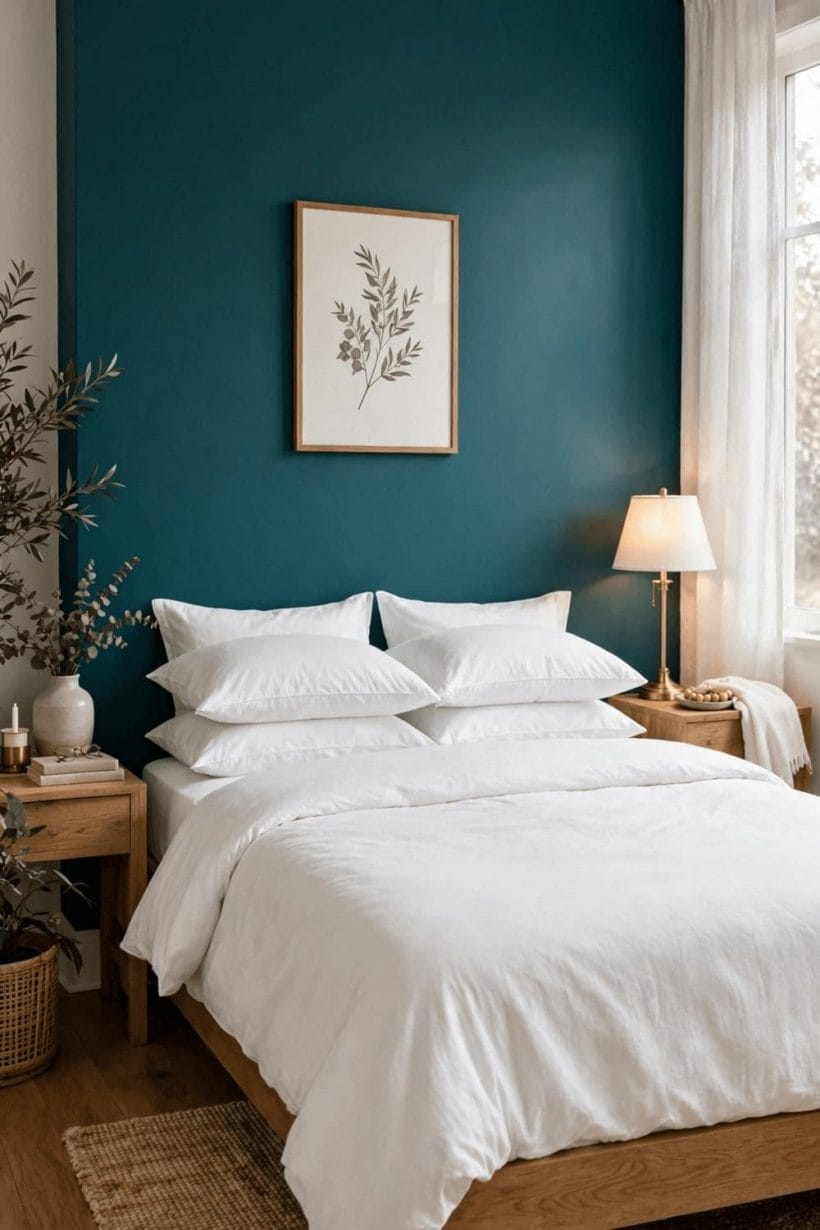
At the bottom of the scale, LRV stops being about brightness management and becomes a tool for depth: it tells you how much light a dramatic colour will take from the room, and therefore how much the room must be given back.
Depth Is a Deliberate Purchase
A deep colour’s low figure is not a warning; it is a price tag. Rooms that pay it knowingly — a study, a snug, a dining room used by lamplight — gain an enclosure no pale scheme can imitate. The pairing instinct in yellow and green applies here too: saturated colour succeeds when the whole scheme, light included, is built around it.
One Deep Wall Is a Different Sum
An accent wall changes a room’s total reflectance far less than four deep walls do. If you love a deep colour but fear the gloom, the arithmetic is on your side: keep the remaining walls and ceiling high on the scale, and the room keeps its light while gaining its drama.
Saturation and Value Together
Vivid colours can sit anywhere on the scale — a bright yellow returns far more light than a deep plum of similar boldness. When a colour feels “too much,” the fix is sometimes value rather than saturation: the same hue, deeper or paler, changes the room’s light budget without surrendering the colour’s character.
9. Choosing a Band for the Room You Have
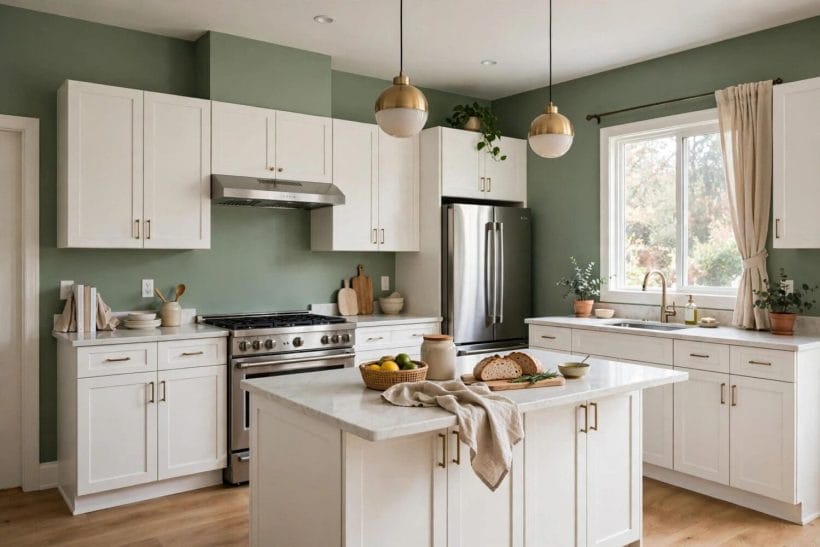
Decorators think in bands, not points: broad zones of the scale that suit broad kinds of rooms. Working in bands keeps LRV useful without pretending a room can be engineered to a decimal place.
Match the Band to the Light Budget
Small, dark or north-facing rooms generally live in the upper bands; large, bright rooms can spend reflectance freely across the middle; deliberate snugs and studies occupy the bottom by choice. State your room’s light budget honestly first — windows, aspect, obstructions — and the band chooses itself.
Keep the Ladder Inside the House
A house feels coherent when its rooms step up and down the scale gently rather than leaping. If the hall is mid-tone, a bedroom at the very top of the scale will glare by comparison. Carry one or two familiar values from room to room — in trim, if nowhere else — and the whole house holds together.
Write the Figures Down
When a colour succeeds, record its name, range and published LRV in the household notebook. Touch-ups, reorders and the next room’s shortlist all start from that line. Paint memory is short; the notebook is how a house accumulates wisdom about its own light.
10. Testing: Sample Boards and Real Light
Everything LRV gives you is a prediction, and predictions about colour are only ever confirmed on the wall. The figure narrows a hundred candidates to five; the last step belongs to samples, daylight and patience.
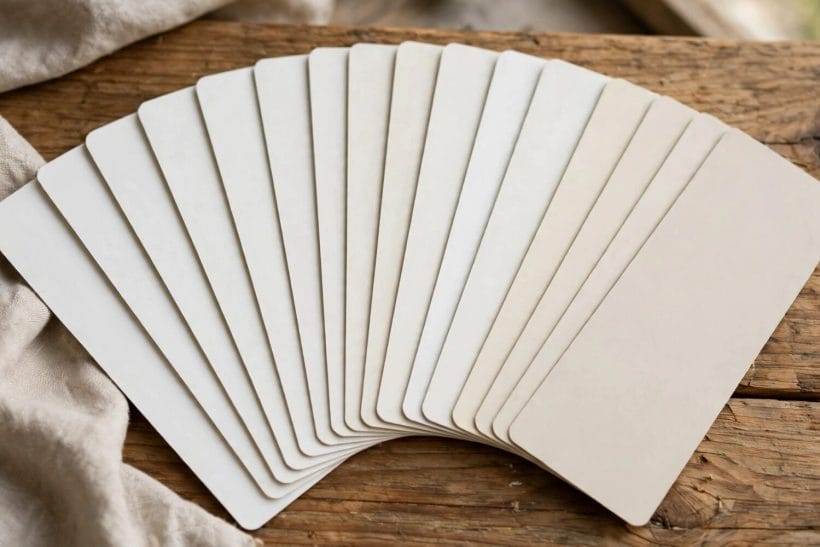
Paint generous samples onto boards, not onto the wall itself — boards can move: beside the window, opposite it, next to the sofa fabric, under the evening lamp. Live with them through at least one full day and one lamplit evening. A colour is chosen by the worst light it must survive, not the best.
Then commit without nostalgia for the runners-up. If the sample pleased you at breakfast and by lamplight, its LRV is doing the quiet work this guide described — reflecting the right share of your room’s light, from a colour whose published figure you read for yourself.
Final Considerations
LRV is the rare decorating tool that is both genuinely technical and genuinely simple: a manufacturer’s measured figure for how much light a colour returns. Read it on the chip or the data sheet, treat third-party quotations as leads rather than facts, and use it to choose the band your room’s light budget can afford.
Pair the figure with undertone, sheen and a day of sample boards, and paint stops being a lottery. The colour on the wall will be the colour you chose — which is all any number can promise, and more than most colour cards ever tell you.

0 Comments