

New Muscovy ducklings look sturdy, with broad bills and quiet ways, but their first days decide how calmly they settle. Get the warmth, water and first feed right, and raising muscovy ducklings becomes a steady, enjoyable routine instead of a scramble.
This guide walks through a simple brooder, safe first meals and the small daily checks that help a young flock thrive on any homestead.
1. Muscovy Ducklings at a Glance
Everything in the first week comes back to four basics: a warm, dry corner, the right starter feed, shallow water and room to grow. Ducklings cannot regulate their own comfort the way an adult bird under a mother hen can, so the brooder has to do that job for them. If you are new to waterfowl, it helps to read this alongside our pillar guide on how to raise chickens, because brooding young poultry shares the same foundations of warmth, dryness, feed and safety, even though ducklings are messier and grow in a different style.
| Area | What They Need | Remember |
|---|---|---|
| Brooder | Warm, dry corner | Heat lamp kept safe |
| First Feed | Waterfowl starter | Niacin matters |
| Water | Shallow and safe | No swimming yet |
| Growth | Fast growers | Space expands |
| Warmth | Consistent warmth needed | A warm end and a cooler end |
| Feed | Protein-rich duckling feed | Fresh feed, little and often |
| Water Safety | Shallow water only | Deep enough to dip the head, never to swim |
| Space | Room to move and rest | Plan the bigger pen early |
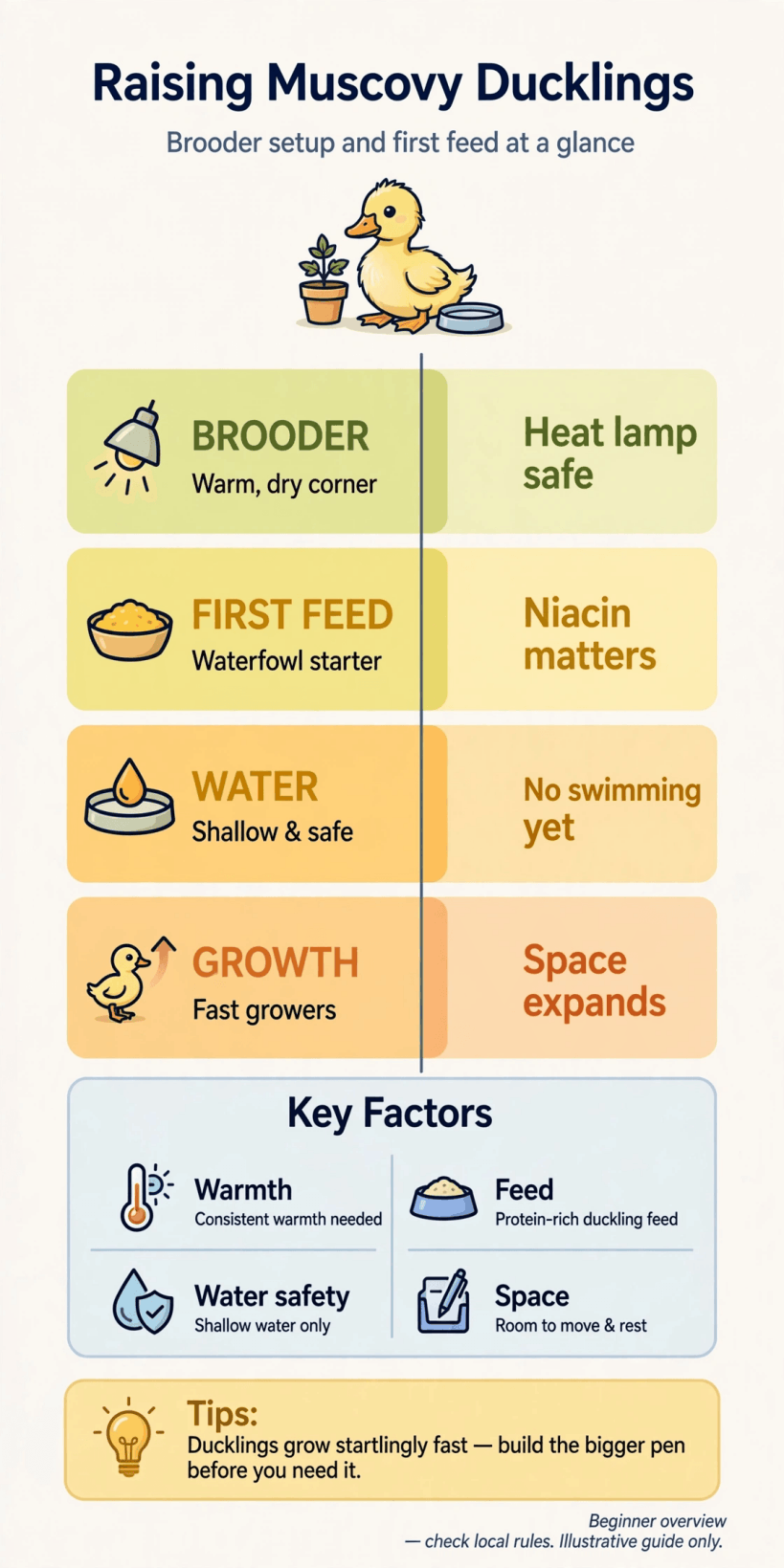
Brooder setup and first feed at a glance: a warm, dry corner, waterfowl starter, shallow water and space that expands as the ducklings grow.
Keep that table in mind as a checklist rather than a set of rigid rules. A small batch of ducklings in a sheltered building behaves differently from a larger group in a breezy barn, and the birds themselves will show you, through where they sleep and how they spread out, whether the setup is working. Observation always beats assumption with young waterfowl.
2. Why Muscovys Make a Different Kind of Duckling
Muscovys are not simply quiet versions of other ducks. They come from a different background, they communicate with hisses, tail wags and soft sounds rather than loud quacking, and the adults develop the distinctive facial caruncles that make the breed so recognisable. Our Muscovy duck guide covers the adult bird in depth, and it is worth reading before your ducklings feather out, because a Muscovy flock is managed with its perching habits, strong mothering instincts and excellent foraging in mind.
As ducklings, they are generally calm, curious and hardy when their basic needs are met, and they bond readily to a predictable routine. They also have sharp little claws and a natural inclination to climb and explore, which surprises keepers who expect the waddling helplessness of other ducklings. Handle them gently, keep footing secure under them, and expect confident youngsters that grow into self-reliant birds. If you have kept other ducks before, our guide to raising ducks for beginners makes a useful comparison for housing, water and daily care across breeds.
That calm temperament is one reason Muscovys suit small farms and family homesteads so well. They tend to forage widely, sit and hatch reliably as adults, and go about their business without much noise, which neighbours usually appreciate. Starting them well is what turns those natural qualities into a flock that is easy to live with for years.
3. Setting Up the Brooder Before They Arrive
Set the brooder up before the ducklings come home, and let it run long enough to prove it is warm, dry and draught-free. Almost any secure container with solid sides can work for a small batch: a large tote, a stock tank, a wooden pen or a sectioned-off corner of a shed. What matters is that it keeps ducklings in, keeps pets and predators out, and keeps bedding dry. Round off or block sharp corners where youngsters could pile up, and give the pen a lid or cover if there is any chance of cats, rats or curious older birds getting in.
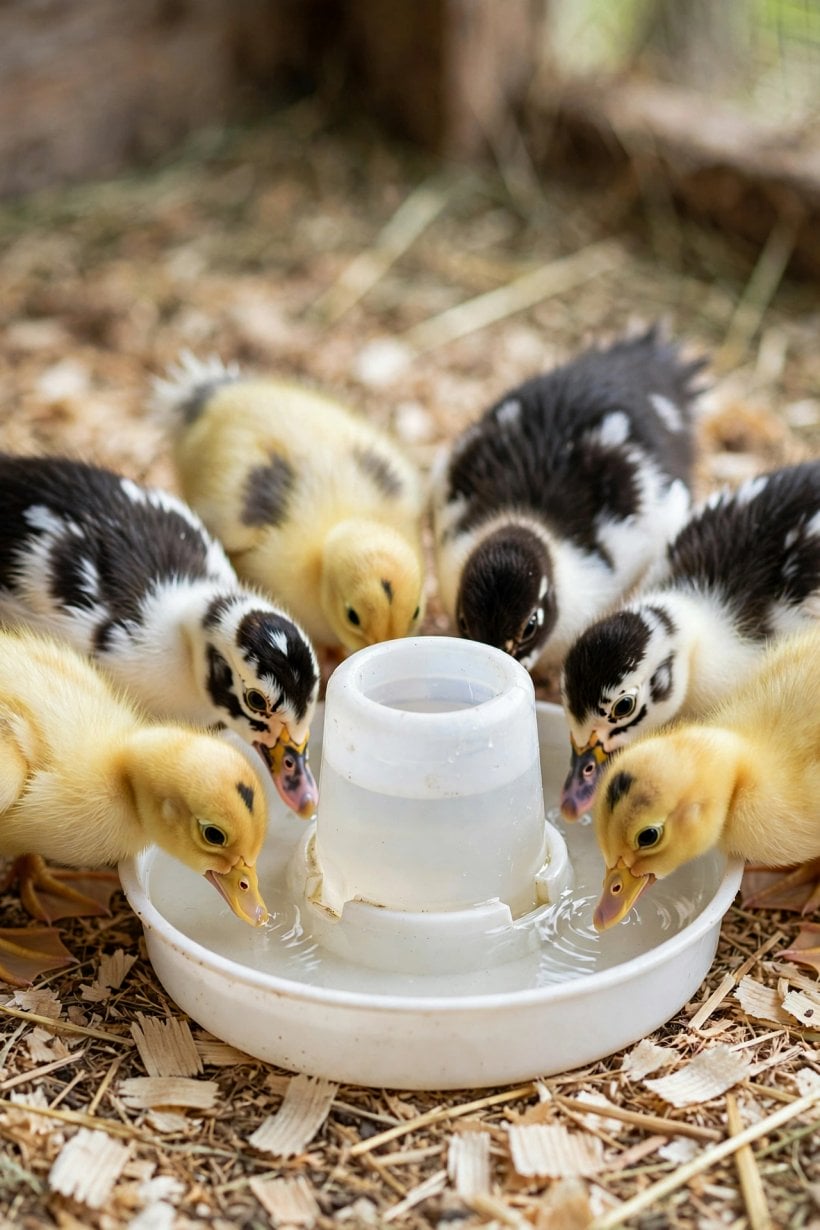
Put the heat source at one end so the ducklings can choose their own comfort zone, moving closer to warm up and away to cool down. Secure lamps firmly with more than one fixing, well clear of bedding and water, because a fallen lamp is a fire risk in any brooder. The same discipline described in our guide to raising turkeys for beginners applies here: test the setup, watch how the heat spreads, and never bring young birds home to equipment you have not already run and checked.
Finally, place feed and water where they stay as clean as possible, away from the hottest spot so water stays cool and inviting. Ducklings find feed and water quickly when both are obvious, shallow and close to where they rest, so keep the first layout simple and resist the urge to add toys, ramps and extras until the basics are running smoothly.
4. Warmth, Light and the First Days
Consistent warmth is the single most important factor in the early days. Newly hatched ducklings chill quickly, especially if they get wet, and a chilled duckling stops eating, hunches and fades fast. Watch behaviour rather than obsessing over instruments: youngsters that crowd tightly under the heat and cheep loudly are telling you they are cold, while birds that spread out, sleep in a loose group and move calmly between feed, water and rest are comfortable. Ducklings pressed far from the heat with bills open are too warm, so adjust gradually and recheck after every change.
Reduce the heat in small steps as the ducklings grow, feather and spend more time away from the warm end on their own. There is no single day when warmth stops mattering; a sturdy, well-feathered youngster in mild weather needs far less help than a small one on a cold night. Keep nights in mind especially, because a brooder that feels perfect at midday can cool sharply after dark. A simple routine of checking first thing, through the day and last thing at night will catch most problems while they are still small.
Light can stay simple. Ducklings need enough light to find feed and water and to learn their surroundings, and a natural day and night rhythm suits them well. Avoid sudden darkness in the first days if it causes panic and piling, and avoid harsh, restless brightness around the clock. Calm, predictable conditions produce calm birds.
5. The First Feed: Waterfowl Starter and Niacin
Offer feed as soon as the ducklings are settled and drinking. A waterfowl or duckling starter is the natural first choice, served as a fine crumble that small bills can pick up easily, in a shallow dish they can reach without climbing in and fouling it. Protein-rich starter supports the rapid early growth this breed is known for, so choose a feed made for young waterfowl where you can, keep it fresh and dry, and top it up little and often rather than letting it sit stale.
Niacin matters for ducklings in a way it does not for chicks. This B vitamin supports healthy leg and joint development, and feeds formulated only for chicks may not supply enough of it for fast-growing waterfowl. Keepers who must use a general starter often add a niacin source suitable for poultry, following the product guidance carefully. Our explainer on what ducks eat walks through feed, treats and forage for waterfowl at every age, and it will help you plan what comes after the starter stage.
Introduce anything beyond starter slowly. Tiny amounts of finely chopped greens can come later, once the ducklings are eating confidently, and any food beyond a complete feed calls for access to fine grit so they can grind it. Never let treats crowd out the balanced starter in the early weeks, and remove wet, spoiled feed promptly, because ducklings will splash, trample and soil food with enthusiasm.
6. Water That Is Shallow, Safe and Always Available
Water is where duckling care differs most from chick care. Ducklings need drinking water deep enough to dip their whole head and clear their nostrils and eyes, yet shallow enough that they cannot climb in, soak themselves and chill. A sturdy, low drinker, or a shallow dish weighted so it cannot tip, set on a wire or slatted platform over a tray if you can manage it, keeps the worst of the splashing out of the bedding. Ducklings are astonishingly effective at turning a dry brooder into a swamp, and damp bedding is the root of many early problems.
There should be no swimming water yet. Downy ducklings raised without a mother to waterproof and warm them can chill dangerously in a bath, however cute the idea is. Short, supervised paddles can wait until they are older, partly feathered and able to climb out easily into warmth. Until then, drinking water, refreshed often and never allowed to run dry, is all they need. A duckling without water cannot eat properly either, because waterfowl wash feed down as they eat, so check drinkers at every visit.
As they grow, graduate to bigger drinkers in step with their size, always keeping the same balance: deep enough for head-dipping, never deep enough for a small bird to get stuck or soaked. Much of the daily routine in our raising ducks for beginners guide is really water management, and learning that rhythm now will serve you for the life of the flock.
7. Bedding, Grip and Dry Floors
Young ducklings need footing they can grip. Slick surfaces such as bare plastic or newspaper can leave small legs splaying outwards, which is hard for a growing bird to recover from, so cover smooth floors with a textured layer for the first days. Over that, use absorbent bedding you can stir, top up and replace easily. Because ducklings splash, bedding near the drinker will need attention far more often than bedding under the heat, and a brooder that smells strongly is a brooder that is overdue for a clean-out.
Think of bedding work as a rhythm rather than a rescue mission. A quick daily tidy, removing wet patches and adding a fresh handful where they sleep, keeps conditions steady and takes minutes. A deeper clean can follow whenever the floor no longer dries between visits. Ventilation matters too: the brooder should smell fresh, not stuffy, but fresh air must arrive without a cold draught blowing across the ducklings themselves, especially at floor level where they live.
Dry floors protect feet as well as lungs. Constantly wet, dirty bedding softens skin, encourages sores and makes chilling more likely, while a dry, springy floor keeps ducklings active and comfortable. If one corner is always wet, fix the cause, usually the drinker setup, rather than forever adding more bedding to a design problem.
8. Handling, Calm Routines and Watching Growth
Handle ducklings little and often, gently and close to the ground, so they learn that people mean food, water and calm rather than chasing and grabbing. Support the whole body, never lift by the legs or wings, and keep sessions short for very young birds so they do not chill away from the brooder. Children can absolutely be part of this, supervised, sitting down and letting the ducklings come to them. A flock that is relaxed around its keepers is easier to check, move and treat for the rest of its life.
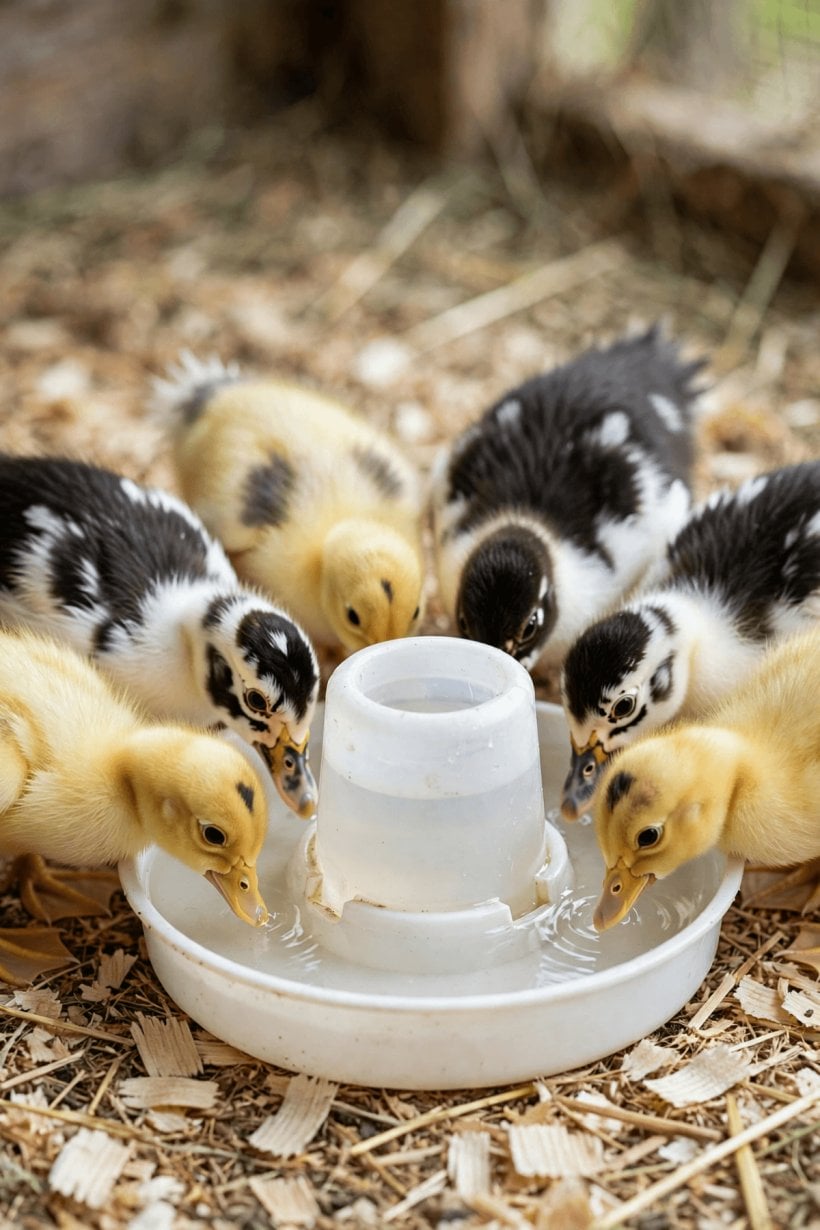
Growth is the other surprise. As the infographic tip puts it, ducklings grow startlingly fast, so build the bigger pen before you need it. A brooder that felt generous in week one can feel crowded remarkably soon, and crowding brings wet bedding, competition at the feeder and restless birds. Expand space in stages, and take inspiration from small-flock housing generally: our collection of quail coop ideas shows how much can be done with compact, secure pens, and these chicken run ideas adapt well to young waterfowl that need safe outdoor time.
Watch growth with your eyes at every visit. You are looking for bright eyes, active movement, steady eating and drinking, clean vents and a group where even the smallest bird gets its share. A duckling that sits apart, stops joining the rush to fresh feed, or is being trampled at the drinker needs a closer look the same day, not at the weekend.
9. Moving Outdoors: Pens, Shade and Predator Safety
The move outdoors should be gradual. Start with short outings on mild, dry days once the ducklings are well grown and increasingly feathered, in a secure pen on grass they cannot escape from and nothing can reach into. Bring them back to shelter at night and in bad weather until they are fully feathered and clearly unbothered by outdoor conditions. Muscovys become capable, weather-hardy birds, but youngsters still chill in cold rain, and a soaking at the wrong stage can set them back badly.
Outdoor housing needs the same elements as any good poultry setup: a dry, draught-free shelter, shade through the day, water they can dip their heads in, and fencing that respects how determined predators are. Our guide to chicken predator protection covers locks, mesh, buried barriers and routines that apply just as well to ducks, and it deserves a place on your reading list before the flock moves out full time. Remember too that Muscovys can flutter and climb better than other ducks as they mature, so pen height and covers deserve thought.
Keep the outdoor routine predictable. Birds that know when feed arrives, where water lives and which shelter is home will settle quickly and range calmly, and a settled flock is far easier to count, inspect and shut in safely each evening.
10. Troubleshooting the Common First-Week Problems
Most early problems trace back to the basics in the table: warmth, feed, water or space. A duckling that is cold, wet or unable to reach the drinker will fade in the same quiet way whatever the underlying cause, so work through the brooder first. Is the warm end genuinely warm? Is the bedding dry where they sleep? Can the smallest bird reach feed and water without being pushed aside? Fixing the environment solves more first-week trouble than any supplement or remedy.
Watch for the youngster that stops eating, stands with eyes half closed, or has a dirty, pasted vent. Gentle warmth, easy access to water and feed, and a clean, dry space are the sensible first responses, along with separating a struggling bird somewhere warm and quiet if the group is overwhelming it, while keeping it within sight and sound of company where possible. Problems that spread through a group, or a duckling that deteriorates quickly, call for prompt advice from a vet or a very experienced waterfowl keeper rather than guesswork.
Keep simple notes. A few lines each day about appetite, behaviour, bedding and any changes you made will show patterns you would otherwise miss, and they make the next batch easier. Keepers across the whole poultry cluster, from the how to raise chickens pillar onwards, tend to say the same thing: small problems noticed early are chores, while small problems noticed late become losses.
Final Considerations
Raising young Muscovys well is mostly a matter of rhythm: warmth that never fails, water that is shallow and always there, the right starter feed, dry bedding and space that grows as fast as the birds do. None of it is complicated, and all of it rewards consistency. Plan the bigger pen early, keep the daily checks short and regular, and enjoy a breed that repays good care with calm, capable, long-lived birds. When your flock is grown and ranging, compare notes with our guide on what geese eat if you are thinking of adding grazing waterfowl to the same homestead system.


0 Comments