
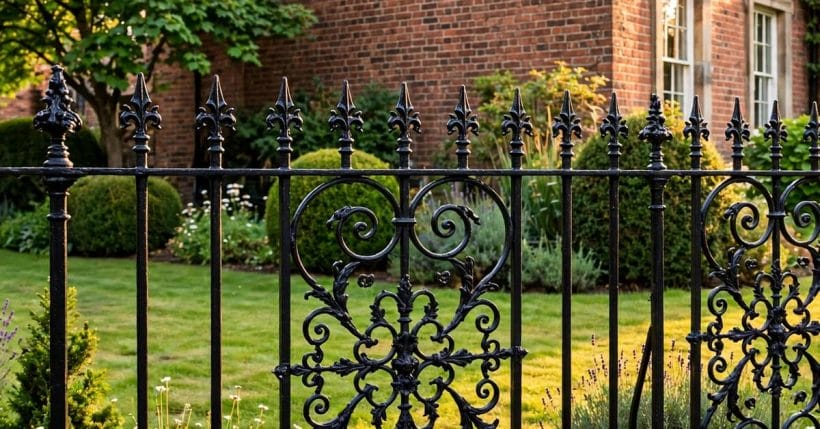
An iron fence at the front of a house does something few other boundaries can do. It marks the edge of a property clearly, yet it barely interrupts the view. From the street, the garden, the planting and the front of the house all remain visible through the open bars, so the boundary feels like a frame rather than a wall. That openness is the whole appeal of this kind of fencing, and it is also the thing to think about most carefully before choosing it. A wrought iron fence suits homes where the garden is part of the display, where light matters, and where a formal, finished edge is wanted without shutting the plot away.
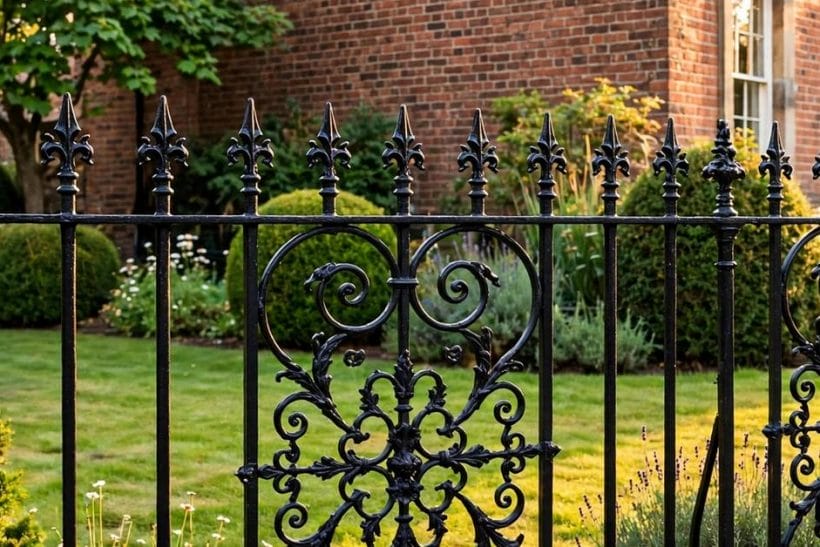
The look is traditional, but it is far from one-note. Panels range from plain vertical bars with a flat top rail to elaborate scrollwork with finials, rings and curved details. Colours are usually dark and restrained, though lighter painted finishes change the mood completely. Heights, spacing, gates and planting all shift how the finished boundary reads. This guide walks through those choices in general terms: the forms on offer, the colours that work, the practical details worth settling early, and the cost drivers that shape a quote. Structural and installation work belongs to experienced professionals throughout; nothing here is a set of fitting instructions.
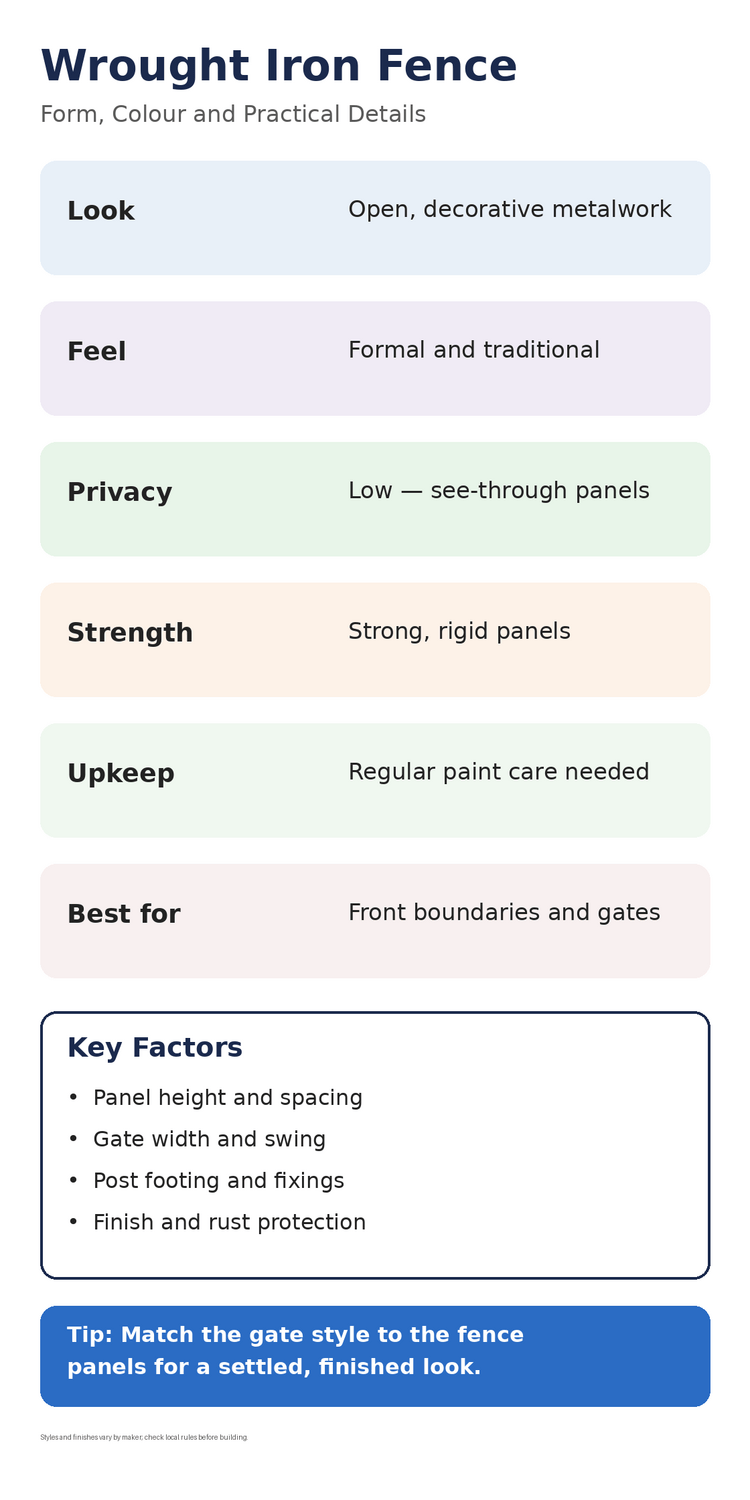
1. The Look: Open Metalwork and the Street View
Open metalwork gives a front garden a particular character. The eye travels through the bars to the lawn, the path and the planting, so the garden reads as part of the street scene rather than hidden behind it. That suits houses with planting worth showing, a handsome front door, or a porch that deserves to be seen. It also keeps a front garden feeling light, because sunlight passes through the fence and shadows fall as a soft pattern rather than a solid block.
The formality of the look can be tuned. Plain bars with a simple top rail read as quiet and contemporary, even though the material is old-fashioned. Add spear-top finials and the fence turns more traditional at once, with a rhythm of pointed tops along the run. Add scrolls and the effect becomes decorative and grand, which suits larger houses and wider frontages better than a small plot, where too much ornament can crowd the view.
Proportion matters more than decoration. A fence that is too tall for a small front garden can make the house feel set back and stern, while a low fence on a grand frontage can look lost. Walk the street and notice which fences sit comfortably with their houses. Often the comfortable ones share a height with the neighbouring boundaries or echo a line in the house itself, such as the height of a porch rail or a low garden wall. A fence that relates to something already there tends to settle in quickly.
2. Panel Styles: Spear Tops, Flat Tops and Scrolls
Panel style is the first choice most people notice, and it sets the tone for everything else. Spear-top panels, where each bar ends in a pointed finial, are the classic image of this kind of fencing. They read as traditional and a little grand, and they suit brick houses, period properties and formal front gardens. The pointed tops also discourage climbing, which some householders value at a front boundary, though that is a secondary benefit rather than a reason on its own to choose the style.
Flat-top panels are the quieter cousin. The bars end level with the top rail, giving a clean horizontal line that suits modern houses, rendered walls and minimalist planting. Flat tops can also sit well alongside stone or brick piers, where the piers carry the decoration and the panels stay plain. If the house is simple and the garden is structured, a flat-top panel often looks more considered than a fussy one.
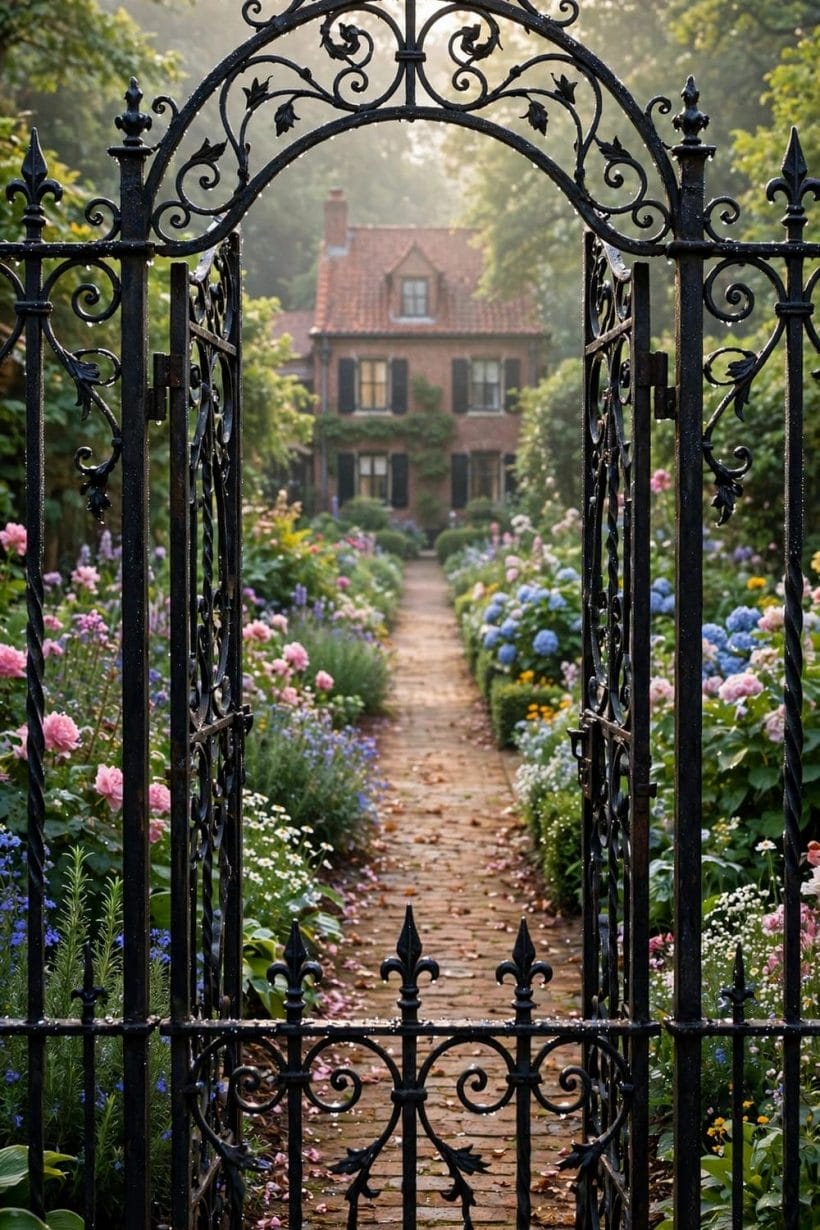
Scrollwork panels add curves, circles and decorative infills between the bars. They are at their best where there is room to appreciate them: a wide frontage, a long run, or a gate that acts as a centrepiece. On a short run, heavy scrollwork can feel busy. A useful middle ground is to keep the panels plain and put the decoration into the gate, so the entrance gets the flourish and the boundary stays calm. Mixing panel styles along one boundary rarely works; consistency along a run reads as intentional, while a patchwork of styles reads as accidental.
3. Colours and Finishes: Black, White, Bronze and Beyond
Black is the default colour for iron fencing, and it earns that place. Against green planting, brick and stone, black recedes and lets the garden do the talking. It also hides dirt and minor marks better than pale finishes, which matters for a boundary that faces the street and the weather. A matt or satin black finish tends to look softer than a high gloss, which can catch the light and draw attention to every bar.
White painted iron fencing changes the mood entirely. It reads as lighter, more cottage-like and more decorative, and it pairs beautifully with pale houses, pastel planting and white-painted porches. The trade-off is upkeep: white shows dirt, algae and rust staining sooner, so it asks for more frequent cleaning and touching up. In a shaded or damp spot, that difference is worth weighing honestly before committing to a pale finish.
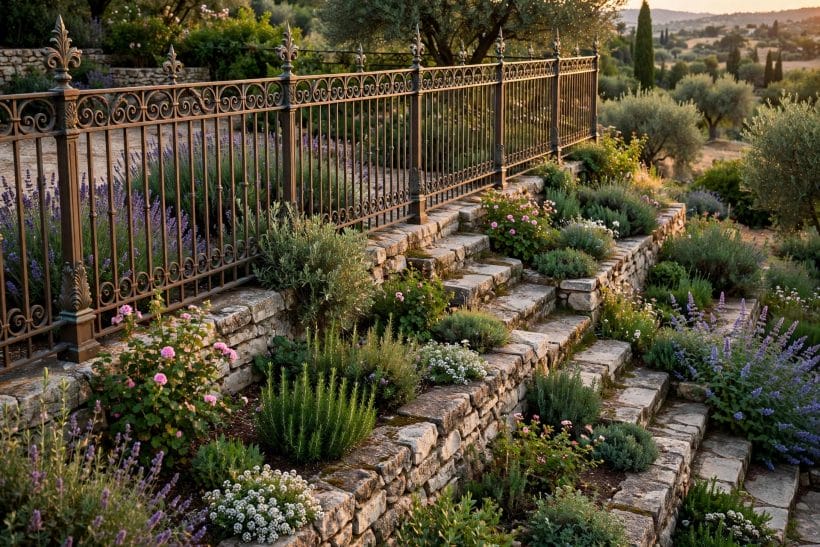
Bronze, dark green and grey finishes sit between the two. Bronze warms the look and suits stone houses and autumnal planting. Dark green blends into hedges and trees, which can be an advantage where the fence should be felt rather than seen. Grey works with rendered and contemporary houses. Whatever colour is chosen, the finish is also protection: iron needs a sound coating to resist rust, and the quality of that coating matters as much as the shade. Repainting is a recurring task, not a one-off job, and it should be factored into the long-term picture from the start.
4. Heights, Spacing and the Feeling of Openness
Height and bar spacing together decide how open or closed a fence feels. A lower fence keeps a front garden sociable and open to the street, which many people prefer for a front boundary. A taller fence gives more definition and a stronger sense of enclosure, but it also casts more shadow and can make a small garden feel boxed in. Local rules may also limit front-boundary heights, so checking what applies in the area is a sensible early step, before falling for a particular panel.
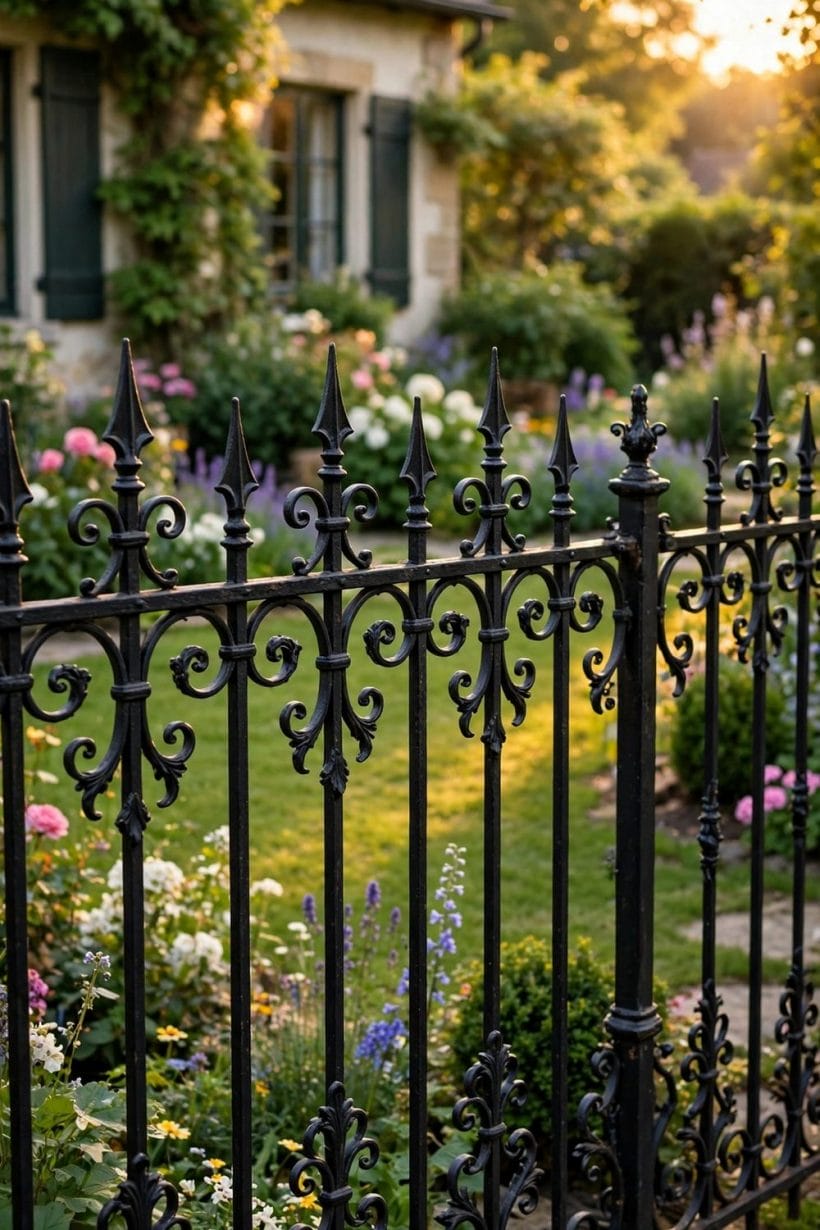
Bar spacing affects both the look and the practical job the fence does. Closely spaced bars look more solid and formal, and they suit boundaries where small pets need to be kept in or where a more enclosed feel is wanted. Wider spacing looks lighter and more open, and it suits a purely decorative front boundary where containment is not the point. Spacing also changes how the fence reads from an angle: from straight on, even wide spacing looks fairly closed, while from the side it opens up completely.
Think about the view from inside as well as from the street. From a front room or a porch, an open fence keeps the outlook and lets the garden connect visually with the street trees and neighbouring planting. That is one of the strongest arguments for this kind of boundary. If privacy is the priority, however, open bars will disappoint on their own, and the answer usually lies in planting or in a different kind of boundary altogether rather than in forcing an open fence to do a closed fence’s job.
5. Gates: The Working Part of the Boundary
The gate is the part of the boundary that gets used every day, so it deserves more thought than the panels. Its width needs to suit real life: a pedestrian gate should be comfortable to walk through with bags or a pushchair, and a driveway gate needs to clear vehicles with room to spare. The swing matters too. A gate that opens onto a pavement or into a tight path causes daily irritation, while one that swings into the garden needs clear space behind it. Hanging, alignment and fixings are professional work, and a gate that drops or drags is usually a sign that the posts or the hanging were not right from the start.
Style-wise, the gate should belong to the fence. A plain gate in a scrolled fence looks like an afterthought, and a heavily decorated gate in a plain fence can dominate the whole frontage. Matching the gate’s top line, bar spacing and finials to the panels gives the boundary a settled look. Many people choose to put a little extra decoration into the gate alone, such as a curved top or a central motif, which marks the entrance without breaking the overall consistency.
For anyone weighing the wider family of metal boundaries, iron gates deserve a look in their own right, since gate forms, widths and hanging details vary more than panel styles do. A gate also needs a latch that works reliably and, where children or pets are around, closes securely. Self-closing fittings exist for some situations, and a professional can advise what suits the gate and the setting. It is worth settling these details before ordering, because retrofitting a latch or changing a swing direction is rarely as tidy as getting it right first time.
6. Front Gardens: Planting That Suits Open Fencing
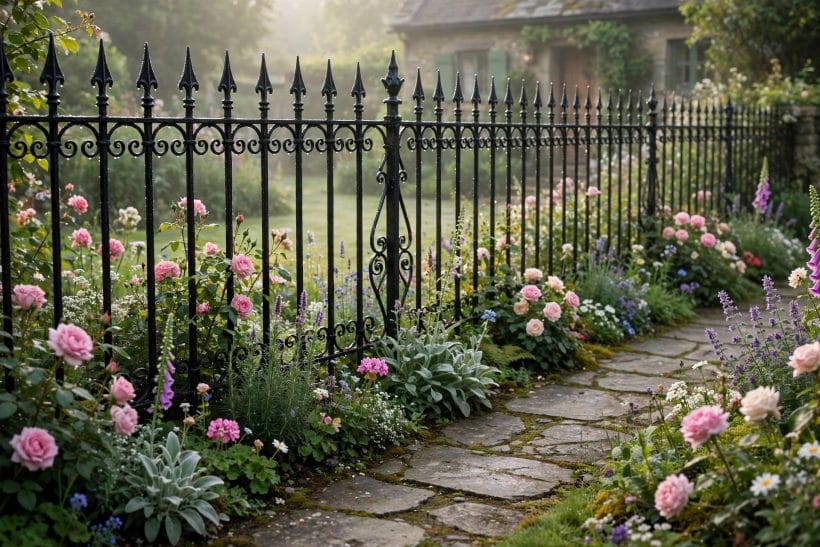
Planting and open fencing flatter each other. Low shrubs, roses, lavender and clipped hedging look their best seen through iron bars, because the dark lines frame the planting without hiding it. Climbing plants can soften the fence further, though they need care: a vigorous climber can swallow a fence whole, hiding the very metalwork that was chosen for its looks, and its weight and moisture can add to upkeep. Lighter climbers, trained and pruned, give softness without burial.
Think in layers. A low hedge just inside the fence gives a soft green base, taller shrubs behind it add depth, and the house itself provides the backdrop. Because the fence is see-through, the planting behind it is always on show, so a tidy, layered bed reads far better than a bare strip of soil. Equally, a fence with nothing behind it but lawn can look stark; even a few well-placed shrubs change the picture.
Seasonal change is part of the charm. In spring and summer the fence frames flowers and foliage; in winter, when leaves fall, the bare bars and the structure of the garden take over. That winter view is worth picturing when choosing, because an open fence never has an off-season disguise. A garden arbor over a path can add a vertical accent that works with the fence line, giving the front garden a focal point that echoes the metalwork without competing with it.
7. Side and Rear Boundaries: Where Openness Needs Thought
At the front, openness is usually a virtue. At the side and rear, it needs more thought. A rear garden is often a private space for sitting, playing and drying washing, and an open fence does little for privacy on its own. That does not rule it out, but it does mean the planting and the layout need to do the private work. Hedges, trellis with climbers, or a mixed boundary where iron panels sit above a low wall can all add screening while keeping the iron look.
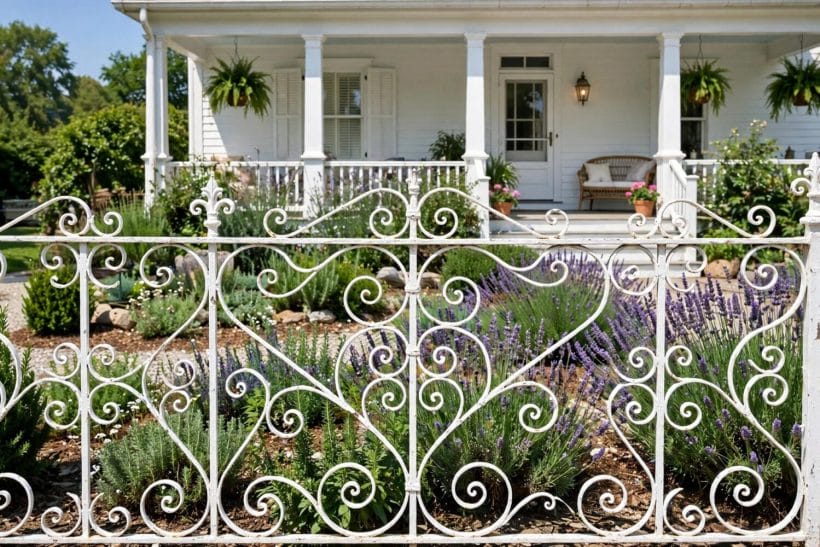
Side passages have their own considerations. A narrow side return with an iron fence can feel lighter than a solid wall, which helps where light is scarce. But a side fence also needs to be secure and practical, with a gate that can be locked and that does not obstruct bins, bikes or access. The boundary between neighbours deserves a conversation too: a fence that suits one household’s taste for openness may not suit the neighbour’s wish for screening, and agreeing the approach early avoids friction later.
For a general sense of how rear boundaries differ from front ones, backyard fence ideas show the range of forms used where privacy and practicality lead. The iron option sits at the decorative, open end of that range, which is exactly why it works best where the garden behind it is already doing some of the screening, or where openness itself is the point.
8. Pools, Pets and Practical Boundaries
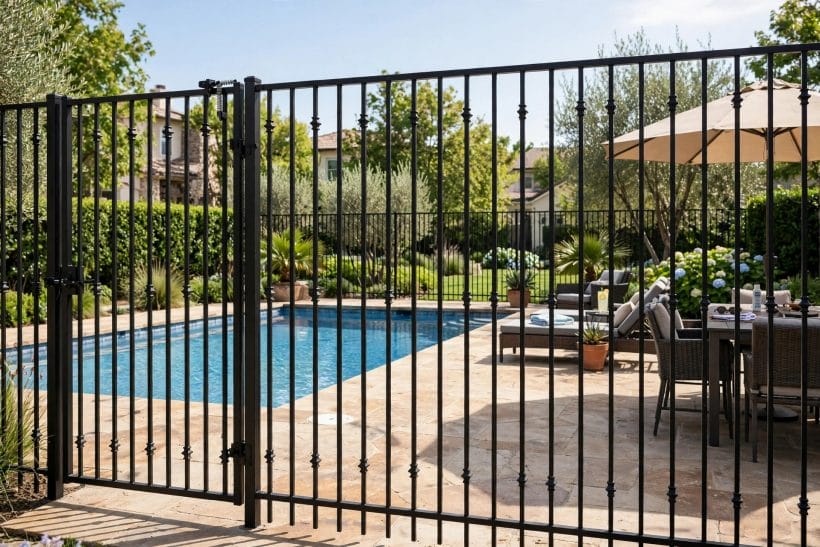
Around a pool, a fence is a safety feature first and a design feature second, and the rules that apply are usually strict and local. Bar spacing, height, gate closing and latch positions may all be specified, and compliance is a matter for qualified professionals and the local rules, not for guesswork. Iron pool fencing is popular because it is strong, see-through and does not block supervision of the water, but the details that make it compliant are precise and should be settled with someone who knows the local requirements.
Pets change the spacing question. A fence that looks fine for people may have gaps a small dog can slip through, and a determined dog may test the bottom rail. Closely spaced bars, a low bottom rail and a gate that closes firmly all help, but the only reliable test is the animal in question. Cats, of course, treat most fences as suggestions rather than barriers, which is worth accepting before choosing any open boundary for cat containment.
Where a lighter, more rural look is wanted for part of a garden, hog wire fence panels offer a useful comparison: open mesh with a timber frame, a very different feel from formal ironwork. The contrast is instructive, because it shows how much of iron fencing’s character comes from its rigidity, its dark finish and its decorative tops. A garden bridge can play a similar framing role in a larger garden, marking a crossing point the way a gate marks an entrance.
9. Upkeep: Paint, Rust and Seasonal Checks
Iron fencing asks for regular, undramatic upkeep, and it repays it. The main enemy is rust, which starts where the coating is damaged: at chips, scratches, joints and the base of posts where moisture lingers. A seasonal walk along the fence, looking for bubbles, flakes and orange staining, catches most problems while they are small. Touching up chips promptly matters more than any grand annual effort, because rust spreads under a damaged coating once it gets a hold.
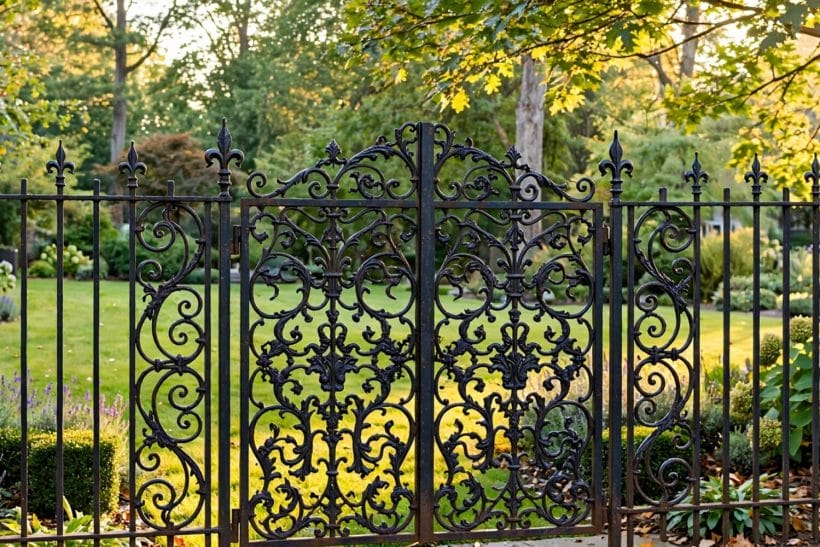
Cleaning is simple and worth doing. Washing down with water and a mild cleaner removes dirt, algae and road grime, and it also reveals the condition of the paint. Avoid harsh abrasives on a sound finish. Repainting, when it is due, is a bigger job: preparation, priming bare metal and applying a suitable exterior metal paint, with attention to joints and the ground line. Many householders have this done professionally, since a thorough job on a long run of bars is slow and fiddly work.
Posts and footings deserve a check too. A post that moves, leans or sits in standing water will shorten the life of the whole run, and gate posts in particular carry daily loads. Vegetation should be kept from burying the bottom rail, and soil or mulch piled against the fence traps moisture against the metal. A little clearance at the base, and planting kept pruned back from the bars, goes a long way. With that kind of attention, an iron fence can look good for many years; without it, even a well-made fence will age quickly.
10. Costs in General Terms: What Drives the Quote
Cost is best understood as a set of drivers rather than a single figure, because every boundary is different. Length and height are the obvious starting points: more metal, more posts and more finish all add up. Panel style is the next driver, since plain bars are simpler to make than scrollwork or custom finials, and a bespoke design costs more in time than a standard panel. Gates add disproportionately, because they need hinges, latches, stronger posts and careful hanging.
Ground conditions matter a great deal. A level run on easy ground is straightforward, while a slope, steps, curves, existing walls or awkward access all add work. Removing an old fence, dealing with tree roots, or working around services can also change the picture. Posts and footings are a real part of the job, not an afterthought, and they are professional work: the stability of the whole fence depends on them. Finish is another driver, since a higher-specification coating system costs more up front but may save on repainting later.
Local labour is the final major driver, and it varies by area and by the tradespeople involved. The sensible approach is to get several detailed quotes for the same specification, so the comparison is like with like, and to ask what is included: panels, posts, footings, gates, fixings, finish and removal of the old boundary. A quote that looks low because it leaves out gates or footings is not a bargain. For a contrasting boundary material in the same garden, cedar fence ideas show how a timber boundary is discussed, and the comparison underlines how different the upkeep and character questions are between timber and iron.
Final Considerations
An iron fence is a long-term choice, and it suits a particular kind of house and garden: one where openness is welcome, where the planting deserves to be seen, and where a formal edge adds to the property rather than shutting it away. The decisions that matter most are the ones that are hardest to change afterwards: height, panel style, gate width and swing, and the colour. Those are worth lingering over, ideally with the fence viewed in place, or at least imagined against the house at different times of day.
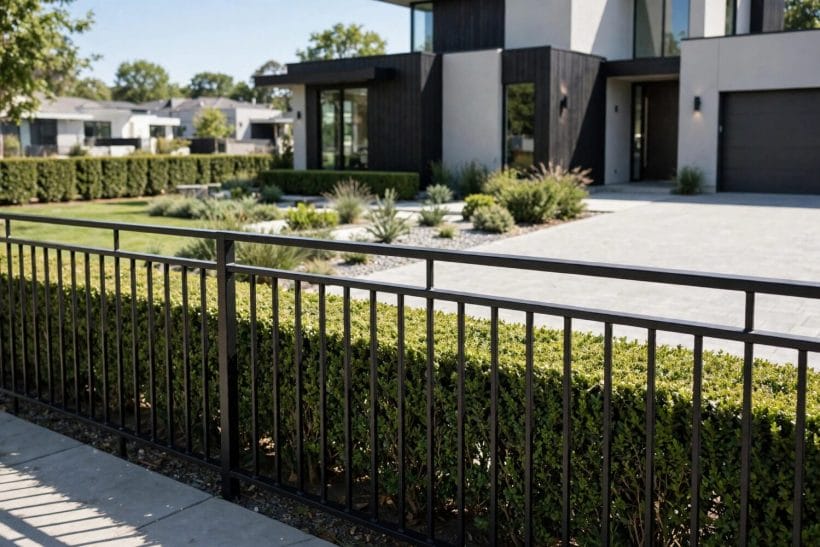
It also helps to think about the boundary as part of a set. The fence, the gate, the piers or posts, the path and the planting all need to agree with each other. A fence that matches the house’s period and the garden’s planting will look inevitable, while a fence chosen in isolation can look applied. Related metalwork around the house can tie the scheme together: iron railing on steps or a porch, for example, can echo the fence and make the whole frontage feel designed rather than assembled piecemeal.
Finally, keep the practicalities in view alongside the looks. Check local rules on height and, where relevant, pool safety. Plan for repainting as a recurring task. Settle the gate details before ordering. And get the structural work done by experienced professionals, from footings to gate hanging. Done with that care, an iron boundary can frame a garden beautifully for years, giving a frontage that is open, formal and finished, without ever hiding the garden it was built to show.




0 Comments