

A healthy goose starts with grass. If you are asking what do geese eat, picture a grazer first and a grain eater second: pasture does most of the work, and the feed bucket simply fills the gaps that pasture, season and age leave behind.
This guide walks through feeding goslings and adults in plain keeper terms, from a gosling’s first starter feed to winter rations, so you can build a routine that stays simple, affordable and kind to the birds in your care.
1. Feeding Geese at a Glance: Grass First, Grain Second
So, what do geese eat on a real homestead? Mostly grass, supported by a sensible supplement and a few wholesome extras. The summary below mirrors the way experienced keepers actually think about the ration: start with the pasture in front of the birds, then adjust for the season, the age of the bird and the quality of the grazing on offer that week.
| Part of the Diet | What It Means for the Flock |
|---|---|
| Staple | Pasture grass for most of the year |
| Supplement | Grains and waterfowl feed, especially in winter |
| Extras | Greens and clean garden trimmings |
| Key Factors | Pasture quality, season, niacin and water |
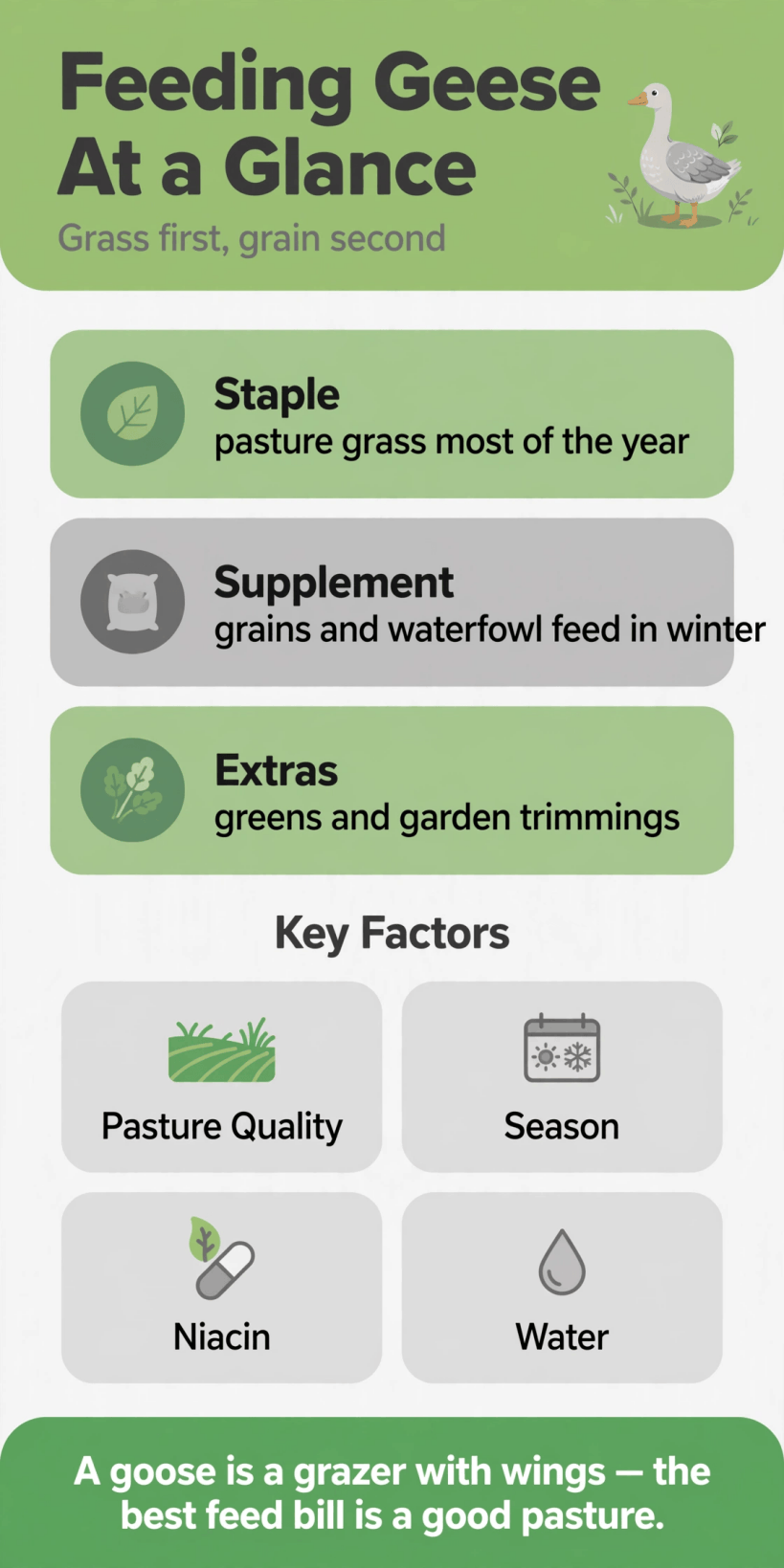
Grass first, grain second: pasture is the staple, bought feed is the supplement, and greens are the extras on top.
Read the table from the top down and you have the whole feeding philosophy in order. When pasture is green, short and growing, adult birds need surprisingly little from a bag. When grass is dormant, muddy or covered in frost, the supplement row matters much more. The extras row is a bonus, never a foundation: trimmings and greens add variety and interest, but they cannot carry a flock on their own, however generous the garden happens to be that month.
The key factors row is your checklist before you change anything. Check the pasture, check the calendar, remember that growing birds need enough niacin, and never let the water run out. Most feeding problems on small farms turn out to be one of those four things, not a mysterious fault in the birds themselves.
2. Grass and Pasture: The Food Geese Are Built to Eat
A goose is a grazing animal in a feathered body. Its bill is shaped for cropping short grass, its digestion is set up to ferment fibrous forage, and a flock on good pasture spends most of the day doing exactly what it evolved to do: walk, graze, rest, drink and graze again. Short, young, leafy growth is the prize. Long, stemmy, mature grass is far less useful, because the birds pick at the tender parts and trample the rest, so rotating birds onto fresh ground keeps both the pasture and the flock in better condition.
Rotation does not need to be complicated. A simple moveable fence, a rested strip and a fresh strip will do. Watch what the birds leave behind: if they are stripping one corner bare while ignoring another, the sward may be too mature there, or the ground may be sour and wet. Keepers who also keep ducks will recognise the same pattern from what ducks eat on pasture and pellets, although geese lean far more heavily on grass itself and ask much less of the feed bin than ducks ever do.
Pasture alone has limits, and honest guidance should say so. Very young birds cannot live on grass. Laying birds, moulting birds and birds facing a hard winter all draw on reserves that grazing by itself may not replace. Treat pasture as the foundation of the diet, not as an excuse to ignore the bird standing in front of you. Body condition, behaviour and droppings tell you more than any feeding chart: a contented, active, bright-eyed flock is usually a well-fed flock.
3. Grains, Pellets and Waterfowl Feed as Supplements
Supplemental feed exists to cover what grass cannot. A purpose-made waterfowl feed is the simplest choice, because it is formulated for birds that swim and graze rather than for chickens that scratch. Whole grains such as wheat, barley, oats and corn can play a supporting role, offered in a heavy, stable dish or scattered on clean ground where birds can find every piece. Feed little and often enough that nothing sits around going stale, attracting rodents or growing mould in damp corners of the run.
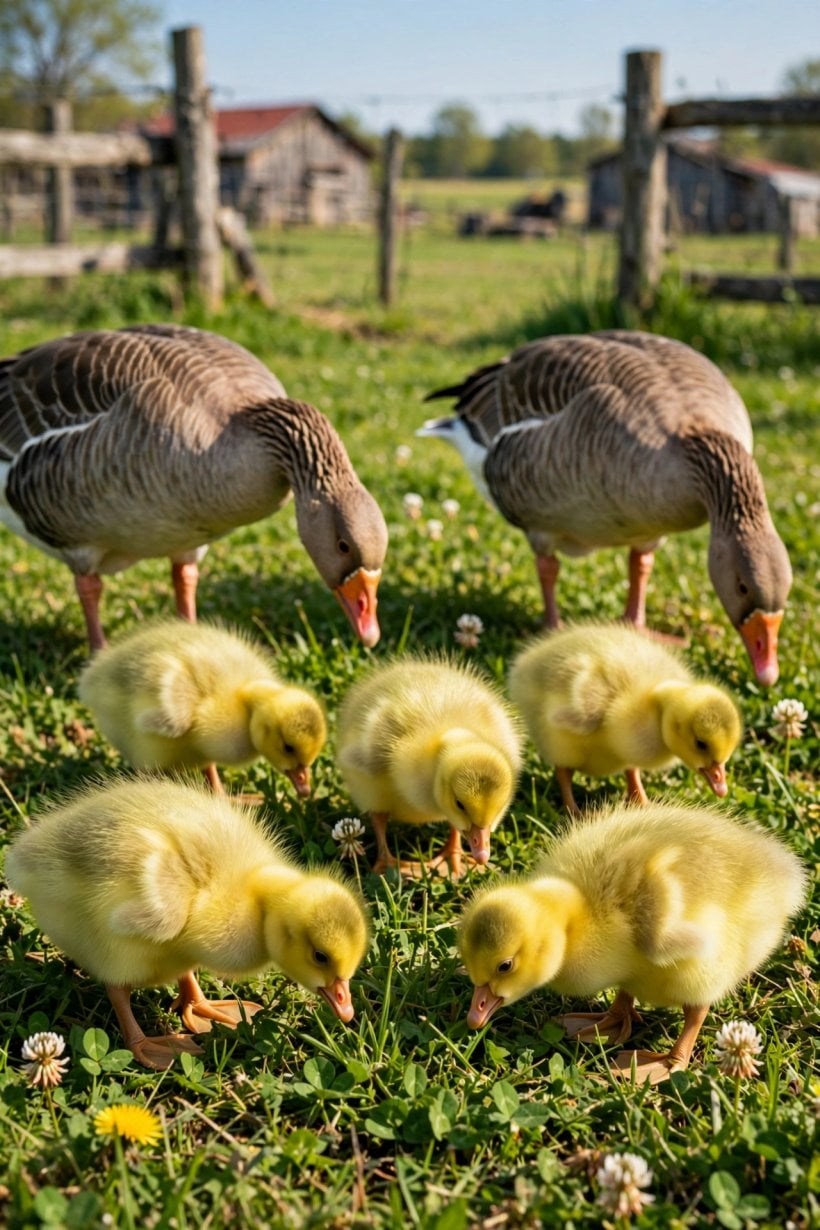
Timing matters as much as the feed itself. Many keepers offer the supplement in the evening, which has the happy side effect of training the flock to come home willingly at dusk. Birds that know a small evening ration waits in the night pen are far easier to shut away safely from predators. In the morning the same birds head straight back out to graze, which is exactly the balance you want: the pasture works all day, and the bucket simply tops the birds up.
Resist the urge to keep a feeder brim-full at all hours. Geese that fill up on grain graze less, gain unhelpful weight and can go off their legs, and spilled feed is money scattered in the mud. Think of the supplement as a dial you turn with the seasons and the pasture, not as a fixed habit. When the grass is flying in spring, turn it down. When frost locks the ground, turn it up, and watch body condition as you go.
4. Feeding Goslings in the First Weeks
Goslings grow at a startling speed, and their first feed needs to support that growth. Offer a starter feed made for waterfowl, or an unmedicated chick starter that keepers commonly use for young waterfowl, presented in a shallow dish the little birds can reach without climbing in and fouling it. Feed should be available through the day in these early weeks, because small stomachs and rapid growth do not suit a once-a-day routine. Sprinkle a little feed near the goslings at first so they learn where it is, and keep the brooder warm, dry and draught-free while they find their feet.
Fresh water belongs beside the feed from the very first day, in a drinker shallow enough that a gosling cannot climb in and chill. Young birds need to rinse their bills and clear their nostrils as they eat, so a drinker that lets them dip the bill but not the whole body is the right shape. Anyone who has raised other poultry will find familiar ground in what to feed baby quail in the first weeks, even though goslings are hardier, larger and far messier students at the water dish.
Within the first couple of weeks, healthy goslings can begin nibbling finely chopped greens and, on mild days, short supervised spells on clean, untreated grass. Keep these first outings brief, warm and close to shelter, and bring the birds in at the first sign of chilling or rain. Never put goslings on ground that has carried sick birds, and keep their early world small and clean. Growth at this stage sets the frame for the adult bird, so steady feeding now pays you back for years.
5. Niacin, Grit and the Nutrients Growing Birds Need
Niacin deserves its own section because young waterfowl need more of it than young chickens do, and a shortfall shows up where a keeper least wants trouble: in the legs. A gosling that sits back on its hocks, walks reluctantly or develops bowed legs on a feed that was never meant for waterfowl is giving you a nutritional message, not a behavioural one. Using a feed formulated for waterfowl is the cleanest way to cover this need. If you must use a general starter, ask your feed supplier about suitability for ducks and geese before the birds tell you the answer themselves.
Grit is the other quiet essential. Birds have no teeth, so swallowed grit lodged in the gizzard does the grinding that teeth would do, working over grain and fibrous grass alike. Geese on open pasture usually pick up all the grit they need from the ground itself. Birds in a pen, on concrete or on ground that is frozen or deeply muddy may not, so offer a small pot of coarse grit and let the flock help itself. It keeps for ages, costs very little and removes one more silent limit on digestion.
Round this section out with minerals in their proper place. Laying females draw heavily on calcium when eggs are coming, and a separate dish of oyster shell lets a laying bird top herself up without forcing extra calcium on ganders and non-laying birds that do not need it. Separate dishes, free choice and clean water: that simple pattern covers most of the micronutrient questions a backyard flock will ever raise, without turning feeding into a chemistry lesson at the gate each morning.
6. Greens, Vegetables and Safe Garden Extras
Extras are where the garden meets the flock, and geese are enthusiastic partners in the arrangement. Leafy greens, lettuce that has bolted, cabbage leaves, chard, pea vines, cucumber ends and chopped herbs all go down happily, and garden trimmings that would otherwise fill a compost bin become a daily event the flock hurries to meet. Wash off soil and any spray residue, chop long stringy pieces so nothing can wad up in the crop, and introduce anything new in small amounts first, the same sensible rule that applies to any animal’s diet.
Keep extras in their place, which is on top of the staple diet rather than instead of it. A bird filled up on watery lettuce has less room for the grass and balanced feed that actually build body and eggs. Scatter greens on clean ground or in a wide tray so subordinate birds get a share, and clear away anything wilted and trampled before it turns unpleasant. In a well-planned yard, the flow of trimmings becomes part of the design, as you can see in a half acre homestead layout that pairs pasture with garden beds, where the garden, the compost heap and the grazing strip all feed one another.
Weeds deserve a careful word. Geese will happily work through many common garden weeds, and some keepers value them as living weed control in orchards and between rows. The keeper’s job is identification: know the plants in the area before you let birds graze it freely, because the flock cannot tell a wholesome green from a poisonous one. When in doubt, pull it out and compost it rather than offering it. Curiosity is a virtue in a gardener and a hazard in a goose run.
7. Foods to Avoid and Plants to Keep Away From the Flock
Some foods simply have no place in the run. Bread is the classic example: it fills a bird without nourishing it, fouls water quickly and encourages exactly the heavy, inactive condition a grazing bird should never be in. Salty snacks, processed foods, chocolate, avocado and raw dried beans are also off the menu, as is anything mouldy, fermented or spoiled. A goose’s willingness to taste almost anything is not evidence that the thing tasted was good for it, so the gatekeeping belongs to you, every single day.
Mould deserves special emphasis because it hides so easily. Feed stored in a damp shed, grain wetted by a leaking roof or greens left sweating in a sealed bucket can all turn quietly dangerous. Store feed dry, sealed and off the ground, buy little enough that it stays fresh, and throw doubtful feed away rather than reasoning that the birds will sort it out. They will not. The same applies to water containers scrubbed too rarely: clean, fresh and often is the whole rule, and it is a cheap rule to keep.
Plants need the same caution outdoors. Keep flocks away from ornamental plantings you cannot identify, from areas treated with weedkillers or slug pellets, and from lawn clippings that have sat and heated in a pile, which can ferment and should never be fed even though fresh grazing is ideal. If a bird goes off its feed, isolates itself or seems unsteady, think first about what it might have eaten, note anything new in the environment, and seek proper veterinary advice for a bird that does not quickly right itself.
8. Water for Drinking, Dipping and Digestion
Ask any experienced keeper for the shortest feeding advice they know and many will say: never let the water run out. Geese drink a great deal, they need water alongside dry feed to swallow and digest comfortably, and they must be able to dip their bills and clear their nostrils and eyes. A bucket deep enough for the whole head, refreshed often and tipped out before it turns green and soupy, covers the essentials. Drinking water is a nutrient in practice, however the textbooks file it, and a flock short of water eats less of everything else too.
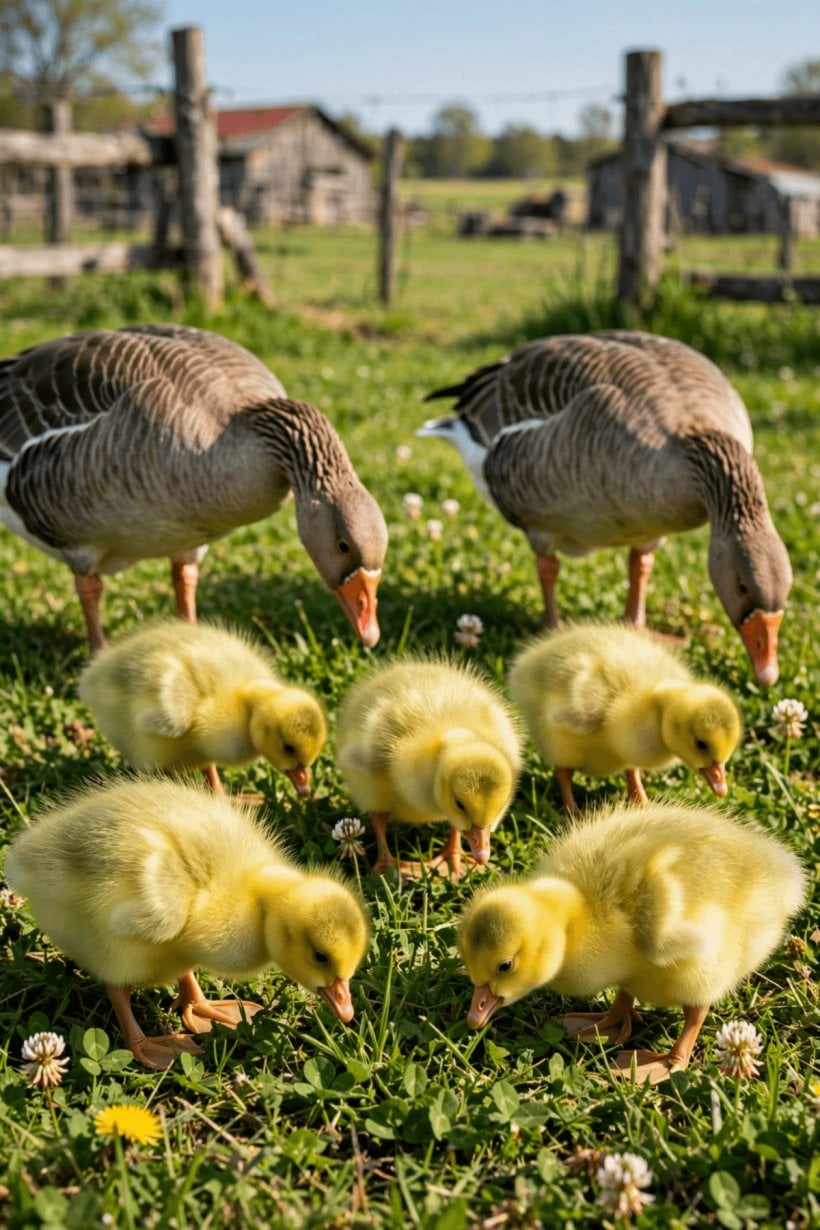
Swimming water is a pleasure rather than a strict necessity, provided the drinking supply is right. A simple tub or shallow pool, emptied and refilled regularly, keeps feathers in the condition birds need for insulation and preening, and watching a flock bathe is one of the honest joys of keeping them. Site any pool where the inevitable splashing and mud will not ruin the grazing or turn the night pen into a swamp, and expect to move it around. Geese are tidy grazers and spectacularly untidy bathers, and good siting is how you enjoy both facts.
In winter, water duty means breaking ice in the morning and checking again on bitter afternoons, because a frozen bucket is the same as no bucket. In summer it means shade over the drinker and a second container when a heat wave arrives, so the whole flock is not queuing at one hot, crowded rim. Build the water round into the same daily walk as the feed round and neither job gets forgotten when the day gets busy, which is precisely when such jobs tend to slip.
9. Seasonal Feeding: Summer Grazing, Winter Rations and Laying Birds
Spring is the season of abundance and restraint at the same time. Grass is rich and growing fast, goslings are arriving, and breeding birds are working hard. Let the pasture carry the flock, keep the supplement modest, and spend your attention on the laying females and the youngest birds, whose needs genuinely rise. Watch that geese coming out of winter do not simply convert spring plenty into fat: condition should rebuild steadily, and birds that will breed need fitness, not softness, on their side when the season turns.
Winter reverses the picture. Grass stops growing, what remains is fibrous and thin in value, and cold weather asks the body for more fuel just to hold condition. This is when the supplement row of the table earns its keep: waterfowl feed and whole grains offered generously enough to hold weight, hay or leafy greens to keep fibre and interest in the diet, and unfrozen water without fail. Keepers planning a mixed yard can compare notes with what turkeys eat from poults to adults, since turkeys face the same winter gap between pasture and bucket, even though their ration leans more heavily on the bucket all year round.
Autumn is the keeper’s preparation season, and it deserves a plan rather than a shrug. Assess body condition bird by bird as you handle the flock, repair feed storage before the rains, lay in supplies before bad weather makes deliveries awkward, and decide honestly how many birds your winter pasture and budget can carry well. A smaller flock fed properly through winter will outlay, outlast and out-graze an overstocked one every time, and the birds you keep will go into spring ready for the work of the year.
10. A Simple Daily Feeding Routine That Works
Good feeding is mostly a rhythm. Morning: let the birds out onto pasture, check and refresh every drinker, glance at each bird as it passes you, because the gate is the best inspection point you own. Daytime: let grazing do the work, move fencing when a strip is eaten down, and offer garden extras when you have them. Evening: call the flock in with its modest supplement, watch who eats eagerly and who hangs back, top up water for the night and shut the pen against predators. Simple, repeatable and finished in minutes once the birds know the pattern.
Housing and feeding support one another, so plan them together. The feeding yard, the night pen and the water points should sit where you walk anyway, which is the same practical thinking behind turkey coop and shelter ideas for a mixed poultry yard and behind most well-run small farms. If you are comparing birds for a small yard, our guide to bantam chickens vs standard chickens for size, eggs and space helps you judge companions honestly, and the cautions in whether turkeys can live with chickens safely are worth reading before any mixed flock shares a fence line, a feeder or a water bucket through the winter months.
Finally, keep a few written notes. A notebook line each week (pasture condition, feed offered, eggs, any bird off colour) turns guesswork into management and shows you patterns a month before memory would. Note what your own land teaches you, too: every pasture has wet corners, early corners and strips the flock loves best. Keepers of quieter waterfowl will enjoy the Muscovy duck guide for quiet backyard waterfowl as a companion read, since ducks and geese share a fence happily when the feeding stations are planned so that each species can eat in peace.
Final Considerations
Feed the grass first, the bird second and the bucket last, and you will not go far wrong. Start from good pasture, supplement with a proper waterfowl feed when age, season or laying asks for it, keep niacin in mind for growing birds, offer greens as a bonus rather than a base, and guard the water supply as if it were feed, because to a goose it is. Do that steadily, watch your birds as carefully as you watch your pasture, and the flock will repay the routine with health, eggs, grazing work and company for many seasons to come.


0 Comments